
Lawfare Daily: The Houthi War Against Saudi Arabia

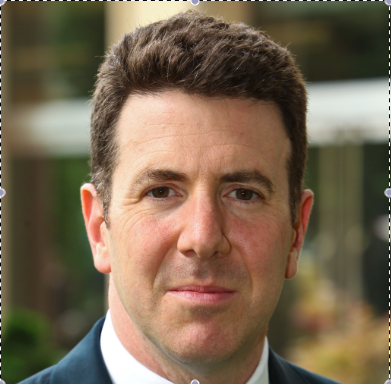
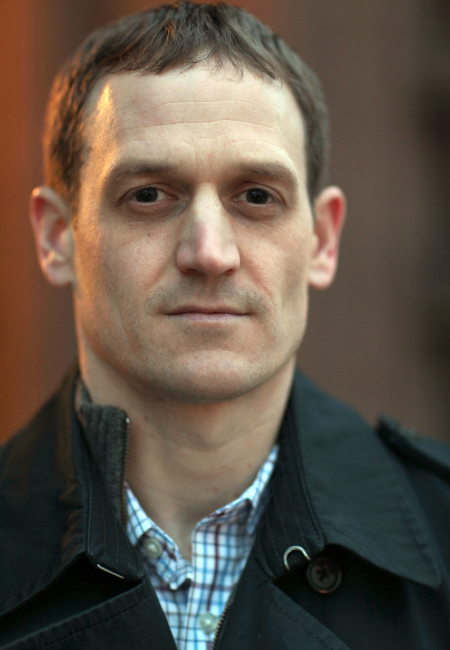

For today's episode, Lawfare Foreign Policy Editor Daniel Byman interviews Gregory Johnsen, non-resident fellow at the Arab Gulf State Institute, to discuss the current war in Yemen.
The two discuss the latest developments in the war, the reasons for the Houthis' successes so far, the dilemmas facing Saudi Arabia, and why the situation has gone from bad to worse.
To receive ad-free podcasts, become a Lawfare Material Supporter at www.patreon.com/lawfare. You can also support Lawfare by making a one-time donation at https://givebutter.com/
Click the button below to view a transcript of this podcast. Please note that the transcript was auto-generated and may contain errors.
Transcript
[Intro]
Gregory Johnsen: They
certainly are not going to stop. They’re an incredibly expansionist group, and
any political deal that they’ve signed, the Houthis have basically looked at
these agreements as something that they sign to buy time, which allows them to
sort of refit and regroup and then make another try to get some of the things
that they actually want.
Daniel Byman: It’s
the Lawfare Podcast. I’m Daniel Byman, foreign policy editor with
Lawfare, with Greg Johnsen, nonresident fellow at the Arab Gulf State
Institute.
Gregory Johnsen: They
feel that Saudi Arabia’s vulnerable, and they’re trying to squeeze. And that...
If you if you take that sort of understanding and lay that onto what it is that
you’re seeing in the news, then I think what the Houthis are doing makes a
little bit of sense, both domestically in Yemen as well as sort of from the
broader regional strategic level.
Daniel Byman: Today,
we’re talking about the Houthis and their war against Saudi Arabia, and the
dilemmas it poses for the United States.
[Main Podcast]
The current offensive of the Houthis, both within Yemen and
their attacks on Saudi Arabia and on the Red Sea and Bab el-Mandab area, has
put Yemen again in the headlines. And Greg, I have a dozen questions I wanna go
through with you.
So, let’s start with the basics, just to make sure that we’re
all on the same page as we go forward. Tell us about the Houthis today. If we
were having this conversation over a decade ago, at least I think we’d be
talking about a more local movement. But how should we think the— about them
and their role in Yemen?
Gregory Johnsen:
Yeah, that’s a good question. So obviously they’re a group that controls much
of northern Yemen, so they control the capital city of Sanaa in, in Yemen. They’ve
held that really since about September of 2014, so over a decade now. They’ve
been... The Saudis for a while, the Emiratis, the US, a number, Israel, a
number of countries have tried to basically bomb them into submission.
That hasn’t worked particularly well. In recent years, they’ve
started to project power, not just inside of Yemen, but actually out into the
Red Sea. They fired missiles at Israel in late ‘23, early 2024. And then I
think as many of your listeners will know, they started to carry out several
attacks on commercial shipping in the Red Sea for a period of several months,
almost a year.
Eventually, that sort of declined. And then more recently, they
have really started, saw the, the U.S.-led war in Iran as something that they
could take advantage of, and they see Saudi Arabia and particularly its, the
route that it uses to get its oil to market, as something that they could press
on. And so that’s been really driving their offensive over the past couple of
weeks, where the Houthis have, if you have sort of a map of Yemen in your mind,
western Yemen is right along the Red Sea coast. The Houthis had a few ports up
in the north, but what they’ve done is pushed south, which brings them very
close to a strategic choke point, the Bab el-Mandab.
And so, they’ve been able to take that territory, some of the
islands in the Red Sea, and from there they are able to actually hold at risk
many more Saudi oil tankers that are going through there. So, what you’ve seen
is a group that’s evolved from sort of this local insurgency that basically
captured the state, or at least part of the state, and now it’s a group that
has very maximalist claims and wants to continue to project power not only
inside of Yemen, but out throughout the region and into the Red Sea in a way
that is causing some significant costs for Saudi Arabia in particular, but also
for the global economy.
Daniel Byman: So, if
we were handicapping this 20 years ago or 25 years ago, I would say, okay, you’re
gonna tell me about a relatively local group in Yemen that is going to, first
of all, become probably the strongest single force within Yemen.
In addition, it is going to deal with an intervention from
Saudi Arabia, from the United Arab Emirates, from Israel, from the United
States, and emerge pretty strong.
Obviously, it’s got weaknesses that we’ll talk about, but I
think quite impressively. What explains the Houthi resilience? What explains
their success?
Gregory Johnsen:
Yeah. Well, I think one of the things that we often sort of miss when we talk
about the Houthis is exactly what you were saying. Like, go back you know, a
quarter of a century, and the Houthis have basically been fighting for that
long.
I mean, they started fighting the Yemeni central government in
2004, and initially it looked like the, the Houthis were gonna be defeated.
Their initial leader, a guy by the name of Hussein Badreddin al-Houthi, was
killed in September of 2004. The leadership of the movement basically passed to
his very old, kind of frail father, and then eventually to one of his
half-brothers, the current leader, Abdul Malik al-Houthi.
So, you— well, while we think of the Houthis as an organization
that has been sort of active in 2023 or ‘24, maybe we heard about them in 2015
when Saudi Arabia started bombing Yemen, this is a group that views itself as
having won a local war against the Yemeni government. So, they fought six
successive wars from 2004 to 2010, and they didn’t really take a lot of
territory, and they didn’t really do much, but they managed to survive.
And for that, and that’s a pretty low bar, but for an insurgent
group like the Houthis, that was all that they had to do to win. Then, of
course, the Arab Spring comes. Their main rival, Ali Abdullah Saleh, the former
president, overthrown, and the Houthis are able to basically take advantage of
a chaotic situation.
From 2011, 2012, the U.S. was trying to restructure the Yemeni
military, which basically just broke the Yemeni military and didn’t put
anything good in its place. So, there were all these sort of fractures and
fissures in Yemen that allowed the Houthis to basically march on Sanaa and take
the city without much of a fight, to be honest.
That’s 2004 to 2014. So, they look... They won this domestic
fight, and then Saudi Arabia with this 10-country coalition gets involved in
2015, starts bombing the Houthis. This is a war that goes on really from, like,
2015 to about 2022. And again, the Houthis don’t do much, but they manage to
survive, so air power allow alone is not able to defeat them.
And so, the Houthis look, okay, we fought a local war and we
won, and now we fought a regional war against Saudi Arabia, and we won that as
well. And so, then you saw them in ‘23 and 2024 fighting what they thought was
an international war against the United States and Israel, and the U.S.
obviously carried out about two months of pretty heavy airstrikes in 2025.
And again, they destroyed a lot of things. But, the Houthis
survived, and they view that as a victory, and that’s the situation that they’re
in now. And so essentially, they feel that they have a pretty strong hand,
particularly against Saudi Arabia, that they can put a lot of pressure on
Saudi. And they’re doing this, I think, for a couple of different reasons.
One, they’re doing this for their own domestic political
purposes. So, the Houthis would like to take more territory in Yemen. You saw
them move sort of south and take some of the Red Sea coast, but they also wanna
move east and inland and take some of the oil and gas facilities in Marib and
Shabwa and Hadhramaut.
That’s something the Houthis have long had their eyes on
because this would give them the economic base to really rule Lem— Yemen long
term. So, they wanna do that, but they also want to assist Iran, which has been
backing them and has helped them over the years.
And as Iran has closed down the strait, the Houthis looked at
that and say, hey, we can do a similar thing in Bab el-Mandeb, and we can put
pressure on Saudi Arabia, and we can get Saudi to give us some financial
incentives. We can potentially get some more recognition. We can continue to
project power out into the region and show that we really are a force.
So, this is a group that has just moved from local to regional
to international, and even though it hasn’t done a whole lot, it’s mostly taken
advantages of the weaknesses and the divisiveness and the divided nature of
most of its domestic adversaries.
Daniel Byman: So, you’ve
said a lot there, and I wanna kind of drill down on a few of your points. There’s,
you know, so much to discuss. So, when we think about the Houthis within Yemen,
are there, I’ll say, realistic goals? Obviously, everyone, Yem— everyone in
Yemen has ambitions, but are there realistic goals to control the entire
country, or do they just want to dominate parts of it and make sure that their
position is secure?
Effectively, how aggressive and expansionist are they within
the country?
Gregory Johnsen:
Incredibly expansionist. So, what it is that they want, and you can see this,
and this has been pretty apparent for, you know, about the past eight years,
really 2018 on, the Houthis... So again, if you, if your viewer or listeners
have sort of a, a map of Yemen in their head, the Houthis have basically the
northwest quadrant of the country, and this is largely the mountainous area of
Yemen.
And they wanna move from that out east, directly east from
Sanaa, out into this governorate called Marib. And Marib has traditionally been
part of northern Yemen. It’s tribal. The Houthis haven’t been able to take this
territory, largely because of Saudi airstrikes. And so, as you move east out of
Sanaa, you move out of the mountains into sort of some, eventually some low
foothills and then some rolling, and then you get— by the time you get to
Marib, you’re out in the desert.
This is Queen of Sheba territory. This is where archeologists
work. But it’s also where Yemen’s oil and gas fields are. So, the Houthis wanna
move directly east out of Sanaa into Marib. Once they control Marib, then they
want to move sort of southeast into Shabwah. Now, this would bring them down
into the south, and it would bring them actually right onto the coast of Yemen,
where sort of the Gulf of Aden is.
And by doing that, they would get access to the Gulf of Aden,
which they want, ‘cause then you have access to the Red Sea, as well as the
Gulf of Aden. You have the oil and gas fields in Marib, as well as in Shabwah,
but you also split the southern half of Yemen. So, if you move into Shabwah, to
the west of Shabwah is Aden.
This is Yemen’s second city, and it’s sort of the temporary
capital of what’s often called the Internationally Recognized Government, which
is basically just a, a made-up name for a fictitious group that is, you know,
divided within itself. But you split Aden, the capital, from Hadramaut, the
wealthiest province.
So, my, my sort of read of it is, and this is a long way off,
but this is what the Houthis would like to do, move into Marib, move southeast
into Shabwah, and then move back northeast into Hadramaut. So, by doing that,
you would effectively break the south, and then you would take all three of
these sort of major oil and gas fields. That’s Marib, Shabwah, Hadramaut.
And one analyst, and I think he’s right on this, refers to this
as sort of Yemen’s triangle of power. This is... Yemen’s an incredibly poor
country. But, really the only exports it has is these oil and gas fields. So,
if the Houthis control those fields, they control the entire country, and then
they can just pick off Aden and Taiz and the rest of it.
And I don’t think their expansionist goals stop with Yemen.
There are a couple of provinces right over the border in Saudi Arabia, Asir and
Najran, which prior to 1934 were actually part of Yemen, and there at least
traditionally has been a strong Zaidi Shia element, and that’s what the Houthis
are.
They’re Zaidi Shia. And they’ve talked often of taking that
territory but also moving on. And so again, it’s one thing to have this sort of
lofty rhetoric. It’s something else to actually make it… put it into practice
on the ground. That’s what they’ve been trying to do. They’ve been
unsuccessful, but they certainly are not going to stop.
They’re an incredibly expansionist group, and any political
deal that they’ve signed, the Houthis have basically looked at these agreements
as something that they sign to buy time, which allows them to sort of refit and
regroup and then make another try to get some of the things that they actually
want.
Daniel Byman: So, you
also mentioned in your initial remarks Iran, and of course, for many people
that’s, you know, the, the key component here are the Houthis ties to Iran. And
a big question is, you know, first of all, how much do the Houthis, if at all,
take orders from Iran? And then beyond that, are they dependent on Iran?
Like, how should we think about this relationship both from a
diplomatic sense and also from a military sense?
Gregory Johnsen:
Yeah, it’s a really good question, and this is one of the questions that I
think divides the people who look at Yemen and look at the Houthis. I think you
have— It’s one of those cases where, at least in the open-source reporting, you
have so little evidence, and the evidence that you do have fits almost any
narrative, that people are able to project their own views onto what it is the
relationship is between the Houthis and Tehran.
So, having said that, I will say that for me, I tend to think
of the Houthis as being not necessarily under the command and control of
Tehran, but rather, the Houthis and Iran, their interests align rather closely,
and it’s a mutually beneficial relationship. But it’s also a relationship that’s
changed pretty significantly over time.
Iran did not create the Houthis. The Houthis were sort of born
out of local grievances in Yemen that date back to the 1960s and so forth. And
then the Houthis have... You know, once they seized the state in 2014, they
were then able to— They had a number of missiles which basically only went
about three hundred kilometers or so.
So, a bunch of Scuds and sort of knockoffs like that. And in
2017 and 2018, the Houthis were incredibly dependent upon Iran because they
needed these sort of advanced medium-range ballistic missile components. And
so, I was on the UN Security Council’s Yemen panel of experts at that time, and
we were investigating a lot of these transfers.
And you can see very clearly in sort of 2017 when the Houthis
started to acquire these Iranian missile components, and it allowed them to
start to fire stuff at Abu Dhabi and Dubai as well as at Riyadh. And so, at
that point, the Houthis were very much dependent upon Iran and IRGC advisers,
and particularly Iranian missile components.
But over the course of the past, you know, five, six years, the
Houthis have really put together a pretty interesting— And there’s a great
report out from Peter Salisbury and his team at the Century Foundation that has
looked at some of this. And they’ve done a really good job of sort of building
up a, a defense industrial base of their own that has allowed them to either
produce some of the things that they would need, or to be able to buy them off
the shelf from different places and u— and utilize those.
So, their dependency on Iran has gone down a little bit, but at
the same time, they’re seeing what Iran is doing in the Strait of Hormuz. They’re
seeing how they can work together, and there’s still IRGC officers on the
ground with the Houthis, but it’s not as if they’re saying, Hey, Houthis, you
should do this, or this, but they’re saying, this is sort of, you know, in
Michael Scott from The Office parlance, This is win-win for both of us.
Daniel Byman: Always
good to have an Office reference when you’re talking about Yemen. When we talk
about the strength of the Houthis, I always, you know, urge people to think
about, you know, strength in relative terms. And as you mentioned, you have
this kind of, you know, internationally recognized government that’s really
just, you know, a group of different factions that fight each other as much as
they fight anyone else.
How should we think about the strength and weakness of the
Houthis’ enemies? Is this the sort of thing that if Saudi Arabia, the UAE, the
United States, if outside powers got behind the opposition more squarely, could
it make a significant difference, or are they just too broken?
Gregory Johnsen: Yeah,
they’re too broken, and not only are they too broken, but Saudi Arabia and the
UAE, their relationship is too broken to sort of, I think, salvage, at least in
Yemen at this point.
So, you know, in, and I’ll just sort of give you a little
rundown of the Houthis’ enemies, and these are people that is often called the
anti-Houthi coalition or the Internationally Recognized Government or the PLC
or, you know, all these terms that we in the West use which make it think as if
we’re dealing with a single entity.
But when you’re actually on the ground, it’s not a single
entity. It’s seven, eight, nine, 10 different groups, all of whom are fighting
one another, many of whom have diametrically opposed views. So just to give you
one example, Tareq Saleh is the nephew of the former president, Ali Abdullah
Saleh. So, he was actually allied with the Houthis for the first couple of
years of the war.
He was fighting with them from about 2015 to the end of 2017.
Then when the Houthis killed his uncle, he defected. He joined the anti-Houthi
coalition. His forces, the National Resistance Forces, they were the ones in
Mocha, this port city on the Red Sea coast that the Houthis just took. And his
group is at odds with a group called the Southern Transitional Council, which
is a group of people in the south that wants to see an independent southern
state.
And the people in the south hate Tarek Saleh because of what
happened, the history of a 1994 civil war, when the north basically came back
and colonized and sacked the city of Aden. So, there’s all these past histories
that are involved, and what’s happened is that any time the anti-Houthi
coalition will make any sort of an advance, then they’ll be scrambling for...
You know, they’ll start, oh, I want this territory. No, I
want... And then you see fighting that actually breaks down between these
different groups. And this came most into focus almost a year ago now in late
2025 when STC, the Southern Transitional Council, the group I was just talking
about, they made a play to actually take control of the state.
So, in the same way that we just talked about. The Houthis
wanna move to Marib, to Shabwa, and then out to Hadramaut. The STC was moving
from Aden to Ha— Hadramaut, basically making the same play, that they wanted to
take all of the south and then basically declare an independent southern state.
And the STC was a UAE client, and so they were getting funding, they were
getting arms, they were getting training from the UAE.
Saudi Arabia was very opposed to this move in December of 2025,
and you actually had the very odd optics of Saudi Arabia bombing UAE shipments
that were coming into Yemen to support the STC. And after that, Saudi Arabia
pushed the United Arab Emirates completely out of Yemen, and it basically said,
we’ll take Yemen.
And so, all the different proxy militias that had been aligned
and that had been receiving support from the UAE, Saudi Arabia tried to fold
them all into its umbrella. But of course, there’s a lot of history, there’s a
lot of, you know, past grievances for... So for instance, you know, and
obviously we’re getting a little bit into the weeds, but not to go too far,
Tariq Saleh, the guy that I just mentioned who had fought with the Houthis for
a long time, he doesn’t have a great relationship with the Saudis because his
uncle, Ali Abdullah Saleh, former president of Yemen, when he sort of broke
with the Houthis and asked for Saudi support, the Saudis were nowhere to be
seen.
And so, then Tareq Saleh is supposed to be fighting the
Houthis. Saudis are supposed to be backing him. And so, you have all of these
different sort of temporary alliances in which nobody really trusts one
another. And the Houthis who have a unified group and they have one goal, they’re
able to take advantage of these different divisions and fissures and fractures
and all these things that are going on.
And it’s not that they’re just stronger than every other group
put together. It’s just that they never have to fight every other group put
together. Even Saudi Arabia and the UAE can’t get on the same page. I am of the
opinion... So, there are some people when they look at the Houthi, sort of the
Houthi problem in Yemen, they think s— the U.S. has basically five options.
There was the initial option of sort of defend traffic in the
Red Sea, defend only, put the U.S. naval carriers out there. Then there was the
option of, well, we should attack Houthi mobile missile launchers. The U.S.
tried this in early twenty twenty-four with Operation Prosperity Guardian. Then
there was those who said, okay, we should really go big against the Houthis.
U.S. tried this in Operation Rough Rider in twenty twenty-five.
Then there are those who say, well, the Houthis are just sort of a symptom of a
deeper problem, which is Iran, so you just go after Iran, you cut off the head
of the snake. Obviously, we, the U.S. tried this in twenty twenty-five with
Operation Midnight Hammer, and then in twenty twenty-six with Operation Epic
Fury.
But door number five is, hey, we should really back this
anti-Houthi coalition, which I think gets to your question, Dan, and really
sort of put the full backing of the United States behind them, and then they
can roll back the Houthis. They can be the ground troops, you know, the
counter-ISIS campaign, where the Kurds are the ground troop, U.S. provides the
air cover.
We’ll do all of this. The problem with that, of course, is that
most of these groups in the South, there’s pretty significant human rights
violations, so you’d run into U.S. domestic law against partnering with many of
these different groups. And also, there’s no guarantee that these groups are
actually gonna be successful, and in fact, I don’t think that they would be.
And so in order to really push back the Houthis, you’re going
to need some sort of foreign ground troops that the U.S. doesn’t wanna provide,
UAE isn’t gonna provide ‘cause they’re not there, and Saudi Arabia isn’t gonna
provide, which means that nobody is really able to solve the Houthi problem,
which means it just keeps metastasizing and getting a little bit worse, a
little bit worse, and they’re able to hold more and more things at risk.
Daniel Byman: Le— let’s
go now to the latest territorial gains of the Houthis. How should we think
about this? Obviously, getting territory on the Red Sea coast seems
significant, but is this really just a tactical advance, or is this a
tremendous shift in power both within Yemen and in terms of the Houthis’
ability to threaten other states?
Gregory Johnsen: I
think it’s a pretty significant shift. So the Houthis were targeting ships,
obviously, from the Red Sea, from the coast there, but they needed to use sort
of longer range ballistic missiles in order to target the ships. And now what’s
happened is that as the Houthis have moved south, they’ve managed to actually
get some of that territory, which means that, A, they can disperse their stuff
along a greater coastline, so it’s harder to actually target for the United
States, and the ships that they’re targeting are sort of more congested because
they’re in the choke point.
And, then the third issue, is that the Houthis don’t have to
use some of their more advanced weaponry to target the ships. They can actually
target them with sort of, you know, lower level weapons, dumb weapons, things
that they can go after and just sort of hit the ships that way.
Daniel Byman: When we
look at the attacks on Red Sea shipping, what is the primary purpose?
You know, the rhetoric is a lot about Israel. There is a
question about, you know, demonstrating support for Iran, as which, as you
mentioned, is an important backer of the Houthis. I’ve also heard the theory
that frankly, they want a bigger bribe from the Saudis, and they’re trying to,
you know, basically extort money from Saudi Arabia.
How do you see the goals of the Houthis when it comes to
attacks on Red Sea shipping?
Gregory Johnsen: So,
I think there, it’s important here to distinguish the two types of attacks that
are happening. So, initially it was twenty-twenty three, twenty-twenty four,
and that the Houthis said was done in defense of sort of the Palestinian cause.
They were responding to the Israeli response to the October
seventh bombings and then the Israeli move into Gaza. But really for the
Houthis, you know, think of it like a, a surfer doesn’t launch the wave, but
the surfer rides the wave. And the Hou- Houthis needed a wave, and they were
riding this wave for all it was good for.
So basically, what they were doing is there had been a
ceasefire in Yemen starting in about twenty-twenty two and for the Houthis,
they’re, perhaps not surprisingly, not very good at governance. They are in
fact very poor at governance. And they sort of are able to spur a lot of
domestic antagonism by the way that they govern, which is very heavy-handed and
authoritarian.
So, for a while, the Houthis if there’s not a war going on,
then the Houthis can really struggle. And what they need, war is basically good
for the Houthis. So, the Houthis sort of saw this opportunity, and they took
advantage of it ‘cause they thought, A, Palestinian cause incredibly popular in
Yemen.
Doesn’t matter where on the political spectrum that you fall.
If you are pro-Palestinian, then that’s something that everybody gets behind.
And so, the Houthis could s— wrap, basically wrap themselves in the Palestinian
flag and say, hey, we’re doing this on behalf of the Palestinians. Nobody else
is fighting for them. The Saudis aren’t doing anything. The Egyptians aren’t
doing anything. We’re the ones who are actually fighting for them.
And then in doing that, they invite strikes from Israel, from
potentially the United States, which happened, and then they can say, we’re
also the defender of the Yemeni state, and we’re here fighting, and the Houthis
use this to recruit more and more fighters to actually come into their ranks.
So that’s what they did in ‘23, ‘24. What they’re doing now is
something different. What they’re doing now, they’re saying, we’re not just
targeting commercial shipping writ large in the Red Sea, which is basically
what they’d done before. They’re saying any, any ship that has any ties to
Israel, that’s who we’re going after.
Now they are saying, and they’re very explicit about this,
saying, we’re only going after Saudi oil tankers. And the reason that they’re
saying that is they are, A, trying to keep the United States out of the
conflict because they’re not... Unlike in 2025 when they were sort of trying to
bait the United States into a bigger conflict, the Houthis don’t have an
interest of fighting the United States right now.
I think the, the Houthis made a bet that basically they could
absorb more punishment than the U.S. was willing to dole out, and I think they
probably won that, but it cost them a lot more than they were than, than they
had initially realized. So what they’re doing right now is they’re taking
advantage of Iran’s blockade of the Strait of Hormuz, which makes Saudi Arabia
vulnerable, ‘cause Saudi, basically, they can send their oil to market through
the Strait of Hormuz, which is the best, the easiest, and the cheapest, most
cost-efficient route, or they can send it sort of on the east-west pipeline to
their western coast and then down south through the Red Sea, through the Bab
el-Mandeb, and then out to Asia. That’s sort of route number two.
Or they can send it to the Western Coast and then up through
the Suez Canal. But then you have to go, if you’re going to Asia, obviously you
have to go all the way back around Africa, get all the way out there. Very
long, very costly route. So, Iran has closed down that eastern route.
The Houthis say, hey, we can close down this southern route and
put a lot of pressure on the Saudis. I think they’re doing that, as you alluded
to in your question. They would like to get the Saudis to pay civil servant
salaries. They’ve even at different times, they’ve asked Saudi Arabia to pay
the salaries of Houthi fighters who are fighting Saudi Arabia, which, you know,
on the face of it is just, you know, sort of the chutzpah that it would take
for a, for, for somebody to make that actual demand, that you should pay for
both sides of the soldiers on both sides of this war.
But they feel that Saudi Arabia is vulnerable, and they’re
trying to squeeze. And that, if you if you take that sort of understanding and
lay that onto what it is that you’re seeing in the news, then I think what the
Houthis are doing makes a little bit of sense, both domestically in Yemen as
well as sort of from the broader regional strategic level.
Daniel Byman: Let’s
flip the perspective a bit and go to Saudi Arabia. As you noted, you know, in
2015, Saudi Arabia and the UAE launched this war that was, at least from my
point of view, you know, largely disastrous for them, ineffective, made them
look both kind of cruel and weak. But fast-forward over a decade, how is Saudi
Arabia approaching this conflict?
And what are their options, both if they have the United States
by their side or if they don’t have the United States by their side?
Gregory Johnsen:
Yeah, I don’t think Saudi Arabia has great options. In many ways, what they’re
dealing with now is the same sort of scenario that they faced in 2015. So, they
fought for a decade, they’ve wasted a bunch of munitions, they’ve killed a
bunch of people in Yemen, many of them innocent civilians, and yet they’re no
closer to what it is that their goal is.
And if you may remember, I mean, you were in D.C. in 2015,
right on the eve of the war, Saudi Arabia was coming, and the Obama
administration’s in power at the time, and the Saudi envoys are telling the
Obama administration, we think this air campaign will last about six weeks, and
then the Houthis will be... You know, they’ll be pushed out of power.
Hadi, who was the president at the time, he’s since passed away
he— we’ll be able to restore him to power. And that, that never seemed like a,
an analysis of the situation that was grounded in any sort of reality. But the
Saudis are l— are looking at Yemen, and they have a few options.
Option one is, well, we could basically just do nothing and let
the Houthis take the state. But as we talked about earlier, the Houthis are
very expansionistic, and so there’s nothing in Houthi history would suggest
that once they came to any sort of a political deal, that it would last longer
than, than it would take the Houthis to sort of rearm and feel that they’re
strong enough to take a little bit more territory.
Saudi could do nothing, but that’s probably not gonna work.
Saudi Arabia could put in ground troops and really try to press the Houthis
out, but the terrain in Yemen is very unforgiving. It’s mostly mountainous, so
any sort of a conflict is gonna be long and bloody, and the chances of success
of a ground conflict are not particularly high.
So, then the Saudi says, okay, well, maybe we just do
airstrikes and hope for something to change on the ground, which has basically
been the Saudi approach over the past decade. But if anything, that’s only made
the, the Houthis stronger than they were otherwise. So then Saudi Arabia turns
to the United States and says, hey, can you guys help us? You guys can carry
out airstrikes.
U.S. has tried this. The Houthis were able to withstand it. The
U.S. and the Houthis came to some sort of a ceasefire. And so now, really,
Saudi Arabia is looking at its options on the menu and is now casting about for
new options, which I think is one of the reasons that Saudi Arabia’s reached
out to China to try to put pressure on Iran, to put pressure on the Houthis to
get them to back down.
So, Saudi’s just casting about to try to find a way out of this
conflict because they’ve gotten in, and there’s no real good way for them to
get what it is that they want, which is the Houthis out of power.
Daniel Byman: You’ve
covered up really a remarkable amount of material in a very clear and succinct
way, but frankly, it’s been pretty depressing.
And I would like to end simply by asking you, you know, what
might be a plausible set of positive developments for Yemen in the near term?
And we don’t have to go to, you know, total peace and amity— Mm-hmm ... in
Yemen. Just what might make things look a little better if we’re doing an
update podcast in a year or two?
What has gone well, and frankly, what can the United States or
other countries do to kind of move in that direction?
Gregory Johnsen:
Yeah. I wish I had a good answer for that one. I think one of the, you know,
one of the challenges with the Houthis is that it’s not— I don’t think this is
going to be a problem in sort of U.S. national security policy that is unique
to Yemen and the Houthis.
But basically, how does the U.S. handle groups like this that
are able to exert some sort of geopolitical leverage, whether it be over a
waterway, in this case, or over a natural resource or something like that, when
the U.S. doesn’t want to have a full-scale invasion, obviously, and yet
airstrikes alone are showing that they’re insufficient?
So, what are the other tools in the U.S. toolbox that it can
use to sort of push this group back or at least find some way to neutralize
some of their advantages? And you see, you know, the U.S. often does things
like sanctions. But in Yemen, the sanction regime was basically set up to
sanction the Houthis and to sa— sanction the former president, Ali Abdullah
Saleh, who had been allied with the Houthis.
So, there was an asset freeze and a travel ban. But that really
impacted Ali Abdullah Saleh in that his— he had international assets to freeze,
and the Houthis didn’t. And so, all the sanctions actually did was weaken an
internal Houthi adversary, and then the Houthis were able to kill him and
basically co-opt his network, which in the long run has made the Houthis
stronger than they would’ve been otherwise.
So, I think this is a real challenge, and this is j— basically
just my long-winded way of saying I’m not sure there’s a lot of positive hope
for Yemen right now. Saudi can’t do it with airstrikes. The US, although there
have been recent reports on President Trump deciding, yes, I will. No, I won’t,
when it comes to airstrikes.
Airstrikes alone aren’t going to do much to push the Houthis
back. At best, they’re sort of a holding action that kicks the can down the
road. But the Houthis have strategic patience, which it seems Saudi Arabia and
the U.S. don’t necessarily have, which puts the Houthis in a stronger position.
So, until there’s any sort of a, a unified front on the ground in Yemen, which
I’d I don’t see happening anytime soon, then I don’t think that there’s
anything actually positive.
It just... You know, in a year or two, if we’re having this
podcast, then we think back to today, and we think of this as sort of the good
old days where things actually looked a little bit better than they do in ‘27
or ‘28, and that’s pretty unfortunate and pretty depressing. But usually, when
you’re talking about Yemen, this is the place that you end up.
So, if you think back, 2015 was bad. It’s worse now. 2022 was
bad, but there were some glimmers of hope, but it’s worse now. And the problem
is, most of the groups, the UN, the United States, Saudi Arabia, they just,
they’re not willing to pay what it is that the Houthis want. They don’t trust
the Houthis for very good reason.
And so— and they’re not willing to go all in to fight the
Houthis, which means that the Houthis continue to grow and get a little bit
stronger, a little bit stronger, and then the problem gets a little bit worse
and a little bit worse.
Daniel Byman: Well,
unfortunately, that seems like a fitting, if depressing, end to this
discussion.
Greg Johnson, thank you very much.
Gregory Johnsen:
Thanks so much, Dan. I appreciate it.
[Outro]
Daniel Byman: You can
get ad-free versions of this and other Lawfare podcasts by becoming a Lawfare
material supporter at our website, lawfaremedia.org/support. You’ll also get
access to special events and other content available only to our supporters.
Please rate and review us wherever you get your podcasts. Look out for our
other podcasts, including Rational Security, Allies, The Aftermath, and
Escalation, our latest Lawfare Presents podcast series about the war in
Ukraine.
Check out our written work as well at lawfaremedia.org. The
podcast is edited by Jen Patja and our audio engineer this episode was Goat
Rodeo. Our theme song is from Alibi Music. As always, thank you for listening.