
Lawfare Daily: The Story of PEPFAR, with John Donnelly, November 19
Dan Byman and John Donnelly discuss PEPFAR, the Bush administration’s landmark effort to fight AIDS in Africa.

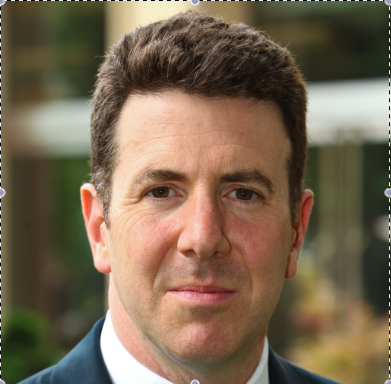
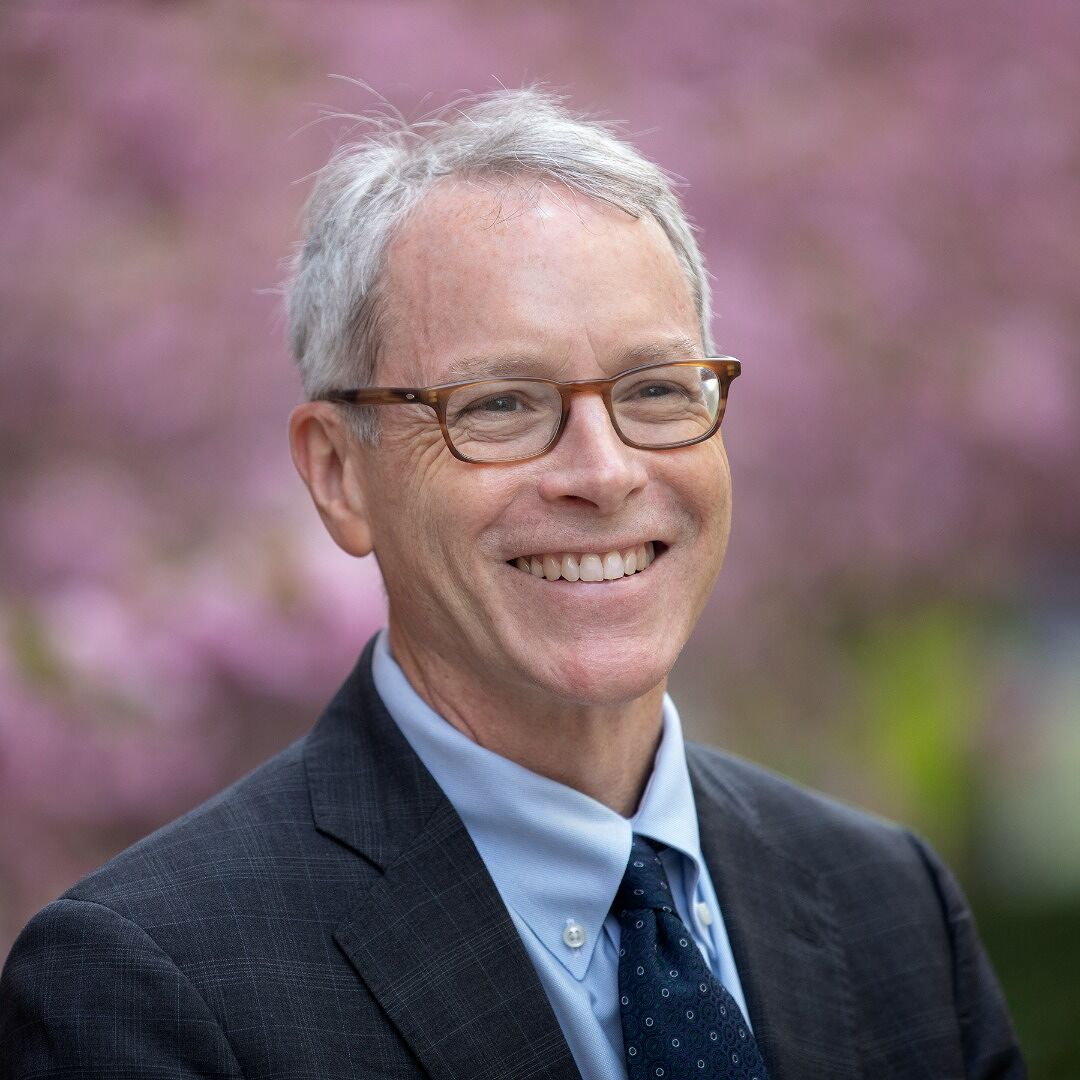
Lawfare Foreign Policy Editor Dan Byman sits down with John Donnelly, author of the new book, “Lifeline: The Story of PEPFAR, the Greatest Humanitarian Initiative of Our Time.” They discuss PEPFAR, the Bush administration’s landmark effort to fight AIDS in Africa; the origins of the program; how its architects overcame political and bureaucratic obstacles; and whether the United States still has the ability to change the world for good.
To receive ad-free podcasts, become a Lawfare Material Supporter at www.patreon.com/lawfare. You can also support Lawfare by making a one-time donation at https://givebutter.com/lawfare-institute.
Click the button below to view a transcript of this podcast. Please note that the transcript was auto-generated and may contain errors.
Transcript
[Intro]
John Donnelly: You know, if we do not do something to show that in the poorest countries in the world, to show that we care about them, we’re gonna be vulnerable to attack, as was 9/11. And he pointed to the Kenya and the Tanzania bombings in 1998 as examples of that. So, he was interested on a national security basis.
Daniel Byman: It’s the Lawfare Podcast. I’m Daniel Byman, foreign policy editor of Lawfare, with John Donnelly, author of “Lifeline: The Story of PEPFAR, the Greatest Humanitarian Initiative of Our Time.”
John Donnelly: It shows that the soft power can open many doors that you wouldn’t otherwise be open if this wasn’t there.
Daniel Byman: Today we’re talking about what the George W. Bush administration did to fight AIDS in Africa and what this achieved for the United States and the people of Africa.
[Main podcast]
Let’s begin by really setting the stage. Can you tell us about the situation in the early 2000s with regard to the AIDS epidemic? Start in the United States, but then explain what is happening in Africa that makes the situation so grave.
John Donnelly: Yeah, there’s a great contrast actually between the AIDS epidemic in the U.S. and in other parts of the world, especially with Africa. In 2000, the United States… if you were infected with HIV in the United States and you were on treatment, it was a chronic disease because in 19- a few years earlier the triple cocktail combination of antiretroviral drugs had been developed, and it was then widely spread around the U.S.
It wasn’t spread, though, to poor countries. So, if you were HIV positive in an African country in 2000, it was basically a death sentence for you. And there were probably at the time about 30,000, 35,000 people who were on these drugs in Africa, and there were about another five million people or six million people who did not have access to the drugs in Africa.
So, it was a quite… a different world, and that created, as you can imagine, a lot of tension in African countries from doctors, from patients from the activists, that there shouldn’t be one reality in the U.S. where you’re suddenly you’re, you… could live, and the other reality in African countries where you were surely gonna die.
Daniel Byman: So, I wanna put you into this story as well. So, let’s go back in time as this program is being considered and conceived. Tell us your background up to this point and how it intersects with your book.
John Donnelly: So, I was a, I was a reporter overseas for a number of years before I started covering this. I covered… I worked for the Miami Herald. I covered a lot of crises in Haiti. Then I went to the Middle East, and for four years I was in Jerusalem and Cairo covering both Israel, but also the Arab world, and also Iran at the time. But even before I went to the Middle East, I started getting very interested in global health issues.
And in Haiti, actually, I spent a lot of time with the— with Paul Farmer from Partners In Health, and would spend, you know, a week with him many times up in Cange in northern Haiti. And he really showed me how you could deliver healthcare in the most challenging places in the world and deliver quality healthcare.
So, I was interested in global health from there. And then I— after the Middle East, I moved back to Washington, and I got a job at The Boston Globe. And it was 1999, and I told my editors, I mean, my beat was to cover foreign affairs, and I told my editors I thought the most important story in the world was the AIDS crisis in Africa.
And it took them a little bit aback. They weren’t expecting that answer. But the reason was I felt that, you know, when you have two million people a year dying in an area of… continent of Africa, and when you have almost no global response to that huge crisis, that it really deserved a lot of attention.
So, I persuaded them that I could cover AIDS as a huge part of my beat as foreign affairs correspondent. And when George Bush made the surprise announcement in his State of the Union Address in 2003, when he said the United States will now embark on this this mission to treat two million people in five years in Africa and prevent seven million infections, I persuaded my editor, Marty Baron, who was the editor of The Boston Globe then, that I should move to Africa to cover this.
This was an astounding moment in history, and he agreed with me, so we moved to South Africa. So, I covered the politics and policy of AIDS and traveled a lot to Africa before PEPFAR, but then I lived in Africa during PEPFAR, the first three years of it.
Daniel Byman: I’m trying to imagine a newspaper today giving a foreign correspondent that sort of support and leeway to write, given how resourcing is done for most newspapers.
So, I’m glad you were able to do that. I fear that there wouldn’t be a modern equivalent of that for most newspapers, unfortunately.
John Donnelly: There isn’t, except for there are some visionary editors, I think, who will go out. You know, the danger in journalism often is staying too close to the pack.
You know, the journalism really excels when you have people who really care about a big issue, and you let them go. And so, I think there are some, there are still some examples of that with some of the better resourced outlets, but you’re right it’s pretty rare.
Daniel Byman: Before I read your book, when I thought of the Bush presidency, especially its foreign policy, I really thought about Afghanistan and Iraq and a very kind of hard national security way of looking at the world. Your book really opened my eyes to the importance of PEPFAR and how important this was to President Bush.
Tell me why this initiative happened. I will say, unfortunately, the United States at different periods in history has ignored suffering around the world. So why was this situation different?
John Donnelly: I think this situation was different because number one, the magnitude of the crisis was huge.
Number two, George Bush had a couple of advisors, Condoleezza Rice was the main one, Colin Powell was another, who told him that he should pay attention to this AIDS crisis in Africa and there was something that we can do about it. So, when Condi Rice told him that there’s something we can do about it, he said, prove it to me.
So, Condoleezza Rice brought in people from the agency that has cared the most about the AIDS crisis in Africa, and that was the CIA. She brought in a couple of CIA analysts and some people from the National Intelligence Council, and they laid out to Bush what the situation was at that moment in the year 2000 and then what could possibly be done, where are the areas that you really need to focus.
Bush had a lot of questions at that meeting, but he came away convinced that it was a problem worth addressing. The question was, how do we actually, how do we actually come up with a plan? So, he was persuaded on two grounds. One was national security, actually. So, after 9/11, the whole of government was really responded to 9/11, but a few months after that, he wanted his health secretary, Tommy Thompson, and Tony Fauci from the NIH to actually go on a mission to see what could be done.
And the reason he did that was he was… two things that he was thinking about. Number one was, on national security was, you know, if we do not do something to show that in the poorest countries in the world, to show that we care about them, we’re gonna be vulnerable to attack, as was 9/11. And he pointed to the Kenya and the Tanzania bombings in 1998 as examples of that.
So, he was interested on a national security basis. Second thing, though, was he really felt that his religious beliefs demanded of him that if he could do something for poor people in the world, he was obligated to do that. And as a reporter, I went in thinking this is most likely national security issue.
This is also an optics issue, you know, for public relations, that this would be a good counterbalance to the Iraq War. But the more and more I reported, the more it was clear to me that for Bush, it was really the compassionate case to do something. And I would argue that I would say no U.S. president has ever embarked on an act of mercy like George Bush did with PEPFAR.
I don’t think there’s any other parallel where so many lives were at risk, and he then went out to try to save those people. He got his people to do it. So, George Bush 9/11 happens, focusing a lot on Iraq and Afghanistan, as you talked about, and George Bush opens up this makes this huge announcement in 2003, and it unleashed this amazing effort to try to save lives as quickly as possible.
Daniel Byman: So just to try to run the experiment if we can imagine, you know, votes in Florida go a different way, it’s Al Gore who’s president of the United States in 2001. Would something like PEPFAR have happened?
John Donnelly: Very unlikely. I think that first of all it’s kind of like the, in some ways, the Nixon to China parallel, where a Republican decides to take the boldest step of all when the Democrats were arguing, were trying to get things moving more incrementally. Al Gore in the Clinton administration, you know, was very interested in doing more about AIDS in Africa.
He had a UN ambassador Richard Holbrooke, who was— who held the first hearing at the UN and that for his AIDS was a national security issue. So there was clearly a lot of interest in… with Al Gore to do something. But the Clinton administration at the time the end of its administration, it was devoting nine hundred million dollars a year to fighting HIV around the world.
George Bush came in and a year into his presidency, he put five hundred million in for initiative to prevent the transmission of HIV going from mother to child. And then he put in the fifteen billion dollar initiative over five years, you know, right after that. So, Bush didn’t just up it a little bit, he blew it wide open.
And I think to have someone come in persuaded, I mean, Bush is, you know, a kind of a no-nonsense guy, and he just said, if I can get a plan that works, I’m gonna go ahead and do it. I don’t, I didn’t— I don’t see that dynamic happening with Al Gore.
Daniel Byman: Let’s again go back to two thousand, two thousand and one.
What’s the case against PEPFAR? And let’s best case this, right? Which is you have serious people who are not inclined to support this program. What’s their argument? Why do they think this might be a mistake?
John Donnelly: So, there were two arguments against it. Karl Rove was… held the argument to Bush that you’re going to get no political benefit from launching this thing.
If you think this thing is gonna help you for, you know, your two thousand and four election, don’t do it. It’s not gonna have any help at all. People are not going to notice. And Rove also raised another point. He said, why do you think this can happen? He said, you know, if you looked at the Marshall Plan, you know, which had thousands of U.S. troops on the ground to help rebuild Europe, what’s your equivalent?
Your equivalent is maybe a dozen, fifteen people in a country that work in embassies, and they’re not used to rebuilding, you know, health systems in a country. How could this happen? So that was one argument. The other argument was money. And the OMB had a very tough analyst working for OMB, who’s overseeing this.
Her name was Robin Cleveland. And she questioned Tony Fauci and his deputy, Mark Dybul, really closely. Tony Fauci really grew to dislike Robin Cleveland, in fact, because of her, how tough she was with him. And her boss was Mitch Daniels. And Mitch Daniels, very much of a moderate conservative, Mitch Daniels just saw this as, like, a huge expenditure that where a lot of domestic issues could be addressed.
Why spend $15 billion in Africa? So, there was a lot of resistance in the very beginning to it.
Daniel Byman: In its early years tell us how this unfolds on the ground, right? The United States starts to write bigger and bigger checks, but what is the money being spent on? How does this work on… within Africa itself?
John Donnelly: So, they decided... The Bush administration decided to put this new shiny program not in USAID, but to put it into the State Department, ‘cause they didn’t fully trust the USAID could actually execute the program and meet the outcomes. So, because they put it in the State Department, they asked 15 countries… they focused on 15 countries.
They asked the ambassador in each of those 15 countries to be in charge of the plan in terms of where the money was gonna go in each country. And so, the ambassador then built teams. The teams then came up with a plan. In Kenya they were funding AIDS for 25 million before PEPFAR. They went up to 100 million that first year, up to 220 million or so the second year, up to 500 million in five years.
So huge. 80% of the embassy budget was PEPFAR. It’s absolutely swamped everything else. And those people in the countries, the people in the embassies, worked for USAID, CDC, Defense Department, Peace Corps, NIH. All agencies came together and built the plan, and what they did was they focused a lot on the treatment aspect of it.
So, they went from clinic to clinic to clinic around a country, setting up one or two rooms in that country that would suddenly have an AIDS treatment program. They went, and they had to purchase drugs. It was a race among the embassies about putting in your drug orders fast because there wasn’t enough supply to meet the demand, the new demand that this was creating.
They would go and start training laboratory technicians, doctors, nurses about setting how to treat AIDS patients all around these countries. And what happened was, ‘cause I was really interested in how did this take off? How did... ‘Cause there was so much stigma around AIDS in Africa. How did it take off?
And so, what I found was that by the third or fourth month after a clinic had opened, that person, that patient, one of the first patients had come back and was suddenly gaining weight, was looking much better, was healthy again, was themselves again. And that person who was so healthy by the third or fourth month would bring with her or him five people or 10 people, sometimes 15 people.
It was the Lazarus effect where you have someone raising from the near dead to life, and other people were no longer afraid to go get tested if they were HIV positive or negative. Because if they were positive, they didn’t have to die. They could live with these drugs.
And so PEPFAR took off- You know, after three or four months of starting, and it just continued to grow like gangbusters. So, there were lots of issues with it. It wasn’t, didn’t run smoothly in many countries. But they did one very smart thing, and that is they set up a huge data collection system, and they measured how they were doing, were they meeting targets, and those showed the countries that weren’t meeting targets, that they put extra effort into those places until they did.
So that was basically the infrastructure.
Daniel Byman: We’ve talked a lot about President Bush. Let’s move the lens a little bit to some of the other people involved, and can you discuss some of the people you found very impressive whose names are probably not known to our viewers and listeners?
John Donnelly: Yeah, I would say almost everyone who worked on PEPFAR is not known to your listeners and viewers.
I would say that you have George Bush and Condi Rice and very few other people. Josh Bolten maybe. Tony Fauci maybe.
Daniel Byman: Tony Fauci shows up.
John Donnelly: Tony Fauci. Yeah, that’s true. Tony Fauci’s in it. So, I would say... Let me just talk about two people, and one of them is Peter Mugyenyi, is a Ugandan doctor.
And Peter Mugyenyi moved back to— He was chased out of his country literally by Idi Amin’s militiamen, and he came back to be a doctor in a hospital earning $10 a month at the hospital. They gave him room, they gave him a house, but he gets, salary was $10 a month. And he realized within the first week that he was going to so many funerals of people who had AIDS, who died of AIDS, that his future would be to be an AIDS doctor in Uganda.
This is the early ‘90s. So, he was fighting all, for the whole next decade to try to get drugs into his country. He had built it up to about the largest public treatment program in Africa, and it was 2,000 patients by 2002. So, it was just tiny. But he had built a system. And he even did things like… The government did not allow importation of generic drugs without going through a regulatory process.
He decided he was just gonna just order the drugs, get them there, and then deal with the consequences. And so, they came in, they impounded the drugs. He went to the regulatory board. Three of the members of the regulatory board were his schoolmates from when he grew up. And they said, brother Peter, what are you doing?
You said… he said, you know, you can’t do these things. And he said, the law says that if there’s an emergency, you know, we can, you can allow these drugs to come in, and this is an emergency. And they said, okay, we agree with you. You can take them in. You don’t have to go to jail. We’ll let you take the drugs in, but only this one time.
And Peter said, I’m sorry, but people have to take these drugs every day, so I’m not gonna do this one time. I’m gonna do this many times. And they again said, you’re right. You can do that. So, it’s that kind of a fight, kind of a moral outrage that he had, you know, makes, to me makes him a incredible hero.
You know, when they finally got the drugs through PEPFAR, he would get all these dignitaries, you know, around a clinic. He would bring in the Ugandan military brass band, and they would have a parade going down Main Street to the AIDS clinic. You know, showing people this is something to celebrate. Come and get tested.
Get your drugs. So, it was a full circle with him. The other person, a second unsung hero, is someone who actually is known in the world, but I think he’s completely unsung as well, and his name is Mark Dybul. Mark Dybul, who’s been at Georgetown for many years, but he was a… he was the second PEPFAR ambassador, and he went to the Global Fund after that to fight AIDS, TB, and malaria, and just recently has been renamed to head the Global Fund, so he’s still a player in this global health political world.
But Mark Dybul grew up in Milwaukee, very blue-collar family. Was thinking about being a priest so he spent a lot of time with the Jesuits, and decided that he really wanted to do something about AIDS in Africa. He saw like a Newsweek cover and said, oh my God, this is something I should do. And he became a doctor and then had the good luck of being Tony Fauci’s deputy at the NIH.
He drew up the AIDS plan with Tony’s oversight, and Tony changed things but Mark was a really driving force with it, and then joined their first office and became... Was down the rung a few steps, but then became the most trusted deputy to Randall Tobias, who was the first ambassador, and then was named ambassador in 2006.
When I talk to people about him, they talk about not only his incredible medical knowledge but also his diplomatic skills, and he now, you know, looking ahead to what’s going to happen next in global health, and he now has spent a few years working very closely with African heads of state, with finance ministers, with health ministers, and is really an advocate for them to re… establish their own health sys- you know, build up their health systems and… so that they can absorb and treat the patients that PEPFAR has been treating .
Daniel Byman: So, one person who shows up in your book, that brought back memories was Jesse Helms.
Tell us about the role of Jesse Helms in all this. And I should back up. Some of our younger listeners or viewers may not know who Jesse Helms is, so give us a little introduction to his role in American politics, too.
John Donnelly: So, Jesse Helms is a- was a, a conservative senator from North Carolina.
I think conservative is an understatement. He became the head of the Senate Foreign Relations Committee. As the head of that committee overseeing foreign assistance, he said that foreign assistance was like throwing money down a rat hole. And so, you can see how someone like that just distrusted, you know, really distrusted…
And the other thing, other issues he took were just calling people who became HIV positive and had AIDS in the United States was, you know, called it a gay disease, was equated it with, you know, them receiving the wrath of God. You know, was somehow because they were gay that they were opening themselves up to this.
And so, he was anti-AIDS, anti-foreign assistance. And in two thousand and one, Bono, the rock star, decides, who had just started DATA, this organization was trying to reduce debt in African countries and also to have a response to AIDS in Africa. Bono just has to go meet him, and Bono asks him, you know, basically goes, I’m gonna- I wanna listen to you.
I wanna hear you out. And so, he listens to Jesse Helms talk about all these things, about his distrust and everything. And Bono says, can I tell you a story from the Bible? And so, he told Jesse Helms a story from Matthew, and it’s basically Jesus walking through an area, and a leper came up to Jesus.
And, you know, at the time, no one would touch a leper, and so Jesus put his arms around the leper and showed him that grace and compassion. And Bono said, what we have going on in Africa today is the same as what Jesus met with that leper. We have babies who are being born HIV positive through no fault of their own, and we’re leaving them to die.
And so Jesse Helms completely embraced this whole view of a compassionate… that it was an act of God of compassion to do something about AIDS in Africa. So, Jesse Helms Comes out and is a convert. He goes, he actually goes to a U2 concert during this. And which he didn’t really like the music so much, but he was glad to go.
He goes and he tells Dick Cheney, President Bush should listen to Bono. And Dick Cheney goes to tell Bush that, and Bush says, who’s Bono? You know, so he had no idea. And so, you think about the political skill of someone who would go to the most, the person who would oppose your position the most, get them to listen to you, accept your view, and then introduce you to a president.
So, it’s a, a pretty amazing... It says a lot about Bono, but it also says a lot about Jesse Helms, right? That you can be open to something that you may have never dreamed you were open to. If you can change your mind, it says something about you.
Daniel Byman: Yeah. This book, that was another instance where this book really made me kind of rethink the images in my mind that I thought were pretty well-established, and that was a fascinating story to me.
Let me ask you about PEPFAR compared with other programs. It was strikingly effective, and you detail that in your book. You saved so many lives. Why did this succeed when often the U.S. government has spent a lot of money, at times ambitiously, without nearly the success? What made this different, if you will?
John Donnelly: A couple of things made it different. First of all, I’ll talk about one of Bush’s assistants. His name is Gary Edson. He worked in the NSC. And Gary Edson, in his first few years in the White House, actually contributed to, I would say, kind of a Bush doctrine for foreign assistance, and that was get an objective to a problem that you wanna face, have those targets set up, and then be accountable.
And so, Gary Edson set up and target... The other part that he had was to target countries that show they actually can get things done, that there isn’t huge corruption problems, that the economy, you know, can be scaled, that things can be scaled up in the economy, that there’s some, the logistics to make it work.
So, he started the Millennium Challenge Account, which became the Millennium Challenge Corporation. It was separate, a whole separate entity. And then came PEPFAR. He set up PEPFAR, and it moved it, not, but didn’t put it USAID, but moved it to the State Department. And lastly, he set up the President’s Malaria Initiative.
Again, a separate entity focused on a couple of, just a really clear objective. So, I think it worked. I think that model helped that it worked, but I also think that the accountability part in this played a huge role, that if the different countries did not reach their targets, they would be held accountable.
They would not get the same amount of money. They would... Or if they were surpassing the targets, if they were doing very well, they needed more money, they would get more money. It responded to performance. And so I think that was huge. The last thing that is, and I don’t think you can underestimate this, but that when you have a mission that is inspiring, that is like a mission of a lifetime, you will work incredibly hard to try to make sure that happens.
And so, I think that people in these embassies, people in governments in different, in African countries, you know, worked like I’ve never seen people work before. And so, I think all of those factors coming together made PEPFAR succeed when others didn’t.
Daniel Byman: The humanitarian impact is clear, and you know that at the outset of this that was one of President Bush’s goals.
But you also said that he thought of this also in national security terms. Outside of the saving lives, how did this help advance American interests, whether it’s political or national security?
John Donnelly: I would say first let me... There were polling that showed just to give the macro view of it, polling that showed in 2008 the fifth year of PEPFAR that the favorability ratings of American leadership in the world in Africa was 85%.
So, it was the highest it’s ever... It’s never even approached that. Now it’s actually below 40%. China is higher in Africa than in its favorability today. But in 2008, Africans were very, very grateful of this. Josh Bolten, who was Bush’s last chief of staff went to volunteer for a month in Namibia at a Maryknoll clinic, and he said the kids that he met all thought PEPFAR was a word.
They just saw it as a word of mercy, of coming in to help, bringing AIDS drugs in. It wasn’t an acronym, it was a word for them. But the national security element of this, I think, is also pretty clear. The whole U.S. command center in Djibouti, for instance, you know, started, you know, because of the war on terror, but it was much easier to start it because of the fact that the U.S. was giving all this money to fight AIDS in countries.
I talked to a CIA station chief who was in several African countries at the time, right after the first five, six years, right after the Bush administration. And he said he was in Khartoum, and Sudan wasn’t getting a lot of money from PEPFAR. It was getting some. But he said because of the— what happened from PEPFAR, what he was asking for was much, much easier to get what he needed for his job than it would’ve been without PEPFAR.
He said people referenced it all the time. So, I think in terms of, you know, the... Those are a couple anecdotal things, although the Djibouti thing’s a pretty major thing. It shows that the soft power can open many doors that you wouldn’t otherwise be open if this wasn’t there.
Daniel Byman: One thing you mentioned earlier was efforts to build African medical systems and capabilities.
Talk to us about that in a PEPFAR context. Did this create a system that was dependent on the United States, where once the U.S. kind of withdrew, everything collapsed, or was it able to transition to something that was much more African-led?
John Donnelly: The U.S. did create parallel systems, so they didn’t join in with the national government health systems of the procurement pipelines, the logistics of it all.
So, and it did that for far too long, I believe. It was PEPFAR, you know, after its first 10 years, it was no longer an emergency. There was no longer reason for the U.S. to have this sort of, you know, with no deadlines attached, just ongoing program. It should have started into a country transition.
So, when in 2025, when DOGE came and shut down USAID over a few weeks, you know, there— And there was a 90-day freeze on any kind of foreign assistance except for the quote unquote life-saving measures, which were- weren’t really enacted. There was chaotic situations happening all throughout the ground about, you know, how is this going to continue?
And one of the problems was that the data that was collected by the U.S. government for, you know, monitoring patients and everything was not being shared with the national governments. So, there was a crisis just on the sharing data in the beginning, and then also a crisis of making sure the money kept coming to do that.
They worked that out. They worked out the sharing data. They moved it over. They got the information to governments. And by and large, because PEPFAR had built up such a strong health infrastructure, had trained tens of thousands of doctors and nurses and lab technicians, people working in health systems, there’s a very strong health professional cadre in most African countries.
It’s not what the, the common view is of these countries. It’s actually… health systems are not strong in particular, except for a few countries, but they have amazing people working there and trained people working on things. So, I would say that one of the big problems with PEPFAR is that it did not transition over to countries, you know, much more quickly.
But one of the big pluses of it was that it built up resiliency and expertise so that even in this emergency pullout, they still were able to continue. Along with it, continue as well because the U.S. government is still putting in lots of money into it.
Daniel Byman: When you began this book you started with considerable knowledge of the epidemic in Africa, of the U.S. government.
But what surprised you? What did you believe when you started writing this book that you no longer believe today?
John Donnelly: I think when you’re outside a project and you look in, and as a reporter you look in and you cover different things that come out, you find things kind of haphazardly sometimes through different sources and whatever.
But you never fully— You don’t have the full understanding of what it was like to be in the middle of this, you know, of a crisis situation. And so going back and spending a couple of years talking to people about what it was really like to be in there and, you know, people shared with me long letters they wrote home, you know, during a few year period.
I got all these, you know, through FOIA requests and through spending a lot of time at the Bush Library in Dallas, I got all these emails, you know, of what, of these crisis situations and what was happening, and then the interviews with people about these situations, I guess showed me a couple of things.
One was I was so impressed, I was so impressed with the system. A system was built that empowered smart people to do things quickly and to save lives. There was enough money in the pipeline so that people didn’t worry about, okay, I gotta watch it what I spend on this. They had the money to do it. They had— They were empowered to be creative, to address changing situations.
I mean, it’s almost like a, on a war footing in a way, if you think about it, commanders on a war footing. Things are changing here and there. This, you know, not responding, you know, this problem that’s happening over in that part of the city, what do we do? And the PEPFAR coordinators were doing something maybe not quite as minute to minute, but they were doing things day to day… in shifting things.
So, I was so impressed with that. I was— It gave me a whole new way of looking at how talented the people we have in government are. Just how there’s... You know, you always... People like me who talk to people in government, you have people you go to all the time because they just are smart, and they have great insight and whatever.
But I felt like there were scores of people like that in PEPFAR doing all levels. So very impressed with that. And then there were a lot of things I didn’t— I... the question’s so interesting because I would say what surprised me or something. I could say what surprised me, but what I went into it thinking that I found that it was, that that it was wrong is a harder question almost.
Because you try to go into these things with an open mind, right, and not so sure. But I guess I guess the other thing I would say is what I heard about President Bush surprised me quite a bit, and I think the things he did as a father in this case, ‘cause he had a daughter who went and volunteered for 10 months in a hospital in Cape Town in the middle of this.
The things he did in, on a personal basis when his politics were actually quite different, such as single-sex marriage, where politically he opposed it, and personally he extended grace to people. I think my view of him changed quite a bit in the reporting of this.
Daniel Byman: Last question. Your book certainly details many of the limits and some of the problems with PEPFAR, but it also makes clear this is a tremendous success.
Could America do this again? Does the United States have the political leadership, the institutional capacity, the broader consensus about America’s role in the world that would enable a similar ambitious initiative on some other issue in the future?
John Donnelly: I think it’s a far different time today than it was when PEPFAR started.
But that said, if you remember in the 1980s, Ronald Reagan wouldn’t even say the word AIDS. He wouldn’t even utter the word AIDS. 20 years later, George Bush is announcing a $15 billion program to fight AIDS in Africa, okay? 20 years after Bush, you know, we have the situation today where it’s divisive, and bipartisanship seems like a dream.
You know, it’s not possible. But I would say that things change, and it’s not that much of a stretch for me to believe that we can get back to an era where there is ground for bipartisanship. And if there’s ground for bipartisanship, then I think the U.S. can come around a program that either domestic or international that has just large objectives, it can tackle that problem.
I think PEPFAR shows that the U.S. government can tackle the biggest problems in the world, and so we really shouldn’t lose hope.
Daniel Byman: That’s a lovely note to end this on. John Donnelly, thank you so much for joining us.
John Donnelly: Thank you, Dan. Really appreciate it.
[Outro]
Daniel Byman: You can get ad-free versions of this and other Lawfare podcasts by becoming a Lawfare material supporter at our website, lawfaremedia.org slash support. You’ll also get access to special events and other content available only to our supporters. Please rate and review us wherever you get your podcasts.
Look out for our other podcasts, including Rational Security, Allies, The Aftermath, and Escalation, our latest Lawfare Presents podcast series about the war in Ukraine. Check out our written work as well at lawfaremedia.org. The podcast is edited by Jen Patja, and our audio engineer this episode was Gold Rodeo.
Our theme song is from Alibi Music. As always, thank you for listening.