
Lawfare Daily: The Trials of the Trump Administration, Jan. 5
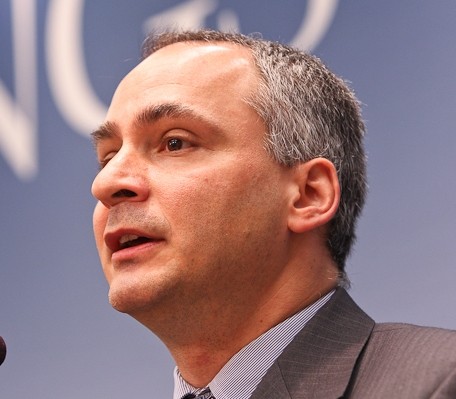
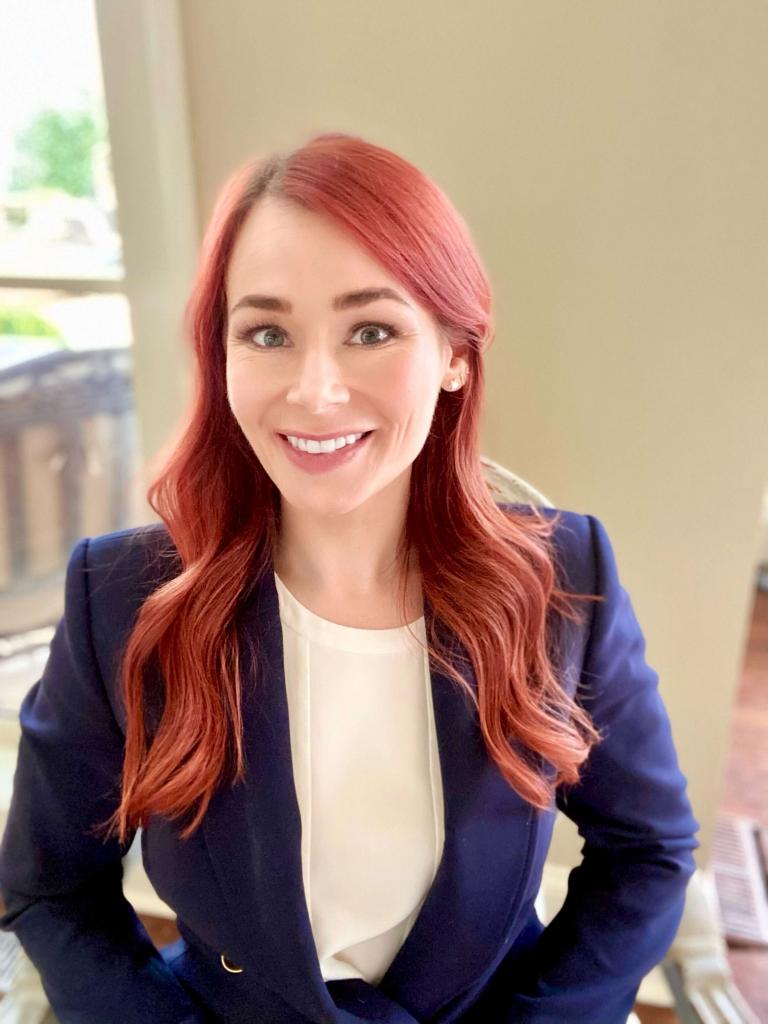
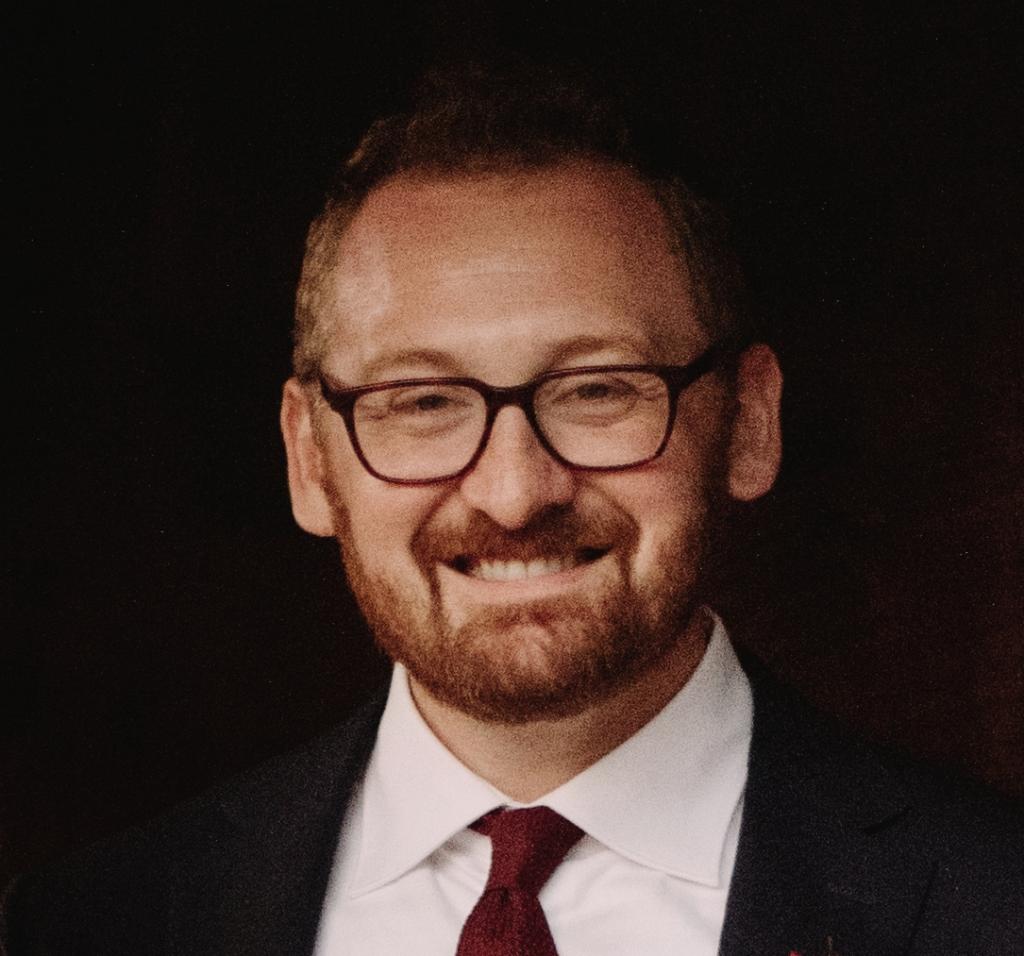


In a live conversation on YouTube, Lawfare Editor in Chief Benjamin Wittes sat down with Lawfare Senior Editors Anna Bower, Scott Anderson, Michael Feinberg and Eric Columbus and Lawfare Associate Editor Katherine Pompilio to discuss the Supreme Court’s decision on President Trump’s domestic deployment of the National Guard in many cities, Jack Smith’s testimony in front of the House, developments in Kilmar Abrego Garcia’s case, a hearing in the arrest of Venezuelan President Nicolás Maduro and his wife, and more.
You can find information on legal challenges to Trump administration actions here. And check out Lawfare’s new homepage on the litigation, new Bluesky account, and new WITOAD merch.
To receive ad-free podcasts, become a Lawfare Material Supporter at www.patreon.com/lawfare. You can also support Lawfare by making a one-time donation at https://givebutter.com/lawfare-institute.
Click the button below to view a transcript of this podcast. Please note that the transcript was auto-generated and may contain errors.
Transcript
[Intro]
Benjamin Wittes: It is the Lawfare Podcast. I'm Benjamin Wittes, editor-in-chief of Lawfare with Lawfare Senior Editors Scott R. Anderson, Eric Columbus, Mike Feinberg, Anna Bower, and Roger Parloff. This is a two week roundup special edition of the trials and tribulations of the Trump administration that covers the holidays, it covers all the things that you missed while lying on the beach with a Mai Tai and thinking that you were not thinking about the trials and tribulations of the Trump administration. They were still thinking about you, and they stored up in a big pile to be discussed now.
[Main episode]
So, Scott, the most important single development while we were all lying on the beach with our Mai Tais was that the Supreme Court who came off the beach for a moment to issue a major opinion on National Guard deployments that caused the President to kind of give up on National Guard deployment in American cities. It's kind of a big deal. What happened?
Scott R. Anderson: Yeah, so on December 23rd, we finally got the long-awaited decision in Trump v. Illinois. For those who may not recall, this was the case where after the attempted deployment of Illinois, federalization, I should say, of Illinois National Guard personnel and deployment of them to Chicago was enjoined by, first, a federal district court, and then the Seventh Circuit Court of Appeals on appeal. And I should note, they enjoined the deployment of the troops, actually, the federalization was allowed to proceed.
The administration quickly went to the Supreme Court. This was back in the fall, I think, actually, towards the end of October maybe the beginning of November, and said ‘Supreme Court, please intervene and clarify that the president has the authority to do this.’ And they actually requested an immediate administrative stay. That is something the Court has been willing to hand down in a number of other cases, but they did not do it here. Instead, we saw a months-long deliberation involving an additional round of briefing solicited by the Court on the issue that ended up deciding it for a majority of the justices.
And that was probably a sign, pretty early on, that the administration was not in a good place in terms of its legal arguments as to why the president could take this step of federalizing and then deploying these National Guard personnel to Chicago. And it's the same legal argument they also used in Los Angeles and attempted to use in Portland as well.
So, all three deployments, more or less, hang on this legal argument. The court determination that came down hinged on one specific question, and that is a provision of the statute 10 U.S.C. §12406 sub provision three. It's a provision that allows the president to federalize the National Guard of different states in a variety of circumstances.
One of which where is, I'm paraphrasing a bit here, is subsection three, where the president cannot execute the federal law with—the law with the regular forces. Through the briefing, the parties on both sides had more or less accepted that the regular forces meant conventional law enforcement. Although the district court in this case did nod towards the possibility that regular forces could just be regular military forces.
But, as we discussed previously on this podcast and on all these live streams, we had a very influential amicus brief filed by legal scholar Martin Lederman, who came and talked to us about it shortly after it was filed that led the Supreme Court to solicit an additional round of briefing from the parties on a specific question that is whether in fact, under the statute in which it was asserted in the U.S. Code back in 1908, this regular forces language actually means regular military forces, not regular law enforcement personnel. And that's ultimately where we saw the court issue this ruling that came out on December 23rd. It was an unsigned opinion, but we can tell from the distribution of dissents and concurrences that we essentially had five justices in the majority. That is the three Democratic appointees, as well as Chief Justice Roberts and Justice Amy Coney Barrett. What they said essentially is that, well, 124063 does really talk about the regular military for regular forces and from context of the statute, we believe this means regular military forces, at least at this preliminary stage of the proceedings.
And that poses a problem for President Trump 'cause he has not made any sort of determination that the regular military forces could not meet the needs of enforcing law in these cases. But then this five justice majority went one step further. They said also it's notable that the theory on which you are deploying these troops once you federalize them, as well as notably some standing military, regular military—in the context of California, there were some Marines deployed there early on in the deployment—there you're relying on something called the protective principle. This is a theory of inherent constitutional authority of the president able to use the military to defend federal personnel and property.
But a big part of the protective principle, a big part of the argument the executive branch has made and reiterated in briefing in this case, is that it does not run afoul of the Posse Comitatus Act limitations because the protective principles not actually enforcing federal law, it's just defending federal property.
And this led the five Justice majority to say, well, there's a tension here because you are saying that what you are doing is not enforcing federal law for purpose of the Posse Comitatus Act, but is for purposes of 124063 being able to mobilize these personnel. So they would double down and say, it seems like you haven't even articulated a legal basis under which you could actually—could invoke 124063 to do these sorts of deployments, 'cause these deployments aren't enforcing federal law, which is what, 124063 authorizes. On that ground, they basically said, we're gonna deny the motion for a stay that the government sought way back in the fall.
Justice Kavanaugh joined these five justices on the first part of this analysis. He said ‘I agree regular forces means regular military forces.’ But he said, basically, didn't go quite this far, but he strongly suggested that really just means the president needs to make a determination that's the case. And he even says pretty expressly, ‘Hey, that's pretty—gonna be on a pretty deferential standard.’
And he criticized the majority for taking that extra step further about drawing this inference from the Posse Comitatus Act and 124063 as it relates to the protected principle, he says ‘We should have done more. I wanted to see more briefing on that. I wouldn't have gone that far to make that assertion.’ And he cast some cold water on whether he would join that analysis if we're actually on the merits and essential to reading—reaching the disposition, which he didn't think it was here.
And then we had two dissents, one by Justice Alito, joined by Justice Thomas, one by Justice Gorsuch, which said similar things, essentially, somewhat more stridently in Justice Alito’s case, somewhat more Reservedly in Justice Gorsuch's case, where essentially they said in this preliminary matter, none of the parties actually raised this argument. So, it really should have been seen as waived, or at least we shouldn't have stretched ourselves to reach it as we did in this case, based off strictly an amicus brief. And that in these cases, the balance of equities, in this case, defending federal personnel average towards the fact that the executive branch should kind of presumptively get its way if there's a, any sort of gray area ambiguity.
And they all thought this issue wanted, had enough ambiguity that it needed further deliberation. And so, they would've granted the stay at this preliminary stage. Regardless, because the majority said ‘no stay’ at this point and threw out pretty cold water on the whole legal theory underlying what the Trump administration has done. The Trump administration did, as you noted, opt to end its military deployments to Chicago, Portland, neither of which actually happened. For the record, they were just federalized. But troops were never actually on the ground doing anything—in California, which had mostly wound up, still had some, a few personnel on the ground doing things.
But the president did say, we may come back when crime rates raise again in the future, perhaps in the stronger form. And that is, you know, I think a lot of people are taking that as suggestion that there are other legal authorities the president could invoke to do similar things, like the Insurrection Act.
That might lead us back to a very similar position with similar arguments.
Benjamin Wittes: Yeah. So, let's talk about that, because it seems to me that since the authority to invoke the Insurrection Act is a little bit clearer, I wonder if this is a kind of pyrrhic victory for those who don't, aren't excited about domestic deployments of federal troops or National Guards in that it just kind of encourages or incentivizes the use of more aggressive authorities.
Scott R. Anderson: Yeah, it's a real question, and it is the underlying question that the Court very expressly said, we don't reach 'em. Strongly implied, we don't wanna reach this question. And that's the question as to what degree of deference the president gets when he's invoking these emergency statutes and determines, well, I can't enforce federal law or, in other provisions of both 12406 and the Insurrection Act may be that there is an insurrection or domestic violence or an invasion allowing me to invoke these sorts of authorities. And mentally I’m a little bit torn on this personally about what exactly this means for invoking the Insurrection Act.
Would it be a stronger argument than 12406? On the one hand, 12406, we actually saw all the lower courts, more or less agree, the president gets substantial deference on invoking 12406 and the basis for which they did it was a bunch of cases about the Insurrection Act. So on the one hand, you read this and saying, well, you're saying you, the president gets a lot of deference in invoking the Insurrection Act under these precedents that most of which are a hundred years old or more. And you're extending that to 12406. So that kind of implies, well, actually 12406 might be getting the same level of deference. So at least according to the lower courts, the Insurrection Act wouldn't be any more invokable than 12406. Again, the Supreme Court may disagree they didn't reach that issue here, but at least the lower courts, the outcome might be the same.
But it is a little tricky because the provision of the Insurrection Act that talks about invoking or using the military to enforce federal law actually has language that, unlike other provisions of the Insurrection Act, is more expressly deferential to the president, basically saying if the President determines that this is necessary to take this step.
So you could read that as saying, even within the Insurrection Act, maybe that provision is entitled to even more heightened deference. And notably that those provisions, I believe, if I recall correctly, although I would wanna double check this, I think those provisions were actually at issue with some of those 19th century precedents that are cited as a basis for deference.
But the language has shifted a little bit over the years, and I believe in the interim, at least from the earliest, those opinions. So the long and short of it is, it's a little bit of a variable here. There's gonna be arguments Executive Branch is gonna make as to why the Insurrection Act should receive, at least under this provision, even more deference than 12406. And those may be persuasive 'cause of the way Congress has worded this particular provision, but I don't think it's open and shut. I mean, the core conclusion here reached by the lower courts is even under really substantial deference of the sort the Supreme Court has given to the president on the Insurrection Act in the past, the president lost in these cases.
And I sus—I kind of suspect the lower courts are gonna feel the same way, even under the Insurrection Act invocation of similar circumstances. But again, the Supreme Court may not agree.
Benjamin Wittes: And so do you take this to mean that the Trump administration's flirtations with and experiments with deploying the National Guard in American cities is over?
Or do you take it to mean you know, he's gotten bored of it and in the face of a judicial setback and an exciting military opportunity in Venezuela, he's focused elsewhere now.
Scott R. Anderson: I lean towards the latter, but tend to think that there is an acknowledgement in the administration that this has proven to be a much more uphill legal fight than they anticipated.
Now, notably, there are other legal authorities the administration is relying on to deploy National Guard in the military domestically in other contexts. In Washington, D.C. they rely upon 32 U.S.C. 502F to deploy volunteer National Guard units volunteered by state governors, red states primarily to Washington D.C. that is still in play and still being pursued there.
Similar authorities are being used in Tennessee. Discussed being used in other places where Red State Governors want and are inviting National Guard units to come. That's a different sort of authority. It's being done with the consent of the governors involved which makes it somewhat less legally problematic, although notably legal challenges are pursuing against both those, all those actions on other grounds, D.C. law grounds in D.C., state law grounds in Tennessee.
The D.C. case has not, the plaintiffs have not succeeded as of yet. I believe in Tennessee. They're still debating whether the state constitution actually raises some issues about how the National Guard units are being deployed there. Regardless, there's still legal fights happening under these other deployments, and these authorities are still being used and are likely going to still be being used.
And that's before we even get to the fact that there are expressed statutory authorities for things like using the military on the border and for various types of law enforcement support around that don't rise to the level of, you know, deploying them to the streets alongside law enforcement personnel.
So a lot of this is still gonna be happening, but the exact model of deployments that this administration innovated, were the first to use in Los Angeles, then in Portland and Chicago. I think that's DOA at this point, unless they decide to come back and invoke the Insurrection Act and for whatever reason, that's just a step they've been really reticent to take so far, for reasons that I guess are, I'm guessing are predominantly political.
But now maybe double down by the fact that the courts have proven much more willing to scrutinize those determinations probably than a lot of people thought, including in the administration. They would be going into the, going into these debates.
Benjamin Wittes: And what about D.C. I assume this all has no bearing on D.C. 'cause it's pursuant to a different set of authorities.
Scott R. Anderson: Yeah, exactly. In Washington, D.C. again, you have 32 USC 502F that is being relied upon to deploy, volunteer outside state, red State National Guard forces. So when we see, you know, Ohio, Florida—I can't remember if Florida's actually deployed to this here or not—I know Ohio has West Virginia, they are being deployed under this 502F authority technically under the command of their state governors.
Technically they're on state National Guard duty, but they're being funded and directed under by the federal government under what's called a kind of hybrid status Title 32 status. Then you have the D.C. National Guard units, which are being called up specifically by the president under his own authority because D.C. being an odd duck basically says the Commander in Chief is the head of our D.C. city National Guard, and that there are limits to that legal authority, some which are being litigated.
But there's a decision on that, I think we've talked about on this livestream series before, that came out before the holidays where district court basically did not buy into legal challenge before by the city as a plaintiff to a couple, a bunch of those different actions. And I, we have to check and see exactly where that is in the appellate process.
I'm not sure off the top of my head.
Benjamin Wittes: Alright. So, what is the next state, the next stage of this battle is that there is no next stage except in D.C. right?
Scott R. Anderson: I think that's right. And some of the states again, Tennessee state court they are having a debate over state authorities. And look, I mean, particularly when you talk about 502F deployments, those state law questions are really integral because again, they're contingent upon the governor's ability to volunteer troops for these purposes.
So I think you're very well might see more litigation in state courts over state constitutional law provisions. But those are the two real fronts where we're gonna see this fought out in the future unless the administration decides to find another way to use troops on the ground. And that is likely to be the Insurrection Act if they wanna have National Guard troops.
Or they can use the regular military. That is a door that's opened up and that's something Justice Kavanaugh kind of flags in his opinion. He says, an outcome of this intended or not, might be that the executive branch uses the regular military more for these sorts of things, as opposed to National Guard units.
And frankly, if you read the Dick Act and the early 20th century legislation that installed 124063, that actually does seem to be what they were intending, because they wanted to make it harder for the federal government to put the burden on the states for those sorts of deployments. They only wanted make that necessary if they didn't have the regular military forces to do it.
But over the last century, there's been a much stronger tendency to actually lean more on National Guard forces because they're seen as more local, they're seen as less intrusive. That practice may now kind of ground to a halt a little bit in these sorts of contexts because at least this one statute, although there are other statutes that can be used for it, does suggest, well, you, maybe you should be using the regular military first.
And that is something the president can do under the protective principle. It raises other legal issues that may be challenged, but you would get around the need to rely on this 124063 authority.
Benjamin Wittes: Alright. Well, it is time folks. We're doing things a little bit out of order today because we want to let people dismiss themselves as they finish their parts.
And so, we are frontloading today everybody's favorite game show and the only game show we play on Lawfare. Who wants to dismantle a federal agency? And this time Scott has rolled the bad dice and will be dismantling the CFPB. Scott, what happened with the CFPB while you were lying on the beach with a Mai Tai?
Scott R. Anderson: Yeah, so we had a pretty substantial development in NTEUV vote. That is the litigation around the efforts to dismantle the Consumer Financial Protection Bureau. Folks who keep on top of this case may have recall seeing in the news that in November, the Office of Management and Budget Director Russ Vought, who's the named defendant in that case and is also the de jure head of the CFPB had requested an opinion from the Office of Legal Counsel, which then issued, essentially saying that the funding mechanism for the CFPB works differently than the way it's been applied, more or less throughout its history.
And that funding wasn't actually available for it. The exact mechanism, essentially that CFPB as I understand it, draws money down from the Federal Reserve. And that this new argument advanced by the Office of Legal Counsel, at the request of CFPB, was that, the statute only allows CFPB to draw down that money where the Federal Reserve is not operating at a loss because the Federal Reserve has been increasing interest rates and paying out more money and interest.
It actually has been arguably by some means of calculation operating at a loss substantially since 2022. Although there's some amicus briefs that were inserted into the brief, into the filing, saying that's actually not true anymore and hasn't been true. And again, there's a lot of different ways to, to count what that means.
Regardless, it's a pretty bold move, 'cause essentially they're saying no, CFPBA can only pay for itself when the Federal Reserve is not actually—is taking in more money than it's letting out, which would mean that you either would be severely constraining monetary policy or only allowing CFPB to operate when U.S. monetary policy is operating in a direction where a lowering interest rates essentially.
That's not really what the, it's not very hard to reconcile that with the statutory intent of the CFPB statutory system, which was to maintain a body and insulate it from a lot of political influence and for a lot of flows and changes, basically to make it more secure. In finally what we saw happen is that the plaintiffs in this litigation, which we should note, the overall challenge to the CFPB’s actions, particularly its personnel actions, is before the D.C. circuits actually pending reconsideration or rehearing on before the entire D.C. circuit.
A prior panel opinion hostile to the plaintiffs in this case was vacated and they're gonna hear, have hearings on, starting in February, if I believe. While that's been going on, the district court is still managing the preliminary injunctions, which are still substantially in place, basically saying you have to keep paying CFPB personnel and maintaining basics, minimal statutory duties. And Judge Amy Berman Jackson there issued a, at the request of the plaintiffs, a clarification of its of her preliminary injunction, basically saying ‘Hey, look, the statute says you have to try and do these functions.’
You have a duty to employ these functions. And you are now advancing an argument as to why the Federal Reserve might be able to say, we can't pay you the money you requested, but it's not a legal basis for you not to request that money. And notably the Office of Legal Counsel's opinions, a little unclear whether Federal Reserve will agree with them or have to rely on them.
Which is actually kind of an interesting note.
Benjamin Wittes: Just to be clear: have to rely on them because the Federal Reserve is in some sense, part of the executive branch and OLC is binding law for the executive branch.
Scott R. Anderson: Yeah, exactly.
Benjamin Wittes: And so in fact, that of course the Federal Reserve is uniquely not part of the executive branch 'cause it's a descendant of the first and second banks of the United States, and therefore maybe not subject to the appointments clause.
Scott R. Anderson: Presumably. Yes, exactly. I think that's all the direction we assume this is headed and although we're waiting to on that one.
Benjamin Wittes: I see. Okay. Just checking. Yeah.
Scott R. Anderson: And so, you know, essentially there's this argument that she essentially rules, look, you can't get out of your statutory obligation for doing this.
And she really drags the point that Russ Vought has continued to say expressly: ‘Our whole goal in this is to dismantle the CFPB. We expect it to be gone in two or three months.’ He said this in an interview on the Charlie Kirk Show or a segment on the Charlie Kirk radio show in November or December that she quotes at length from, and numerous times in the brief, really underscoring it's clear that there is, this is all really just pretext for what they're trying to do, which is shut this down, which is something she's concluded time and time and time again in district court proceedings. And part of the reason why she has kept ruling against the government on this.
And frankly, it doesn't seem like the government's able to stop shooting itself in this foot with these very public statements about what they're intending or trying to do for whatever reason. That combination of factors essentially led her to say, ‘I'm issue this clarification. The prior injunction still stands. You have to request this money and you still have to pursue these duties and pay these people and that you can't get out of this because the OLC has issued this opinion at your request. That frankly doesn't relate to your duties as an agency.’
I haven't seen signs of an appeal in the docket. It was updated. I checked as of this morning and it looked like the docket was looking, had been updated just a few hours prior. So we'll have to wait and see exactly how the government responds to this. My guess is maybe they're waiting to see how the D.C. Circuit handles other issues related to CFPB before taking action if they can wait that long.
But regardless, that's the way place the order stands and it does seem to mean that the CFPB and people who work there are still gonna be in place and getting paid if not doing their jobs for a few more months.
Benjamin Wittes: And we are gonna turn to the estimable Mike Feinberg who, Mike one thing that we all missed while lying on the beach the last couple weeks was Jack Smith's testimony. Eight hours of testimony before a deposition, a Capitol Hill deposition that was done in secret, but then released mysteriously on December 31st, by the same people who insisted on doing the deposition secretly. What did you make of his testimony?
Michael Feinberg: Quite a bit. So you're right to point out sort of that this happened in a rather odd fashion.
Most special counsel testimonies to the relevant oversight committees, the judiciary committees, have been done in open session. Jack Smith very much wanted to do this one in open session. He has made a number of public statements through his attorneys at Covington and Burling that they would like to do that, but the Chairman of the House Judiciary Committee, Jim Jordan, insisted that it be done closed session.
Now, in spite of that, the full transcript as well as video recordings of the testimony was released at the less than opportune hour of the final hours of 2025 on New Year's Eve. And I'm gonna presume that it was done in this fashion because the majority on the House Judiciary Committee very much did not get anything they were seeking out of Jack Smith.
The mode of interrogation shifted almost immediately from one where the staff members for Jordan and his party were really trying to put Jack Smith on his back feet. And at no point do they. If this were a boxing match, they would've never landed a punch. Smith was much better prepared for this, and at no point got tripped up whatsoever.
Which sort of begs the question, why they released the transcript in the video testimony at all. And I know well, what they—
Benjamin Wittes: Also, what they thought was gonna happen, right? Because they weren't asking him profoundly difficult questions that a reasonable person would suspect would trip him up. They were asking him, you know, basically, did you engage in a political witch hunt to, you know, interfere in an election?
And, you know, you say no over and over again for eight hours. It's not the—it's actually not the hardest testimony in the world to give. I agree with you. He was extremely well prepared. But I'm not sure why they thought he would've been otherwise.
Michael Feinberg: Well, there were a number of political rose bushes in which they wanted him to get trapped up in the thorns. They tried to do this with the obtaining of the toll records from various senators and one House member, but all he had to fall back on, which he did, is that he was entirely within Justice Department policy and got all the necessary approvals that are normally required for those sort of sensitive records requests.
You know, the fact that he himself was the Chief of the Public Integrity Network just means that he's going to know what these requirements are inside and out in a way that the Judiciary Committee is not.
And so they tried to get him there. They tried to get him somewhat with the original predication. They tried to a little bit impugn the integrity of the people with whom he was working, whether prosecutors or investigators, or even at one point, the people who did the analysis of the toll records, but it was all innuendo. They had no hard facts to really point to, to push forward these sort of conspiratorial musings that the investigation was politicized and it's actually worth knowing—noting that the final report Jack Smith released, which we've been able to see, we've been able to see volume one of the special counsel’s report, which pertains to the attempts to overturn the 2020 election.
We have not been able to see the portion of the special counsel's report, which deals with the mishandling of classified information. But if you look at the volume we've seen and you compare it to the original file openings of the investigations, which he eventually took over, he actually narrowed the scope considerably in a way that a lot of special counsels throughout recent history have not.
This is probably, if you look at his report and you look at his testimony, the most focused and the most damning special counsel's report that I'm aware of ever having been written.
Benjamin Wittes: How do you mean?
Michael Feinberg: Well, special councils have sort of always fallen prey to two pitfalls. The first is in expanding scope without guardrails, and as you know better than most of us, this is most visible in Ken Starr’s inquiries. It starts with a very simple question and then goes on to look at other questions in other parties than those originally intended. And it sort of just runs off the rails. And we saw this to a certain extent with the Durham Special Counsel as well, where the question that he's supposed to be answering is rather vague.
And so he goes off in a whole bunch of different directions, against a bunch of different subjects resulting in almost no convictions. He gets one plea bargain from an FBI employee for changing a line in an email. But that plea doesn't even really speak to the underlying charges Durham is trying to prove writ large.
Conversely, you have special counsels like Robert Mueller, who keep their investigation pretty narrowly focused, but don't really come to a lot of legal conclusions with respect to the primary subject. Mueller famously said that he declined to say whether President Trump had committed obstruction to justice. Smith, in comparison to these sort of two models, keeps his investigation narrowly focused on very discrete events, but also does not waffle one bit whatsoever with his conclusions. He states that President Trump attempted to overthrow the results of the 2020 election and that he would've been able to conclusively prove this beyond a reasonable doubt had he gone to trial.
That sort of certitude is very rare in this type of arena.
Benjamin Wittes: Yeah. I agree with that. Anna, you also watched the deposition. Do you have additional thoughts on Smith's testimony?
Anna Bower: Not really. I mean, I will say that I agree with Mike's analysis that they didn't really land a punch at all on Jack Smith, though.
You know, one of the things that I've noticed in watching the reaction from people on the right to the testimony is that the content of it all kind of didn't seem to matter because it, regardless of Jack Smith's performance, his words and representations are still being spun and twisted. And so, to kind of fit this narrative of weaponization.
I will also add as well, which I believe that Mike mentioned briefly, that there was a lot that he could not say about the second volume of the final report, which dealt with the classified documents case, because there is still an injunction imposed by Judge Cannon down in Florida that restricts his ability to speak freely about that case.
Obviously, there's other reasons why he would not be able to go into certain things about that case, things like grand jury testimony, that kind of thing, rule 6E. But the injunction by Judge Cannon really seemed to restrict his ability to give responses to questions based on the classified documents case.
And so, to be determined whether that final report will ever become public at any time soon. And whether Jack Smith can, you know, speak more freely about that issue.
Benjamin Wittes: Alright. Speaking of people turning into pumpkins, Mike is going to turn into one now. Keep your eye on his screen for pumpkin evolution.
And Anna let's talk about the estimable Daniel Richman who's gonna have enough good questions for like a hundred criminal law exams at Columbia University while you were on the beach with your Mai Tai what happened in the Dan Richman fallout to the Jim Comey case?
Anna Bower: Well, the government, some government attorneys, maybe they were on the beach with Mai Tais because they were seeking extensions of time to comply with Judge Kollar-Kotelly’s order that the government must return Dan Richman’s materials and then place a copy with the district court for the Eastern District of Virginia.
There were several motions over the holidays, Ben, in which the government said, we need more time, one reason being the holidays. But then most recently, over the past several days, the government—after Judge Kollar-Kotelly said, okay, I'll give you some more time to comply with this order—the, we had an appearance from Stanley Woodward in the case.
People might remember Stanley Woodward former criminal defense attorney.
Benjamin Wittes: Was anyone threatening him?
Anna Bower: No one was threatening him, as far as I'm aware. Okay. It's tracking. But Ben is making a reference, I believe, to an episode during the classified documents case when Stanley Woodward claimed that Jay Bratt, one of the prosecutors, had implicitly threatened him.
Benjamin Wittes: And this matter shows up at some length in Jack Smith's testimony who gave a quite extensive explanation for why he did not believe that Stanley Woodward had in fact been threatened by Jay Brat.
Anna Bower: Yeah. And Roger has written extensively about this issue for Lawfare, so I suggest people who wanna remind themselves of what happened to go and check out Roger's piece.
Benjamin Wittes: Anyway, Stanley Woodward shows up here, does not get threatened. What does Stanley, what—
Anna Bower: Right, and Stanley Woodward, I should say, is now the associate attorney general, who was recently confirmed to that position. Previously was, I believe it was White House Counsel, and now shows up in this matter and says Judge Kollar-Kotelly, your order said to return these materials, the forensic copy of these materials to Dan Richman. We've gone ahead and placed a copy of them with the district court as you've ordered.
However, we have this issue because Judge Kollar-Kotelly said there's a single classified document on there. That classified document is the one that was one of the memoranda written by Comey back in 2017 that he then sent to Richmond, who was his attorney at the time.
It was not at the time classified, but then was, you know, after the fact classified.
Benjamin Wittes: There was one word in it that was classified, right?
Anna Bower: Oh I did not remember that part, but I wasn't—
Benjamin Wittes: I believe, I believe there is, that the classified nature of this document is that one word. Which is the name of a country, which if memory serves is Egypt. Is classified.
Anna Bower: Well, because of this document and apparently the one word in that document, the government has been saying, there's classified information in this. We can't just give this guy classified information back.
And so Judge Kollar-Kotelly said, oh, well, I've told you that you can delete the classified information that apparently is just this one memorandum off of the copy before you return the materials to him.
Well, Stanley Woodward comes in and says, within the past several days, we need more time to comply with your order because we can't delete the one memorandum off of the forensic copy without, you know, deleting the entire thing or something to that effect. He says it's not technologically possible to just delete this one thing off of the copy.
I don't really understand that. I'm not a technol—like, I barely know how to work my iPhone, so, I do not quite understand that explanation. But maybe there is something to it, maybe there's not. Regardless,
Benjamin Wittes: Maybe it may be in the nature of a copy that, you know, a a forensic copy that it—
Anna Bower: Right, it’s a forensic image—
Benjamin Wittes: Right. So that it's not, these are not discrete files on it. Right, it's all one, one image of what was on the original iPhone. And so you can't—it's, and it's designed to be tamper proof, right?
Anna Bower: And so as a result Judge Kollar-Kotelly said today, fine, you can have until January 12th, which is when the government requested.
The government has in the meantime said that it will continue discussions with Richman's counsel about this issue and how to comply with the order. So I assume we might see some forthcoming additional motions about how they, the parties want to handle this before January 12th, unless the government figures out how to delete that one classified document off of the image.
Additionally, the government has agreed not to access or use the materials in question. So, that leads me to believe that, over the next several days or weeks, we are, should not expect a new Comey indictment, because these materials are very key to the government's case in the Comey case.
So, that's what's going on in the Richman case, Ben.
Benjamin Wittes: So, let's talk about it with reference to the Comey case. The government still has not noticed an appeal in Comey, nor have they moved to re indict him. I assume they could notice an appeal without reference to any of this material, but it's hard to see how they could re-indict it.
Anna Bower: No, there was a notice of appeal. Am I wrong?
Benjamin Wittes: Oh, yes. When—sorry, I was lying on the beach with a Mai Tai. When was the notice of appeal?
Anna Bower: Yeah, so it was over the holidays. It was like right in the thick of the holidays. I can't recall the date, but there was, at least in the James case, let me check on the Comey case, but I would presume that if they are appealing the Letitia James case—oh yes, it was Comey. Thank you, John.
Okay. Both. So yes, we do have a notice of appeal. I don't think that would prohibit, though, the government from, if they wanted to, still trying to seek a new indictment while that appeal is ongoing.
Benjamin Wittes: No, I think that's exactly right. But the point is that they don't have a, they don't have—the unavailability of the Richman material does not affect their ability to appeal the underlying decision, but it very much affects their ability to—
Anna Bower: bringing the case to trial.
Benjamin Wittes: Bring the case. Right.
Anna Bower: Well, and also to bring the—so let's say that their appeal is successful in the Comey case. I would think that the current, at least obviously, I would assume that. By the time we get out to beyond an appeal, everything's resolved, they're preparing to go to trial, if they're, if they succeed on appeal in the Comey case, you know, you would think that by then they would've sought a warrant for these materials, which is now what they would have to do to get the Richman materials again.
But if they don't do that, then they will have issues because they no longer have evidence that can be authenticated and introduced at trial. Right.
Benjamin Wittes: Gotcha. Yes. Yeah, I think that's exactly right. Alright. So, we are going to assume that Roger is not going to be available. So, Eric.
Anna Bower: Wait—we do have, though, I do—oh, maybe you're mo—Okay. No, you're moving on to something else. That, and we'll come back to me. Sorry.
Benjamin Wittes: Yes, I will come back to you.
Eric, talk to us about Judge Beryl Howell's ruling on Trump's $100,000 fee for H-1B visas.
Eric Columbus: So, in September Trump issued a proclamation requiring employers to fork over $100,000 if they want DHS to process an employer's petition for an H-1B visa for an employee.
Now, the H-1B program, visa program was created in 1990 to allow employers to bring in foreign workers for, on a temporary basis to work in specialty occupations requiring highly specialized knowledge including education in the this specific area. And Trump in this proclamation said that the H-1B program has been, is being abused to replace American workers and to lower prevailing wages.
And this is echoing a lot of the rhetoric that's been heard on the right. Though it's a place where the Trumpist coalition kind of has some friction, because the H-1B program is beloved by a lot of big tech companies that have whose leaders have been very supportive of Trump.
So then the Chamber of Congress—sorry, Chamber of Commerce and the Association of American Universities sued, claiming that it exceeds the president's legal authority.
Judge Howell ruled in favor of the Trump administration. Which I think came as a surprise to some people, but I think her opinion actually is fairly strong. Now it, she relies on Section 212(f) of the Immigration and Naturalization Act, which is the same statute that Trump relied on for the Muslim ban at the beginning of his first term.
And that is an incredibly broad statute. And I'll just read it out to you.
Whenever the president finds that the entry of any aliens or of any class of aliens into the U.S. would be detrimental to the interest of the U.S., he may by proclamation, and for such period as he may deem necessary, suspend the entry of all aliens or any class of aliens as immigrants or non-immigrants, or impose on the entry of aliens any restrictions he may deem to be appropriate.
It's very broad statute as, and Judge Howell notes that the Supreme Court said in the Muslim ban case that it quote exudes deference to the president in every clause. So the the plaintiffs made a bunch of different arguments. I'll just discuss a few of their relatively stronger ones and Judge Howell's response.
The plaintiffs argued that the detriment to the United States that the statute contemplates has to come in the entry of these people to the United States. But the president's proclamation is about domestic hiring decisions. And these people can still come into the United States by other means on other types of visas, like a tourist visa or a, you know, a student visa perhaps.
And but Judge Howell says no, and she says, again, look at the statute. The statute says the president may impose on the entry of aliens any restrictions he may deem to be appropriate. It doesn't require the detriment to come in the entry itself. The plaintiffs also argued that this is a payment requirement, which is a power reserve to Congress, which has not authorized it here.
And then again, Howell again says, you know, look at the statute and the statute says any restriction that he may deem to be appropriate. And any restriction means any restriction. And it could be monetary restriction. There's no nothing saying that the president can't do that. And when you're imposing a monetary restriction, what you're doing is reducing the incentive for employers to use H-1B visas, and by comparison, increasing their incentive to hire Americans.
And plaintiffs also suggested this conflicts with the scheme of the Immigration and Naturalization Act, which specifies specific fees for H-1B visas. And Howell says, again, no, this is not a fee. And it's for a very different purpose. It's to, as I just stated, to kind of equalize or more equalize the cost-benefit analysis between hiring a foreigner and hiring an American. And the nothing in the H-1B fee statute says that no additional payments may be required.
Finally, the plaintiffs argue that this will cause H one B petitions to plummet below this statutory cap set by Congress. And Judge Howell says, well, look, that's a cap. There's no—Congress set no requirement that, or even a goal for a minimum number of such visas to issue.
And so this in no way contravenes the statutory scheme.
Benjamin Wittes: So, liberal activist Judge Beryl Howell, giving the Trump administration everything at wants, so that basically tells you how it's likely to go on appeal, right?
We are joined at this moment by the estimable, Katherine Pompilio, who just walked out of court where President Maduro was being arraigned.
I know nothing about what happened in that courtroom. Save that. Katherine texted me. Crazy stuff.’
Katherine, what is the crazy stuff that happened at the Maduro arraignment?
Katherine Pompilio: First of all, his orange shoes were awesome, but that is not any part of what I'm about to say. They both—so Maduro and his wife Celia Flores, both pleaded not guilty to all of the charges against them.
Maduro was asked by Hellerstein, Judge Alvin Hellerstein, to just state his name and make sure—
Benjamin Wittes: Who is 92, right?
Katherine Pompilio: 92 and does all of his hearings with AirPods in, which is my favorite thing ever.
But that he was asked to just state his name and confirm that he was who he said he was. And he went on Maduro, went on a bit of a soliloquy talking about how he was a prisoner of war and he was kidnapped and that he is still the president of his country.
And Cilia Flores—
Benjamin Wittes: And what language did he do that in?
Katherine Pompilio: Spanish. They had interpreters with both of them. Okay. I shout out to the Spanish speaking journalist next to me in the overflow room who helped me understand the stuff that he was saying. Yeah, she, they—we landed on, they waived a right, both of their rights to a speedy trial.
The next hearing is a Rule 16 conference on March 17th, St. Patrick's Day. And they also both requested that they have medical assistance because they both claim they've sustained injuries during their, quote, abductions from Venezuela. So yeah.
Benjamin Wittes: And who is representing them? Do they have retained counsel or court-appointed counsel?
Katherine Pompilio: So they've retained—Maduro—they have separate counsel. Maduro has Barry Pollack, who was the lawyer I think for Julian Assange. So he was there for him. And then Andrew Sanchez and one more person, whose name I will get—Something Donnelly—was representing Flores. But they both were in consultation with one another and seemed to be filing jointly. Yeah. Crazy day.
Benjamin Wittes: Interesting. And so, Anna, you looked like you had a question.
Anna Bower: Yeah. I was just wondering if we got any information about the other deadlines or expected motions that might be filed?
Katherine Pompilio: Kind of. Not really. No more, no specific deadlines. Pollack raised the points that there are significant legal questions that need to be addressed.
They, he said that Maduro is still the head of a sovereign state, and so there he's entitled to the immunity that comes with that. So there are legal questions around that, as well as—
Benjamin Wittes: That is a reference, for those who don't know the law of this area, that's a reference to what is called head of state immunity.
And that is going to be a major issue in this case. Although, for reasons partly addressed in the Noriega case and partly a function of the fact that the United States has not recognized Maduro as head of state for a number of years ever since he stole the last election, and we transferred recognition to Juan Guaidó, it is not a slam dunk matter on his side either.
And it's, I think it's very plausible that you could have a court reject the head of state immunity motions that he's certain to file.
Katherine Pompilio: Pollack also made reference to legal issues surrounding his military abduction. So it's—and they both, they, the lawyers for both of them made clear that this was going to take a lot of time.
So that was kind of the only hint we got towards future motions.
Benjamin Wittes: Interesting. And was there any discussion of CIPA matters? Classified Information Procedures Act issues, nothing about CIPA?
Anna Bower: Who is, who was there for DOJ?
Katherine Pompilio: Great question. I have their names. Kyle Wirshba. Kaitlyn Nicholas Blare, Henry Ross, Kaylan Lasky. I have to double check that 'cause I can't read my own handwriting. But yeah.
Benjamin Wittes: Excellent. Well, any other theater you want to give us a sense of from the scene, or is that—I mean, it was not a long hearing.
Katherine Pompilio: No. I spent most of my time in the lobby at SDNY, but I did count, there's a massive law enforcement presence everywhere. You can hear the sirens behind me.
I counted, I tallied all of the DEA agents that passed me while I was waiting, and the number was like 85, in addition to U.S. Marshal service and New York City, NYPD bomb squads.
And the journalist to the left of me was, before the hearing started, was talking about how her family came from Venezuela in 1993, and that she said today was a good day, but she is hesitant about the future because there's no stable leadership now.
So I, there's also in front of me a massive rally about no war with Venezuela, oust Trump. But then also outside the courthouse people are handing out Venezuelan flags. And a lot of the members of the public waiting to get into the trial were telling me and other reporters that they were there because this was an injustice. And they are big Maduro fans.
Benjamin Wittes: Interesting.
Anna Bower: What was the line situation like? 'Cause I heard on the grapevine last night that there was already a line out there starting in the early evening.
Benjamin Wittes: Anna Bower going right for the jugular of the important question: How was the line?
Katherine Pompilio: The line was great. I made friends, we did crosswords.
They, people lined up there started lining up, or the line dude started lining up at 7:00 PM the night before. I got there around 8:15 this morning and the girl directly in, in front of me got there at 7:00 AM. And we made it into overflow with no problem. There were many more people behind me.
So—and the line was inside for most of the day, which was
Benjamin Wittes: Oh, that's amazing.
Katherine Pompilio: Absolutely lovely. Yeah. Great. Yeah, it was people, other journalists were wearing like snow pants and long underwear and were shocked that we that we were let inside so early. I waited outside for maybe 10 minutes.
So it's luxury at SDNY.
Benjamin Wittes: Alright, we are going to leave it there. Katherine, thank you for joining us and let's get back to our roundup.
Eric, we have a TRO in the CCDH removal case. And I confess I do not even know what the CCDH removal case is. So bring me up to speed.
Eric Columbus: Sure. So, CCDH stands for Center for Countering Digital Hate.
And it is a London-based organization founded by a man named Imran Ahmed, which combats online disinformation and other harmful online conduct largely on social media.
It has gone after a lot of the usual suspects, such as anti-vax conspiracists, people on—hateful conduct on Twitter and X, stuff on TikTok and ChatGPT, but also looking at how Iranian state, the Iranian government has used social media to spread antisemitic conspiracies.
And they—the reason why this case is very late-breaking, in December, the European Commission issued 120 million-dollar Euro—sorry, 120 million Euro fine against X for violating certain provisions of their digital services, the European Digital Services Act.
Trump got furious about this and made noise, as did Marco Rubio. On December 23rd, Rubio put out a statement saying that they're acting against five individuals whom he did not name, whose entry presence or activities in the US have potentially serious adverse foreign policy consequences. And this is a somewhat odd statute that gives him very broad authority and that he has used or attempted to use earlier in the term last year against pro-Palestinian activists.
And then the next day, or maybe later that day, the undersecretary of state for public diplomacy, named Sarah Rogers, tweeted out the names of the five individuals who were involved, all of whom were European citizens of European countries including Imran Ahmed. Ahmed, I believe, I believe two of the five were actually located in the United States at the time.
Ahmed, one of the two, happens to be a legal permanent resident with U.S. citizen wife and child. And he sued, claiming that this is retaliation against his activities, largely against X, nd that also constitutes viewpoint discrimination and abridgement of his violation of due process rights. And also arbitrary and capricious agency action in violation of the Administrative Procedure Act.
Now, nothing has been done to him yet, in that he has not received a notice to appear. He has not been, obviously—not obviously, but he has not been arrested. But even so—
Benjamin Wittes: I would think being identified as basically a target is sufficient to convey standing, no?
Eric Columbus: Yes. And the judge did not even wait for the administration to respond but rather granted the TRO that Ahmed requested. This is Judge Vernon Broderick, an SDNY and Obama appointee.
So, he granted the TRO and further proceedings will follow. This may be another instance where even if Ahmed wins, the process is the punishment, right? And it is designed to, you know, one, discourage future dissent, and two, to make people like Elon Musk happy.
Benjamin Wittes: Speaking of further proceedings in which the process is the punishment, Anna Bower, we have developments in the Kilmar Abrego Garcia, AKA, Job case.
What do we know?
Anna Bower: Yeah. So in the criminal case against Kilmar Abrego Garcia in Tennessee there were some interesting developments over the holidays.
So there was this—just keep people, catch people up to speed again on what's been going on, Judge Crenshaw previously found that Abrego Garcia had raised a presumption of vindictiveness.
That's kind of the first step in this process, in considering whether to dismiss his prosecution for selective or vindictive prosecution. And there was a hearing that was supposed to happen in evidentiary hearing on this question of whether the prosecution was vindictive. The government was supposed to attempt to rebut the presumption of vindictiveness that Abrego, according to Judge Crenshaw, had successfully raised.
But in the interim period, there was a number of intervening issues. There are like 3000 documents that Judge Crenshaw needed to go through to decide whether or not the government should turn those materials over to the defense.
There was also this question of whether Todd Blanche and Patrick McHenry and Aakash Singh, people who are high-level officials within DOJ, should have to testify at that hearing.
Bcause the defense wanted them to testify, but the government was seeking to quash that, those subpoenas. And over the holidays, we got a number of answers on all of this.
So the first thing that happened is that Judge Crenshaw ruled on the motion to quash subpoenas for Blanche, McHenry, and Singh.
But he kind of didn't rule, because he basically just said, I'm going to put this off until we have this evidentiary hearing in which the government will have an opportunity to rebut the presumption of vindictiveness. And if it does rebut that presumption and the burden then shifts back to Abrego, then I'll revisit this question of whether Blanche and McHenry and Singh should have to testify.
And so he canceled the trial that was previously set for January 27th, and he instead scheduled that evidentiary hearing for January 28th. So later this month that hearing I think should finally go forward. It's been, you know, canceled and then rescheduled and had a number of issues getting to that point, but I think that it likely will finally go forward.
However, there was this other issue related to all of this, which was this order that was under seal related to the documents that Judge Crenshaw had been going through in chambers that the government handed over.
And in this order that was unsealed on December 30th, Judge Crenshaw reveals that though the government had previously said that, you know, people like the Office of Attorney General and Todd Blanche didn't have a role in deciding whether to prosecute Abrego. It turns out that in fact, there's a number of documents in these materials that Crenshaw went through in which Aakash Singh, who is Blanche's deputy, seems to be pretty involved in the prosecution and is communicating with McGuire. Is saying things like ‘this is a top priority, this prosecution.’
And that is significant not only for the defense's, you know, the merits of the defense's claim, because previously the government made the argument that Robert McGuire, the U.S. attorney, was the only guy who made the decision.
He was the ultimate decider. He filed affidavits as well. That said that he did not have correspondence including email, text calls, with quote, any personnel at the White House, the Secretary of Homeland Security, the office of the Secretary of Homeland Security, the Attorney General, the office of the Attorney General, the Deputy Attorney General, or the then-principal Associate Deputy Attorney General.
You know, it turns out that he actually was speaking, even if not with Todd Blanche himself, but was talking to Aakash Singh, who is Blanche's deputy. So there's a number of things that raise questions not only about the candidness of McGuire in terms of these affidavits that he filed about whether he received direction from the office of the Attorney General or the Deputy Attorney General.
But also that seemed to go to the merits of a Abrego's selective or vindictive prosecution claim. So that was very interesting, this unsealing of that motion. But for now, the next thing to come up in this case seems to be that evidentiary hearing. There's also a pending motion on sanctions for extrajudicial statements that has been an ongoing issue in the case.
Because the government continues to make extrajudicial statements about Abrego Garcia, despite the fact that the court has multiple times said you know, cut it out and follow the local rules about this.
Benjamin Wittes: Alright. Speaking of people who shouldn't be deported, a judge in the Northern District of California has stopped ICE from detaining people for deportation who show up for their immigration court gates.
Eric, what is the half-life of such an opinion before the Ninth Circuit, and more pointedly, before the Supreme Court?
Eric Columbus: So I should, I should note that this has been, this opinion, this order is limited to areas that are within ICE's San Francisco Field Office, courthouses that are within the scope of ICE’s—
Benjamin Wittes: Right, it’s not a national injunction.
Eric Columbus: It is not a national injunction. It's, you know, I don't know how it would fare on appeal? I mean, I think the opinion is well-reasoned. It's not—although it does conflict with an opinion in the Southern District of New York. It's by Judge Casey Pitts, who I believe is a Biden appointee.
If I'm wrong about that, then he's definitely an Obama appointee. And it's basically, this is something that, that, ice. This is a kind of a similar issue to something we've seen in a lot of cases in this Trump administration and the last one, where the government revises a policy in a way that they are, in theory, legally authorized to do, but their rationale is sufficiently vague or lacking that it gets overturned as being arbitrary and capricious.
And ICE has historically been very sparing about its use of arrests, arresting people at courthouses. And it's gotten—and especially immigration courthouses—in large part because this is, has a chilling effect on people who try to vindicate their rights in court.
Benjamin Wittes: And also these courts order people to show up. And it seems unfair to then use that—particularly if it's somebody who's, you know, got a pending asylum claim or was subject to some discretionary non-detainment—to then sort of use their to use their compliance and cooperation against them.
Eric Columbus: Yes, exactly. And there's been a—during the Trump, Biden-Trump era, there's been in this and in many other areas, a kind of a whiplash in policy.
In 2018, ICE made it easier to conduct its civil enforcement actions and arrests. Biden, then dialed that back in 2021. But in 2025 then ICE open it up again and made it kind of, made it kind of broader and allow them to conduct immigration—civil immigration arrests in, including at immigration courthouses.
The government argued somewhat oddly that their new practice of conducting widespread civil arrests at immigration courthouses is not actually the result of any policy at all, but it just stems from individual officers’ discretionary enforcement decisions. And they, they said that for the first time at oral argument. And the judge is like, well, one, it's waived 'cause you didn't put in your briefs, and two, come on, this is ridiculous.
But so then the judge then looked more carefully at the 2021 policy and said, and noted that it focuses on the chill to individuals’ access to courthouses. And that if you arrest them when they're coming to vindicate their rights, then you will impair the fair administration of justice.
That's what the government, that's what the Biden's administration's ICE said in 2021. And he noted that the current policy did not address that and did not explain why this is a price worth paying.
And if you don't—if you change your position and you don't ex-, give a reasoned approach about why the, the issue that underlay the old policy is no longer something that warrants a continuation of the old policy, then—
Benjamin Wittes: Then that does sound like arbitrary and capricious.
Eric Columbus: Exactly. And so that was one part of the Judge Pitt's reasoning. The second part was that it relies on a certain kind of lack of logic in the reasons that it does offer.
For example, it says that the—ICE said that civil enforcement actions at courthouses can reduce safety risks to the public and to ICE officers. Because in the courthouse you've already screened these people and searching for weapons and contraband. But you're dealing with this, the judge, you're dealing with people who by definition are, have not been detained. These are people who've put in removal proceedings but you're still letting be free in the community.
So you've already determined that this person is not a threat to the public. And ICE also said that these enforcement activities are often required when jurisdictions refuse to cooperate with ICE, including when they refuse to honor immigration detainers and transfer citizens directly to ICE custody.
But, as Judge Pitt’s noted, that applies in situations where people are being moved from jails to ICE custody, and that may have some relevance to the need to arrest individuals when they appear in criminal court. But ICE has not drawn a rational connection between its need to arrest criminals non-citizens specifically, and its use of civil arrests at, in immigration courthouses generally, which, especially this day and age, has been covering people with—vast number of people with no criminal records at all.
Benjamin Wittes: Alright, so speaking of Northern District of California district court opinions that have a short half-life before appellate bodies, a different Northern District of California judge has blocked the Trump administration's effort to end TPS, temporary protective status, for migrants from Honduras, Nepal, and Nicaragua.
And I just want to say I cannot think of an area where the courts are more likely to defer to presidential discretion than TPS. Eric, what possible arguments could a good-hearted district judge come up with to contradict me on that?
Eric Columbus: Well, again, we have a—it's an arbitrary and capricious review. Judge Trina Thompson, a Biden appointee, found that the administration's actions were basically for ord—foreordained, I should put it, based upon the comments by Trump and by DHS Secretary Kristi Noem, about how TPS was being abused and correctly noting that these, the, in many cases, including here, the TPS as temporary protected status has lasted for many many years.
And the judge also noted that there were the—Kristi Noem had basically pre-written her decisions about, temporary protective status in these cases without, before receiving country condition reports.
Apparently that's true for, note, for Honduras and Nicaragua. When she did receive country condition reports to the Department of State, they were apparently she, they were requested to be very brief and to include improvements in those countries without mentioning environmental concerns or climate change, and that they'd also been instructed to not to include any different harms that might have occurred in the subject countries without that had been—that were separate from the original harms that gave rise to the temporary protection status in the first place.
The judge deferred pending appellate review other claims advanced by the plaintiffs—including claims that these were based, these decisions were based on animus—she rejected the plaintiff's, the defendant's motion to dismiss on those grounds, kind of citing Trump's comments and Noem’s comments about how we are getting too many immigrants from too many bad places.
But she will return to that if this is overturned on appeal.
Benjamin Wittes: Right. Which it—I think will be, I just, I, you know, I'm—I love the TPS program. I don't think the president should be revoking TPS for any of these countries, but I just can't see how an opinion like this is gonna survive.
Flying over many flyover states. From there to the other coastal elite center of Boston, Massachusetts, another judge has done basically the same thing vis-a-vis South Sudan.
What is the difference between this opinion and the one from the Northern District of California and should I. Suspect it will have a longer, healthier existence.
Eric Columbus: Well, I don't think we can answer the second question, because of one key difference is that this is just an administrative stay.
This is just—
Benjamin Wittes: I see. So it's not even really reasoned.
Eric Columbus: It's not even really reasoned, but it affects it affects a very small number of people. But obviously for those South Sudanese, who at apparently 70 or so had temporary protective status, it obviously means a lot to them. The judge, this was, I think, issued late December, the judge put on hold a very recent TPS verification and call for briefing on it.
Benjamin Wittes: Yeah. So just to be clear, TPS is a really important program and what the administration is doing to—it's really hundreds of thousands of people in the United States with TPS is a—it's a very grave and serious thing, and I don't mean to make light of it.
I do think these programs where the president gives discretionary relief to people are programs in which it is going to be the hardest for the courts to, in a sustainable way, intervene.
And so I do suspect that district courts throwing wrenches into the gears is going to be a very temporary thing.
That is all for today. Believe it or not, there are zero questions in the queue, so we are going to do something we almost never do on Trump Trials and Tribulations. We're going to finish up a few minutes early today.
Welcome back to the year 2026. The trials and tribulations are not slowing down. They continue to trial and tribulate. And we will be back on Friday for our regular week roundup, which will start again on the regular Friday at 4 ET time. Thanks to Anna Bower, to Eric Columbus, to Katherine Pompilio, to Mike Feinberg, for Roger, to Roger Parloff for his valiant efforts to join us, failed or otherwise. And to Scott R. Anderson. And thank you too, Anna Hickey, who is the organizer convener of all of this.
The Lawfare Podcast is produced in cooperation with the Brookings Institution. You can become. A material supporter of law fair and thereby get your questions answered if you want them.
Although nobody wanted their questions answered today in our livestream studio, we will be back. This podcast is part of Lawfare's live stream series Lawfare Live: The Trials of the Trump Administration. Subscribe to Lawfare's YouTube channel to receive an alert the next time we go live. The Lawfare Podcast is produced in cooperation with the Brookings Institution.
You can get ad-free versions of this and other Lawfare podcasts by becoming a Lawfare material supporter at our website, lawfaremedia.org/support. You'll also get access to special events and other content available only to our supporters.
The podcast is edited by Goat Rodeo and our audio engineer this episode was Anna Hickey of Lawfare. Our theme music is performed by ALIBI music.
As always, thanks for listening.