
Lawfare Daily: The Trials of the Trump Administration, May 1
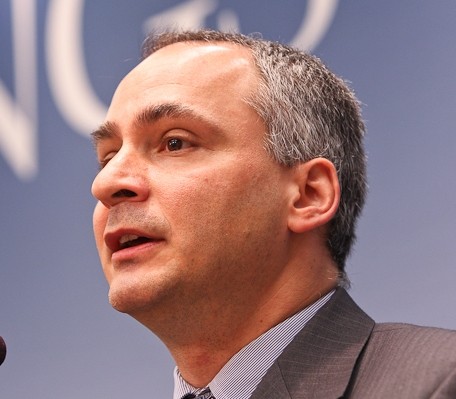
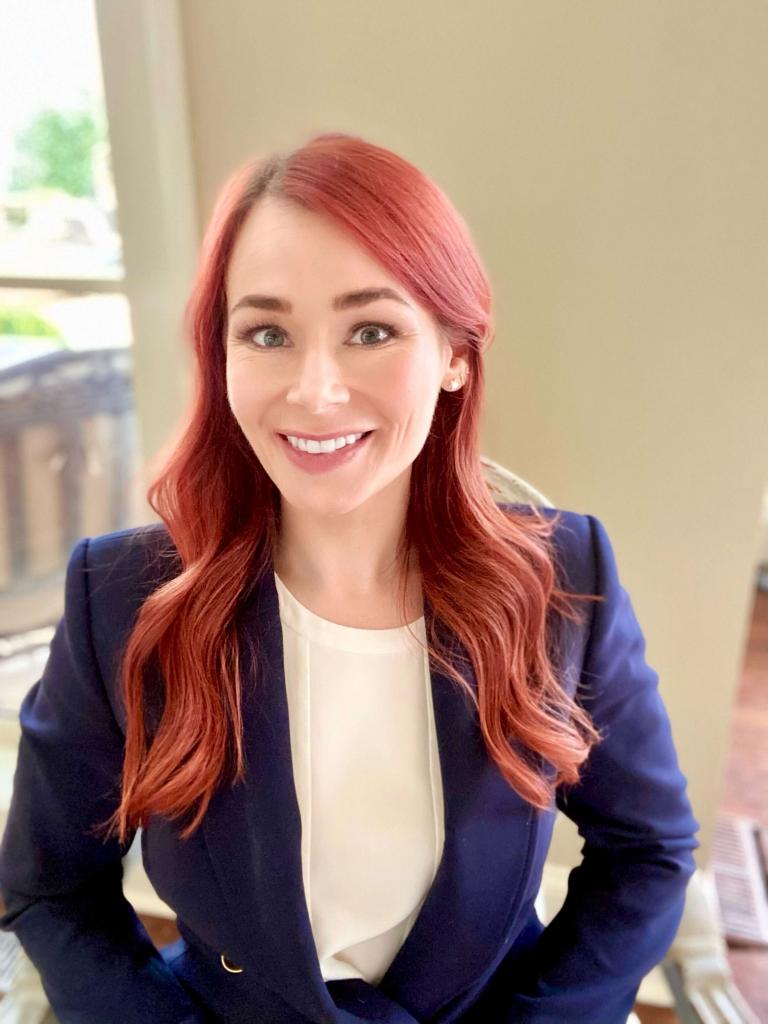


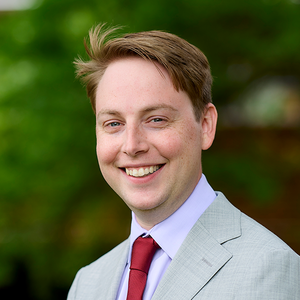
In a live conversation on YouTube, Lawfare Editor in Chief Benjamin Wittes sat down with Lawfare Senior Editors Anna Bower, Molly Roberts, and Roger Parloff and Lawfare Contributing Editor Nicholas Bednar to discuss the second indictment of former FBI Director James Comey, a judge finding that he has jurisdiction over Maureen Comey’s litigation challenging her firing from the Justice Department, oral argument at the Supreme Court over the cancellation of TPS, and more.
You can find information on legal challenges to Trump administration actions here. And check out Lawfare’s new homepage on the litigation, new Bluesky account, and new WITOAD merch.
To receive ad-free podcasts, become a Lawfare Material Supporter at www.patreon.com/lawfare. You can also support Lawfare by making a one-time donation at https://givebutter.com/lawfare-institute.
Click the button below to view a transcript of this podcast. Please note that the transcript was auto-generated and may contain errors.
Transcript
[Intro]
Benjamin Wittes: It
is Friday, the first day of May, 2026. Happy May Day to those who celebrate. It
is 4:00 PM Eastern Time, and you are watching Lawfare Live. I'm Benjamin
Wittes, editor-in-chief of Lawfare, and I am here with Lawfare Senior
Editors Anna Bower, Molly Roberts, and Roger Parloff, and Lawfare
Contributing Editor, joining us from the University of Minnesota, Nick Bednar.
[Main Podcast]
He is the only member of the Lawfare editorial cinematic
universe who has his own bat signal. And when we, when something happens in the
world of personnel we even have a phrase, we're sending up the Nick Bednar bat
signal, and that is what happened this week. And so we are it is a pleasure to
have you with us, Nick.
Nick Bednar: It's
great to be back.
Benjamin Wittes: All
right. We're gonna do something we don't usually do. We usually break up Lawfare
Live thematically. But this week, we are starting with a family. Everything
in section one is about the Comey family because the trials and tribulations of
the Trump administration this week do seem to involve a single family a great
deal.
And Nick, get us started. It started with not Jim Comey, but
Maureen Comey his daughter, former AUSA in the Southern District of New York,
prosecutor of Ghislaine Maxwell and Jeffrey Epstein who won a big victory. Tell
us about Maureen Comey's win in federal court this week.
Nick Bednar: Yeah. So
Maureen Comey, as many listeners are probably aware, was removed from her
position towards the start of the second Trump administration for quote Article
II reasons and no other reason was cited.
So she filed a claim in the Southern District of New York, and
the first issue in this case is whether she can even be in the Southern
District of New York. So normally with these civil service cases when an
individual employee is removed, they're sent to the Merit Systems Protection
Board. The Merit Systems Protection Board, if you read a bunch of stuff on Lawfare
that I write, you are probably aware is the now kind of formerly
independent agency that reviews employment disputes between the federal
employees and the federal government.
So Judge Furman issued an order basically saying Maureen Comey
can remain in federal court. Her claim does not arise under the Civil Service
Reform Act because the government didn't remove her pursuant to that act. It
removed her pursuant to Article II of the Constitution. And so she can proceed
in federal court.
She doesn't have to go back to the Merit Systems Protection
COurt—Merit Systems Protection Board.
Benjamin Wittes: And
broadly speaking, is that because if you say you're fired because Article II,
there's no merit system to protect in that. It's like, you know, saying, “I'm
firing you because I can.” And that raises the legal question, can you—
It doesn't raise the legal protection the legal question of
whether the conduct alleged against the employee allows under the civil service
law that employee to be fired. Is that a fair layman's summary?
Nick Bednar: Yeah. So
the, like, more, slightly more complicated summary of all of this is that the
Supreme Court back in the '90s issued this case called Thunder Basin,
which is like one of the coolest possible names for a doctor.
Benjamin Wittes: It
is a great name for a case.
Nick Bednar: Yeah. So
Thunder Basin basically says if Congress creates an administrative
review scheme to administer a statute, which is what the Merit Systems
Protection Board is, it administers the Civil Service Reform Act, then claims
arising under that statute have to proceed through that administrative review
process.
But there, there's nothing to review under the Civil Service
Reform Act here. She wasn't removed pursuant to it. We don't need to assess
whether she was removed for cause because she wasn't. They're not asserting she
was removed for cause, and there's no procedural concerns here because they
clearly didn't follow the procedures of the Civil Service Reform Act.
So they basically, Judge Furman concluded that this doesn't
even, like, rise under the Civil Service Reform Act. The Merit Systems
Protection Board has nothing to do in this case.
Benjamin Wittes: And
do you, first of all, do you think he's right? And secondly, do you think there
is a reasonable probability of the higher appellate courts, particularly the
Supreme Court thinking that he's right?
Nick Bednar: So,
okay. So first, let me give my standard caveat with this one, which is I wrote
an amicus brief in this case, and I wrote the statutory argument, and he
basically followed the statutory argument to a “T.” So yes, I think he's right.
So, yes. Do I think the Supreme Court or the higher courts are going to agree
with it?
I think there's a strong probability, actually. The Supreme
Court has been kind of walking back Thunder Basin. They have been
wanting individual plaintiffs to appear more often in district court. I mean,
there's a really easy way around this for the federal government, which is
don't just cite Article II, right?
Remove people pursuant to the civil service laws. If the
Supreme Court decides that this case falls within the Civil Service Reform Act,
it's probably because the Supreme Court thinks the entirety of the Civil
Service Reform Act is unconstitutional. That's a case that's gonna work its way
through the federal circuit very soon.
But I think Judge Furman kind of hit it on the head with this
one as far as the statutory text is concerned.
Benjamin Wittes: And
to the extent the Supreme Court thinks the entire Civil Service Reform Act is
unconstitutional, that's really more about Article II appointment clause purism
than anything else, right?
Nick Bednar: Yeah.
Yeah. And like, again, that's not a case the Merit Systems Protection Board
would hear, right? Because the Merit Systems Protection Board to say that it
should decide whether Article II makes, or Article II forbids Congress from
protecting the Civil Service, the Merit System Protection Board would have to
invalidate itself, which is just something it's clearly not equipped to do.
So, you know, it's possible that we get to the merits in this
case and they decide that the President has an Article II authority to remove
assistant U.S. attorneys. I'm skeptical that will happen, but we'll see.
Benjamin Wittes: And
just to flesh that out for those who are skeptical of your skepticism because,
you know, the Supreme Court is conservative and all that Article II is actually
pretty clear that lower inferior officers can be hired and fired by people
other than the president and presumably therefore Congress can create, you
know, tenure protections or civil service protections for them.
The civil service has been around a long time. I'm, I would be
stunned if the Supreme Court took the position that the president has the
authority, inherent authority to reach down to the assistant the assistant U.S.
attorney level and fire a line prosecutor because he doesn't like her dad. Is
that the source of your skepticism as well or am I missing something?
Nick Bednar: No,
that's right. I think the Constitution, right, has always been interpreted such
that inferior officers, Congress can protect from removal, same with employees.
And I can't count five votes to get rid of that, you know, line of cases. So,
you know, a lot of what we're talking about with all these removal cases in the
Unitary Executive Theory are really those high level—
Benjamin Wittes:
Right.
Nick Bednar: appointees.
There's no question the president can remove the attorney general, right? But
once you start getting to the individual employees, the court has been much
more squeamish about saying it's willing to extend the president's power to
those individuals.
Benjamin Wittes: All
right. So let's talk reciprocity here, Anna Bower.
When Jim Comey does stuff that the president doesn't like, he
fires Jim's daughter, and when Maureen Comey wins a case or wins a order that
the president doesn't like, they indict her father again. First of all, is
there any known relationship between Judge Furman’s opinion and the decision to
re-indict Jim Comey over seashells, or is that purely a coincidence in time?
Anna Bower: I think
that it's purely a coincidence in time, to be honest. I think if anything, the
Jim Comey indictment has more to do with the firing of Pam Bondi and Todd
Blanche, you know, taking over the reigns more so than what's going on with
Maureen Comey's civil case. But, you know, never say never in this
administration bin, so who knows?
But it certainly does seem like the reporting that we're
getting this week from various outlets was that this Jim Comey seashell
indictment was kind of on the, put on the rocks for a little while during
Bondi's tenure and then was you know, had a resurrection under Todd Blanche.
Benjamin Wittes: All
right. So let's talk about the seashells indictment. When the incident in
question happened, which correct me if I'm misremembering the details here, Jim
was walking along the beach, saw some seashells arranged in the shape “8647,”
took a picture of them and posted it to Instagram. There was immediate uproar
suggesting that it could be interpreted as a threat so he took it down and
apologized and then was interviewed by the Secret Service.
Is that the sum total of the facts as we know them?
Anna Bower: That
seems to be the sum total of the facts. I mean, interestingly, you know, we,
the indictment does not mention the deletion and the apology, but weirdly
enough, Kash Patel during a press conference after the indictment became public
did publicly state that the grand jury was presented with evidence of the
deletion and the apo- and the subsequent apology.
You know, that kind of brings to mind the question of how the
grand jury ultimately ended up indicting the case because you know, frankly,
I'm not aware of other evidence at least on the public facts other than, you
know, the post and then the deletion and the apology it seems like all of those
things as a cumulative matter would in, to my mind but as someone who knows
what a true threat is, of course would not certainly not lead to probable cause
that a crime was committed.
But you know, I think that we may very well see, as we did in
Comey's other case, some type of motion to get the grand jury minutes because
it, you know, it, it seems like there's some real questions here about what the
grand jury was told. So we'll see.
Benjamin Wittes:
Right. And there's also a question, I think, about whether Kash Patel's
purported disclosure of what was presented to the grand jury, assuming he was
speaking accurately, whether that was proper.
Anna Bower: Yeah I
agree. You know, there's a number of rules of, as we've talked about previously
that regulate disclosures about evidence presented to a grand jury, including Rule
6E that prohibits disclo—a government attorney and then others to whom
disclosures are made from revealing matters that occurred before the grand
jury.
Kash Patel very explicitly said, you know, this evidence was
presented before the grand jury. So, you know, both under 6E or under other,
you know, norms, Justice Department norms, that's something you typically don't
see. So it certainly was very surprising to hear him say that. I would not be
surprised if we see Comey's team raise that public statement in a motion to get
the grand jury minutes because if it's true that, you know, it all depends on
if it's true whether the grand jury was presented with that information, but
they certainly probably are going to be wanting to know, you know—
Benjamin Wittes:
Right.
Anna Bower: what
were, like, what was the grand jury presented with and did Kash Patel violate
any of these rules or norms by going and stating publicly what they were told?
Benjamin Wittes: So
here's my question to you. In what order do you expect what motions to dismiss
to be filed? We know there will be a motion to dismiss for vindictive,
selective and vindictive prosecution because one was filed the last time
around.
One assumes there is a motion to dismiss based on the fact that
the facts as alleged even assumed true amount to First Amendment protected
speech not a true threat. And then of course, we will probably get a motion for
disclosure of the grand jury transcripts antecedent to some outrageous
government conduct motion.
What, first of all, do you agree with me that those three
motions are all but inevitable and we should expect them within the first few
weeks of the of the litigation and what else are you expecting in the aftermath
of a preliminary hearing that's expected, what, on the 11th, right?
Anna Bower: Yeah. So
Comey has initial appearance is scheduled. He already had an initial appearance
in—
Benjamin Wittes: I
mean, arraignment, sorry.
Anna Bower: Yeah.
Well, I mean, it's technically on the docket, it's still listed as an initial
appearance but I, you know, presumably it's going to be the arraignment and
some preliminary you know, discussions of various filings.
I agree with you that I think we'll get those three types of
filings you mentioned. I think there'll be a first ... I think you kind of
maybe might lead with a First Amendment as a plied challenge and then, you
know, go to selective or vindictive prosecution. I'm sure they already have the
workings of that motion ready to go because of the motion that was made in EDA.
And—
Benjamin Wittes: Most
of it's gonna be verbatim the same as the last time.
Anna Bower: Yeah. It's
gonna be the same except maybe with a few extra exhibits because the president
has been tweeting about Comey, so—
Benjamin Wittes: And also
because- Because Jack Posobiec makes such a good argument for selective
prosecution, right? You have lots of cases of people wearing “8646” shirts and
not getting indicted or—know that they've been arranging seashells in the shape
of, right?
But like you have a better selectivity argument in this case
than I think you did in Virginia.
Anna Bower: For sure.
You've got that. You've got, you know, the people who sell these types of
shirts on Amazon that say, you know, “8646,” “8647.” You've now even got this
phenomenon that I've noticed in which—in the wake of the Comey indictment, you
have all these people who are kind of in protest almost going out and posting
the seashells photo or stating the “8647” in the kind of as a way of tempting
fate almost.
So, you know, you have a lot of things that you can tweak in
that motion regarding the selective prosecution aspect of it. You have some
things to maybe add on the vindictive prosecution but ultimately—especially on
the vindictive prosecution aspect of that motion, it'll be largely the same, I
think.
And then the final one that you mentioned, the outrageous
government conduct I think that as well, I have seen some people mention maybe
a motion you know, failure to state an offense because they don't think that
the indictment was sufficiently pleaded with respect to some of the First
Amendment elements.
I don't know that it necessarily, though, has to be the case
that you put, you know, the standard from countermen you know, in the
indictment itself, that seems like you could be handled with jury instructions
so long as you include the mens rea element in the, there are the statutory
elements—
Benjamin Wittes:
Right.
Anna Bower: Which
they do here. So I'm a little bit—
Benjamin Wittes: I
hope you can build that into your First Amendment,
Anna Bower: Right.
Benjamin Wittes: like
to the extent, to whatever extent this you know, th- this is so ... Th- this
does not meet First Amendment standards, and by the way, it also doesn't meet
the standards of the you know, the pleading standards of the statute.
Anna Bower: Yeah, it
can be something that kind of goes with that motion. But yeah, I mean, I and I,
like I said, I think that with the outrageous government conduct motion,
probably what they're going to want to do is get the grand jury minutes. So
that will be litigated, I think, before any outrageous government conduct
motion is made.
But yeah, I mean, do you agree with all of that, Ben? Do you
think that's the order of operations here?
Benjamin Wittes: I
do, yeah. I think I think we're gonna have rapid fire motions to dismiss that,
again, like in the Virginia case, the question will be which one gets granted
first. Fortunately, in this case, you will only have one judge.
Anna Bower: Roger,
you have your hand raised.
Roger Parloff: Yeah,
I was curious if anyone knows whether the counterman instruction has to be
given to grand jurors or just the petit jurors.
Benjamin Wittes: I
think it's a trial standard, but presumably the petit, the grand jurors should
be informed as to the state of the law, right?
Because otherwise, how do they make a decision whether there's
probable cause?
Roger Parloff: Yeah,
you would think so, but I don't know.
Anna Bower: Yeah,
that's a good question. I'll need to look into that one, but I'm, off the top
of my head, I'm not sure.
Benjamin Wittes: All
right. So speaking of Jim Comey, Anna, we're getting ready to indict him a
third time, right?
Anna Bower: May-
maybe. So there was some reporting this week after the second, the seashell ...
should we call it the second indictment or the seashells indictment? I think—I
think it's,
Benjamin Wittes: I think
it's the seashells indictment.
Anna Bower: The
shells indictment for short. The after the shells indictment, there, there was
some reporting that came out this week that in addition to the resurrection of
the shells case that started way back when Comey first posted that Instagram
post, there also is now a renewed effort in recent weeks since Blanche took
over, apparently to look at this third case that there have been some rumblings
about for some time that relates in some way to Comey's providing memos that
he'd written years and years back to Dan Richmond, who at his time, at the
time, was working as his attorney and was also a close personal friend of Comey
people might remember Richmond because he also is a presumptive witness in the
first Comey case that was dismissed—
Benjamin Wittes: And he's
also good friend of mine.
Anna Bower: Yes.
Benjamin Wittes: And
sometime Lawfare contributors. So, not gonna pretend to be unbiased on
the Dan Richmond subject.
Anna Bower: But so,
so there's this news reporting this week that there's this kind of renewed
effort to look at this question of the memos and potentially a transmission of
classified information.
Now, if people remember, it wasn't until after the fact that a
very small portion of that memo or one of the memos that Comey provided to
Richmond was retroactively classified,
Benjamin Wittes:
Yeah, can we—can we get, pin you down on how many words—
Anna Bower: I believe
my memory was one word and it was the name of a country,
Benjamin Wittes: Correct.
It was Egypt.
Anna Bower: Yeah. So
tell us about, you will have a better memory of this than I do, Ben. Tell us
about the circumstances of—
Benjamin Wittes:
Well, again, working off of memory here there was a, you know, Jim gave some
memos to Dan, one of which the substance of which was transmitted to Mike
Schmidt, that's the, of the New York Times, that's the memo that involved the
loyalty oath.
But there were, there was at least one other memo, there may
have been more, I'm not sure I remember that. And when the, when those memos
were returned to the Justice Department after Jim's firing there was a
retroactive classification review of them in which I believe that in one of the
memos, there was a determination that a single word should have been classified
and was erroneously not classified, and it was classified at the confidential
level because it involved, which is the lowest level of classification, because
it involved the name of a country that we had diplomatic engagement with, and I
believe it was Egypt.
And so the single word Egypt was retroactively classified in
that memo. And so, you know, sort of the defense kind of writes itself here,
which is it was not marked classified, it was not classified at the time it was
disclosed. By the way, I believe Dan Richmond had a clearance but I'm not sure
about that.
And by the way it was retroactively classified, it was a single
word, nobody intentionally mishandled any classified information, and it was
confidential. I don't think anybody's ever been prosecuted for mishandling
confidential information. So it's a pure ... Oh, and the other thing is it was
referred, I believe, by the inspector general to the Justice Department once
before, and Bill Barr, who has written about this in his memoir, dismissed it
as, you know, not something you're gonna bring a case over.
And that's that ... But I'm working off of memory here. I can't
imagine getting a grand jury, at least not in the District of Columbia. Maybe
it would be in New York because Dan lives in New York, but it's hard for me to
imagine a grand jury signing off on an indictment of that.
Anna Bower: Well, and
also, so two things, and then also keep in mind that presume—remember, Dan
Richmond filed a 41G motion to get his stuff back, and presumably the evidence
that they would have to—and he was successful in that motion, by the way, but
presumably a lot of the evidence that they would have to use in building this
case would be things that they previously had acquired, you know, through that
search and through the thing ... Like, I'm just a little bit confused about how
they think this is gonna go, because previously, those same materials were
found, you know, by the court to be a violation of Dan's constitutional rights.
It, the stuff was returned to him. There were all these issues
with, like, the filter protocol and, like, all this stuff. I think maybe they
kept the cla—There was, like, the, there was some, to my memory, there was
some, you know, question around whether some of the things were classified,
that kind of thing, but, you know, it all just seems like it's kind of, from
the start going to have a lot of the same issues that they had with the first
indictment that was had different factual circumstances, but the same kind of
universe of of things. Roger.
Benjamin Wittes:
You're muted.
Roger Parloff: Yeah.
I correct me if I'm wrong, Anna. I think that he won the 41G, but I think a
complete copy was kept of everything—
Anna Bower: Under
seal, I believe though, right?
Roger Parloff: Under
seal, yeah. And then they would have to, like, make a new search warrant and
they could try to get access.
Anna Bower: Yeah. And
that brings me to—And that's in EDVA and that brings me to the second thing I
was going to respond to you, Ben, that I just remembered, it, which is where
this is taking place. The reporting this week was that, you know, it might be
an EDVA, but they're looking at, you know, doing something maybe where Dan
Richmond lives, which is the Southern District of New York because he's a New
York resident.
So it, you know, it—They haven't been very successful in trying
to, since the first indictment and trying to restart efforts to prosecute
Comey, but, like, maybe they think, “Oh, if we get a fresh start in the
Southern District of New York, we could make something happen here.”
Benjamin Wittes:
Right, because New York grand juries are gonna be super lenient about, like,
single word retroactive classifications at the confidential level for eight-year-old
matters.
Anna Bower: So, okay,
here is what I will say is that I think a New York grand jury's probably gonna
have fewer lawyers or government workers on it than an EDVA in Alexandria grand
jury. So maybe there'll be, maybe the idea is that they'll be maybe the idea
... Look, I'm just speculating here irresponsibly, but maybe the idea is that,
you know, we could get away with things before a Southern District of New York
grand jury that we couldn't right now in Alexandria given, you know, the
history of the case and the, you know, occupation related to the National Guard
activity and that kind of stuff.
So I don't know. I'm just spitballing, but maybe that's the
idea.
Benjamin Wittes: All
right. Nick. Who is Peter Marocco? What is USADF and how did he come to be
found to be unlawfully serving as his, its president?
Nick Bednar: Yeah. So
Peter Marocco, you can kind of think as, of, as the Trump administration's
hatchet man for all these foreign aid agencies.
So he was initially installed as acting deputy director of
USAID. After President Trump issued this executive order, basically instructing
all of these agencies to shut down. So the one at issue most recently in the
case I'm gonna talk about is the African Development Foundation. So the
foundation is this entity established by Congress to provide grants to African
businesses, mostly small businesses that provide support to other businesses
within Africa.
And President Trump in February 2025 fires the entirety of the
African Development Board and appoints Peter Marocco as the acting chair of the
foundation. And then Marocco installs himself as president of the foundation
and proceeds to fire and put on administrative leave most of the people in this
foundation.
Benjamin Wittes: All
right. So then he did not prevail in court as to the legality of his service.
Tell us about the judgment.
Nick Bednar: Yeah.
So, in March Judge Leon of the U.S. District Court for D.C. granted summary
judgment to the plaintiffs. The plaintiffs in this case are Rural Development
Innovations Limited.
They're a small Zambia consulting firm who used to receive
money from the foundation. The procedural posture in this case is kind of
weird, so I'll just start at the summary judgment motion from March. But the
government had initially argued that the president has an inherent Article II authority
to appoint acting principal officers.
And its theory here was, look, the president has an obligation
to take care that the laws are faithfully executed, and the president can't do
so if there's not an acting official in place. And therefore, he shouldn't have
to go through advice and consent of the Senate. He should just be able to
install an acting official.
And Judge Leon correctly reads the tea leaves from the D.C. Circuit
and says, “That is not gonna fly. That would eviscerate the entirety of the
appointments clause. The purpose of the appointments clause is the president
needs to seek approval from the Senate when it's when the president's going to
appoint someone to a position.”
So then they raised this other argument that's, “Well, we have
the Vacancies Act. Perhaps the president could appoint him under the Vacancies
Act, but the Vacancies Act doesn't cover the foundation.” So ultimately, Judge
Leon granted the plaintiff's motion for summary judgment, granted declaratory
relief saying Marocco was not lawfully appointed as a board member, and
therefore Marocco's actions have no force or effective law.
In addition, they enjoined Marocco from acting as a board
member and ordered the defendants to restore the foundation's employees' access
to the office's IT systems and financial systems.
Benjamin Wittes: And
I know what our audience is wondering, which is how many exclamation marks did
Judge Leon use in these opinions?
Nick Bednar: So I
don't think ... I don't recall seeing any exclamation marks in the order for
summary judgment. So he's very restrained there. Now, what has happened this
week, however, is the department or the defendants, the government in this
case, filed a motion asking to clarify the preliminary injunction because
according to the government they cannot reinstate any of the employees because
the only person who had authority to do so was Marocco, and he was found
unlawfully appointed, therefore there is no one capable of exercising the
authority of the foundation, and therefore they can't restore the status quo
without the president appointing people to the foundation separately.
Judge Leon granted the motion to clarify and basically said, “Hey,
you need to roll this back and you need to put the employees back in place.”
And that argument got some exclamation points out of him.
Benjamin Wittes: All
right. Roger, have you done the exclamation mark density analysis, which we're
famous for here on Lawfare Live with Richard Leon opinions?
Roger Parloff: I'm
afraid I'm not. I've been remiss. I didn't realize that this was a Judge Leon
opinion.
Benjamin Wittes: I
see.
Roger Parloff: So I,
I have some homework to do.
Benjamin Wittes:
Yeah. I think it's really important that we keep up with this issue. Molly,
speaking of Judge Richard Leon, we've had a big week in White House ballroom
litigation and of course it all involves national security.
And so there was a question for a while whether the White House
ballroom issues really fell within Lawfare’s jurisdiction. The nature of
the arguments this week have really resolved that issue. So, proving that
everything does come back to national security law, how does the ballroom issue
how has it situated itself back within our jurisdiction?
Molly Roberts: Yes.
Thank you, Mr. President. I have been wanting to write about this and he
delivered me a gift. So after last weekend's attempted shooting at the White
House correspondent's dinner, President Trump got on Truth Social and he said, “This
event would never have happened with the militarily top secret ballroom
currently under construction at the White House. It can't be built fast enough.”
Even before that, the night before, a bunch of MAGA-oriented
influencer accounts were tweeting something really similar. It seemed like the
immediate reaction to this above lots of other stuff was, “This is exactly why
we need the ballroom.” And that may have seemed weird—
Benjamin Wittes: And
had, just to be clear, had anybody ever made the case for the ballroom before
the shooting that the ballroom was important because this way the president
would attend events in the ballroom rather than going to the Hilton and things
could be really dangerous at the Hilton?
Molly Roberts: It's a
very good question. There was no argument made certainly about the Hilton
specifically, despite it having been the site of another attempted presidential
assassination. There actually was in one of the earlier briefings, the mention
of the idea that tents on the White House lawn aren't as secure as the ballroom
would be, but this was talking about events of state, and it seems now that the
argument is expanding to all events, which I think is a little ridiculous
because it's not as if the president is actually going to do all events at the
ballroom.
First of all, the White House Correspondence Dinner is an event
run by the White House Correspondence Association, not by the White House, and
it's supposed to celebrate freedom of the press. And you wouldn't think that it
would be at all appropriate for it to be hosted by the White House. Second of
all, because, I mean, again, there are just lots of reasons the president is
going to want to do events elsewhere, and the assassination attempt that came
far closer than this one did to being successful in Butler, Pennsylvania was at
a rally.
I mean, the president isn't going to do his rallies at the
White House ballroom. So to answer your question, sort of, but not really
entirely. They had mentioned events, and it was just one mention, and it was
not one of the kind of longer lines of reasoning, but it wasn't all events
until this happened.
Patrick Cole: Hey
there, Lawfare listeners. I'm Patrick Cole, Lawfare’s managing director,
a role that Ben jokingly refers to as a Rasputin-like figure. I work mostly
behind the scenes, overseeing Lawfare’s fundraising, operations, and
strategy. Today, I'm stepping out from behind the scenes because while reliable
nonpartisan analysis reporting and research, which Lawfare produces
matters to the future of national security, democracy, and law, you matter to
the future of Lawfare.
And in my role, I regularly have the privilege of hearing from
listeners and financial supporters just how much they value Lawfare’s ability
to break down complex national security and legal issues, making them
accessible to everyone, both in terms of their clarity and the availability of
lawfare's work to the public without a paywall.
But here's the thing, as a 501 nonprofit, we make our content
available without a paywall because we believe that rigorous analysis and
trustworthy sources ultimately engender fact-based decision-making and informed
public debate on complex issues. Look, I know your time's valuable. Resources
are limited and you face information overload on a daily basis, but Lawfare
is steadfast and it's commitment to be a resource for anyone who cares about
the most pressing issues we face.
So here's my ask. Please go to lawfaremedia.org/support. There
you'll find information about how to become a paid supporter, as well as
information on how your support has an impact. You can sustain lawfare by
becoming a paid supporter on Substack at $10 a month or more, or making a
one-time donation. No matter what you choose, every little bit adds up, and you
help keep Lawfare free for everyone.
Thank you for listening, and thank you for supporting Lawfare.
Benjamin Wittes: All
right. Speaking of weird punctuation exclamation marks, all capital letters,
the Justice Department filed an unusual brief this week in this case that was
actually kind of “out Judge Leon-ed” Judge Leon. Tell us about the Justice
Department's filing.
Molly Roberts: It did
have Judge Leon. There were plenty of exclamation points, but Judge Leon
usually stays away from the all capital letters, which this brief did not.
So what happened here was after the president—
Benjamin Wittes: And
just so that we're naming names, who signed this brief?
Molly Roberts: Oh,
the brief is signed by Todd Blanche, the acting attorney general. It's signed
by Trent McCotter, who is a recent hire. He's running essentially the Deputy
Attorney General's office while Blanche is acting.
And by Associate Attorney General Stanley Woodward. And those
are not the names that were on the previous filings in this case. I mean, why
would they have been? So quite a sharp pivot. It is not signed by President
Trump, however, it sounds a lot like a Trump Truth Social post in many ways.
There are references to Barack Hussein Obama, there's Trump Derangement
Syndrome in all caps.
Instead of just talking about standing, they talk about
standing in all caps. And in this discussion of standing, the motion mentions
how the plaintiffs are relying on quote unquote a woman walking her dog to try
to get standing. And that is referring to a history professor who says that she
uses the President's Park, which is the area, including the White House
grounds, for her personal and aesthetic enjoyment, but also for her work.
But the previous briefings from the government never said a
woman walking her dog, oral argument did not include a woman walking her dog.
However, President Trump has used that language multiple times. So very weird
filing both in who signed it in what, what's in it, not only in the language,
but kind of in the argument too, because it's such a stretch and, you know,
they're asking
Well, what they're asking for specifically is an indicative
ruling from the judge. They're asking the judge to say, so it, the case is on
appeal in the D.C. Circuit. Now they're asking Judge Leon to say, “If the D.C. Circuit
sent this back to me, I'd be inclined to dissolve my injunction.” So that is
what they're asking for, but the way in which they ask for it is really not
like any motion, at least that I've seen from the administrations over.
Benjamin Wittes: And
so what, how do you interpret this? 'Cause I think of like part of the job of
the lawyers is to translate Trump administration speak, which tends to have all
caps a lot of punctuation and a lot of ad hominem verbiage into law speak,
which tends to refer to cases. And it's almost like they forgot to plug this
into Google Translate and just gave the president's tweets to the court, but,
you know, Todd Blanche is not a moron and whatever else he may be, what do you
think he, they were trying to do here?
Molly Roberts: It's a
good question. So, you know, there is some legal speak in this. There are
portions of the motion that read like what you would expect from the motion.
They're just supplemented with all this stuff from President Trump. You know,
Todd Blanche said Monday afternoon that they had filed a motion that day, and
my colleague Eric Columbus and I were looking for the motion, “Where on earth
is the motion and where on earth is it?
And it pops up at 11:38 PM or something like that. And who
knows what happened, but it's certainly possible that the president wanted to
be more involved with the motion and wanted some of his language in the motion.
And so what happened was they revised what would have read like a more legal
filing to read this way.
I mean, I also think that so much of what we see from the
Justice Department is sort of performance and as we talked about in recent
weeks about the race for the nomination for attorney general, Todd Blanche is
sort of in audition mode. So it's same thing with the seashells case. What is
that?
It's ridiculous and yet here we are.
Benjamin Wittes: All
right, guys, it is time for this week's edition of the Grand Conspiracy. And
I've decided we need grand conspiracy music, so here it is.
All right. We had a an article about your friend and mine, Joe diGenova
on Monday and we have a new prosecutor in the case Mr. diGenova who was once
upon a time before his decline and fall into the decrepitude of conspiracy
adult aging respectable U.S. attorney in Washington.
I believe he was also an independent counsel in the in a
matter. Molly, Anna, tell us about Joe diGenova’s reemergence as the grand
conspiracy prosecutor.
Molly Roberts: Who
wants to go first? I can start. Okay. So Joe diGenova, you just gave us a bit
of background on him. He was recently sent, he says, by President Trump
himself, to Southern Florida as counselor to the attorney general to helm the
inquiry into the supposed grand conspiracy, the deep state plot that ties
together a lot of the bad things that have happened to Trump, the impeachments,
the prosecutions, the 2020 election laws.
He was sent down there after the departure of an assistant U.S.
attorney, Maria Medetis Long, who's a respected national security career
prosecutor down there. She had not wanted to quickly bring charges against
former CIA Director John Brennan for lying to Congress, and she left the case
after that. And it was in the wake of that, that he was sent down there along
with another guy, Chris DeLorenz, I believe his name is, who is gonna help up
with the investigation too, and is a former Aileen Cannon clerk.
So those were kind of the personnel developments that led up to
this. And at the same time, diGenova is working on two things. One, he is
working on the discrete part of the investigation that involves the John
Brennan lying to Congress charges or possible charges. And two, he's working on
the broader probe.
The John Brennan part seems to have moved to D.C., and the rest
of it appears to be continuing in Southern Florida, including in Fort Pierce,
which is where Aileen Cannon presides. So that's what happened. That's why he's
down there, but what Anna and I were looking at was this kind of long history
he has of statements about not only the grand conspiracy theory itself, he's a
big fan, big proponent, been spreading it all over the place, but two, the
specific individuals who, some of whom have already been subpoenaed and others
of whom are kind of likely targets of this investigation.
So I'll kick it over to Anna for whatever's next.
Anna Bower: Yes, and
I apologize. We just had a Fulton County case filing come in, so I was trying
to read that in the background, but I w- I wanna mention a few things about diGenova’s
history of public statements about various people who are, you know, presumed
targets of the grand conspiracy investigation, including Brennan, Comey, other
folks.
One is just that, like, they are so specific in nature and so
sustained over such a long period of time and they assume the guilt of people
who are now being investigated by diGenova himself to the extent that it gives
whoever may be a target of investigation, either, you know, just at the
investigative stage through a motion to quash a subpoena or eventually if
charges result through a selective or a vindictive prosecution motion, it gives
them a lot of ammo to just, like, fi- use these exhibits of, like, a decade's
worth of statements that diGenova has been making in which without even having
done any investigating you know, he's attacking these people personally, he's
assuming guilt and he's doing it in such a specific way and over the course of
a decade that I think that it really goes to the question of animus now that he
is the prosecutor who presumably, you know, is supposed to be doing this in a
disinterested, like, “I'm gonna go where the facts lead me,” type of way.
The second thing that I will mention are three, actually facts
that I think are you know, claimed facts by diGenova himself that Molly and I
unearthed in reviewing these materials. DiGenova, you know, he goes on these
media, does these media hits very often, including up until the day that he was
sworn in as, a- as this special prosecutor or what counsel, whatever it is
that, whatever name they're giving him.
And so in recent weeks, there's been some really interesting
claims that he's been making and there are three points that I will make about
that. One is that he claims that Bondi that the firing of Pam Bondi and her
exit was in some way, at least in part, related to Trump's frustration over the
slow pace of this Miami grand conspiracy case.
The second is that he claims that he was previously supposed to
be appointed to take over this case, you know, a few months back, but Pam
Bondi, you know, put her foot down and said, “I don't want him taking over this
case.” And then the third thing is that he said that, again, in this interview
that was the day that he was sworn in, he says that Trump called him up and
personally asked him to take over what he describes as the Russia hoax
investigation.
And so those are three things that are, like, going to be, I
think, very important in a potential motion to quash or a selective or
vindictive prosecution motion. And I, and—
Benjamin Wittes: Right,
because they amount to personally doing the bidding of the president at his
specific request.
Molly Roberts: Yes,
he just made the stalking horse argument, like in an interview the day he was
sworn in.
Anna Bower: Right.
It's the stalk—the, and that's exactly it, is that, like, you know, there's
been in these other cases, like, a need to connect the president's animus
against these people to the Justice Department's actions. I mean, it's all a
little bit of a fake, it's all kind of a facade anyway, because, like, if
you're someone who subscribes to the Unitary Executive Theory, like, I don't
understand why we're, like, any, put that aside.
Like, the whole thing is that you need that connection and Joe diGenova
on his first day on his new job just gave everyone that connection. And then
two weeks before he did that, you know, he's saying Pam Bondi, the attorney general
got fired in part because of the president's frustration with this case not
going forward.
So it really solidifies those selective or vindictive
prosecution claims that may be forthcoming. And I just think it's fascinating
that this guy who the MAGA right has ... Is that the grand conspiracy music?
Benjamin Wittes:
Yeah.
Anna Bower: Oh,
great. This guy that the MAGA right has cheered as kind of the savior of the
grand conspiracy case actually, I think, is its biggest liability.
Benjamin Wittes: All
right. We will return to Grand Conspiracy watch next week. It now has its own
theme by Mr. Elgar and you know, it's just, it's I think different theme,
different subjects on Lawfare Live need their own music. All right Anna
should we move Judge Boulee to later in the show so that you have time to
review this filing on that and we will turn to one of the lesser noticed cases
of abuse of the Justice Department an Anthony Fauci aide named David Morens,
who now finds himself indicted.
Roger, I have not followed this matter at all. I didn't, I
don't think I even knew that David Morens existed, let alone that he was under
Justice Department scrutiny. So bring all of us, particularly me, up to speed,
what's going on with this guy and why is he now under indictment?
Roger Parloff: Yeah,
and I'm a latecomer to his story, but there are people that are just steeped in
his story people that have been, you know, watching Fauci and going through all
the records with a fine-tooth comb looking for an indictment.
So David Morens is 78 years old. He was a senior advisor to
Fauci at the—it's the National Institute of Allergy and Infectious Diseases or
NIAID at NIH. And it it's he, the, it's crimes related to trying to keep
emails, to email people about federal business without triggering the with the
FOIA without being exposed to transparency through the FOIA, the federal—the
Freedom of Information Act and other, and also the Federal Records Act.
And so he was, ... and so, and there's a tremendous amount of
evidence that he did that. So, I don't know how good a candidate this is gonna
be for selective and, or vindictive prosecution. You know, if hypocrisy was a
defense he'd have a good defense because there's a lot of avoidance of FOIA
stuff going on in this administration, but I don't know if that's I ... And we
haven't ... This just came down this week, so we don't know what his defenses
really will be. It's a 29-page indictment, it's a talking indictment, and it's
three counts but basically there are three characters. There's him, and there's
a man that has been identified in reporting who ran named Peter Daszak, who was
president of EcoHealth Alliance and there was a contract back in 2014 where NIAID
gave his group some money to investigate something incredibly important, which
was coronaviruses coming out of emerging from bats to, and reaching humans.
And so one of the subcontracts went to from EcoHealth to the
Wuhan Institute for virology in China. And so when COVID happened, and then
there were the theories about, well, was it a leak from the virology lab, or in
fact, did China maybe intentionally leak it as a sort of warfare weapon?
All of these led to hundreds of FOIA requests, many from people
that were not likely to write nice things no matter what the FOIA showed. And
these people did try to hide their communications. And so that's the gist of
it. It's conspiracy to commit a number of offenses against the U.S.
One is obstruction of justice, 18 U.S.C. 1519 that's involves
destruction, alteration, and falsification of records, because apparently he
did, they did try to get rid of some of the emails they've already written
before switching. Another is 18 U.S.C. 2071, that's concealment removal,
mutilation of paperwork.
And a third is 201(c), which is actually sort of like the
gratuity statute, because there is some language, and it's hard to tell if
they're joking or not, you But about the guy the ecohealth guy giving gifts to,
to Morens. And in fact, he did give two, two bottles of wine at some point to
Morens saying that that, you know, he, this would be the sort of a first
there'd be more to come.
And again, I the bottles were the brand was called The Prisoner
and it has, you know, it's a red wine from Napa Valley that has a tortured
prisoner in chains on it. And I don't know if that was part of the joke or if
this was a real gr- gratuity or what this was. Anyway there's five counts that
there's one conspiracy count and then four substantive counts.
There's no actual count for the gratuity. That's only part of
the conspiracy charge. So, that's the gist of that one. And there is some sort
of small there is c- conspiracy stuff in there about trying to generate the
false view that there was a consensus out in the scientific community that that
that there wasn't a leak from the virology lab.
I don't know how important that is to the case. It does seem
like he really felt bad for ... As, as soon as COVID happened, I'm sorry,
EcoHealth lost its contract. And I'm sure the guy felt bad for EcoHealth, which
was trying to do important research, and he was trying to get that contract
restored without it being obvious over FOIA.
So I think that's what that one's about.
Benjamin Wittes: All
right. Meanwhile the president is trying to sue the IRS and we have a federal
judge, a former federal judge appointed as amicus to determine whether there's
a case or controversy when the president tries to get money from the tax
authorities.
What's going on?
Roger Parloff: Yeah,
it's really there's not too much more than that. You remember last week we
mentioned that she issued this order saying she didn't know what to do with
this case and does she have a case or controversy? So, I think yesterday or no,
the day before, she actually appointed she appointed six of the biggest lawyers
in the United States with three law firms.
I don't know why she quite needs this many. And one of them is
former judge John Gleeson from the Eastern District of New York. He was also
the guy that prosecuted John Gotti if you remember that sort of thing, and
convicted him. So there's two guys from Deb Avoise. Then there's a- a former solicitor
general Don Verrilli of Munger Tolles, and then there's three from a very
renowned New York firm, Faith Gay, Philippe Selendy, and Corey Stoughton.
So all of them are supposed to produce a memo by May 21st so
that will be an interesting memo to read.
Benjamin Wittes:
Yeah, it'll certainly resolve the whole issue if a bunch of prominent lawyers
can agree. All right. Speaking of situations in which a bunch of prominent
lawyers cannot agree the Supreme Court held oral arguments this week in the TPS
matter how did it go?
Roger Parloff: Well,
if I can t- toot my own horn I wrote a preview piece about it, about the case
and I think it, it holds up pretty well. The the key issue, of course, was this
a jurisdiction stripping clause or jurisdiction limiting clause, as the pro-
migrant attorneys call it 8 U.S.C. 1254(a)(B)(5)(a).
And it did sound like I counted most likely five votes that
were gonna say “You don't get past that for the APA claims.” The theory was,
and it's a good theory w- it speaks of it says that determinations of Noem are
not, of the secretary are not reviewable. I'm not re- repeating the whole thing
about what TPS is because if you've been following, we've been talking about
it.
But and the theory of that was that okay, you can't review the
determinations, but you can review, did she follow the procedures that she, the
statute says she's got to follow before she makes the determination. And there
was, there were two Supreme Court precedents that seemed to be directly on
point, one from ‘86 in the Medicare context, one, one from ‘91 in the
immigration context.
So it's a, it's not a silly argument, it's a strong argument,
but I do think it looks like five judges will rule against it. The silver
lining is that the it does seem that I the equal protection arguments in this
case, that there are constitutional arguments, especially in the, there were
two cases up there, Syria TPS and TPS for Haitians, 350,000 Haitians, about
7,000 Syrians.
And especially in the Haiti case, there was a very strong case
that there was racial and ethnic animus involved in the decision to terminate.
And there is an overall, you know, 13 countries, TPS countries have come up for
review and 13 have been terminated. And of course, they're all non-white so far
and non-European.
And so, and the statements of Trump, the statements of Noem, a
lot of them had strong anti-white valence. And so I think the equal protection
claims will survive. They won't be easy and there will probably be a split
opinion on that too, but it, there is, again, going back to 1990, ‘91 at least,
a strong precedent that constitutional claims cannot be barred by this sort of
jurisdiction stripping statute.
Benjamin Wittes: And
what about claims from Yemenis?
Roger Parloff: Yeah.
So, I think last week or the week before Anna attended a hearing, this was a
TPS case for the Yemenis and we just got a ruling today from Judge Dale Ho up
in Manhattan who blocked the termination for the Yemenis. And of course, you
might say why doesn't he wait for the Supreme Court to rule?
But the TPS status was going to expire in three days, so he
didn't really have any choice. And it's almost, you know, all of these are
almost the exact same—
Benjamin Wittes:
Right.
Roger Parloff: facts.
There's no consultation between DHS and appropriate agencies, which the statute
says is supposed to take place.
There's, like, one email back and forth you know, is it okay if
we do this? Yeah, I don't see any foreign policy implications. And so, there
was one detail in there I didn't know. It says that Yemeni nationals operate
half of New York City's 15,000 bodegas, which I had not realized.
Benjamin Wittes: I did
not know that either.
Roger Parloff: Oh,
no.
Benjamin Wittes: I
suspect in Yemeni Arabic, the word for small convenience store, however, is not
bodega.
Roger Parloff: No, I
didn't think so. But it also says that they have an employment rate in the U.S.
of 94.6% but anyway that, that's what I have there.
Benjamin Wittes: All
right. And we finally have a circuit split on mandatory detention.
Roger Parloff: Yeah.
And actually, I mean, we sort of had a circuit split. The Seventh Circuit had
one of these likely, w- what's more likely than not it was an unusual posture,
but yes,
Benjamin Wittes: This
was—Circuit split and a half.
Roger Parloff: Yeah.
But this is the Second Circuit voted 30 a panel. It involved a Brazilian who's
been here for 20—
You know, it's one of these cases that just turns your stomach.
You know, it's a tw- he's been here 20 years, no criminal record. He's, you
know, family, kids who are citizens, and operates a construction business. And
it was José Cabranes, who is a Clinton appointee, but he's very conservative,
really.
Benjamin Wittes: Yeah.
Great judge.
Roger Parloff: Yeah.
Benjamin Wittes: Really,
really great judge.
Roger Parloff: Joseph
Bianco, who was a GW W. Bush appointee to the district court elevated by Trump
and Alison Nathan, who's Obama, it's 30. Bianco writes the main opinion that
he's the Trump appointee. And there is some savage language in here. Even if
the government's newfound interpretation were plausible and it is not, we would
nonetheless reject it based on our obligation to construe these statutes in a
manner that would avoid serious constitutional questions attended to what would
be the broadest mass detention without bond mandate in our nation's history for
millions of non-citizens.
And then the there was some stuff that was a little tough on
the judges that who of the Fifth Circuit and Eighth. I mean, it wasn't directed
to them specifically, but the government's attempt to muddy these texturally
clear waters defies the statute's context, structure, history, and purpose
contradicts the Supreme Court's dicta in Jennings and longstanding
executive branch practice.
Its interpretation raises serious constitutional questions that
should be avoided. If judges could add to, and this is quoted from a Supreme
Court ruling, it's a Gorsuch ruling. If judges could add to remodel update and
detract from old statutory terms inspired only by extra textual sources and
their own imaginations, we would risk amending statutes outside the legislative
process reserved for the people's representatives.
So, and Cabranes wrote separately and it was pretty rough as
well.
Benjamin Wittes:
Well, Cabranes is one of the very finest circuit judges in the country and also
a very funny man. All right, it is time for some golden oldies, Roger.
Roger Parloff: Oh, I
we—Anna was gonna come ... We were gonna go back to Anna for—
Benjamin Wittes: Oh,
yes.
Roger Parloff: Yeah.
Benjamin Wittes: We
have to check in on Judge “Crème brulee”. What did he do in the Fulton County
case and how did Fulton County respond?
Anna Bower: Yeah. So,
Judge Boulee has, I think, as we've made clear made a number of rulings that
have been favorable to the government, including quashing a subpoena issue to
the FBI agent who drafted the search warrant affidavit.
Benjamin Wittes: And this
is for the Tulsi Gabbard attended conspiracy-minded search of the Fulton County
election waiver.
Anna Bower: Yeah. And
for people who ha- maybe need a refresher, this is the case in which Fulton
County is seeking the return of the ballots that were seized on January 28th
from the Fulton County Election Hub.
And as we've discussed previously, one of the things that was
raised in this effort to try to get the ballots back was this argument by the
county that the search warrant, the criminal search warrant was just a pretext.
It was all you know, really an effort to get these ballots because the Civil
Rights Division under Harmeet Dhillon had previously tried to get them and that
those efforts failed you know, when they went through civil litigation.
And so really what this was all about was just trying to get
the ballots through other means by criminal process. That seemed to be an
argument that Judge Boulee was actually interested in at the hearing that was
held, you know, over a month ago now on this issue. And there's been a lot of
back and forth about, like, you know, Fulton County trying to get more evidence
the government not wanting to give any.
Fulton County ultimately sought a motion to compel where they
had these four questions for the government. It was like, what date was the
case actually referred by Kurt Olsen, who's the guy in charge of election
integrity at the White House? When did the affidavit, when did Agent Evans
actually draft the affidavit?
And then when did the FBI open the investigation? And then
finally, were there any meetings between, like, the civil division and the
criminal division about this? As kind of surprisingly considering his past
rulings, Judge Boulet granted in part the motion to compel by the county in
which he said that three out of those four questions did need to be answered by
DOJ related to the timing and the timeline of this investigation all of which
relates to that pretext argument because it was in December that the civil
litigation was filed by the Civil Rights Division and there were previous
efforts by Harmeet Dhillon to try to get these through letters and that kind of
thing.
And so, you know, today, s- kind of surprisingly, because I was
maybe expecting, like, a last-minute motion to stay or a writ of mandamus to
the 11th Circuit or something to that effect, considering all the things that
DOJ has done in the past, they actually went ahead and filed this. So we have
some information now about the origins of the criminal investigation into the
Fulton County ballots.
And Ben, do you wanna guess when Kurt Olsen ... So keep in
mind, it was in December that Harmeet Dhillon’s office filed that civil
litigation. Do you wanna guess when Kurt Olsen filed or formally referred,
according to this filing, the did the criminal referral that is mentioned in
the search warrant affidavit?
Benjamin Wittes: I
have no idea.
Anna Bower: January
5th so this actually ... or no later than according to DOJ, no later than
January 5th Kurt Olsen makes this referral to the FBI. So that immediately
seems to weigh in favor of the county, although I will say that DOJ makes a
point of saying that the motion to dismiss in the civil litigation that the
county filed was not filed until a few hours after he made the criminal
referral.
So they're trying to already, kind of make an argument there.
Then we have other information as well that it was the next day, January 6th,
that the FBI opened an assessment and then it was not until January 22nd that
Agent Evans, who's the author of that search warrant affidavit and who swore it
out on January 2nd, took an investigative summary and converted it into, you
know, a draft affidavit form.
So Ben, what we have now learned, because as you will remember,
it was January 28th that the government seized the ballots. So we now know that
the FBI sees more than half a million ballots from voters in a state with, for
a long-decided election. This was the 2020 election. They did that based on a
no more than three-week investigation.
And so this really does seem to assist the county's argument,
whether will be enough to overcome Judge Boulet's doubts about some other
things. I don't know. But at a minimum I mean, it really kind of, i- is
revealing in terms of the fact that the government did not do a lot of work, it
seems, before it just went forward and seized the ballots from Georgia.
Roger Parloff: Well,
it's not something complicated like the seashells case that you need for nine
months, 10—
Anna Bower: Yeah, you
know, when you've got, you need 11 months for a seashells indictment I guess it
is pretty impressive that you only need three weeks for the ballots.
Benjamin Wittes: Well,
priorities are priorities, you know? All right, let's revisit some golden
oldies, Roger. We have an update from E. Jean Carroll. Yeah. Did anybody
remember E. Jean Carroll?
Roger Parloff: Yeah,
and I don't mean to joke about this because she's now like ... I think she's
about 82 and the stalling in this case is really difficult for her.
But anyway, we had, the Second Circuit denied motion for
rehearing in Carroll I. So this is this is—Carroll I, which is
temporarily Carroll II, right? That's right. Carroll I was filed
first, but tried second. So this is the one with an $83.3 million verdict. It's
for defamation in June 2019 during Trump's first term.
And so it has these issues difficult issues of presidential
immunity and Westfall immunity that have now been to the Second Circuit four
times, and also to the Court of Appeals of D.C., not the D.C. Circuit, but the
Court of Appeals. So, it was nine ... it was a pr- I'm a little confused about
the count.
I think it was nine to three, basically. Two, the two
dissenters were Trump appointees, and then there was a partial dissent by Debra
Livingston, who is actually a George W. Bush appointee and sort of a real
judge. So, that's some note. The other case, Carroll II, which was filed
second and tried first, the fi- $5 million verdict for both sexual assault, the
digital penetration in the Bergdorf Goodman fitting room and defamations in
October 2022 after he was no longer president that one is now at the Supreme
Court and, I mean, the petition for cert, and it's been relisted, I think, 10
times now, which is concerning to me, and it leads to three theories.
So the most benign theory is somebody's writing a dissent from
the denial of cert, and that's why they keep doing this. Another possibility is
they will eventually take it they will eventually take it. That would be
surprising because it only presents ... Carroll II only presents
evidentiary questions of the type that the Supreme Court would not ordinarily
entertain.
And in fact, questions that I think Judge Kaplan said that it,
they would've been, even if they went the other way, it would've been harmless
error. Or in, in any event, you could send it back and he could still rule it
was harmless error. So the, it would be very strange. But on the other hand, if
you remember Masterpiece Cake Shop, that one I think was relisted about
18 times, and then they took it, and then they overturned it.
So that's a possibility. Another possibility is that they want
to hold the case over the summer, and then do the two cases together, and take
the two cases up together, because the one that's just got the just finished at
the Second Circuit level really has sort of Supreme Court-like issues, like
presidential immunity and s- and what's called Westfall immunity.
So, that's another possibility. I think you need five votes to
to hold over a case, or at least that's used to be the rule. I don't know what
it is.
Benjamin Wittes: All
right. What is the January 6th civil suit against Trump Roger, and what has
Judge Mehta ruled that is causing consternation?
Roger Parloff: Well,
th- there are a number of these suits, remember, that police officers filed and
that injured police officers filed including the widow of Brian Sicknick and
then also Congressman filed that w- people that were there and emotionally
impacted and so on. And those are the suits and f- for the most part I think a
week or two weeks or three weeks ago, Judge Mehta reached the summary judgment
phase and he for the most part, he ruled for the plaintiffs.
He said, “I'm not throwing these out. Most of the acts are not
official acts, and this is going forward.” So Trump has already appealed those,
that portion, but he did throw out a few pieces of evidence as official acts,
and one of them was the most important, maybe the most important piece, single
piece of evidence of all, which was the you know, the January 6th Trump tweet
at 2:24 PM where he said, “Mike Pence didn't have the courage to do what should
have been done to protect our country and our constitution” and so on.
That was so important because 2:24 was 11 minutes after the
rioters broke in and entered the Capitol. And in fact, it was first probably
announced on Fox News at 2:24. And so this was pouring gasoline on the fire.
It's no longer a qui- it's not like looking at what he said at the Ellipse and
wondering, “Well, did he really know what he was gonna set off?”
It's like they had gone through the outer perimeter, they were
now inside the Capitol, and he is rooting them on and this did galvanize the
protestors. We know it. We, you know, there's video of them reading this thing
and s- and get ... and so it's a very power piece of evidence, and Judge Mehta
did say, “Well, he wrote it from inside the White House.”
I I can't say whether the, it wasn't necessarily the act of a
Trump, of an office-seeking person as opposed to an office holding person, and
he excluded it as an official act. And so they wrote a 25-page brief just on
that one tweet to try to get him to change his mind. It's a pretty important
tweet.
Benjamin Wittes: All
right, we are gonna go to audience questions.
Roger Parloff: Oh,
there was one—
Benjamin Wittes: And
our first question is from last week.
Roger Parloff: Oh,
okay.
Benjamin Wittes: Last
week, we had a question about the Fourth Circuit ruling in US v. Hernandez
and how it might impact Judge Hannah Dugan's conviction in Wisconsin. Roger,
remind us who Judge Hannah Dugan is, what her conviction is for, and none of us
knew the answer to this last week, but how is it plausibly gonna be affected by
the Fourth Circuit ruling in US v. Hernandez, which did what?
Roger Parloff: Yeah,
this was a really good question that I certainly was unprepared for. So Dugan,
Hannah Dugan was the judge that was accused of sort of helping to, or helping a
an immigrant that had come before her to escape ICE. The ICE officers were
waiting out in the hall and she let him out a back door and the allegation was
she was trying to help them escape.
So she was charged 18 U.S.C. 1074, which is harboring a felon,
but that's only a misdemeanor in this case because they weren't charged with a
felony themselves. They were, I mean, the the non-citizen, he was charged with
a civil immigration problem. The other charge was 1505 corruptly obstructing
any pending proceeding.
That's a five-year felony. So he was acquit- she was acqu- she
was acquitted on the harboring charge. So the only charge she was convicted of
was this 1505. And then the question was, “Well, what was the pending
proceeding? It's obstructing a pending proceeding.” And because there was no
longer Under an immigration proceeding, it was just a police action.
There was already an order of removal and the ICE officers were
just enforcing. And so there was some law out there saying mere police activity
is not a proceeding. It has to be some sort of fact finding proceeding, you
know, so quasi-judicial or judicial. And so the judge looked up, was there any
prior example?
And the best example he found was this case of a guy named
Dennis Zeledon Hernandez in the Eastern District of Virginia. And so, and the
judge in the Eastern District of Virginia had said okay executing, I mean, a
warrant an immigration warrant that suffices if you try to escape.
And and then that was appealed and the Fourth Circuit reversed
and it just reversed last week. And so this was definitely the key ruling that
the judge in the Dugan case relied upon in deciding that the pending proceeding
language could apply to executing an ICE warrant.
And it was his only precedent on all fours. Of course, so
there's now a motion to reconsider, and it is the only charge she was convicted
of. So it's a good argument but of course the Wisconsin is the Seventh Circuit,
so the judge is not bound by the Fourth Circuit ruling, and the Fourth Circuit
ruling was two to one and so it probably will itself you know, there may be an
attempt to overturn it on rehearing.
So I it doesn't spring her, but it is a big it is a big victory
for her.
Benjamin Wittes: All
right. Welcome to Lucy the Dog and we have one more question from the estimable
Mr. Andrew Steele who asks, “Has anybody followed the case of Burnley versus
United States from the District of Massachusetts filed by the mother of a
fisherman killed in an operation southern spear strike?”
The government's response to the complaint was due April 13th,
and they blew through that deadline without requesting an extension. Do
plaintiffs have any chance to recover in cases like this or are they sunk, no
pun intended, because of doctrines like immunity or non-just disability? So
first of all, I think the premise of this question may be in error.
I was looking at the docket while Roger was talking and the
according to an order of March 30th there was a joint motion to establish a
briefing schedule and that was granted and the defendant's motion to dismiss is
due by June 5th. And so I have not studied this case carefully, but I think the
answer is that the defendants have another month or so in order to file their
motion to dismiss and really nothing has happened on the docket since, other
than the admission of a bunch of lawyers pro hac vice in Massachusetts since
the case was filed.
The general answer to your question is that if the government
doesn't respond to one of these cases, it can get a default judgment entered
against it. And I have never seen a default judgment entered against the United
States because the Justice Department is pretty assiduous about responding on
time.
That actually could be a casualty of we saw a bunch of missed
filings in habeas cases in Minnesota and elsewhere. So, but it's hard for me to
imagine that a major piece of litigation brought by the ACLU and the Center for
Constitutional Rights over a targeted killing in international waters would
prompt a default.
So I with the caveat that I may have misread the docket and
I'm, I will correct myself next week if I'm wrong. I think the answer to this
question is that the filing is, has not in fact been due yet. Yes, Roger.
Roger Parloff: And I
have seen a default against the government but it didn't last long.
Passantino, Stefan Passantino brought a FTCA case against the
United States over the way he was treated by the January 6th committee, and
there was a fail- this was under the previous administration, and there was a
failure to respond and the ju- and the clerk, you know, enters a default.
Benjamin Wittes:
Right.
Roger Parloff: And
then it said, “Oh my God,” you know, and they realized and got it overturned
and I mean, the default lifted and the one that had the case thrown out, it's
now on appeal.
Patrick Cole: Yeah.
Benjamin Wittes: All
right. We are going to leave it there. Lucy the Dog, thank you for joining us
today.
Anna Bower, Roger Parloff, Molly Roberts, and of course,
special guest, Nick Bednar, thank you for joining us as well. You know, you may
be surprised to learn this, but this podcast is part of Lawfare's
livestream series, Lawfare Live: The Trials and Tribulations of the Trump
Administration. You can subscribe to Lawfare's YouTube channel to
receive an alert the next time we go live.
[Outro]
The Lawfare Podcast is produced by the Lawfare Institute.
You can get ad-free versions of this and other Lawfare podcasts by
becoming a Lawfare material supporter at our website,
lawfaremedia.org/support.
Folks, we are on a, like, six-week push to get new members and
material supporters of Lawfare. I want you to participate in that. Become
a great American. You can do that by joining the legions of people who support Lawfare.
Remember that it is a crime to provide material support to terrorists. It is a
virtue to provide material support to legal websites. You'll also get access to
special events and other content available only to our supporters.
This podcast is edited by the good folks at Goat Rodeo. Our
audio engineer, this episode was the very estimable Anna Hickey of Lawfare.
Our music is, as always, from ALIBI Music.
Thanks for listening.