
Lawfare Daily: Trials of the Trump Administration, Sept. 18

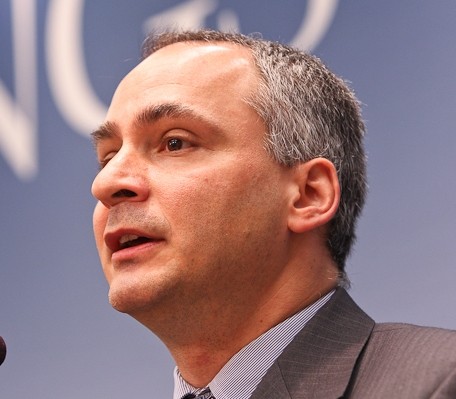
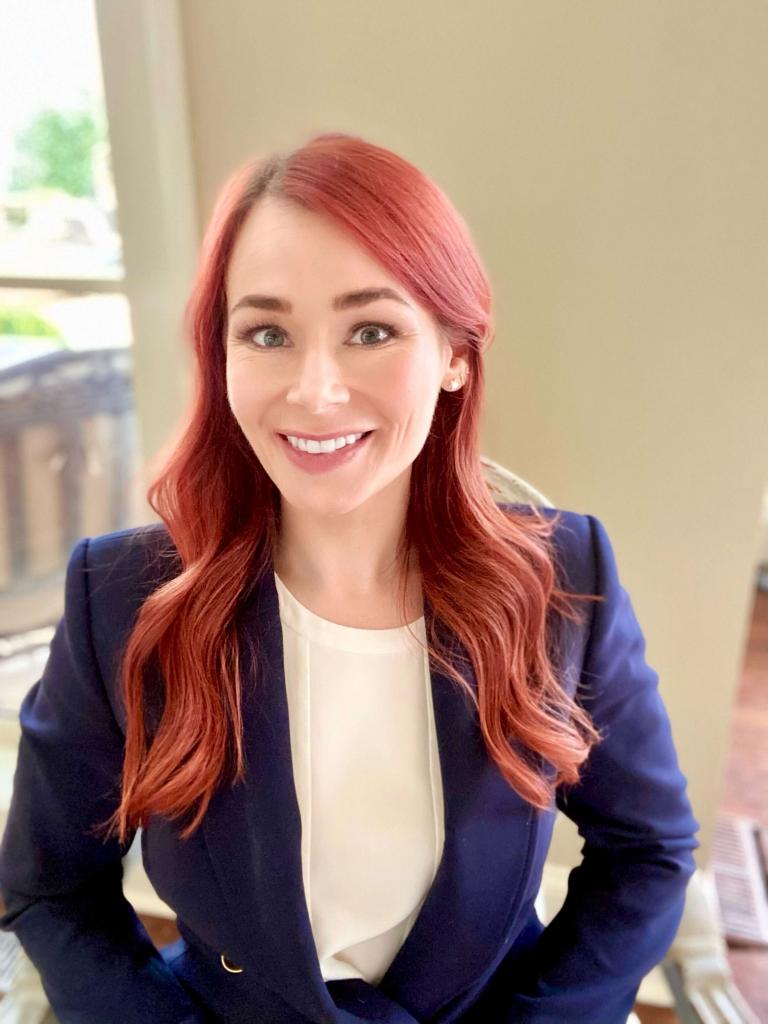


In a live conversation on YouTube, Lawfare Editor in Chief Benjamin Wittes sat down with Lawfare Senior Editors Anna Bower, Eric Columbus, and Roger Parloff to discuss Kash Patel’s testimony in front of Congress, a preliminary injunction preventing the Trump administration from deporting some Guatemalan children, updates in Fed. Governor Lisa Cook’s challenge to President Trump’s attempt to remove her, and so much more.
Click the button below to view a transcript of this podcast. Please note that the transcript was auto-generated and may contain errors.
Transcript
[Intro]
Benjamin Wittes: It’s
the Lawfare Podcast. I'm Benjamin Wittes, editor-in-chief of Lawfare,
with Lawfare Senior Editors Roger Parloff, Anna Bower, and Eric
Columbus.
In the September 18th episode of “The Trials of the Trump
Administration,” we talked about Kash Patel's testimony in front of Congress, a
preliminary injunction preventing the Trump administration from deporting some
Guatemalan children, updates in Fed Governor Lisa Cook's challenge to President
Trump's attempt to fire her, and much, much more.
[Main episode]
I am here with Lawfare Senior Editors Roger Parloff,
Eric Columbus, and Anna Bower. And we've got a fair bit to talk about. We are
going to have a slightly different format today, which affects those of you who
may have questions.
So, we are going to do a form of disappearing panelists, which
is after we do Eric Columbus-oriented questions, he's gonna vanish in a puff of
smoke. And then we're gonna do Anna Bower-oriented questions, at which point
she will vanish in a puff of smoke. And then it will just be Roger and me here,
and we will play the piano and sing and dance, and do magic tricks.
So if you have questions for Eric about any of the cases that
Eric is talking about, flag them before he disappears. We're gonna take
questions for Eric before the puff of smoke. And if you have questions for Anna,
ask them wh––pose them, we’ll bring you on to ask the questions before she
disappears in a puff of smoke. Roger and me, you can wait as long as you want ’cause
we're not going anywhere.
Alright. All of which is a long-winded introduction to, let's
start with federal personnel matters. So we had a Fed meeting. Lisa Cook was
present with both of her fraudulent mortgages in the backpack. She, she came
with, no, I'm joking. She didn't seem to have been removed for cause, but now
the Trump administration has gone to the Supreme Court and said, no, really, we
wanna get rid of her. Bring us up to speed, Eric.
Eric Columbus: Sure.
I'll backtrack a little bit. For folks who may not have listened last time,
would not have been here last time, Lisa Cook is on the Board of Governors of
the Federal Reserve. Trump purported to fire her, ostensibly because she'd
claimed two different properties as her primary residence on mortgage
applications.
According to the Federal Reserve Act, each governor has a 14-year
term, quote, unless sooner removed for cause by the president. And Supreme
Court has basically blown up nearly every statutory protection for presidential
employees, but in Wilcox, it carved out in dicta an explicit protection
for the Fed, because they seemed to believe that political messing with the Fed
could carry far worse consequences than in other realms.
They didn't say that, of course, but that–basically said only
that the statute, the statutory protection remains valid. It doesn't say, it
doesn't say you can't get rid of them at all.
Cook sued. And, saying, look, this firing was not for cause.
And even if it was, it was pretextual, and I was denied due process–notice and
opportunity to be heard. Cook won in the district court. The court left the
pretext argument aside, but said that she was not fired for cause and that she
was denied due process. So that's where we were last Friday's recording.
The government––since then, the government sought a stay
pending appeal from the D.C. Circuit and lost in 2-1 decision with two Biden
judges in the majority and a Trump appointee, Judge Katsas, in the minority.
And interestingly, the majority relied only on the due process
claim, which might have been a strategic decision to focus some justices’
attention on an issue where the judges believe Cook is most likely to prevail.
So the Fifth Amendment says no person shall be, dot dot dot, shall be deprived
of, quote, life, liberty or property without due process of law.
Benjamin Wittes: Included
in that list is not job.
Eric Columbus: Included
in that list is not job. So the first question, therefore, is whether Cook had
a property interest in her job. And a lot of it turns on a case from 1900
called I believe Taylor, in which the court said that the loser in a
contested governor's race in Kentucky did not have a property interest in the
position.
Now the D.C. Circuit majority distinguish that case as not
being a position with a statutory for-cause protection. Judge Katsas has
disagreed and said, basically, look, it's crazy to think that someone who wields
so much policymaking power as a Federal Reserve governor can have a personal
property interest in keeping her position.
So today, the solicitor general asked the Supreme Court for a
stay pending appeal. And in addition to arguing that there's no property
interest, the government says that even if they're wrong, and that she was
entitled to due process, she received all the process that she was due. Because
Trump and, was, after he posted on Truth Social that she had the, the bad
mortgages, blah, blah, blah, that she, she had allegedly misrepresented the
mortgages, he waited five days to fire her. During that time, she did not
provide any substantive response. That was the government's argument.
Lurking in the background are two issues. One is that everyone
knows this isn't the real reason why he fired her. To what extent does that
matter? Judge Katsas noted in his dissent that that shouldn't matter at all,
because presidents can do things for reasons other than, than the stated reason.
That you don't look behind a presidential decision-making, as the Supreme Court
has said in a variety of times, including in the Muslim ban case, Trump v. Hawaii
in 2017.
And second, perhaps more relevant to what the Supreme Court is
thinking, now, there have been articles suggesting quite strongly that Trump is
wrong on the facts––which I realize would be a first––but that she did not in
fact represent incorrectly on her mortgage applications. Now, there's no real
place in the litigation for that to play out at this point, but it might or
might not be something that the Supreme Court considers as they evaluate this.
That said, I, I think the presence of a dissent by Judge Katsas
is usually a good indicator as to where the Supreme Court is gonna come out.
Benjamin Wittes: And
specifically, where two justices––he's an awfully good bellwether for Justice
Kavanaugh and the Chief. Not perfect by any means, but they have extremely
similar backgrounds. He is, and I, I think if you, if you wanna understand the
center of gravity of the court–of the Supreme Court by looking at one judge on
the D.C. Circuit, Judge Katsas is not a crazy place to look. And can I, can I
ask a silly question about this?
Eric Columbus: Of
course.
Benjamin Wittes: You
know, there are these, you get these, a bunch of these cases where, you know,
the president says he's doing something because of acts an invasion from
Nicaragua––from Venezuela. Or, you know, a state of war that exists that nobody
knows of except him. And, or a bank fraud, a mortgage fraud, that is clearly
pretextual for something else.
You know, at some point the fiction that you are deferring to a
coordinate branch of government rather than deferring to a coordinate branch of
government lying when you know they're lying, becomes, I mean, a bit laughable,
right?
And I, I'm curious what you think the embarrassment factor is
at the Supreme Court that, you know, for Judge Katsas. These cases come up
every now and then, but every single one of them ends up at the Supreme Court,
and every single one of them is basically, the president is lying to the courts
about what, why he's doing what he's doing.
And you have to decide, five justices, whether you care. Or whether
you're willing to say, the president says that, you know, green is blue, and we
are bound to defer to that. Do you think there's a, that this is just an
ideological thing? Or is there some point at which the embarrassment factor
catches up? Because this case is embarrassing.
Eric Columbus: It is
embarrassing, and it's embarrassing in multiple ways. There's the first, the
pretext, which is not unique to this case and not unique to this president. But
when you couple it with, with factual allegations that are probably in, in
addition to being––
Benjamin Wittes: Yeah,
it's a pretext, and it's false.
Eric Columbus:
They're false. I mean, it's like, I think a couple of weeks ago the, when you
were discussing the Alien Enemies Act and either you or maybe Katherine Yon
Ebright came up with the, the possibility of Trump declaring that these Tren de
Aragua had assassinated the, all the justices of the Supreme Court. Like, do
you have to defer to that determination by the president if the Supreme Court's
right there and they're saying, hey, we're actually still alive? I mean, does
that, does that tip the embarrassment factor beyond?
Benjamin Wittes: That
was Katherine. I, that's a good hypothetical and I can't claim credit for it. I
was, I was sad as soon as she came up with it that I had not come up with it, 'cause
it was excellent.
Eric Columbus: The
ultimate compliment.
But there's also a third embarrassment factor here, which is
that the Supreme Court, I think, thought that they had preempted this when they
carved out the Fed in, in the Wilcox case.
Benjamin Wittes: Right.
And so spell that out for us. Because we all thought this was gonna be a Humphrey’s
Executor case and it's not.
Eric Columbus: It's
not. Yeah. I mean, they–in, in Wilcox I forget which of the independent
agencies had a for-cause protection and, but the, the Supreme Court stayed the
lower court's injunction preventing Trump from firing that person saying, look,
this is, these, Article Two does not allow these for-cause protections for
presidential appointees.
And then they said, no, no, but we're––and then they said––they
didn't have to say this, they went out of their way, I mean, even though it was
nothing but the facts of the case that presented them––they went out of their
way to say, oh, but the Fed is different because the Fed, it was created in the
early 1800s pursuant to, you know, Bank United.
It just, they kind of went on for a few paragraphs. Because
they had to––maybe one paragraph, but they had to say something. And they had
to use some words in order to distinguish what they were trying to distinguish.
But most people were not convinced that it had any real logic to it beyond the
strength of their views about the importance of an independent central bank as
opposed to independent regulatory agencies. And so I think they thought that
this was, this would not happen, that the Fed was safe, but then.
Benjamin Wittes: And
then he is like, no, I'm doing it for cause.
Eric Columbus: But
then, I'm doing it for cause. And if they can, and if he can do this to Lisa
Cook, then he can do the same thing to Jerome Powell and blame, you know, cost
overruns.
Benjamin Wittes: And
particularly if he can make up facts by which to do it. So it's one thing if
you have to actually count on Jerome Powell to commit mortgage fraud. But if
you can merely make it up and say, oh, well, my guy Pulte at the Federal
Housing Administration says he committed mortgage fraud, and there's no basis
in which he gets to challenge that or to refute it, you don't have to bring any
charges. Well, then you can kind of do whatever you want.
Eric Columbus: And
you can do it not just to Jerome Powell, but to Jerome Powell’s successor, who
will be nominated next year.
Benjamin Wittes: All
right. All of which is a great place to leave this, since it is in the hands of
the Supreme Court. And just a matter of fun prediction Eric, how long do you
predict it will take the Supreme Court to issue a stay in this case?
Eric Columbus: Well,
I think it's, it's a little odd because the, the big event that everyone was
expecting this to be resolved by, the Federal Open Market Committee meetings, just
happened earlier this week. And so there's no longer this very quick rush.
But I think, I think I was reading that Lisa Cook just filed
her reply, her response just now. I have not had a chance to look at. So I
think it would––I mean, it depends upon whether the court, the court can take
its time without rushing if it wants to. So I would imagine by the end of, I'd
imagine by early next week, let's say, they often surprise me by moving more
quickly, but I'd say next week?
Benjamin Wittes: Yeah.
End of the day today.
Alright, let's talk about the American Federation of
Government Employees, in which there is a summary judgment grant. What do
we know and what do we think?
Eric Columbus: This
was a case that has been lingering around for a while, it's gone up and down,
in which probationary employees challenged their termination by OPM. And it
went up to, originally to the Supreme Court.
When on, when the judge in––Judge Alsup, who I believe was in
the Northern District of California first granted an injunction and ordered
them reinstated. But then that was stayed by the Supreme Court, because the
Supreme Court found that there was no standing by, for the nonprofit
organizations that had filed suit.
The case went back down and Judge Alsup held that public-sector
labor unions had standing and he issued a, it went to summary judgment. And
today he ordered, he ruled in fa––generally in favor of the employees, but
didn't really do that much for them. He found that their firing was basically
arbitrary and capricious, was very chaotic.
OPM had, and the agencies had basically no idea what they were
doing. And the OPM, the agencies were fighting and OPM somewhat haphazardly
came to various conclusions about which agencies were included and not, and
why.
Judge Alsup considered whether administrative exhaustion was
required by the probationary employees to go through some combination of the
Office of Special Counsel, the Merit Systems Protection Board, and the National
Labor Relations Authority. For various reasons, Judge Alsup concluded that none
of those would be able to provide real relief.
But then he basically said, look, you know, I can't provide
full relief either because these, there's been so much water under the bridge.
These––which was actually, actual phrase he used––the jobs that the
probationary employees held basically no longer exist in some cases, many
cases, their offices that they, in which they––not the physical offices, but
the part of the department in which they work––no longer exist. There's been so
much of this that happened.
And he also noted that the, the Supreme Court in its emergency
docket is, would probably overrule any judiciary––judicially granted relief
regarding reinstatement. So he basically said, look, I'm gonna enjoin OPM from
ever doing this again. I'm gonna require that they update all the personnel
files to make sure that it reflects that the termination was not based on
performance or conduct.
And literally they have to write a note to each of the
defendants saying––each of the plaintiffs, rather––saying, you are not
terminated on the basis of your personal performance.
Benjamin Wittes:
Alright, somebody who was terminated on the basis of her personal performance
is Maureen Comey, whose performance included having the last name Comey.
And Maureen Comey––whom, despite being friends with her dad, I
actually don't know, and I don't wanna pretend to know Maureen Comey, I don't
think we've ever met––was, brought suit this week. What do we know about the
suit?
Eric Columbus: She
was fired in July, apparently for no good reason. Her father––
Benjamin Wittes: Her
name is Comey.
Eric Columbus: Her name
is Comey.
Benjamin Wittes: And,
and in the first year of a Trump administration, in that middle period between,
you know, it's gotta be somewhere between May and August, you fire somebody
named Comey.
Eric Columbus:
Exactly. It's like the, like the swallows returning to Capistrano.
Benjamin Wittes: Exactly.
Eric Columbus: Our,
our good friend Laura Loomer apparently discovered in May the, of Maureen,
Maureen Comey's existence and, and tweeted about her and it, it took them two
months to get rid of her. Interestingly, relevant or not to the termination, Maureen
Comey led the team that prosecuted Ghislaine Maxwell. Just saying.
So she has sue––and, I'm sorry, she was, she was given the notification
that she was given of her firing, just said basically because of Article Two,
'cause of the president's authority Under Article Two.
The Civil Service Reform Act of 1978 says that's not good
enough, says you need to provide good reasons to fire someone. And does not say
anything about their last name being Comey. Also says you need to give them 30
days’ notice, at least seven days to respond orally and in writing.
Now normally these suits go to the Merit Systems Protection
Board. If you're challenging your, if you're a federal employee challenging
your termination, and which has three members with seven-year terms. Unfortunately,
there's only one member right now who ret––one retired at the end of his term
and then Trump fired the other. And the Supreme Court let him do it, in one of
these cases where the court invalidated the for-cause protections. So there's
only––there's not a quorum right now for the Merit Systems Protection Board.
You can still go, still file suit before admit the, the board's
administrative judges. But it––and in some cases you can leapfrog the board to
get to the Federal Circuit––but it's unclear whether they, the administrative
judges can grant you full relief. There's a backlog. The administrative judges
are overwhelmed. And the government is claiming that the whole scheme is
unconstitutional.
So, Maureen Comey is basically alleging that it would be futile
to make her pursue relief before the Merit Systems Protection Board. And she's
not the first person, fired federal employee, to make this argument this year.
But none of the cases have been litigated yet. I, I would lean toward thinking
that she would lose here and her ability to challenge it in federal court, but
that remains to be seen.
Benjamin Wittes: And I,
I was just gonna ask, given that the court's position seems to be that, you
know, you can't challenge dismantling of an agency except on an individual
basis. And given that their position is that mass terminations of grants have
to be challenged individually, why would they not take the position that you
have to go through the Merit Systems Protection Board process, even if you
can't?
Eric Columbus: Yeah,
I mean, I think they––well, even if you can't, would be the reason, but I, I
think they would say like, look, you––it is a hobbled remedy, but it is not
entirely futile.
Benjamin Wittes: Gotcha.
Well, I will just say that Maureen Comey has one argument that all these other
people don't have, which is that the Merit Systems Protection Board is designed
to adjudicate disputes over a civil service firing. This isn't even a dispute
over a civil service firing. It's a complete bypass of the rules entirely.
You know, where if Trump is right and he can fire somebody ‘because
Article Two,’ not withstanding all of the civil service rules, I'm not sure
that that's a, a matter that the Merit Systems Protection Board has any
authority to address, you know, the, the president's constitutional authority.
And so it seems to me that the president here may have so
overstepped that he's actually––there's no dispute about Maureen Comey's
performance or her eligibility under the civil service rules. There's merely a
dispute as to whether the president gets to waive the whole civil service
system away entirely.
Eric Columbus: Right,
yes. Yes.
And they've, they've mentioned that, that the––in their complaint
that the MSPB has held that it does not have the authority to consider the, the
constitutionality the CSRA.
This is somewhat analogous to what we see some in some
immigration law cases where the immigration judges are similarly constrained in
considering constitutional arguments. And therefore the government is trying to
channel things to them. And the, particularly the immigrants are trying to keep
them in federal court, actually in Article Three court, for the same reason.
Benjamin Wittes: All
right. Before we let you go, there is one question that has your name written
all over it. From the anonymous attendee, assuming that SCOTUS upholds Cook's
firing, might they make an argument to evade or bypass the issues raised by Wilcox?
If so, what might that look like?
Eric Columbus: Evade
the arguments raised by Wilcox, right?
Benjamin Wittes: The Wilcox
case to which you alluded before.
Eric Columbus: Yeah.
Well, they wouldn't, I mean the, the arguments in the––the government is right
now not challenging the dicta in Wilcox about how the Fed is carved out.
The government is accepting for the purposes of this case that for-cause
protection for the Fed is valid. Yeah.
Benjamin Wittes: But
couldn't they argue that––yeah, I guess that's right. They wouldn't, they
wouldn't have to.
Alright. This is the part where Eric turns into a puff of smoke.
And we turn to the Anna Bower portion of the show, in which the first thing
that happens is that Anna Bower seizes control of the of the monitor––moderator's
microphone and turns the tables on me.
Anna Bower: All
right, Ben, well, I will turn the tables on you. So this week, Kash Patel was
in the hot seat before the Senate Judiciary Committee and the House Judiciary
Committee. There were at times some fireworks. Tell us about it. What did you
make of it?
Benjamin Wittes:
Well, so it was an interesting pair of hearings. Both Patel and the Democrats
on both committees kind of made a point of making it as combative as possible. There
were definitely––he definitely came in knuckles bared, and a bunch of the
Democratic members in both chambers came in with a clear desire to have a
shouting match with him for purposes of the cameras.
That said, I do think––so number one, I think he was pretty
effective in certain respects, the first being that he turned a hearing that a
lot of Democrats expected to be about Epstein into a hearing in which he was
crowing about crime data. And, you know, that the merits of those claims have
really yet to be adjudicated. But a lot of the hearing was him talking about
how much crime is down and how effective his approach has been in that regard. I,
I just wanna say I find this very unconvincing, but I do note that he managed
to take up a lot of time with it.
The second thing is that he made a series of claims about the
personnel actions that he's taken at the Bureau that are, I think, almost
certainly false. And whether they're false in a, a perjury sense, I have no
idea. I think you'd need to know a lot more than I know in order to make that
allegation. But they are certainly, I think, not true.
And he claimed, for example, that nobody at the FBI had been
dismissed because of their prior case assignments. I flatly do not believe
that. He also made a number of claims that, you know, that there is, you know,
no politics in the decisions about who's, who is being investigated and for
what. I––that is very clearly not true.
And I, and so I think he, you know, really did quite
aggressively try to seize control of the agenda. He's a fairly effective, I
don't know, street brawler in terms of his, you know, argumentative style. And
I think he threw a lot of people a little bit off balance with just how willing
he was to, you know, do things that FBI directors normally don't do. Which is
to call members of Congress disgraces and, you know, why don't you serve your
constituents, and that sort of thing.
One thing that I think, you know, hasn't gotten a lot of
commentary, but is––was very striking to me was that this is a guy who is
serving in a, you know, it's sort of a political appointment, but it's sort of
not. And he was very much there as a member of the administration and as a
representative of the MAGA movement. And he used words like ‘we’ to refer to
the Trump administration.
And that is not something that prior FBI directors of you know,
either Democratic administrations or Republican administrations would do,
because they all have this sense that they're there on a 10-year term. They're
not like the attorney general––attorneys general tend to be a little bit shy
about talking like that, too, but FBI directors really don't. And this is a sea
change, I think, just in how the FBI director evinces, you know, describes
himself, talks about himself.
And you know, it raises a really interesting question: In the
next Democratic administration, will you have an FBI director who talks about “we”
meaning, you know, the president and I, the Attorney General and I, the CIA
director and I? Not we, the intelligence community or we, the law enforcement
community, but we, the administration?
So I think there were a number of really interesting aspects of
Patel's testimony.
Anna Bower: Let's
focus on two of the areas that you mentioned. One is crime statistics. What is
it that kind of set off alarm bells for you when Patel was talking about the
crime statistics? You suggested that you are not entirely––you're a little bit
skeptical of some of the claims that he was making.
What was it specifically, and I guess like why, why does it ma––like,
it seems pretty obvious why we care if the FBI is fudging numbers around crime
statistics, but what's kind of the upshot for you in terms of why it matters
that Patel is making claims that might not meet with reality in terms of the
statistics that he's throwing out there?
Benjamin Wittes:
Yeah, so I wanna say I have not yet done a deep dive on the crime figures for
2025, which are, in any event, not stable enough and detailed enough to really
do that yet. So one of the first things I would say is, I think he's talking
prematurely.
And, you know, you're comparing 2025 data that is very
preliminary to previous years that are much solider and we usually don't do
that. We usually say things like, hey, so far murder rates are looking much
better this year than next year.
We don't assert: there's a dramatic drop in murder nationwide,
and it's because I have sent FBI agents to plus up every state in the country,
including yours, Anna Bower, right? Which is the tone that he was talking in, you
know, very, very confidently, that the numbers will bear out a dramatic change.
And very certain of the reason.
Now, there's a lot of reasons to be skeptical of that. The
first is that policy––you know, crime data is a lagging indicator of policy. And
if you change policy and send more FBI agents to an area, it's gonna take a
while before you see the number of murders decline. So that's the first reason
for my skepticism.
The second reason for my skepticism is honestly, you know, the
arrest statistics that he announced, which are dramatically higher this year
than last year. And he was really pounding the table about that. You know, FBI
investigations don't happen overnight. If you have a lot of arrests this year,
that's because of investigative activity that's been going on for a long time.
And so I'm skeptical that Kash Patel came in, you know, caused
immense turmoil among the rank and file, and the result of it was to accelerate
a whole lot of violent crime investigations. That doesn't ring right with me.
Now, do I know that it's incorrect? No. Am I, was I surprised to see him as
confident as he is and to see member, Republican members as confident as they
are, not merely that there's a dramatic decline this year and, you know, but
that it's caused by policies of this administration?
Yeah. Color me skeptical.
Anna Bower: Yeah.
Okay. So the other area that you mentioned as well is some of these
discrepancies in the claims that he was making about personnel firings at the
FBI and how that fits with claims that are being made in some of the lawsuits
that have been brought by former FBI agents. How, how could that potentially
affect some of the litigation, if at all, going forward?
Benjamin Wittes: Well,
so well––
Anna Bower: ––and
also is it likely that we'll see a potential Kash Patel deposition in any of
this litigation if it continues to pass the discovery phase?
Benjamin Wittes:
Yeah. There is no question that Kash Patel will be deposed in anything after
the discovery phase. He is the principal actor in a lot of these allegations.
And he and Dan Bongino are the key policymakers. And so any suit that
progresses beyond a certain point is gonna involve his testimony.
Now, he was speaking, you know, he was careful not to speak
about any of the specific cases where there are allegations. So the ones in
which there are, you know, Mr. Jensen and Mr. Giardina and Mr. Evans have sued,
he declined to talk about that. And he was not asked about situations like that
of our colleague Mike Feinberg. But he was asked in general terms many times
about a number of things.
One is, are you asking inappropriate questions in polygraph
exams, in which people allege that there have been questions about whether
people have criticized Kash Patel, and he claims that that didn't happen. And
that in any event, he's not involved in, you know, figuring out what to ask in
polygraph exams. That is just not what the
public record suggests.
And so one possibility here is that the public record is wrong,
that a whole bunch of FBI personnel are making anonymous allegations to the
media about Kash Patel that are not true. Another pet possibility is that Kash
Patel is lying, and that this will come out in the course of, of litigation and
discovery.
And a third possibility––which is, I suspect, the truth––is
that Kash Patel thinks he is speaking very carefully. And that he is trying to
say things that cannot be tagged as lies, but convey false information. Now, do
I know which one of these this is? No. Do I think it's probably the third?
Yeah, I think he's lying––trying to lie without actually lying. Alright. If
there's nothing else, let's move on.
Anna, I am seizing back control of the reins and turning the
tables on you. Let's talk about your favorite case this week, the Guatemalan children
case, where Judge Tim Kelly––just today, as I promised you all he would. I
said, you guys said he was a Trump appointee. And I said, yeah, but Tim Kelly's
a very good judge, just ask Roger Parloff, he did a very good job in the Proud
Boys case. And I saw some stuff in the chat that was like, yeah, well, we'll
see.
And today we saw. What did, what did Judge Kelly do?
Anna Bower: We saw
Judge Kelly granted the plaintiffs’ motion for a preliminary injunction to bar
their removal to Guatemala. And also granted the–because remember, this is 10
named plaintiffs in this suit.
And then he also granted a provisional class that includes
essentially all unaccompanied Guatemalan minors, except those who already have
a final order of removal and therefore are removable, or minors who, unaccompanied
minors who have sought and then received permission from the Attorney General
for voluntary departure, which we know from this litigation is––there’s, you
know, a very, very small number of, of that group who might want voluntary
departure at this stage.
But, so essentially, this is a win for the plaintiffs. The only
thing that they did not get in terms of what they requested was a relief for a
broader class that would include all unaccompanied minors from non-contiguous
countries. So basically, kids from other countries like Honduras or El
Salvador, where there are some signs in recent weeks that the government may
very well be planning to do the same thing in terms of rounding them up and
removing them on the basis of this so-called reunification authority.
Benjamin Wittes:
Alright, so we actually have a question on this case, which in our new format
we're gonna do in order.
Michael asks, in the Labor Day weekend middle-of-the-night
child reunification case––other than not trust the DOJ any farther than Judge
Kelly can throw them––can or will Judge Kelly take any actions to hold the DOJ
to account for their flagrant misrepresentations, a.k.a. lies, in the earlier
part of the case? So, remind us, Anna, what those misrepresentations were, some
of which he calls out in the first paragraph of this decision, right?
Anna Bower: Yeah. I,
I mean, it's––this is one of the remarkable things about this decision is that,
you know, when I, when I initially wrote the piece about this case called ‘The
Guatemalan Children's Case and the Judicial Learning Curve––which is on our
site, folks who haven't read it yet––you know, we talked in that, in that piece.
One of the questions was, it was clear that Judge Sooknanan,
who was the emergency-duty judge who initially put a stop to all of these
middle-of-the-night removals, it was very clear that she had been paying
attention to things that happened before with Drew Ensign making alleged
misrepresentations to Judge Boasberg.
So the very last line of the piece is, you know, basically, is
Judge Kelly paying attention too? And the answer that's very clear in this, in
this memorandum opinion is yes, he has been paying attention. The main––
Benjamin Wittes: In
fact, one got the feeling he read your piece. Am I crazy?
Anna Bower: I, there
were parts where I was like, did he read, did he read that piece? Because like,
like––
Benjamin Wittes: It
seemed like he was concerned about a lot of the same issues that you, yeah.
Anna Bower: But I
mean, look, there's a lot to be concerned about in this case, right? So maybe
it's just quite obvious to Judge Kelly as well.
But you know, the main represent, misrepresentation that he
calls out––although there are many others that, further on in the opinion, he
really zeroes in on––the main claim was, the government initially said that it
was fairly outrageous that the plaintiffs were trying to put a stop to the
removals, because this was just an example of the government reunifying parents
and children, that these were children who you know, would be put back together
with their parents in Guatemala, that there had been requests made for the
children to return to Guatemala by the parents.
And it––and as he, Judge Kelly puts it, that claim crumbled
like a house of cards. I mean, this is a Trump judge who is saying that the
government's representations crumbled like a house of cards.
Benjamin Wittes: This
is a Grassley staffer. I mean, this, this is, this is not a lib.
Anna Bower: And he's
like, there's no evidence in the record before the court that like basically
any of these kids wanted to go back or that they even had parents to go back to
there.
And in fact, all the evidence suggests otherwise. He points to,
you know, this report that Reuters reported on, that was obtained from the
Guatemalan government, in which the Guatemalan government says, you know, the
parents we were even able to locate––and weren't able to locate a whole lot of
them––the ones that we could locate said, you know, they didn't, they had not
requested to have their kids back or that they didn't want them back.
And, you know, there's other things too that he points to, in
terms of the government at one point provided a declaration by Angie Salazar,
who is the acting director of the Office of Refugee Resettlement, which is the
office responsible for the custody and care of these children.
And it was all about, you know, how they're applying this
criteria that they have about who is eligible for the program of so-called
reunification. And he basically says like, you know, the government's
representations about how it's applying this criteria isn't really tracking.
There's a lot of inconsistencies here. It's very clear he's not really buying
what the government was selling in terms of how it applied this criteria.
And at one point he says something in which he says, it doesn't
seem to be applying that in good faith. He, you know, very explicitly says that––and
keep in mind that this comes just two days after a group of whistleblowers
wrote a letter to Congress in which they alleged that Angie Salazar knowingly,
or, you know, should have known that she was making misrepresentations in that
declaration that she filed with Judge Kelly.
Because they pointed to a number of reasons, you know, why she
should have known that the things that she was saying in that was, was not
correct about how they selected children to be removed.
So, Ben, it's really just clear––it's kind of a remarkable
opinion because it is clear that Judge Kelly doesn't believe the government in
a lot of ways.
To answer the question though, you know, Judge Kelly doesn't
strike me as––he does not strike me as the type of judge who, sua sponte, is
just going to say, alright, sanctions for you, contempt proceedings for you.
I think that if there is anything that he would do, he, you
know, it's gonna play out, a) in the future of the litigation as it moves
forward, he's gonna know, like he's going to be on notice and have a kind of a
sense of skepticism about the claims the government is making.
But then also, b) in terms of any actual kind of proceedings or
sanctions, I think it would have to be some, through some kind of motion that
the plaintiffs would raise.
Benjamin Wittes: I’m sure
that's right, because the co––especially because the conduct in question was in
front of Judge Sooknanan, not in front of him. And it's one thing to sua sponte
respond when somebody, a lawyer, engages in misconduct in front of you.
It's another thing in, with, to do it when it happens in front
of another judge. Interesting question whether Judge Sooknanan might wanna have
something to say about that, but I think, Anna, you're almost certainly right
that there will be––that this will come in the form of a, some motion from the petitioners.
Roger, you have spent, uniquely among us, I don't know, six,
eight weeks, 10 weeks, 12 weeks in a court with Judge Kelly and, as I recall,
came away with a fairly positive impression of him. What are your thoughts on
all of this? You’re muted.
Roger Parloff: Yeah, I
did. And I thought he tried to get things right and if he had a fault, it was
that he let––he was very under––he, he let the lawyers speak and speak and
speak and speak, ’cause he wanted to make sure he had it right.
But I, I trust his judgment. And I was not surprised by the
outcome. I thought the ruling is really bulletproof.
And I also wonder, I––just a comment, I mean, this, you know,
of all the cases we've discussed, this is probably to me it's like the most
unconscionable. I, I really don't––I wonder––it's hard for me to imagine
they'll appeal, 'cause I don't think John Sauer wants the Supreme Court to see,
you know, that they behaved like this.
I know they got away with stuff in D.V.D. I think this
is beyond the pale. I, I think they're gonna put their leg between their the
tail between the legs and walk away.
Anna Bower: My
question is, do they, do they put their tail between their legs and walk away
with respect to all the other children from other countries as well?
’Cause, ’cause this relief relates to the unaccompanied
Guatemalan children. You know, there was a report just a few days ago that even
now they were planning to make the same type of move against other children
from other countries. And, you know, you've, you've gotta wonder how much this
order, even if it doesn't apply to those other children, could just nip those
plans in the bud. But we'll see.
Roger Parloff: Yeah,
there's 12 Hondurans involved in that Kettlewell case. And in addition
to more Guatemalans, which Anna pointed me to earlier, some other.
Anna Bower: Yeah, so
this is another case called Kettlewell v. Noem, which is playing out in
Arizona. There is a preliminary injunction, but my memory of that case though,
Roger, is that, or excuse me, there's not a preliminary injunction, there's a
TRO. But my memory of that case is that it's not a class––there's, they're not
seeking class certification. Is that right? In that clai––in that case?
Roger Parloff: That
might be right. I think they've got 69 plaintiffs and I, I think they're named.
I think that's right.
Anna Bower: Okay.
Well, we'll see. We'll keep everyone posted.
Benjamin Wittes: It
is time for a very occasional feature on this show called Flashback to Trump
Trials and Tribulations Season One. I wish we had a sound effect for this. We
go back in time. And there was a Georgia criminal case against the former, the
once and future president at one point. Anna Bower, this week, the Georgia
Supreme Court finally issued an opinion in the Fani Willis disqualification
matter. What did it do?
Anna Bower: Yeah,
man. What a blast from the past. It’s like––
Benjamin Wittes: ––from
our, to use a Taylor Swift, what reference from our, Georgia criminal trials
era.
Anna Bower: Yeah,
exactly.
So, and from our somehow romantic love affairs becoming the end
of a, a prosecution against a former president, which is––so this relates to,
as folks might remember, the relationship that existed romantically between
Nathan Wade, who was a special prosecutor on the Fulton County case against
Trump, and at one point 18 others, but now it is 14 others as it stands.
Fani Willis, of course, had a romantic relationship with Nathan
Wade. She's the district attorney. Mike Roman’s counsel, Ashleigh Merchant, in
January of last year, sought to put a stop to the prosecution by seeking
dismissal and disqualification. There was a whole circus of an evidentiary
hearing that we covered. Judge McAfee eventually said––
Benjamin Wittes: Remember
we used to call him Boy Wonder?
Anna Bower: Boy
Wonder. Boy Wonder eventually said, at the end of it all, I don't think this
rises to a conflict of interest that is disqualifying, but the whole thing just
kind of stinks. And I think it rises to the level of an appearance of
impropriety. And I think the remedy here should be that Nathan Wade has gotta
go, or Fani Willis has to give up the case. So she gave, he gave her a choice.
She chose to fire Nathan Wade.
It then went up to the Court of Appeals of Georgia, and the
Court of Appeals of Georgia eventually said, actually, even though appearance
of impropriety isn't supposed to rise to the level of disqualifying a district
attorney, we still think that she should be disqualified. And so poof, Fani
Willis, you're off the case.
And this is then on appeal from that, Fani Willis sought to get
back on the case. It went up to the Georgia Supreme Court. We've been waiting
for months and months. At one point, inexplicably, the Georgia Supreme Court
decided not to you know, have a scheduled argument on it. And so it, it's after
these many months of waiting we got a decision, and the decision was that the
Georgia Supreme Court just won't hear the case. And effectively what that means
is that the Court of Appeals decision remains in place and Fani Willis is
disqualified.
In terms of the reasoning, Ben, we had concurring opinion on
behalf of three judges of the Georgia Supreme Court and then a dissenting
opinion on behalf of three others. But the swing vote, the, in the majority
for, for whatever reason, did not join in on the concurring opinion in the
majority.
But the essential reasoning, bottom line here is, the majority
said, you know, we're the Supreme Court. We're supposed to just hear legal
issues of great, you know, public importance or significance, and we just think
this is too niche. This is too specific of a dispute to hear this, even though
the public might be really interested in this case. You know, we just think
it's too specific for us to chime in on.
On the other hand, in the dissent, the, the judge who also is a
Republican appointee said, what are you talking about there? Nothing could be
more important than the question of whether an appearance of impropriety itself
can disqualify an attorney, because that affects literally every attorney in
the state of Georgia.
Benjamin Wittes: One
is entitled to ask what exactly you have a state Supreme Court for, if not to
answer a question like that.
Anna Bower: So
basically the Supreme Court just punted it said, we don't wanna have any part
of this, we're not gonna hear it. And that means, as a result, Fani Willis remains
disqualified. There's basically no other way for her to get back on the case now.
And the, the consequence is that this goes to a, the prosecuting attorney's
counsel of Georgia
Benjamin Wittes: Which
has as its head, the awesomely named––
Anna Bower: Pete
Skandalakis.
Benjamin Wittes: His
name is Pete Skandalakis. Which is what happens if you take a scandal, and you
make it into a Greek dish that you can serve at dinner. It's called a Scandalakis.
Anna Bower: Yeah. And
he is in, in charge of this agency. So it goes to them and they then will
either, well they've now said that they are looking for people to reassign the
case to. So that could be a special counsel. It could be another prosecutor's
office. So they're actively searching for someone to reassign this to who will
then decide whether or not to move forward with it or to drop the case
altogether.
I will mention there the, the precedent that we have for this
with Pete Scandalakis, is that he couldn't, he says he couldn't find anyone to
take on the Burt Jones investigation. That's the former lieutenant governor who
was under investigation by Willis, who––she was also disqualified from, from
prosecuting his case, although not in relation to her relationship with Nathan
Wade.
Pete Scandalakis said he searched and searched and couldn't
find anyone. He appointed himself to then decide the matter, and he decided not
to move forward with it, and issued a kind of two-page summary of, you know,
here's why I won't move forward with a prosecution against Burt Jones related
to his fake electors role.
Benjamin Wittes: But,
and in any event, he can't move forward with this case and nobody can until
Trump is out of office. Right?
Anna Bower: Well, not
necessarily true with respect to the co-defendants.
Benjamin Wittes: Right.
Anna Bower: And it may very well be, Ben, that, you
know, anyone who gets this case, a prosecutor, a special counsel who gets this
case, might decide that some parts of it are worth peeling off and prosecuting,
and some parts aren't.
So you, you know, for a long time the question of the
culpability of the people who weren't the organizers of the electors has been
in question. Jack Smith decided not to prosecute people who just participated
as fake electors and were not, you know, the architects of it, you know.
Benjamin Wittes: And
the Michigan case against them was just dropped, right?
Anna Bower: The
Michigan case against them was just dropped. So you might see parts of the case
like that being peeled off.
But then you've got things like the Coffee County element of
the case, which we've reported on extensively and seems to be, based on the
evidence as alleged, seems to be a pretty strong case. So, you know, I, I think
we'll see what happens, but that is where we stand now in the Fulton County,
Georgia case.
Benjamin Wittes: All
right. This is the part where puff of smoke number two, Anna Bower, watch her
turn into a puff of smoke. Ready? 3, 2, 1. And she's gone like that. All of
which brings us to part three.
Roger, remind us what Trump v. Slaughter is and what
it's doing at the Supreme Court.
Roger Parloff: So
Slaughter, Rebecca Slaughter, was an FTC Commissioner that was fired. And so,
it's sort of the same issue as with Wilcox and Harris and Boyle. Wilcox was
fired from the NLRB. Harris was fired from the MS––the Merit System Protection
Board, and Boyle was fired from the Consumer Product Safety Commission.
But this one is particularly important, possibly because the
FTC is what the Humphrey’s Executor was about in 1935. If Humphrey’s Executor––that's
the case, that established––that supposedly established, for a while
established––that you could, Congress could protect the members of these
independent commissions by saying the president can't fire them except for
cause. And they do that to keep them independent and nonpolitical and so on.
And then this was the theory that the unitar––people that
ascribed to a strong version of the unitary executive theory say, no, that
can't be. The president has to be able to fire everybody. They've gotta be
accountable. And not everybody, but the principal officers and so high, high-level
people like that, that perform executive functions.
So this is sort of the ultimate case. It, it it's conceivable
the court could still distinguish the FTC of 1935 from the FTC of today.
Congress has given the FTC a few additional powers. But if they’re go––this
might be the case in which they simply overrule Humphrey's Executor
except for the Fed. And right.
Benjamin Wittes: We
have to call it Slaughter? We can't call it Humphrey's Executor’s executor?
Roger Parloff: Oh,
oh, yeah––
Benjamin Wittes: ––I
mean, it does seem like we should go with the––
Roger Parloff: –executor,
the executor of––
Benjamin Wittes: Exactly.
Humphrey's Executor’s executioner or executor? Executor. I don't know.
There's some, okay, morbid theme we could go with.
Roger Parloff: Yeah.
So anyway, it's fully briefed now and I hope it wasn't just, you know––I, it's
fully briefed. And also, what's interesting about it also is that the
government asked for the, the Supreme Court to grant cert before judgment. And
Slaughter's attorney agreed. So, and then after they did that, Wilcox's
attorney said, well, if you're gonna do that, we'd like that too. And then the
same with the, Harris's attorney.
So, this, it might go, right, we might get a cert grant rather
than just formally what's, what, what the stakes are, is motion for, you know,
a stay pending appeal. But we might get a cert grant, and so this could be a
big thing. Right now, Chief Justice––earlier this week or September 8th,
Chief Justice Roberts granted it an administrative stay. Yeah.
Benjamin Wittes: So, speaking
of the totalization of the unitary executive we have two more FBI agents who
are saying, you can't just fire me ‘because Article Two.’ How different is this
from the Maureen Comey situation, and what do we know about these guys?
Roger Parloff: So,
just to be clear, formally, we don't think the actual principles of, that are
involved in Slaughter and Wilcox and Harris are going to
play any role here because these are not principal officers. But––
Benjamin Wittes: Right,
no, this is the more extreme example, right?
It's where, where, you know, the, the soft hard version of the
unitary executive affects only principal officers. But the hardest version says
the president can fire a line attorneys and people with ostensibly civil
service protections like FBI agents or, or AUSAs. This is a more extreme case,
I think, than merely a principal officer, right?
Roger Parloff: Yeah,
I think that's right. This is where you would get down to having the whole
federal government be just Tammany Hall with Boss Tweed in, in control and just,
just a spoil system. Trump rewards his friends and punishes his enemies.
So we'll see if that's where we are going, but the actual
protections of each of these people varies. So, for instance, Comey apparently
would normally go to MS––the Merit System Protections Board.
A lot of FBI agents are not covered by the Merit Systems
Protection Board. Some––and the, and so we saw the three that we talked about
last week that Mike Feinberg talked about, that's filed, sued in Federal
District Court in the southern district––Brian Driscoll, Steven Jensen, Spencer
Evans they sued in district court. I don't think they would ordinarily be able
to go to the Merit Systems Protection Board.
Benjamin Wittes: So yeah,
they're senior executives.
Roger Parloff: Yeah.
Yeah. And, and so they're different. These people––now there's two others that
were fired the same day as those people––Christopher Meyer and Walter Giardina––and
their cases are factually intermingled.
Benjamin Wittes: And Walter
Giardina, just re––people should remember, was fired in like, within days of
his wife dying of cancer.
Roger Parloff:
Exactly, yes.
Benjamin Wittes: And
was––
Roger Parloff: While,
while I think she was dying.
Benjamin Wittes: While
she was dying, he was interrogated. It's a truly deranged situation.
Roger Parloff: It is.
And so they and their cases are, like I said, intermingled because I think
Driscoll was trying to protect Meyer when he––that's one reason he was fired, and
Jensen was trying to protect Giardina, and that's one reason he was fired.
These two guys have, they are, they do have apparently Merit
Systems Protection Board claims, and they have brought them. Apparently because
they are combat veterans, so that's a special category. Certain, certain––they are
combat veterans, but certain categories of veterans have special protections.
So, they have brought what are called appeals. It's an appeal
of Ka––of Patel's termination. And so that will go before an ALJ. In theory, if
they lose, they could appeal to the Merit Systems Protection Board, as Eric
said. Right now, there's no quorum there. And then in theory, you could move
from there to, I think, the appellate court, U.S., you know, Court of Appeals.
And the other thing that they get, my understanding is that as
veterans or combat veterans or whatever this high level, they also are entitled
to––see, see, ordinarily you can't, the MSPB can't take constitutional
questions. So, and there––you know, all of these people have First Amendment
claims and Fifth Amendment claims, but what they do have is that as combat
veterans, they are supposed to be given statutory due process before they're
fired.
And so they can claim that they weren't provided that. And, and
so I think that's the way that will go. I do not have the MSPB complaints.
Those aren't public, typically. And, but, that's the situation with them. They
were fired. Christopher Meyer was a pilot among other things. He was an––he was––
Benjamin Wittes: He
was Patel's pilot.
Roger Parloff: He was
Patel's pilot. Yeah. They have 50 years of FBI experience between them, in
addition to being sort of decorated war, I mean decorated veteran––combat
veterans. He, he had been an Air Force pilot in Afghanistan. Apparently, the
attack on him comes from a right-wing podcaster, Kyle Seraphin, former FBI, who
thought that he was the main case agent at Mar-a-Lago. And Meyer says he never
worked on the Mar-a-Lago case.
Giardina, he's been the target of accusations from Senator
Grassley, who says that he's getting information from whistleblowers he was
supposed––thought to have received the Steele Dossier. He says he was never
involved in that investigation. So, those are the sorts of things at stake
there.
Benjamin Wittes:
Alright, it's time for a brief immigration roundup. We have three cases to talk
to talk about. We have, again, a reminder that a lot of these cases involve
initials D.A.––which does not stand for district attorney––v. Noem.
This is the Ghana case. Roger, what's going on here?
Roger Parloff: Yeah,
I, I think that we should group this together in a way with L.G.M.L. in
that, what I think is happening here is that the government seems to be
pressuring or incentivizing foreign governments to give diplomatic assurances
or make requests––you remember L.G.M.L. was, supposedly was Guatemala requesting
that we help them reunify families.
Benjamin Wittes: Right.
Roger Parloff: That was how it was presented to the
judge. And so here, the claim, they're going to foreign governments and they're
saying they give diplomatic assurances that if you deport somebody there, they'll
be sure and they'll make sure that person does not experience persecution or torture
or death, and they won't forward them to a country where they will experience
those things.
And the, the advantage––the reason that these are being sought
is, the government is seeking ways to avoid judicial review of removals. You
know, just so that they can take people in the middle of the night, send them
out of the country without any judicial review. And, and, and this is a third
country removal case, so it's sort of D.V.D.-land for people that
remember the, these are people that, all the plaintiffs are 14 people who all
have orders of withholding of removal, or withholding under the convention
against torture treaty because they face persecution, torture, or death abroad.
They all have that if they would be returned to their countries
of origin, which in these cases are Nigeria and Gambia. Which, for some reason,
we call the Gambia. And so they've all, they were removed to Ghana, but Ghana
immediately returned several of them to their country of origin, including one
of the plaintiffs named K.S.
And apparently the plan––and Ghana has been telling people over
there that it plans to return the rest to their places of origin. And, in fact,
the most incredible fact is that two of these plaintiffs have submitted
declarations that say that on the plane, you know, they weren't told where they
were going, they were just bundled into this plane.
And then, on a refueling stop in U.S. Virgin Islands, ICE officers
told them, you are going to your home countries, you're going to Ghana first,
and then you're going, you know, and if that's true, then this––and the, the government
goes in and they say, well, we got assurances from Ghana that they wouldn't be
refouled or refouled or, you know, they wouldn't be resent to the countries
from which our, our immigration judges have found that they have federal,
credible fears of facing torture, persecution and death.
But Ghana doesn't seem to think so, and the ICE agents didn't
think so. So it looks like a sham.
Benjamin Wittes: And
so, and what's the status of it?
Roger Parloff: So
Judge Chutkan got the case. And of course, they were already in Ghana. And so,
you know, the two problems are, well, I, I feel for you, but what's––how,
what's the redressability, how do I tell Ghana not to forward them? And can I
even tell the government to tell Ghana not to forward them?
And, and the plaintiffs were saying, well, tell Ghana, have the
government, tell government to tell Ghana to facilitate not sending them to the
third cou––and, and the other problem was she wasn't sure if it was covered by D.V.D.,
which has a class action about third country removals.
And so, Judge Chutkan ruled yesterday. She denied the TRO. She
it––it was a, a, a painful ruling to read. She said the government's actions
appeared to be part of a, quote, pattern and effort to evade its legal
obligations by doing directly what it indirectly, what it cannot do directly.
She said that the case is not an outlier, but the court cannot
order the U.S. government to order a foreign government to take any action,
despite facts in the record, indicating that this agreement may have been
designed to evade the government's obligations to plaintiffs. Dot dot dot, the
court's hands are tied.
So, that's where it stands. It, it's, it hasn't been dismissed.
It's––the TRO has been denied, and she might disclose––she says that the, the
agreement—only she knows the government submitted under seal initially or in
camera an affidavit from a high-level State Department guy.
But her understanding is there is no written agreement with
Ghana. And whatever that guy submitted she might make that public. That's,
that's in litigation right now.
Benjamin Wittes:
Alright. Speaking of people who had a bad day, Mahmoud Khalil. Not a great
situation for him. What's going on?
Roger Parloff: Yeah.
This is such a complicated case. But he lost an immigration judge ruling in
Louisiana yesterday. To, to understand it, I have to step back. You remember?
He's the Columbia University––he was a legal, a lawful resident, a green card
holder basically. And he was active in the Palestinian demonstrations at
Columbia.
And then the government tried to expel him, and he was detained
originally under this Secretary Rubio finding of, where it's called, the person
will––
Benjamin Wittes: That
he was a threat to U.S. foreign policy.
Roger Parloff: Yes.
Would compromise a compelling United States foreign policy interest just by his
presence in the United States.
And, and then a few days later, they added––they tacked on––and
we think you said something false on your application for citizensh––or for
lawful resident alien status. And so we're, that's fraud. We're gonna––and, and
so, the case has been kicking around, it––there's almost 400 entries in the
court thing now.
It's before Judge Farbiarz in New Jersey, the federal––and
there's a parallel in immigration proceedings. And anyway, the, the immigration
judge had, had, was going to, had ruled that they were gonna remove him, both
under the Rubio decree and for this fraud and, alleged fraud. And then Judge Farbiarz
said, no, I already struck down the Rubio decree as vague, for vague, for voidness.
And then he sent it back to, said reconsider, which is sort of
odd, you know, 'cause he's not the, he's not the–– an appellate judge. But it
was odd of her, too, not to ignore his ruling. And so then she said, well,
okay, I can't hold him for that, but I, I'm gonna, I'm gonna remove him on the
fraudulent document charge, even though almost nobody has ever been removed for
solely that charge anyway.
It's in––so, it's not clear if Judge Farbiarz is gonna try to
do something. The, the appeal would be to the BIA, the Bureau of Immigration
Appeals, and then the appeal would be to the Fifth Circuit. But the Fifth
Circuit doesn't even typically stay removal during a pending appeal. So it
looks like he may get removed.
Benjamin Wittes:
Where is he now? He's free right now, right?
Roger Parloff: He is
free. After over a hundred days, he was freed by Judge Farbiarz. And then he,
and then meanwhile he has a Third Circuit appeal which is also a, a, sort of a
bear 'cause there's a hundred issues at play there. Did Farbiarz have
jurisdiction because it was filed in Manhattan and they were trying to get him
away to-
Benjamin Wittes: Right.
Roger Parloff: -to Louisiana? And, but anyway, and then
there's jurisdiction-stripping provisions and then there's––and it’s not a
great set of facts for the jurisdiction-stripping because you do have this
weird parallel proceedings that with the IJ immigration court and the, the
district court and the district court ordering the IJ to reconsider. That's
very strange. So, that it, it's a bear of a case.
Benjamin Wittes:
Alright, finally last case. Let's talk about National TPS Alliance. There is a Ninth
Circuit denial of a stay of a district court summary judgment. What on earth is
this case?
Roger Parloff: Okay,
remember, this is the case involving TPS––which is temporary protective status––that
was granted to, this batch is 350,000 Venezuelans.
So, you know, one of the first things Secretary Noem did was
she tried to vacate the, the order granting them that status from the previous
administration. And that was challenged. And if you remember back in March, Judge
Chen ordered a––essentially enjoining that. It's called granting a motion to
postpone.
And then this, Ninth Circuit denied a stay. And then in May,
Supreme Court granted a stay 8-1. Well, you know, okay, with one noted dissent.
And so––and with no explanation, and so, but a bad sign, a bad sign. And, and
there are jurisdiction-stripping issues. There's an issue about whether TPS
says our dis-, you know, the secretary's decisions are not reviewable. We don't
know what––what they were thinking.
But anyway, it went back to Chen. And so he did––he went
through the summary judgment, you know, he took evidence, discovery, it's now
fully developed. And so in, in––earlier this month, he ruled for the plaintiffs
again and said, Noem did no inquiry into even country conditions.
You know, it was just, this was all decided four days after the
inauguration, before she was appointed. It was just, you know, preordained,
there was no good-faith inquiry. And, and so he ruled for them again. And the Ninth
Circuit just yesterday denied a stay. And the government's, you know, it was 15
pages, it was unanimous.
The government was obviously saying, look, you need to fi-, you
know, the government, you, the, the Supreme Court's stay order tells you
something that's controlling but correctly as a legal matter. They said, no,
it's not controlling because now we have a fully developed record. The Supreme
Court didn't have it. We don't know what basis they were ruling on. And so, and
so that's where it is. It's sort of remarkable. I'm not very optimistic about
how long this lasts.
Benjamin Wittes:
Yeah. Count down to the Supreme Court stay. It'll come anytime now.
Alright. We've got two questions before we wrap. We're gonna
wrap on time today, guys.
Andrew asks, not sure if this is in any panelist’s ambit
specifically, but does Jimmy Kimmel have a strong case against the FCC for a
First Amendment violation among other claims? Brendan Carr has suggested that
the FCC rules against broadcast hoaxes concerning crimes might apply to
Kimmel's statement that got him suspended, though I'm skeptical as to whether
it does apply. There was no immediate public harm.
So I would say that what the FCC is doing is inimical to First
Amendment values and that ABC might have a First Amendment claim. It is hard
for me to see how Jimmy Kimmel, as an employee, and thus an arm of the entity
that is the licensee, would have a claim independent of that. But I've never
thought about this issue and I'm not, I'm venturing that as a very tentative
hypothesis that is super rebuttable. Roger, do you have thoughts on that?
Roger Parloff: Those
sound like––what my guess is, yeah. I, that's a weird––that it's a First
Amendment violation, I think, is obvious, but who can, what to do about it, if
anything––
Benjamin Wittes: Who
can assert it and under what circumstances?
Roger Parloff: I
think it would be, you know, it's an impeachable offense. But, you know, that
and a dime will, you know, get you a phone call as––
Benjamin Wittes: Not
even a phone call anymore.
Roger Parloff: Yeah.
Benjamin Wittes: Alright.
Josh asks what do people think of Kash Patel's behavior in the wake of the
assassination of Charlie Kirk? Is it appropriate for the FBI director to
comment on social media about ongoing investigations?
So the answer to that question is no. It is not appropriate.
But that is only the beginning of the impropriety. And the, the first major
impropriety is that Kash Patel should not have been involved in this
investigation at all. You know, Kash Patel, by his own account, and Charlie
Kirk were good friends.
And you don't, you know, if you're a surgeon, you don't operate
on your good friends. If you're a lawyer, you don't represent people who you
have a, a deep personal relationship with as a general matter. And you
certainly shouldn't, as a law enforcement officer, be leading an investigation
that involves the murder of somebody that you feel a personal connection to.
And so there's that. There is also––you know, law enforcement
done right involves a certain amount of professional detachment, and it is not
a good idea to be investigating things that you feel personally connected to.
The other thing that he did that was––I, I just thought wildly
inappropriate was that he announced that they had a subject in custody before
he had any idea what he was talking about.
And that may be what Josh is referring to, about commenting on
social media about an ongoing investigation. But it's more than a comment. It's
a comment about an individual subject. And you know, you can get somebody
killed that way. It turned out the person was innocent and shortly thereafter
released. There were actually two people who were detained for questioning.
This stuff is super routine. There's nothing wrong with
detaining somebody, questioning them, and then letting them go. One of the
reasons you don't talk about it is because they you can get people really,
really attacked. And so yeah, I don't think there's anything good to say about Kash
Patel's management of the situation.
I do think the field office's management of the situation was
very professional, as they did some good work, isolated some photographs of the
guy pretty clearly, and were receptive to the person's family coming forward
and coaxing him to come in.
And that the, the one other thing that they, the Bureau did
that I, you know, I don't, we don't, I don't really know who did this, but
Patel confirmed it in public testimony yesterday or the day before, that the suspect
has a trans roommate with whom he was romantically involved.
That was leaked by somebody. I don't know whom. You know, you
can really gin up a pogrom in that kind of way. And, you know, there's been a
lot of talk about the irresponsible rhetoric on the left celebrating Charlie
Kirk's murder.
But there has been some very irresponsible talk about and
malicious talk about trans people in relation to this and other criminal
activity that, you know, Patel did not put distance between himself in, and
whether he was responsible for it or not, whether those leaks came from the Bureau
or not, he certainly shouldn't have been confirming that stuff in congressional
testimony.
This is a witness to a crime who, by all accounts, was
cooperating with authorities. What you want is an envelope of protection for
somebody who does that. Not a not, you know, not a kind of a goon squad
mentality. Roger, do you have thoughts on, on Kash's handling of the Kirk
investigation?
Roger Parloff: No, I
think that that summarizes it well.
Benjamin Wittes: We
are gonna leave it there. Thanks today to the ghost of Eric Columbus, to the
ghost of Anna Bower, and to the live, in the flesh, actual Roger Parloff who
stuck with it to the end, and thanks to you all for joining us. We will be back
at our regular time next week.
Natalie Orpett: The Lawfare
Podcast is produced in cooperation with the Brookings Institution. You can
get ad-free versions of this and other Lawfare podcasts by becoming a Lawfare
material supporter at our website, lawfaremedia.org/support. You'll also get
access to special events and other content available only to our supporters.
Please rate and review us wherever you get your podcasts. Look
out for our other podcasts, including Rational Security, Allies, The
Aftermath and Escalation, our latest Lawfare Presents
podcast series about the war in Ukraine. Check out our written work at lawfaremedia.org.
The podcast is edited by Jen Patja and our audio engineer this
episode was Ian Enright of Goat Rodeo. Our theme music is from ALIBI music. As
always, thank you for listening.