
Lawfare Daily: Two Appeals Concerning Alien Enemies Act Removals in Apparent Defiance of a Court Order

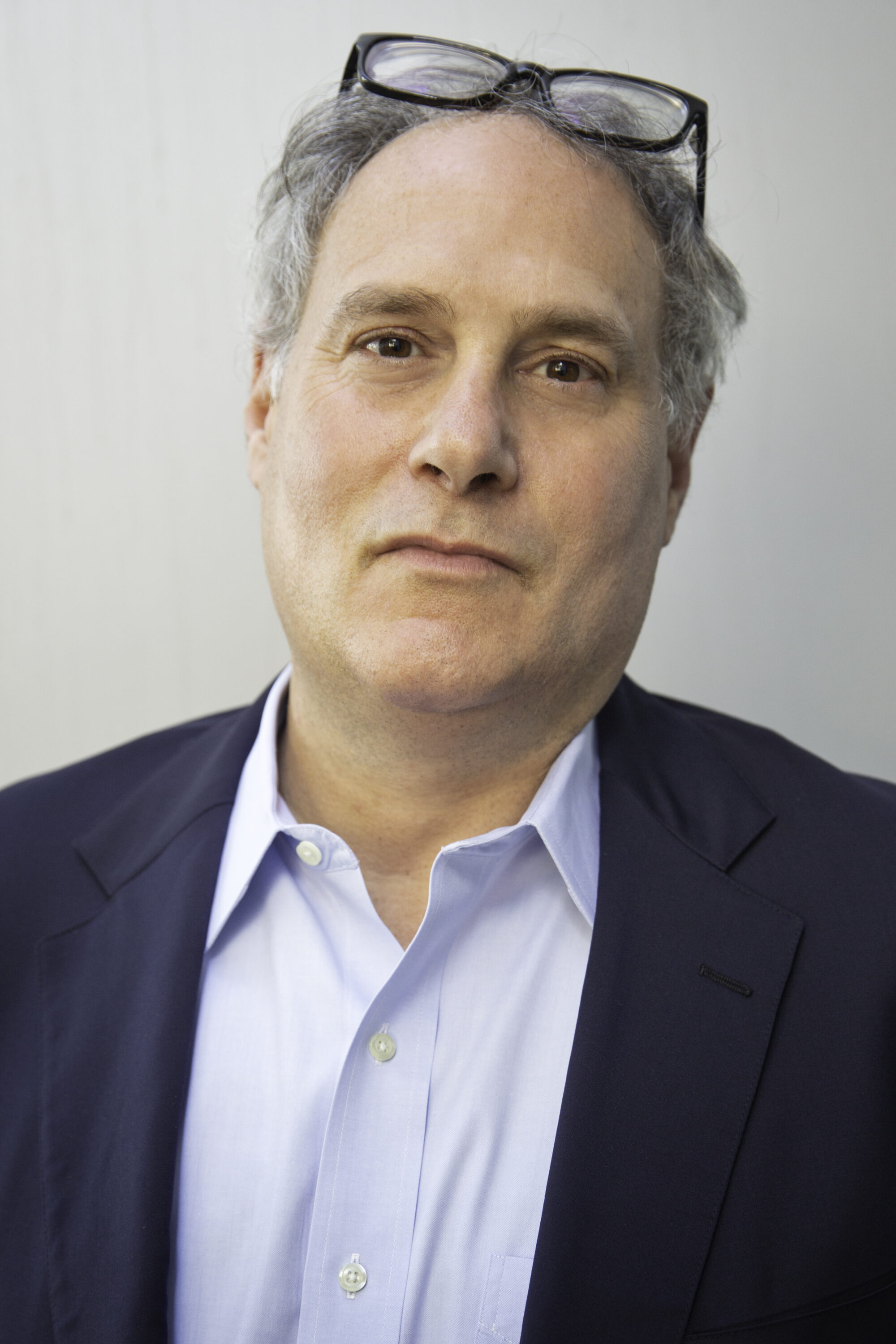

Lee Gelernt, the chief ACLU litigator on Alien Enemies Act cases, speaks to Senior Editor Roger Parloff about two upcoming DC Circuit arguments he’ll be making relating to the March 15, 2025, removals of 137 Venezuelans under the Alien Enemies Act.
In one, the en banc court will grapple with whether to permit Judge James Boasberg to conduct fact-finding on whether to seek contempt charges against high-level Trump administration officials, including current Attorney General Todd Blanche and current U.S. Court of Appeals Judge Emil Bove.
To receive ad-free podcasts, become a Lawfare Material Supporter at www.patreon.com/lawfare. You can also support Lawfare by making a one-time donation at https://givebutter.com/lawfare-institute.
Click the button below to view a transcript of this podcast. Please note that the transcript was auto-generated and may contain errors.
Transcript
[Intro]
Lee Gelernt: Chief
Judge Boasberg ended his first opinion by saying the rule of law is at stake
here, but let’s be clear, this is not, quote-unquote, just an academic
exercise. These men suffered brutally because the executive branch just thumbed
its nose at a judicial order. And so there’s a lot riding on this en banc
hearing on September 29th.
Roger Parloff: It’s
the Lawfare Podcast. I’m Roger Parloff, senior editor at Lawfare,
and I’m with Lee Gelernt, the ACLU’s chief litigator for Alien Enemies Act
cases.
Lee Gelernt: They’re
trying to have it both ways. They’re trying to set up, well, the secretary didn’t
do anything wrong. She just followed legal advice, and the lawyers gave
confidential advice, so that’s off the table. You know, so the whole thing is
just sort of wrapped up in obfuscation.
Roger Parloff: Today
we’re talking about two arguments Lee is about to make in the D.C. Circuit,
including an en banc case over whether Judge Boasberg can hold a hearing on
possible contempt charges against now Attorney General Todd Blanche and now
U.S. Appeals Court Judge Emil Bove.
[Main Podcast]
So Lee, you have two D.C. Circuit cases coming up in the space
of five days. They arise from the same case. There’s one September 25th and one
September 29th, which is actually en banc, the whole panel. We’re gonna do
both, but discuss both, but I’m gonna focus on the en banc case because in my
humble opinion, it involves the biggest legal scandal of the Trump
administration.
This is the one involving the specter of possible criminal
contempt charges against the now sitting Attorney General Todd Blanche, and a
now sitting appellate judge, Emil Bove. Can you explain for the listeners the
gist of that case?
Lee Gelernt: Yeah,
sure. So, what happened, you have to go back to March 15th, 2025. We heard
through media and through immigration attorneys that Venezuelan men were being
alleged as gang members of a Venezuelan gang, Tren de Aragua, and being moved
from all over the country to Texas.
We had been hearing rumors that the administration might use
the Alien Enemies Act against this gang. Then the media started reporting that
they thought it was going to happen that weekend of March fourteenth,
fifteenth, sixteenth, 2025. We then got calls from immigration lawyers saying
our clients are in Southern Texas now, and multiple lawyers had called us with
clients who had been moved from all over the country.
At the same time, the media was reporting that they had reason
to believe the administration might secretly invoke the Alien Enemies Act. We
stayed up all night for two nights and filed what’s called a TRO, a temporary ,
seeking a temporary restraining order saying, do not transfer these men. At
that point, we had heard they might go to El Salvador to a notorious prison
called the CECOT prison in El Salvador.
We stayed up all night and at one in the morning filed this
motion for a temporary restraining order. So that’s one in the morning, Friday
night, the fourteenth, Saturday morning, the fifteenth. And we have filed it on
behalf of five Venezuelan men as the named plaintiffs on behalf of a proposed
class of all the Venezuelan men who might be removed under the Alien Enemies
Act.
And just let me just pause there because I know the Alien
Enemies Act is not something that everyone knows. I— Prior to this Trump
administration, it’s not something I had ever really looked into. I think
people now have some understanding since this has been ongoing litigation for
sixteen months. But the Alien Enemies Act was passed in 1798.
It was intended to be a wartime authority that could be used
when there was a declared war or a military invasion. It’s an extraordinary
power given to the president to declare nationals of another country enemy
aliens, and basically take their property, detain them, remove them. Given that
it’s only supposed to be used against military invasions, it’s not surprisingly
been only used three times in the country’s history.
The War of 1812 when the British invaded, World War I, and
World War II, both obviously declared wars. So we filed this saying we have
reason to believe the Trump administration is gonna try and use it against
these men. The next morning, we get a call from the law clerks for Chief Judge
Boasberg saying, “He has been given your case. He’s gonna issue a temporary
restraining order for the five named plaintiffs and wants to hold a hearing on
Monday for the remaining class members.”
We urged the district court to hold a hearing over the weekend
because we had reason to believe the men were already being dressed for removal
and would be removed under the Alien Enemies Act that day, Saturday the 15th.
At this point, the government still had not made public any
proclamation u-invoking the Alien Enemies Act. We subsequently learned that
they had done it in secret and didn’t make it public till later that afternoon
on the 15th. The district court said, well, is there a proclamation?” And we
said, we think there is. It just hasn’t been made public, and we think Monday
will be too late. Our class will be in a notorious Salvadoran prison by then.
The government unbelievably told Chief Judge Boasberg, a
weekend hearing is premature. Your original idea of holding a Monday hearing is
fine. The government subs- That same lawyer who told the district court that
subsequently admitted that he knew the planes were gonna go that weekend.
So, in effect, affirmatively misleading the district court into
thinking Monday would be fine, knowing full well that by Monday it would be too
late. The judge said, well, in light of what the plaintiff’s lawyers are saying
and Mr. Gelernt is saying, I think we better hold a hearing, an emergency
hearing by Zoom Saturday night.
And so, there was a hearing on Saturday night at 5:00 PM. The
district court’s first question to the government lawyer was, so, I now see
there’s a proclamation which had finally been put on the White House website at
an hour before the hearing, an hour and roughly 18 minutes before the hearing.
The district court said, are there planes that are going with
these men? And when I say imminently, I mean in the next twenty-four to
forty-eight hours. The government lawyer said, I don’t know. The judge was
incredulous. So, they have sent you, you’re a high-level DOJ political
appointee. They have sent you to this hearing without any information about the
very thing we were gonna talk about. This hearing has been highly publicized.
Surely you knew you should come with that basic information.
The government lawyer said, I don’t know, but I can try and
find out. The district court said, Well, let’s take a recess, come back at six
o’clock, and you tell me what you’ve learned. The lawyer came back and said, I
still can’t give you any information, for waffling between whether it was
classified or he just didn’t have the information.
The district court said, well, let’s then go into a public—
take the public off the line, because at this point, the public was on the line
and the media, you tell me in camera. He said, I still don’t have any
information for you. I am urging the district court to act as quickly as
possible, saying we believe the planes are already in the air, and one may take
off imminently.
Little did we know that later we would find out that the planes
were unbelievably sent in the beginning of the hearing and during the recess,
even though that was exactly what the government was trying to find out. So,
someone made the decision, we still don’t know who, to actually send the planes
during the hearing.
The lawyer said, I still don’t have any information from you.
The judge said, well, in light of what Mr. Gelernt is saying, I think I better
issue a temporary restraining order. And just to be clear to the government,
this is supposed to be immediately complied with, and I don’t want any
confusion. If the planes are already in the air, turn them around. If they’ve
landed in El Salvador, do not let these men get off the plane and be
transferred to El Salvador.
His focus was on, A, preventing irreparable harm to the men,
but more importantly, stressing that I could lose jurisdiction and authority if
the men are turned over to a foreign sovereign. So, I don’t want them turned
over to a foreign sovereign.
Is that clear to the government lawyer? “Yes, Your Honor, it’s
clear.” We subsequently learned that the attorneys on the case sent multiple
emails to the agencies and to higher-ups at DOJ saying we’re gonna be in
contempt if we turn the men over to El Salvador. He says, then I will issue a
written order so that it’s all memorialized.
Thirty-three minutes later, he issued a written order saying, “As
discussed at the hearing, the men are not to be removed, and this is the class
definition, and we will have immediate further briefing and an argument.” The
government lawyers then, after the written order, continue saying, do not allow
these men to be transferred to El Salvador. We risk contempt.
We don’t hear anything. The court doesn’t hear anything all
night. The next morning, El Salvador releases a video, a harrowing video of the
men being taken off the plane in shackles, armed guards from El Salvador,
soldiers with guns, making them kneel, shaving their heads. El Salvador
releases that video early in the morning.
It’s at this point, Sunday the 16th, that the men had been
transferred around midnight, and our Secretary of State and our president
reposted the videos. At this point, we have not heard from the government
officially, nor has the district court. Finally, that afternoon, they tell the
district court, we understood the order to mean that it only applied when the
planes were in U.S. territorial airspace. Because the orders came after they
had already cleared U.S. territorial airspace, we thought we were free to hand
the men over to El Salvador.
That started what’s now turned into an en banc hearing sixteen
months later, with the government repeatedly trying-. Because Judge Boasberg
said, I think the government willfully violated my order. That’s a completely
contrived interpretation of my order. They didn’t come back to clarify. They
had five hours when they held the planes up in Honduras. They never came back
to clarify the order. They couldn’t possibly have understood me to be concerned
with whether the planes were in U.S. territorial space or not, because that— I
would not have been divested of custody just because they were in s- other
sovereign’s airspace, given that they were on a U.S. plane and U.S. retained
custody.
He said, I wanna try and get to the bottom of this. The
government stalled it out, went up to the D.C. Circuit, it came back to him.
This all led to finally the case being heard en banc, and the question is: Can
he continue with these criminal contempt proceedings? The government is saying,
we’ll tell you that Secretary, former Secretary Noem was the person who made
the decision. We won’t contest that she did it willfully for current purposes.
If you wanna refer her for prosecution, refer her to us.
Obviously, that’s going nowhere. But no— the investigation has
to stop as to anybody else about whether any DOJ lawyers lied to you, about
whether— why they kept this all secret, why they sent the planes during recess.
It all needs to be shut down and very bluntly told the full
court of appeals, the active judges, eleven of them, who are gonna hear this
argument, not that they would consider going to the Supreme Court if the Court
of Appeals allows the investigation to go forward, but within 14 days, they
will go to the Supreme Court if the investigation goes any further.
I mean, our brief lays out the full facts. This is a conspiracy
from beginning to the end, from the top to the bottom. And one other remarkable
fact that’s come out in a whistleblower disclosure is that now Third Circuit
Judge Bove, who was a high-ranking DOJ employee, apparently told a group of DOJ
lawyers the day before on the 14th, “The planes m- are going this weekend no
matter what, and we may have to say fuck you to the courts if,” and those are
from the exact words from the whistleblower, “if the courts try and stop us.”
So, this was a premeditated decision that we are gonna send
these planes. President Trump has already told DOJ, you’re gonna be reading
about something big Saturday. The planes are going, and we’re not letting the
court stop. They tried to keep the hearing from happening on the weekend. Once
the hearing happened, they sent the planes anyway. And then when the judge
issued the order, even though the attorneys on the case who were at the hearing
told their higher-ups and the agency repeatedly, we may not transfer the men,
the higher-ups didn’t bring those line attorneys into the discussion, never
went back to the district court for clarification, and just said, just transfer
them, and then didn’t even tell the district court till Sunday afternoon, this
was our interpretation, therefore, we did it.
You know, I know we’re gonna talk about this, but Chief Judge Boasberg
was the first really to put his foot down in the beginning of the second
administration that the executive branch cannot violate court orders and the
judiciary must stick up for itself. He has taken enormous heat for this, with
the president calling for his impeachment.
I anticipate that— I mean, I assume that he’s gotten enormous
threats. His daughter’s picture was put in the New York Post saying she works
for an NGO. You know, and I know now that there have been other judges who have
gotten threats. If the Court of Appeals does not stand up for this district
court, this is the most acute instance of the administration violating an order
with the most severe consequences, and we’ll talk about this later, I assume,
Roger.
The men spent four months in this prison, just abused every
single day and tortured. We now know that because there was a prisoner swap
where they were sent to Venezuela. And Chief Judge Boasberg ended his first
opinion by saying, the rule of law is at stake here. But let’s be clear, this
is not, quote-unquote, just an ‘academic exercise.’ These men suffered brutally
because the executive branch just thumbed its nose at a judicial order. And so,
there’s a lot riding on this en banc hearing on September 29th.
Roger Parloff: That
was a terrific summary. Let me just emphasize a couple things. The background
of this, I don’t think it’s really contested that this whole thing was a race
against the court.
This is not the crux of the criminal contempt proceeding, but I
don’t think it’s disputable that everyone knew the use of the proclamation was
dubious, that the giving them no due process whatsoever was impossible. And in
fact, we know that the Supreme Court later said nine to nothing on that point,
that was wrong.
And you see this activity on March 14th that you described,
where Trump says something’s gonna happen tomorrow with these people, you’ll be
proud of me, or something like that. You’ll be impressed. And of course, that
meeting that you discussed, which is not really... You know, it’s sort of the,
the fuck you meeting with Judge Bo- now Judge Bove, which is— They have
deflected.
Bove says he doesn’t recall if he said those words. But the
whole thing is... I mean, that much there’s no dispute about, that this was
about getting them out of the country before a judge could rule whether it was
lawful what they were doing.
Lee Gelernt: Yeah. And
I, and if I could just interrupt, I’m sorry, ‘cause I think you’re making a
really important point about race against the courts.
Because ultimately, Chief Judge Boasberg can look at civil c-
inherent sort of civil sanctions as well. What is clear is that there are cases
talking about even if there’s not yet an order, that can be the basis for civil
contempt for exactly the reason you’re pointing out, Roger, which is that you
can’t take race against the courts and tr- take away the subject matter of the
hearing so that it makes it impossible to provide relief.
And there’s cases stretching back to the 1960s that talk about
that, where someone, the lawyers or the client tries to remove something that,
so then the court cannot get at it once they hold a hearing, and it can be in a
variety of circumstances. Sometimes it’s moving money. And so, this situation
was the g- government was gonna try and get these men into Salvadoran prisons
so that no matter what the court ordered, ultimately it wouldn’t matter.
So, we will be pursuing that theory as well. But you’re
absolutely right. This was a race against the courts. Everything was done in
secret that Friday, and we later learned that then Attorney General Bondi had
sent a memorandum to DOJ saying these men are not entitled to any hearing, any
review. They can be removed immediately.
The government initially took that position, but ultimately had
to back away in the Supreme Court. And as you said, the Supreme Court was
emphatic in two different opinions that we can talk about how the government
tried to get around the first opinion about due process. And I think we will
when we talk about the September 25th case involving the men.
But you’re absolutely right to point out the race against the
courts is itself can be potentially con- a contemptuous violation.
Roger Parloff: You
mentioned it, but I just want to underscore it. This proclamation doesn’t
become public until one hour before the hearing and the presidential
proclamation, and 82 minutes before the first flight leaves, we now know.
You know, and the law is that it has no effect until it
becomes... They had no choice but to make it public. It sh- But the facts on
the, the race against the court aspect of it are just overwhelming. The, the
other thing I wanted to just give the reader some examples that are in your
brief of what Reuveni was saying to the higher-ups as after the hearing ended. Reuveni
is listening on a public line.
Lee Gelernt: And he’s
one of the attorneys in on the case.
Roger Parloff: Yes,
Erez Reuveni. At the time, he... I’m sorry, he was the, I think, deputy
director of the Office of Immigration Litigation. He later becomes a
whistleblower. He’s listening, and he is on a thread, an email thread with 23
officials from State Department, from DOJ, from DHS, and from ICE.
And at 6:48, he writes, PM, “The judge specifically ordered us
to not remove anyone in the class and to return anyone in the air.” And then
somebody responds and says, “Well, two flights departed already,” an ICE
person, “And, but we’re taking people off the third flight that hasn’t left.”
And he asks, “Well, what about the ones that are in the air?”
And he gets no answer. And then he repeats, “No one’s subject
to the AEA, the Alien Enemies Act, in our custody can be removed. Anyone in the
air should be returned unless they have a— they’re removable under some other
statutory provision.” And then at 7:18, “Again, please confirm ASAP. No one
lacking a, a final order of removal will be taken off these planes when they
land. We need to address this ASAP to avoid contempt.”
No response. They just freeze him out. And then one other thing
before I... You mentioned that Secretary of State Rubio and Trump retweet
Bukele’s post, the, the dictator of El Salvador, when he shows that he has the
prisoners. And Marco Rubio adds, “Oopsie.” He writes, “Oopsie,” meaning to make
fun of the courts.
Lee Gelernt: Right. I
think, as I understood it, that President Bukele of El Salvador had written
that and s- the secretary reposted that, but, you know, same difference. It’s
that-
Roger Parloff: Oh,
okay. I’m sorry.
Lee Gelernt: But same
difference. You know, the point is just whether the secretary wrote it or
simply reposted it.
Roger Parloff: Okay.
Lee Gelernt: It’s
piling on humiliation on the district court by the Secretary of State of the
United States.
Roger Parloff: Before
I get to the legal arguments, I just want to say one other thing. Boasberg
ruled in your favor, so the government files the first brief here. It’s a
mandamus. They’re saying that Boasberg is acting unlawfully, and obviously
unlawfully, because that’s a very high standard for mandamus. And, it’s such a
sanitized version of the facts that reading it, I become emotional, you know?
And I just have to admire lawyers. Y- your brief responding is
so, given that fact, it’s, it stays, it’s forceful, but you collect your
thoughts and organize them, and it’s methodical, and I don’t think I could do
it. You know, I just get so emotional. I don’t know. Do you have any comment
there?
Lee Gelernt: Well, I,
you know, I, well, I appreciate you saying that about our brief. You obviously
have seen a lot of briefs in your time. Yeah, I mean, it is emotional. I mean,
for one thing, those were our clients who ended up in that brutal prison, you
know? And so, but yeah, I mean, I, I think as a lawyer for the past 30 years, I’ve
never seen anything like this, you know?
And I’ve been litigating against the federal government almost
exclusively in my career, and now for more than 30 years, and this is a
remarkable situation. I... You know, 204 former federal and state judges of
both, you know, appointed by both parties have signed the brief, signed an
amicus brief saying the rule of law is at stake.
Several members of the D.C. Circuit have already written in
this case saying this is a grave threat. And, you know, in addition, former DOJ
officials of both parties have filed a brief saying, this is not the way the
Department of Justice has acted in the past under either party, and this is out
of bounds of zealous advocacy. This is something way different.
Yeah, it’s tough. I mean, you know, and Chief Judge Boasberg
has been unbelievably patient. They asked him, the D.C. Circuit, to throw him
off the case. The president sought to impeach him. You know, everything. And
you’re right. It is tough. We’re gonna see, you know, what the en banc
arguments are like. I anticipate that it could get very explosive. And you have
the government out there threatening, saying, well, we’ll just go to the
Supreme Court within two weeks if you d- let this go on.
And, you know, the other thing I would say is, and I think you
sort of touched on this, Rogers, the government has tried to sort of gaslight
everyone and say- Chief Judge Boasberg is doing something so unusual you need
to put an end to it, because you wouldn’t normally have a court looking into
having this kind of inquiry into high-level officials.
But the reason he’s doing it is not because he just woke up one
morning and said, let me inquire into people. They did something unprecedented,
so of course it requires a somewhat unprecedented response. You know, they can’t
do this out- thing that’s so outrageous and then say, how dare the judiciary
try and stick up for itself?
So I am hopeful that the D.C. Circuit says, look, this is not a
partisan issue. If we’re gonna con- continue to have the rule of law in this
country and a judiciary that protects itself, we need to stand up for Chief
Judge Boasberg and orders of a federal court. And I think, you know, no less
and no more is at stake than basic rule of law concepts here.
Roger Parloff: So,
now I’m going to finally get to some of the legal issues. I can’t say with
certainty w- what the government considers the, their strongest points, but one
of their key points is alleged ambiguity in Judge Boasberg’s order. And their
theory goes like this, that, yeah, maybe the oral order was clear. He says, you
know, words to the effect of ‘turn around the planes. You need to get, make
sure they don’t disembark.’
But he also says, I’ll put this in a written order so you don’t
have to take notes. And then a half hour later he says, “As we discussed in
today’s meeting,” and then he issues the order that the class members are not
to be removed. But he doesn’t define removed in the written order.
And so, the argument becomes, well, maybe by removed, even
though no one discussed this at the hearing, maybe all they meant was removed
outside the territorial United States, not turned over into the custody of
someone where he would lose jurisdiction. And of course, within five minutes
after leaving the airport in probably Harlingen, Texas, they were outside the
territorial U.S. So, we complied. That’s the ambiguity. Address that.
Lee Gelernt: Right. So,
for one thing, you’re right, that was the basis for the panel decision. Judge-
Judges Rao and Walker said there was too much ambiguity, and therefore,
criminal contempt can’t lie as a matter of law, so this whole thing needs to be
shut down. You know, I would just make a few points about that.
One is, just initially, even if that were true, and it’s
certainly not, the district court still may look at whether lawyers directly
lied to him and all that. That’s outside the bounds of even whether the order
was violated. But as to your point, right, the government is saying, well, the
district court at the hearing said you don’t have to race to write all this
down. I’ll memorialize it in an order.
The government says that Judge Walker said, well, look, that
meant that the whole oral order is gone. That’s wrong for a number of reasons.
First of all, when he said, you don’t have to race to write this down, he was
talking about the details of when the briefs would be subsequently due and also
what the class definition would be because he changed the class definition.
But even aside from that, he made clear that the government had
to understand the oral order, the basics of it, because he was saying
immediately comply, as Judge Walker acknowledges. And the government did, of
course, understand it, and Mr. Reuveni memorialized it in constant emails, as
you said, to that chain of 23 people.
And so, there’s no question the government understood that they
weren’t simply able to put aside everything in the oral order. But then, more
importantly, Chief Judge Boasberg’s written order specifically linked the
written order to the oral order because he started, as you mentioned, the
written order by saying, as discussed at the hearing.
So, he was specifically telling them these two things are
linked. The government is saying, well, the written order only says removed,
and that can have different meanings. Well, they didn’t— They could have
clarified it. Of course, the reason they didn’t is because they knew exactly
what the district court would say: Of course, I didn’t mean territorial. I
meant don’t hand the men over. My whole focus is not losing custody, and I
wouldn’t lose custody whether they were 10 miles inside the United States or 10
miles outside.
This is what you would have to believe if you take the
government’s position, that at the oral hearing, the district court’s sole
focus was on not losing jurisdiction. Then 33 minutes later, when he issued the
written order, he had completely abandoned that focus and s— thought: I don’t
care any longer whether the men are turned over if the planes are outside of
territory airspace. So, I’m completely reversing my concerns, and I am not
gonna tell anybody that I’ve reversed my concerns. We’re gonna reverse the
order completely. I’m not gonna tell the parties, the government. I’m not gonna
tell them, ‘If you’ve turned around the planes, you can re-turn them around.’ I’m
not gonna tell them if they’re sitting on the tarmac, ‘You can now release the
men.’ And I’m just gonna adopt this and have a new order and not tell anybody
that I have changed completely, all in 33 minutes.
That is completely far-fetched. You know, and as Judge Pillard
said in one of the dissents the first time it was up before the D.C. Circuit, this
is just a manufactured post hoc contrived interpretation. You know, and
notably, even though that was the basis for the panel decision that’s ult-
ultimately now en banc, the government’s brief doesn’t get to it, to page four—
opening brief till page 43.
And so, I think there’s some element of the government feeling
like, well, you know, we’ll make, continue to make that even though a number of
judges have said that’s completely contrived. So, their primary argument now
seems to be he has enough information to make criminal referrals because we’ve
said Secretary Noem was the one who made the decision, and for current
purposes, we won’t conc- we’ll concede that she did so willfully.
So, they fe- spend the first 43 pages talking about, okay.
Well, maybe even if the order was clear, it’s time for him to get it off his
plate and refer it to us. And Judge Katsas, in the first panel opinion, said
the quiet part out loud, everyone knows the DOJ won’t investigate this. And so
basically, they’re saying, the only person you can send to us is Secretary
Noem. After that, drop the investigation, and we’ll take over as the Secretary
Noem now, and that’s the end of it.
It’s as if the U.S. attorney was looking at a corporation, and
the corporation said, here. Here’s a vice president. We’re telling you he did
everything and nobody else did anything. Take it or leave it.
A U.S. attorney would never, you know, accept that.
Roger Parloff: And I’ll
get back to that argument. I— Before we abandon ambiguity, I just wanna stress
the most peculiar aspect of it. And again, correct me if I’m wrong, but I don’t
think anyone is arguing that anyone at DOJ or at DHS had any genuine subjective
confusion about what Boasberg wanted.
It’s this gotcha thing where they think he made a mistake that
they can capitalize on or exploit, but, when he moved from the oral to the
written. And just to make one final point. It, of course, in the written order,
he says, “As we discussed at today’s meeting.” And when the government in their
brief block quotes the order, they excise that.
Lee Gelernt: Right.
Roger Parloff: They
excise that sentence.
Lee Gelernt: Yeah, I
don’t think I’ve ever seen-
Roger Parloff: How
can you do that? ...
Lee Gelernt: anything
like that from DOJ at this level-
Roger Parloff: Yeah
...
Lee Gelernt: in the
past 30 years. I mean, that was a remarkable admission, right? It do- it’s not
as if that was buried somewhere. It started the minute order, and the minute
order was only a few sentences. So, someone made a deliberate decision to leave
that off.
Roger Parloff: So, I
think you’re right that their key arguments are what they-
Lee Gelernt: Well, I
just wanna ...
Roger Parloff: Yeah.
Yeah.
Lee Gelernt: Before
you get to that, I just wanna put some emphasis on the point you just made,
which is, I think, absolutely critical, is that they have never said anybody at
DOJ didn’t fully understand it.
We know now that the lawyers who were actually listening to the
hearing and arguing it knew full well what both the oral and written order
meant because Mr. Reuveni and his whistleblower disclosure has now revealed
those emails, and the government has conspicuously avoided coming in under oath
and saying anybody at DHS or DOJ didn’t understand the order.
I mean, we know they had to because it’s so implausible what
they came up with. They’re doing exactly what you said, saying, well, it has to
be so clear, there can’t be a gotcha. But this is not blindsiding them. They
knew exactly what they were doing. And the D.C. Circuit has been emphatic about
the point that it has to be a reasonable interpretation reached in good faith.
And in— it’s a s- objective standard, but the D.C. Circuit has
also made clear that if the individuals, especially if they’re sophisticated,
understood the order, that bears very much on the objective reasonableness of
the order. You know, and of course, they haven’t come in and said, we didn’t
understand the order to be this.
There’s no way they could have. They understood full well what
they were doing, but the president had promised this the day before,
apparently. Now Judge Bove had told them, we’re gonna say fuck you. And so, you
know, that’s how it all went down.
Roger Parloff: We’re
getting toward the end of our time. I do wanna— I’ll ask one other thing about
this case. A- and for the listener, Boasberg asked for declarations from the
people involved in the decision.
Lee Gelernt: Right.
Roger Parloff: And Kristi Noem said it was me, which is
f- sort of incredible on its face. And then based on a conversation with
privileged information from Joseph Mazzara, who was the acting general counsel,
and that he had conversations with high-level DOJ people.
And then Blanche and Bove said they gave their legal advice to
Mazzara. And they say, well, Judge Boasberg wants to now have a hearing where
Drew Ensign, and Erez Reuveni would testify. Two of the lawyer inv— there at
the hearing that day, and Reuveni, who the deputy director of the immigration
group.
And they say, well, there’s nothing relevant that they have to
offer. What do you say to that?
Lee Gelernt: Yeah. So,
I mean, the first thing is, right, the government is saying, well, they didn’t
directly talk to the secretary or even the high-level people. I don’t think the
government should wear that as a badge of honor that they kept the lawyers who
actually were on the case completely isolated.
I mean, they did that for a reason because they knew very well
that those lawyers would push back and say what you’re— how you’re interpreting
the order is completely implausible. We’re gonna be held in contempt. They can
testify to a number of things.
First of all, he’s not just looking at what the secretary did. He’s
looking at the whole situation of the race against the court, who lied to him,
so they can certainly testify to that. But the other thing is, even as to the
order, right? I mean, the fact that they isolated them means that Judge
Boasberg is gonna have to figure out what happened and why they were isolated.
So, they’re gonna be able to testify to what did Bove say the
day before, ‘cause that bears directly on whether this was a premeditated
decision. You know, were— did they ask to be involved in the discussions? Why
were they isolated? So, it— I, I think it all bears on it. I mean, the fact
that they kept them isolated...
You know, and they’re complaining, well, they don’t have the
direct information. Well, let them send former Secretary Noem. Let them send
Blanche or Bove or Mazzara. You know, let them send the person who made the
decision to send the planes during the recess. You know, they’ve left the, the
judge no choice. I mean, and the judge said, look, I want affidavits from all
those involved in the decision.
They cherry-picked who they were gonna put the affidavits in,
and remarkably, the affidavits were two sentences each. That’s how much
information they gave. And so, you know, they’ve talked about legal advice.
They’re trying to have it both ways. They’re trying to set up, well, the
secretary didn’t do anything wrong. She just followed legal advice, and the
lawyers gave confidential advice, so that’s off the table. You know, so the
whole thing is just sort of wrapped up in obfuscation.
Roger Parloff: Yeah.
Even the Reuveni whistleblower letter, which, you know, is sh- shocking and
says a lot, he’s actually very careful, and he feels that there are a lot of
privileges he can’t violate there.
There’s a tremendous amount he hasn’t said-
Lee Gelernt: Right.
Roger Parloff: that
sort of bears on mens rea here w- what he intended.
Lee Gelernt: Yeah,
and we hope that other career lawyers finally step up and say, this is not what
we signed up for. I mean, Reuveni, just to be clear, has been in five
administrations, including vigorously defending policies during Trump one.
I mean, I had many arguments against him during Trump one. And so,
I hope others at DOJ come forward and say, this is how it all went down.
Roger Parloff: And
then we have almost no time left. Can you just, as fast as you can explain what
the other case, the September-
Lee Gelernt: Right
...
Roger Parloff:
twenty-fifth case is about?
Lee Gelernt: Right.
So that is— stems from the same incidents that weekend.
The men who were sent to the CECOT prison are now, what we
filed on behalf of them an amended complaint and said to Judge Boasberg, These
men are entitled to hearings, not just because using the Alien Enemies Act
during peacetime is unlawful, but they deny that they’re even gang members and
fell within the order, even if the order was otherwise legal.
They never got a hearing. The government now concedes that
under the Supreme Court’s decisions in J.G.G. and A.A.R.P., they
didn’t get due process, and so the government concedes that there was a
constitutional violation. But without a trace of irony, says, well, Chief Judge
Boasberg can’t do anything now because they’re out of the country, never
acknowledging that they’re out of the country ‘cause they violated his order.
This is the very thing he was worried about, is that they would
come in and say, well, it’s too late now. They’re out of the country, at the,
at that hearing, the emergency hearing. So, he said, No, I have jurisdiction to
do something, and they either get remote hearings or be brought back. You can
detain them when they’re brought back, but one way or the other, they have to
be given hearings since you concede their due process rights were violated.
The government, of course, appealed that, said, we won’t give
them hearings. You have no authority or jurisdiction to order this. So that
case obviously is intertwined with the en banc. That will be argued separately
by me on September twenty-fifth before a D.C. Circuit panel, and that involves
our client’s right to basic process.
You know, as a lot of people said across the board, from Joe
Rogan to, you know, others, if there’s no hearing and anybody can be sent to
this notorious prison and held incommunicado , that means literally anybody can
be picked up, a citizen, anybody, if there’s no way to, for them to contest it.
They got zero time.
They were just thrown on the planes with no opportunity to say,
look, I’m not even a gang member. What are you doing? And we know now it was
flimsy evidence to suggest... that the government used to say each one of them
were gang members, tattoos of the Chicago Bulls you know, things like that. And
so that’s what’s at stake there is, you know, and I think Judge Wilkinson from
the Fourth Circuit in the Abrego-Garcia case, you know, a comparable
case, said, the federal courts can— this is untenable. This would be a loophole
that the government could exploit all the time, is rush people out of the
country, put them in a foreign prison, and then w-wipe their hands of it. The
courts cannot allow this. There has to be an ability to correct this.
And so we hope that the D.C. Circuit will say, absolutely, they’re
entitled to a hearing. And s-so that, you know, and they’re obviously
intertwined, the two cases.
Roger Parloff: I
think we’re gonna really have to leave it there, both fascinating cases. Thank
you so much for coming today, and really appreciate your time.
Lee Gelernt: Thanks
for having me.
[Outro]
Roger Parloff: The Lawfare
Podcast is produced by the Lawfare Institute. If you want to
support the show and listen ad-free, you can become a Lawfare material
supporter at lawfaremedia.org/support.
Supporters also get access to special events and other bonus
content we don’t share anywhere else. If you enjoy the podcast, please rate and
review us wherever you listen. It really does help. And be sure to check out
our other shows, including Rational Security, Allies, The Aftermath, and
Escalation, our latest Lawfare Presents podcast series about the war in
Ukraine.
You can also find all our written work at lawfaremedia.org. The
podcast is edited by Jen Patja with audio engineering by Goat Rodeo. Our theme
song is from Alibi Music. As always, thanks for listening