
Lawfare Daily: Why Immigrants are Challenging the Conditions of their Detention
Breaking down the landscape of immigration detention litigation.



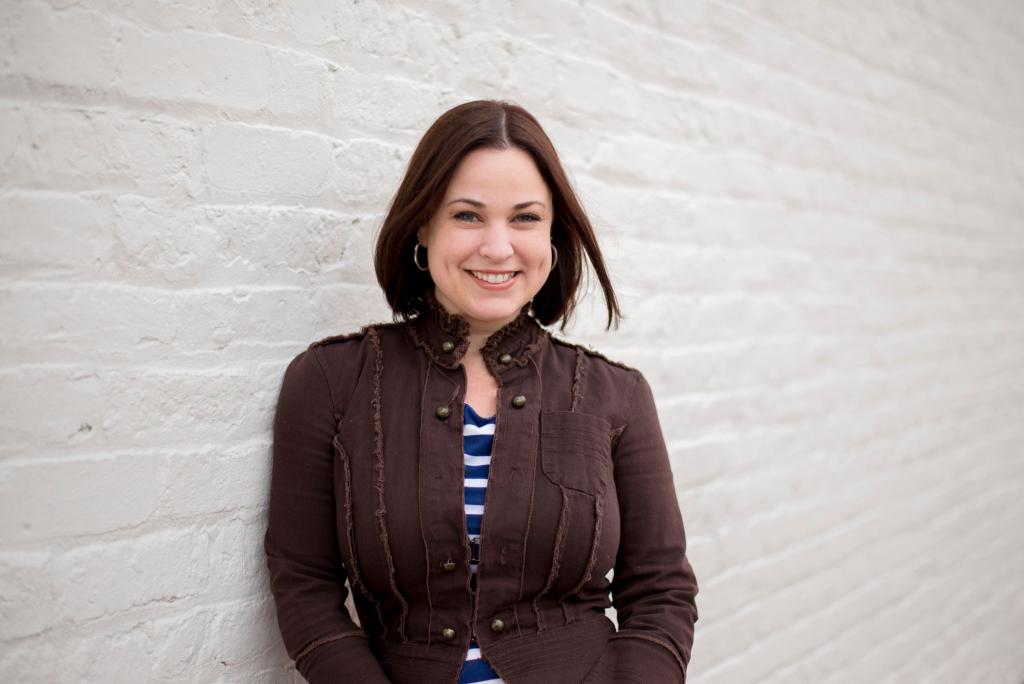
The Trump administration’s aggressive immigration enforcement policies have resulted in an unprecedented number of people being held in detention facilities. Now, lawsuits across the country are alleging horrific conditions in those facilities, including excessive force, unsanitary conditions, and denial of medical care. On today's podcast, Executive Editor Natalie Orpett speaks with Elora Mukherjee, Director of the Immigrants’ Rights Clinic at Columbia Law School, about the legal landscape of immigration detention. They discuss what rights detained immigrants have, why it's so hard to enforce them, and why it's even harder to get a remedy when rights are violated.
To receive ad-free podcasts, become a Lawfare Material Supporter at www.patreon.com/lawfare. You can also support Lawfare by making a one-time donation at https://givebutter.com/lawfare-institute.
Click the button below to view a transcript of this podcast. Please note that the transcript was auto-generated and may contain errors.
Transcript
[Intro]
Elora Mukherjee:
Unfortunately, across the country, immigration detention facilities, both those
that are run by ICE, but as well as those that are run by private prison
corporations, they are failing to meet these agency standards, and they're also
failing to meet the Fifth Amendment's due process standards.
Natalie Orpett: It's
the Lawfare Podcast. I'm Natalie Orpett, executive editor of Lawfare,
with Elora Mukherjee, director of the Immigrants' Rights Clinic at Columbia Law
School.
Elora Mukherjee: When
I've had, for example, a client detained at Delaney Hall, I couldn't reach
them, and I ended up filing a federal habeas petition. I let the federal judge
know I cannot access my client.
Natalie Orpett: The
Trump administration's aggressive immigration enforcement policies have
resulted in an unprecedented number of people being held in detention
facilities. Today, we're talking about one of the consequences. The conditions
of those facilities are, according to both reporting and numerous lawsuits
filed across the country, horrific. There are reports of excessive force,
unsanitary conditions, lack of access to food, water, and medical care. But
immigrants challenging these conditions in court face major obstacles, both
legal and practical.
[Main Podcast]
I've invited you on today to talk about one piece of the
immigration enforcement landscape, and that is detention.
So there's been a fair amount of news about these really
dramatic increases to the number of people being detained, and correspondingly,
some pretty poor conditions based on overcrowding and things like that. But
also allegations in a number of lawsuits around the country of unsanitary
conditions, of mistreatment, of insufficient access to healthcare, all sorts of
things.
It is, however, as I think lawsuits are finding, a very
complicated legal framework in which to operate. And so I wanna start by just
setting out the legal framework here. It's complicated, just like everything
else in immigration law, but I think it's really important to understand
because it helps explain why it's so hard to actually deal with the abuses that
are being alleged here.
So just to start with the basics, what is the body of law that
governs detention of immigrants? Because, you know, most of the time people
hear detention, they think cruel and unusual punishment, the Eighth Amendment,
but that's actually not what applies here. So tell us about that framework.
Elora Mukherjee:
Sure. Thank you so much for having me on, Natalie.
So the U.S. Constitution applies to all people on U.S. soil,
regardless of their immigration status or their citizenship status. For
non-citizens who are apprehended, their apprehension needs to be governed first
by the Fourth Amendment. A person cannot be unreasonably searched or seized.
That is a basic protection that all people on U.S. soil have. Have. Once people
are in immigration detention facilities, they must be given basic due process
rights that are set forth and protected in the Fifth Amendment's Due Process
Clause. And all non-citizens are also protected by the First Amendment, so they
shouldn't be retaliated against because of their speech.
With regard to conditions in immigration detention facilities,
there is the Fifth Amendment's Due Process Clause, and then there are
additional agency standards that detention centers must meet. For a detention
facility that is run by ICE, the standards are set forth in what's called the
Performance-Based Detention Standards.
They are agency regulations set forth by ICE itself. For many
ICE facilities, they're not directly run by ICE, but they're run by private,
for-profit prison corporations such as CoreCivic and the GEO Group. And for
those facilities, those facilities must meet what's called as the PBNDS, the
Performance-Based National Detention Standards.
So these two agency regulations basically set forth in detail
that a person in immigration detention must be cared for in a reasonable way.
They must be safe in immigration detention. They must have access to adequate
food, drinking water. There are transportation standards that must be adhered
to. And unfortunately, across the country, immigration detention facilities,
both those that are run by ICE, but as well as those that are run by private
prison corporations, they are failing to meet these agency standards, and
they're also failing to meet the Fifth Amendment's due process standards.
Natalie Orpett: And
can you spell out in a little bit more detail what the Fifth Amendment
standards are? Because if that... of course, that's constitutional. There are
sort of different teeth to regulatory requirements. But in terms of just the
basic constitutional rights, you know, I, as I understand it, there is a
requirement for civil detention, of which immigration detention is a type, that
the detention cannot amount to punishment.
But how does that sort of play out in, in practical terms? What
do the, the items that you listed, the conditions, et cetera, how is that
actually determined or assessed?
Elora Mukherjee:
Right. So as you've already mentioned, the Fifth Amendment's due process clause
protects people who are in immigration detention from punitive detention.
Immigration detention is only supposed to be used for two
purposes: one, if someone poses a flight risk, and two, if someone poses a
danger to the community. But otherwise, civil confinement for immigration
purposes is not permitted under the law. In terms of the conditions that
immigrants are facing across the country in detention centers, repeatedly
people are talking about overcrowding.
They're talking about not having access to sufficient clean
drinking water. They don't have access to palatable, appropriate, edible food.
They are sleeping in conditions that are terrible with the lights on
twenty-four seven, where they may not even have access to sufficient bed space.
A few years ago, under the Biden administration, there were about thirty-five
to thirty-six thousand immigration detention beds available on any given day.
By January of twenty twenty-six, there were more than seventy
thousand people in immigration detention facilities. That number has dropped
slightly today, so we're currently seeing about sixty thousand people in
immigration detention facilities, but that is still far larger than the number
of people who should be in these facilities.
And overwhelmingly, immigrants who are being detained currently
do not have any criminal histories whatsoever. So according to statistics that
I saw recently from TRAC, upwards of seventy percent of people in immigration
detention facilities have no criminal histories whatsoever, not even traffic
violations.
And then if you look at the percentage of people who have very
minor offenses such as traffic violations, it makes up another really big
proportion of people who are in immigration detention facilities. So these are
individuals who are not criminals, who have by and large done nothing wrong,
and yet they are being treated As criminals, as prisoners, without being given
access to the basic conditions that people need to survive and thrive.
Natalie Orpett: Yeah,
and if I understand correctly, part of that huge increase, at least of late, is
because of the Trump administration's new, and one might say novel,
interpretation of when mandatory detention is required. Can you talk a little
bit about that and how that corresponds or doesn't to the two justifications
for immigration detention that you outlined?
Elora Mukherjee:
Absolutely. So there are two statutes. Getting into the weeds, there are two
statutes that we should be looking at when we're having this conversation.
There's 8 U.S.C. 1225, and then there's 8 U.S.C. 1226. These govern what is
mandatory detention and what is discretionary detention. And historically,
across administrations, Democratic, Republican, across decades, we as a nation
have understood mandatory detention to be very limited to a certain group of
people who, for example, present at a port of entry when entering the United
States and are subject to mandatory detention.
And overwhelmingly, people who have lived in the United States
for periods of time, who have built lives in the United States, who are
generally law-abiding and are trying to do everything right, they have
historically been understood not to be subject to mandatory detention. About
one year ago, the Trump administration presented a radical rereading of these
two provisions of the US Code, and their interpretation subjects large swaths
of non-citizens who never before had been subject to mandatory detention to a
claim that all of a sudden these individuals who are law-abiding, who are doing
everything right, who are showing up for their ICE check-ins, who are going to
their immigration court hearings, are now subject to mandatory detention, even
if they've been living law-abiding lives in the United States for decades.
And this is a radical and fringe reading of these two
provisions of the U.S. code. And over the past year plus, there have been
thousands of federal habeas petitions filed by people who shouldn't be subject
to mandatory detention under the Trump administration's reading, who are now
asking the federal courts to order them released because never before would a
person in that position be subject to mandatory detention.
And now we're at the point where the federal habeas cases have
wound their way through the federal appeals courts. There is now a clear
circuit split on this issue. And given how stark the split is, it seems likely
that the Supreme Court will weigh in on this question.
Natalie Orpett: Okay.
So I think that gives a good sense of just how dramatically large the
population is that we're talking about. If I understand correct, correct me if
I'm wrong, once in detention, the means by which someone arrived in immigration
detention does not matter with respect to the rights that they have once they
are in detention. Is that correct?
Elora Mukherjee:
Right. So over the past year, I've filed federal habeas petitions for people
who entered the United States lawfully, for example, with CBP One appointments,
and who've been arrested when they did exactly what they're supposed to be
doing, which is showing up for their ICE check-ins, which is showing up for
their alternatives to detention programs, or showing up for their immigration
court hearings, and they are being swept into the Trump administration's
deportation machine.
And even families with children who I'm representing, children
as young as 18 months old, 16 months old, they're being arrested and detained
by armed ICE agents in masks with weapons, and they're being taken into
detention. And once they are in detention, it is really, really difficult for
the overwhelming majority of people to vindicate their right to release, even
though they should never have been arrested and detained in the first place.
Natalie Orpett:
Right. So as you mentioned, one of the ways in which detention is being
challenged is through habeas cases that are challenging, just as you said just
now, whether or not detention is even proper. But what I wanna focus on now is
the cases that are challenging what is happening in detention. So whether
that's part of habeas cases where there are separate challenges that are asking
for, for example, injunctions to ask the judge, you know, "Please order
ICE to do this or not do this," or whether it's just in the form of other
types of requests.
I, I wanna lay out what those rights are and just drill down on
how they are presenting themselves, how the sort of boundaries are being
tested, and that's primarily in a tension between what right does an individual
have versus what deference is the government or a detention authority given to
sort of keep things running in an orderly fashion, that sort of thing.
But let's just take the different sort of categories or buckets
of, of claims one at a time, and if, if you could just talk through what are
the parameters, what are the tensions of each one. So if we could start with
use of force. They're, I think, the most well-known case right now challenging
use of force instances i- in Delaney Hall in New Jersey. But I know there are
several others. So what can you tell us about use of force in detention?
Elora Mukherjee:
Unfortunately, officers in immigration detention facilities are using force
excessively against people when it is absolutely not appropriate, and this has
led to myriad lawsuits across the country alleging use of force violations.
It has also led to the death of one non-citizen in ICE custody
being ruled a homicide. And over the past fiscal year, the federal fiscal year
from October 2025 onwards, there have already been 29 deaths of non-citizens in
ICE custody, which is an all-time high, and it's appalling.
Natalie Orpett: It
is. Let's, let's talk though about the legal parameters of it, right? Because
as I mentioned, there is some tension the government would presumably argue in
some of these cases alleging excessive use of force, that force was justified.
What is the test that a court is going to impose to balance the argument of
excessive force versus necessary force, the dispute between the two parties?
Elora Mukherjee:
Yeah, the federal court will have to adjudicate whether the use of force was
reasonable or not. And what lawyers who are working with non-citizens in
detention are trying to do is to gather as much evidence as possible in these
lawsuits, which are often proceeding as class action lawsuits, to try to
document what is actually happening in these facilities.
So they are gathering sworn testimony from people who are in
immigration detention facilities, who are in ICE holding facilities, and they
are trying to present a compelling case to the judge. In some cases, there
should be video footage of what is happening, and that is sometimes how the
truth actually comes out.
Natalie Orpett: Okay.
So another bucket of claims that we're seeing in a number of lawsuits which
we've mentioned already, relates to unsafe or unsanitary conditions, including
things like overcrowding. This has come up in 26 Federal Plaza, in Baltimore,
in several other cases. So of course, you can imagine the government making
defenses along the lines of, you know, conditions are what they are by
necessity.
These plaintiffs are being unreasonable in the types of things
that they're demanding the, you know, restrictions on just capacity, et cetera,
whatever counterarguments the, the government would have. So talk to us
similarly about the calculus a court would make between what the government
might argue in terms of what it is required to provide versus a plaintiff or
class' argument about the rights to which they/it is entitled.
Elora Mukherjee:
Right. So f- first at the outset, I feel like I have to say that, overcrowding
is not necessary in these facilities. The overwhelming majority of individuals
in these facilities do not belong there, are being held there in violation of
their people's rights under the Constitution, under the Fourth Amendment, under
the Fifth Amendment, and they should be released. So overcrowding is a creation
of ICE's monstrous deportation machine. It is not inevitable. So that's first.
But second, with regard to overcrowding, what we are hearing
about ICE holding facilities across the country, including earlier places like
26 Federal Plaza before class action litigation there was successful, is that
people were literally jammed up against each other with hardly any space at all
in rooms with open toilets where people are being forced to sleep next to a
toilet that has no privacy, where people do not have access to mattresses, to
pillows, to blankets, where conditions are often really cold.
That's a complaint that comes up often across these cases, that
the facilities are just really cold. And people in these overcrowded holding
facilities do not have access to showers or to adequate food or to adequate
water. And part of it is because the holding facilities were initially designed
not for long-term stays, but for short periods of time, just several hours
until a person could be transported from, let's say, 26 Federal Plaza to an ICE
facility that is designed for longer-term detention.
But what we've seen over the past year is that individuals are
being detained in ICE holding facilities for days at a time, even longer than a
week or weeks. And this is just absolutely inappropriate, inhumane, deplorable.
It violates people's rights under the Fifth Amendment. And again, here, lawyers
who are working with non-citizens are trying to document what is actually
happening in these facilities through written testimony.
And often it's hard to do that. It's hard to do that because as
a lawyer, I have limited access to my clients in ICE holding facilities. I have
limited access to my clients who are in immigration detention facilities. And
people are understandably so worried about retaliation. If I speak out, what
will ICE do to me? What will ICE do to my family? Will they deport me faster?
Will I be subject to worse conditions? So there is real fear pervading The
efforts to try and hold the government accountable for its worst abuses.
Natalie Orpett: Yeah,
and I, I do really wanna dig into that even more when we move on to the sort of
obstacles to actually getting relief here and looking for accountability.
But to drill down a little bit on the, the parameters of the
rights, I mean, I know that in the criminal law context, in criminal
punishment, there has been a fair amount of litigation that has refined the
question of is this reasonable? Is, you know, the devil is always in the
details. I think some of the examples that are alleged, it's hard to imagine
how a judge could possibly say, "Oh, no, that, okay, that's
reasonable."
But of course the, the test is either subjective or objective,
is this reasonable? The parameters of what types of things are inherently
problematic versus not, how you weigh that against, you know, government claims
of necessity. All of that is, is complicated when you're not talking about the,
the real outlier, egregious examples.
Can you talk a little bit about how all of those factors
balance and, and really do we know enough or is there still a lot of
uncertainty in, in this context as opposed to a context that can use the Eighth
Amendment?
Elora Mukherjee: So
federal district courts across the country have found in favor of non-citizens
when they've brought either individual actions or class actions that allege
that conditions are deplorable and inhumane and that conditions are overcrowded
and people don't have access to sufficient water or sufficient food and that
they're being held in facilities far longer than they should be.
One area that I do a lot of work in is the Dilley Family
Detention Center in Texas. This is the facility that is designed for babies,
toddlers, and children and their parents. It is a prison for babies, toddlers,
and children. It is a place where families are treated as criminals even though
no one there has any criminal history, any criminal record.
And in the context of children and families, there is a even
more clear law that applies, it's the Flores Settlement Agreement from nineteen
ninety-seven, which sets forth in great detail that children must be, if they
are to be detained, then they must be detained in, quote, "safe and
sanitary conditions."
And second, that children's release must be prioritized, which
has been interpreted in the context of children accompanied by their parents to
limit the time that children spend in detention to no more than twenty days.
And in this context with children and families, we are seeing gross violations
of the Flores Settlement Agreement, where kids and families report and have
testified repeatedly that they do not have access to sufficient clean drinking
water, that they do not have access to appropriate food, that children and
parents alike have found live worms, bugs, and mold in their meals.
Even in this context, lights are on twenty-four/seven and
children are being detained far, far longer than they should be. I've worked
with children who've been in detention at Dilley for well over a hundred days,
a hundred and twenty days, a hundred and thirty days, far beyond the twenty-day
limit. And what we're seeing, unfortunately, is an executive branch that is not
abiding by the rule of law when it comes to immigration detention, both in
terms of conditions and in terms of not detaining people who shouldn't be
detained under the Constitution and then not releasing people who deserve to be
very clearly released under, for example, the Flores Settlement Agreement when
we're talking about very young children and their parents.
So Natalie, I do not have good news to report on any of these
fronts, except that the federal district courts have been an important bulwark
against the worst abuses of the executive branch in this context. But there's a
gap between when a federal district court rules and when there are changes on
the ground that have a meaningful impact on the lives of those who are most
affected.
Natalie Orpett:
Absolutely. I am gonna ask you to talk a bit more about that. I do wanna run
through two other categories of claims that we've been seeing in courts and
just get a sense again of what we know about the rights to which immigrants in
detention are entitled. I suspect it's similar to, to the ones we've gone
through already, but if we were to, for the sake of understanding the legal
parameters, you know, set aside the, the real egregious examples and just
understand, you know, how is a court gonna have to judge or test whether or not
a right has been violated.
The, the next category is access to medical care. Unfortunately
for this one, I think there are quite a lot of truly egregious allegations
being made in court. But what exactly are the rights to which people are
entitled? What do we know about the test that a court would apply to understand
whether a right has really been violated?
Elora Mukherjee: A
person who is detained has the right to basic medical care, and if they're
facing a health emergency, they deserve and are entitled to emergency
healthcare. And the National Performance-Based Detention Standards and the ICE
detention standards set forth some parameters on what constitutes appropriate
medical care.
Unfortunately, the cases that are litigated are often the worst
cases with the most horrific consequences for non-citizens, including people
dying in federal immigration custody.
Natalie Orpett: Just
to be clear, the standards, the ICE standards that you referenced, you said
are, are regulatory. So are those housed under a specific statute?
Elora Mukherjee: So
they were first issued in 2000 by the Department of Justice's Immigration and
Naturalization Service. And over the past 25 years, ICE has continued to
promulgate them and use them to facilitate oversight in both their own
facilities as well as privately run facilities as well as state and local
facilities.
Natalie Orpett: Okay.
So those have the force of law. They're not just sort of policy that has been
in place that any administration could choose to opt out as a, on a claim that
it is a different policy now, right? These are regulations that are law.
Elora Mukherjee: Yes,
they should be treated as law
Natalie Orpett: All
right. The last item which I suspect you and I will both feel strongly about
and think does not get nearly enough attention in the press is access to
counsel, which you have referenced already.
It's important to say up front, as not everyone may know this,
but unlike in a criminal law context, immigrants even in detention are not
entitled to a government-appointed lawyer. They don't have an absolute right,
for example, under the Sixth Amendment, to be represented by counsel. But there
are still some cases out there that are talking about a government's violation
of someone's right to counsel. So what right are they asserting? What does that
look like?
Elora Mukherjee: So a
non-citizen, as you've explained, Natalie, doesn't have a right to
government-appointed counsel, but they can hire their own attorney at their own
expense, and they should be given reasonable access to that attorney. Courts
have interpreted this to mean that non-citizens in immigration detention
facilities should have the opportunity to communicate with their lawyer,
whether that be by phone, by video, or in person.
And unfortunately, at immigration detention centers across the
country, especially ICE holding facilities, it's been really, really difficult
for lawyers to access their clients. For example, in December when I had a
client who was showing up for his ICE check-in and doing exactly what he was
supposed to do, he was unexpectedly arrested at his ICE check-in.
And then neither me nor his family had any idea where he was
because the ICE detainee locator, which you can use, which you should be able
to use to search where a non-citizen is in detention, it hadn't updated. And
for hours and hours, we didn't know where he was being held. And then even once
the detainee locator listed that he was located at 26 Federal Plaza, I didn't
have a way to get in touch with him there because he was in this overcrowded
holding facility without phone access.
And this is just one example of many that immigration lawyers
can share in terms of the challenges with accessing their clients. Another
really sad example of this from one of my cases is I was working with a family
that was detained at Dilley last year, and all of a sudden the ICE detainee
locator showed that they were in a different Area that they were being held in
the Washington, D.C. area.
And I didn't know why. I had no way to get in touch with them,
and I ended up filing a federal habeas petition for them within a few hours
trying to stop what I imagined was an imminent deportation. I wrote to the U.S.
Attorney's office immediately to put them on notice that the federal habeas
petition had been filed and the family shouldn't be deported.
The U.S. Attorney's office didn't get back to me for several
days, and by the time they did, they wrote to let me know that the family had
been deported and that my federal habeas petition, which was filed in D.C., it
wasn't filed in the right jurisdiction because although the ICE detainee
locator showed the family as being detained there, they were actually in other
facilities in the southern part of the United States.
So I had no way to know where they were, how to communicate
with them, and where to file a federal habeas petition for them that would be
successful So it's, it's been a really hard time for many immigration lawyers
in terms of trying to access clients in detention
Natalie Orpett: What
is the client side of this? So presumably, you know, people who are represented
are asking the officials in the facility where they're being held to
communicate with their lawyers.
What are they hearing? What are ICE officials or private
officials who are running ICE detention facilities, what is their affirmative
duty to, to represent, to facilitate access to counsel? Are they, you know, is
it that they- Yeah ... need to give a phone call? Is it that they need to give
some update? What is the right of an immigrant who's being held in detention to
ask for and get access to their counsel?
Elora Mukherjee:
People in detention should have access to their attorneys. They should be able
to make phone calls to their attorneys. They should be able to meet with their
attorneys. When I've had, for example, a client detained at Delaney Hall, I
couldn't reach them, and I ended up filing a federal habeas petition. I let the
federal judge know I cannot access my client.
And fortunately in that case, the federal judge ordered ICE to
permit me to access my client. But he couldn't call me. He couldn't access a
phone to reach me so that we could work on his case together. So these are
unfortunately examples of what's happening across the country.
Natalie Orpett: And
would that have been a claim that he could have made? So he could say, you
know, "I, I asked the officials in this facility to let me have a phone
call so that I could call my lawyer, and they didn't let me." Is that in
and of itself a violation?
Elora Mukherjee: If
there is a pattern of a person being unable to reach their counsel, then yes,
that could amount to a violation, but there are so many steps between being
denied access to a phone call to call your lawyer and filing a case that makes
it to a federal judge. They're almost insurmountable for the overwhelming
majority of people in immigration detention.
Natalie Orpett:
Right. And let's turn to that now because, you know, I've, I've tried to sort
of sketch out what the rights are, but unfortunately, as we know, there can be,
as you said, quite a large gap between the rights that people very clearly do
have and the ability to actually realize and enforce those rights.
And I wanna talk about why. And you've spoken somewhat already
about, you know, what these rights are actually looking like in practice. Do
they, do they have any teeth? Can you tell us to start, we've talked about, I
think, two different types of lawsuits that could be brought in an effort to
enforce these rights.
One is through habeas cases, one is through filing for
injunctions. Can you talk about the different forms that lawsuits might take?
Elora Mukherjee:
Sure. Those are the two main categories, and a federal habeas petition is
designed to seek the release of someone. It's not really designed to challenge
conditions, though of course if a person is suffering in detention, as a
litigator, I would want to detail all the ways that they're suffering in
detention so that the judge understands why release may be particularly urgent
in a certain case.
The second type of action that you mentioned is an individual
action or a class action that's seeking declaratory or injunctive relief that
is seeking to remedy conditions for a class of people or an individual who is
currently in detention. And so that type of lawsuit does not necessarily seek
individuals' release from detention.
Natalie Orpett: Okay,
so the challenge, as I understand it, for injunctions in particular, which it
seems are the main route to challenge conditions, even if you are either
separately filing a habeas suit for release or perhaps you don't have a basis
for release, but you still want to challenge the conditions in which you're
being held or the treatment that you're experiencing.
Injunctions seem very tricky these days, particularly after Trump
v. CASA making it pretty much impossible for a district court to issue
universal injunctions. And you've spoken a little bit about some of the other
just procedural hurdles to being able to litigate these cases. But can you talk
about why injunctions in particular are tricky for this population and for
within the, the legal structure that we've talked about?
Elora Mukherjee:
Sure. So as you've mentioned, after CASA, a federal district judge may
not issue a universal injunction that says to ICE, "Make sure that
everyone in immigration detention facilities have access to adequate water,
food, lights at a reasonable level, and basic humane conditions across the country."
And so since CASA, a lot of the challenges to immigration detention
conditions have been on a much narrower basis.
So challenging conditions in one particular detention center or
with regard to one ICE holding facility. And these cases are challenging to put
together. First of all, as we've already discussed, it's hard for non-citizens
in these facilities, especially in the holdings facilities, to access counsel.
And then it's hard to collect evidence.
Often lawyers are working across languages and with individuals
who have limited access to phone calls or video calls with their attorneys. And
at least at ICE holding facilities, it is often impossible for lawyers to do
in-person visits to collect testimony and to learn what's going on. So it is
hard to bring these lawsuits, and yet it is so important as a mechanism for
challenging deplorable conditions in ICE facilities.
Natalie Orpett: Yeah,
and it, it seems to me another really tricky part of it is just who is the
plaintiff, right? Because if you're filing on behalf of an individual, it might
be, in some cases at least, more possible to get the evidence you need to make
a good claim. It might be a little bit faster, at least to get a preliminary
injunction.
But of course, that would only apply to the individual and not
even to the whole facility in which the individual is, is located. So then it
seems that the alternative is a class action, which I know many individuals are
filing, but that takes longer to get through. First of all, do I, do I have
that right and are there any pieces I'm missing as to the pros and cons of, and
just the challenges of securing an, an injunctive relief?
Elora Mukherjee:
You're exactly right. So for injunctive relief that may have a lasting effect,
that is likely to have a lasting effect, it's far more effective to pursue this
through class action litigation. It's also harder to pursue class action
litigation. You need to meet the class action requirements, and you need to
find plaintiffs who will represent the class.
You need to prove numerosity, commonality, typicality of the
claims, and you need to have the class certified, which is a time-consuming
hurdle. It's a significant evidentiary hurdle, and it makes succeeding in these
lawsuits far more difficult.
Natalie Orpett: Yeah,
and, and am I right that there have been a number of instances where cases have
been filed for injunctive relief on behalf of plaintiffs that then the
government was able to either moot by deporting someone or defeat jurisdiction
by transferring them to a different facility or sort of otherwise use its
ability to really control the individual and their fate in order to sort of get
out of some of these lawsuits?
Elora Mukherjee:
Yeah, so I'm not personally familiar with those, so I can't speak to that, but
it seems like you have good evidence that you're talking about.
Natalie Orpett: I
think that's right. I think those are relating to injunctive relief cases. I
know there have been a couple that are where the government has mooted habeas
claims asking for release by just deporting someone.
But in any event, even if there aren't specific cases to that
effect, it seems like certainly a tool that the, that might be available to try
to evade some of these lawsuits. The other type of relief that seems like it
should be available but I think is probably not in any realistic sense, but I
wanna explore why, is some sort of damages, right?
So for some of these really egregious abuses, including things
like the use of force, you know, one might think, okay, well, why don't, why
doesn't someone sue the federal government, sue the officials who were
responsible for this abuse and, and get damages out of it in addition to some
sort of injunctive relief stopping the abuse? Is that happening? And if not,
why is that?
Elora Mukherjee: So
this has happened in the immigration detention context over the years. The
mechanism for bringing a damages lawsuit for abuses that a non-citizen or
anyone suffers in immigration detention is the Federal Tort Claims Act. So to
file a Federal Tort Claims Act, a person must first exhaust administrative
remedies, which means filing a FTCA claim, administrative claim first, waiting
at least six months for the administrative tolling period to expire, and then a
person can file for damages in federal court.
We have seen this most often in recent years in the context of
the first Trump administration's family separation policies. So in 2017, 2018,
going into 2019, the Trump administration had an intentional government policy
of ripping babies, toddlers, and children apart from their parents at the
southern border.
This was the so-called zero tolerance policy. And many of the
families who were subject to those family separations that were clearly in
violation of both the Constitution and federal law and human decency filed
Federal Tort Claims Act, first administrative actions, and then they filed
lawsuits in federal courts across the country, and a number of those cases have
settled for damages.
It, but I, I guess I should say, this is a long process. This
is not an easy fix. And the damages that are ultimately paid, if damages are
paid at all, do not come out of the pockets of the abusers, of the individual
ICE officers or private prison guards who have inflicted the abuse, the
excessive force, the neglect that nearly results in, for example, a child's
death.
They are not personally paying out of pocket. So there are
questions about the extent to which this has a deterrence effect on subsequent
bad behavior, unlawful, unconstitutional behavior
Natalie Orpett:
Right. And I mean, it does also emphasize the significance of access to counsel
because those sound like very complicated procedures, and how would you know to
file an administrative claim before you can try to access relief through the
federal courts?
The other piece of it that I think affects this and, and also
has a much broader effect relates to, as we were talking about before, the role
of private sector actors in serving as contractors to do much of this
detention. And I'll put a little plug in for the, the work that you did with us
on our Deportation, Inc.
project with Situ which looked at detention and the role of
private companies. And we'll encourage all of our listeners to go check that
out as well. But talk to us about what that has to do with all of this and, and
the extent to which that makes lawsuits even more complicated.
Elora Mukherjee:
Yeah. So private prison corporations h- wield enormous power in the immigration
detention space.
There are two private prison companies, CoreCivic and GEO
Group, that hold incredibly lucrative contracts with the federal government to
run immigration detention centers across the country. The Dilley facility, the
family detention facility that I've referenced a few times, it's run by
CoreCivic.
CoreCivic has an annual contract with ICE to run the Dilley
facility, and in return, CoreCivic is paid about $180 million annually for the
Dilley facility alone. So these are incredibly lucrative contracts. And the
private for-profit prison corporations have an invested interest in locking up
as many people as possible.
So they have enormous lobbying power, and they're using their
lobbying power to put people into our government, both at the state level and
at the federal level, who will crack down on immigration and try to lock up as
many people as possible and make offenses that previously were not deemed
offenses to be something that results in people being locked up because it's
good for the company's bottom lines.
Natalie Orpett: And
what sorts of complications does that introduce for lawsuits that immigrants in
detention might try to bring against those companies or against their detention
more generally, but it turns out that the defendant might have to be a private
corporation rather than the government?
Elora Mukherjee:
Yeah. So o- one way that both CoreCivic and GEO Group deflect responsibility
for what's happening is, for example, if there's media coverage of the Dilley
Detention Facility, then CoreCivic will put out a statement saying, "We
don't have any decision-making authority over whether a person is in detention
or not, whether a child is in detention or not. We are only doing our very best
to take care of everyone."
And one way that it becomes more complicated to hold private
corporations accountable is in the context of the Federal Tort Claims Act. You
need to prove that the corporation and the federal government together bear
liability for any abuses or neglect that's been perpetuated by the abusers
against the non-citizens, and there is, in the FTCA context, something called
the independent contractor exemption.
So as a litigator, you need to figure out how to get around
that, and it is extraordinarily difficult, especially without access to
counsel, to get around that exception to Federal Tort Claim Act liability.
Natalie Orpett: So,
you know, you've been, you've been litigating a lot of cases, and you've
mentioned a couple of them and some, some really, frankly, terrible facts.
But just, I, I guess as an overarching matter, litigating in
not only this environment with this dramatic increase in the number of
immigrants being held in detention, but also in this really complicated, messy
legal framework that existed long before this administration, what do you find
to be the biggest obstacles as a litigator in vindicating the rights of your
clients?
Elora Mukherjee:
Yeah, there are numerous obstacles. I don't know that I can just focus on one.
There are challenges with accessing clients who are in detention. There are
challenges with accessing the medical records of our clients in detention. Very
often, for the children and families I represent, they try to get their medical
records from the detention center, which we need to prove wrongdoing and
in-inadequate medical care, and they're not given those records, at least not
in a timely manner.
There are challenges with gathering the evidence needed to
bring compelling cases. And overhanging all of this is the fear of deportation.
We are doing all this work in the federal system trying to improve conditions
and protect people's rights, but this is all taking place as people are facing
deportation, and the Trump administration's deportation machine is moving
faster than ever before to do, to deport people, especially people in
detention, and it makes doing this work really, really hard.
Natalie Orpett: I can
imagine. Okay. To wrap us up, I think I just wanted to ask you about what we're
looking for going forward. There are all of these uncertain areas of law. We've
talked about a couple of different circuit splits that seem to be existing. You
mentioned one actually that you expect might get to the Supreme Court.
Give us just a sense of looking forward, what are the key legal
issues that are likely to persist and maybe have to get to a point of actually
being opined on by higher courts and ultimately the Supreme Court?
Elora Mukherjee: So
there are two major issues that I would draw your attention to. First, the
circuit split over mandatory detention and what is the actual meaning of these
two provisions, 8 U.S.C. 1225 and 1226. To what extent can non-citizens just be
arbitrarily swept off the streets and be put into detention centers? And if
they are put into detention centers, to what extent do federal courts have
habeas jurisdiction to hear those claims? So that big set of issues is likely
to be resolved by the Supreme Court at some point in the next year or so.
The second big issue that I'm looking at, given the work I do
on a daily basis, involves the Flores Settlement Agreement, and the Trump
administration has moved to terminate the Flores Settlement Agreement, which
would leave children in federal immigration custody with virtually no
protections at all.
And a federal district court last year rejected the Trump
administration's effort to terminate that settlement agreement, but now the
case is on an expedited appeal to the Ninth Circuit. Oral argument is scheduled
for June 17th, so we will see what the Ninth Circuit does. But if the
administration does not prevail there, I expect that they will appeal to the
Supreme Court as well.
Natalie Orpett: Okay.
Lots to look for going forward. I want to thank you for helping walk us through
all of this complicated law and for the work that you're doing. Thanks so much
for joining us.
Elora Mukherjee:
Thank you so much, Natalie. I appreciate it.
Natalie Orpett: The Lawfare
Podcast is produced by the Lawfare Institute. If you want to support
the show and listen ad-free, you can become a Lawfare material supporter
at lawfaremedia.org/support.
Supporters also get access to special events and other bonus
content we don't share anywhere else. If you enjoy the podcast, please rate and
review us wherever you listen. It really does help. And be sure to check out
our other shows, including Rational Security, Allies, The
Aftermath, and Escalation, our latest Lawfare Presents
podcast series about the war in Ukraine.
You can also find all of our written work at lawfaremedia.org.
The podcast is edited by Jen Patja, with audio engineering by Max Johnston of
Goat Rodeo. Our theme song is from Alibi Music. As always, thank you for
listening