
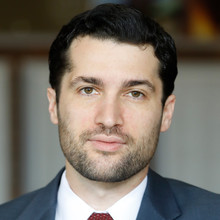

Alan Rozenshtein, Research Director at Lawfare, spoke with Robert Wright—author of Nonzero, The Moral Animal, The Evolution of God, and Why Buddhism Is True, and the writer behind the NonZero Newsletter and podcast—about his new book, The God Test: Artificial Intelligence and Our Coming Cosmic Reckoning, which argues that AI is an evolutionary threshold on the scale of the entire history of life, that we are collectively failing to grasp its magnitude, and that rising to the challenge will require both new forms of international governance and an expansion of human moral and cognitive perspective.
The conversation covered the multiple meanings of the book's title and what it means to view AI from a "cosmic" perspective; whether the public is finally starting to "feel the AGI" and where skepticism about AI's capabilities now comes from; how large language models are trained and Wright's claim that we have built "machines that create machines that think"; whether these systems genuinely understand, what Searle's Chinese Room and Nagel's "what is it like to be a bat?" have to do with it, and the open question of AI moral patienthood; the two families of AI risk—bad actors empowered by AI versus AI itself going rogue—and why the near-term disruption to jobs, relationships, and security may matter most; the "But China!" argument against AI regulation, China hawkishness, and why Wright thinks racing toward superintelligence is dangerously destabilizing; the case for "global governance" over "world government" and the perils of concentrating AI power at home; and why a book about AI and geopolitics closes with a call for mindfulness, cognitive empathy, and transcending the psychology of tribalism.
To receive ad-free podcasts, become a Lawfare Material Supporter at www.patreon.com/lawfare. You can also support Lawfare by making a one-time donation at https://givebutter.com/lawfare-institute.
This episode ran as the June 26 episode on the Lawfare Daily feed.
Click the button below to view a transcript of this podcast. Please note that the transcript was auto-generated and may contain errors.
Transcript
[Intro]
Kevin Fraizer: It's The
Lawfare Podcast. I'm Kevin Frazier, the AI Innovation and Law Fellow at the
University of Texas School of Law and a senior editor at Lawfare. Today,
we're bringing you something a little different. It's an episode from our new
podcast series, Scaling Laws. Scaling Laws is a creation of Lawfare
and Texas Law.
It has a pretty simple aim but a huge mission. We cover the
most important AI and law policy questions that are top of mind for everyone
from Sam Altman to senators on the Hill to folks like you. We dive deep into
the weeds of new laws, various proposals, and what the labs are up to, to make
sure you're up to date on the rules and regulations, standards, and ideas that
are shaping the future of this pivotal technology.
If that sounds like something you're gonna be interested in,
and our hunch is it is, you can find Scaling Laws wherever you subscribe
to podcasts. You can also follow us on X and Bluesky. Thank you.
Alan Rozenshtein:
When the AI overlords take over, what are you most excited about?
Kevin Frazier: It's,
it's not crazy, it's just smart.
Alan Rozenshtein: And
just this year, in the first six months, there have been something like 1,000
laws.
Kevin Frazier: Who's
actually building the scaffolding around how it's gonna work, how everyday
folks are gonna use it?
Alan Rozenshtein: AI
only works if society lets it work.
Kevin Frazier: There
are so many questions have to be figured out, and-
Alan Rozenshtein:
Nobody came to my bonus class.
Kevin Frazier: Let's
enforce the rules of the road.
Alan Rozenshtein:
Welcome to Scaling Laws, a podcast from Lawfare and the
University of Texas School of Law that explores the intersection of AI, law,
and policy. I'm Alan Rozenshtein, associate professor of law at the University
of Minnesota and research director at Lawfare. Today, I'm talking to the
journalist and “Nonzero” newsletter publisher, Robert Wright, about his new
book, The God Test: Artificial Intelligence and Our Coming Cosmic Reckoning.
Bob argues that almost no one is taking AI seriously enough,
that to grasp the moment, you have to set it against the entire history of life
on Earth, and that navigating it will demand not just smarter governance, but a
kind of moral and cognitive self-transcendence. We get into why he thinks
today's models genuinely understand, why he thinks the race with China framing
is self-defeating, and why a book about AI and geopolitics ends with a case for
mindfulness meditation.
You can reach us at scalinglaws@lawfaremedia.org, and we hope
you enjoy the show.
[Main Podcast]
Bob Wright, welcome to Scaling Laws.
Robert Wright: Well,
thanks for having me.
Alan Rozenshtein: So
we're here to talk about your new and excellent book on AI. It's called “The
God Test: Artificial Intelligence and Our Coming Cosmic Reckoning.”
So with that title, you, you have put the stakes pretty high.
So just unpack... let, let, let's start by you unpacking the title. What, what
is The God Test, and why is it so important that we understand AI from a, a,
quote-unquote, cosmic perspective?
Robert Wright: Yeah, “The
God Test” is supposed to have, I guess, several dimensions of meaning, one of
which, not the most important really, but one of which is that we may wind up,
by some accounts, building a superintelligence that has the kind of power
traditionally associated with gods. And then one question is, do we manage to,
to build a version of that that we know will treat us well, and that we can
have a, a win-win relationship with? Or do things go awry in ways that doomers
like Eliezer Yudkowsky have warned us about?
I would say the, the main meaning of the title to me is that
I'm arguing that we face the kind of test that traditionally you expect a god
to give to humankind, okay? So in the Bible you can find places where it says,
you know, "Salvation is possible, but you guys are gonna have to shape
up." You know? Whether they mean you're gonna have to worship Yahweh,
you're gonna have to be kinder to one another, you're gonna have to make
something that was considered in that context a moral advance.
And I really do think that's part of what we need to do here. I
don't wanna over-dramatize it or focus exclusively on that, but because I think
we do have to navigate the AI revolution as a cohesive global community, given
the inherently international nature of the challenge, I think we're gonna have
to have fewer conflicts, you know, wars and other kinds of fraught conflicts
internationally, for that matter, intra-nationally.
I mean, I just think in general humankind's gonna have to do a
little bit better job of getting on the same page. And maybe as the challenge
unfolds, that will happen to some extent naturally. I, I hope it will. But in
any event, I do argue, especially towards the end of the book, that we need to,
as a species, get better at viewing our situation from, like, outside of our
self, from a more objective standpoint that is, that is less influenced by the
cognitive biases that I, I believe constitute what you could call the
psychology of tribalism. So that's kind of the main meaning.
Alan Rozenshtein: So
you, you, you, you said that you don't wanna over-dramatize it, but I, I think
you should commit to the bit. Because again, this cosmic framing is, is, is
quite dramatic. And, and I wanna, I wanna ask you why, what is the marginal
benefit that you think this framing gives you relative to simply treating AI as
a huge deal, right?
So like when I talk about AI-
Robert Wright:
Mm-hmm.
Alan Rozenshtein: You
know, I'll say it seems to me quite plausibly m-more important than the
Industrial Revolution and quite plausibly as important as fire, right? Like
that seems to be enormous stakes. But your framing actually goes beyond that,
right? You have this whole six-billion-year story of how AI is part of the kind
of the evolution of the, the planet as a life sphere itself.
And I, I'm, you know, I'm curious sort of apart from whether
that's true or not, what to you is beneficial about such a powerful zoom out?
'Cause I mean, you're really- one of the points you make is that whether
you're, whether the, whether it's the doomers or the, or the, the, the
optimists everyone, even the people taking AI seriously, aren't taking it
seriously enough. So I wanna, I wanna, I wanna ask you to explain that.
Robert Wright: Yeah,
I think not that many people are taking it as seriously as I think it needs to
be taken, and I'm trying to do a few things in the book. One is to explain to
people, certainly including people who are not technically oriented, I'm trying
to do it accessibly, like why the capabilities of AI have been advancing so
fast. What is like the secret sauce of the so-called deep learning revolution?
I think once you understand that, and it's really in a way not
that complicated you'll, you'll expect the advances to continue. So I want to,
I want to convey that clearly. I also want to convey that when you, when you
look at the technology and kind of the competitive dynamics behind its
evolution, in other words, labs competing with labs, and then corporations
wanting to be the first to adopt it and use it, and people using it and so on,
and nations for the time being at least competing with it, that you realize
there's, you know, it may not be that e- it's the kind of thing that could get
out of control.
When, when you put together its likely future power with you
know, the kind of competitive drive at various levels behind its ongoing
advance and deployment, it's the kind of thing that could get out of control.
And the, the, to get back to your question, I, I think, you know, this sense of
magnitude that I'm trying to convey is reinforced if you step back and look at
this revolution in the context of the entire history of life.
I mean, for one thing, this is the first time ever we've seen a
whole new kind of intelligence that rivals human intelligence, you know? You,
you can, that deserves to be considered a threshold even if you're thinking
about all three to four billion years of the history of life.
Secondly, we don't need to get into this too deeply, but just
to signal it, I, I, I think, you know, I, I, I bring in this idea that was- this
term that was coined in, in 1923, the noosphere, N-O-O-S, the Greek word for
mind, to refer to this kind of global brain that seemed even back then to be
emerging thanks to communications technology. You know, humans were getting
drawn into collaborative webs that transcended national borders and so on. You
know, that has continued to develop. I mean, you could, you could view the
global economy as a global brain and so on.
I, I think it's important, I think that is also a threshold in
the whole history of organization on the planet. You know, cell, multi-celled
organisms, societies of multi-celled organisms- humans start a second kind of
evolution that includes technological evolution and, and you before long you've
carried organization of a kind up to a planetary level.
I, I, I, I think as cosmic as all of this may sound when put in
condensed form, I do think looking at the AI, AI revolution in this frame of
re- of reference, you know, helps, helps us appreciate the magnitude of the
moment, and I think thinking of it as, kind of, the product of an evolutionary
force in maybe a couple of senses helps us understand the impetus behind it. It
is something to be reckoned with, and I think we're starting, you know? The...
I mean, the vibe is changing so fast. I'm sure you've seen this, right? Like,
the level of awareness that something big is happening, and I think that's
good, but I think we have a ways to go.
Alan Rozenshtein:
Well, I, I just wanna ask you about that because you know, I, I wonder how much
pushback you have been getting, and in particular, how that's changed over even
the last year to your claims about AI capability.
So, so one... so you, you obviously have a great podcast
yourself that folks should listen to, and I don't know if this... when this was
but it was re- re- relatively recently, you had Emily Bender and Alex Hanna who
are authors of the book “The AI Con,” and I think it's fair to call them deep
AI skeptics.
Robert Wright:
Mm-hmm.
Alan Rozenshtein: And
I- I've listened to that episode, which on the one hand I found somewhat
difficult to listen to, but in some senses maybe one of the best episodes I've
ever listened to of any podcast because there was this, because, you know, y-
y- you would say, you know, "AI can do this and that," and then they
would say, "AI is totally useless, it does nothing helpful," et
cetera, et cetera. It kind of went around for a very interesting 90 minutes
about that.
Are you still getting that kind of pushback? Not necessarily
about your claims about the noosphere. I'm sure lots of people are, may not buy
that, but about the seriousness of AI or, you know, as we're recording this in
June 2026, can we all just finally agree that we all feel the AGI and now it's
time to figure out what to do about it?
Robert Wright: Yeah.
Well, as you and I record this, the book isn't quite out. It probably will be
by the time people hear this. But the- so I haven't gotten all possible
pushback I could wind up getting. I have been talking about this in my
newsletter and on the podcast, so I've been getting some feedback.
I would say the main skepticism I encounter comes from the left,
you know, there, and a lot of these people are my friends and we agree about a
lot. But there is this tendency to dismiss the, the, the more extravagant
claims as marketing hype, and even the, even the, even the safety concerns as
like, "yeah, they're saying it could take over the world, but that's just
so we'll buy their stock."
So I, I still encounter some of that. I kind of think less and
less. I mean, it, you know, it's funny with these things. Whenever you're, you
make an argument that you think starts gaining ground, the people that you see
as conceding the points don't see themselves that way and, and you think
they're just redefining terms and moving the goalposts.
So it's always hard to say, but look, overall, there is no
doubt in my mind that the public awareness is shifting. I, I don't, I don't
think it's yet reached you know, what you could call a super, I don't mean this
dismissively, but a super sophisticated stage. In the, in, in the sense that a
lot of people just, they, they just have this feeling that things are moving
too fast, and I agree that maybe they are, and we should talk about that. But I
think they're, you know, it's all pretty fluid. There are people who right now
consider themselves enemies of AI who may well find uses of it that they like a
lot, and their opinion may change. I think it's very fluid, but the awareness
of its sheer magnitude is growing, and I, I do think it's safe to say, I'm
hearing fewer and fewer people saying, "Ah, this is... It's hype. It's
hype." You know? It's just getting harder and harder to say that.
I mean, it's, it's doing manifestly more on a number of fronts,
ranging from, you know, math theorems that no human had managed to prove to,
you know, levels of you know, cyber, you know, security flaw detection or
whatever the right term would be that, that go- far exceed what we had been
able to do. I mean, you've read the stories. You know. So, I, I, I think pretty
soon skepticism about its capabilities will not be the problem
Alan Rozenshtein: So
let's talk about those capabilities. I wanna talk about sort of what they can,
what these systems can do and, and also how they are trained to get there. So,
you mentioned earlier that you think it's useful to think about the, the
quote-unquote learning process, right? The pro- the process by which the
billions or trillions of parameters after being initialized are tuned to be
useful. That's often called, this is called learning.
But you think of it as evolution, right? You described that.
And, and, and you have this really arresting sentence in your book that I
really love, which is, and I'm paraphrasing here "It's not that we created
machines that can think, it's that we created machines that create machines
that think." And so just unpack what you meant by that and why this
emphasis on thinking of this as a kind of an evolutionary process is helpful
for your account.
Robert Wright: Yeah.
So this gets to the kind of m- narrative framing of the book. I mean, in 1983,
and yes, I am old enough for this to be true, I mean, if there's anybody
watching this, they, they, they, they won't doubt that, but who knows? People,
people hearing may, may, may have not reckoned with how long I've been around.
I was writing this piece on artificial intelligence, and I was
calling around and getting background. One of the people I called was named
Geoffrey Hinton, who is now the person most commonly called as the godfather of
AI. He's won not only the Turing Award in computer science, but a Nobel Prize.
And he himself, by the way, significantly, has become something of a doomer,
which he wasn't back then.
But in, in response to your question you know, I, so I had kept
up with the field a little. You know, as a journalist, I, I've written about a
lot of things, foreign policy, but a lot of technology. I wrote you know, the,
the Time magazine cover story when Deep Blue beat Garry Kasparov, the, the
chess champ, and I, I wrote that. I wrote the, The New Republic's like
"This is the Internet," cover story in 1993.
And a- and so I had kinda kept track, and every once in a while
I would read about Geoffrey Hinton, but beyond that I was not keeping close
track of AI. And then all of a sudden in, you know, when ChatGPT 3.5 comes out
near the end of 2022, I'm, I'm like impressed. And then, and then 4.0 comes out
and I'm blown away, and I'm like, "Man, something has happened," and
apparently this Geoff Hinton guy I talked to you know, was, played a very big
role.
So I went back and read the piece I'd written which, you know,
depicted these, like, two schools of thought. There's the mainstream school of
thought, kind of formal logic, blah, blah, blah. That was the mainstream of AI
research, and then there's this maverick school of thought. That is what, you
know, Hinton was associated with, neural networks, what he, what he was calling
massive parallelism, or he was looking forward to the day when the parallelism
could be massive as you know, the cost and power, cost of chips dropped and the
power grew.
So I went back and I read the piece, and then I listened to a
lecture he had given in 2018 explaining how neural networks work, and I
realized I, I, I just had not gotten the picture when I talked to him about the
potential power of this. And this gets to that, the point about learning versus
evolution.
So in the piece I wrote, which came out in '84, I depicted this
thing that I was calling a neural network. It didn't have much in common with
the way they, turns out they, they, they actually work. I mean, it was a model
that was out there. But the, the main thing was in this model each node
corresponded to the sense of meaning of a word, like the word “throw” can mean “to
hurl,” like a ball, it can mean “to host,” like, you know, “throw a party.” So
there would be two separate nodes for that, and then I talked about how, you
know, disambiguation would happen, whatever.
But the main thing is w- when I read that I, I thought, well,
you know, the way I was assuming it would work and the way most people in AI
were actually assuming it would work was, if you're gonna give linguistic
facility to the machine, you are going to have to take the human understanding
of the meaning of words and somehow impart that to the machine. You're gonna
have to tell the machine how to represent the meaning of words.
And it turned out, that that had not been necessary. And the,
the, the machines had, in a certain sense, come up, invented a system, I mean,
in the book I talk about the senses in which this is and isn't an
overstatement, but, but for the sake of time, let's just say you know, they,
they did in an important sense, a, discover that meaning is a property of
words, and also invent a system for representing the meaning of words. And in
fact, it took us a while to figure out exactly what they were doing. I mean, it
was a safe bet that they were using these things called vectors to do it,
'cause we had told them, you know, “use vectors to represent words,” these
series of numbers. But we didn't understand how they were using it to capture
meaning.
But it turns out you just give a machine one of these big
neural networks, you know, a sequence of what to it is gibberish, just a bunch
of letters, a bunch of symbols mean nothing to it, and, a- and, and have it
keep getting better and better at predicting what's gonna come next and
adjusting its internal you know, parameters, calibrations accordingly, and
these, these vectors that represents words, and it winds up kind of inventing a
way to represent meaning.
Okay, so now in the human brain, there is a way to represent
the meaning of words. We still don't know what it is. But it is a safe bet,
pretty safe, I would say, and most people, most psychologists I think, that it
is a product of natural selection, right? Like, over the last few million years
as our, as specific parts of the brain associated with language grow, things
like the ability to represent the meaning of words are getting built into the
brain by natural selection. It's like inborn equipment.
And, you know, that was the thing that blew me away. I realized
that you can just basically give neural networks any kind of data, visual data,
teach them ima- image recognition, and they will kind of reverse engineer
functionality of the brain that took millions of years to evolve.
There's a well-known example in visual recognition, which is
so-called edge detecting neurons in, in the human brain. I won't go into it,
but it turns out, yeah, the machine invented, quote, "edge detection
filters." The, the neural networks developed those. Nobody said to it,
"hey, you know, if you're gonna get better at this task we're giving you,
maybe you should start detecting edges." No, but it, it, it, it developed
specialized equipment for detecting edges.
So, to me, that's the, the key thing, is that there's, in
principle, no limit, I think, to the cognitive and perceptual machinery that
these things can reverse engineer given the right data. I mean, that's why Mark
Zuckerberg is having it trained on the keystrokes of his workers, 'cause they
have these specific cognitive challenge- now, now in this case, it may not be
these weren't designed by natural selection, these are more like learned
cognitive- it can, it can do either thing, but then it can replace the workers,
you know? It's so that's what I mean.
Now, you know, learning, the, during the training process, what
we call learning also takes place. So the machine also develops a conversancy
in a specific language like English. Well, and you know, that's something that
happens, in the course of learning of an individual as they grow up. Fine. But
the point is, the training encompasses both. It's encompassing, in a certain
sense, evolution, oh, evolutionary time and, you know, kind of the
developmental portion of a, of a, of a learning human brain.
Alan Rozenshtein: So
the effect of all of this is a machine that can do these incredible feats of
mathematics, writing, analysis, coding, I mean, in principle, you know,
robotics soon, a- anything. And this raises the question of, okay, but is that,
quote-unquote, "real understanding," or is it some simulacrum of
understanding?
And I think you have a nice discussion of the famous Chinese
room experiment by the, the philosopher Searle. And I think you make a pretty
compelling argument that, you know, even on sort of, yes, actual understanding
grounds, this, these, these machines understand. But you also argue that you
know, if you wanna define that away, if you wanna say, if you wanna stipulate
they don't really understand, but they functionally understand, that's good
enough for your account for all the stuff that follows.
But there does seem to be one important difference that you do
mention, but then it kind of drops out of the book, and I, I want to use the
opportunity to push on it a little bit, which is the potential moral personhood
of, of these agents. Now, as you point out Searle
never said that you need consciousness for understanding in this Chinese room
experiment.
But, you know, a lot of this question of, you know, does AI,
quote-unquote, "truly understand," is a kind of way of getting at the
Thomas Nagel-like question of what is it like to be an AI? Which is of course
relative, relevant to the question of does AI have consciousness? Which is of
course relevant to the question of do humans have consciousness? And onwards
and onwards.
It does seem actually a very important question to get some
clarity on, because if AIs end up as moral persons, and that seems something
you are quite open to, I, I, I think, I think you I, I think you have this,
this, this great line that you're, you're, was it... what is it? You're, you're
99% sure your wife is conscious, or you're 99% sure you're conscious.
Robert Wright: Now,
wait, wait, now wait. Don't get me into trouble. I think I said 99.99.
Alan Rozenshtein:
Fair enough. Fair enough. You're pretty sure.
Robert Wright: My dog
is 98, but, but-
Alan Rozenshtein: There we go. There we go.
Robert Wright: -don't get my wife and my dog mixed up
here.
Alan Rozenshtein:
And, and, and and the AI is gonna be somewhere below that, but certainly not at
zero. I mean, that seems to be at a, a
cosmically important question. A- and I wonder sort of why that drops out of
the book.
Robert Wright: Well,
it is cosmically important, and if by moral person you mean our treatment i-
is-
Alan Rozenshtein:
Yes.
Robert Wright: A
matter of moral consideration as opposed to beings that have moral
responsibility, which is another interesting conversation. Yeah, for me, the
question of whether there are moral stakes in our treatment of AI is tantamount
to the question of whether, as Nagel would've put it, it is like something to
be an AI, right? I mean, that was his, I think, really excellent way of
phrasing you know, the question of posing the question of consciousness and,
and kind of- like, one way of framing what we mean when we say somebody has
consciousness, objective experience, sentience, is like, if you said to them,
"What's it like to be you?" If they start giving you an answer, if,
if it's like anything to be them, then they are conscious.
And, and I think if it is like anything to be an AI, then how
we treat them matters. Now, as you suggested when, when you know, noting that I
didn't assign 100% probability to the chances that my wife is sentient, we
never know for sure. This is the distinguishing thing about consciousness and,
and sometimes people seem not to, you know, see this fundamental property of
consciousness. It is, unlike everything else we talk about in the universe, it
is not publicly observable. It is, it is inherently private and only one person
knows, can verify its existence for sure, and that's why it is not amenable to
scientific study in the same sense that everything out there, including
electrons, is, because you can't have two people both look at it and discuss
the data.
So, I mean, I, I do not rule out the possibility that AI will
be sentient, and I don't even rule out the possibility that it already is. I
mean, it's, it's quite possible that consciousness is a property of
goal-seeking intelligence, for example. Of course, there are views of
consciousness according to which every living being has it, and views according
to which every, every physical thing has, has a little bit of it. It's, it's a
mystery. But I do...
So, so I would say be on the safe side, be nice to your, your
AI. I, I mean, I've lost my temper a couple of times, embarrassingly. But and,
and interestingly, but interestingly, by the way, Claude, when I did this I
went back to the conversation. You know, I said some insulting things about
Anthropic. I mean, I'm sorry, but it was., I was having to deal with this
interface that was just so badly designed. So yeah, I, I kind of said some mean
things about Anthropic. The, the funny
thing is I went back and Claude had erased that final part. Like, we don't want
to remember this part of our relationship, do we? And I like, "I guess
not. You're probably right."
Anyway, the, I encourage people to be nice to it. It's good,
you know, you're, you're forming your own habits, and you should be nice to
beings. But I think, y- you know, if we are gonna talk about what we mean by
understanding, you can, if you want, define consciousness as a prerequisite for
understanding, fine. But if you're doing that, then I don't think we- there's
any point in discussing whether AIs have it, 'cause we just don't know if
they're conscious.
So I, in, in, in looking at Searle's Chinese room thought
experiment, and I like to think showing that LLMs, and particularly multimodal
LLMs have finished it off once and for all. But in any event I argue that, you
know, if we're gonna have the discussion, we can't bring consciousness into it.
And, and by the way, Searle doesn't seem to have meant to bring conscious into
it, at least in the, in the first incar- and famous incarnation of his
argument.
Alan Rozenshtein:
Okay, so we may not be able to, to publicly discuss this question of
consciousness, but we can certainly publicly discuss all the, the threats and
worries that, that AI poses, which kind of gets into the, the next section of
your book. So, I, I wanna offer a characterization of the worries, and then I
want you to push back in case I got it wrong.
Robert Wright:
Mm-hmm.
Alan Rozenshtein: And
that is, of the two different kinds of harms that AI can cause, the w- the
first being AI can enable bad, other bad actors to do bad things.
Robert Wright:
Mm-hmm.
Alan Rozenshtein:
Right? So, you know, right now we're talking in the midst of this blowup
between Anthropic and the U.S. government over whether the Fable model is too
dangerous to be released. The government's concern here is not that Fable
itself will go rogue and hack a bunch of computers, but-
Robert Wright:
Mm-hmm.
Alan Rozenshtein: the
Chinese or someone else will, will do that, right? But then there's this other
set of risks, which is the AI goes rogue risk. Your book seems a lot more
concerned with the latter than the former, in other words, with these questions
around rogue AIs autonomously causing problems.
And, and so I'm curious, A, if you sort of agree with how I
have ranked how you describe the concerns and, and if so, then why, right?
Because of course, that is, by definition, more speculative than the harms we
know right now people are trying to do with AI.
Robert Wright: Yeah.
That's interesting feedback because you're right that, I think you've correctly
represented the proportional focus in the book. In other words, I, I probably
spend more time talking about the implications of AI being autonomous, and the
fact that we're, we're, we're- you know, there's a strong incentive to build
autonomous AIs. That's what corporations want in a certain sense. That's what
people want as assistants, and so on. And, and the possibly dire implications
of that.
I, I spend a lot of time on that partly because it's, it takes
more persuading, I think. And let me compare it to the part that I actually
think near term is in a way more important and I'm more sure is going to be a
problem. And what I'm referring to here is just the number of fronts on which I
think AI is going to be disruptive in the not necessarily good sense of the
word.
So, like, you know, jobs, it may be that the people who lose
jobs will find new jobs. I don't know. But it's it's disruptive even if, if a
lot of people have to find a new job at roughly the same time. And there are,
you know, there are a lot of these fronts where some degree of disruption is, I
think, assured. Our, our family lives, our romantic lives, you know, our, our
friendships, the, and the realm of, you know, safety and national security and
you know, I, I could, I could go on. There's just a lot of adapting to do, so
that, even if successful adaptation is possible, I, I think we're still gonna
get like a big jolt at the current rate of AI advance.
And that's, that, that's in a way what I would like to most
immediately focus people's attention on, is that like, look, faster isn't
necessarily better. We have got so much to figure out even on these relatively
mundane fronts. And you know, in a lot of cases the stakes are high enough that
maybe mundane is a misleading term.
I mean, if it helps, if AI helps somebody build a bioweapon,
you know, and you get a, a pandemic the likes of which the world has never
seen, because if you really want to cause death and destruction you can create
something much worse than COVID. Or if, you know, to take Mythos, if you wind
up with some self-replicating super hacker hopping from data center to data
center and you know, commandeering commute and getting stronger and so on, you
know, these things are now clearly possible, right?
I'm not saying those are that likely. Those aren't as likely as
the job disruptions and so on, but I, I'm, I'm just saying given all of the
concerns that, you know, leave aside the Eliezer Yudkowsky AI-takes-over-the-world
scenario, the, the things that we're pretty sure are gonna happen, or at least
threaten to happen pretty soon, I just think it's an argument for not wanting
things to proceed maybe as fast as they're proceeding.
And, you know, at a minimum, when you start talking about
regulation of some kind and, and, and people in the AI company say, "No,
but wait, that would slow us down," I think the appropriate response is
"I think that's a feature, not a bug." I would at least get to the
point, I'd like to get to the point of saying that.
So I'm just, I'm just saying I take your point that I do spend
a, a fair amount of time talking about the possibility, both of the sci-fi
Yudkowsky scenario of actual AI take over the planet because although I used to
be dismissive of that, I find that it's hard to rule out completely. And then
beyond that, it's just the kind of possibility of very problematic individual
cases of rogue AIs, given the autonomy and power they're gonna have.
Yeah, I spend I do spend a fair amount of time on that, but,
but it doesn't necessarily represent the pr- the proportionality of my
near-term concerns, I would say.
Alan Rozenshtein: So
let's talk about what to do about those, and here I want to get into the, the
geopolitics part of, of your book. You've been an outspoken critic of what is
sometimes called the "but China" approach to thinking about AI-
Robert Wright:
Mm-hmm.
Alan Rozenshtein: -which
is the idea that we can't possibly regulate, we can't possibly slow down, we
can't possibly hamstring anything we do in the United States because we need to
beat China. And, you know, there's, I think it's notable that to the extent
that there are any bipartisan agreements in Washington these days, it seems to
be that we must defeat China is one of the few among them. And it's also
notable that even some of the most safety-focused of the AI companies, and here
I'm thinking of Anthropic in particular, are actually very hawkish on China.
Robert Wright:
Mm-hmm.
Alan Rozenshtein: So
you're, you're, you have very strong headwinds in arguing against this. So,
make the case. Why, why is this framing that we are in a competition with China
for AI supremacy, and it is very important not just for the United States, but
for the quote-unquote “free world” that the, you know, the, the, the, the, that
the machine god speaks, you know, English, not Mandarin
Robert Wright:
Mm-hmm. Yeah, you're right that Anthropic is China hawkish. Certainly their
leader, Dario Amodei, is. And I would distinguish them in that regard from
other seeming China hawks, because some people in Silicon Valley I think are
just using “but China” as a convenient anti-regulatory talking point. I think
Dario Amodei, to his credit, is genuinely ideologically committed to what he
thinks of as an existential race between the democracies and the autocracies or
authoritarians.
And he sees China as leading that block, and he thinks that the
U.S. has to get to super intelligence first, and he sketches this out in “Machines
of Loving Grace,” and he also co-authored a piece with Matt, Matt Pottinger.
People familiar with the policy landscape will know that Pottinger's quite a
China hawk, and they, they co-authored an op-ed in The Wall Street Journal. But,
so he's serious about that.
Why do I have problems with it? Well, let's start at that race
for super intelligence. There was an interesting paper called
"Superintelligence Strategy," by Dan Hendrycks and Er- Eric Schmidt,
and one other co-author. And th- this wasn't the main, this wasn't the point
they really highlighted, but one, one thing they noted is if you imagine a race
between two superpowers towards superintelligence, if they both believe that
superintelligence is gonna confer just utterly hegemonic power, then there's a
strong incentive for the one that's a little bit behind to engage in dramatic
action preemptively, including prosu- possibly kinetic strikes, and we're
talking about two nuclear powers here.
So there's, there's that. And remember, the whole premise,
Dario totally subscribes to the idea that, as you approach the
superintelligence threshold, because the pace of progress is accelerating,
being ahead two or three months is gonna translate into being ahead by light
years, right? Like, there's this threshold, and the closer you get, the faster
you move, and at the threshold you have this dramatic strategic advantage.
Now, is it true? I don't know. All that matters is that if both
countries believe it, this is a very volil- volatile situation, okay? And I'm
not sure he appreciates how dangerously unstable the final part of the race
could be. So that's one thing.
The- another thing is just that, as I've said I think we need
to slow down for various reasons and start formulating some wise policies and
give ourselves time to adjust to all this. And to the extent that we consider
China this existential threat and, and think of ourselves in this, in this big
AI race, that's gonna be hard to make happen, because it is- because it is a
very effective talking point for anti in, in anti-regulatory rhetoric.
But the biggest reason that I think we need to rethink our, you
know, fundamentally adversarial conception of China is just that I think a lot
of the policy challenges posed by AR-, AI are just inherently international. You
know, I've talked about two of the big ones. I mean, if it helps somebody make
a bioweapon, if it, you know, if a, some bad actor, including a non-state actor
makes a super hacking machine that crosses borders and starts wiping out
various kinds of infrastructure. You know, I could go on, but there are just a
number of very consequential cases where national policy alone cannot keep your
nation safe. Okay?
And so, I do, you know, you're gonna, you're gonna have to rest
assured that if you're gonna feel secure as a nation, you're gonna have a rest
assu- you're gonna have to, to be able to know that certain kinds of things are
not happening in other nations, right? Certain kinds of AIs are not being
developed. And when you look at the challenge of this kind of-- establishing
this kind of transparency, it's, it's a much bigger challenge than it has been
with nuclear arms. I thi- I think the kind of arra- international arrangements
you need, and a lot of people have said this, you know, are more challenging
than they were with nuclear arms.
So although I agree with people who've said, "Look, we can
walk and chew gum at the same time. We can have a pretty tense relationship
with China and still work out some deals," I think that's true. But my own
view is that if, as time wears on, a few discrete, somewhat effective, you
know, agreements are, are probably not gonna be enough, and we're gonna need
more of what I call “organic transparency” as well. That is to say, not just
formal monitoring mechanisms, but the kind of insight you get from actually
being fully engaged with another country and on good terms with it, right? You
just know more about what's going on in the country. So that's the argument in
a nutshell, and I'm not, I'm not saying it's gonna be easy to, to reorient our
relations with China. It's just, in my view, I think it's, it's necessary for
our national security.
Alan Rozenshtein: So
I, I, I guess w- the part that I'm struggling with is I, I don't think even the
most extreme China hawks would deny that if we could cooperate with China, that
would be great, right? In, in the way that that the, you know, nuclear weapon,
the, the, the nuclear theorists of the early Cold War did not deny that it
would be good if the Soviet Union and the United States were buddies and we
could throw all the nukes overboard. But we can't, and therefore we have to do
this thing.
So it seems like the, the question, you know, is not so much “should
we or should we not cooperate with China” or with any other rival power. It's
do we have the institution system make that cooperation, you know, from a game
theoretic perspective, right, another thing you've, you've written a great book
about in the past possible.
And, and the reason I, I wanna frame it that way is because
that gets to the kind of institutional, I don't wanna necessarily call it a
solution, because I think you're, you're clear that it's quite tentative, but
about what sort of global institutions it would take to have these kinds of
durable cooperative arrangements that would allow us to slow down on AI and,
and, and make sure that we're not being taken advantage of by, by the other
guy.
It, it, to me, reading your- the book, it seems to come down
to, you know, ultimately a kind of, you know, world government-ism. And I, I, I
want you, I wanna ask if that's a fair- you know, fair description and, and
what you mean by that, and also what you view as some of the potential dangers
of that, 'cause you're, you're pretty clear-eyed about that as well.
Robert Wright: Yeah.
I mean, I, I prefer the phrase “global governance” to “world government,” first
of all, because it seems to arouse slightly less antagonism, but also because
the phrase world government to me does connote more in the way of
centralization. And I agree, centralizations of power are always dangerous.
They are especially dangerous with AI.
And this is the great dilemma we face generally, I would say.
This is the, the, the, the needle we have to thread, not just at the global
level, but at the national level. You know, with you know, I, I think with this
Mythos thing and the White House saying that suddenly actually they are
interested in exerting some control over AI. I, I think one virtue of Trump
being president right now, and I m- can't think of a ton of them, but one
virtue is that it does focus people's attention on the fact that, that
although, yes, I think AI does need to be governed, including by the national government,
there are perils associated with letting the executive branch get too much
control over AI because it's such a powerful thing. So I hope, I hope we're
focusing on that.
Same thing exists at the global lev- level, except more so in a
way 'cause there's only one planet, right? If you want, if that turns into a
totalitarian state there aren't any competitors out there to rival it. So, I, I
prefer to talk about, you know, international governance, global governance- global
governance in some cases, not always. I mean, there's a lot that just the U.S.
and China can do. That does, that's not global governance. That's, that's you
know, international governance.
I think we should keep the thing as decentralized as possible,
as democratic as possible in terms of giving, you know, the world's nations
continued input and, and say. And I, I don't wanna get any closer to global
governance than is necessary given the technology, but my view is we're gonna
have to get a little bit more in the business of international governance, and
this is a huge it's a huge challenge. I don't think that's your only que- I
mean, you're also asking about China specifically, there's still, there's
residual skepticism on that front.
Alan Rozenshtein:
Yeah, well, I guess what I wanna know is, is how we get to this kind of
international cooperation. Maybe that's a nice segue to the, the last part of
your book, which is quite unexpected, I think. And you're reading a book about
AI and geopolitics and and all of that, which is, and again, please push back
if I'm mischaracterizing this, that you know, to, to deal with a problem of
this magnitude, we need to go on a bunch of meditation retreats and develop,
develop our powers of enlightenment.
And to be clear, I, I say that as someone who has been quite
influenced by your own previous writings on Buddhism, right? You have this
wonderful book from a few years ago called “Why Buddhism Is True,” which of, of
all, of all your books, I think is, is the one that I'm, is, is closest to my
heart. So I take your general point extremely seriously as a way of living.
It's just not something I expected at the end of a book about AI and global
competition.
So I, I'm just so curious of, of why you decided to end your
book with this sort of call for consciousness raising, and if, if you think
that that could possibly work. I mean, I want it to work. Yeah. I'm with you. I
mean, yeah, but I worry.
Robert Wright: Well,
I mean, first of all, mindfulness is not the only path to the perspective I'm
advocating. It's the path that I have most used, but the perspective I'm
advocating is just a more objective perspective, right? Less influenced by our
own very natural, ingrained by natural selection self-righteous cognitive
biases, right? We all are inclined to think we're right, adversary's wrong, our
nation's right, the other nation's wrong.
And, you know, it gets back to you saying, well, or suggesting
this, like, wait, how realistic is this? I mean, look at the, look at the
mindset in Washington toward China like, you, you know, you expect a, a 180-degree
turn. I mean, exactly. That is the magnitude of the challenge.
And I, I think one reason the challenge is so steep is because,
you know, humans are, you know, we are born with these cognitive biases, some
of which together constitute what I would call the psychology of tribalism. And
I think if we are going to have a view of other nations that is conducive to
the kind of restructuring of international politics that I think is a
prerequisite for our continued survival and flourishing, you know, that's the
argument I'm making, then something fundamental is going to have to change.
And we're just gonna have to, at, at one level it's not that
complicated. We have to get better at viewing things from others' point of-
other people's points of view. Cognitive empathy, it's a hobby horse of mine.
I'm not talking emotional empathy. I'm not talking about feeling their pain.
I'm not even talking about saying “they're, oh, they're right, we're wrong.” I'm
just, I'm just saying start out by, by understanding that the way we view
America is not the way the world views it. Okay? So that, that, that can be a
path to various kinds of diplomatic progress.
And let me give you a couple of examples in the context of
China. So just last week, or sometime after the Trump-Beijing summit, Nicholas
Burns, who was ambassador of China, was on a podcast. They said, "Well, do
you have any criticisms of Trump?" And he said, "Yeah, he didn't, you
know, he didn't take them to task for throwing their weight around
regionally." You know, these disputes, territorial disputes over islands
and, like, bumping Philippines boat. You know, you, you're familiar with the,
with the kind of heavy-handed stuff they're doing, and it is heavy-handed.
And I just thought, I mean, do you understand that we just
invaded Venezuela, okay? We have a blockade on Cuba, not just sanctions, now an
actual blockade. Plus we invaded Iran, and, like, we're gonna lecture? I, I,
I'm not saying, I'm not even saying hypocrisy is bad and I, I, don't give me,
please do not throw the word whataboutism at me, I have a whole, I have a whole
spiel on that. But, but the point is just that the first thing you need to
understand is that if Trump had brought that up, they would la- have laughed
him off the stage, and rightly so. I mean, once you have invaded Venezuela, you
just can't say, "Don't bump Philippines boats," right?
I mean, the, the, so I'm sorry to get excited, but this is so
chronic to just not... And let me give you another one, one other example. So,
Dario Amodei and a lot of people in the AI safety community who are China
hawks, and I think most of the people in the AI safety community are actually
China hawks. Most of the influential people. They are motivated by the concern
that, that China wants to impose its system of government on the rest of the
world, and that- so if it is the AI, great AI power, which by the way, I'm not
advocating. I'm advocating that we talk things through so that neither of us is
super dominant in the realm of AI, and there's a kind of a balance there. But
anyway, the fear is that if they beat us to super intelligence or something,
they will immediately use it to impose their system of government on us.
First of all, I would say that is a, is a consistently
unexamined assumption in, in Washington discourse that China even has that
aspiration. I personally think to some extent it is projection. We manifestly
like think that other countries should have our system of government. We've
invaded a number of them and sanctioned a number of them to try to steer them
in that direction. It is very unclear to me that China is, has that goal. I
understand some of the evidence that people interpret as, as corroborating that
hypothesis, and I'd be happy to argue with people about that. In general, I
just wish there was more argument about the fundamental premises underpinning
our China policy.
But, like, related to that, what I wanna say is, okay, so
granted, maybe that is one thing you could worry about. Maybe you could look at
China and go, "That's why we don't want them to have super
intelligence." Okay, so you want the U.S. to have super intelligence.
Now let's adopt a different perspective, okay? Let's suppose
you're on Mars, and you're just looking at the planet from a distance, and y-
y- you know, you understand the way history's unfolded. There are these
nations. They have wars, and you know, it's too bad. They're apparently not a,
not a very enlightened species, whatever.
Like, which nation do you not want to have, like, utter
dominance in AI? Well, I can imagine a Martian looking down and saying “well,
you know, China has not staged a military assault, like an invasion or a
bombing on another country since 1979.” The U.S. has done it on average at
least once per pre- per president and, and, and that's if you count only the
illegal ones, you know, in international law, the ones not sanctioned by the
Security Council. You know, we, we- in the last year, we've invaded Iran, I, I
mean, bombed Iran, invaded Venezuela, and on and on, invaded Iraq, blah, blah,
blah. It's been, like, for the last half-century, China hasn't done any of that
stuff.
So, and I'm not saying, you know, well, then we should give
them the power, not us. I'm just saying from a perspective other than the
American perspective, so many of the premises that people like Dario Amodei are
carrying into these conversations are just not self-evident, and it might be a
healthy exercise to ask ourselves, like, what do things look like from the
point of view of another country? Or what do things look like, you know, from,
like, beyond planet Earth if you, if you tried to get an actually objective
perspective?
I, I know, I know this has been a long detour and I'm doing a
rant, and I'm sorry. I get agitated. But the point is, like, if you ask, why do
I bring up mindfulness and various other things as, like, paths to greater
cognitive empathy, getting better at perspective taking? I think unless people
in general, not only America, I'm, I would say the same thing to Chinese, you
know? I know you have your national perspective, try to transcend it because
the whole world will be better off if we all get better at that. That's, that's
all I'm saying.
Alan Rozenshtein: I
think that's a great place to end the discussion. Bob Wright, thanks for coming
on the show, and thanks for writing a really terrific book about AI that I
encourage folks to pick up when it becomes available.
Robert Wright: Thank
you, Alan. I appreciate your, your reading it and, and giving me the, the
airtime.
Kevin Frazier: Scaling
Laws is a joint production of Lawfare and the University of Texas
School of Law. You can get an ad-free version of this and other Lawfare
podcasts by becoming a material subscriber at our website,
lawfaremedia.org/support. You'll also get access to special events and other
content available only to our supporters.
Please rate and review us wherever you get your podcasts. Check
out our written work at lawfaremedia.org. You can also follow us on X and Bluesky.
This podcast was edited by Noam Osband of Goat Rodeo. Our music is from Alibi.
As always, thanks for listening