
Lawfare Daily: Sept. 11, 2001, 25 Years Later

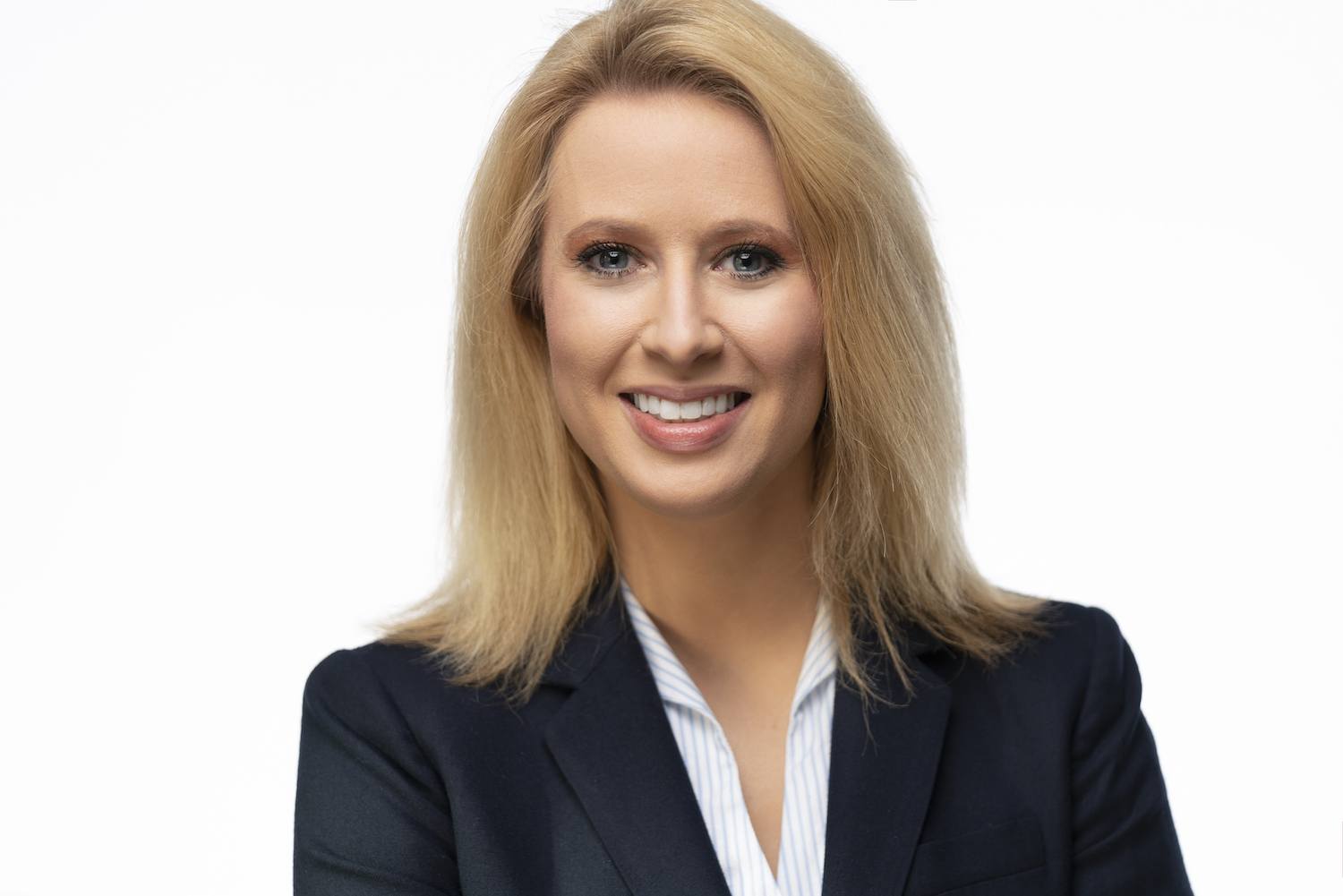
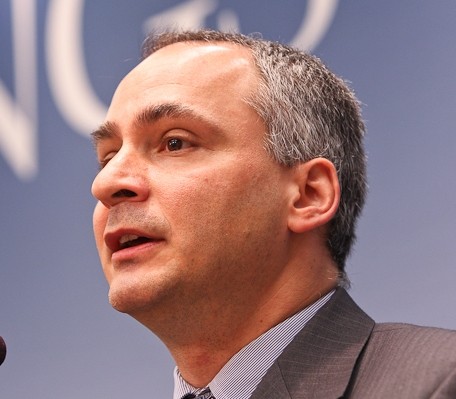
On today’s episode, on the 25th anniversary of 9/11, Lawfare Associate Editor Katherine Pompilio sits down with five members of the Lawfare team—Public Service Fellow Julia Curlee, Senior Editor Michael Feinberg, Executive Editor Natalie Orpett, Senior Editor Loren Voss, and Editor in Chief Benjamin Wittes—to talk about how Sept. 11 shaped the U.S. national security apparatus and the guests’ careers.
Together they examine what the country's national security institutions looked like before 9/11, which of the legal and institutional structures built in response have outlived their original purpose, and what a younger generation—one that has never known anything else—should understand about the world those structures were built to answer.
Read Lawfare's collection "9/11 at 25: The Legal Architecture of the War on Terror, Twenty-Five Years On," examining how 9/11 remains—or doesn't—embedded in current legal and policy frameworks, a quarter century after the attacks.
To receive ad-free podcasts, become a Lawfare Material Supporter at www.patreon.com/lawfare. You can also support Lawfare by making a one-time donation at https://givebutter.com/lawfare-institute.
Click the button below to view a transcript of this podcast. Please note that the transcript was auto-generated and may contain errors.
Transcript
[Intro]
Julia Curlee: I was on the Mall fetching the copies for my internship at the State Department when I heard a rumble in the distance at about 9:30 or so in the morning.
Natalie Orpett: I graduated college right around the time that we learned that the United States had a systematic program of torture and rendition. As I was graduating with a new interest in human rights, that became the real area of focus for me.
Katherine Pompilio: It's the Lawfare Podcast. I'm Katherine Pompilio, associate editor of Lawfare, with Julia Curlee, Michael Feinberg, Natalie Orpett, Lauren Voss, and Benjamin Wittes.
Loren Voss: And just the lasting impact of this conflict and in Afghanistan under Taliban control today, those, those personal stories are really, to me, what I, what I really hope doesn't get lost.
Michael Feinberg: Protecting the country from things like this ever happening again. Like, it literally becomes, this sounds like an action movie cliché, it's the reason you wake up in the morning.
Benjamin Wittes: We have to protect ourselves. We have to protect our democracy, but also we have to protect it from the people who we have anointed to protect it.
Katherine Pompilio: Today, we're talking about how the terrorist attacks of September 11th, 2001 shaped each of their careers and the U.S. national security apparatus 25 years on.
[Main Podcast]
I was two years old on 9/11. Every version of the national security state that I've ever known, so TSA at airports, surveillance authorities, the detention regime, wars, the creation of the DNI, and the entire Department of Homeland Security was built in, in response to that day. And so I want to spend this hour understanding what came before through the people who lived the before and then built their careers in the after.
So, for the rest of you who were adults on 9/11, what's the version of the U.S. security state you remember from before that morning that I never got to see? We can start with Ben.
Benjamin Wittes: So the, the post-9/11 national security state was not, as is commonly imagined, a trigger that got pulled on 9/11. It was a little bit more of a continuum that started before 9/11. And if you read the 9/11 Commission report, you know, one of the things that is striking about it is that the problems that led to 9/11, you know, people were responding to already. The question of how much you should use the military, for example, to respond to al-Qaeda. The questions of airport security were not, you know, wholly revealed on 9/11. They had antecedents. The, the, the sense that, you know, counterterrorism was an increasing part of U.S. foreign policy and domestic law was something that built over the course of the 1990s and some of the architecture that we associate with the post-9/11 world actually kind of preexisted 9/11 in some form.
So I think the best way to understand it is that 9/11 radically accelerated a set of trends that were already underway and they are the following. The first is the, the idea that international terrorism is something that we principally deal with as a matter of military intervention rather than principally deal with, you know, through domestic law enforcement means. We've tacked back in significant ways since then. But that sense that, you know, you use Tomahawk cruise missiles to deal with al-Qaeda is a creature of the late Clinton administration, right? And, and that radically accelerates with the passage of the AUMF seven days after, eight days after 9/11.
The second is the sense that covert actions have a very significant part in this and that is covert actions both in the form of kinetic actions but also, you know, what came to be called extraordinary ren- renditions, right? Running a, a transportation service in the form of kidnappings and airplanes to get people to countries in which they had criminal process pending against them.
The third big element is a hardening of American infrastructure and this was most visible in the case of the airport security stuff, but it was underway with respect to some, a lot of other critical infrastructure and the, the phrase “critical infrastructure” was a, you know, kind of a like already something, you know, a, a cliché in the late ‘90s, right? And that sense that, you know, boy, they could blow something up and it could really disable something, you know, was not a, you know, that's a creature of 1994 and 1995 when Tim McVeigh takes down the federal building. And as was, you know, questions like bioterrorism.
A- and then the, the, the last of them is, you know, this sense that the whole world is becoming less governable, right? And that we have, and that you need to bulk up surveillance capacities and the legal architectures that underlie surveillance capacities. There are some significant reforms of the FISA that predate 9/11, so, and the, the government was already pushing the use of those in ways that were raising questions as, as well as technology was developing in ways.
So what I would say is very little new was revealed on 9/11, but all of a sudden, everything that we had thought about as long-term questions that we really need to think about and things that are really gonna require a lot of reform of the way we do business, all of them went from That kind of level of priority to this needs to be dealt with right now today. But the nature of those questions, I think, didn't change as much as people often think they did.
Katherine Pompilio: Does anybody else have anything they'd like to add about the before? Go ahead, Mike.
Michael Feinberg: So it's interesting. I don't disagree with a single thing Ben just said, but if you ask me what the difference between the pre- and post-9/11 eras were, I would have a completely different answer. And that's because for me, the division of that day was primarily a cultural one. And I mean that in a couple of sentences.
First, the culture of national security, the culture of the intelligence community and the military fundamentally changed, not just because of the subsequent intelligence reform acts and various new authorities that were loosened in terms of approvals, but a lot of the stovepiping that even wouldn't have been touched by administrative and bureaucratic reform vanished because operators and analysts realized that the atomized way of doing things agency by agency was no longer really going to work if you were going to shift from a posture where you were dealing with the contingency of a big war, or you were dealing with figuring out something after the fact, and shifting to essentially being a preventative enterprise.
In other words, it's one thing if something terrible has happened, and the FBI and CIA and NSA aren't sharing what they know after the fact. It's a very different thing if what happens is because those agencies didn't share with each other. So I really think there was a shift in employees' worldviews and willingness to speak with other counterparts in different buildings that wasn't there before. And I think that has actually been almost an absolute good. I'm hard-pressed to think of a downside to that.
The other major cultural shift is that we are now at this moment hosting a podcast talking about national security topics. In the pre-9/11 era, outside of a very specific sort of group of professionals and practitioners, you know, surveillance authorities weren't really something that took up a lot of ink in most newspapers. You know, the average citizen had no idea what JSOC was or, you know, what Special Activities Center or Special Activities Group was, or the Hostage Rescue Team. Like there's all these organizations now, or subunits of larger organizations, that are part of the national conversation that just nobody knew about beforehand. And it's not just because of 9/11, it's because of how the popular imagination and media reacted to 9/11. I mean, it brought forth like, we could do an entire show on like how weird a TV show “24” is, but it wouldn't exist but for 9/11.
And then that, that leads to the third cultural change, which I almost am reluctant to get into, but I think it was very pronounced among my generation, by which I mean people who were involved in higher education at just more elite schools, to be blunt. And that shift was when I was growing up, patriotism in its traditional trappings was viewed as something that was sort of almost unsophisticated and for rubes. Like if you grew up in the left, you didn't have a ton of friends who flied the American flag out of their house. You didn't have a lot of talk about like John Ford films and Springsteen albums. I'm just using those as examples of like sort of pieces of art that contain classic American tropes that had traditionally been leveraged by conservatives.
Now, you know, 25 years on, I mean, Ben and I were at a Springsteen show where the imagery was no different at times than it would've been in the country show during the Reagan era. And that was really interesting to me, is that once the Iraq War sort of spun down and we withdrew from, we withdrew most of our forces from Afghanistan, I'm not talking about the most recent drawdown, but there was a willingness like, all right, the acute post-9/11 phase is over. We can have a conversation about what sort of country we are going to be. And it, it was held in a much more honest and bipartisan patriotic manner than I ever would've expected. And that was just, you know, that was very interesting for me.
Katherine Pompilio: Yeah, I could do a whole podcast on that, but I wanna get to why we're here. So you're all here on this panel because you, you had careers that were shaped by 9/11 or in response to 9/11. So I wanna go one by one. I'll start with Loren. Talk about where you were that morning. What's a moment that you can picture, and what was a moment in the following weeks, months, years where you thought, "This is going to be my life's work now"?
Loren Voss: Yeah. So I actually, like, didn't tie the whole narrative together until we started talking about this podcast, right? Because it was just, this is how my life turned out. And then I actually started looking at those threads and going, "Wow, look how contingent this all is on this one moment."
So, I was in high school at the time. I was applying to, getting ready to apply to colleges, trying to figure out what I wanted to be when I grew up. And I was in math class at the time. We didn't know what happened at first, right? You know, you hear there's an attack, but you think it's something, you know, similar to a, you know, like a car bomb type thing. And, and the narrative came out over the day, and it was, you know, one of those moments that you remember those conversations throughout the day. But I, I wasn't somebody who then on September 12th woke up and said like, "Okay, I'm gonna join the military now. I'm ready to, you know, join the fight." At that point, I thought I was going to go study abnormal psychology. I wanted to be a psychologist. That was the plan.
And then I went off to college and I studied psychology, but with all of the world events going on, this was like the, you know, mid-2000s now, I was really drawn into the very difficult conversations that were happening around Iraq and Afghanistan and the challenges we were facing, that, like, tactical success wasn't enough, right? Like, there were m- major failures happening there. And so I started studying international relations and political science and focusing on those things.
I should say as, as a side note, I went to public school in Missouri for high school. In the early two thousands, everyone had to take the ASVAB. If you don't know what that is, that is the Military Enlisted Placement exam. They tell you it is a job aptitude exam, and then you get the results, and you see that they're all military jobs. You go, interesting.
So it had been in the back of my head, you know, for a while then, but I was, you know, really trying to grapple with these, with these concepts in, in college. And I, you know, I wrote my thesis on the failure of disarmament, demobilization, and reintegration in Afghanistan, and I was getting pulled into this, and that was at the point while we were still struggling in both Afghanistan and Iraq at that point with what to do, and that tactical success wasn't enough. There was no, you know, there was no real good path forward at that point.
And that is when, you know, I, I joined the military and that has really shaped much of my career. And I, you know, that wouldn't have been probably even an option on my radar if not for 9/11. You know? And I joined, I joined the military and got to do these things, you know, be into the fray of it, of what was happening. I was a part of very difficult targeting identification decisions and war planning in such a way that it made me wanna go to law school, which I had never wanted to do before. I did not wanna be a lawyer. And so I ended up, you know, in law school studying the law of armed conflict because I'd had all of these lawyers before in the military tell me no or I couldn't do things. We had to wait for something to happen, and they would never explain why. And so I went to, to law school to have that experience.
I also have to say though, the military, I've gotta give it credit. I used the GI Bill. I come from a working class background in Missouri. My father was a cab driver, and my mom was a stay-at-home mom. There is no way that I would've gone to law school and gotten a master's if not for the GI Bill, which, which covered it all. So I'm, you know, grateful for that military experience for that. But you can see, you know, how all of these different pieces build up to turning me into an attorney you know, and then making me want to focus on things that come up in conflict, whether that be targeting to the Pentagon or, you know, a DOD senior advisor on civilian harm, trying to like tackle those, those concepts.
And then now today, what makes it, you know, super interesting to me is that some of the issues we're dealing with now when we talk about domestic counter-terrorism type issues are things where we're dealing with legal opinions and things that occurred right after 9/11 that could have impact on what we're seeing today. And so that, you know, makes it kind of come full circle for me.
The one thing that I think makes it the most personal to me is the withdrawal from Afghanistan, and I know that's still sensitive to a lot of people for a lot of reasons. I had just joined the board of the nonprofit No One Left Behind. They told me two to three hours a week, we want you to help with governance. We ended up doing 24/7 operations trying to get people out. I was pregnant with my first child, eight and a half months pregnant. His name is Noah, you know, and, and as military people do dark humor, they, you know, said we were, this was Noah's Ark, and we were trying to get, you know, people out. But you had, you had people telling you, "I've got to leave.” You know, “my kids don't have visas ‘cause it's a baby," right? "Do we leave our child behind, or do we all stay," right? Or if anyone knows the Special Immigrant Visa program, which is what No One Left Behind works with it's for immediate family. So we had people with unmarried sisters who we're gonna, you know, le- have to leave them behind knowing what the Taliban might do, but were, you know, fearful for their own children.
So I mean, all of that to say that work and the like thousands of people that we helped get out, we're still doing the work today, right? And that's what's most important to me as we talk about this now, and it's becoming, 9/11's becoming academic. Afghanistan's becoming academic. And to me, it is always so personal to think about these service members killed or wounded, you know, who will forever be changed by this. The SIVs, the people in Afghanistan that helped us, that got left behind, and just the lasting impact of this conflict and in Afghanistan under Taliban control today, those, those personal stories are really, to me, what I, what I really hope doesn't get lost.
Katherine Pompilio: Julia, what was your experience?
Julia Curlee: Well, when I think about 9/11, I think about my entire adult life. I was a college student in D.C. I was a sophomore at American University. I was on the Mall fetching the copies for my internship at the State Department when I heard a rumble in the distance at about 9:30 or so in the morning. And by the time I got back to my office, everyone was in a panic, and the boss was screaming that everybody should flee. And I found my way back to my dorm. There was already beginning to be a line of Gulf embassies sending their limos to evacuate their, their students. Me and a couple of friends organized an NIH blood drive where we all got up to, to Bethesda, gave blood, which, which turned out never was needed because there weren't enough survivors.
And pretty much after that, after that day it happened early enough in the semester, I changed my major. I focused like a laser on military studies and the Middle East and applied and got into the Defense Intelligence Agency and, and prepared to go to war as quickly as possible. Having grown up in Hawaii, I immediately felt like it was my December 7th moment, and whatever my misgivings were, concerns with the Bush administration at the time, it just felt like this was the moment and we were, we were, my generation was being called to serve, and I got swept up in it all.
And, you know, in the Oliver Holmes quote, if we “shared the incommunicable experience of war,” it was just like a tide that pulled us all away, and I found myself sooner than later in Iraq for the first of five tours, and then in Afghanistan and all the places that a person like me would serve, whether it's Baghdad or Kirkuk or Ramadi or Kabul or Coast. I, I was there at one point or another over the next 15 years.
And it defined all of my adult life. CIA became my family, my home, the place I transitioned genders, gave me my identity, and then the day I walked out of CIA in May, the last thing I did was walk by the 9/11 exhibit. So in other words, it's the defining moment of my life and, and gave myself my purpose, which I, which I followed to now, and I think like a lot of people in my generation now, without that organizing principle, the, the world feels a little bit alien.
Katherine Pompilio: Natalie, what about you? Tell us your story.
Natalie Orpett: Yeah. As everyone is talking, I think maybe mine is best characterized as a response to the response to 9/11. So I was a senior in high school. I live in Chicago, so the news of the Twin Towers being hit came out before the school day started. It was all anyone was talking about. I remember very vividly that we didn't know what had happened. Maybe it was an accident. There were planes, then there were more planes, then there were more planes in Pennsylvania, and it took a while to piece it all together.
But I remember by the end of the day, I was becoming really scared that my friends who had just registered for the Selective Service were gonna be called up in a draft to go to war against whoever it was had done this. I was not a particularly national security or even federal government, whole of country-oriented person. So I, I didn't ever really feel the pull to like, Julia or Loren were describing to join the military or join the government in some other capacity. I was deeply worried about it, and I was scared. I just I guess, saw a different sort of role for myself.
But I think pretty quickly, you know, perhaps my, my role here on this call, but my role in all of this also is as a bit of a foil. I remember very early on feeling like part of what had happened here, to speak a little bit to another component of the cultural shift that Mike was talking about, is that for those of us who were not, you know, in D.C. or New York or already part of institutions or bodies that were observing what government was doing and thinking about it, it was a total shock.
And maybe this is a, a feature and part of the age I was at. I was not as, you know, fluent with what else was going on in the world, and certainly not as aware of what other sorts of threats there were to the United States. But that's a legitimate perspective to think about in this context as well, because that was the case for a lot of Americans. This was completely shocking, and it was a brand-new world. And I, I fully believe Ben when he says that a lot of these debates and discussions were happening before 9/11, but it wasn't until 9/11 that the rest of us became aware of them or felt like we had anything to say about them because it had been sort of academic and relegated to the back rooms of government buildings where important people did important things.
But I remember in college, sitting in my dorm room, watching the news about the U.S. going to war in Iraq and saying, "Wait a second, what did Saddam Hussein have to do with 9/11? I thought we were going to war because of 9/11." And from then, I guess, I have taken to the response to the response as the area where I have felt the need to engage. And it is in part because, I'm sure in the first instance, inspired by the shock that I experienced at the fact that it had happened, and then watching and observing and, for better or worse, feeling like I didn't know what my place was going to be in the immediate response, but knowing as I was watching others' response, others' responses unfold, that I had some serious questions about some of them.
And so to fast-forward a little bit, I was not focusing on national security, foreign policy. I was focusing on international development in undergrad. I decided pretty quickly that I was interested in a human rights-based framework rather than an economics-based framework. And as things continued to play out, and I graduated college right around the time that we learned that the United States had a systematic program of torture and rendition as I was graduating with a new interest in human rights, that became the real area of focus for me.
And that is how I eventually got into, I think the, the only thing that's particular to my career that has to do with 9/11 is having been involved with representing a detainee at Guantanamo Bay. There are other things that are a little more tangential, but this was only a piece of my career. It was not sort of trajectory-changing in the same way that it was for others here.
Katherine Pompilio: Mike, let's hear from you next.
Michael Feinberg: So 9/11 definitely impacted my career, but it was a very long fuse before I felt the effect. I was in law school on nine eleven. I was a 1L at Northwestern, and there was one morning I was running late to my civ pro class, and as I was driving down Lake Shore Drive towards our campus, I couldn't figure out why at 8:00 in the morning all the traffic was coming out of the city. It just was the exact opposite pattern that you would normally see during rush hour. I was not smart enough to turn on NPR and try and figure out wh- why. I instead just shrugged my shoulders and kept going. And I got to campus, got to my civ pro class, and found out what happened.
And it really was, it was a different time in so many ways that even have nothing to do with national security. You know, I, I didn't have a cell phone. The woman I was dating in law school at the time was furious with me 'cause she hadn't been able to get in touch with me as she discovered what was going on, and I was unreachable 'cause I wasn't at home with my landline. It was just a different era, and probably the greatest shame in my life is that I did not enlist right after it happened, and that's something that always sort of stuck with me for a few years.
And then sometime around 2007 or 2008, we threw a birthday party for my grandfather. I forget whether it was his 90th or 95th, but, you know, his relatively spry late 80s younger brother was there as well. And they started reminiscing about how they joined the military after Pearl Harbor. And it just sort of got me thinking that I had had way more privilege than them growing up. I mean, they were children of the Depression in every sense of the word. My grandfather's father had died when he was a kid. Like the older sons were taking care of this large family while putting themselves through school. And they still felt the need to serve their country when the unthinkable happened. And I had every advantage they didn't. And, you know, the next, on September 12th, I had done nothing to change my life. So talking to my grandfather and my great uncle a few years later, I realized that I still could do something and that I had no real excuse not to.
So like within a week of that party, I looked at jobs both at CIA and at FBI for a variety of reasons which aren't super important here. I withdrew from the CIA one and only focused on the FBI one. And much like Julia, it became… It's more than a job. I mean, that sounds like a tagline in a commercial, but protecting the country from things like this ever happening again, like it literally becomes, this sounds like an action movie cliché, it's the reason you wake up in the morning. It's the reason you go to work. It's the reason you don't allow yourself to have bad days where you're not on your best footing. Like, you just can't. I mean, there, there were days where I had horrible things going on in my personal life, but you get to work and, like, you compartmentalize and shut up about it because there's still spies and terrorists out there, and that's what matters.
And that is, I know I'm describing it in a weird way. I, I hope Julia would agree with it. That ends up being a really goddamn beautiful thing. Having that ability to focus on protecting other people, to dedicate your life to the safety of strangers, is a calling that is more rewarding than I can ever articulate. And it's just, you know, that was, that was my life's purpose, was to stop things like that from ever happening again. And the great thing was I was surrounded by other people who had made that exact same choice. And, you know, 9/11 is not about my personal self-actualization, obviously, but I, I hope people realize there are tens if not hundreds of thousands who went through that similar experience and viewed the responsibility the exact same way. And I, I think all of us, I mean, Loren, Julia, jump in if you disagree. Like, I don't think myself or anyone I worked with would have, would have hesitated in the slightest to lay down our own lives to protect people in an office building. Like, you just did it, and it was a really noble way to spend a couple decades.
Katherine Pompilio: And finally, Ben, what's your story?
Benjamin Wittes: Yeah. So I guess, you know, two of the three major components of my professional life were already in place on the morning of 9/11. I was already a, a journalist who did opinion writing about law. And I had a bit of a background in national security law, which made me un- very unusual among journalists. But that was kind of just a creature of the way that I'd spent my time and some things that I'd become interested in.
So on the morning of 9/11, I was sitting in The Washington Post editorial page conference hall in my office, and Fred Hiatt, the new editor of the editorial page, walked by and stuck his head in and said, "Did you see that a plane had just, just hit the World Trade Center?" And so I wandered into the conference room and I saw a wisp of smoke coming from the World Trade Center, and a plane had, you know, it was clearly a terrible accident. And I wandered back into my office and didn't think much more of it because I was aware that at one point during World War II, a fighter plane had slammed into the Empire State Building and, and it had been an accident in the dark of night in a storm. And it never occurred to me that it was a jetliner, and it never occurred to me that it was done on purpose, which gives you an idea of what a, you know, what a counterterrorism investigator I would be. And I sat in my office for another 40 minutes doing normal work things until a second plane hit the second building, whereupon I sort of woke up.
So this was the third component of what has been my career ever since which was, you know, what do I do in life? I write about law in contexts that involve democracy and national security, and that's where that third element came from. And I think everything about my career has been defined by those three things colliding: writing about law involving national security. And, you know, as I say, I did have a background in it before, but I'd never thought of it as foundational to who I was. And yet within five years of there, I h- then I had left The Washington Post to come to Brookings and work on nothing else. And by the way, one part of that was founding Lawfare. And so, you know, Lawfare absolutely certainly would not exist but for 9/11.
And I find myself very much in the mode that Julia and Mike and Loren are describing of just having, having this kind of all-consuming passion that has been what I've woken up every morning thinking about ever since. And the wrinkle is that I also have a bit of what Natalie described, which is al- although I came to it later than Natalie described it, which is a kind of horror about some of the response, and that is a really personal horror that, you know, I think is a little different from hers because, you know, I feel very used by the, you know, the ar- some of the arguments that I made and believed and still believe have been twisted into things that are very ugly.
And, you know, I believe in drone strikes. I don't believe in drone strikes against fishermen. I believe in surveillance authorities that are relatively robust. I don't believe in using them to go after political enemies. And so I find myself both sharing this, this kind of all-consuming sense of we have to protect ourselves, we have to protect our democracy, but also we have to protect it from the people who we have anointed to protect it. And I think that is the, if I think about what the last 25 years of my professional life has been, it's been k- kind of a bit of both, and sometimes a lot of both at the same time
Katherine Pompilio: I wanna dive into that last point that you made. All of you come from different backgrounds and perspectives on this, but I think share sort of that sentiment. I feel like it's why we're all here now. To pose a question for all of you, is there a single post 9/11 institution or authority that you think has fundamentally outlived its original purpose? And how so?
Michael Feinberg: DHS, 100%. DHS was a reorganization based on increasing administrative efficiencies between disparate organizations that were not necessarily tied together thematically, but didn't fit anywhere else. Like, Federal Emergency Management with immigration? Like, there's no reason that those two organizations should be together except for the fact that when there is a crisis, it turns out good having the people respond to disasters, having some small law enforcement component and some national security component. Like, it's a good idea.
But what we've seen, and I'm, I'm gonna get a bit controversial here, what we've seen is that organizations tend to solidify their power as much as they can. I mean, it's just like an obvious statement of how political institutions work, and it's no longer a coordinating agency so much as it is a catch-all agency that has the capabilities to do things similar to many other law enforcement agencies, but without the requisite history of mistakes and subsequent learning that might stop them from doing some of those things.
I don't think it's a coincidence that the overwhelming majority of what I will call indefensible law enforcement or national security actions over the past 18 months or so have been largely done by DHS and not by some of the older, more staid organizations. And I really question what we're getting out of it at this point.
But you know that, that's also tied up into an- another argument that no one's really reckoning with except, I suspect more people from Natalie's world are reckoning it than people from my former world or Loren and Julia's former world. And that is like, I do a lot of mea culpas every day because I spent a very long time dismissing arguments that increased surveillance authorities, you know, additional administrative warrant powers. Like, I sort of poo-pooed the civil libertarian argument. "No, these are inevitably gonna be used against American citizens." I'm like, "No, they're drafted pretty carefully. There are a number of restrictions that hamper them in from being misused. Like, these are necessary tools, and yes, there's always a possibility they get misused, but on balance, we need them." And what I see now is that when people take power who have no respect for norm or balance, like the civil libertarians I brushed off were 100% correct. I just, like, that's heartbreaking.
It's, it, it's heartbreaking on a personal level to realize you were so wrong about something so important, but it's also heartbreaking to see all these institutions that you worked with and loved and accomplished great things undone for really petty bullshit reasons. You know, I'm sure Loren feels about the military the way Julia feels about the CIA which is the way I feel about the FBI, which was like I you know, I, I bled Bureau blue as the cliché states. And we were really wrong about the institutional backbones of those organizations, and that they would hold the line when pressed to use powers intended to combat terrorism to do something else instead. And that's like, you know, I, I think there are certain circumstances where the older you are, the more it hurts when the scales finally fall from your eye. And seeing how the national security and law enforcement community is now being used is really one of those moments.
Loren Voss: Yeah, to your point about, you know, maybe a legal interpretation that's kind of outlived its purpose, I think we're seeing a lot of really hard conversations that need to happen around the law of armed conflict. There were a lot of modifications and new interpretations that were made for the CT environment. And, you know, for example, so that you didn't have a revolving door problem, we talk about, you know, being a, a member of an organized armed group means that you're targetable. And how we define that membership according to the law of war manual is this long list. We don't tell you how to weigh the things. So you may not even think you're a member of the group, but we think you are, right? And so there's that kind of piece.
There's also this argument around war sustaining that made sense in a counterterrorism context of, you know, if, if this economic thing, like drugs, for example, is, is sustaining the terrorist group, that can indeed be targeted. But we're talking about these law of war interpretations, and now we're putting it whether it be, you know, on the boat strikes or potentially against other countries. You can't map these the same way. At it's ta- at the point you start talking about membership in this amorphous way is the point you start talking about economics as being something you can target when it's, it's nation versus nation. You've completely, like, destroyed the foundation of the law of war.
And so I think, you know, there's a lot of nervousness of the interpretations and the lessons learned from the counterterrorism world and what that might mean for future conflicts. So to me, that's just, like, an incredibly crucial point that, you know, there is not, there's not a good proposal or a good solution out there now. But, I mean, I think people are very nervous about how the law of war might continue to be interpreted going forward.
The one other thing that I would just say is, you know, I, Natalie kind of, you know, posed herself as, as the opposite of those of us that had been in government. And I, I think that it's been, for me at least personally, really interesting to be in government and almost feel like I was, I was part of the reform effort within government when it, whether it be, you know, standing up the civilian harm mitigation efforts or when I was on NSC staff having the, the GTMO portfolio and trying to reduce the number of people there. I also had the UCMJ reform efforts.
I think, you know, right now, though, even those of us that were in government are on the outside because we see the importance about talking about those issues of not just how are, how do you effectively wield power, but then what is the oversight of that power? And I think that is where we are all, you know, critically worried today. And even though we came from all of these different, different disparate backgrounds, we're all focused on the same core issues today.
Julia Curlee: I think it's very possible that if you, you know, change a few of the variables in my life my life would resemble Natalie's a lot more than it resembled mine. And it's probably most to do with what tribe I, I found myself in on, on 9/11 or the times afterwards. And so the efforts that I got involved in in the war zones, the first thing I did was get assigned to a hostage rescue task force. And in the name of rescuing Iraqi and American hostages, which was a righteous mission that I've never had a, a, a more satisfying effort in my entire career, I participated in efforts that resulted in the death of other people and in using surveillance technologies that we have now developed at, at scale.
I participated in organizations that were involved in the Abu Ghraib abuses, in renditions, in torture, in GTMO, in black sites. I wasn't involved in any of those efforts, but I was down the hall. And I justified most of it because my mission was, was righteous. And I've never been more satisfied in my life than getting to live and breathe in that kind of a, of an effort.
And I will say now with, with all of the benefit of hindsight I am trapped because I wouldn't give back a minute of that time or the good things that, that I was involved in. But I admit that now that I find myself in a category of people that has been added to a CT strategy list, potentially put on the, you know, the nip if for intelligence collection priority against radical pro-transgender Americans and, and, and being a part of an apparatus that's now wantonly making criminal groups into terrorists so that it opens up a CT toolkit to do lethal operations against people engaged in non-capital activities.
It, it makes you feel like you have to question all of those choices. Was I lied to all along? And it's been gut-wrenching. The only thing I've got going for me now is I no longer am inside. I actually can, can work through these things and, and write about it from the outside. I'm not ready to say that we were all wrong at the time because, I think that, that many of the things that we did, the authorities we used, the actions we took were justified given the circumstances. But it is now undeniable that they've long since outlived the real requirements, and they're being abused. I wish there was a more regular process for revisiting these things, but it is gut-wrenching, and I have much more sympathy for people like Natalie now that we're out of that period in, of my life.
Katherine Pompilio: Natalie, I'm curious for your perspective.
Natalie Orpett: Yeah, I mean, I, I feel the need to say that although a lot of my concerns have proved justified, I am not taking a victory lap. And I think that those acting in good faith who were in the sort of dissenting crowd of the libertarians and the other communities that were really challenging people in government and the choices that were being made, the powers that were being authorized, all of that, those who are in good faith would also say, "Of course, not everything went wrong." There were things that went wrong. That doesn't mean that everything went wrong.
And I think the, there's a little bit of a tension here that's worth naming that is a virtuous tension, and that is that, you know, I, I will take on the role, though I think it's, I, I probably don't deserve to take it on as a full mantle nearly as much as others. But for the purposes of this conversation, I think the, the communities of those pushing back, responding to the responses, et cetera, the role is to remind that not everyone who is in positions of power and ability to do really dramatic things in the name of the American people are actors in, who will act in good faith. They are not all people who are motivated by the right things, or they are not all people who, whose judgment you can trust. There are always going to be people in every institution at every layer of everything that think that the ends justify the means. But the, the people in the pushback communities were also not the ones who were charged with keeping Americans safe and had access to what information did exist about the, the likelihood of threats in the future.
And so,they're different roles, and both of them are necessary. And I think Loren makes a very good and a very important point that also government institutions are not monoliths, and there is a lot happening internally also between agencies. I mean, there's, I think, relatively specific to the Guantanamo context, but there definitely is there, there's a history of a lot of tension between the FBI and the CIA, which is, you know, in contrast to a lot of what both Mike and Julia have described. And that's because all of this is very, very complicated. So I, I think it's just worth saying that expressly because although I do think that it is an important lesson that communities expressing concerns about the possibility of future abuses of great amounts of authority that are either given to or taken by government actors need to not be dismissed as histrionic. I also think it's important to remember that they are not also coming along with solutions to all of the problems. It's just part of a conversation.
Julia Curlee: If I could just want, just, just put one more little thing on top of that, I agree with everything Natalie just said, but there are people alive because of the CT authorities, because of the 702 authorities, people alive, including, I think, myself, because of the authorities and capabilities that we were able to use in a war fighting context. And I now am in favor of effectively rescinding those very things. And times change, wars wrap up, and we should be able to revisit even justified authorities and capabilities when they're no longer needed as much.
Benjamin Wittes: Yeah. I just wanna foot stomp that point a little bit. I don't repent a lot of the authorities. I repe- some of them are worthy of repentance in whole, but most of them had a real purpose and were used according to that purpose, and there are a lot of people who are alive today because of that, and there are a lot of people to use Loren’s example from earlier, who are not alive today because we stopped using them or whose lives have been really disrupted in profound ways. And so you can err in both directions here, and we have erred in both directions.
I wanna nominate two authorities, post-9/11 authorities for repeal, not because they weren't good ideas at the time, but because they are no longer, you know, to go back to Katherine's original question, because they're no longer good ideas. The first of them is the authorization for the use of military force of 2001. There is no good reason why this should still be law, and there's no good reason why it should still be authorizing anything.
The second, and this bridges post-9/11 authorities and some, a lot of pre-9/11 authorities, all presidential emergency authorities should be the subject of significant review and amendment, and in some cases, outright repeal. We are living in an environment right now in which the authorities themselves are more dangerous than the things that they allow the president to protect against. And a lot of these just, you know, to, to go back to Julia's point, yes, some people are gonna die if we take them away, but some people are dying because we have them. And so I think, you know, a systematic review of some of these emergency authorities is really well, well, well overdue.
Katherine Pompilio: Mike, go ahead. You had one final point.
Michael Feinberg: Yeah. I mean, if we're gonna close, I would like to make a bit of a point, and I know this is gonna sound a bit schoolmarm-ish or scolding. I, I really don't mean it to. It's a genuine plea. After I left the FBI, the hardest day I had by far was the first anniversary of 9/11, and it is because it was the first time since I started to really care about the national security of the United States that I didn't have a community with whom to mourn.
There was gonna be, like, I was in, I was in my townhouse in Virginia Beach. There was gonna be no moment of silence. There was not gonna be a group of people talking about it afterwards. There was not gonna be a remembrance of the people from our office who died that day or later from ingesting harmful chemicals while clearing the scenes, collecting evidence, and rescuing people. And we're recording this podcast on September 10th, and the conversations we're having are very important conversations, and they're conversations we should have every day of the year as long as the United States is facing hostile foreign actors, war zones, national security emergencies, what have you.
But I would just implore all of our listeners and ourselves on 9/11 itself, at least take a moment to pause and think not about the reactions and consequences, but just on the facts of what happened and what was lost. There were people who made the choice I can't even fathom, that their best option that morning was to jump out of the 90th floor of a skyscraper. There are people who spent months trying to find bodies so families can get some degree of closure, who inexorably will succumb to cancer from the concrete dust that they ingested during that entire time period. There are thousands upon thousands of soldiers who have left widows and orphans in the conflicts that resulted. Like, however strongly you feel about any of this stuff, like maybe just on 9/11 itself, put a pause on the arguments and at least spare a few moments of reflection for the people who don't get to take part in these debates anymore.
Katherine Pompilio: And I think we'll leave it at that. Thank you all so much for your perspectives, especially for someone like me who's grown up only in a post-9/11 world, and for people younger than me, too. I think it's very important to be a part of these conversations. So yeah, thank you all so much again.
[Outro]
The Lawfare Podcast is produced by the Lawfare Institute. If you wanna support the show and listen ad-free, you can become a Lawfare material supporter at lawfaremedia.org/support. Supporters also get access to special events and other bonus content we don't share anywhere else. If you enjoy the podcast, please rate and review us wherever you listen. It really does help.
And be sure to check out our other shows, including Scaling Laws, Rational Security, Allies, The Aftermath, and Escalation, our latest Lawfare Presents podcast series about the war in Ukraine. You can also find all of our written work at lawfaremedia.org. The podcast is edited by Jen Patja with audio engineering by Cara Shillenn of Goat Rodeo. Our theme song is from Alibi Music. And as always, thanks for listening.