
Almost immediately after Jan. 6, 2021, legal commentators began debating whether Section 3 of the 14th Amendment would disqualify former President Donald Trump from running in the 2024 presidential election. They debated whether or not Section 3 applies to a former president, whether it is self-executing, and whether Jan. 6 could be considered an insurrection or rebellion.

Since then, the issue became less abstract, though no less contentious. In February 2021, the U.S. Senate acquitted Trump of an impeachment article for inciting insurrection, but with a bipartisan majority of the Senate voting to convict. Section 3 challenges have been mounted against several legislators, and one state-level county commissioner who participated in the attack was successfully ousted from his post under that provision. At the end of 2022, the House Select Committee on the Jan. 6 Attack on the Capitol made the argument that Trump did inspire an insurrection, referring him to the Justice Department for prosecution under multiple criminal statutes, including one prohibiting insurrection. The Special Counsel’s Office has since brought a criminal case in Washington, D.C. charging Trump for his role in the Jan. 6 attack. And some prominent legal conservatives made the case for a strong, originalist reading of Section 3 that they argue would apply to Trump, immediately disqualifying him from office.

Beginning in winter 2023, voters and advocacy groups have brought Section 3 challenges in courts across the country, attempting to block Trump’s name from appearing on ballots for state primaries and caucuses before the general election begins, as Lawfare tracked and represented in the above map and table below. After Colorado became the first state in the nation to take Trump off its presidential primary ballot in Anderson et. al v. Griswold, the question reached the Supreme Court in Trump’s appeal of the decision in Trump v. Anderson (the docket for which Lawfare tracked and remains below). After hearing oral argument on Feb. 8, the Supreme Court ruled on March 4 that Trump could not be disqualified from Colorado’s presidential primary ballot under Section 3 without Congressional action. (Read Lawfare’s analysis on the decision.) That decision has effectively ended the array of challenges to Trump’s ballot eligibility.

Below you will find Lawfare’s past and continuing coverage of the legal and policy implications surrounding Trump Section 3 challenges, and primary source documents, analysis, and resources.

The Trump Disqualification Tracker was created by Hyemin Han with Caleb Benjamin on Oct. 30, 2023. The litigation tracker portion of the project was last updated and edited by Han, Anna Bower, Matt Gluck, Tyler McBrien, and Roger Parloff on March 4, 2024.

Lawfare Analysis on Section 3


Democracy & Elections

Section 3, Insurrection, and the 2024 Election Event
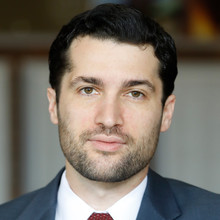
Alan Z. Rozenshtein
Monday, October 30, 2023, 9:42 AM
Lawfare Senior Editor Alan Rozenshtein will give introductory remarks and moderate a conversation at 12:15 p.m. CT. 

On October 30, the University of Minnesota Law School, in collaboration with the Center for the Study of Politics and Governance at the Hubert H. Humphrey School of Public Affairs, the American Constitution Society, and the Federalist Society, will hold a conference bringing together legal and policy experts to discuss the ongoing lawsuits to disqualify Donald Trump from the 2024 presidential ballot.

Challenges to Trump's eligibility allege that, through his actions around the 2020 election and the January 6 attack on the Capitol, he violated Section 3 of the Fourteenth Amendment, which provides that “No person shall . . . or hold any office . . . under the United States . . . who, having previously taken an oath . . . as an officer of the United States, . . . shall have engaged in insurrection or rebellion against the same, or given aid or comfort to the enemies thereof.”  

The conference will coincide with major litigation in two ongoing Section 3 cases: the November 2 oral argument in the Minnesota supreme court and an evidentiary hearing, which will begin on October 30, in a Colorado trial court. These are the first two cases challenging Trump’s eligibility, and, especially if either result in Trump’s disqualification, will likely be heard by the United States Supreme Court.

Watch the live event here or above.

Alan Z. Rozenshtein is an Associate Professor of Law at the University of Minnesota Law School, Research Director and Senior Editor at Lawfare, a Nonresident Senior Fellow at the Brookings Institution, and a Term Member of the Council on Foreign Relations. Previously, he served as an Attorney Advisor with the Office of Law and Policy in the National Security Division of the U.S. Department of Justice and a Special Assistant United States Attorney in the U.S. Attorney's Office for the District of Maryland. He also speaks and consults on technology policy matters.
}

Section 3 at the U.S. Supreme Court


Anderson et al. v. Griswold et al. was originally filed on Sept. 9, 2023 by six Colorado voters against Jena Griswold, in her official capacity as Colorado Secretary of State, and Donald J. Trump. On Nov. 17, in Denver District Court, Judge Sarah B. Wallace dismissed the petitioners suit, but determined that Trump engaged in insurrection. On Dec. 19, the Colorado Supreme Court ruled on appeal that former President Donald Trump is disqualified from being President under Section 3 of the 14th Amendment.

On March 4, 2024, the Supreme Court ruled that Section 3 of the 14th Amendment could not be used to remove former President Donald Trump from Colorado's presidential primary ballot without further Congressional action. Two months prior, the Supreme Court had granted Trump's petition for it to review the Colorado Supreme Court's decision removing him from the state's primary ballot. Trump and the Colorado Republican Party filed petitions for writ of certiorari on Jan. 3, 2024 and Dec. 27, 2023, respectively. Oral argument in Trump v. Anderson was on Feb. 8.

Lawfare tracked the Supreme Court's docket on the right.


The Docket


Cases We Watched

  • Colorado—Anderson et al. v. Griswold et al. was filed on Sept. 9, 2023 by six Colorado voters against Jena Griswold, in her official capacity as Colorado Secretary of State, and Donald J. Trump. On Nov. 17, in Denver District Court, Judge Sarah B. Wallace dismissed the petitioners suit, but determined that Trump engaged in insurrection. On Dec. 19, the Colorado Supreme Court ruled on appeal that former President Donald Trump is disqualified from being President under Section 3 of the 14th Amendment.
  • Illinois—On Feb. 28, Illinois Circuit Judge Tracie R. Porter ruled that Donald Trump is ineligible to be listed on the Illinois primary ballot due to his role in Jan. 6, making Illinois the third state in which Trump was disqualified under Section 3.
  • Maine—On Dec. 28, 2023 Maine Secretary of State Shenna Bellows ruled pursuant to state election laws—in response to three administrative challenges—that Trump is disqualified from the ballot, making Maine the second state to disqualify the former president under Section 3 of the 14th Amendment. The decision was automatically stayed pending Trump's appeal to Maine Superior Court. Click on Trump v. Bellows under the state of Maine for more information.
  • Minnesota—Growe et al v. Simon was filed on Sept. 12, 2023 by eight Minnesota voters against Steve Simon, in his official capacity as Minnesota Secretary of State. On Nov. 8, the Minnesota Supreme Court dismissed the petition, but added that the plaintiffs could bring a new petition regarding the general election ballot following the upcoming Republican primaries. 
  • Michigan—LaBrant et al v. Benson was filed on Sept. 29, 2023 by four Michigan voters against Jocelyn Benson, in her official capacity as Michigan Secretary of State. On Nov. 14, Judge James Redford of the Michigan Court of Claims dismissed the petition. Michigan voters appealed, and the State of Michigan Court of Appeals affirmed the Court of Claims' decision on Dec. 14. On Dec. 27, the Michigan Supreme Court denied review of the court of appeals ruling. Accordingly, Trump may appear on the primary ballot. (The court of appeals ruling did not preclude a renewed challenge to Trump's appearance on the general election ballot, should he become the party's nominee.)