Lawfare Daily: Why AI Won’t Revolutionize Law (At Least Not Yet), with Arvind Narayanan and Justin Curl



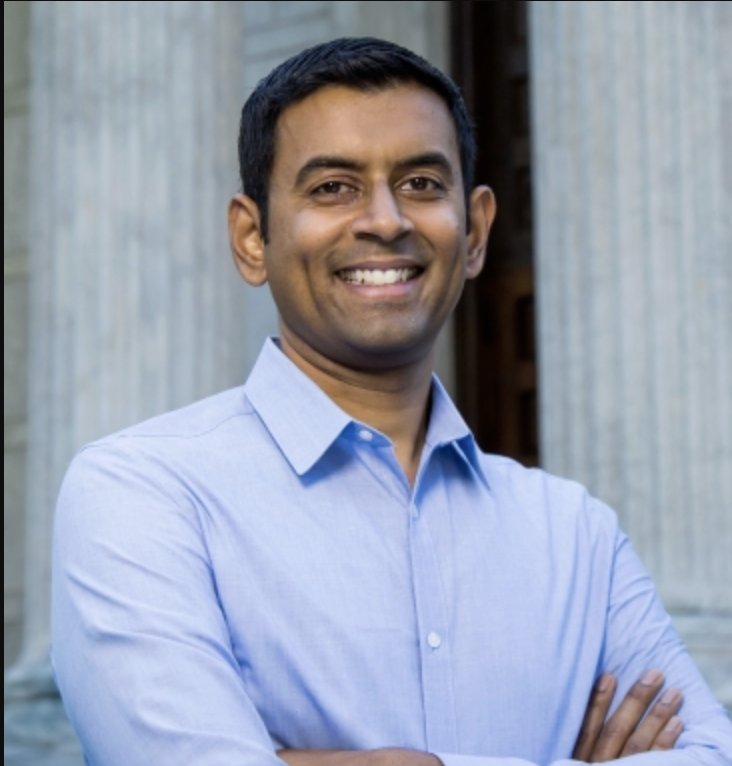

Alan Rozenshtein, research director at Lawfare, speaks with Justin Curl, a third-year J.D. candidate at Harvard Law School, and Arvind Narayanan, professor of computer science at Princeton University and director of the Center for Information Technology Policy, about their new Lawfare research report, “AI Won't Automatically Make Legal Services Cheaper,” co-authored with Princeton Ph.D. candidate Sayash Kapoor.
The report argues that despite AI's impressive capabilities, structural features of the legal profession will prevent the technology from delivering dramatic cost savings anytime soon. The conversation covered the "AI as normal technology" framework and why technological diffusion takes longer than capability gains suggest; why legal services are expensive due to their nature as credence goods, adversarial dynamics, and professional regulations; three bottlenecks preventing AI from reducing legal costs, including unauthorized practice of law rules, arms-race dynamics in litigation, and the need for human oversight; proposed reforms such as regulatory sandboxes and regulatory markets; and the normative case for keeping human decision-makers in the judicial system.
To receive ad-free podcasts, become a Lawfare Material Supporter at www.patreon.com/lawfare. You can also support Lawfare by making a one-time donation at https://givebutter.com/lawfare-institute.
Click the button below to view a transcript of this podcast. Please note that the transcript was auto-generated and may contain errors.
Transcript
[Intro]
Justin Curl: The
amount of work that each side does could essentially just go up, because now
both sides are being hyper productive with AI. Instead of writing like one
motion or writing five pages or looking at a hundred cases, they're now doing a
hundred X that and all of those relevant domains. So the amount of outputs has
increased, but because the outcome that clients ultimately care about is
settling favorably or winning at trial, it takes much more work and much more
outputs to reach that exact same outcome.
Alan Rozenshtein:
It's the Lawfare Podcast. I'm Alan Rozenshtein, associate professor of
law at the University of Minnesota and research director at Lawfare. I'm
talking to Justin Curl, a third-year J.D. candidate at Harvard Law School and
Arvind Narayanan, professor of computer science at Princeton University and
director of the Center for Information Technology Policy.
Arvind Narayanan:
Judges make law a lot of the time, and exercising human judgment about what we
want the world to look like. That's the perfect example of what I would want
humans to be doing in a world where all conceivable labor can be automated.
Alan Rozenshtein:
Today we're discussing their new Lawfare research report, co-authored
with Princeton P.h.D candidate Sayash Kapoor, arguing that despite AI's
impressive capabilities, structural features of the legal profession, from
guild regulations to adversarial dynamics, mean that the technology may not
deliver the dramatic cost savings that many predict.
[Main Episode]
So I'm excited to get into the paper that you and your
co-author Sayash Kapoor have written about the effect of AI in the legal
profession, and specifically why it might not provide the sort of cost savings
that everyone is predicting, and at least some people though perhaps not
lawyers are hoping for.
But before we get into that, I wanna take a moment to talk
about the broader framework of how you're all thinking about this, which draws
on this broader project that you, especially you, Arvind, and your collaborator
Sayash have thought about and have written a great book about and learned a lot
of great writing about, which is this idea that AI is a normal technology.
So just before we get into the law part of this, just sketch
out what you mean and particularly what you mean by a normal technology.
Arvind Narayanan:
Definitely, let me start with a historical example. Way back when electricity
became a thing, there was a lot of hope that it would enable factory owners to
rapidly achieve a lot of cost savings by, as I understand it, replacing those
big, messy steam boilers with electricity.
But there's a great analysis of this by economic historian Paul
A. David, and it turns out when they first started doing that, it didn't really
seem to help, and it took 40 years, something like that, to really figure out
how to gain the benefits of electricity. And that's by taking advantage of the
fact that electricity is a much more portable kind of technology and you can
move it and generate it wherever you want.
So that required restructuring the whole layout of factories,
going towards the logic of the assembly line, changing how firms hired and paid
and trained workers, that sort of thing. And these kinds of downstream
innovations, again, took a period of decades.
And really the insight of AI as normal technology is that we
can and should learn from these past general purpose technologies. And AI is
not exceptional in that way. And a lot of the discourse starts from rapid
improvements in AI capabilities to drawing a straight line to societal effects
or effects on any particular profession or the economy.
And our view is, no, that's not gonna happen. There are various
stages in this pipeline.
So we take this existing framework from the theory of diffusion
of innovations and apply it to AI specifically, and we have four stages. The
first stage is improvements and capabilities. The second one is how those get
translated into better products in law or any other particular domain. The
third stage is workers starting to adopt these products and learn to use them. And
the fourth stage is really the hardest one. That's where you need to make
organizational changes to laws, nor norms, business models, et cetera, which we
get into in, in this paper.
But really the overall framework is about looking at all of
those four stages in order to understand the speed and nature of AI impacts on
any particular profession, as opposed to merely looking at, you know, what is
the latest performance of GPT 5.2 or whatever.
Alan Rozenshtein:
That's great. But let, and lemme just dig in a little bit before I turn to
Justin to sort of set up the law part of this. To be clear, and I just wanna
make sure that I'm understanding the argument correctly—When you say normal,
you don't mean non-transformative, because of course electricity was quite a
big deal. Automobiles were a big deal. The neolithic revolution was a big deal.
I mean, a lot of these things are big deals.
It sounds like what you're saying though, it just takes a lot
longer than people think. I think there's a quote, I think it's often
associated with Bill Gates, and maybe it's one of these quotes that's
associated with many people, which is that people systematically overestimate
what can be done in the short term, but then they tend to underestimate,
because people are bad at compound math, they tend to underestimate what's
gonna happen in the long term.
Is it a fair to say that you are at least open to the
possibility that in the longish term, AI will have a deeply transformative
effect, even if it takes a quite a long time, and there are roadblocks and
reforms and a lot of messiness that, as you pointed out, the latest, you know,
frontier math accomplishment that, you know, GPT 5.2 Pro or whatever is going
around X does not really capture.
Arvind Narayanan:
That's exactly right. We are pretty optimistic about the effects of AI in the
long run. We do have much longer timelines than a lot of people talking about
this, but also we emphasize the agency that's involved. I think these effects
are not preordained. I think we need to get a lot of things right in terms of
reforming our institutions in order to be able to take advantage of these
benefits.
Alan Rozenshtein:
What interested you in particular because, you know, Justin's a law student,
I'm a law professor, sort of, we are professionally investing in the legal
field. You are a computer scientist, so there are any number of fields that you
could, and I'm sure, have in your research applied this too. I'm curious if you
think that the legal field in particular is a good test case or if it has some
unique elements relative to other possibilities for you in particular.
What was interesting about the legal angle here?
Arvind Narayanan:
Yeah, lots of things. So let's contrast a few different fields. On the one
extreme I would say is software engineering, which like law is a purely
cognitive field, and unlike, let's say medicine, which I'm gonna put on the
other extreme, although it's not really an extreme, I wanna look at the range
between these three fields.
So in software engineering, being a purely cognitive field,
we're starting to see the impacts of AI very quickly. But an important way in
which it's different from law is that it's not professionalized. There aren't a
whole bunch of regulations about who can do software engineering, how software
engineering can be done, various kinds of liability, none of that stuff. And so
the impacts are starting to hit very quickly.
On the other hand, in medicine, you know, like law is very
professionalized, but also you can't as an individual just start, you know,
using a model for self-diagnosing yourself. You can, but you very quickly run
into roadblocks.
Alan Rozenshtein:
Yeah, I think tens of billions of people might disagree with you there, Arvind.
Arvind Narayanan:
Yes, for sure. Yeah, they are. But the problem is you can't prescribe yourself
something, right. And so you hit a roadblock in terms of the in terms of
interacting with the system. Law is very nicely in the middle. It is purely
cognitive, and so there is clearly a lot of great potential.
But at the same time, it is very professionalized. There's all
these regulations that, that we discuss in the paper, and the reason it's so
interesting to look at this profession that's in the middle of these two
extremes is that you can really imagine and spell out: What are the kinds of
reform that will be needed in order to really take advantage of this tremendous
possibility? And those are things that, you know, the professionals can start
doing now. It's much harder to articulate that in medicine.
So an example is people say, oh, we're gonna be able to
dramatically speed up drug development. Well, the problem is, the hard part of
drug development is not discovering new molecules. It's, you know, testing
them. The human trials, which take 10 or 15 years, highly regulated, et cetera.
It's really hard to articulate how you can compress that down to, let's say a
few months without, you know, throwing away what we've learned about testing
drugs safely. But when it comes to law, it's not that kind of thing.
You can actually imagine and spell out the reforms, and I think
that's what Justin has tried to take the lead in doing in this paper.
Justin Curl: I'll
just jump in briefly, I think one way that I also think about the AI as normal
technology framework is just as a prescription of where we should be focusing
our efforts.
I think it's really easy to sort of view AI as this like
all-encompassing tsunami where there's nothing any individual can do to fight
back against it or can intervene or shape its development. But AI as normal
technology tries to identify systematically what those organizational and
societal bottlenecks are so that you can know where you should focus your
efforts if you're trying to ensure that, sort of AI diffusion is positively
impacting people.
Alan Rozenshtein: So
I think one way of looking at your paper is an exploration fundamentally, you
know, less about AI and more about why law is so expensive, right? Why the
practice of law, why the products of law are so much more expensive and why,
you know, we don't see the productivity gains in law that we do with, I don't
know, flat screen TVs or many other things.
And so you identify sort of three structural reasons that legal
services are expensive, even before AI enters the picture. So you talk about
law being a credence good. You talk about how the value of a legal service is
often relative rather than absolute. And then of course there are these
professional regulations.
So can you just sketch out for the non-lawyers in the audience—What
is it about law that makes it so expensive, sort of ex, before we can start
talking about any technological developments like AI.
Justin Curl: Yeah, of
course. And I think here it's really important to sort of nod towards Gillian
Hadfield's work. A lot of this, it comes directly from papers she's written
over the past two decades about this. They're excellent. I recommend people
check them out.
Starting with the first sort of reason about credence goods. I
think one reason law is unique is because it's very hard to evaluate the
quality of legal services, even for lawyers and experts in the field.
You could imagine, if I'm engaged in like this complex year
long trial, it's hard to know whether a particular motion filed or like a
particular decision in one sentence about how to frame a topic is the reason
why the client reached the outcome they want. And so instead of being able to
directly assess the quality of legal services, you're sort of forced to rely on
reputation or things like how prestigious was the law school that someone went
to or things like that. And so that makes it very hard to have a functioning
market when you're thinking about legal services.
The second reason about the value of legal services being
relative is. Also it, it's hard to have like an understanding of legal services
in the abstract. It's not like I can look at that and be like that's a seven
legal services.
If I'm engaged in litigation, oftentimes whether I'm able to
achieve the result I care about depends on what the other side is doing. So if
my contract term is really good, might depend on whether the, what the other
side is doing and how they're thinking about it.
And then the final, sort of reason that, again, Professor
Hadfield identifies is there's a very complicated regulatory framework. There's
two types of, I think, regulations that are relevant here. The first is UPL or
unauthorized practice of law regulations, which limit who is allowed to provide
legal advice that is defined incredibly broadly. So anytime you apply legal
knowledge to specific facts, you might be engaged in the practice of law. If
you do so without permission or you're not a licensed attorney, that's actually
a felony in a lot of jurisdictions.
So that's already one reason why, maybe some of these
companies, when their chatbots are providing things that look like legal
services, they might actually start to run into some liability for it.
Alan Rozenshtein: And
also, I'll also jump in and just add to that. So I am a lawyer, believe it or
not, despite being a law professor who I would not recommend hiring for legal
advice. I am technically a lawyer. I'm barred in the state of the fine state of
New York. And when I moved here to Minnesota, at some point I was just curious,
okay, well what does legal practice look like?
Because I don't intend to really practice law anymore, but I
don't wanna accidentally, you know, practice law and not doing the right thing.
And so I looked at the New York bar rules and what's amazing is there was all
these paragraphs about what the practice of law might be, but then they
specifically refuse to say what the practice of law actually is, and that they
actually also won't tell you.
So it is almost Kafka-esque situation where there is such a
thing as the unauthorized practice of law, it's quite a big deal to do it, but
no one will actually tell you what constitutes the unauthorized practice of
law, which I have to assume just has sort of a chilling effect on this whole
industry.
Justin Curl: I think
there's two really good examples actually connected to that, that we talk about
in the paper. I think one is, if you look at what the New York Bar Association
has said, they've been like, well, chatbots, they might be the practice of law.
It seems like it's getting close.
And so I don't really know what I'm supposed to do with that. If
I'm a lawyer thinking about, or even a consumer thinking about using AI.
Alan Rozenshtein: What
units is close, measured in, I'd be very curious how many GPT units is close in
this context?
Justin Curl: Yeah
that's also what I wanna know.
Arvind Narayanan: Can
I ask you if either of, you know, if there have been any lawsuits against the
major chatbots?
I mean, I use it all the time for little things like reviewing
contracts, and I assume that many people out there are doing that. So
presumably these chatbots, you know, at least in my case, are providing legal
advice that's tailored to my situation. So I wonder if people have been trying
to sue them.
Alan Rozenshtein: I
don't personally know of any of these. I mean obviously there are other—the
automated legal services is a thing that predates these chatbots and I think
there have been some legal, at least regulatory challenges to some of these,
you know, I dunno if it's illegal. Zoom has faced these challenges, but sites
like that, there are also the countervailing First Amendment considerations
where you couldn't get—the Guild could not get too aggressive about this
because people also have sort of First Amendment rights to, you know, talk to a
chatbot about their legal issues as well.
But I'm curious, Justin if you've heard of anything.
Justin Curl: Yeah, I
haven't seen anything focused on AI chatbots specifically, but I think LegalZoom
is a good example ,where over the past two decades they've been sued countless
times and they've had to rework the actual way that they provide legal services
because they've had to reach settlement, very expensive settlement agreements.
And what's interesting about that is who the plaintiff is. Like
you, you ultimately need a plaintiff to bring the lawsuit. And so sometimes
that's the attorney general of a state, but sometimes that's actual individuals
who have received the legal services. So maybe if ChatGPT gives bad legal
advice and someone's upset, we might see a new lawsuit about it.
Alan Rozenshtein: So
I wanna get into the bottlenecks that you all go through in your paper, but
before I do, I wanna address sort of one thing that's not in the paper that
actually might be surprising if you're reading a paper about skepticism that AI
will automatically lower the cost of legal services, and that is what none of
you are arguing, is that AI won't be able to do the actual individual cognitive
tasks.
There are a lot of people that think that AI is, quote unquote,
fancy autocomplete or stochastic parrots or just a giant plagiarism machine.
There are lots of ways of dismissing that and that'll never have the skill or
the creativity to be a really good lawyer. Am I right? And let me ask you Arvind,
since you also have sort of a broader sense of the AI landscape across
different cognitive domains, that's not what you're arguing.
It seems like your paper is happy to concede the possibility,
and maybe you all actually believe this. I certainly do. But I'm not a computer
scientist. That already today, and certainly within several years on any
discreet, even large scale task, like write me a Supreme Court brief, you know,
GPT-7 may actually be quite capable of outperforming all but the absolute elite
lawyers, and even for those elite lawyers at a tiny fraction of the cost that
it takes to, you know, hire Paul Clement to argue your case.
And so all these bottlings are actually totally separate from
the raw capabilities. Is that a fair articulation?
Arvind Narayanan:
That's mostly where we land. That's right. We're not capabilities skeptics. So
let's divide it into two ways of looking at it.
One is some of the current limitations such as hallucinations,
or not really having access to all of the documents that it would need in order
to do a good job in your case, that sort of thing. These are all easily fixable
in our view, you know, especially when you consider the long term of AI
development. They're gonna get fixed.
But then you do get into some gray areas. So what it means to
write a good Supreme Court brief is not something unlike, let's say, coding,
where there are correct and incorrect answers. People are going to disagree
about that. These are matters of judgment. So we do think there are some limits
there in terms of how good AI can get, because you know, it learns from
feedback and it's not going to be that easy to learn from millions of cases of
feedback where AI creates an argument and then that brief is submitted, and
then you get to learn from, you know, what was what was the result.
In that case, that feedback loop is extremely slow, and so
you're not necessarily gonna see the kind of rapid capability progress that you
see in, let's say, math or software engineering.
Nonetheless, that's not where our risk skepticism comes from. We
are acknowledging that there might be a day where AI is able to do any
precisely specifiable cognitive task that most lawyers are able to do.
Alan Rozenshtein:
Alright, so let's now then jump into the first bottleneck, which is, which
you're talking about just recently, Justin, this question of regulatory
barriers.
So explain sort of how that could get in the way of AI really
revolutionizing and lowering the cost of legal services especially, and it just
says maybe a bit of a counterargument, even if. At the end of the day, the
legal landscape. You know, if, you know, if you go to law school in, you know,
2029, 2030, even if the legal landscape superficial looks very similar, there
are a bunch of law firms, some are very big, some are medium, some are small.
If all of these law firms are using AI integrally, right? If
these law firms are essentially kind of wrappers around these models, why isn't
that enough to really have AI revolutionize legal practice?
Justin Curl: And I
think it's important to distinguish between two ways that someone could receive
legal services.
I think the one that you just mentioned with law firms that
more directly implicates the entity regulations piece of professional
regulations of the law. And so that is—that limits who can own equity in a
legal services business. So I think it's no surprise that all of the law firms
are owned by lawyers because you have to be a lawyer in order to own a law
firm.
What again, Gillian Hadfield points out is that this can create
very inefficient business models. In a lot of the smaller practices serving
individuals and small businesses, lawyers work eight hours a day. But of those
eight hours, only about 2.3 of them are actually doing billable work. The other
six hours of that is just doing administrative tasks and like sourcing clients,
things like that.
And so even if AI is very advanced and capable of performing a
lot of legal work, the way that AI is integrated into the business might
actually be a lot less efficient because of these constraints on how those
businesses are run.
Alan Rozenshtein: But
let me actually push back on that a little bit because there's a whole cottage
industry right now about using, you know, multi-agent Claude swarms to go out
and find your clients and to do all your invoicing and all of that sort of
stuff, right?
It seems to me that one of the things that AI could do, in fact
and this is certainly how I try to use these AI tools, right, which is to sort
of automate the administrivia of my, you know, life, whether it's as a teacher
or a researcher or a consultant or whatever the case is.
So, I mean, I do wonder if there's a possibility here for these
AI systems to be, you know, exactly, actually, the thing that a mid-sized firm
that is run because of guild rules by lawyers who, God bless, whatever skills
we have, management is often not one of them. You know, maybe what we need is
Claude Code actually, just for that purpose. Why isn't that an answer to the
management inefficiency problem?
Justin Curl: So I
actually think this is a very good application of AI, in part because I think
it is a nice niche that is not necessarily covered by the unauthorized practice
of law rules. So if I'm outsourcing clients, very few people think that counts
as practicing legal services, so this regulatory barrier actually wouldn't
really cover those set of applications.
And s one great way to make a lot of smaller firms much more
efficient is to go out and automate a lot of the tasks that are taking up their
time so that they can spend more time providing legal services. And so I think
this is a great application of AI and maybe actually helps prove the point
because it shows that when there aren't those regulatory barriers, you can
actually use AI to make it much more efficient.
Arvind Narayanan: I
wonder, even in some of these administrative tasks, if there are competitive
dynamics, certain kinds of paperwork, certainly, you know, there's a fixed
amount to get done, but something we say later on in the paper is that one of
the big barriers to productivity improvements actually translating to a better
version of legal services is that there are kinds of arms races, you know, we
talk about arms races between plaintiffs and defendants, and I'm sure Justin
will say more about that.
But one of the kinds of arms races that can happen, even in the
more management kind of work, is you talked about going out there and finding
clients. Well, these are gonna be tools that every firm is now going to be
using to kind of level up how effectively they can do that. So, what's gonna be
the end result of that process? That seems hard to anticipate.
And we're seeing in other cases, for example, in scientific
peer review, for instance, there are these arms races between authors using
LLMs to try to improve their productivity and reviewers using LLMs to try to
automate some of the aspects of reviewing, and it's leading to some very
unhealthy kinds of equilibrium—or not an equilibrium, perhaps it's leading to a
kind of debt spiral.
So we should be careful about things that at first appear to be
productivity improvements, but can in fact upset existing kinds of balance and
end up removing certain useful kinds of friction from the process.
Alan Rozenshtein: So,
that's great. And actually let's use that to then pivot to the second
bottleneck, which is this sort of adversarial point. Arvind teed it up, but
Justin kind of riff on that. What is, I mean, I think everyone has sort of an
intuition that law is a somewhat adversarial profession. But to talk more about
that, and how that might lead to AI being sort of largely a wash when it comes
to the provisional legal services.
Justin Curl: Two
things on this. I think the first is it's important to understand like, when
are we ending up in this world where this becomes the predominant bottleneck? I
think we're, even if we're in a world where AI is being used very widely, and
it's being used to make lawyers much more productive, this is still a
constraint because if you give both sides access to AI, and you're sort of
locked in this zero-sum process, the amount of work that each side does could
essentially just go up, because now both sides are being hyper-productive with AI.
Instead of writing like one motion or writing five pages or
looking at a hundred cases, they're now doing 100 X that and all of those
relevant domains. So the amount of outputs has increased, but because the
outcome that clients ultimately care about is settling favorably or winning at
trial, it takes much more work and much more outputs to reach that exact same outcome.
And so, although AI has made both sides more efficient, you end up doing a lot
more work.
The second thing on this, and maybe the historical analogy
here, is the discovery process. A lot of people thought that digitization was
gonna make discovery way, way easier because you can now just “control F” for
documents. So it's much easier to find the relevant documents.
What they didn't expect was, now both sides, there's just much
more documents being created. Digitization means you can now request a lot more
documents and share a lot more documents, and the net result is now discovery
consumes like half the time that first year associates spend doing.
And they're also—it's become one of the most expensive parts of
litigation and litigation costs have not actually come down. They've, if
anything, gone up in a lot of the complex cases.
Alan Rozenshtein: How
much of this is about—is a litigation story versus a sort of general law story,
right? So again, I think most people, when they think of law, they think of
litigation, and that's obviously a large part of it.
Litigation is only one, I'm not even sure it's the plurality,
frankly, of legal practice. I suspect transactional work is actually right,
especially when you include smaller scale stuff like, you know, wills and
things of that nature is probably, again, if not the majority, then the
plurality of legal work and then of course is a bunch of in-house stuff.
So how much of this adversarial kind of arms race problem is a
litigation story, and how much of it also bleeds into, let's say, transactional
work?
Justin Curl: I think
some of it definitely bleeds into transactional work. I think it, again,
depends on the dynamics within transactional work. When you touched on wills,
to me that doesn't seem like there's a clean adversarial process. 'cause the
goal is just sort of to match the intent of the person who wrote the will. So,
like,
Alan Rozenshtein:
It's not the ‘who's on the other side.’ Right?
Justin Curl: Exactly.
Alan Rozenshtein: You
know, God gets it all in the end.
Justin Curl: And then
in some sort of transactional context though, like say you're negotiating a
merger between two parties, that, to me, starts to seem a lot more adversarial.
Like oftentimes transactional lawyers distinguish their work
from litigators by saying no, we're much more positive sum, it's much more
collaborative. But at the end of the day, if how you draft your contract
provisions, what you choose to include what you disclose to the other side.
There's a very fine line between what is and is not okay. And
how you skirt that line can actually translate into advantage for your side.
And so you may end up using AI to take advantage of that.
Alan Rozenshtein:
Arvind, let me ask you, go back to you mentioned sort of earlier that obviously,
law is not the only place where you have these arms races. You gave some
examples.
The examples I was thinking about was actually, for example,
trading. Right? Which seems like a perfect example of this, right? You know, we
already seen this before AI, where you have these sort of massive high
frequency trading outfits that are spending, God knows how much money, but it's
sort of not clear that they're making anything necessarily that much better
because there's just someone else on the other side.
I'm curious, again, zooming out and from your work, thinking
about AI as a normal technology across the entire economy, how much of the
economy, how much of a productive economic worth is vulnerable to these sorts
of, kinda adversarial conditions where the result of AI is not just, is not
really lower cost, it's just everyone using AI more to sort of try to beat each
other.
Arvind Narayanan:
Yeah, it really comes up everywhere. Trading is, of course, a perfect example.
I remember 10 years ago there were proposals for exchanges in the middle of the
ocean, something like that, because the speed of light was becoming a
constraint in high frequency trading. And so you, that's an example where, I
don't know if they ever ended up actually building it, you know, in between
London and New York and the Atlantic Ocean, but it's a perfect example of
sinking a lot of money into something.
That brings benefits that are purely relative, right? If
neither side has access to it, you haven't lost out on anything. Your, you
know, trades are a fraction of a second slower. You can't argue that's actually
a benefit to society to build these things in the middle of the ocean. So yeah,
these dynamics come up literally everywhere.
We just talked about peer review. But there's this great book
called “Bullshit Jobs” by David Graeber. And he has I think, five different
categories of bullshit jobs, but one or two categories of them are all about
how so many different jobs and every different occupation are not necessarily
about providing the service better, but doing it better than your competitors.
And so better on that dimension doesn't actually translate to
better service for consumers. So this is not specific to law. It comes up
really all across the board.
Alan Rozenshtein:
Yeah, I remember that book. I think the essay from which it comes from is even
better 'cause it's a nice tight read. And I do recall corporate lawyer was one
of the main examples that, that he gives.
Alright, so let's now turn to the third bottleneck, which is
this need for human involvement. So, Justin, what is this need for human
involvement in the law? Why can't we just have, you know, robot lawyers arguing
in front of robot judges while I sip, you know, daiquiris on the beach?
Justin Curl: Well,
okay, so you definitely could have that world. I personally would not really
want to live in that world. I think even the most sort of AI pilled people out
there are still hesitant about the idea of turning over judges in society to AI.
I think there's also compelling constitutional reasons not to do that, namely Article
Three.
But putting that aside, I think the human element is—assuming
we want human beings to be involved—this is, there is a limit to how quickly
judges can process cases. So if you imagine sort of this, going back to this
litigation example. Both sides are producing a bunch more work. They're writing
much more sophisticated briefs, they're citing more cases.
Also, it probably becomes easier to file lawsuits, so there's
just a lot more lawsuits. As that happens the new bottleneck becomes the time
it takes for judges to adjudicate those cases. Going over to the transactional
side, I think the new bottleneck, as contract provisions get longer and these
negotiations become more complex, I think the bottleneck becomes the ability
for human lawyers to actually understand what's going on behalf of their
clients.
I, for one, would want to be in a world where corporations know
what they're signing up to when they're signing up for contracts. And so I
think having someone inside of the corporation who understands this is the, is
sort of the final bottleneck. So even though AI makes things a lot faster,
there is still this thing of how quickly can human beings work.
Alan Rozenshtein: So
I, the normative question about do we want human judges, human decision makers,
the legal question as a constitutional crime. That's interesting. Let's put
that to side for a second. 'cause I think the kinda psychological assumption or
the empirical assumption that as a matter of human psychology, as a matter of
what is sometimes called sociological legitimacy, which is whether or not the
system is a good one, do people perceive it to be a good one?
Whether that requires human decision makers—I'll admit, and
maybe this just shows how out of touch I am with actual human beings and that I
should log off Claude Code more—It is not obvious to me actually that there is
going to be such a demand for human decision makers outside, you know, let's
put criminal law, for example, to a side, but outside sort of the most high
salience context.
I mean, it certainly seems to me that the sort of story of
modern human sociability over the last 20 years is the increasing replacement
of sort of human connection and human engagement with digital connection and
digital engagement. And again, that may be a bad thing, right? That may be
quite possible, but it still appears to me to be a thing.
So I'm curious for your thoughts, Justin, about whether that
might be a possibility in the legal sphere, and then also zooming out, Arvind,
for your thoughts about how, you know, we might think about that in, in other
domains, right? Because you could presumably tell the same story about
education or mental health therapy, but at the same time, I don't know, maybe
it's possible that in 10 years we'll all be using chatbots as the bulk of
mental health therapy and people just got sort of used to that.
Because, you know, humans are malleable creatures. So let me
start with Justin and then I'll move to Arvind.
Justin Curl: I know
you said put the normative considerations aside, but I have to fight the
hypothetical on this one just because I do think if you're making a decision
about whether someone has like 10 years in prison or not, that is such an
important decision that it carries such moral weight that I would want a human
being to be involved in that.
Alan Rozenshtein:
Sure. But again, like criminal law is still a relatively small percentage of
legal practice, and I think the sort of economic story that you are talking
about is also more relevant to commercial litigation and the commercial
practice of law than the criminal practice of law, which is why I'm sort of
curious about the sort of like 90% of legal disputes that are not as high
stakes or salient.
Justin Curl: Yeah.
And so I think this is where one of our reforms actually is to have sort of
parallel tracks. And so you could imagine you have judges for the context in
which human involvement is most important. And then for those less important
things, you have a parallel track such as through arbitration.
And there are a lot of problems with arbitration about whether
it's like actually people are consenting into it properly, but assuming that
they are. You can have sort of, these AI judges are using it as a way to make
the process more efficient in contexts where you're less worried about the
stakes. And the stakes do seem lower, and so that might be a way to sort of, if
there's a finite pool of human attention and human time that we can allocate to
these tasks, we should allocate it in a way where it's most needed.
Arvind Narayanan: So
let me share a couple of thoughts, both specifically for judging, but also like
you said, zooming out, Alan. One thing I'd say is even in some world where, you
know, AI could make these decisions, what do we want the humans to be doing in
that world?
To me, you know, judges make law a lot of the time and
exercising human judgment about what we want the world to look like—That's the
perfect example of what I would want humans to be doing in a world where all
conceivable labor can be automated.
I mean, I think that should be literally the last thing to get
automated again for normative reasons, regardless of whether it can or can't be
automated.
Alan Rozenshtein:
Well, let me ask about that, 'cause I'm curious to sort of push on that
intuition. Where is that normative commitment coming from? I mean, because you
can imagine a lot of our arguments for you could say, well, it's because I
think that humans will always do a better job, at least in some cases, right, in
exercising that judgment than AIs do.
In which case I would say—we did earlier, however, kind of
stipulate that at least in a lot of domains, AIs are getting quite good, and
then you'd have to have a, I think a somewhat rosy view of how good human
decision makers are, at least kind of the median human decision maker.
Or you might say, I worry that if we outsource those decisions
to AIs, we ourselves will kind of have an almost moral de-skilling, right? We
will lose the capabilities.
Or you might say, you know, human psychology just requires
something carbon based to pass judgment on me, and it'll just rebel and society
will fall apart, right? If we have this done by computers.
But I don't know. I'm curious to sort of push you on just to
clarify where that intuition is coming from.
Arvind Narayanan:
Yeah. It's a simple answer. I think this is what it means to be in control of
our own civilization. This, I mean, all those debates about AI safety, this is
actually what it boils down to for me, not killer terminator robots. These
kinds of moments where we put the course of humanity in the hands of machines.
I think that's a line we should not cross. I mean,
historically, look at any cases that had a significant impact on how society
functions, let's say Brown versus Board of Education. Is that
something we would want to have been decided by a robot? I don't think it's a
matter of accuracy. There are no accuracy standards by which you can claim that
AI is doing a better or worse job than a human judge.
It's purely a normative question. It does not have an empirical
component. And you know, I would say that a world in which we leave these kinds
of decisions up to AI is not a world I wanna live in. And hopefully the
majority of people.
Alan Rozenshtein: And
just to clarify, and it's not, it sounds like because you don't think AI could
have written Brown versus Board of Education, it's just that the
whole point was that humans decided like—
Arvind Narayanan:
Correct.
Alan Rozenshtein: It
is a sort of, that's the whole point of democracy, right? Is not that we come,
not necessarily that we come to the best decisions, but they are fundamentally
our decisions. Is that the intuition—
Arvind Narayanan:
That's right.
Alan Rozenshtein: I'm
not pushing back on it, but I think it is useful to clarify where those
intuitions come from.
Arvind Narayanan:
Yeah. This is what it means to have agency as a species. These are the biggest
decisions that we make about the course of our societies.
Alan Rozenshtein:
Okay, so, so we talked about the impediments to the broad diffusion of AI, the
unauthorized practice of law issues the adversarial dynamics and just the needs
for, you know, humans and therefore humans will be a bottleneck.
Let's talk briefly about some of the reforms and the solutions
that you all propose. But before we get into them, I do wanna ask kind of a
meta question.
It sounds like, at least as I read the paper, you all do think
that we should have more AI in legal service. I mean, a lot of these reforms
are meant to facilitate the spread, but one could, I think just as easily look
at your analysis and say, oh, thank god we have these roadblocks, right? We
want there to be these really strong, unauthorized practice of law rules. I'm
not sure anyone would say we want to have these bullshit jobs where people are
just creating costs, but certainly, I mean, Arvind, I think he's just very
eloquently set out your argument for why humans being in the loop is just a
fundamental axiom of, you know, what it means to be human and have a human-led
society.
Why isn't the last third of your paper a thank god, and we
should do everything we can to keep AI out of the legal profession. Yeah. Arvind,
why don't you start?
Arvind Narayanan:
Sure. I mean, I think there's gonna have to be some line drawing exercise. I
think in every profession, you know, people will argue about what kinds of
aspects of what it means to do that job are fundamentally human, and which ones
can be delegated to a machine, certainly in the legal profession, and really
any other profession, there are lots of things we've chosen to delegate in
which we're comfortable with.
I think in a way law is starting from a really good place
because there are all of these restrictions currently, and so it's kind of
opting in to AI. We have to choose to allow AI to be used for certain things,
and it's not like by default AI is gonna replace judges and lawyers. So in a
way that's good. And so that is something that I celebrate.
But I don't think the current equilibrium is the optimal one. I
think there are a lot of things that make sense to delegate. And just a simple
example being access to justice for people who can't afford a lawyer being such
a scarce thing. And if AI can be used to enable public defenders to be more
productive, that would be a big win. So it's an existence proof that there are
some tasks where that line is is not for me to say, but I don't think the
current equilibrium is the optimal one.
Alan Rozenshtein:
Well, lemme ask the same question to Justin.
And I think your perspective is particularly interesting here
because, you know, you're a third-year law student, you're graduating in a few
months and you're entering a world, a legal profession that is radically
changing. And I suspect you can see that even more than you know, many of your
classmates.
Now, I think you've made a very clever bet in focusing on AI
because even if legal profession goes away, there will always be, I think
demand for your expertise in thinking about AI in the legal profession. But I'm
just curious from your perspective. I mean, I can imagine you, you know, you as
a student saying, I would, I do not want AI interfering with my, you know,
future job prospects.
And so, I'm curious where you come down on this on this point?
Justin Curl: Yeah. I
actually think it, it takes us back to the beginning of the conversation where,
ultimately the AI as normal technology is a prescription about where we should
focus. And I view sort of these reforms and these bottlenecks as opportunities
of where we should be allocating our time and attention.
Because ultimately one thing I think you'll learn going through
law school is just there's so much that needs to be fixed and there's so much
like, there are so many problems with our current legal system, and I view AI
as partially a way to fix those problems, but also as a way to sort of push
through or motivate the reforms that we've needed for a long time that aren't
actually about AI.
Like there's a lot of problems with our access to justice
system that aren't really AI problems, but maybe now that people are thinking
critically about how should we redesign our system in light of AI, we can start
having a better system generally.
Alan Rozenshtein: So
let me end the conversation, then with one of the reforms or kind of grouping
some of the reforms under one category, which at least to me jumped out as the
most interesting, and that is really changing these unauthorized practice of
law rules.
And so just talk me through what that would look like, and then
also how you'd respond to some of the concerns that, well, the reason we have unauthorized
practice of law is the same reason we have unauthorized practice of dentistry,
right? We do want some consumer protections around this.
And so why doesn't that mean that sort of the proposals that
you all suggest, you know, the regulatory sandboxes that are in places like
Utah, you talk about what those are or your paper mentions Gillian Hadfield's
idea of regulatory markets where you have sort of the government regulators
certifying private regulators and it's those private regulators and in a kind
of market competitive sense, then regulate the individuals almost in a way
that, you know, the government recognizes certain accreditation bodies and
those accreditation bodies then accredit schools.
You know, all of this is very clever, but it ultimately is in
the service of weakening unauthorized practice of law regulations. And someone
might argue, I'm not sure I would argue that because it worries, I worry that
it's just guild capture. One might argue that all is just making, you know,
customers of legal services more vulnerable.
So lemme start with Justin and then I'm curious Arvind
actually, how you think about those issues more broadly, 'cause as I mentioned,
very similar issues can come up in, in other professions and even in
non-professional settings like software engineering.
Justin Curl: Yeah I
think ultimately if the purpose of unauthorized practice of law regulations
sort of in their strongest form is to protect consumers from sort of unethical
practitioners that are giving bad legal service.
I just am not very compelled that they're actually doing that
good of a job of it right now, it seems to be making things much more
expensive. And there's some people who've passed the bar who give horrible
legal services. And then if you think about in the debt collection context, 70%
of people are losing by default because they didn't actually respond to the
lawsuit because they didn't afford a lawyer.
If you look at some of the most consequential, sort of legally
relevant decisions in our life, like whether you're getting divorced or whether
you're getting evicted. People just don't really have access to lawyers. And so
I just don't think that UPL rules are serving their intended purpose right now.
And so that's sort of why I'm for changing them in some way.
Arvind Narayanan: I'm
trying to say something useful by comparing it to other domains like software
engineering, without making it sound like, you know, I'm giving advice to
lawyers on how to run their profession because that's not for me to say. Okay,
so lemme say this.
Certainly, it's easy to understand the motivation behind
unauthorized practice of law rules, but I think as Justin said, there are
currently not that great at serving their intended function, and they seem to
have all of these unintended consequences, guild capture as you might put it,
that are deeply problematic.
I think there could be other ways of ensuring that consumers
are not harmed. It's for me as a non-lawyer, not a legal scholar, it's not
really for me to say what those are, but may, you know, maybe this moment of
upheaval around AI is a time when we can have a lot of innovation around, you
know, the way we regulate different professions and what institutional and
organizational structures we put in place.
Software engineering is one example of a field, like I was
saying earlier, is not professionalized, but still has a mix of various kinds
of checks in place to ensure that horrible outcomes don't result. So maybe
there's something to look at from different fields. Maybe we don't have to put
all of our weight into unauthorized practice of law rules.
Alan Rozenshtein: I
think it's a good place to leave it. Arvind, Justin, thanks for coming on the
show and for writing a great paper. It's very interesting and I do hope that
both optimists and skeptics of AI in the legal profession get a chance to read
it.
Justin Curl: Thank you.
Arvind Narayanan:
Thank you, Alan. This has been really fun.
[Outro]
Alan Rozenshtein: The
Lawfare Podcast is produced by the Lawfare Institute. If you
wanna support the show and listen ad-free, you can become a Lawfare
material supporter at lawfaremedia.org/support.
Supporters also get access to special events and other bonus content we don't
share anywhere else.
If you enjoy the podcast, please rate and review us wherever
you listen. It really does help. And be sure to check out our other shows,
including Rational Security, Scaling Laws, Allies, the Aftermath, and Escalation,
our latest Lawfare Presents podcast series about the war in Ukraine. You
can also find all of our written work at lawfaremedia.org.
The podcast is edited by Jen Patja with audio engineering by
me. Our theme song is from Alibi music.
And as always, thanks for listening.