9/11’s Legacy of Torture

In 2005, President George W. Bush assured the American people that “any activity we conduct, is within the law. We do not torture.” In 2006, he admitted that “the CIA used an alternative set of procedures” but said that the Justice Department had “reviewed the authorized methods extensively and determined them to be lawful.” Then in 2014, President Barack Obama conceded that “we tortured some folks.”
Anniversaries have a way of forcing reflection on the passage of time. Twenty-five years since the Sept. 11, 2001, terrorist attacks on the United States means that recent college graduates don’t remember how shocking it was when reporting revealed that the United States had been systematically torturing suspected terrorists in black sites. The United States, torturing people? It was unthinkable. Now, a generation of Americans has never known it to be otherwise.
Which is, perhaps, partly to blame for the fact that the United States still hasn’t figured out how to confront its legacy of torture. To many people, it feels like history. And there are plenty of urgent problems happening right now. Why dwell in the sins of the past?
Setting aside the moral imperative of righting this wrong—which I’ll do for the purpose of this article only—the reason is this: The failure to confront the United States’s legacy of torture exposes a fundamental failure of law.
Criminal law could not hold torturers accountable because of prosecutorial disinterest, legalistic sophistry, and congressional obstruction. Civil law could not hold them liable, or provide remedies to their victims, because of doctrines like standing, extraterritoriality, and state secrets, and because judges kept narrowing statutes intended to prevent torture. Efforts to investigate the facts of what happened—to find at least some measure of accountability through public disclosure—were stymied by the investigated or by the investigators themselves.
The consequence is that those who perpetrated and enabled the torture have suffered almost no repercussions, and those who were victims of torture have seen no real justice. All of which is itself a clear signal that the law failed. What is the law for, if not to punish wrongdoers and provide redress to those whom they injured?
Of course, that doesn’t help the case for those who think of 9/11 and its aftermath as a historical artifact. To them, I say this: when a legal system has systematically failed to metabolize lawless, unconscionable government conduct, there is something wrong with that system. If we don’t figure out what, how will we combat lawless government conduct in the future—or now?
Yes, It Was Torture
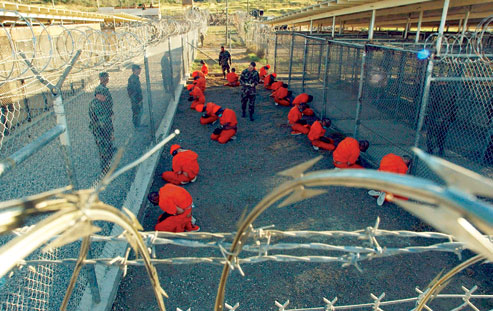
Gradually, over years, the American people learned some of what the United States was doing to detainees in the name of the “war on terror.” Some of the details came from official government sources. Interrogating detainees in covert facilities (or, as reporters often called them, black sites). Waterboarding, including “in a manner inconsistent” with approved methods, of a single individual 119 times. Up to 180 hours of sleep deprivation. Using a “police stick” to sodomize a detainee. These are only a few examples.
It’s almost hard to remember that the Bush administration and its supporters used to deny these activities. After enough information became public, though, they shifted to arguing that what was happening wasn’t really torture. Right-wing radio host Rush Limbaugh likened the treatment of detainees at Abu Ghraib prison to a “fraternity prank.” Bush adviser Karl Rove said that he was “proud we used techniques that broke the will of these terrorists,” but said he didn’t believe waterboarding is a form of torture. Fox News host Sean Hannity said critics were overreacting and offered to be waterboarded on television for charity. He never was, but conservative journalist Christopher Hitchens, who had been a prominent supporter of the “war on terror” and the treatment of detainees, was. Afterward, he concluded that “if waterboarding does not constitute torture, then there is no such thing as torture.”
Today, there is no serious dispute about whether the United States government was responsible for torturing people. Executive branch officials across administrations have said so (“we tortured some folks”; “[Al-Qahtani’s] treatment met the legal definition of torture”). Multiple judges in the Guantanamo military commissions at both the trial and appellate level have said so (Al-Baluchi “was subjected to physical coercion and abuse amounting to torture”; “the military judge did not err” in finding that Al-Nashiri had been tortured). The Supreme Court of the United States has even said so (the “Government has since concluded that [Abu Zubaydah’s] treatment constituted torture”).
In fact, the U.S. government’s torture of detainees is so firmly established in the Guantanamo military commissions that prosecutors have basically stopped denying it, and are now arguing that they should be permitted to use evidence obtained through “enhanced interrogation” methods, so long as it’s only for the purpose of pretrial proceedings. They have also argued that they should be allowed to use detainees’ alleged confessions even if the detainees had been tortured, provided that some time had passed between the torture and the statements. (The latter is a claim that lost in federal court all the way back in 2010; it’s also a claim prosecutors dropped only a few days ago in the case of alleged 9/11 mastermind Khalid Sheikh Mohammed.)
Why Criminal Law (Mostly) Failed
To my knowledge, there has never been a federal criminal prosecution of a government official for committing torture. That’s not for lack of evidence—reporting on these activities dates back to at least 2002, with gruesome photographic evidence by 2004, and that same year, two of the government’s own investigations confirmed that the U.S. had engaged in torture. Reporting had uncovered the existence of CIA black sites and brutal interrogations in Guantanamo by 2005. In fact, the CIA itself seems to have been worried about the evidence: It destroyed what turned out to be 92 “brutal” interrogation videos back in 2005.
Documentation since then has come in the form of media reports, Congressional testimony and investigative reports, military commission and habeas litigation by Guantanamo detainees, and investigations by the Justice Department, the Defense Department, and the CIA.
So why weren’t federal officials prosecuted for committing torture? It’s not due to an absence of applicable criminal statutes. Among other options, 18 U.S.C. § 2340A prohibits committing or attempting torture outside of the United States; 18 U.S.C. § 2441 prohibits war crimes, including torture, by U.S. persons (including members of the armed forces) abroad; and 18 U.S.C. § 3261 permits prosecution of certain members of the armed forces and those accompanying them for serious crimes even when committed abroad.
The cynical interpretation is that federal prosecutors and/or Justice Department officials and/or the president protected the torturers, having concluded that bad things happen in war and their conduct was therefore justified. But it’s more complicated than that—and that’s where the law itself becomes part of the problem.
First, within months of the attacks, the Justice Department’s Office of Legal Counsel (OLC) urged the president to declare that the Third Geneva Convention on the treatment of prisoners of war did not apply to al-Qaeda and the Taliban, including for the specific purpose of “substantially reduc[ing] the threat of domestic criminal prosecution.” It laid the foundation for strategically shaping the law to protect torturers from being held accountable.
Second, the law provides a defense for mistakes of law or good faith reliance on legal advice. Congress formalized this defense in the Detainee Treatment Act of 2005, which provided in § 1004 that individuals charged for crimes resulting from detentions or interrogations could rely on a defense that “they did not know that the practices were unlawful” and that “good faith reliance on advice of counsel” should be taken into account. The Military Commissions Act of 2006 (2006 MCA) then made this defense retroactive to cover all conduct dating back to Sept. 11, 2001. It was not an absolute defense, but Attorney General Eric Holder effectively made it one when he announced in 2009 that the Justice Department would not prosecute anyone who had relied on the department’s own legal guidance (about which more below).
Third, Congress legislated around some of the conduct that had become public. The 2006 MCA amended the War Crimes Act in a manner that arguably decriminalized certain techniques, effectively redefining criminal statutes to make it harder to prosecute the conduct.
Fourth, the OLC interpreted its way around criminal prohibitions. In a set of legal memoranda—now popularly referred to as the “Torture Memos”—the OLC constructed painstakingly detailed arguments to excuse torture. For example, an August 2002 memo to the White House Counsel read statutory definitions as prohibiting “only the most extreme forms of physical and mental harm,” argued that any effort to prosecute an interrogation method as torture might be an unconstitutional infringement of the president’s commander in chief power, and even offered defenses to criminal charges that might be brought against government officials. An August 2002 memo to the CIA authorized specific interrogation techniques, the specifics of which were spelled out in graphic but sanitized detail. And a March 2003 memo to the Defense Department gave further authorization to specific interrogation techniques.
Notably, OLC was not the only office building a legal Potemkin village to justify torture—lawyers from multiple agencies across the executive branch also weighed in. And since alleged torturers could effectively block their prosecution by claiming they had relied on legal guidance, these opinions served to enable and immunize what may have otherwise been criminal conduct.
The combined effect of all of this rendered criminal prosecutions practically impossible. Or at least that’s what prosecutors and politicians concluded.
That said, there were a handful of cases in which individuals were criminally charged for their conduct—albeit for crimes such as “abuse” rather than torture by name, and only after the incidents provoked public outrage. Eleven enlisted soldiers were court-martialed for their role in the Abu Ghraib prison abuse scandal, which gained notoriety after photos became public; their sentences ranged from discharge from the Army to 10 years in prison. (The only officer charged in connection with the incident had his case thrown out and was given an administrative reprimand.)
Seven soldiers were court martialed after two Iraqi detainees were killed at the military base in Bagram, Afghanistan; their sentences ranged from letters of reprimand to a few months in prison. One person—a contractor for the CIA, not a government official—was convicted of assault in federal court in connection with the death of a detainee who had surrendered himself at the gate of a U.S. military base in Afghanistan; he served six years in prison and later told PBS News that he “wouldn’t have done anything different.”
Why Civil Law (Mostly) Failed
Numerous victims have sued their torturers and those who enabled them. But they faced an uphill battle before even entering the courtroom. Claims against the United States itself were generally foreclosed by sovereign immunity, so victims were forced to bring claims against individuals or corporations. Certain laws that clearly forbade torture, like the Convention Against Torture, do not provide private causes of action.
A basic canon of statutory interpretation, the presumption against extraterritoriality, coupled with the territorial limitations of common law torts, meant that there were exceptionally few legal claims available to them in the first place—usually, for the simple reason that their torture took place abroad. (Some claims were rejected for other reasons as well. For example, a few plaintiffs brought Bivens claims seeking monetary damages; these were quickly dismissed, including on the basis of “special factors.” Claims under the Federal Tort Claims Act also failed; the court found that the “foreign country exception” applied because the United States did not have sovereignty in the “legal and technical sense” over Guantanamo, where the alleged torture had occurred.)
Plaintiffs thus turned to two main statutes that seem to contemplate claims for torture in particular: the Torture Victim Protection Act (TVPA) and the Alien Tort Statute (ATS).
As it turned out, the TVPA was of limited utility by its own terms because it creates a cause of action against torturers acting under color of law of a foreign nation. The TVPA simply did not apply to those plaintiffs whose torture had been perpetrated pursuant to U.S. government orders.
The ATS, therefore, seemed like the most promising option, at least for a while. It provides a “civil action by an alien for a tort only, committed in violation of the law of nations or a treaty of the United States.” Torture victims alleged in at least eight separate cases that their treatment had clearly violated “the law of nations,” as evidenced by customary international law and treaties like the Convention Against Torture, and that the ATS gave courts a jurisdictional hook to hear their claims.
But almost all of those plaintiffs have been unable to secure a remedy. It’s not because they failed on the merits—it’s because numerous failures of law got in the way of even considering the merits.
First, the state secrets privilege proved a powerful tool for undermining plaintiffs’ cases. The judge-made doctrine allows the government to avoid discovery if it asserts that disclosure of the information would harm national security. In multiple cases, including El-Masri v. United States, Mohamed v. Jeppesen Dataplan, Inc., and Arar v. Ashcroft, judges dismissed cases outright, not even allowing plaintiffs to attempt to prove their claims in some other way, like through substitution of evidence.
Second, courts held that some officials accused of torture were protected by qualified immunity, which provides that a federal officer cannot be held liable for conduct alleged to have violated the plaintiff’s constitutional rights if the right was not “clearly established” at the time of the violation. Judges rejected plaintiffs’ arguments that any reasonable person would have known that torture violated a constitutional right, holding that the relevant question was whether the torture victims even had clearly established constitutional rights—and finding that it was not. In other words, the plaintiffs’ claims were foreclosed because judges said that it wasn’t obvious that the Constitution protected detainees tortured by Americans abroad. Or, stated otherwise, that the Constitution did not prevent Americans from torturing people as long as they did so abroad.
Third, courts have been continuously chipping away at the ATS and have now effectively foreclosed any potential claims of torture as a matter of law. Earlier jurisprudence had permitted foreign nationals to bring claims in U.S. courts for human rights violations committed abroad. But by 2004, the Supreme Court began narrowing the ATS’s reach. In Sosa v. Alvarez-Machain, the Court found that the ATS is a purely jurisdictional statute and does not create a cause of action, which meant that lower courts could only hear a small number of “specific, universal, and obligatory” violations of international law. Between 2013 and 2021, the Court continued to narrow the statute in Kiobel v. Royal Dutch Petroleum, Jesner v. Arab Bank, and Nestle USA, Inc. v. Doe in ways that further restricted victims’ possible claims. The likely final blow came this June in Cisco Systems v. Doe, which held that the ATS did not cover aiding and abetting torture (incidentally, it held the same for the TVPA).
Fourth, civil remedies are unlikely for practical reasons as well. Torture victims don’t always know who tortured them. Gathering evidence may prove impossible, even before government assertions of state secrets. Given the complexity of the legal issues, litigation can take decades—the plaintiffs alleging torture at Abu Ghraib originally brought their claims in 2008, more than 18 years ago.
To my knowledge, there is only one instance in which victims saw some kind of civil remedy for their torture. In Salim v. Mitchell, three former detainees sued the psychologists who had run the so-called enhanced interrogation program under the ATS. But there are a couple of reasons this case was the exception to the rule: The case was not fully adjudicated; it settled on the eve of trial with no admission of responsibility. The defendants were contractors, not government officials, and therefore could not unilaterally block the plaintiffs’ access to evidence by asserting the state secrets privilege. And in this case, unlike others, the government declined to intervene in order to assert the privilege.
Of course, Al Shamari v. CACI had been a second instance of torture victims’ prevailing—this time in front of a jury, and with a damages award of $42 million. But just last month, the Court of Appeals for the Fourth Circuit reversed the case, which it had previously affirmed, in light of the Supreme Court’s decision in Cisco v. Doe.
Why Other Mechanisms of Accountability (Mostly) Failed
Over the past 25 years, there have been plenty of investigations into alleged misconduct, including torture. In 2004 alone, the Defense Department’s Taguba Report documented its investigation into alleged abuses in Abu Ghraib; a CIA Inspector General Report documented a CIA investigation into the “RDI Program,” the term used to describe rendition, detention, and interrogation operations; an Army Inspector General Report documented an investigation of detainee operations; the Fay-Jones Report documented a Defense Department investigation into conduct at Abu Ghraib; and the Independent Panel Report documented a Defense Department investigation. All found instances of abuse at a minimum, though they varied widely in how they attributed blame—some pointed to individual bad actors, some considered more systemic failures. A few years later, the Justice Department Inspector General reviewed the FBI’s involvement in detainee interrogations in Guantanamo, Afghanistan, and Iraq, and a Senate Armed Services Committee (SASC) investigation looked at abusive interrogation techniques by Defense Department personnel.
There were two particularly prominent investigations. The Durham investigation, which originally looked at the CIA’s destruction of videos of detainee interrogations, was later expanded to examine CIA involvement in the interrogation of 101 detainees. It resulted in a recommendation to conduct criminal investigations in connection with the deaths of two detainees, but the Justice Department eventually declined to file charges.
The Senate Select Committee on Intelligence (SSCI) investigation conducted a multi-year comprehensive review of the CIA’s detention and interrogation program and ultimately issued a 6,900-page report, of which only the 712-page executive summary was declassified. The declassified Justice Department Inspector General and SASC reports issued after the investigations document horrific abuses but do not use the term “torture.” The Durham Report and the SSCI Report, on the other hand, do reference torture (in fact, the SSCI Report is colloquially referred to as the Torture Report).
There is an inherent value to fact-finding—both for transparency in support of the rule of law and for securing a historical record. And it is crucially important to establish the reality of the United States’s systematic torture during the post-9/11 era. For a long time, most Americans either didn’t know or didn’t believe that their government would be responsible for torture. There is, perhaps, some measure of accountability that comes from merely airing the facts. But the reports are limited in that respect because the names of those responsible are redacted, leaving a generalized sense that torture was serious and widespread, but making blame attributable only to systems and procedures rather than individual people. And there is a certain devastation in knowing the facts while also knowing that the law has almost universally failed to hold torturers and their enablers accountable, or to provide remedies to their victims.
It’s worth pausing on some of the back stories, too, because they are further evidence of government officials’ apparent willingness to protect torturers from accountability. Most famously, in 2014, Sen. Dianne Feinstein (D-Calif.) alleged in remarks on the Senate floor that the CIA had illegally searched the computers of SSCI investigators, removed documents from their investigative materials, and attempted to intimidate congressional staff by asking the FBI to investigate them. Meanwhile, the Obama administration argued in court that the complete version of the SSCI Report should not be released pursuant to a Freedom of Information Act (FOIA) request, including because disclosure could “affect the candor of law enforcement deliberations about whether to bring criminal charges.” Politicians also took action to bury the facts: In Jan. 2015, almost immediately after taking over the Intelligence Committee’s chairmanship from Sen. Feinstein, Sen. Richard Burr (R-N.C.) asked President Obama to order all executive branch agencies to return their copies of the full, classified SSCI Report to the committee, saying it was “committee sensitive” and should be deleted from any executive branch systems. Critics argued that the move was intended to prevent disclosure or eventual declassification, because keeping the report in Congress’s hands exempted it from FOIA requests.
Another failure of accountability relates to the role of lawyers in constructing duplicitous legal justifications for torture. Countless lawyers contributed to building the legal artifice that propped up the RDI program and shielded individuals from liability, but very few seem to have suffered any consequences.
The Justice Department’s Office of Professional Responsibility (OPR) actually did investigate the two primary authors of the so-called Torture Memos, John Yoo and Jay Bybee. It concluded that Yoo had “committed intentional professional misconduct” and that Bybee had acted in “reckless disregard” of his professional duties. The report recommended that the Justice Department “review certain declinations of prosecutions regarding incidents of detainee abuse referred to the Department by the CIA [Office of the Inspector General].” But Associate Deputy Attorney General David Margolis declined to adopt OPR’s findings, and also rejected its recommendation that Yoo and Bybee be referred to their state bar disciplinary committees. Yoo is now a tenured professor at the University of California, Berkeley Law School, and Bybee is a federal judge.
One successful mechanism of accountability bears mention, if only because it is so demonstrably inadequate. The Guantanamo military commissions are among the last forced to confront the U.S. legacy of torture because the defendants charged with crimes there—including those accused of perpetrating the 9/11 attacks—are challenging various aspects of their prosecutions as a result of having been tortured. In several of those cases, military judges have expressly acknowledged their torture and provided what can be generously characterized as remedies. These include multiple instances of suppression of evidence that was obtained through torture. Another defendant’s torture was seemingly acknowledged in the form of a reduction of his sentence, which was done at the urging of the panel of military officers hearing his case, who wrote that the treatment had been “closer to torture performed by the most abusive regimes in modern history” and was a “stain on the moral fiber of America.” (Disclosure: I was one of the lawyers for this defendant, Majid Khan).
But the military commissions’ grappling with the legacy of torture is a double-edged sword. On the one hand, defendants have at least a modicum of due process rights, and the government is suffering actual consequences for the torture, if only in the form of making prosecutors’ jobs harder. In at least a few instances, the government has learned that when subjected to judicial scrutiny, in a forum where victims’ perspectives are (somewhat) heard, its self-serving legal veneer is exposed as specious. (It’s worth noting that federal courts, which have a long track record of hearing cases against alleged terrorists while respecting due process rights, would have been even better positioned to do this, but Congress forbade it by passing legislation that prevented transfer of detainees to U.S. courts.)
On the other, the “original sin” of torture is largely to blame for the commissions’ wildly unsuccessful track record of prosecuting alleged terrorists. It’s part of the reason that even the accused 9/11 perpetrators have been in prison for more than two decades without yet being brought to trial, and why 9/11 victims and their families are still waiting for closure a quarter of a century later. Political interference with attempts to resolve the 9/11 case—which was effectively blessed by the D.C. Circuit—makes matters worse.
Why It All Matters
After years of engaging in systematic torture rationalized by pretextual legal arguments, the United States has systematically failed—or refused—to hold torturers accountable or provide remedies to the victims.
Twenty-five years after 9/11, the Overton window on torture has shifted. A generation of Americans has never known an America that didn’t have a torture program. They simply can’t be as outraged as those for whom it was a shock. So maybe they don’t feel the same urgency to fix what went wrong. That’s deeply distressing to me—because I was and remain shocked—but time marches on.
The thing is, what went wrong is still going wrong, just in a different form. The United States is murdering civilians in boats. It is detaining immigrants in what government officials are themselves calling inhumane conditions. It is deporting some immigrants to third countries known to commit human rights violations, and deporting others whom judges have specifically protected from removal because they were at risk of being tortured. It intentionally sent immigrants to a Salvadoran prison known for torturing detainees; the photos of the operation were eerily evocative of those that emerged from Abu Ghraib and Guantanamo more than twenty years ago. It is even sending immigrants to the same Guantanamo prison that houses the 15 remaining war on terror detainees. And it’s all being done with the same pretense of legality.
Will anyone be held accountable? Will any of the victims see remedies?
Has the United States learned anything from its legacy of torture?