
A Terrorism of Vengeance

Editor’s Note: Terrorism in the United States increasingly does not fit typical labels such as “left-wing” or “right-wing.” Rather, as Jacob Ware argues, the category of “nihilistic violent extremism” fits many of the most recent attacks, including many school shootings or other violence that is not typically counted as terrorism. Ware calls for broadening our conceptualization of terrorism in order to understand today’s dangers.
Daniel Byman
***
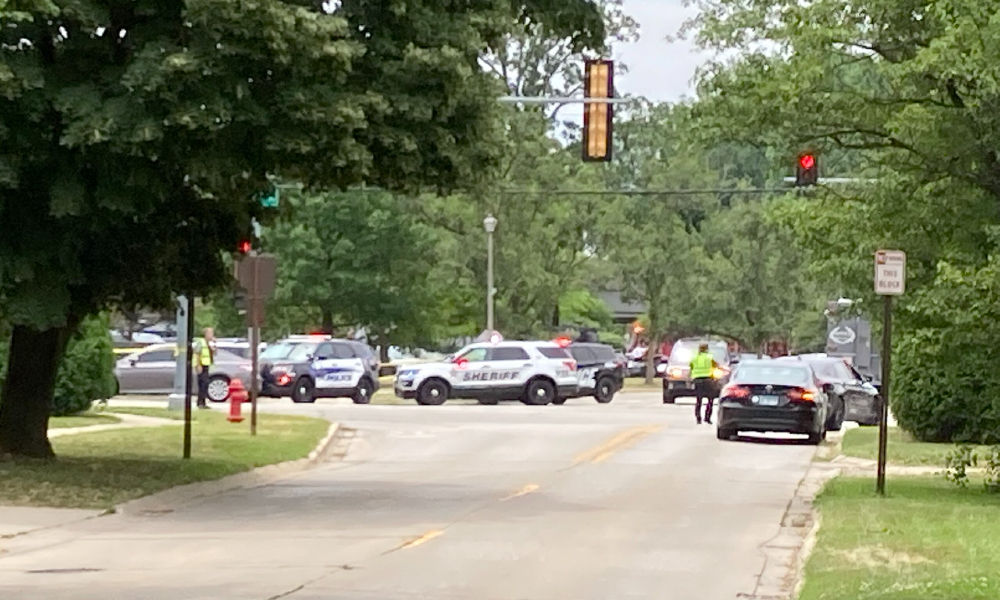
Minutes after Charlie Kirk was assassinated on a stage in Utah in September, a lesser-covered act of political violence unfolded some 450 miles away, in mountainous Evergreen, Colorado. Desmond Holly, 16, walked into his school and opened fire, seriously wounding two students before taking his own life.
The gunman’s digital footprint revealed an eclectic mix of motives. The shooter had, for example, praised far-right terrorists like Brenton Tarrant and Payton Gendron, while also engaging with a comment asking if he would “become a Hero,” a common phrase in the involuntary celibate (incel) lexicon. But neither of those ideological influences appeared to be the primary driver behind Holly’s attack. Instead, had he survived, Holly likely would have been investigated as a “nihilistic violent extremist” (NVE), a new term of art first employed in court documents in March 2025, which the FBI defines as an “individual[] who engage[s] in criminal conduct within the United States and abroad, in furtherance of political, social, or religious goals that derive primarily from a hatred of society at large and a desire to bring about its collapse by sowing indiscriminate chaos, destruction, and social instability.” The establishment of the NVE language has been accompanied by a drumbeat of public statements by the bureau about this form of political violence, including a recent admission that there are currently 250 open NVE investigations.
The broader NVE category manifests in at least two primary ways. One set of NVEs have gathered in online networks that combine white supremacy, Satanism, and misanthropy into a vicious and largely indiscriminate hatred that celebrates ritualized child sexual exploitation. The community known as 764 provides one such example. Within this network, vulnerable youth are targeted and encouraged to commit acts of self-harm, up to and including suicide, and to provide documentary evidence to the network. 764 spaces are particularly productive in fueling a cycle of abuse. As Marc-André Argentino, Barrett G, and M.B. Tyler write, “Victims are turned into abusers and recruiters who do unto others what was done to them.”
A second category, which seemingly inspired Holly and is likely to inspire lethal violence with a higher toll, is generally dubbed the “true crime community.” This culture glorifies school shooters, conducting deeply tactical investigations of prior acts of mass murder, and has encouraged new attacks. The Institute for Strategic Dialogue reported after one school shooting in Wisconsin last year that the gunman “was known to members of the community and left a robust digital footprint for fans to dissect.” NVEs also often gather on gore sites, which depict acts of murder and mutilation, and ultimately desensitize users to mass violence. The Anti-Defamation League identified at least four school shooters, including Holly, who had been active on one particular gore site.
The term “nihilistic violent extremism” has been controversial with some scholars and journalists, who have argued it is a red herring employed by political leadership attempting to distract from white supremacist terrorism (or, in official terms, “racially or ethnically motivated violent extremism,” abbreviated REMVE), which for the past several years has posed the greatest terrorism threat to the U.S. homeland. More test cases of surviving NVEs will need to enter the justice system to fully evaluate the claim. But considering the NVE term merely as a replacement for other extremist classifications is a mistake. Instead, NVE more closely resembles two other forms of mass violence that have similarly evaded simple characterization: incel violence and school shootings. Accordingly, the NVE term is a dramatic and ambitious attempt to better classify (and therefore securitize) violence that has been traditionally derided as “meaningless” mass murder into a serious, organized, and sustained threat. Whether this change is appropriate or effective remains to be seen.
An Unholy Trinity: Parallels Among NVEs, Incels, and School Shooters
NVEs, incels, and school shooters each exemplify a number of trends in the broader terrorism space that strengthen the connections between violent attacks committed by the different categories.
First, and most crucially, the perpetrators of terrorist attacks are getting younger. The youth that has defined both the school shooter and the incel has been easily picked up in NVE spaces, where younger adherents often rail against bullying, isolation, and the exploits of their more popular classmates. In one of the more notable 764 plots, a 14-year-old from northwestern Oregon planned a mass shooting at a mall in nearby Kelso, Washington. Defense attorneys explained that the teen had recently moved schools and was having trouble adjusting, while an FBI agent claimed the teen felt “trapped” by the 764 chatrooms, fearing violence against his family if he left. In another case, 17-year-old Nikita Casap murdered his parents, seeking the financial freedom to embark on a plot to assassinate President Trump and spark a race war.
Second, terrorism is increasingly defined by chaotic and inconsistent ideologies. Perhaps the purest “nihilistic” attack to date occurred at a reproductive clinic in Palm Springs, California, earlier this year, perpetrated by an anti-natalist (or maybe even pro-mortalist) bomber seeking to destroy eggs and embryos at the clinic. But other attackers have blended more predictable ideological traditions into new potions that inspire and drive their violence. A shooter who opened fire at a church connected to the Annunciation Catholic School near Minneapolis, for instance, broadcast ideological material that both threatened President Trump and glorified past white supremacist terrorists. And in Nashville, a Black teen inspired by a mélange of white supremacy and incel ideology killed a classmate in January. His manifesto seethed that “THE ONLY REAL EMOTION IS HATE.” To give credence to the aforementioned counterarguments, even in cases with such a clear white supremacist nexus, the NVE term may supersede a REMVE designation if the assailant seems to be driven primarily by a broader hatred of society.
Third, the perpetrators of acts of terrorism frequently are individuals affected by autism spectrum disorder or serious mental illness, especially depression. Across incels, school shooters, and NVEs, suicidality plays a particularly significant role. School shootings are often carried out by mass murderers who are ultimately planning their own deaths at the conclusion of their rampages. Incels, too, typically kill themselves at the end of their attacks; they often claim to take a “blackpill,” denoting a final ideological indoctrination in which adherents accept not only the crooked realities of the world but also that there is fundamentally no way to improve their situation. NVEs display similar pathologies. A 12-year-old NVE arrested in Wisconsin for several arson attacks was part of a 764 subgroup called “Suicide Hill.” The 14-year-old would-be Washington mall attacker planned a suicidal end to his rampage. And the Palm Springs bomber explained that “I’m angry that I exist,” adding that “nobody got my consent to bring me here” (investigators are unsure if he intended to kill himself in the bombing, but perhaps revealingly, an arrested accomplice later died by suicide). The three factors of youth, ideological hybridization, and suicidality were neatly summarized by terrorism expert Brian Levin in the aftermath of the Palm Springs attack, which he described as the actions of a “hopeless unstable young man whose suicidal despair stir[red] him into a self-consuming brutal death justified by a personally distorted embrace of an obscure anti-life ideology.” The findings also comport with Joel Capellan’s discovery that “lone wolves tend to be suicidal and often view their attacks as suicide missions.”
Suicidality, in fact, may be the single most dangerous element of this emerging triad. As scholar Simon Purdue warned after the 2022 Fourth of July shooting in Highland Park, Illinois, “Ideological nihilism, by its very nature, seeks to erode and ultimately remove the self-preservation instinct that acts as the last bulwark preventing many extremists from committing acts of mass violence.” The idea was darkly summarized by the 17-year-old Black white supremacist who murdered a classmate at Antioch High School in Nashville: “Don’t just kill yourself,” he implored his like-minded readers. “Don’t be [a] simple suicide statistic. Be a murderer.” Accordingly, anti-suicide interventions might work effectively as counterterrorism measures against each of these actors. As leading scholars Amy Cooter, Matt Kriner, and Pete Kurtz-Glovas write, “[M]ainstream social media platforms can serve as an important connector to resources for people showing early signs of depression and suicidal ideation.”
Finally, and most importantly in this context, all three categories typically prioritize the same soft target: schools. Several of the most significant incel attacks—including the 2014 shooting at the University of California, Santa Barbara, often seen as the pioneering incel massacre—were school shootings, as were most of the significant acts of mass violence (such as Virginia Tech in 2007 and Sandy Hook in 2012) in which the perpetrators were later inducted into the incels’ hall of fame. It is no coincidence that most of the cases in which the NVE term has appeared (in either law enforcement statements or analyses) were also school shootings, such as those that occurred at Antioch High School, Annunciation Catholic School, and Evergreen High School. Holly, who perpetrated the last of these, made both digital and sartorial reference to the Columbine shooters, who many regard as the initiators of the grim school shooting trend and who attacked a school barely 20 miles from Evergreen. The Institute for Strategic Dialogue in October identified 15 attacks or plots inspired by the nihilistic true crime community, all targeting schools.
A Terrorism of Vengeance?
The terrorism studies field has been slow to adapt to the increasing role played by personal grievances in violent extremism. For instance, a sustained disagreement broke out over the incel community years ago, with scholars arguing whether a hatred of women was sufficient to breach the “political” or “ideological” threshold included in most terrorism definitions. (I joined co-author Bruce Hoffman in arguing in January 2020 that “[b]y advocating bloodshed as a means of broader societal intimidation, incel ideology conforms to the core definition of terrorism as violence designed to have far-reaching psychological effects.”)
Governments have been bolder in categorizing this violent front as a terrorism movement, repeatedly if somewhat surreptitiously employing counterterrorism terminology and resources to combat the threat. In Canada, for instance, a 17-year-old incel who murdered a spa worker in Toronto was prosecuted two years ago for terrorism, the first time the charge had been pursued for gender-based violence. In France, it took until this past July for an 18-year-old to be charged with terrorism for incel-related threats. In the United States, the steps have been less overt. In February 2024, for instance, an Ohio incel was sentenced for plotting a mass shooting of women. Eagle-eyed observers may have noticed that the case was investigated by a Joint Terrorism Task Force.
The NVE label is a revolutionary approach to countering violent extremism that is likely to both challenge analysts’ preexisting partisan understanding of political violence (labels like “far-left” or “far-right” risk being left behind by this all-encompassing category) and also broaden the counterterrorism umbrella to include cases that were previously deemed nonideological. Indeed, in April, Seamus Hughes and Peter Beck wrote that “[a] preliminary review of federal cases by [the National Counterterrorism Innovation, Technology, and Education Center] at the University of Nebraska Omaha found more than two dozen arrests in the last few years that would squarely fall into the new Bureau classification of Nihilistic Violent Extremism.”
Whether such a move is right remains to be seen. On the one hand, greater specificity not only may allow law enforcement to better categorize threats and align resources, but may also encourage different (in this case, perhaps less carceral) counterterrorism approaches. On the other hand, a less ideological (and more personally driven) vein of violent extremism risks obviating categorization altogether, raising serious questions about whether such violence should be considered “terrorism” at all. What is certain is that prior terrorism classifications have been rendered obsolete by a fast-moving, freewheeling, and spectacularly cruel online community that glorifies violence and targets a broad spectrum of victims, including young children. Any serious steps to get ahead of the threat should be welcomed.

.png?sfvrsn=1f2a75b9_7)
