America’s Second Abandonment of Afghanistan

Editor’s Note: Among the Trump administration’s troubling cuts to international aid, one of the most devastating has been the withdrawal of support to Afghan women and girls. Former State Department official Liya Khan details the impact of these cuts and explains how this empowers the Taliban.
Daniel Byman
***
In April 2025, the United States terminated all ongoing and planned humanitarian assistance to Afghanistan, amounting to $562 million. This drastic action severed millions of Afghans’ access to life-saving aid, deepening the humanitarian crisis that the Biden administration had pledged to alleviate following the U.S. withdrawal from Afghanistan in 2021. The termination of this aid virtually overnight sent humanitarian conditions inside the country into a full downward spiral: More than 15 million Afghans are currently facing acute food insecurity, and of these, 3.4 million people are experiencing conditions that precede famine.
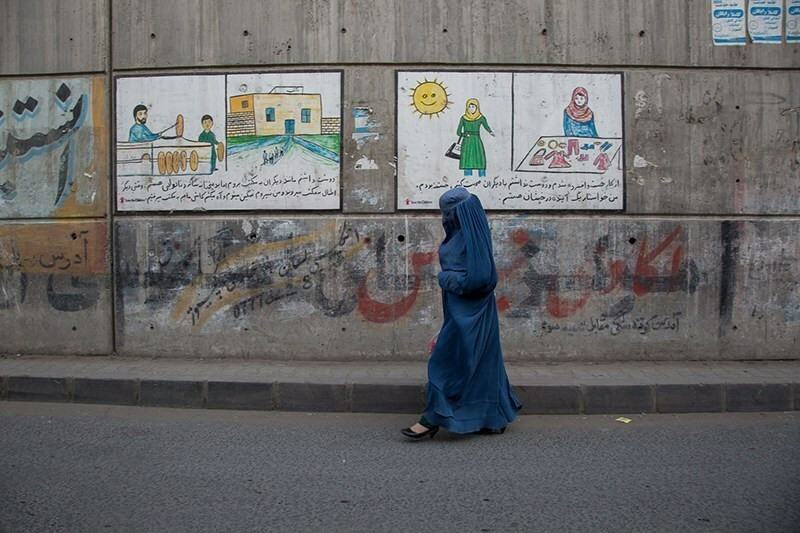
This severe reduction in aid has coincided with the Taliban’s extensive efforts to enforce gender apartheid in Afghanistan. Since August 2021, the Taliban have imposed escalating restrictions on women’s abilities to work, attend school, and participate in public life outside of their homes. These have been codified into procedural and legal decrees as recently as this year, deepening the subjugation of women through the legitimization of domestic violence, child marriage, and even slavery. As their rights and freedom of action have diminished, women and girls across Afghanistan have also borne the brunt of the drastic aid collapse. Services and programs across Afghanistan that remained lifelines for women and girls repressed under the Taliban were cut off with no warning, leaving millions without health care, societal networks, and critical resources.
The combination of severe aid disruptions and the Taliban’s campaign of repression against women has entrenched Taliban control of Afghanistan, indirectly empowering the very regime the United States and the international community sought to isolate after 2021. The abrupt withdrawal of U.S. aid has eroded the credibility of U.S. diplomatic engagement with Afghanistan in the broader international community and facilitated the Taliban’s increasing control over the country, perpetuated most viscerally by violent repression against Afghan women and girls. With its Afghanistan policy still “under review,” the current administration may have a narrow window to stop conditions in the country from deteriorating past a point of no return.
Restrictions Against Women Expand Under the Taliban Revival
Since returning to power in the aftermath of the U.S. withdrawal in August 2021, the Taliban have issued 264 decrees targeting human rights inside Afghanistan, 166 of which specifically strip the rights of Afghan women and girls. These edicts range from banning women from universities and girls from secondary education to restrictions on women being “heard” singing or reading aloud in public. The Taliban’s brutal enforcement mechanism, the Ministry for the Propagation of Virtue and the Prevention of Vice (MoPVPV), has grown in both centrality and importance to the new regime since its revival from the first period of Taliban rule, 1996-2001.
The punishments for women and girls accused of violating these restrictions have grown increasingly violent and pervasive: Afghan women have been beaten with electrical cables for appearing in public without a mahram (male guardian), killed while protesting, denied legal resolution to end abusive marriages, and forced into early marriages against their will. The cascade of restrictions against women and girls have crept into nearly every facet of life. In this climate of impunity, the impacts on women have been severe: The UN reports a 40 percent increase in the risk of violence against women and girls under the Taliban.
The imposition of severe, unflinching restrictions on women has aided the Taliban’s consolidation of its domination of Afghan society and raised costs to opposition. Hannah Litty argues that in the Taliban’s struggle for control of the country—warding off challenges from the National Resistance Front (NRF) and Islamic State-Khorasan Province (ISKP)—the cascade of restrictions against women serves a crucial purpose: maintaining despotic policies of the more conservative elements of Taliban leadership, while also centering the Taliban as the focal point of “extreme oppression and control over Afghan society as a whole.” This approach allows domination from narrower leadership sects over the wider Afghan population. Hopes that the Taliban’s more dogmatic leaders would be outmaneuvered by pragmatists have failed to materialize.
This level of repression and violent enforcement serves an important purpose for Taliban state-building efforts. Evicting women from public life dramatically reengineers public spaces, serving as a powerful demonstration of the Taliban’s hold on society and use of security forces to enforce their edicts. Despite contemporary evolution of views on gender and women’s rights in Afghanistan among Afghan men, the near-certain guarantee of harm against women and girls have made Afghan men the enforcers of Taliban rules in their own families. The Taliban’s ruthless control of the security apparatus plus the severe societal exclusion of women imposes high costs on potential opposition from Afghan men who may be motivated to act otherwise.
These costs may extend to Talib rank-and-file, particularly as armed resistance to the Taliban becomes more geographically dispersed and the need for command-and-control increases. The Taliban have already demonstrated their willingness to commit flagrant violence against perceived traitors, having carried out reprisal killings against family members of former Afghan National Defense and Security Forces (ANDSF). Through policy and violent enforcement, the Taliban are engendering what Valerie Hudson, Donna Lee Bowen, and Perpetua Lynne Nielson have called the “Patrilineal/Fraternal Syndrome,” a system of patriarchal control that perpetuates subordination of women in service of male security alliances and correlates with greater authoritarianism, political violence, and corruption. In this manner, the Taliban pursue total societal control, entrenching gender apartheid and subjugation while simultaneously needing women to perpetuate their state-building goals with children. These unsustainable circumstances threaten to plunge the country further into disrepair as the economy craters, owing in part to the estimated $84 million loss from women’s exclusion from the workforce. The Taliban have directly and indirectly consolidated their ranks and social compliance through persistent denial of basic rights for women and girls across Afghanistan.
The United States Exits Afghanistan, Again
Even after the Taliban takeover, U.S.-funded humanitarian partners continued to deliver critical aid in Afghanistan from 2021 to 2025. U.S. funded programs—and U.S. leadership on humanitarian aid—in the immediate aftermath of the U.S. withdrawal was widely seen as supporting a vital bulwark of protection and essential services reaching Afghan women and children. Between 2021 and 2025, the United States provided $3.83 billion in humanitarian assistance to Afghanistan, representing 36 percent of all international contributions during that period. U.S.-funded protection programs in 2025—services and aid primarily targeting women and children—were projected to help more than 6 million Afghans, with millions more households reached with medical care in rural areas via primarily U.S.-funded health interventions.
It is not clear why the United States decided to cut aid. Neither the State Department nor the United States Agency for International Development (USAID) could point to a clear reason as to why terminations were issued so abruptly, especially prior to the conclusion of the foreign assistance review process initiated by Executive Order 14169. While the State Department later pointed to the Special Inspector General for Afghanistan Reconstruction’s (SIGAR’s) final slate of reporting in 2025 to justify the cuts on the basis of the Taliban “keeping” aid, no justification at the time of terminations was offered to requisite offices overseeing grants in the State Department.
U.S. aid cuts terminated 88 percent of maternal and child health care funding across Afghanistan. This included the closure of more than 400 health facilities and the elimination of more than 150 Family Health Houses (FHHs), dedicated service points for women and children in some of the country’s most difficult to reach areas. Under a regime that criminalizes most health care mechanisms available to women, these closures have been a death sentence. Maternal mortality rates have already begun to climb again in Afghanistan following years of steady decline and are projected to rise, along with neonatal deaths. Following termination of U.S. health assistance, maternal mortality rates in Herat province experienced a 109 percent increase; hospitals in Nangarhar and Farah recorded 60 percent and 133 percent increases in neonatal mortality rates, respectively. Nearly 40 percent of women-led organizations in Afghanistan—often the primary or exclusive implementers of services for women and girls—have lost funding or are at risk of dissolution, if they haven’t shuttered already. The cessation of support for nearly half of the country’s women’s shelters and safe spaces precipitated the disappearance of protection mechanisms for survivors of domestic violence and exploitation, reinforcing harmful coping strategies and driving up levels of child and forced early marriages. Amid the country’s severe economic downturn, food insecurity, and unprecedented aid cuts, domestic violence and exploitation have also increased in communities across Afghanistan. The psychological distress of these impacts coupled with the Taliban’s perilous restrictions on society are driving mounting mental health crises and suicide rates among Afghan women and girls.
All or Nothing?
The dissolution of U.S.-funded humanitarian programming in Afghanistan has reinforced the worst effects of the Taliban’s repressive campaign against Afghan women and girls. In addition to the devastating humanitarian fallout, drastic U.S. aid cuts have indirectly empowered the Taliban’s control over Afghanistan.
As its policy on Afghanistan remains “under review,” the State Department should recognize that the issues of foreign assistance, Taliban control, and the fate of Afghan women and girls are deeply intertwined. The department’s current efforts are woefully mismatched against the level of rising need and the depth of the Taliban’s intransigence. While this administration has all but abandoned diplomatic and humanitarian efforts pertaining to Afghans, both at home and abroad, the restoration of U.S-funded targeted humanitarian assistance for women and girls would be an effective first step to reverse course.