As Drones and Temperatures Fall in Kyiv


KYIV—At a dinner party in a fashionable neighborhood in Kyiv, a palpable anxiety hangs over the attendees about the coming months. It’s mid-November. The guests are a mix of government officials, intellectuals and cultural figures, and a foreign diplomat. Our host, a prominent public intellectual, begins the evening by worrying out loud that this might be the last time he is able to convene such a dinner before endless power and heating outages, water supply failures, and rockets and drones make such things impossible. “I fear this may be the last normal gathering like this we will be able to have,” he worries, admitting that he feels depressed and spends a lot of time spiraling these days.
Others take a more upbeat tone, but nobody quite contradicts him either.
Wherever you go in Kyiv, people are talking about whether to leave the city to head west, where apartment prices are skyrocketing. The subject comes up at the dinner, discuss whether life would be better if one retreated to Lviv for the winter.
What would that really do, one person asks? The missiles and drones can fly to Lviv too, after all. A few days later, a Russian strike on a railway station in Lviv killed two and injured at least a dozen others.
Five years into the full-scale war, Ukrainians have long gotten used to tough winters. But even by their standards, this year’s cold season is shaping up to be uniquely dark—in every sense of the word.
Moscow’s annual campaign to destroy the Ukrainian energy system, which renewed in early September, has brought back power outages and even periodically compromised water supply. Exacerbating the crisis are new Russian tactics and Ukraine’s apparent lack of preparedness, as well as the United States’s aiding Russia by disrupting the Ukrainian military’s access to Starlink, withholding critical air defence munitions, and waiving sanctions on Moscow.
President Donald Trump’s verbal attacks against Ukraine have further inflamed the palpable sense of anger here in Kyiv.
It isn’t that cold yet. But the days are getting short. Cloud cover is more the norm than exception, and it’s often wet. People know that winter is coming, and people know that the Russians know it too. And that has meant an increased tempo of strikes and a concerted effort to cut off electricity, heating, and water for a civilian population that just got through a particularly brutal winter.
The memory of last winter—when unusually frigid temperatures came and stayed even while heating was knocked out for long periods of time for much of the city, when ice and snow packed the streets and was not removed, and when people faced real dangers of freezing inside their apartments—is still fresh.
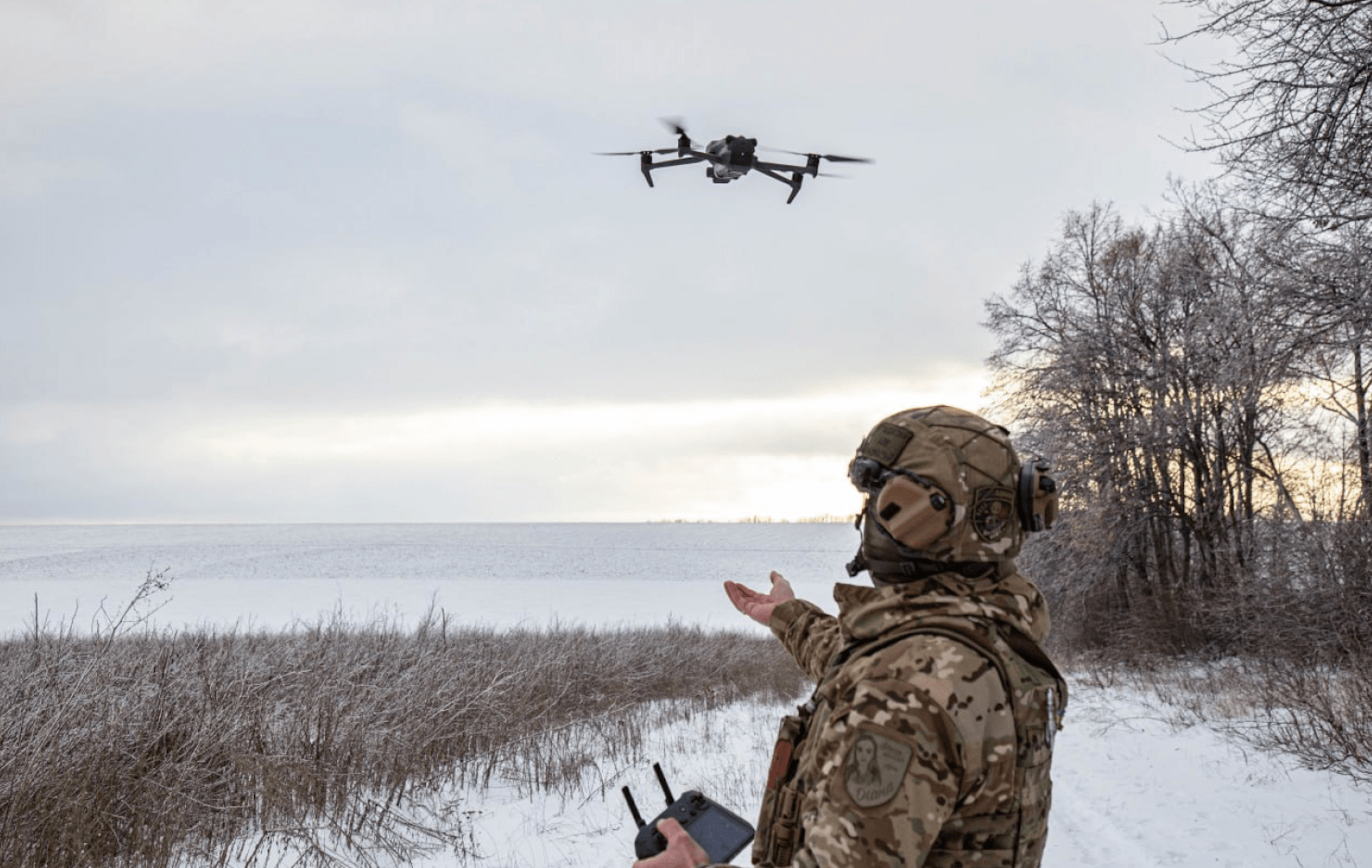
And the Russians are putting on a vivid daily display of their improved capabilities since last winter to make life here miserable. Where they have long had drones, they now have jet-powered drones that are far more difficult to shoot down. Ukrainian air defenses have degraded as well, not just because air defenses are less effective against these new weapons but also because the world—the U.S. in particular—has not been supplying enough air defense interceptors to Ukraine.
So as the temperature drifts downward and the days grow darker, and the Russian assaults grow more successful, it’s not particularly surprising that the mood grows grimmer, more depressive, and more apprehensive. Even if the weather does not play ball with Putin this year, the next few months are going to be harsh—and everyone in Kyiv knows it.
How We Got Here
The stream of bad developments began in late August, when Russia pivoted to new air war tactics. Instead of just sending barrages of drones and missiles at night, Moscow began attacking Kyiv with small numbers of its new, jet-powered drones continuously throughout the day. The challenge for Ukrainian forces was twofold—defending the capital from the new weapons while sustaining life in the city during never-ending attacks.
The problem of Russian one-way attack drones had been all-but solved by the spring of 2026, when Ukrainian interceptor drones were bringing down as many as 95 percent of Russian drones. But the Russians adapted by putting jet engines on their drones, thus doubling their speed and making them a lot harder to shoot down. As Ukrainian engineers have been racing to find a solution, the interception rates have dropped significantly. Of the 3,520 jet-powered drones used to attack Ukraine in September, just over half were shot down. In October, the number grew to around 66 percent, according to the Ukrainian military.
Per Russia’s new-found strategy, one or two jet-powered drones would enter Kyiv skies nearly every hour, prompting constant air raids throughout the day. This marked a genuine shift for Kyiv residents. For much of the war, daytime in the capital was relatively normal and quiet. Russia’s mass attacks—which, at their worst, contained strike packages of up to 1,000 drones and missiles or more—regularly terrorized the city during the night. But come dawn, fueled by caffeine and grit, the cadence of ordinary life could resume.
The latest Russian attacks erased this boundary between night and day. On Aug. 27, Kyiv recorded 13 air raid alerts over a 24-hour-period—a record since the start of Russia’s full scale invasion. The cadence of attacks has remained high ever since, including during daytime.
The apparent aim of the tactic is to paralyze life in the capital, as air raids close down businesses, interrupt public transport, and force people to shelter for hours at a time. Shopping malls, government offices, as well as certain gas stations, clinics, and restaurants close during an air raid. Children at schools and kindergartens are moved to shelters. Traffic over the bridges connecting the left and right bank of the Dnipro River, which cuts through Kyiv, is partially restricted. The metro line that runs between the two banks stops operating entirely. All this chaos unfolds to the constant thrum of explosions and the fire bursts of mobile air defense teams hunting down the drones.
Efforts to disrupt life in the capital are far from new, of course, but their intensity has grown, and Russian targeting has become more disruptive to everyday civilian life. For months now, Russia has been striking data centers, warehouses of all kinds, pharmaceutical plants, shopping malls, railway infrastructure, and mobile operators, causing mild network outages, shortages of certain goods, and delays in services.
For the first time, Russian forces have begun systematically attacking the capital’s bridges—with drones and ballistic missiles—prompting traffic closures that paralyze transit across the Dnipro, and throughout much of the city at rush hour. These strikes prevent hundreds of thousands of people from getting to and from work, leaving many Kyivans with no option but to cross the bridges on foot. A mass overnight attack on Nov. 20 damaged three of Kyiv’s six bridges, prompting partial restrictions on each of them.
The results of the energy attacks, the routinization of daytime strikes, and the sheer volume of attacks is palpable everywhere. We visit a small school on the left bank on the Dnipro, which serves a mixed community that includes many children with ADHD or on the autism spectrum. The school has 53 students and 23 staff, but enrollment is declining because families are moving west, and the financial impact makes it hard to pay its staff. Diesel prices are sky-high, and keeping the lights on and the place heated requires running a diesel generator for many hours a day. The school had to move the upper grades to two small basement storefronts to make sure the students had bomb shelters to go to when the alarms go off. Some of the students who have stayed can no longer pay tuition, further stressing the budget. The school’s director says plainly that she doesn’t know exactly how she will stay in business through the spring.
Even downtown Kyiv, an area full of embassies and government buildings that has always been considered the city’s safest, has become vulnerable to Russian drones. On Sept. 4, a Russian jet-powered drone flew right into the headquarters of Ukraine’s State Security Service located there. Three weeks later, a drone hit the Ukrainian National Academy of Sciences building just down the street, killing two people.
A few days after the dinner, the target is the neighborhood of Podil, where one of us lives and where the other is staying in a hotel.
The first of these strikes on Thursday takes place while we are in a hotel not far from the targeted building. We know the strike is very close—close enough to be, in local parlance, “loud,” a word Ukrainians use both to refer to sonic volume and to refer to the proximity and intensity of a strike or a period of strikes. It turns out that a Russian drone has hit an apartment building some 700 metres away from us.
The second second strike takes place a few hours later. It is the middle of the afternoon, and we are in a high-end jewelry store buying gifts. The scene, complete with elegantly dressed attendants, could be in any European capital. Light classical music is playing. We are offered coffee and champagne and browse the shop. And then, in the distance, as we are paying, three dull booms find their way across the city. They sound relatively close, but the attendants don’t break the momentum of the transaction or the politeness. They maintain the illusion that it’s just a high-end jewelry shop, not a jewelry shop in a city under bombardment.
“That doesn’t sound good,” one of us says. One of the attendants shakes her head briefly, acknowledging the rude intrusion of reality onto the moment. And then the illusion restores itself. The war is banished to a different part of town. A credit card transaction takes place. A present is packed up. The completely normal and the completely abnormal merge.
A few short miles away, back in Podil, a drone has hit a building 50 meters from the Kyiv Independent—the country’s premier English language newspaper—and just a block away from the hotel we had been in the previous morning. The blast causes minor damage to the embassy of the Netherlands, which stands right in front of the impacted building. The Dutch government summons the Russian ambassador in The Hague. Dutch Foreign Minister Rob Jetten, though not openly accusing Russia of targeting the embassy, says his country “would not be intimidated” by Moscow’s attacks.
Days earlier, a Dutch defense company Destinus had announced that its missiles were used in the successful Ukrainian attack on Russia’s illegally-built Kerch Bridge, which connects occupied Crimea to Russia. The attack caused unprecedented destruction, blowing up part of the road section of the bridge, though the adjacent railroad section remained operational. The attack on the Dutch embassy is probably a coincidence—and an accident—but who can really know?
The strikes on Podil turn out to be only a prelude to the mass attack that begins that evening. Overnight, the Russians send across 404 drones and a notably high number of missiles—84 cruise missiles and 27 ballistic missiles—targeting mainly energy infrastructure across the country.
Russia shifted its focus towards knocking out Ukraine’s energy infrastructure at the end of September, targeting big cities, especially Kyiv. As the poet Percy Bysshe Shelley might have written, if autumn comes, can attacks on energy infrastructure be far behind?
As the biggest consumer of energy in the country, Kyiv has always relied on its four giant Soviet-era power plants for electricity. Because of Russian attacks, none of these plants currently generates electricity, which makes the capital almost entirely dependent on energy from nuclear power plants outside of the city. Since September, Russia has been hitting substations near those nuclear power plants, as well as the substations in Kyiv that are critical to sending electricity into the city, causing rolling power outages that at times had lasted most of the day.
Moscow has also been strategically targeting sites that power public transport, the water supply, and even Kyiv’s only sewage plant. The Kyiv subway periodically goes dark, albeit for brief moments of time. The work of trams and trolleybuses is regularly halted. Much of the city had no water for nearly 24 hours following what the authorities called one of the largest ever attacks on energy sites on Nov. 3.
President Zelensky and Vitalii Klitschko, the famed boxer turned Kyiv mayor, have traded blame for the energy crisis—which is hardly surprising, given their years-long feud. Zelensky accused the city authorities of “a near-total failure to take the necessary steps” to prepare Kyiv ahead of winter, as severe power outages began hitting Kyiv residents relatively early into the cold season.
On Oct.17, hundreds of Kyivans protested near the mayor’s office, calling on Klitschko to resign. “Klitschko was unable to get Kyiv ready even for the fall. Klitschko must go,” Ukrainian veteran Dmytro Kozyatynskyi, the demonstration’s organizer, said in a Facebook post. The mayor said the accusations were baseless and cited a lack of government funding, as well as air defence challenges amid growing Russian attacks.
Ukraine has been building protective structures over its key energy sites since 2023, but they are ineffective against direct hits of Russian ballistic missiles. The single reliable solution to that problem is the American-made PATRIOT air defence system, which uses PAC-2 and PAC-3 interceptor missiles to shoot down incoming targets. But because of worldwide shortages associated with limited production capacities and other wars—especially the war in Iran—Ukraine has run consistently short on these interceptors, occasionally exhausting its stockpiles completely. During the most recent mass attacks, on Thursday night, Ukraine said it intercepted only three of the 27 Russian ballistic missiles.
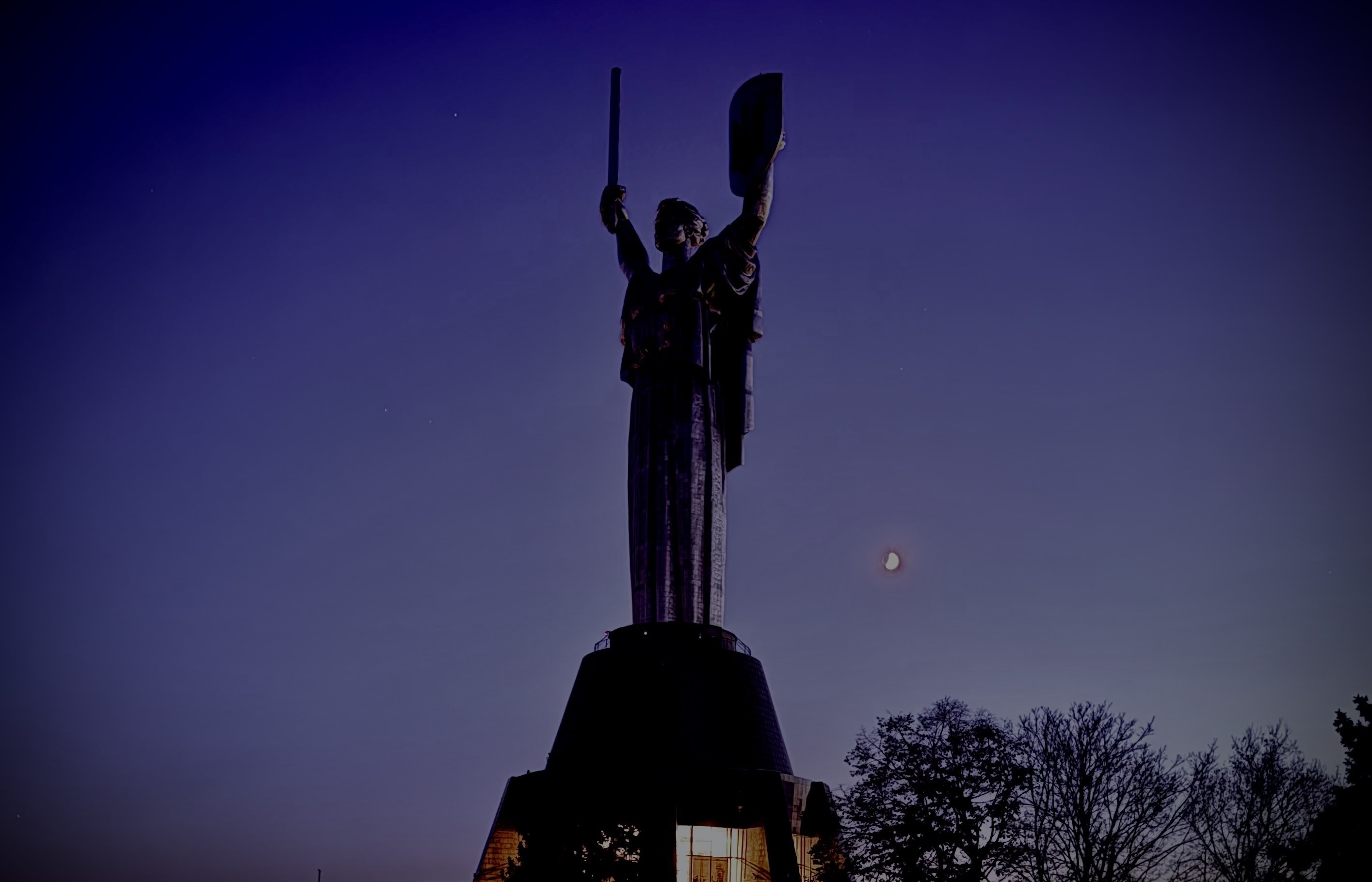
And then there is the darkness. Big cities are never truly dark. They emit their own light. Streetlights. Lights from windows. Lights from traffic. Neon signs on stores. When collected, tens of thousands of these lights diffuse through the atmospheric moisture and particles to create a kind of glow at the horizon.
Now imagine that most of those lights are suddenly off. A walk in the park at night becomes like a walk in the deep woods. It is just blackness. A giant Soviet-era apartment bloc is completely dark save the one or two windows of families with batteries. Non-essential storefront lighting not powered by generators goes off. The light haze at the horizon dims. Landmark buildings of the sort that are lit up in every city in the world are black shadows, visible more because one knows they are there than because one can really see them.
The eeriness is hard to overstate. The true effect cannot be photographed, because it lives in invisibility.
And amidst all these compounding crises, the White House has once again found its villain: the Ukrainian government. President Trump accused Zelensky of not wanting to end the war and called for his replacement. In recent months, Washington has repeatedly pressured Ukraine to halt strikes against Russian oil even while announcing a legally dubious deal to buy diesel from Russia. Working with Elon Musk, the Trump administration has throttled access to Starlink and Star Shield, which are essential for both the defensive and offensive aspects of the Ukrainian war.
And, it has publicly absolved Russia. “Russia, frankly, has been fine on Ukraine. They haven’t been doing much,” Trump told reporters recently, just hours after a Russian drone strike killed two children, one of them a one-year-old, at a park.
In a recent interview with Bloomberg, the Ukrainian president was tellingly open about what he thinks Trump is trying to do: “I believe steps have been taken to convince Ukraine to capitulate…That’s how it looks.”
There is no plausible chance of that. Though the mood in Kyiv heading into the winter is grim, one hears not a word about suing for peace. At the dinner party, the talk is depressing, but it is all about how people will cope, not about whether capitulation to Putin and Trump is preferable to coping. Nobody entertains that thought for a second, nor does anyone else we meet with over ten days. The premise of Trump’s pressure campaign—that Ukraine can be convinced to submit if Russia hits Kyiv hard enough—is completely delusional.
On the way out of town Thursday evening, as part of that evening’s big bombardment, the train stops and is evacuated for a drone scare. A crowd of civilians, some with small children, stands for half an hour in wet grass in the drizzle by the tracks in pitch darkness.
Nobody complains.