Back to the Future: The U.S. Court for Berlin’s Lessons for the ATRC
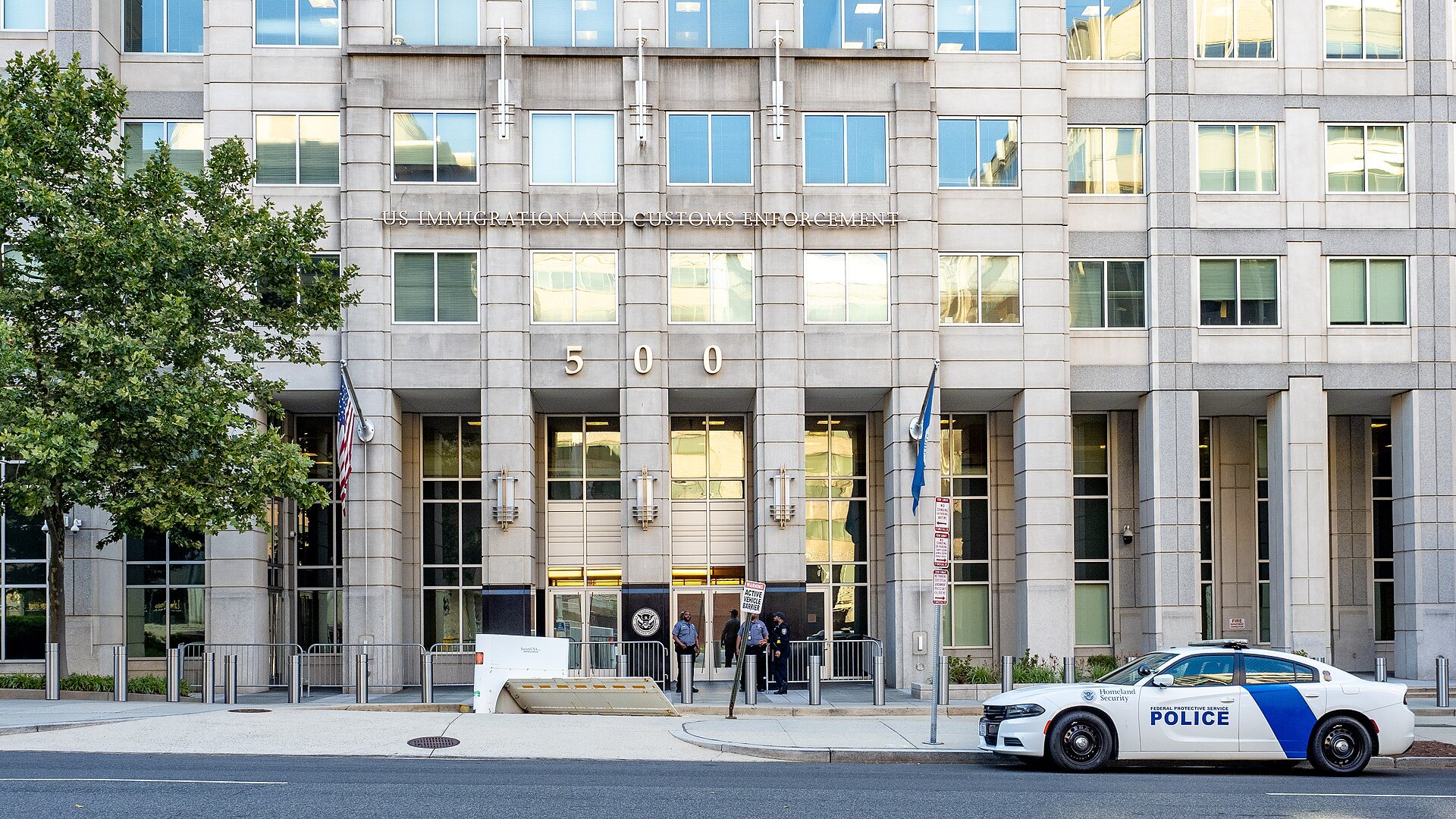

The Trump administration’s first attempt at bringing to life the long-dormant Alien Terrorist Removal Court (ATRC) ended with the alleged Islamic State supporter agreeing to self deport, avoiding (at least for now) the procedural and constitutional shoals that loom for this “Rip Van Winkle” court, which until this year had never had so much as a single filing. Attorney General Todd Blanche lauded the outcome as showing how the Justice Department would use “every tool at its disposal to protect our country,” and White House “Border Czar” Tom Homan promised that the administration would bring many more cases before the ATRC. It therefore appears this moribund court may yet rise again.
To assess the potential future pitfalls facing the ATRC, one must look two decades before its 1996 origins, to 1978 West Berlin, because the ATRC isn’t the first court the United States has recalled to life after three decades of slumber to try an accused terrorist. Nearly 50 years ago, the departments of State and Justice stood up the U.S. Court for Berlin, in order to prosecute two East Berliners accused of hijacking a Polish plane.
A closer look at that forgotten court illuminates the potential future risks the United States faces using the ATRC, and underscores a phenomenon made clear in the Guantanamo proceedings as well: Orderly judicial proceedings rest on generations of precedent and practice, and standing up a new court—especially one involving sensitive national security issues—often is much more complicated than it appears at first glance.
This article begins by reviewing the origins of the U.S. Court for Berlin; then explores its only proceeding, United States v. Tiede; and concludes with some lessons that the long-lost court may provide for the ATRC.
Hijacking’s “Golden Age” and the 1970 Hague Convention
The late 1960s and early 1970s were the “golden age” of air hijackings, posing a massive worldwide problem for commercial aviation. From 1968 to 1972, over 130 planes were hijacked, sometimes at the rate of more than one per week. As the U.S. Court of Appeals for the Ninth Circuit stated in 1973: “The need to prevent airline hijacking is unquestionably grave and urgent. ... The disruption of air traffic is severe [and] [t]here is serious risk of complications in our foreign relations.”
Recognizing the severe problems the scourge of hijackings posed, countries throughout the world (including the United States and the Soviet Union) signed the Hague Convention on Hijacking. Article 7 of the convention provides that “[t]he Contracting State in the territory of which the alleged offender is found shall, if it does not extradite him, be obliged, without exception whatsoever and whether or not the offence was committed in its territory, to submit the case to its competent authorities for the purpose of prosecution.”
During the early 1970s, left-wing-affiliated groups committed many of the hijackings, and the United States took a hard line against air piracy. In 1974, Congress passed the Comprehensive Anti-Hijacking Act in part to enforce the Hague Convention, which included a potential death penalty for hijackers.
The Carter administration continued the strong stance against air piracy, culminating in a July 18, 1978, international conference in Bonn, Germany, where President Carter and other world leaders publicly resolved to “act jointly to suspend air traffic to and from countries that failed to turn over hijackers and hijacked aircraft quickly.”
It was against this domestic and international framework that, a little more than a month later, an airplane hijacking created the need to bring back to life a long-dormant court.
The Hijacking of LOT Flight 165
The story of the U.S. Court for Berlin began in the desperation of East Germany. Hans Detlef Tiede, an East German citizen, was obsessed with escaping beyond the Iron Curtain. Together with a friend (and former girlfriend), Ingrid Ruske, and her 12-year-old daughter, Tiede hatched a plan to flee to West Germany with fake papers via a Polish cruise ship. But when Soviet officials captured Ruske’s colleague who had the false papers needed for their escape, Tiede and Ruske were stranded in Poland and feared arrest (and much worse) if they returned to East Germany.
Desperate, Tiede and Ruske (with no training or outside help) hatched a last-minute plan to hijack their return flight to East Germany from Poland (they had purchased return tickets to East Germany to avoid rousing suspicion). Tiede and Ruske planned to force the Polish plane to land in West Germany—essentially, to use the aircraft to hop the Berlin Wall. After selling what little belongings they had at a flea market, the pair managed to purchase a (realistic looking) toy gun, which they got onto the plane through Ruske’s young daughter.
As LOT 165 began its landing approach to East Germany, Tiede stormed the cockpit with the toy pistol, taking a flight attendant hostage and ordering the pilot to land the plane in West Berlin (to this day, it is unclear whether the pilot and crew went along willingly—as Tiede’s defense team later claimed at trial—or whether they were in genuine fear). After landing in West Berlin, Tiede, Ruske, and her 12-year-old daughter disembarked in West Germany, along with eight of the 68 passengers who decided, on the spot, to defect to freedom. The rest returned to East Germany.
Tiede’s hijacking created a serious diplomatic headache for the West German government and the United States. For starters, the United States contended that West Berlin was still “occupied” territory (this was to protect West Germany from Soviet domination and freeze the status quo after World War II). And West Germany had a public policy against prosecuting East Germans who defected, no matter the means they used to do so (including a 1962 boat hijacking). But the Soviet Union demanded that Tiede and Ruske be prosecuted for their crimes or extradited to the East pursuant to the Hague Convention on Hijacking.
Trying Tiede and Ruske in a domestic West German court was a political nonstarter. So the United States faced a conundrum: How to comply with the Hague Convention obligations without causing a diplomatic disaster in West Germany? The answer: Bring to life a court that had never existed before.
The U.S. Court for Berlin
The proposed solution hinged on a 20-year-old law instituted by the United States High Commissioner for Germany James Conant, just after the end of U.S. military occupation in the rest of Germany. “Foreseeing potential future legal issues arising from the continued American involvement in Berlin after this transitional period,” the 1955 law created a U.S.“occupation court,” the U.S. Court for Berlin, pursuant to Article II of the U.S. Constitution.
The occupation court drew its authority not from Article III, as traditional federal courts do, or even Article I tribunals created more recently for Guantanamo detainees. Instead, its power stemmed from the president’s commander-in-chief power as the occupying authority of West Berlin. The U.S. Court for Berlin had “original jurisdiction to hear and decide any criminal case arising under any legislation in effect in the United States Sector of Berlin if the offense was committed within the area of Greater Berlin.” Because part of the hijacking occurred in West Berlin (specifically its final descent and landing), the court had jurisdiction.
The U.S. ambassador had the power to convene the court (the High Commissioner for Germany having been abolished in 1955) and appoint anyone he wanted as its judge and prosecutor, terminate their appointments at any time, and “affirm, vacate or modify the findings, judgment or sentence of the Court in whole or in part [or to] order a new trial.” The law set out no rules for the court to apply, either procedurally or substantively. It appears that no one seriously considered what this court might look like or how it would operate when the relevant laws were passed.
Because West Berlin had functioning domestic German courts, and unsettled questions about basic procedural rules and whether constitutional protections would apply at the U.S. Court for Berlin, the court was not used in the two decades following its statutory creation.
Following the hijacking, the court had several false starts. The first judge appointed to preside over the hijacking case departed after a short stay in Berlin for reasons that remain unclear. However, the court finally got under way when the U.S. ambassador appointed U.S. District Judge Herbert Stern, whose day job was in the District of New Jersey, as the U.S. judge for Berlin. The Justice Department also sent over officials to Berlin to prosecute the case. (Stern later wrote a book that is an enjoyably readable recounting of these events—on which this article relies heavily—though a subsequent 1988 movie starring Martin Sheen as Judge Stern and a young Sean Penn received a decidedly critical reception at the time of its release.)
Authorities hoped Tiede and Ruske would plead guilty (as effectively occurred in the recent ATRC case), and their pleas would resolve the potential logistical and legal issues for the court. But the defendants refused and insisted on a trial in the U.S. Court for Berlin. This raised a number of substantive issues, most critically: Would the accused be entitled to a jury, and if so, a jury of whom?
United States v. Tiede
The ensuing proceedings proved challenging for the United States. First, Tiede’s lawyer moved for a jury trial pursuant to the Sixth Amendment. In response, the government (represented by Justice Department and State Department personnel dispatched to West Berlin) argued that the Constitution did not apply at all in occupied West Berlin. In fact, the United States argued, because the U.S. Court for Berlin sat in occupied conquered territory, it was merely an instrument of foreign policy. So, the government argued, the court “cannot go beyond whatever restrictions the Department of State places on the Court.”
Stern, an Article III judge on secondment to Berlin, did not take kindly to this line of argument. With the flag of the United States just behind his bench, he asked if the government was arguing “there is no right to due process in this court.” In what Stern describes in his book as a “shocking moment,” the government responded, “That is correct.” Stern went on to ask whether the same would be true for a U.S. citizen—would they too have no rights in the U.S. Court for Berlin? Again, the United States answered “no”—they would not.
Stern forcefully and conclusively rejected this position. He held that the accused were entitled to a jury trial under the Sixth Amendment and that U.S. procedural laws applied, essentially daring the government to remove him from the Berlin bench. He also held that Ruske’s confession (which undergirded the entire case against her) was coerced in violation of the Fifth Amendment, and so he suppressed her confession, leading to the dismissal of charges against her.
The government was left to try Tiede in what was likely the only jury trial conducted pursuant to American procedure in the history of the European continent. West Berliners were called for jury service (the court was, oddly, held in the same defunct airport where Tiede had ordered the plane to land), and a jury was selected.
The jury ultimately acquitted Tiede of hijacking (count one), depriving persons of liberty (count two), and doing bodily injury to the stewardess (count four), but convicted him of count three, “taking a hostage.” Stern sentenced Tiede to time served (approximately nine months), and the United States immediately shut down the U.S. Court for Berlin, never to be revived again.
From the Berlin to the ATRC: Lessons on Standing Up Moribund Courts
United States v. Tiede has a number of lessons for the ATRC. First, Article III judges are fiercely independent and don’t always follow the government’s lead (even in national security matters), especially when basic constitutional rights are at issue. Indeed, when Judge Stern ruled that Tiede had a right to a jury trial and to suppress evidence on constitutional grounds, he was not even sitting as an Article III judge—he was designated as an Article II official whose final ruling was subject to complete reversal by the U.S. ambassador to West Germany. But Stern still held the line against government pressure. And while judges often defer to the executive in foreign affairs, they are less likely to do so when basic procedural constitutional issues are in play, which is the case with both the ATRC and the U.S. Court for Berlin. For instance, Judge Joan Ericksen (the presiding judge of the ATRC), ordered the government to file a supplemental application before allowing an arrest in the ATRC’s only case thus far, and she appeared sympathetic to the federal defender’s position that they were entitled to access classified evidence in an ATRC proceeding.
Second, courts are creatures of precedent, written and unwritten. United States v. Tiede moved in ways the government did not anticipate because the proceedings were novel—there were no prior actions to look to for guidance. Everything was a matter of first impression, from what law to apply to how to select jurors. The ATRC faces the same potential hurdles: There have been no prior proceedings.
As outlined in the ATRC filings in Zada, there are serious questions about the constitutionality of the ATRC itself and the legality of the procedures used to present classified evidence, particularly in ex parte settings. The legal instinct to look at how things have been done in the past will be of no help. And the Justice Department will likely be forced to invest significant resources into drawn-out litigation on these issues (not quite building a courtroom in a defunct airport in Berlin, perhaps, but potentially an even longer process).
The same drawn-out process was true with the commission set up for Guantanamo Bay detainees: There were significant evidentiary issues at the threshold, most significantly in cases where detainees had been tortured. And the unique procedural aspects of the new Guantanamo Commission system, combined with the complexity of finding qualified and cleared counsel, were part of the reason the proceedings dragged on for years. Courts thrive on precedent, and creating new courts of whole cloth creates new problems.
Third, new courts often do not last. The United States thought it had found a solution to its international problem in United States v. Tiede, and in a sense it did—Tiede was convicted and the case receded from the headlines. But the government quickly concluded that the new tribunal was not worth the tribulation it had caused (including a pending petition challenging the U.S. Army’s ability to build a new facility in a West Berlin public park), so the government shut down the court just after the trial was over. For the dozen years that followed until Berlin’s reunification, the court was never used again. In contrast, the White House “border czar” has promised many more cases are coming to the ATRC. If that’s true, the U.S. Court for Berlin shows that further significant constitutional and legal challenges likely await the reawakened ATRC. And as Judge Stern cautions in his book, “perhaps it is timely to remember that there may be a worse result than losing a position in court: winning, by destroying the integrity of the court itself.”