Dispatch: Setting Up Secret Courts
The first public hearing of the Alien Terrorist Removal Court had its stumbles.

Courts don’t just pop up out of nowhere. Their very existence is written into law, meticulously recorded in transcripts and filings, and each decision is etched into case law—the closest an institution can come to being set in stone.
And then one does. Late into the evening on Friday, July 17, a hastily created website for the Alien Terrorist Removal Court (ATRC) appears, sending us journalists scrambling to figure out what a court we never had heard of does.
Three documents trickle onto the website, offering few clues. The crux is that the court, established in 1996, has never received a case until now, when officials at the Justice Department’s National Security Division deemed it imperative enough to public safety to ask a judge to remove a noncitizen suspected of terrorist ties from the United States.
But answers for who the noncitizen in question is, why they are a suspected terrorist, and whether the judge will allow the government to put forward their case—in a court that had lain dormant for 30 years—are sparse. The court’s secretive nature, allowing the government to introduce classified and warrantless evidence without even the respondent’s knowledge, will keep most answers out of reach.
Twelve days pass. It’s 10 p.m. on July 29, and I’m sitting at a Middle Eastern-style cocktail bar in Washington, D.C. My phone pings with an unfinished text from Court Watch’s Seamus Hughes: “So.”
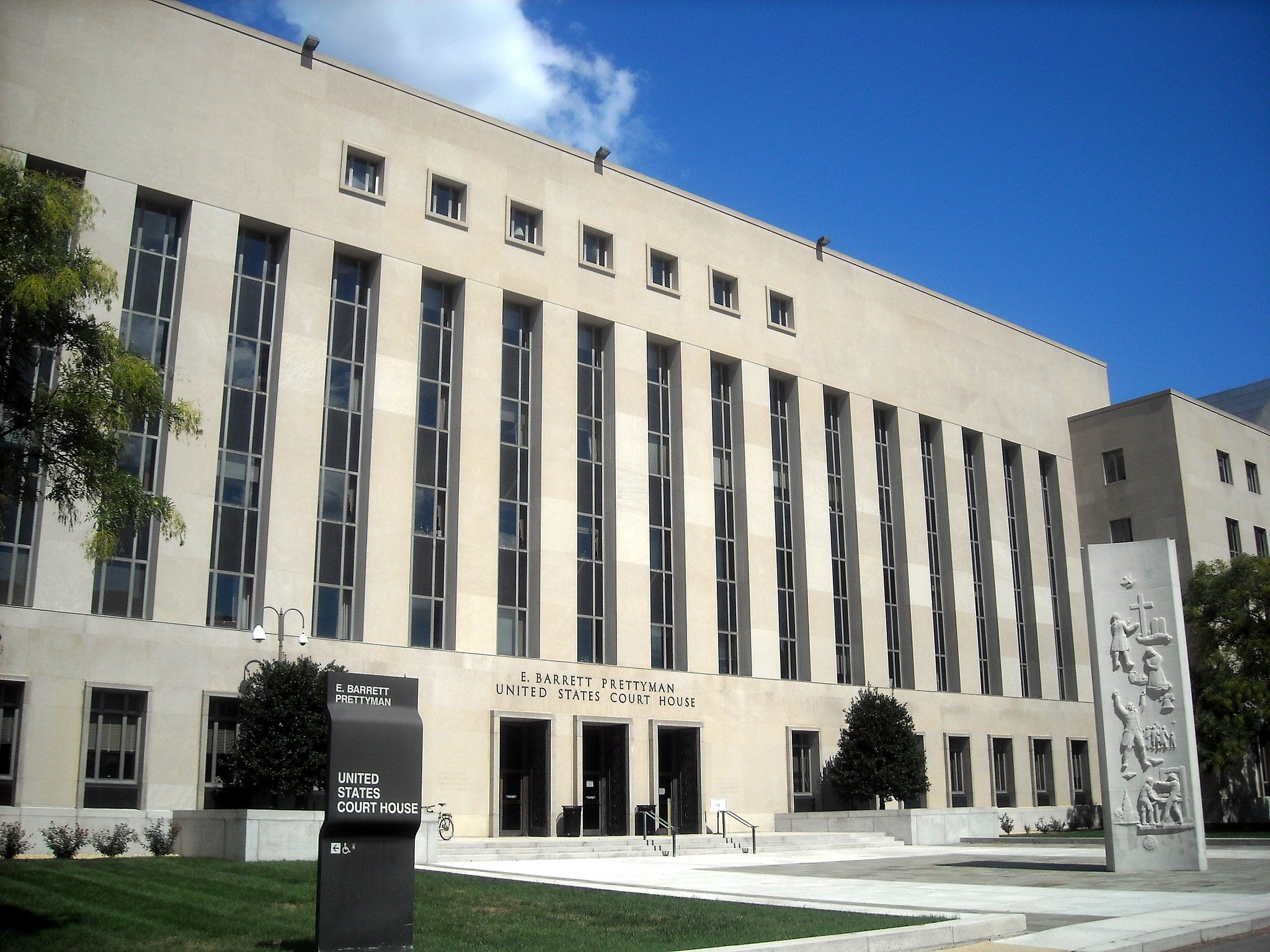
I already know what it’s about. I persistently refresh the ATRC website until the page populates with a dozen more docket entries, including an order scheduling an initial hearing for the very next day at the E. Barrett Prettyman U.S. Courthouse.
On the morning of July 30, I am on my way to the ATRC’s first-ever public hearing. I get to the courthouse early, expecting the proceedings’ historic nature to lead to a packed courtroom. I’m fourth in line for a seat, behind NPR’s Carrie Johnson, a law clerk, and an NBC intern. Lawfare’s Roger Parloff joins me several minutes later as the fifth. Soon, a pool of D.C.’s shrinking ranks of legal journalists forms, trading questions about the process for what happens next and why, after all these years, the Justice Department decided now was the time to give life to the ATRC.
The hallway outside the courtroom fills up. At the other end of the hallway, away from the press and the law clerks, a group that’s just as large circles—the government. It’s not only the national security attorneys tasked with the case and their investigators, paralegals, and interns, but a number of other officials, likely curious about this obscure slice of legal history.
The courtroom doors open a few minutes before 11 a.m. for the attorneys. The press dutifully waits their turn to be ushered in. When the government’s attorneys enter, the two or three dozen other officials try to sneak in behind, creating a traffic jam in the hallway. A clerk turns them away.
We’re finally let in.
“All rise. The honorable Alien Terrorist Removal Court is now in session,” a clerk says. Chief Judge Joan Ericksen, whose day job is as a senior judge in the District of Minnesota, welcomes us warmly. She has short white hair, a green collar that pops up above her robe, and a kind Minnesota demeanor that almost distracts from the ominous nature of the proceedings. Ericksen tells the clerk, “You’re going to call the case. The first case this court has ever heard.”
Two deputies with the U.S. Marshals Service escort the respondent, Nazira Haji Zada, in and take up seats directly behind her. In civilian clothes and a beige hijab, the 47-year-old Haji Zada—an Afghan citizen—sits at a table with her counsel. An interpreter begins to translate in Dari, an official language of Afghanistan. Haji Zada’s face looks solemn.
Chief Judge Ericksen asks the government and Haji Zada’s attorneys to introduce themselves. Acting Deputy Assistant Attorney General for National Security Hayden O’Byrne, Anna Donnell, Evan Schultz, and Larry Schneider stand up on behalf of the Justice Department. Haji Zada’s attorneys are Matthew Farley and Mary Petras of the Federal Public Defender’s Office for D.C.
As Judge Ericksen begins to speak, multiple technical problems occur, sending a loud dial tone ringing through the courtroom. She looks frustrated but only for a split second. The clerk gets the tech under control.
Speaking slowly for the interpreter, she addresses Haji Zada, “This is your first appearance in this matter, is that correct?” Haji Zada nods her head. “This is not a criminal matter. This is a civil matter,” Ericksen continues, referencing the ATRC’s statute. She confirms Haji Zada has legal immigration status as a lawful permanent resident.
The judge outlines the brief history of the case, beginning with the government’s application to initiate removal proceedings against Haji Zada on July 15 and ending with her arrest by the FBI in Fort Worth, Texas, on Tuesday, July 28. She tells Haji Zada that the government is seeking to deport her to Afghanistan.
Reading from prepared remarks, Judge Ericksen says, “This is the court’s first case, and the court is in the early stage of implementing procedures,” warning that there “may be moments of ineloquence.” She then calls for O’Byrne, the government’s lead counsel, to approach the lectern to deliver a “plain English” unclassified summary of the allegations against Haji Zada.
O’Byrne, who up until January 2025 served as an assistant U.S. attorney in the Southern District of Florida, speaks into the microphone with a low voice. I think I must be having trouble hearing because I’m sitting in the back of the courtroom, but soon Ericksen asks him to speak up. He does for a moment, and then his voice returns to semi-audible.
O’Byrne is terse in his description of the allegations, stating that Haji Zada is accused of being an “alien terrorist.” Ericksen asks if he can elaborate. O’Byrne restates almost the same line about the Justice Department determining that Haji Zada is an “alien terrorist.” Unsatisfied, Ericksen asks him a third time to tell Haji Zada about the allegations she faces, this time adding “in plain English.” She specifically references the government’s unclassified summary that appeared on the ATRC website the night before.
He reads the unclassified summary nearly verbatim, alleging Haji Zada has pledged her loyalty to the Islamic State. The government believes she “supported” a conspiracy to conduct a mass attack on Election Day 2024 with her son and son-in-law, who were arrested in October 2024. (Haji Zada’s son is serving a maximum 15-year sentence after pleading guilty to the plot.)
O’Byrne also alleges that Haji Zada has gone to great lengths to “indoctrinate” her children into ISIS ideology and relocate them to ISIS-controlled territory. He says Haji Zada successfully hid this brainwashing and the plan to flee to ISIS-controlled lands from her husband, an Afghan man who previously worked at Bagram Air Base, when it was the U.S.’s largest military base in Afghanistan.
Judge Ericksen leaves it at that—though the details about how Haji Zada supported a plot that was foiled almost two years ago, or her efforts to support ISIS, are murky at best. She moves on to ask whether O’Byrne knows if Afghanistan is a mandatory reporting country, meaning the government has to notify its consulate of Haji Zada’s arrest.
O’Byrne, who has six months on the job as the National Security Division’s third-in-command, says he is not sure. None of the other national security prosecutors chime in, either. Farley, Haji Zada’s attorney, also tells Judge Ericksen he does not know. The judge reads both statements of law to Haji Zada: in case Afghanistan is a mandatory reporting country or, alternatively, that Haji Zada may request that the Afghan government be notified of her arrest.
Judge Ericksen then gets down to business of how the ATRC will proceed. She instructs the Justice Department to submit a summary to the court so that she can rule on its adequacy. If Ericksen deems the summary an adequate description of the allegations against Haji Zada, without revealing the classified information, the removal case may proceed.
But, if Judge Ericksen finds it inadequate, the case will end, barring a successful government appeal to the U.S. Court of Appeals for the District of Columbia Circuit. (It was unclear whether the unclassified summary O’Byrne read from is the same summary that the government intends to present for Judge Ericksen’s approval.)
Regarding the classified evidence in the case, Ericksen tells the parties she plans to “proceed with a CIPA model in mind,” referring to the court’s typical process under the Classified Information Procedures Act for handling classified information in criminal proceedings, which she notes has “quite a robust history.”
Just before he sits back down, O’Byrne asks how the court wishes to number the documents on the docket. This leads Judge Ericksen to launch into a description of how clerks are starting to build an electronic filing system for the ATRC, similar to other courts around the country. One difference—to the glee of much of the press corps—is that ATRC filings will not cost money to access, a break from norms under PACER, the federal court record database.
Next, federal defender Farley approaches the lectern on behalf of Haji Zada. Right off the bat, he moves to dismiss the hearing and release Haji Zada, and raises a broader objection to the court, calling the ATRC’s “lack of process and due process woefully inadequate.” Farley says the ATRC functions as “a runaround of bringing a criminal case” in order “to lower the standard of proof.” He also indicates that Haji Zada’s attorneys will object to the adequacy of the unclassified summary, which consists of “just a few paragraphs.”
My ears perk up when Farley mentions that the Justice Department has indicated the government will not share the classified materials with Haji Zada’s counsel. According to the ATRC statute, as a lawful permanent resident, Haji Zada is entitled to an attorney with a security clearance who can access and contest the classified information on her behalf. (An attorney who discloses such information to their client in ATRC proceedings faces a mandatory minimum 10-year prison sentence, per the ATRC statute.)
Continuing, Farley references the law reviews published about the ATRC and tells the court that Haji Zada’s attorneys have serious misgivings about the ATRC’s constitutionality, citing the First, Fourth, Fifth, and Sixth Amendments. Judge Ericksen chimes in with an earnest smile, “I’ve probably read the same law review articles as you. There aren’t that many.”
The judge denies Farley’s motion to release Haji Zada and suggests the court can hear his constitutional objections to the ATRC as part of the detention hearing. Farley replies that the federal defender’s office needs a ruling about access to the classified materials in order to prepare for the detention hearing.
Then, O’Byrne points out that the ATRC’s statute allows for the presiding judge to review classified materials without the noncitizen’s counsel present and weigh it in their determination whether to remove a suspected terrorist from the United States. He finishes, stating, “We’re not relying entirely on classified information,” and offers to turn over 177 pages of discovery to Haji Zada’s counsel at the hearing (a very low number compared to discovery in most national security prosecutions). O’Byrne, however, doesn’t address whether the government will allow Haji Zada’s attorneys to access the classified information (while keeping that information from Haji Zada herself).
The judge tells O’Byrne that she expects the government to give a specific rationale why each piece of classified information needs to be protected. Ericksen warns that she won’t allow a unilateral classified mandate to conceal information from Haji Zada.
Ericksen pulls out the ATRC statute, 8 U.S.C. § 1534, sending the Justice Department officials and Haji Zada’s attorneys to their U.S. Code books. She says that the respondent’s cleared counsel has a right to access classified materials.
Ericksen asks whether Haji Zada’s attorneys have received clearance. One answers affirmatively, while the other is still in the process. She formally appoints the federal defender’s office to represent Haji Zada.
After this, O’Byrne specifically points to a subsection in the ATRC statute that allows the removal hearing to proceed without an unclassified summary if the judge deems that the noncitizen’s presence in the U.S. and the provision of the summary would both “likely cause serious and irreparable harm to the national security or death or serious bodily injury.” I feel lost as to how this would impact Haji Zada’s attorneys’ access to classified discovery.
Apparently, I’m not alone. Judge Ericksen tells the Justice Department to file a brief on their argument. She says her presumption will be that the federal defender’s office will be able to review classified evidence and will need a “pretty strong reason” to change her mind.
Finally, Haji Zada, who sat motionless throughout the hearing, except to nod or shake her head to the interpreter’s words, accepts the federal defender’s office as her counsel. Judge Ericksen and the attorneys retire to her chambers to schedule the detention hearing for Aug. 11.
On the way out, members of the press exchange glances, feeling just as bewildered as before. My impression is that we weren’t the only ones.