Can the Attorney General Remove Assistant U.S. Attorneys at Will?
Judge Furman holds that the attorney general cannot fire an assistant U.S. attorney without cause, and that Article II does not change that.
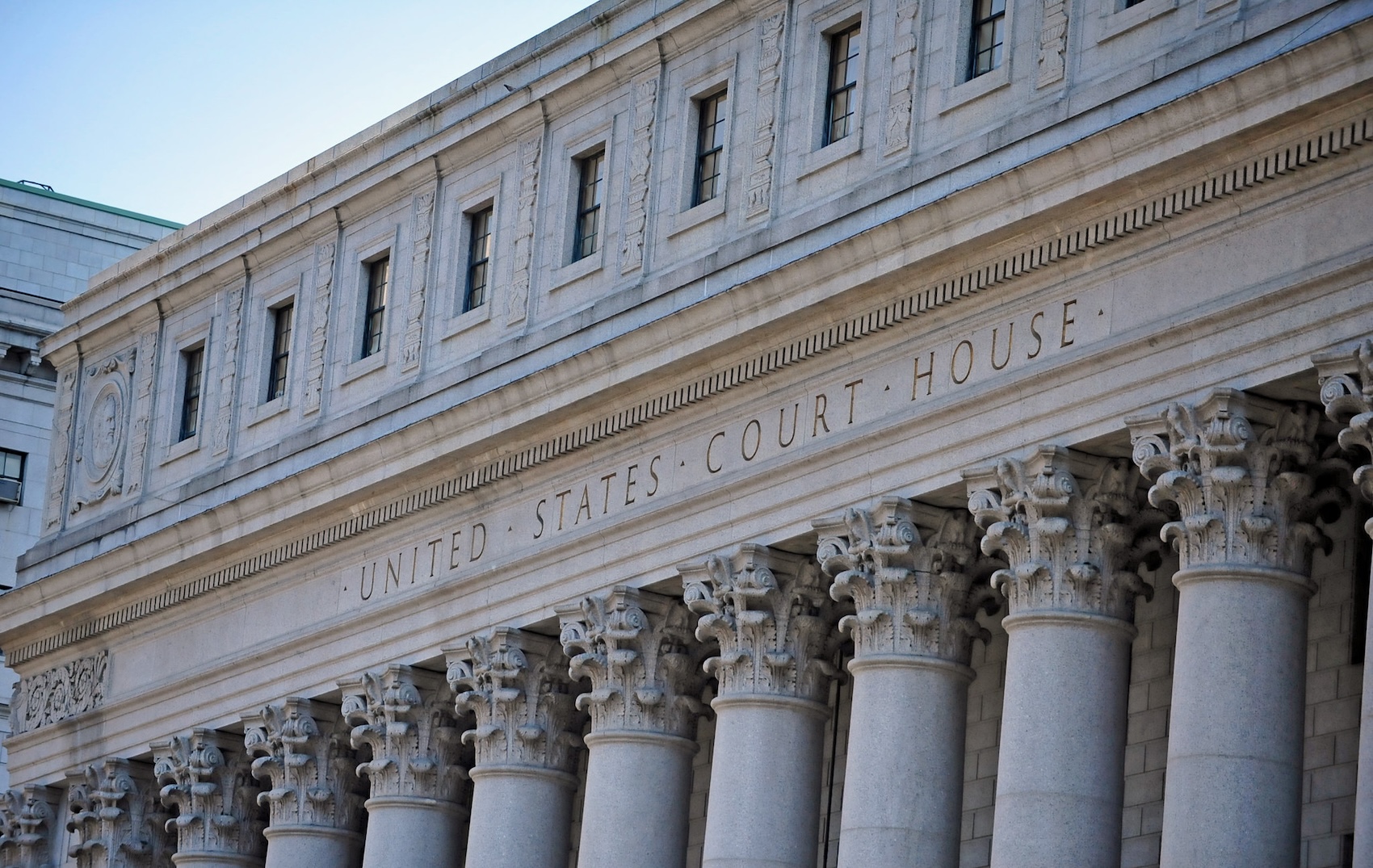

Assistant U.S. Attorney (AUSA) Maurene Comey is a decorated prosecutor. Over nearly 10 years in the Southern District of New York, she prosecuted Jeffrey Epstein, Ghislaine Maxwell, Sean “Diddy” Combs, and Sen. Robert Menendez (D-N.J.), receiving an “outstanding” rating in every annual performance review from 2019 through 2024. On July 16, 2025, the Justice Department removed Comey, citing no reason other than “Article II of the United States Constitution and the laws of the United States.” In a lawsuit filed in federal court in Manhattan, Comey alleged that the Trump administration removed her in retaliation for the outspoken criticism of President Trump by her father, former FBI Director James Comey.
Readers who follow Lawfare’s reporting on the civil service will be familiar with the Civil Service Reform Act’s (CSRA’s) protections for career employees and the Supreme Court’s decision in United States v. Perkins that Congress may constitutionally limit the removal of inferior officers and employees. Compared to other civil service cases, the removal of an AUSA presents two additional wrinkles. First, 28 U.S.C. § 542(b) states, “Each assistant United States attorney is subject to removal by the Attorney General.” How does this provision interact with the CSRA’s removal protections? Second, in Trump v. United States and Trump v. Slaughter, the Supreme Court suggested that the president must have authority to remove any officer exercising the president’s “conclusive and preclusive powers,” including prosecution. Do those rulings change the principle established by United States v. Perkins?
On Oct. 26, Judge Jesse Furman of the Southern District of New York resolved both questions in Comey’s favor. The case is important, because the Trump administration has fired more than 200 Justice Department attorneys. Although AUSAs must normally pursue their employment claims through the Merit Systems Protection Board, Furman allowed Comey to file her lawsuit in district court, because an Article II removal is not covered by the CSRA’s review provisions. Comey offers a hopeful sign for AUSAs—and other federal employees—who have been removed from their positions, but forthcoming cases will determine whether the ruling holds.
The Statutes Governing AUSA Removals
Central to Comey is the interaction of two statutory provisions: 5 U.S.C. § 7513 and 28 U.S.C. § 542. Under 5 U.S.C. § 7513, an agency may remove an “employee only for such cause as will promote the efficiency of the service.” Tenured employees removed from their positions ordinarily have a right to appeal their removal to the Merit Systems Protection Board (MSPB). A separate provision defines “employee” to exclude individuals working in certain agencies or occupations. It exempts neither the Justice Department nor AUSAs, which suggests that AUSAs enjoy the CSRA’s protections.
A different statute—28 U.S.C. § 542—provides that “[e]ach assistant United States attorney is subject to removal by the Attorney General.” The provision makes no reference to Section 7513 or any other CSRA provision. The government reads 28 U.S.C. § 542 as permitting the attorney general to remove AUSAs unfettered by the CSRA’s restrictions or procedures. By contrast, Comey reads 5 U.S.C. § 7513 as limiting the attorney general’s much older authority to remove AUSAs.
The history of the two provisions sheds light on their interaction. Congress enacted 28 U.S.C. § 542 in 1966. At that time, the Lloyd-La Follette Act of 1912 already required cause for removal, but only veterans enjoyed a statutory right to appeal.
The landscape began to change with the CSRA’s passage in 1978. The CSRA expanded appeal rights to employees in the competitive service, but not the excepted service. Like most attorneys in the federal government, AUSAs are classified in Schedule A of the excepted service. Accordingly, AUSAs did not receive appeal rights with the passage of the CSRA.
Nevertheless, the Justice Department treated AUSAs as “employees” for purposes of the CSRA’s other provisions. The CSRA prohibited agencies from taking prohibited personnel actions, such as removing employees for political reasons, against a broader group of employees than enjoyed appeal rights. The Justice Department understood that AUSAs qualified as “employees” for purposes of this provision. In 1983, for example, the Office of Legal Counsel concluded that the prohibited personnel practices prevented the Justice Department from firing an AUSA for his homosexuality unless it showed a nexus between his conduct and his job performance.
By the mid-1980s, Congress had grown concerned about the lack of protections for government attorneys. A series of bills proposed to extend appeal rights to employees in the excepted service, including AUSAs. At a 1985 hearing, the Justice Department submitted comments expressing “grave concern about the ramifications of this legislation,” stating that it was “particularly concerned about the effect on positions such as assistant U.S. attorneys.” The issue became more pressing after the Supreme Court’s 1988 decision in United States v. Fausto, which held that the CSRA left excepted service employees who lacked appeal rights with no other way to challenge their removal in court.
Congress responded to Fausto with the Civil Service Due Process Amendments of 1990. The Due Process Amendments expanded the definition of “employee” for purposes of 5 U.S.C. § 7513 to include individuals in the excepted service who have completed two years of continuous service. The legislative history leaves little doubt that Congress intended to expand appeal rights for AUSAs. The House report explained that the legislation would extend “procedural rights to attorneys.” Congress also excluded several groups from the new protections, such as FBI and CIA employees, but did not exclude AUSAs.
Before Comey, courts had considered the interaction between 5 U.S.C. § 7513 and 28 U.S.C. § 542 in only a handful of cases. In Gosnell v. Department of Justice, a 1995 case, the U.S. Court of Appeals for the Federal Circuit observed, “Determining precisely the rights provided to assistant U.S. attorneys by the Due Process Amendments ... is problematic because of the language of 28 U.S.C. § 542 which gives the Attorney General broad discretion.” The court went on to note, “Since the Due Process Amendments became law, assistant U.S. attorneys have had the right to appeal removal actions ... to the Merit Systems Protection Board.” In Hamlett v. Department of Justice, decided by the MSPB in 2002, the Justice Department itself conceded that the Due Process Amendments had limited the attorney general’s authority under 28 U.S.C. § 542. (Because the issue was jurisdictional for the MSPB, it proceeded to analyze the issue anyway and reached the same conclusion.) The CSRA’s effect on AUSA removals seemed all but settled before Comey’s removal.
The Statutory Holding
In Comey, the Justice Department sought to upend more than 40 years of practice and precedent by arguing that the Due Process Amendments did not alter the attorney general’s authority under 28 U.S.C. § 542. It relied on the Supreme Court’s 2025 decision in Kennedy v. Braidwood Management, which reaffirmed that Congress must use “very clear and explicit language” when it wants to “take away the power of at-will removal from an appointing officer.” According to the government, § 542 does not purport to constrain the attorney general’s power of removal and, therefore, the provision is best understood as codifying “the general rule of at-will removal, at least with respect to the Attorney General’s removal authority.”
Furman rejected the government’s argument, concluding that its “fatal flaw” is that it “ignores the plain language of the CSRA, which was enacted and amended (by the Due Process Amendments) after Section 542.” The CSRA, “by its terms, applies to DOJ and the Attorney General,” and, as the government conceded, AUSAs such as Comey “fall comfortably within” the statute’s definition of “employee.” Furman concluded that “while Section 542(b) grants the Attorney General authority to remove an AUSA, the CSRA limits how and when the Attorney General may do so.”
The government offered another way to harmonize the two statutes. On this reading, the CSRA governs an AUSA’s removal only “if the Attorney General does not direct the removal of an AUSA or the AUSA is provided a reason for their termination.” Furman rejected this reading because it would render the CSRA’s protections “virtually useless.” Justice Department officials could “immunize” their removal decisions simply by declining to give reasons—an interpretation that Furman described as an “absurdity.”
Throughout the opinion, Furman drew on legislative history, precedent, and other tools to illustrate the flaws in the government’s reasoning. For example, he rejected the government’s attempt to invoke the canon that a specific statutory provision (here, 28 U.S.C. § 542) governs a general one (5 U.S.C. § 7513). That canon applies only when two statutes conflict. Even then, Furman concluded that the CSRA is the more specific statute—not 28 U.S.C. § 542—because “[t]he single sentence of Section 542(b) identifies only who may remove an AUSA; it says nothing about when or how—i.e., the substantive standards and procedural protections that apply.”
In a last-ditch effort, the government argued that the attorney general had, in fact, implicitly removed Comey for “such cause as will promote the efficiency of the service.” Furman wrote that the argument “borders on frivolous.” The government admitted that Comey’s removal “was not ‘for cause’ and was not based on her performance,” and it never gave her the written notice and “specific reasons” that 5 U.S.C. § 7513 requires. Accordingly, the attorney general had no statutory authority to remove Comey without explanation.
The Constitutional Holding
The preceding analysis assumes, however, that Congress has the constitutional authority to limit the removal of AUSAs. The constitutional discussion in Furman’s opinion began with a lengthy survey of the Supreme Court’s removal precedents. “For nearly two centuries, the Supreme Court has consistently held that Congress may, by law, ... regulate or limit the removal of inferior officers.” Furman’s account parallels the history in Amy Wildermuth and Peyton Baker’s forthcoming article “Protecting Inferior Officers.” Even as the Supreme Court expanded the president’s removal power in Myers v. United States, it affirmed the vitality of Perkins. Dissenting in Morrison v. Olson, Justice Antonin Scalia—the removal power’s most forceful champion—agreed that Congress may limit the removal of inferior officers.
The government argued that Trump v. United States and Trump v. Slaughter abrogated these precedents. As Furman summarized the argument, “AUSAs who represent the United States in criminal cases in court exercise prosecutorial and investigatory functions that fall squarely within the President’s ‘conclusive and preclusive’ powers,” and, therefore, the president must have authority to remove them.
For Furman, the fact that the Supreme Court has not formally overruled two centuries of precedent “is sufficient, in itself, to reject the argument.” Nevertheless, Furman devoted a considerable portion of the opinion to explaining why Trump v. United States and Slaughter could not be read to overrule these precedents.
In Slaughter, the Supreme Court held that Congress cannot restrict the president’s ability to remove principal officers who exercise executive power. Quoting the only other case to have considered this issue post-Slaughter, Comans v. Executive Office of the President, Furman concluded that Slaughter “had nothing to say about inferior officers or the Perkins line of cases.” Moreover, the Slaughter majority relied on sources—including Myers and Scalia’s Morrison dissent—“that either acknowledged Congress’s authority to limit the removal of inferior officers, explicitly endorsed Perkins, or both.”
In Trump v. United States, the Supreme Court held that the president is immune from prosecution for his official acts. The government seized on its statement that the “investigation and prosecution of crimes” falls within the president’s “conclusive and preclusive” authority to argue that anyone exercising that authority must be removable at will. Furman conceded that the argument was “at least colorable,” citing Jack Goldsmith, but read the language narrowly. The Court does not overrule two centuries of precedent sub silentio.
In a final plea, the government warned that “if criminal AUSAs were not removable at-will, they could bind the President and the entire Executive Branch to positions that the President disagrees with.” As Furman correctly noted, however, disregarding the “instructions and supervision of her superiors” would constitute insubordination. At oral argument, the government added that at-will removal was needed to “deter potentially rogue AUSAs from taking unfavorable positions.” But, Furman replied, “because AUSAs are removable for insubordination, that is a remedy in search of a problem.”
Implications
The government has vowed to appeal Furman’s decision. Nonetheless, the decision has several interim implications for other cases.
First, Comey adds to the lower court decisions holding that Trump v. Slaughter did not abrogate or overrule United States v. Perkins. In Comans v. Executive Office of the President, Judge Michael Nachmanoff of the Eastern District of Virginia held that the Article II removal of the Federal Emergency Management Agency’s career chief financial officer violated due process, writing that the Supreme Court “has repeatedly reaffirmed the principle that the President does not have plenary power to remove all inferior officers.” Although Slaughter’s murkiness has fueled the Trump administration’s arguments, courts have so far rejected them.
Second, the Comey decision will influence litigation in other suits filed by fired AUSAs. In Gordon v. Executive Office of the President, three Justice Department attorneys, one of them an AUSA, are challenging their removal for working on the Jan. 6 investigations. In Rosenzweig v. Blanche, former AUSA Will Rosenzweig argues that the Justice Department violated the First Amendment by removing him after Natalie Winters, a co-host of Steve Bannon’s “War Room,” publicized an anti-Trump blog post he had written before joining the department. In Doddamani v. Blanche, former AUSA Sunita Doddamani is challenging her removal for bringing prosecutions under the Freedom of Access to Clinic Entrances (FACE) Act. Comey offers a road map for many of the issues these cases will raise.
Third, there is a question about the appropriate remedy in these cases. Furman awarded Comey retroactive reinstatement and back pay from the date of her termination through Dec. 20, 2025, when she accepted a different job. Other AUSAs have sought similar relief. Back pay restores harm to the employee who was unlawfully removed from their position. Yet the court cannot require these employees to remain with the office once reinstated. No one can fault AUSAs—or other employees—from voluntarily leaving a hostile work environment. In the end, some of the harm is borne by the public, who is deprived of top-notch public servants.
Finally, the constitutional question remains live. In December, the U.S. Court of Appeals for the Federal Circuit, sitting en banc, will hear argument in Jackler v. Department of Justice. In Jackler, the MSPB held that Congress could not constitutionally limit the removal of immigration judges, who are inferior officers within the Justice Department. Many expect Jackler to reach the Supreme Court. If the Supreme Court overrules Perkins in Jackler, the statutory question in Comey would become moot.
Furman closed by warning that accepting the government’s theory would “risk a return to the spoils system that Congress has sought to end since the nineteenth century.” Congress enacted the Due Process Amendments to protect attorneys, such as AUSAs, from arbitrary or politically motivated removals. Whether those protections survive depends on whether the Supreme Court is prepared to hold, for the first time, that Congress may not protect inferior officers from removal.
Disclosure: The author assisted with an amicus brief filed in Comey.