Slaughter’s Silence
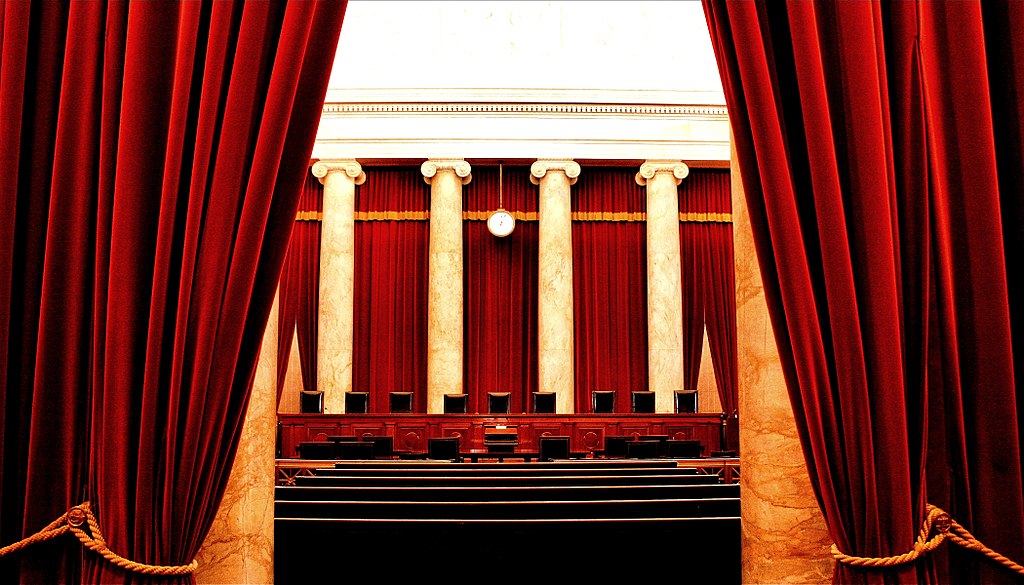

Yesterday, the Supreme Court held in Trump v. Slaughter that a statutory provision limiting removal of members of the Federal Trade Commission to “inefficiency, neglect of duty, or malfeasance in office” violates the Constitution. In 1935, the Court upheld this statutory provision in Humphrey’s Executor v. United States, establishing that Congress may limit the removal of principal officers in multimember agencies. The Supreme Court has whittled this decision away in recent years. Writing for the majority in Slaughter, Chief Justice Roberts declared, “If anything more is left of Humphrey’s, we overrule it.”
Overruling Humphrey’s Executor was preordained. The real question was what reasoning would replace it. A minimalist approach could have held that the Federal Trade Commission exercises more executive power today than it did in 1935, preserving the Humphrey’s Executor exception for multimember agencies with more limited authority. A maximalist approach would embrace the most expansive form of unitary executive theory and abolish removal protections for all officers and employees within the executive branch.
So which reasoning did the Supreme Court ultimately adopt? After reading all 191 pages in Slaughter and its sister case Trump v. Cook (twice), I am not entirely sure.
Slaughter offers more questions than answers. At a minimum, it stands for the proposition that Congress may not limit the president’s authority to remove principal officers. Given the issue presented, this should be the only holding in the case. Even then, the Supreme Court immediately identified a notable exception—the Federal Reserve—on shaky historical but strong prudential grounds. But the majority is silent on whether its decision extends to inferior officers and employees who enjoy removal protections under the Civil Service Reform Act. Moreover, Slaughter includes substantial language that can be read to expand the power to remove these actors. How one reads the majority opinion—broadly or narrowly—likely serves as a Rorschach test for one’s overall disposition toward the administrative state and the federal workforce.
Ultimately, Slaughter’s broad language and indeterminacy provides fuel for the Trump administration to argue that the president has the constitutional prerogative to remove all inferior officers and employees—regardless of whether the Supreme Court intended to protect the civil service or not. Judicial review cannot prevent the evisceration of the federal workforce and administrative capacity—especially when the Supreme Court has created the system that enables such evisceration.
Who Is a “Subordinate”?
Key to interpreting Slaughter is the terminology that has governed personnel decisions for the last half century. The Supreme Court has historically placed executive-branch officials in three categories. A principal officer is someone who exercises significant authority pursuant to the laws of the United States and whose work is not directed or supervised by another officer. The Appointments Clause requires the president to appoint principal officers with the advice and consent of the Senate. An inferior officer is someone who exercises significant authority but is adequately supervised by a principal officer. Under the Appointments Clause, Congress may vest the appointment of inferior officers “in the President alone, in the Courts of Law, or in the Heads of Departments.” By contrast, a “mere employee” is an official with lesser responsibility who falls outside of the Appointments Clause. Slaughter ostensibly only involves principal officers—appointees to the Federal Trade Commission.
By default, the president has authority to remove officers and employees from their positions. The Supreme Court has recognized two notable situations where Congress may restrict the president’s removal power. First, Congress may restrict the removal of inferior officers and employees. In United States v. Perkins, the Supreme Court concluded, “We have no doubt that when Congress, by law, vests the appointment of inferior officers in the heads of Departments it may limit and restrict the power of removal as it deems best for the public interest.” Pursuant to this power, the Civil Service Reform Act limits the removal of most inferior officers and employees “only for such cause as will promote the efficiency of the service.”
Second, Congress may restrict the removal of principal officers who exercise “quasi-judicial” and “quasi-legislative” authority. Although “quasi-judicial” and “quasi-legislative” have a historic pedigree, the exception for these officers traces its roots at the Supreme Court to Humphrey’s Executor.
The strongest reading is that Slaughter only applies to principal officers. The Supreme Court granted certiorari on whether to overturn Humphrey’s Executor, and Humphrey’s Executor only concerned removal protections for principal officers in multimember agencies. Separate precedents govern Congress’s authority to remove inferior officers and employees, and those precedents remain uncited by the Slaughter majority. Justice Gorsuch’s concurrence supports this reading. He begins, “To fulfill his constitutional duty to ensure the laws are faithfully executed, the Court holds, the President must have the ability to remove principal officers who exercise executive power in his name” (emphasis added). Justice Gorsuch also refers to the fact that the civil service laws “ordinarily afford rank-and-file agency employees considerable protection against removal,” citing the Civil Service Reform Act. Limiting the decision to principal officers is the soundest reading of the Supreme Court’s holding.
Yet, Roberts’s majority opinion does not provide a clean statement of its holding or any language suggesting that its reasoning does not reach inferior officers or employees. In fact, the majority opinion does not use the tripartite categorization of federal personnel to explain its logic. Roberts only uses the phrase “principal officers” a few times—in quoting the Appointments Clause and Justice Story—and “inferior officers” once in describing the Court’s holding in Morrison v. Olson. Instead, he consistently refers to Congress’s lack of authority to restrict the removal of the president’s “subordinates.” He does quote Alexander Hamilton for the proposition that “‘persons . . . to whose immediate management the President’s powers ‘are committed’” (i.e., principal officers) are subject to “his superintendence” (emphasis added). He also says that the Court “does not determine the fate of officials not before us,” which presumably includes inferior officers and employees. Despite this caveat, the chief justice’s clearest statement swings much broader than one might anticipate from a narrow holding: “Subordinates who exercise the President’s power are subject to removal by him.”
The indeterminacy in Roberts’s opinion leaves space for arguments that Slaughter expanded the removal power over inferior officers and employees. Textually, the phrase “subordinate” envisions a broader class than principal officers. If the majority only intended to limit the decision to principal officers, why evade the traditional tripartite classification? Rather than focusing on the official’s category, the majority constructs a test centered on whether the “subordinate” exercises “the President’s power” (i.e., executive power). But it concludes that it “has no occasion today to define the bounds of what such power entails.” A principal officer who engages in enforcement, rulemaking, adjudication, legal interpretation, or litigation does so. But many employees engage in these same tasks—subject to supervision by principal officers. The majority’s test does not explicitly state whether supervision matters for purposes of the removal power, and the omission of supervision lends itself to a reading that the removal power extends beyond principal officers.
The use of the word “subordinates” presumably derives from Chief Justice Taft’s opinion in Myers v. United States. Roberts describes Myers as “reaffirm[ing] the President’s powers to fire his subordinates at will.” In Myers v. United States, the Supreme Court overturned a law requiring the president to obtain the advice and consent of the Senate prior to the removal of postmasters. The “subordinate” in Myers was an inferior officer. Whether the majority in Slaughter intended to import this expansive meaning of “subordinate” into its opinion is not clear on the face of the opinion.
Myers, however, did something that Slaughter did not: It acknowledged that Congress has the power to restrict the removal of inferior officers and employees. Citing Perkins, Taft acknowledged, “Congress, in committing the appointment of such inferior officers to the heads of departments, may prescribe incidental regulations controlling and restricting the latter in the exercise of the power of removal.” He also recognized that the “independent power of removal by the President alone, under present conditions, works no practical interference with the [civil service] system.” Even Justice Scalia—often heralded as a champion of unitary executive theory—recognized that Article II “does not require that [the president] have plenary power to remove inferior officers,” because they are subordinate to principal officers.
The omission of a similar statement is uncharacteristic of the Roberts Court, which has often mentioned that its decisions do not consider the president’s authority to remove inferior officers or employees. In Free Enterprise Fund v. Public Company Accounting Oversight Board, Roberts wrote, “Nothing in our opinion . . . should be read to cast doubt on the use of what is colloquially known as the civil service system within independent agencies.” In Seila Law v. Consumer Financial Protection Bureau, Roberts acknowledged an exception for “inferior officers with limited duties and no policymaking or administrative authority.” In United States v. Arthrex, Roberts remedied an Appointments Clause violation by requiring greater supervision of administrative patent judges—rather than striking down their removal protections. In Collins v. Yellen, Justice Alito refused to comment on the constitutionality of the civil service. Finally, in Kennedy v. Braidwood Management, Justice Gorsuch cited the Civil Service Reform Act as an example where Congress had clearly chosen to restrict the president’s removal of inferior officers and employees. Slaughter contains no such caveat, but also contains no reason to believe the Court explicitly overruled the Perkins exception.
Roberts’ majority does acknowledge several possible exceptions to the president’s removal power. First, Congress may restrict removal in offices that do not “come with executive or sovereign power attached.” He offers the examples of the Boy Scouts of America and Georgetown University, which are congressionally chartered entities. Second, Congress may limit the removal of governors of the Federal Reserve, because it “follows in the distinct historical tradition of the First and Second Banks of the United States.” Third and finally, an open question remains for whether Congress may protect judges of “non-Article III courts, such as the Tax Court and the Court of Federal Claims,” but that question was neither “presented” nor “briefed.” Roberts walks through these important exceptions but omits a discussion of inferior officers and employees.
The majority knew the problem its decision created. In her dissent, Justice Sotomayor writes, “Today’s decision may also have major implications for inferior officers and civil-service employees, which the majority studiously ignores.” The Government itself argued that its theory would extend the president’s removal power to all executive-branch employees. This is not some hole discovered by a law professor sifting through a poorly reasoned decision. It has been a core issue in this case since the beginning.
It is impossible to say for certain what Roberts intended by excluding a discussion of inferior officers and employees. One possibility is that the use of “subordinate”— rather than “principal officer”—was necessary to secure a five-vote majority rather than a per curiam. Another possibility is that the majority believed “subordinate” read as sufficiently contained to “principal officers.” The final possibility is that the majority actually intends to change the test. Doing so in this fashion, however, would violate the Court’s standard admonishment against “hiding elephants in mouseholes.”
Although the only defensible reading is that Slaughter applies to principal officers, Slaughter is a destabilizing opinion. But that destabilization may stem from its uncertainty rather than its direct effect on principal officers. Confined to principal officers, Slaughter provides the president with the opportunity to break quorums on multimember commissions and disable the functioning of the agency. Yet, many of these commissions were subject to high levels of presidential control even prior to Slaughter. Presidents often control the commission chair and that provides substantial agenda-setting authority.
The real destabilization—in my mind—is the Supreme Court’s failure to draw a line in the sand and explicitly confine its opinion to principal officers. As written, the decision raises a number of questions about the logical extensions of its reasoning. Does Slaughter permit the removal of the border patrol agent who seizes drugs at the border or the Social Security clerk who denies a claim for disability benefits? Does supervision of these employees by principal officers alleviate the problem? If not, which employees exercise “executive power” and which perform non-executive functions? Those questions have significant implications for over two million federal employees and, more broadly, the ability of the executive branch to faithfully execute the law.
Judicial Review and Administrative Capacity
At the end of the day, Slaughter invites executive aggrandizement by encouraging presidents to pursue more aggressive cuts within the federal workforce. Indeed, Roberts’s incrementalism and subtle hints of where the Court was headed led us to Slaughter. Although the Supreme Court reaffirmed Humphrey’s Executor in its recent cases, its expansion of presidential power emboldened the Trump administration to defy the laws enacted by Congress by removing officials protected by the very statute Humphrey’s Executor upheld. Roberts’s failure to demarcate the boundaries of Slaughter invites a similar strategy—regardless of whether Roberts intended that result. A Truth Social post confirmed Trump’s receipt of that invitation: “Today’s Historic Slaughter Decision by the Supreme Court is the Greatest Increase in Presidential Power in the last 100 years. Such a Monumental Ruling at such an important time!” Only time will tell precisely how the Trump administration intends to use Slaughter, but one can envision using it to justify greater cuts to the workforce.
To whom does this expansion of presidential power pose a risk? The public. Commentators tend to frame civil-service protections in terms of “fairness” to federal employees. Although the civil service laws do offer protections to individuals, they exist for a greater systemic reason: To preserve administrative capacity. Administrative capacity describes an agency’s ability to faithfully execute the laws enacted by Congress. Agencies derive this capacity, in part, from their workforces. Civil service laws promote administrative capacity by ensuring that the federal workforce does not turnover on a four-year clock.
Proponents of unitary executive theory argue that removal protections impede faithful execution by insulating career employees from democratic direction. But much of the empirical evidence cuts the other way. Capacity—rather than control—plays a greater role in whether the president accomplishes his agenda. The public does not perceive presidential control as promoting accountability. Evidence already demonstrates that the Trump administration’s assault on the civil service has impacted the performance of congressionally mandated activities.
The clearest implication of Slaughter—and the past year’s events—is that the federal courts lack ability to curb threats to administrative capacity and the president’s duty to faithfully execute the law. Even if they had the will to preserve the status quo, it is unclear whether they have a way.
A few reasons explain the skepticism toward the federal courts’ ability to protect the civil service—and administrative capacity—in this moment. First, the Trump administration has already adopted an expansive interpretation of Article II, grasping at language in Supreme Court opinions to justify its actions. Slaughter offers more fuel with fewer guardrails than previous decisions. Cases involving the removal of immigration judges, the Senior Executive Service, and federal prosecutors; reductions in force; the implementation of Schedule Policy/Career; and decertification of federal unions are now working their way through the federal courts. The Trump administration will likely file notices of supplemental authority in these cases, arguing that Slaughter ordains actions that would otherwise violate the civil service laws. Even before Slaughter, federal courts expressed skepticism about ruling on these cases because “the Supreme Court has made clear enough by way of its emergency docket that it will overrule judicially granted relief respecting hirings and firings within the executive.” Slaughter itself adds to the perception among federal courts that they lack authority to enjoin actions involving federal employees—even though the best reading of the decision does not extend to inferior officers or the civil service.
Second, federal employees must exhaust their claims before the Merit Systems Protection Board (MSPB) prior to seeking review in the federal courts. Congress established the MSPB as a three-member commission to adjudicate claims arising from the Civil Service Reform Act. Even before Slaughter, the MSPB was subject to public and private pressure from the White House to erode the removal protections afforded to federal employees. The MSPB has largely kowtowed to Trump, holding that it cannot constitutionally apply the Civil Service Reform Act to certain employees. Slaughter strengthens the capture of the MSPB by calling into question whether any of its adjudicators enjoy removal protections. As the entity with the first opportunity to apply Slaughter, the MSPB is likely to use Slaughter to justify its expansion of these holdings to other categories of federal employees.
Moreover, the federal courts cannot control the response of the federal employees and individuals who would otherwise pursue careers in the federal government. The Trump administration’s personnel decisions have already shaped employee behavior, and the uncertainty wrought by Slaughter creates a broader perception that the courts will not intervene to protect them.
Start with employees removed from their positions. Slaughter encourages the Trump administration to expand efforts to remove large swaths of the federal workforce. Even when these employees are reinstated, delays in judicial review often make a return to the federal government infeasible. Employees often seek alternative employment to pay for their homes, cars, and groceries. Meanwhile, the Trump administration’s efforts to dismantle agencies move so quickly that restoring the status quo often proves impossible. In one case this past year, Judge William Alsup held that the Trump administration had unlawfully fired thousands of probationary employees but refused to reinstate the employees. Alsup concluded:
[T]oo much water has passed under the bridge since the Supreme Court stayed this Court’s preliminary injunction reinstating probationary employees. The terminated probationary employees have moved on with their lives and found new jobs. Many would no longer be willing or able to return to their posts. The agencies in question have also transformed in the intervening months by new executive priorities and sweeping reorganization. Many probationers would have no post to return to.
Slaughter also increases the perception of threat among federal employees, which may increase voluntary turnover. Preliminary findings in ongoing research suggest that employees anticipate threats to their tenure protections and leave the federal workforce prior to the president acting on those threats. Other research has shown that perceived politicization within the workforce increases turnover intention. The Trump administration’s attacks on the civil service have already sown distrust within the workforce. In a recent survey targeting all federal employees, only 10.2 percent of respondents had trust in their workplace’s political leaders; 79.5 percent expressed trust in their colleagues. Only 25.2 percent reported that their agency would not tolerate “arbitrary action, favoritism, or political coercion against employees.” By contrast, 56 percent of respondents reported that their agency would not tolerate such actions in a similar 2024 survey. Job satisfaction declined from 64 percent in 2024 to 32.7 percent in 2025. Employees are likely to perceive Slaughter as an additional threat to their positions and, therefore, some may feel pressured to leave prior to their removal.
The same perceptions of threat may chill employees from faithfully performing their duties. All employees take an oath to uphold the Constitution and faithfully discharge their duties. At times, the faithful execution of those duties requires candid conversations with political superiors. Removal protections ensure that federal employees feel comfortable providing candid advice to superiors without a threat of retribution. Various studies demonstrate that federal employees believe it is their role to provide political appointees with candid information about how to achieve the president’s agenda while leaving the ultimate policy decision to those appointees. Political appointees are likely to make worse decisions if federal employees feel they will be retaliated against for providing candid information.
Moreover, upholding the Constitution requires federal employees to report illegal activity within the executive branch. As the government’s frontline workers, federal employees are often the first to observe waste, fraud, and abuse. Removal protections provide security for whistleblowers. Today, only 22.5 percent of federal employees feel confident that they could “report a suspected violation of a law, rule, or regulation without experiencing retaliation.” In 2024, 72 percent of federal employees believed they could report violations of law without “fear of reprisal.” This fear makes it more difficult to hold the executive branch accountable by preventing the public from learning about wrongdoing.
To be clear, Slaughter did not cause the decline in morale witnessed in recent surveys. The Trump administration’s broader assault on the civil service did. But Slaughter contributes to the insecurity felt by employees by giving the Trump administration another weapon in its arsenal.
Even if the courts manage to preserve the status quo and prevent further evisceration of administrative capacity (and I don’t think they can), the erosion of the federal government’s reputation as an employer will damage efforts to rebuild. The pool of individuals willing to work in the public sector is limited. For some of the professional positions that are hardest to hire, total compensation in the federal government is about 22 percent less than in the private sector. Generally, these individuals are motivated by a desire to serve the public rather than money. Yet, they require assurances that they will not be removed from their positions following every election. The stability provided by civil service protections incentivizes individuals to invest time and energy into building the expertise necessary for governance. The uncertainty caused by Slaughter may chill the willingness of individuals to seek careers in government—even as the Trump administration seeks to rebuild the workforce in some core agencies.
Some will respond that the Supreme Court can always clarify its holding in a subsequent case. True. Jackler v. Department of Justice—a case before the U.S. Court of Appeals for the Federal Circuit involving the removal of immigration judges—would provide the Court an opportunity to decide whether the Civil Service Reform Act violates the Constitution. Even if the Court upholds Congress’s authority to limit the removal of inferior officers and employees, the federal courts likely cannot prevent the damage that will be done before that hypothetical decision.
Slaughter provided the Supreme Court an opportunity to draw a line in the sand and reaffirm fundamental principles about the relationship between the president and the federal workforce. Instead, it spoke in indeterminate language that sows further doubt about the executive branch’s reliability as an employer.. Its silence and opacity will cause significant confusion, instability, and the erosion of administrative capacity. One can want a smaller federal government and still want it to work. Slaughter offers neither. It does not shrink the government Congress has built—that requires legislation—it destabilizes the workforce that carries it out. Even readers who would happily see fewer agencies should oppose a regime that produces incompetent versions of the agencies that remain.
The erosion of the civil service would hurt the economic prosperity of the United States and the president’s obligation to faithfully execute the laws. The federal courts lack the authority, time, and will to preserve the status quo. Consequently, the reforms needed to preserve administrative capacity will not come from the Court but, instead, must come from Congress and—most importantly—the people.