Congress Has More Power Than It Thinks
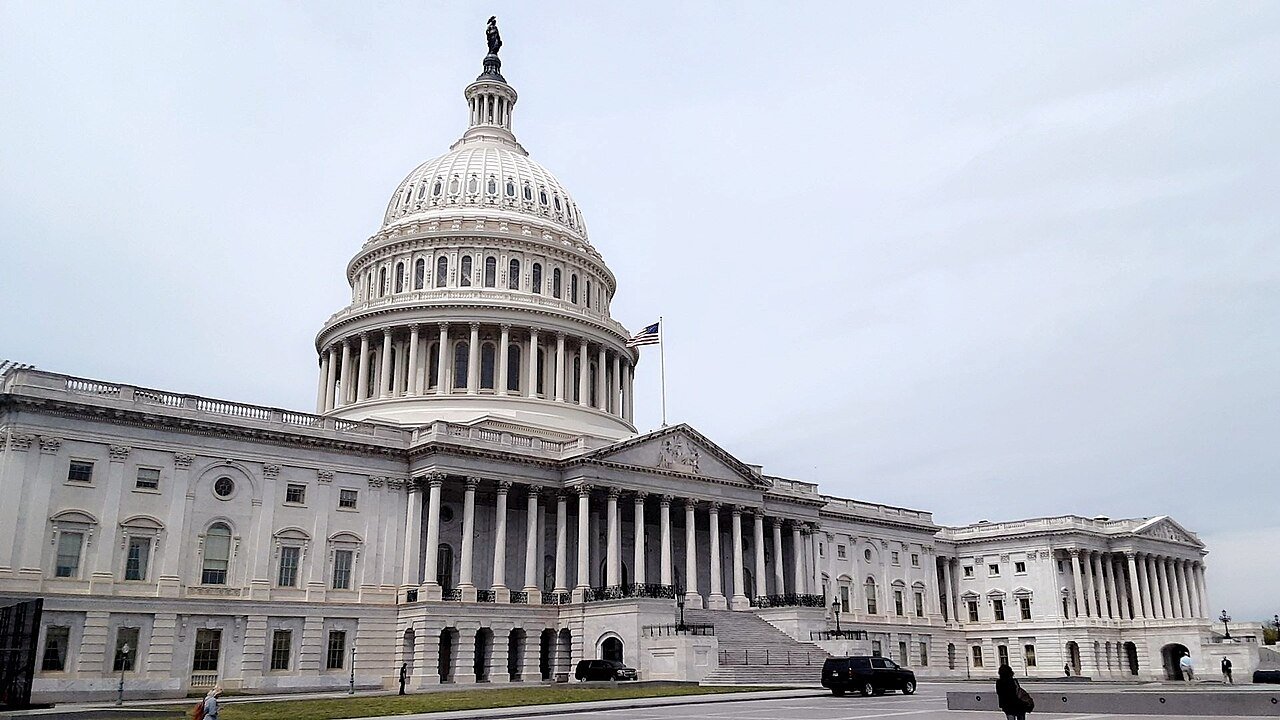


A surpassingly important question in recent separation-of-powers debates is when, if ever, Congress can stand up to reclaim its prerogatives from a president determined to press to the limits of his power and beyond. Recently, a Supreme Court justice and several scholars have expressed skepticism about the legislature’s ability to pull back authority it once delegated to the president. But the assumption that powers once delegated are virtually forever lost deserves critical scrutiny. In fact, Congress has a variety of tools at its disposal to resist executive overreach even when the president can threaten to veto legislation that bucks his will.
The debate over Congress’s ability to retrieve delegated powers took place out of the spotlight in Learning Resources, Inc. v. Trump, where the Supreme Court rejected President Trump’s claim to unlimited authority to impose tariffs under the International Emergency Economic Powers Act (IEEPA). In dueling separate opinions, the justices exchanged opposing views on whether a court should weigh Congress’s ability to undo legislation that delegates power to the president when interpreting a statute. Notably, Justice Neil Gorsuch’s concurrence relied on the “retrieval problem” to argue that the Court should hesitate to endorse broad delegations in part because of Congress’s structural disadvantage in reversing delegations.
At a time when Congress has ceded power and “subordinated itself to the executive branch,” Justice Gorsuch’s approach seems intuitively appealing because it presents a pathway for courts to rein in an aggressive administration stretching its statutory powers to the breaking point. But the assumptions underlying the retrieval problem overlook the complex reality of Congress’s power and could lead courts into improper, political waters.
The retrieval problem posits that, because of Congress’s difficulty in successfully overcoming a presidential veto and retrieving delegated powers, courts should hesitate before broadly interpreting ambiguous delegations of power from Congress to the executive branch. The risk of upholding the executive branch’s action is that Congress could lose its power permanently, even when a majority of legislators want the power back. As Gorsuch put it, “[o]nce this Court reads a doubtful statute as granting the executive branch a given power, that power may prove almost impossible for Congress to retrieve.”
Gorsuch’s assertion that delegated power is nearly impossible to retrieve gives courts a principled reason to be stingier about reading statutes as broad grants of presidential authority. And discussion of the retrieval problem has already entered public discourse. New York Times journalist and longtime observer of the Court Adam Liptak interpreted Gorsuch’s concurrence to suggest that the Court might “limit presidential power grabs” in future rulings by considering the odds of a presidential veto against Congress’s ability to pass legislation. Others lauded Gorsuch’s concurrence for taking the “pro-Congress” approach. A handful of Republican senators, who had repeatedly voted against giving Trump more power, celebrated Gorsuch’s concurrence for its emphasis on checks and balances and his effort to put “power back in Congress’s hands.”
Justice Brett Kavanaugh was not convinced by Gorsuch’s argument. Kavanaugh’s dissent argued that Congress has more power than the retrieval problem assumes: “Congress could … wield its authority over oversight, legislation, confirmations, or appropriations to pressure the president to reduce or eliminate some or all the IEEPA tariffs.” As Kavanaugh saw matters, because Congress has several tools at its disposal to influence policy and the executive branch, “Congress is not a helpless bystander when it comes to the President’s exercise of tariff authority under IEEPA.” To Kavanaugh and others, the retrieval problem does not reflect political realities because Congress has many other established ways to exercise control over the executive branch.
Experience confirms Kavanaugh’s intuition and complicates the retrieval problem’s core assumption. A look at how Congress has actually behaved across administrations of both parties reveals a more nuanced picture: one where the veto threat is real but far from the only factor, and one where Congress has repeatedly constrained or reclaimed delegated power through tools the retrieval problem largely ignores. And in recent days, Congress has shown signs of life, with the House pushing back on the president’s war in Iran and legislators expressing bipartisan fury at the administration’s proposed “weaponization fund”—a dubious if not outright illegal scheme to channel taxpayer funds to political allies that the administration promptly scuttled. As these actions and historical examples show, Congress has ample tools to counter the executive if it has the political will to use them.
Congress’s History of Retrieving Delegated Powers
Congress has more tools at its disposal than the retrieval problem assumes. Undoubtedly, Congress lost a critical tool to restrain the exercise of delegated powers when the Supreme Court invalidated the legislative veto in INS v. Chadha. But when political forces are strong enough to support a joint congressional resolution pushing back on a presidential exercise of power, a president may be reluctant to veto it even if Congress might not have the votes to override it. As Justice Robert Jackson noted in his reflections on President Franklin D. Roosevelt’s disagreement with legislative vetoes, “events which might arouse enough opposition in Congress to put concurrent resolutions through would be likely to require a change of administration policy in any event.”
Beyond the political check on a president who opposes a congressional resolution, as Kavanaugh noted, Congress can often influence the executive branch through appropriations legislation. Because the House and Senate must annually vote on funding, Congress holds a “de facto veto power over particular appropriations.” Congress can also influence the executive branch through its confirmation and oversight power. Minimizing the tools Congress has at its disposal, as Josh Chafetz puts it, “cast[s] congressional power entirely in terms of legislation” and would “significantly understate the scope of Congress’s powers under the Constitution.”
The range of tools available to Congress to take back and maintain power extends beyond the extraordinary political event of overriding a presidential veto. In fact, Congress has a menu of options to address overaggressive executive acts.
Congress’s Appropriations Power
Congress can use appropriations to wield a great deal of power over the president. Kavanaugh’s dissent points to Congress’s use of appropriations power to restrict President Obama’s policy on transferring Guantanamo Bay detainees. In 2011, House Republicans threatened Obama’s administration with a government shutdown to accomplish more than $38 billion in spending cuts and policy changes. These conditions on appropriations limited the president’s ability to transfer Guantanamo Bay detainees to other countries or the United States. While arguing that this appropriations bill deprived the executive branch of its authority over foreign affairs and national security, Obama ultimately concluded that “the importance of avoiding a lapse in appropriations” counseled against a veto, and he instead signed the appropriations into law.
Kavanaugh’s dissent also notes that Congress used its appropriations power in a series of amendments, known as the Boland Amendments, to prohibit the Reagan administration from using appropriated funds to assist the contras with military and paramilitary operations in Nicaragua.
These powers are at issue today. Since February, the Department of Homeland Security (DHS) has been at the center of a funding battle in Congress. Democrats aimed to use the agency’s lapse in appropriations––and the longest partial government shutdown in history––to bring the administration’s immigration policy agenda to the forefront and pressure Republicans and President Trump to agree to changes in DHS and Immigration and Customs Enforcement (ICE) policy. For the length of the shutdown, congressional Democrats refused to support any appropriation bills to fund DHS without rules to constrain and control the department’s aggressive immigration enforcement tactics.
After 76 days of lapsed funding, Congress passed bipartisan legislation funding all non-immigration enforcement components of DHS––ending the longest agency shutdown in history. The funding came without the additional reforms congressional Democrats originally sought to attach to ICE and Border Patrol appropriations. But congressional Democrats’ refusal to lend votes to congressional Republican proposals heightened internal divisions among Senate and House Republicans over Senate Republicans’ decision to exclude ICE and Customs and Border Protection from the bill. President Trump’s push to include the settlement fund in the bill gave Democrats an opening to exploit intraparty divisions by proposing provisions to curtail it. The point is not that Democrats got everything they wanted. They didn’t. It’s that even a congressional minority, without passing a piece of substantive legislation, applied real friction to an aggressive executive agenda. That is not the behavior of a helpless institution.
Filibusters can also allow a minority party to leverage its strength and force a compromise even if it lacks support from members of the majority and falls well short of overriding a veto. Senate Democrats employed the filibuster in February 2026 to block the original Department of Homeland Security funding package because it fell short of the 60 votes needed to overcome a filibuster. Ultimately, congressional Republicans were forced to pass the bill through the reconciliation process to avoid a filibuster in the Senate.
Some scholars, such as Samuel R. Bagenstos, argue that the current Office of Management and Budget’s (OMB’s) aggressive actions threaten to erode Congress’s power over appropriations. Typically, OMB apportions funds to executive agencies throughout the fiscal year in compliance with the Impoundment Control Act (ICA). The act ensures that the president and OMB cannot second-guess Congress’s policy decisions by impounding, or refusing to spend, appropriated funds. Instead, the ICA provides a process for rescissions of funds: the executive branch sends a detailed message to Congress requesting rescission of appropriated funds and seeks congressional approval within 45 days. Otherwise, in principle, the funds must be paid out.
Current OMB Director Russell Vought has repeatedly claimed that the ICA is unconstitutional and that OMB may shut off congressionally appropriated funds. And last year, the Trump administration waited to use the ICA’s rescission provision until within 45 days of the fiscal year’s end, essentially employing a pocket rescission for impounded foreign aid funds.
Still, appropriations likely give Congress a countermove to OMB’s encroachments on the power of the purse. In a forthcoming article, Bagenstos argues that restrictive appropriations riders offer a way for Congress to constrain an emboldened executive branch. These riders could take various forms—for example, reducing any impounding employee’s salary to $1 or providing that appropriations money for a high presidential priority will not be available until the government obligates money for other specific programs that OMB might be inclined to impound.
Oversight and Controlling the Use of Delegated Powers
Congress can maintain some control over delegations of power by exercising formal oversight of the executive branch. The National Emergencies Act (NEA)—which President Trump used to create the predicate emergency for his invalidated tariff policy—requires the executive branch to follow a reporting procedure in declaring emergencies. An emergency declaration must be submitted to Congress with a specification of the power under which the president purports to act and each emergency expires after a year, requiring the president to affirmatively continue the emergency amid new political conditions. Moreover, the NEA also requires Congress to meet every six months and vote on a joint resolution to determine whether the emergency should be terminated.
These formal requirements set out tripwires that can drain political support for unpopular emergency actions. Even members from the president’s party may defect if the president blatantly fails to justify an emergency to Congress within the NEA process. For instance, last fall Sen. Rand Paul (R-Ky.) voted to terminate the national emergency underpinning Trump’s tariff policy, stating: “I don’t see any rationale, legitimate rationale, for how you have an emergency with 80 countries.” In the end, however, the resolution failed to win enough defecting-Republican votes to pass.
These congressional tripwires were more effective in stalling the first Trump administration’s attempt to add a citizenship question to the census. Congress delegates power to conduct the census to the Department of Commerce. And as part of the Census Act, the secretary of commerce must report to Congress about the subjects and questions to be included at least three years before each census date. Accordingly, then-Commerce Secretary Wilbur Ross claimed in a memo to Congress that the Department of Justice requested a question about citizenship to be added to the census to support enforcement of the Voting Rights Act. This assertion contradicted the administrative record produced in the state-led litigation against the new question, which revealed that the Department of Commerce had prompted the Department of Justice to issue the request in the first place.
The congressional reporting requirements about changes to the census, although procedural in nature, exposed the administration’s sleight of hand. By failing to provide the actual reason for the citizenship question, the administration floundered in its attempt to exercise delegated power. Moreover, the secretary’s explanation to Congress fueled the state-litigants’ showing that the Commerce Department’s rationale for adding the citizenship question failed under the Administrative Procedure Act’s requirement of “reasoned decisionmaking.” In the end, congressional procedural hurdles stymied the Trump administration’s attempt to add the question. In short, the tool of congressional oversight can constrain the executive branch’s arbitrary exercises of delegated power.
A History of Veto-Proof Retrieval
A handful of examples also show that Congress does pass veto-proof legislation retrieving grants of power. A veto-proof majority will generally require bipartisan objections to an unpopular presidential act. And the conditions for reaching a political consensus against the president may take time to develop. While this gives a president the political freedom to use delegated power as he sees fit in the short term, it does not insulate him from backlash and criticism. If the president misreads the politics of an issue and overreaches, Congress may intervene after the fact and pass veto-proof retrieval legislation.
President Ford returned swaths of delegated power by signing the NEA. The act grew out of a blatant presidential stretch. In 1970, President Nixon justified funding for military action in Cambodia under the emergency provisions of a Civil War-era law called the Feed and Forage Act. In response, the Senate began cataloging all the powers that Congress had conferred on presidents during emergencies but failed to retrieve.
This proved a monumental task in the pre-digital age. But diligent labor exposed the abuses of emergency power by presidents over decades. For example, the Trading with the Enemy Act (TWEA), originally enacted in World War I and later amended in 1933, delegated peacetime emergency power to President Roosevelt to address the Great Depression. Seventeen years later, with the Depression and World War II over, but the emergency powers still available, President Truman relied on the still active emergency standby statutory authorities to engage militarily in Korea. Against this backdrop, in September 1976, President Ford signed the NEA into law. The law ended four ongoing national emergencies and some accompanying 470 provisions of federal law delegating power to the executive branch. The act passed in the House 388-5 and in the Senate by voice vote.
President Trump also handed back powers in the face of a veto-proof majority just last year. The 2026 National Defense Authorization Act repealed 1991 and 2002 Authorizations for the Use of Military Force against Iraq. The act passed 77-20 in the Senate and 312-112 in the House.
Cooperative Returns of Power
What’s more, Gorsuch notes that a president may be induced to return power even when he faces no veto-proof majority. To be clear, this rarely happens. But presidents in fact may reap political benefits by returning a hot potato to Congress.
Cooperative returns of power might be more feasible when the delegation comes in two parts. IEEPA, for example, relies on the president’s ability to declare a national emergency under the NEA. The president’s ability to unlock powers through declaring a national emergency does offer an opportunity for abuse. But because Congress can vote to terminate the underlying national emergency, it sidesteps the need to pass permanent retrieval legislation. Instead, Congress can retrieve power temporarily. Terminating a national emergency is, of course, also subject to presidential vetoes.
Nonetheless, a 2023 joint resolution terminating the COVID-19 national emergency—an emergency that formed the basis of policies such as student loan forgiveness—was signed by President Biden a month before the date that he had already announced would be the end of the emergency. The bill passed 229–197 in the House and 68–23 in the Senate. Thus, Biden could have effectively vetoed the legislation given the slim majority in the House. In contrast, in 2019 Congress passed a resolution attempting to terminate a declared national emergency that allowed President Trump to use defense appropriations to build a border wall. Trump vetoed the resolution, and Congress failed to organize the votes needed to override his veto.
Yet recently, four House Republicans joined House Democrats to pass a resolution rebuking President Trump’s use of executive power in the conflict with Iran. The resolution requires Trump to withdraw from further hostilities against Iran or win approval from Congress. This resolution signals Congress’s ability to politically pressure the president, even if the presidential veto ensures the resolution––which passed by a slim margin––never becomes binding law.
Pitfalls for the Courts in Relying on the Retrieval Problem
Gorsuch’s approach also asks courts to make exactly the kind of political predictions they cannot make. The retrieval problem cannot be factored into statutory analysis on a case-by-case basis, based on the political likelihood of Congress retrieving that power in the future. Not only do courts lack crystal balls and the political knowledge to make informed calculations about each issue, but judicial assessment of the scope of a statutory delegation cannot turn on such fluctuating and unpredictable political realities. The statute’s meaning turns on textual, structural, and contextual factors that apply across the range of situations in which the executive might exercise a delegated power.
But the problem is no easier if the question is raised to a higher level of generality. For example, where an emergency declared by a president purports to trigger a statutory delegation of power, assessing whether Congress could reclaim that authority may require the courts to make judgments about the varying mechanisms that Congress could theoretically apply (appropriations leverage, threats of a shutdown, and so forth), which turn on political predictions outside the realm of judicial expertise. And structural considerations alone—such as the requirement of a supermajority to override a veto—provide imperfect proxies for a court to assess the probability of retrieving delegated power.
The retrieval problem is also in tension with the courts’ role in our tripartite system. The standard rule is that courts give a statute their best reading and then leave it to Congress to respond if it disagrees—leaving (to use a sports metaphor) the ball in Congress’s court. Past justices have invoked this principle to recognize congressional power by signaling to the legislature that it should act if it dislikes the Court’s interpretation and recognizing that the judiciary is not the last word on the meaning of a statute. Gorsuch’s retrieval problem would have courts second-guess that framework, inserting a thumb on the scales against the executive at precisely the moment when the legislative branch could respond through its own political processes.
* * *
While the retrieval problem may be a useful idea in considering the balance of power between Congress and the executive, it is less promising as a tool of statutory interpretation to determine the scope of delegations. The Court already has many tools to deploy in deciding whether the president has acted unlawfully in exercising purportedly delegated power. The major questions doctrine is a player in that arena, whether framed as a tool of textual interpretation or a normative thumb on the scales to channel major policy calls to the legislature. Adding the retrieval problem to the mix seems unlikely to alter the Court’s resolution of difficult delegation questions.
It is tempting to look to courts to compensate for congressional passivity in response to presidential overreach. But the retrieval problem, as a tool of statutory interpretation, rests on an oversimplified picture of legislative weakness and risks pulling courts into political judgments they are constitutionally ill-suited to make. Courts should not assume Congress is powerless and instead should recognize that it is up to Congress to do its job.