El Mencho’s Death and the Kingpin Strategy Paradox
Editor’s Note: The recent Mexican security force operation that led to the death of cartel kingpin “El Mencho” prompted a spate of violence throughout the country. George Washington University’s Omar García-Ponce reviews the research on efforts to take out drug kingpins while laying out reasons why the results this time could be different.
Daniel Byman
***
On Feb. 22, Mexican security forces killed Nemesio Oseguera Cervantes, known as “El Mencho,” the leader of the Jalisco New Generation Cartel (CJNG), in a military operation in Tapalpa, Jalisco. The raid, carried out by Mexico’s Special Forces, left the country’s most wanted drug lord critically wounded; he died during helicopter evacuation to Mexico City. Seven CJNG operatives were killed and two others arrested, though the operation came at a significant cost: 25 members of the National Guard lost their lives. U.S. intelligence played a supporting role through the recently established Joint Interagency Task Force-Counter Cartel (JIATF-CC), and U.S. officials publicly commended the Mexican government and its security forces for their professionalism and resolve.
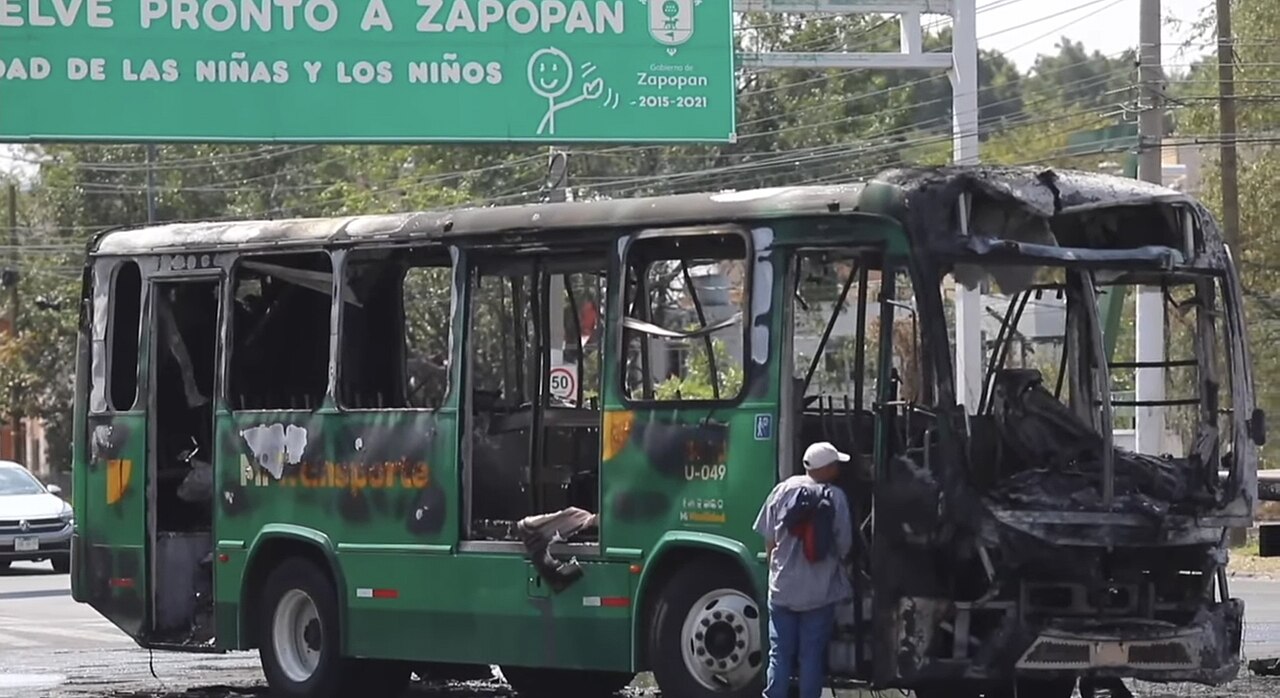
Within hours, however, the cartel demonstrated why celebrations may be premature. The CJNG launched coordinated reprisals across 20 Mexican states, torching vehicles, blocking highways, attacking gas stations and convenience stores, and engaging security forces in armed confrontations. Guadalajara—Mexico’s second-largest city and a host venue for the 2026 FIFA World Cup—was effectively shut down. Flights were canceled out of Puerto Vallarta and other airports. The U.S. Embassy issued shelter-in-place warnings across nine Mexican states.
For anyone who has followed Mexico’s security trajectory over the past two decades, the pattern is grimly familiar. The question is not whether the Mexican government scored a symbolic victory—it clearly did—but whether El Mencho’s death will actually translate into reduced violence for Mexican communities or curb the flow of drugs into the United States. The academic evidence, unfortunately, offers strong reasons for concern.
Kingpin Strategies and Violence
Political science research on criminal violence has produced a robust body of evidence on the consequences of so-called kingpin strategies—the targeting of cartel leaders for arrest or elimination. The findings are sobering. As I discuss in a recent article published in the Annual Review of Political Science, kingpin strategies often result in power vacuums that trigger a series of predictable, highly violent events. These clashes occur for several reasons: First, leadership removal triggers succession struggles within the targeted organization, as different factions compete for the vacant position. Second, it lowers the cost of fighting for rivals; when the government weakens a dominant group, competing cartels are incentivized to challenge its control over trafficking routes and territories. Third, and perhaps most consequentially for ordinary citizens, neutralizing a senior leader can degrade the chains of command that discipline local criminal cells. Without oversight from above, these cells may abandon the logistically demanding long-distance drug trade and turn instead to predatory activities, such as extortion and kidnapping.
Evidence from previous instances of cartel leaders being targeted in Mexico is consistent with these dynamics. A study published in the Journal of Conflict Resolution shows that homicides in municipalities where a kingpin is neutralized increase by over 30 percent in the six months following the intervention. Violence also spills over to neighboring municipalities, particularly those located along strategic transportation routes. Similarly, a study in the Journal of Politics finds that leadership decapitation of drug trafficking organizations in Mexico is associated with brief short-term reductions in violence but followed by an increase in the longer term as groups fragment and newer organizations emerge to fill market demand. Importantly, the short-term violence reduction is associated with arrests rather than killings; when leaders are killed instead of captured, even the brief respite disappears. The underlying logic is straightforward: Arrested leaders may still retain some leverage from prison, which can dampen immediate succession battles, whereas killing a top figure abruptly removes the focal point of authority and can ignite a rapid struggle for control.
More broadly, the evidence from nearly two decades of Mexico’s drug war suggests that leadership removal strategies, when pursued in isolation, tend to produce a recurring pattern: The targeted organization fractures, rival groups move to seize territory, and multiple factions compete violently for control of lucrative criminal markets. A study published in the American Political Science Review found that these strategies can make criminal bosses more shortsighted and prone to breaking peaceful agreements without significantly disrupting the illicit drug trade itself. The demand for drugs—especially fentanyl and methamphetamine flowing to the United States—does not disappear when a leader dies. As long as the market persists, new organizations or factions will emerge to serve it.
Is This Time Different?
There are at least three factors that could shape the aftermath of El Mencho’s death in ways that depart from the worst historical precedents.
The first is CJNG’s organizational structure. As security analyst Eduardo Guerrero noted shortly after the operation, CJNG is not a rigidly hierarchical, top-down organization. It was structured more like a network of semiautonomous regional franchises bound together by coordination and El Mencho’s personal authority. This decentralized design—which allowed the cartel to integrate local criminal cells rapidly across dozens of states—could paradoxically serve as a stabilizing factor in the short term. Regional operators are already used to operating in a decentralized manner and may choose to consolidate control over their own territories rather than launch an all-out war with one another for national supremacy. The risk of further fragmentation is real but not an inevitable conclusion.
A critical variable here is how many members of El Mencho’s inner circle were killed or arrested alongside him. If the cartel’s core leadership remains intact, they could coordinate to maintain organizational cohesion. If they were also neutralized, the CJNG could enter a period of paralysis and internal warfare with consequences felt across the country, from Jalisco and Guanajuato to Michoacán, Tamaulipas, and beyond.
The second factor is the unprecedented level of U.S. involvement and pressure. The operation was carried out with U.S. intelligence support, and the Trump administration has made cartel dismantlement a central foreign policy priority. Washington’s sustained interest creates incentives for the Mexican government to follow through with additional operations against CJNG’s regional commanders, financial networks, and weapons supply chains. If the killing of El Mencho is treated as the beginning of a sustained campaign rather than a one-off spectacle, the outcome could differ from past cycles of decapitation followed by neglect.
The prospect of extradition also plays a deterrent role. CJNG leaders know that the United States will seek to prosecute senior cartel figures, and the recent arrest of Ismael “El Mayo” Zambada—the longtime leader of the Sinaloa cartel—in 2024 demonstrated that even the most powerful capos can end up in U.S. courtrooms. This changes the calculus for potential successors. The combination of military pressure and judicial accountability may be more destabilizing for criminal organizations than either approach alone.
The third factor is the Sheinbaum government’s stated national security strategy, which marks a significant departure from her predecessor’s approach. President Claudia Sheinbaum’s security framework rests on four pillars: addressing the root causes of violence, consolidating the National Guard, strengthening intelligence and investigation capabilities, and improving coordination between the federal security cabinet and state governments. The strategy explicitly prioritizes the neutralization of violent actors and criminal networks alongside prevention and community-based policing. In theory, this means the government is not relying solely on kingpin strikes but is attempting to build the institutional capacity needed to hold territory after high-value operations.
Whether Mexico’s government can successfully execute this strategy is another matter entirely. The immediate aftermath of El Mencho’s death exposed severe gaps in the state’s capacity to contain cartel retaliation. If the government was unable to maintain public order in Guadalajara—the capital of the very state where the operation took place—within hours of the strike, it raises legitimate questions about whether security forces can sustain control over the dozens of territories where CJNG operates.
The Road Ahead
The coming months will be decisive. History suggests that three scenarios are most likely, each with different implications for Mexican security.
In the first scenario, CJNG’s decentralized structure holds, and regional commanders reach informal agreements to divide territories and avoid open warfare. Violence may spike in the short term but stabilize as the organization adapts. This outcome depends heavily on whether a successor can consolidate authority. In the second scenario, the cartel fragments into competing factions, triggering succession battles that escalate violence across western and central Mexico. This is the pattern most consistent with the academic literature on kingpin removal. In the third and most optimistic scenario, the Mexican government, with sustained U.S. support, follows the Tapalpa operation with a systematic campaign targeting CJNG’s financial infrastructure, regional commanders, and political networks. This would require the kind of patient, intelligence-driven approach that requires conditioning state action on criminal organizations’ behavior rather than pursuing indiscriminate military operations.
The academic literature is clear about one thing: Removing a cartel leader without dismantling the market conditions and institutional weaknesses that sustain organized crime does not reduce violence. It rearranges it. Mexico has been through this cycle before—after the killing of Arturo Beltrán Leyva in 2009, after the capture of El Chapo, and most recently after the arrest of El Mayo, which plunged Sinaloa into months of brutal, internecine conflict. Each time, the symbolic victory was celebrated while civilians bore the cost of the instability that followed.
El Mencho’s death is the most significant elimination of a cartel leader in Mexico in years. Whether it marks a genuine turning point or another chapter in a familiar and tragic cycle depends not on the operation itself, but on what comes after it. The evidence demands skepticism about kingpin strategies as standalone solutions. But it also suggests that when leadership removal is embedded in a broader strategy—one that combines intelligence-driven operations, institutional reform, judicial accountability, and sustained international cooperation—the outcomes can be meaningfully different. Mexico now faces the test of whether its government, under intense pressure from both its own citizens and the United States, can deliver on that more comprehensive vision.
Editor's Note: An earlier version of this piece mistakenly characterized Ismael “El Mayo” Zambada's arrest. The current version corrects this error.
-(1).jpg?sfvrsn=af0bd5fc_5)