Will the War Change Iran’s Way of War?
The United States is degrading Iran’s military capabilities. Will Iran rebuild them?
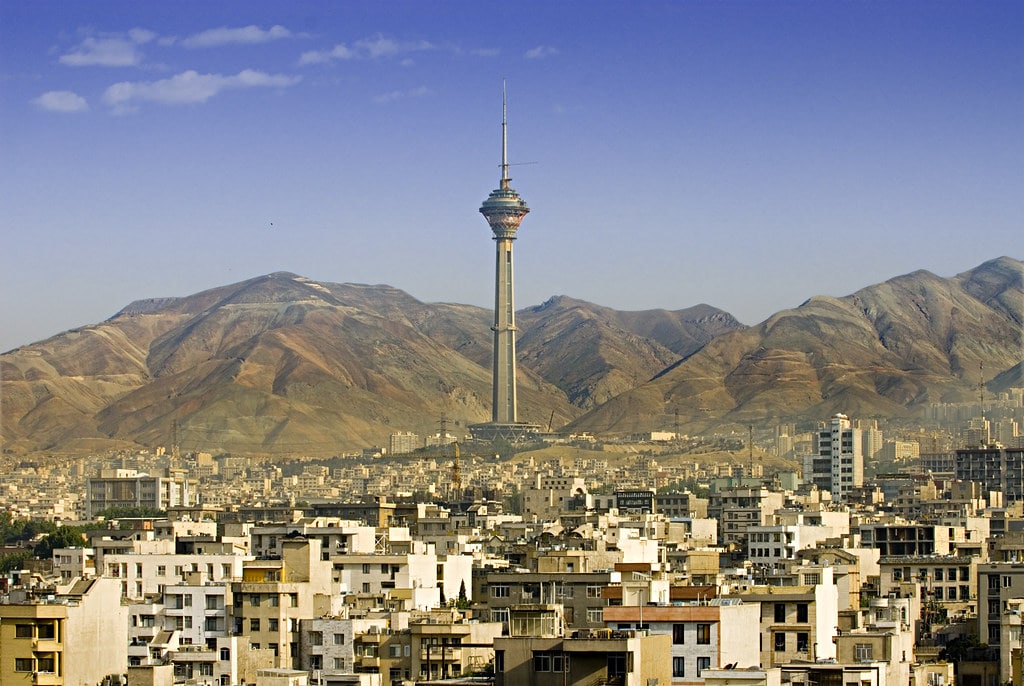


On Feb. 28, U.S. and Israeli missiles landed in Tehran, targeting Iranian military installations, nuclear facilities, and leadership. In one day, Iran’s second supreme leader of almost 40 years was dead, as were a number of his senior-most military and political advisers, and the country was at war.
Iran’s military was designed to survive precisely the type of U.S. intervention it faces today and to impose costs on the regional states perceived to be supporting the regime’s foreign adversaries. With this objective, Iran does not need to “win” operationally to “win” the war. It merely needs to “resist” and sustain itself through the conflict. Put differently, if the Islamic Republic survives, retains some military capacity that it can rebuild after the war, impedes certain U.S. objectives (such as regime change), and publicly messages success, it has won by its own preexisting definition.
After initially providing confused rationales for the war, the Trump administration has now put forth a new main objective for its large-scale operations: the “destruction” of core Iranian military capabilities. What success might look like in this context depends on how the administration defines “destruction,” and if the 12-day war (dubbed Operation Midnight Hammer) is any indication, the administration’s characterization of the war will likely be different from that of the expert community. The current dynamic of shifting U.S. objectives and Iran’s resistance strategy sets up a likely scenario in which both the United States and Iran can walk away claiming to have “won.”
Putting aside the rationale—and cost-benefit analysis—for the war, this article focuses on what Iranian military capabilities might look like after the Trump administration determines the “degradation” objective is accomplished and the war is over. Which of Iran’s core capabilities are likely to survive the war? And where might Iran look to invest resources to reconstitute those capabilities?
Iranian Doctrine After the War
Since 1979, Iran has designed its doctrine and developed military capabilities to pursue an asymmetric warfare strategy. The main assumption in Iran’s strategic thinking and operational approach is that the country must be prepared to resist and fight conventionally superior adversaries, and to do so with limited financial means and under sanctions. This includes contending with global powers, such as the United States, that possess nuclear weapons.
To this end, Iran’s armed forces have tried to make up for their conventional shortcomings by investing heavily in capabilities they can develop at home and use in the “gray zone”: via the “deliberate use of coercive or subversive instruments of power [that] remain below the perceived threshold for direct armed conflict.” As a result, Iran has not invested heavily in maintaining a conventional air force that could never match U.S. air capabilities. Instead, it has chosen to develop its missile and—over the past decade—drone capabilities, supplying them to proxies to expand its strategic depth and hold adversaries at risk. Likewise, instead of developing a conventional navy, the regime has invested in fast boats, sea mines, and other asymmetric capabilities that need not compete with the U.S. Navy.
The war has helped Iran test its assumptions and capabilities, validating some of its choices and highlighting the flaws in others. While some aspects of this doctrine appear to have paid off during the war, others have proved less reliable for the regime. After the war ends, Iran may choose to continue its existing doctrine and reconstitute the capabilities it had prior to the war without making any changes. As it has done in the past, Tehran will learn from the war and adjust its military doctrine and capabilities. Iranian armed forces have a history of learning from their successes and failures, dating back to the Iran-Iraq War (1980-1988), when the regime spent a considerable time studying the tactics and techniques that worked and those that didn’t. The regime’s assessment shaped Iran’s policies, strategy, and doctrine during the 1990s and until today.
While it is too soon to know exactly how the war will affect Iran’s thinking, it is already clear which capabilities have paid off for Tehran and which ones have not. The war has demonstrated that relying on state or non-state partners—even those organized, trained, and equipped by the Iranian military—will not create a bulwark against adversaries. Instead, Iran is likely to continue or increase its investment in organic capabilities such as its missile and one-way attack drone programs. Crucially, many of the capabilities Iran may carry forward after the war will likely remain cost-efficient and designed to contend with the United States’ much more sophisticated and costlier platforms and assets.
A Divided Army
After the Islamic Revolution in 1979, Iran implemented a “coup-proofing” mechanism by creating the Islamic Revolutionary Guards Corps (IRGC) as a counterpart to its conventional armed forces, known as the Artesh, a legacy of the nation’s monarchist past. The new revolutionary leadership initially viewed the Artesh with skepticism and still does to some extent: In a civil conflict or effort to overthrow the regime, the Artesh was perceived as likely to side with the people, not regime leadership. However, during the Iran-Iraq War, the Artesh proved its “worth” to the regime, justifying its continued existence. And following the eight-year war and the regime’s modernization period, the IRGC and the Artesh began to develop separate lanes and a division of labor across the regime’s national security apparatus. Today, Iran’s core doctrinal capabilities reside with the IRGC, and the Artesh remains the junior partner in the relationship. The ongoing war has further diminished the Artesh’s capabilities.
Iran may also consider changes to its command-and-control structure, even as it has proved fairly resilient following a systematic decapitation campaign by the United States and Israel. The ongoing campaign has impacted Iran’s command and control significantly. Khamenei’s son and successor, Mojtaba, is reportedly isolated. The death of Iran’s secretary of the Supreme National Security Council, Ali Larijani, a key official “who could translate battlefield realities into political strategy,” was understood as potentially “slow[ing] decision-making and coordination” among leadership. And the general decimation of Iran’s leadership has made coordination and cohesive decision-making more difficult.
Yet even Supreme Leader Ayatollah Ali Khamanei’s death did not create obvious paralysis in Iran’s decision-making, with the regime surviving the aftermath of the strike and even intensifying its response against the U.S. and Israel in the days that followed. The resiliency echoes the IRGC-Quds Force’s adaptability after the killing of Gen. Qassem Soleimani during President Trump’s first term (albeit on a much larger scale). While the Quds Force’s reach was diminished under Soleimani’s successor, Esmail Qaani, it was able to adjust its tactics and procedures to sustain its presence in key countries throughout the Middle East. For example, Qaani delegated more command-and-control responsibilities to proxies in Iraq. This step afforded the Iraqi Shiite militias more flexibility but also fragmented the network and made them less responsive to Tehran. These examples demonstrate that Iran is better prepared to prevail in the face of key regime and military leadership changes.
Iran’s Military Reset
The highest impact change to Iran’s thinking following the war could be a decision to pursue a nuclear weapon. Since Tehran formally halted its nuclear weapons program in 2003 and ended related activities in 2007, the U.S. intelligence community has repeatedly assessed that Iran had not yet made the decision to pursue the bomb. Shortly before the 12-day war over the summer, Director of National Intelligence Tulsi Gabbard reiterated this assessment in testimonies before Congress. Director General Rafael Grossi of the International Atomic Energy Agency, which is a United Nations body tasked with verifying that states’ nuclear programs remain peaceful, also noted as recently as March that Iran did not have the “structured program to manufacture nuclear weapons” (though he added the caveat that his agency does not have the access it should have to it). The United States must now prepare for that to change.
Several factors are likely to shape the regime’s nuclear aspirations and program. While the United States has significantly damaged Iran’s nuclear infrastructure, the war may have reinforced Iran’s resolve to acquire a weapon. Previously, the costs of acquiring a weapon appeared to outweigh its benefits: The regime was concerned about inviting an attack on its territory if it chose to weaponize. Now that a conflict has occurred, that calculus no longer applies. Additionally, the countries threatened by Trump during his tenure (Venezuela, Cuba, and Iran itself) do not possess a nuclear deterrent. By contrast, North Korea, which does have nuclear weapons, has escaped the president’s threats (and does not even appear in the 2025 National Security Strategy).
U.S. and Israeli strikes have not completely destroyed Tehran’s nuclear program, as the country maintains technical elements and a network of scientists, engineers, and technicians who will preserve the knowledge retained over the course of several decades of work on the nuclear program. Though subject to change, Iran still has “enough” highly enriched uranium to make 10 to 12 bombs and an even larger inventory of material that could produce “bomb fuel” in the future.
Iran got the least bang for its buck with its proxies. Groups such as Lebanese Hezbollah, the Houthis in Yemen, and the Shiite militias in Iraq were historically a force multiplier for the regime’s other core capabilities, affording it plausible deniability when engaged in conflict while avoiding all-out war, and doing so at a relatively low cost for Tehran. But when the conflict is overt, and the Iranian leadership feels the need to reassure its domestic populace while telegraphing to international audiences that it will defend itself and impose costs on its adversaries, proxies are less useful. Moreover, Israel has successfully weakened Iran’s chief proxy, Lebanese Hezbollah, which acted as the “hub” to the “hub and spoke” ecosystem of proxies. And it has struck Hezbollah in Lebanon, which raises the costs of Hezbollah’s participation—Hezbollah will be hurt not just abroad but also at home if it participates.
While some Iranian proxies have responded to the war in some fashion, their responses were delayed. The Houthis only “joined” a month into the conflict, while Hezbollah responded on a much smaller scale than anticipated. Proxies may have been both more willing and able to intervene on Iran’s behalf if Israel had not engaged in its decapitation campaign since the Hamas attacks on Oct. 7, 2023. However, the combination of these campaigns and the ongoing war demonstrates that the proxies have agency and interests of their own, and will not (or cannot) prioritize Iran’s security and interests. To be clear, the treatment of Iranian non-state allies as proxies is largely a U.S. analytical framework. Tehran, for its part, refers to them as partners and may have had a different expectation about whether its proxies would intervene on its behalf than those of the authors and the broader U.S. analytical community. While we do not expect Iran to fully forgo its proxy network, it may decide to deprioritize it relative to its organic capabilities.
Iran’s most successful defense programs during this conflict are its missile and drone programs, perhaps at least in part because it is difficult to target and disrupt their production. To be sure, publicly available estimates of Iran’s missile and drone attacks paint a picture of a capability that often falls short, with abysmal success rates: They can be imprecise and are often intercepted. And the United States has severely degraded Iran’s missile and drone capabilities throughout the conflict—a key U.S. stated objective—even as these systems continue to be deployed everyday.
But the Islamic Republic does not need to reach or maintain high success rates through its drones and missile programs to meet its objective of imposing a cost on the United States and the U.S.’s regional partners. The drones can be launched undetected, be operated en masse to avoid radar, and impose high costs even in limited instances. Iranian drones have already targeted and damaged U.S. facilities and assets in the region, costing U.S. taxpayers billions of dollars. The program has allowed Iran to bring the conflict to Israel’s territory and disrupted one of the most lucrative sectors in the Persian Gulf—tourism (to say nothing of the lives lost and those injured). Meanwhile, relying on drones is cheap for Iran, but countering them is disproportionately expensive for the United States and its regional allies.
Tehran has implemented a targeted approach to closing the Strait of Hormuz by threatening and imposing a toll on most vessels seeking to transit the passage. This has proved more successful than the most blunt scenario the analytical community had envisioned, and may serve as a future road map for the regime. The Trump administration has responded by imposing a blockade of its own to raise the costs of Iranian actions. To preserve this capability, Iran will likely rebuild some elements of its naval capabilities degraded by the U.S. military. Because Iranian naval doctrine is not based on blue-water capabilities and does not require large vessels such as aircraft carriers or destroyers (which it does not have the capacity to produce), its naval armaments are cheaper to reconstitute. The current conflict is unlikely to challenge Iran’s prewar assumptions about the efficacy of its naval warfare approach, given its resource constraints.
Other capabilities Iran will likely continue developing reside in cyber and information operations, as the war has likely proved these investments to be worthwhile. Short-term disruptions to its cyber capabilities imposed by the U.S. are likely just a blip: “The risk of damaging Iranian cyberattacks will rise.” Tehran appears to have stepped up its information operations in the ongoing conflict—having gone viral on U.S. social media platforms using memes and artificial intelligence-generated videos that tap into the American political and cultural Zeitgeist.
Offensive capabilities aside, Iran will likely look to rebuild a network of defensive systems after the war. Iranian air defense systems and aircraft have been systematically targeted by U.S. and Israeli strikes. To quickly bolster its first-line defense, Iran could turn to other countries to procure these systems. Moreover, whether or not the United States launches a ground invasion this time around, Iran might be concerned that a future operation or war could involve U.S. troops fighting their way through Iranian territory. In the event of such a ground incursion, Iran has ground troops and special operations forces that it could deploy. Future preparations to counter a land invasion might require Iran to invest more heavily in those forces.
Conclusion
The Iranian political system and military will look different going forward. This war has allowed Iran to test its strategy and operational capabilities, giving the regime an opportunity to adjust them to strengthen its resistance capacity. The Islamic Republic is not new to navigating transitions, and sustaining itself through such transitions is a core component of its strategic approach to contending with its superior adversaries. Already, changes in the military command and political leadership, including the supreme leader, have taken place, and the regime has adapted its infrastructure, processes, and policies to minimize disruption to its core functions.
The day after the war, a more determined Iran is likely to reassess its strategy and capabilities. The war may end, but the United States will be facing the third iteration of the Islamic Republic (following the 1979 revolution and the Iran-Iraq War), one governed by more radical leaders, likely determined to acquire a nuclear weapon, and more focused on organic capabilities than on outsourcing elements of its security to proxies.