Ceasefire Without End
The memorandum of understanding with Iran will end the U.S.-Iran conflict without ending the war.
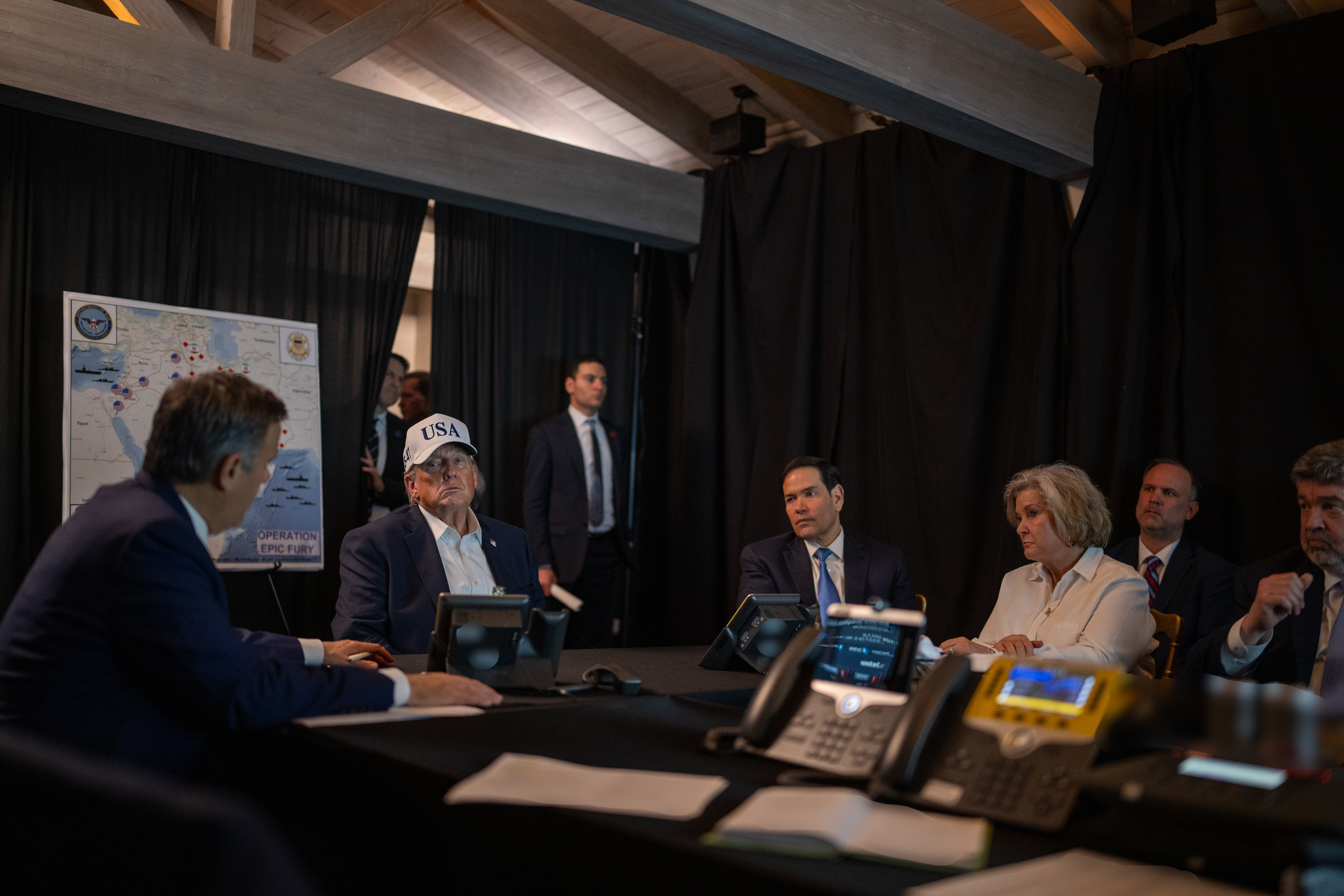

On June 17, the New York Times obtained the memorandum of understanding negotiated by Iran and the United States to end their 110-day-long war. Around the same time, President Trump signed the agreement, ahead of a previously scheduled ceremony that is still slated to be held in Switzerland tomorrow.
The text of the “Islamabad Memorandum of Understanding between the United States of America and the Islamic Republic of Iran” is brief, and only an interim agreement while the United States and Iran now enter a 60-day negotiation for a “final deal,” which the memorandum refers to repeatedly. But the 1,009 words agreed to by Washington and Tehran are remarkable for what they say about the U.S.-Iran relationship, the important issues it leaves out, the supposed final deal to come, and the many ways this flimsy arrangement might unravel.
What Is in the Memorandum?
Memoranda of understanding are agreements between states that are less formal than treaties. They are generally not legally binding under international law, and states typically treat them as nonbinding under their own domestic laws. Under the terms of this memorandum, the United States and Iran make several mutual commitments. This includes the termination of the war, with special attention to the fighting in Lebanon. Iran has claimed that the fighting between Israel and Hezbollah since March has constituted a front in the same war launched by the U.S. and Israel on Iran on Feb. 28, and has previously pressed for the ceasefire to be extended to include Lebanon. While Israel and Hezbollah have continued to exchange fire, the United States has pressured Israel, which was not party to the negotiations, to accept this framing. Israel’s reluctance has prompted significant tensions between President Trump and Israeli Prime Minister Benjamin Netanyahu. The memorandum reinforces the conceptualization of the conflict as one war that spans the region.
With the implementation of the memorandum, the United States and Iran have committed to maintaining the “status quo” for the duration of the negotiations of a final deal, identifying three aspects of the current situation. Iran will “maintain the current status quo of its nuclear program”—an easy promise to make when much of its nuclear material is under a literal mountain of rubble and mines. The United States, meanwhile, will not issue any new sanctions on Iran or deploy additional military forces to the Persian Gulf.
Both states have also agreed to lift their tit-for-tat blockades of the Strait of Hormuz, but the memorandum stipulates different conditions for each country. The United States is obligated to begin lifting its blockade, and to have completed this operation within 30 days. Iran is also given a 30-day window to remove “technical and military obstacles” to commercial shipping. But Iran has only agreed to allow free passage of the strait for the next 60 days; beyond that, the memorandum leaves open the possibility that Iran, in coordination with Oman, will extract tolls (or “fees”) from ships, as Iranian officials have discussed. The memorandum’s language that such “future administration and maritime services” will be implemented “in discussion with other Persian Gulf littoral states in line with the applicable international law and the sovereign rights of coastal states of the Strait of Hormuz” will be a point of contention going forward. Tehran is likely to point out that committing to “discussion” is very different from requiring the Arab Gulf states’ consent to increasing their trade costs and impinging on their sovereignty, while the United States can point to “applicable international law” to challenge any attempt to charge for passage of a natural waterway.
The memorandum also provides a guide for the next round of negotiations. Much of these talks will focus on Iran’s nuclear program. The memorandum indicates that U.S. and Iranian officials have already agreed that Iran will give up some or all of its highly enriched uranium, through either dilution or another means, but other issues remain undecided—including the critical issue of whether Iran will retain some domestic enrichment capacity and, if so, what that may be and how it would be monitored.
If a final deal is reached, the United States has already committed to lift sanctions on Iran. Not just nuclear sanctions or U.S. sanctions, but seemingly all sanctions: “The United States of America undertakes to terminate all types of sanctions against the Islamic Republic of Iran, including the United Nations Security Council resolutions, I.A.E.A. [International Atomic Energy Agency] Board of Governors resolutions, and all unilateral U.S. sanctions, primary and secondary, in an agreed-upon schedule as part of the final deal.” This would ostensibly include sanctions targeting Iran’s support for proxies, sponsorship of state terrorism, missile program, and human rights violations. And as a down payment on this sanctions relief, the United States has agreed to immediately waive the sanctions on Iran’s oil industry, allowing it to begin exporting its economic lifeline. The United States is also providing Iran with immediate access to its funds frozen in international accounts—estimated to be about $24 billion.
But that’s not all. The United States has also dangled additional carrots for Iran conditional on a final agreement being reached. There’s a huge economic incentive, in the form of a $300 billion fund “for the reconstruction and economic development” of Iran—to be supplied by the United States and its “regional partners.” There is also a promise of a U.S. military drawdown. While the “status quo” of U.S. forces is frozen during the talks, a final deal will trigger a 30-day clock for the United States “to remove its forces from the proximity of the Islamic Republic of Iran.” How many forces and how far is not specified; Iran may believe this could include U.S. troops based in the Persian Gulf.
The terms resemble the maximalist demands proposed by Iranian negotiators more than two months ago: an end to the war, including in Lebanon; Iranian control of the Strait of Hormuz; a pathway to end all sanctions on the country; reparations, now rebranded as reconstruction and development funding. It even leaves the door open for Iran’s goals of retaining a nuclear enrichment capacity and obligating a U.S. drawdown in the region. U.S. demands to dismantle Iran’s nuclear program will be the subject of the next phase of talks, and other U.S. points for negotiation—for example, regarding Iran’s missile program and support for regional proxies—have been dropped.
Just what were Jared Kushner and Steve Witkoff doing for the past two months? The timing of the memorandum may be significant; it was reached just when oil experts had warned that diminishing petroleum reserves would cause gas prices to spike drastically. In the game of economic chicken being waged over the strait, the United States swerved first.
What Is Not in the Deal
The agreement is as striking for what it leaves out as for what it includes. For starters, there is no enforcement mechanism. The memorandum states that “an executive mechanism will be established to monitor the successful implementation of this M.O.U. and the future compliance of the final deal,” but negotiating monitoring and enforcement just for what has already been agreed could take 60 days or more.
Several of the Trump administration’s purported war aims are also absent. The Trump administration’s most consistently stated objective for the war has been to “obliterate Iran’s ballistic missile arsenal and production capability.” The memorandum makes no mention of Iran’s missile capacity, which it used to target U.S. military bases and partner countries during the conflict and which U.S. intelligence indicates is largely intact. Iran’s Ministry of Foreign Affairs stated Thursday that its missile program is nonnegotiable—which is not a new position, as the missile program was also left aside during the negotiations of the Joint Comprehensive Plan of Action (JCPOA), sometimes referred to as the “Iran Nuclear Deal.” Trump seems to have accepted this, telling reporters on Wednesday that “if other countries have them, it's a little bit unfair for them not to have some.”
The Trump administration had also claimed that the war would end Iran’s “support for terrorist proxies,” and in April Trump told CBS News that he had received commitments that Iran would cease its support to Hamas and Hezbollah. This was always a maximalist goal—the “Axis of Resistance,” diminished though it may be, is the central feature of Iran’s security strategy and one that Tehran was unlikely to concede. Instead, Iran’s support for Hezbollah is reaffirmed in the memorandum by the condition of a ceasefire in Lebanon. Additionally, the sanctions relief and development fund repeat what critics of the JCPOA described as one of the deal’s major failings—the provision of malleable funding that could be redirected to Iran’s partners around the region.
Though the Trump administration slowly dropped regime change from its messaging, it was one of the initial goals of the war. On the first day of the war, Trump told the Iranian public that the theocratic regime would be destroyed and “yours to take.” Reporting has indicated that, though U.S. intelligence suggested that the regime was unlikely to collapse and that instability would further empower the Islamic Revolutionary Guard Corps (IRGC), U.S. and Israeli officials were hoping to install … someone—maybe an Iranian Delcy Rodríguez, who was accidentally caught in the initial salvo of the war, or Reza Pahlavi, or even political chameleon, hardliner-turned-NCAA basketball fan Mahmoud Ahmadinejad. Instead, Trump said this week that he had “never cared about regime change” and that the succession that Ali Khamenei and the IRGC had planned before the war had brought to power a new leadership comprising “strong people, smart people” who are “nice to deal with.”
The regime will remain, protected by a prohibition on political meddling written into the memorandum. In fact, it will be more secure under the terms of the deal. For years, the biggest threat to the regime has been the country’s domestic economic crisis, precipitated by the international sanctions regime. By lifting oil sanctions, unfreezing funds, and promising windfall development funding, the memorandum is providing the regime the financial security to reinforce the foundations of its control of the Iranian state and society.
Spoilers
Both the United States and Iran want to end the war and have strong incentives to reach an agreement, but the final deal outlined in the memorandum will not happen—not in 60 days, not in a year. The structure isn’t sound; the ambiguities in the text are unbridgeable gaps between the U.S. and Iranian positions, and it is weighed down by commitments from other actors—Israel, the Arab Gulf states, Hezbollah, and Congress—that were not party to the negotiations.
It may fail on its first condition, a ceasefire that extends to Lebanon. Israel has not agreed to end any part of its war with Iran and its regional partners, and Netanyahu said Thursday that Israeli forces will continue to occupy southern Lebanon, continuing a conflict that he has argued is essential for Israel’s security and that remains popular with the Israeli public. The more the United States demands that Netanyahu accede to the terms it has set, the more incentive he has to continue the conflict to demonstrate his policy independence—especially as he prepares for elections later this year. Even before the agreement was announced, critics to his right and left were already using the negotiations and Netanyahu’s relationship with Trump as a political cudgel. Netanyahu is signaling that he will not accept the agreement, and has already demonstrated that he is willing to violate ceasefires even if it means risking more Iranian missile and drone strikes.
There is also the issue of the $300 billion reconstruction fund that is unlikely to find donors. If a final deal is contingent on this pot of money being filled by the United States and its “regional partners,” it will never be signed. Trump stressed on Wednesday that the United States would not be contributing, so who are these unspecified partners? The Arab Gulf states, after being targeted by Iranian missile and drone strikes and having their oil rents slowed to a trickle by Iran’s blockade, will not pony up for a protection racket that they had no say in negotiating. (Saudi Arabia, the Gulf bellwether, is cutting back on spending.) The Trump administration has little leverage to pressure the Gulf states to spend their disposable income rebuilding their regional adversary. It cannot even offer these states deterrent deployments of U.S. forces without undermining negotiations with Iran because a final deal must also, under the terms of the memorandum, include a drawdown of U.S. troops “from the proximity of” Iran.
Finally, the deal might fall apart under pressure from Trump’s own domestic allies. The memorandum not only violates many congressional Iran hawks’ red lines, it would be literally illegal to implement without congressional approval. As Jack Goldsmith and Congressional Research Service analysts Jennifer Elsea and Thomas Clayton immediately pointed out, the administration is running up against the Iran Nuclear Agreement Review Act (INARA), a bipartisan bill passed by Congress in 2015 in response to the Obama administration’s decision to sign the JCPOA as an executive agreement rather than as a treaty that would be reviewed and ratified (or scuttled) by the Senate. The law subjects all future agreements on Iran’s nuclear program to congressional review and prevents the president from lifting sanctions without a legislative process. Several Republicans have already expressed their opposition to the terms of the memorandum and direction of future negotiations, and INARA will give them tools to pressure the administration.
Speaking to the New York Times’ Ross Douthat, Vice President Vance challenged critics, “If you think this is a bad deal: What is your alternative?” The alternative would have been not to launch a war the Trump administration was not willing to prosecute to achieve its objectives, and instead accept the lengthy breakout period for Iran’s nuclear program created by the strikes in June 2025 and let Iran’s regime decay and delegitimize itself as its regional partners diminished and the government massacred protesters to cling to control. But that is a bell that cannot be unrung. Now, Vance describes the U.S. options as limited. If not this deal, then “[w]e could drop more bombs. We could destroy more of their country. We could kill the current iteration of their leadership. We know where all of them are. All of those things could happen.”
They still might when this deal falls apart. More likely, though, is that the Trump administration’s attention will drift. Some element of the U.S.-Iran ceasefire will limp along under the “status quo” conditions set by the memorandum, bought with sanctions relief and safe passage for commercial shipping. The conflict may flare up again until the stasis can be restored—for instance, if Iran begins imposing tolls on ships transiting the strait. But for the most part, the conflict will probably proceed without the United States. The memorandum signals that the next phase of the war will be between Israel and Iran; the Trump administration wants to be counted out. This is a better outcome than the war escalating again, but a disaster nonetheless.