Elections as a Source of Violence
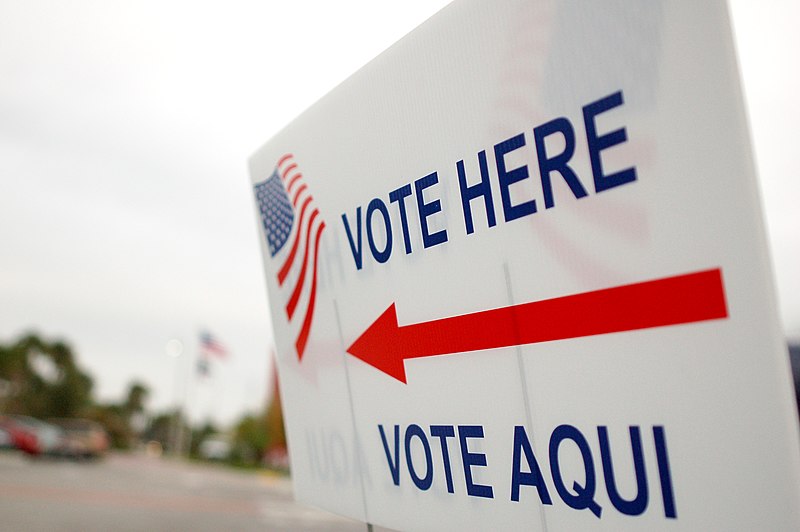

When elections work, individuals with different viewpoints come together under an agreed-upon system for determining priorities, allocating money and patronage, and distributing power. History shows, however, that elections can also fail, becoming a source of grievance, worsening divisions, excluding communities from resources, and even setting the stage for violence.
America’s past is replete with election-related violence that drove its citizens farther apart, and the good news is that much of this appears to have stayed in the past. The bad news is that some trends are running in the wrong direction, with an increase in election-related threats, a more poisonous information sphere, and a nastier partisan environment.
U.S. history offers many examples of political competition turning deadly. In 1830s Missouri, fears that the growing community from the Church of Jesus Christ of Latter-day Saints would vote as a bloc and dominate politics led to attempts to curtail their settlement and eventually a mini-war, with dozens dying. In 1838, Missouri Gov. Lilburn Boggs even issued the “Extermination Order” as militia forces drove Mormons out to nearby states. Seeking safety, the community eventually fled to the Utah territory. In Louisville, Baltimore, and other cities in the 1850s, newspapers whipped up anti-Catholic fears. Dozens died as anti-Catholic mobs seized polling places to prevent Catholics from voting.
After the passage of the 15th Amendment, which granted Black American men the right to vote, violence was an immediate response. During Reconstruction, white supremacist groups such as the Ku Klux Klan, which historian Allen Trelease called “a terrorist arm of the Democratic Party,” killed thousands of Black Southerners in an attempt to intimidate the community as a whole and remove its leaders. Before the 1876 election in Mississippi, Democrats openly vowed to “carry the election peaceably if we can, forcibly if we must.” In state after state in the South, counties that had once produced Republican majorities saw few or no votes for Republicans, as intimidation forced Black voters to stay home.
In the years that followed, violence flared up again and again in response to perceived Black political gains. In North Carolina, Republicans, supported heavily by Black voters, and Populists, supported largely by poorer white farmers, formed a Fusionist alliance that won control of the legislature in 1894 and the governorship in 1896. The once-dominant Democratic Party leaders played up racial fears in the 1898 election, mobilizing the Red Shirts (a Klan-like violent organization) as well as newspapers and public speakers (to reach those who were not literate) throughout the state. In addition to suppressing the Black vote and convincing poor whites to vote against their economic interests, a mob in Wilmington burned down the office of the Daily Record, the leading Black newspaper, and then rampaged through other parts of the city, killing dozens. In the days that followed, mob leaders forced Fusionist elected officials who were not up for reelection in 1898 to resign at gunpoint and expelled Fusionist leaders from the city.
When local communities took up arms, other authorities often joined in or stood by. In Missouri, local militia forces drove the Mormons out. In response to pleas for help from the Wilmington community during the 1898 coup, President McKinley, although a Republican, claimed that he lacked the legal authority to respond without an invitation from state leaders, whom the mob cowed into passivity.
Local perpetrators not only escaped justice but even prospered. Leaders of the 1898 coup in Wilmington went on to become leading politicians, including a future governor, U.S. congressmen, and a U.S. senator.
In addition to prejudice, rumor and deliberate disinformation often drove violence. In 1830s Missouri, anti-Mormon leaders warned that Mormons were arming Native American tribes, while Protestant leaders claimed that Catholic priests had kidnapped and “outraged” young girls. Anti-Catholic hysteria would include claims that the Pope and other foreign powers were using Catholics to undermine U.S. democracy: “We might as well send ballot boxes to foreign countries and let them vote there,” noted one Protestant politician. After World War I, newspapers in Florida and other states ran stories claiming that Black soldiers had sex with white women in France and would now expect the same in the United States after returning home. This mobilized white voters and raised fears of Black sexual violence, helping set the stage for violence in cities like Tulsa and small towns like Ocoee, Florida.
Although violence and discrimination remain painfully common in the United States, no longer do white mobs rampage through minority neighborhoods, killing dozens with impunity and expelling others. Police protect citizens against mobs, and prosecutors are far more likely to obtain convictions for any violence when it does occur. Today’s media environment, though degraded by the rise of fact-free influencers on social media, is far better than its 19th-century counterpart.
Perhaps most encouragingly, there is greater mainstream tolerance for communities that once seemed alien. The eventual election of Catholic presidents and the nomination of a Mormon presidential candidate illustrate how groups once considered existential threats came to be treated as legitimate participants in, even leaders of, American democracy. Racism proved, and still proves, harder to combat, but there is positive news here too, ranging from the growth in the number of Black, Asian, and Hispanic American elected officials to changing popular attitudes. Racial intermarriage, once illegal and probably the biggest bogeymen used by white supremacists to whip up hatred, went from being accepted by only 4 percent of Americans in 1958 to 94 percent in 2021.
Yet in some areas, the United States is moving backward. Although the Jan. 6, 2021, Trump-inspired violence and shootings such as the killing of conservative firebrand Charlie Kirk understandably weigh heavily on people’s minds, election violence has been relatively rare in recent elections. However, work by the Brennan Center for Justice and others indicates that many local election officials face threats—as do many U.S. elected officials. Even if these threats amount to little more than empty posturing on social media, it makes individuals less willing to help run elections and may scare away many quality candidates from seeking elected office.
More broadly, there is a sense that support for political violence has increased as America has become more divided along partisan lines. This is a complex polling issue, and actual support is probably far lower than some of the more alarmist (and often poorly designed) polls suggest. (Indeed, one expert noted the 2016 poll that found half of young Americans would rather a meteor strike Earth than have Trump win the presidency as an example of why pollsters need to be careful not to take the expression of extreme sentiments too literally in polling.) But even mere perceptions can be a big problem, as many Americans who believe political violence is up also believe that only the other side of the political spectrum is responsible. This misperception fosters a climate of fear and provides a potential justification for “defensive” violence or a government crackdown.
Part of the reason for this misperception is the decline in the broader information environment. Social media, because it bypasses traditional gatekeepers, often produces or repeats alarmist reports. Political figures like President Trump have stoked these sentiments, claiming there is “widespread voter fraud” that delegitimates election results. False claims of electoral fraud are particularly dangerous because they encourage Americans to see defeat not as a normal part of democracy, but as an injustice that must be resisted. Similarly, the pardoning of Jan. 6 rioters, including those convicted of attacking Capitol Police, sends a message that political violence pays or at least that it won’t be punished.
The lesson of America’s violent electoral history is that democracy depends not just on the ability to win elections but also on the willingness to lose them. As Americans go to the polls on Tuesday, they—and especially the candidates they support—must remember that the proper response to the risk of losing is to try again in the future, perhaps by changing candidates or modifying platforms or in other cases simply waiting for public sentiment to change. Indeed, the right to vote is only part of why American democracy is strong: Just as important is the willingness to lose without resorting to violence.
Daniel Byman is the Lawfare foreign policy editor. This piece draws on the research in his book “American Pogroms: How Forgotten Massacres Shape America.”