Fighting While Talking: The Iran War Enters Its Bargaining Phase
In war, the guns do not fall silent so the diplomats can speak. The guns often speak for them.
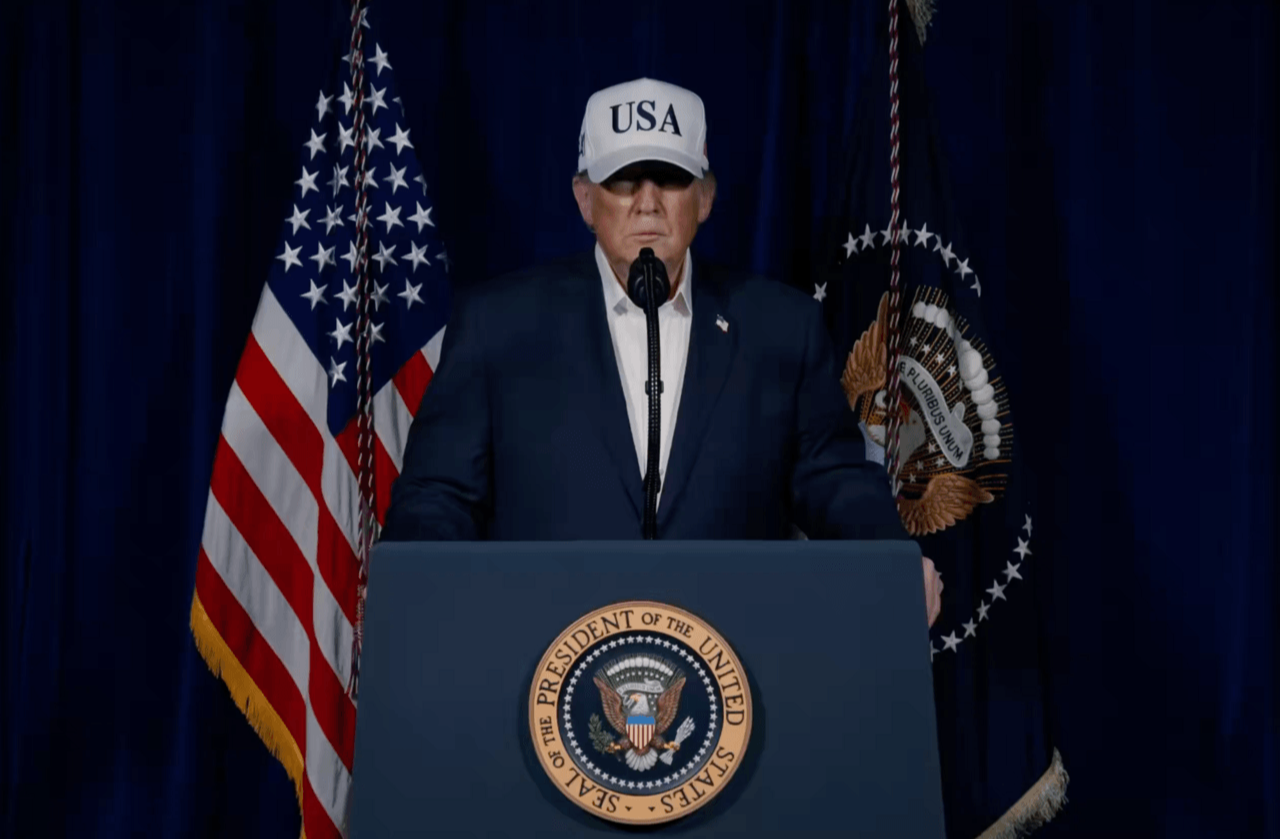


On July 8, President Trump, speaking at the NATO summit in Ankara, pronounced the ceasefire with Iran “over.” The same day, Qatari and Pakistani mediators shuttled between the two delegations with U.S. negotiators keeping the channel open, as U.S. Central Command settled into a rhythm of striking Iranian targets and then pausing. The pattern would carry on for weeks—until early August, when Washington paused new strikes and the diplomatic dialogue moved to an Omani channel. As one U.S. official described it, this new pattern was a deliberate effort to hit Iran militarily, wait, and let diplomacy work.
Commentators said the scene looked like the collapse of diplomacy. But in reality, this was its continuation—by other means.
The Islamabad memorandum of understanding (MOU) that halted the war in June did not end it, nor did it intend to. Instead, it opened a 60-day window that closes in mid-August to negotiate the terms that the fighting had failed to settle, leaving the hardest questions, chief among them the future of Iran’s nuclear program and control of the Strait of Hormuz, deliberately unresolved.
While much was left unsaid and unspecified in the MOU, what was spelled out was even more concerning. Washington made a series of concessions at the negotiation’s outset, signaling to Tehran that more could be extracted from the U.S. administration. What the Iranian regime secured was language it had long placed on its wish list when negotiating with U.S. counterparts—language that previous administrations refused to concede. The memorandum committed Washington to terminate all sanctions, withdraw its forces from Iran’s proximity within 30 days of a final deal, and pledge noninterference in Iran’s internal affairs. The result was that, viewed from Tehran, the United States had chosen the time, place, and manner of the war, but Iran had the upper hand in determining when and how to end it. And for now, the Iranian leadership, having pocketed some of the concessions and paid the price of the war, has no incentive to end it once and for all.
What has followed is a familiar and dangerous condition: a war that has entered a bargaining phase, in which military operations and negotiation are a single process and each strike is a message about what one side will pay and what it will accept.
While anathema to America’s vision of “unconditional surrender” or its ideal of turning adversaries into allies, this is how most wars end: not in surrender or decision, but in a violent haggling over terms. It is also where wars are most easily prolonged, because parties with the clearest interest in breaking the deal are often not the adversaries at the table but the allies beside it. In this war, Israel on the U.S. side and proxies ranging from Lebanese Hezbollah to the Houthis in Yemen on the Iranian side have each shown the capacity to reignite a conflict their allies were trying to wind down.
Understanding why the Iran war will not end cleanly and what it would take to end it at all requires seeing the fighting and the talking as the same thing, and taking seriously the spoilers who have the capacity and reason to wreck it.
The Ceasefire That Never Was
The 14-point memorandum signed on June 17 was less a settlement than a schedule for one. It formalized the fragile ceasefire that had held, unevenly, since April. In practice, it was meant to end the U.S. naval blockade imposed in response to Iran’s partial closing of the Strait of Hormuz, restore Iran’s ability to sell oil, and open a 60-day window to negotiate a permanent agreement. On the war’s central prize, it committed Iran only to “its best efforts for the safe passage of commercial vessels”—toll-free for 60 days, with the strait’s future administration left to later talks.
Washington presented the clause as a path to an open waterway by day 60; Tehran claimed it as recognition of Iranian control. The ambiguity could be blamed on sloppy drafting by amateurs: The memorandum was negotiated by the president’s son-in-law, a real estate developer who lacks substantive knowledge of the history of U.S.-Iran relations, nuclear energy or weapons technology, economic sanctions on Iran, or maritime security, and without proper input by government experts. After all, the same team negotiating the MOU had failed to anticipate that Iran would close the strait, something Tehran had telegraphed and U.S. analysts gamed out for years. But it was also the key disagreement, papered over and deferred.
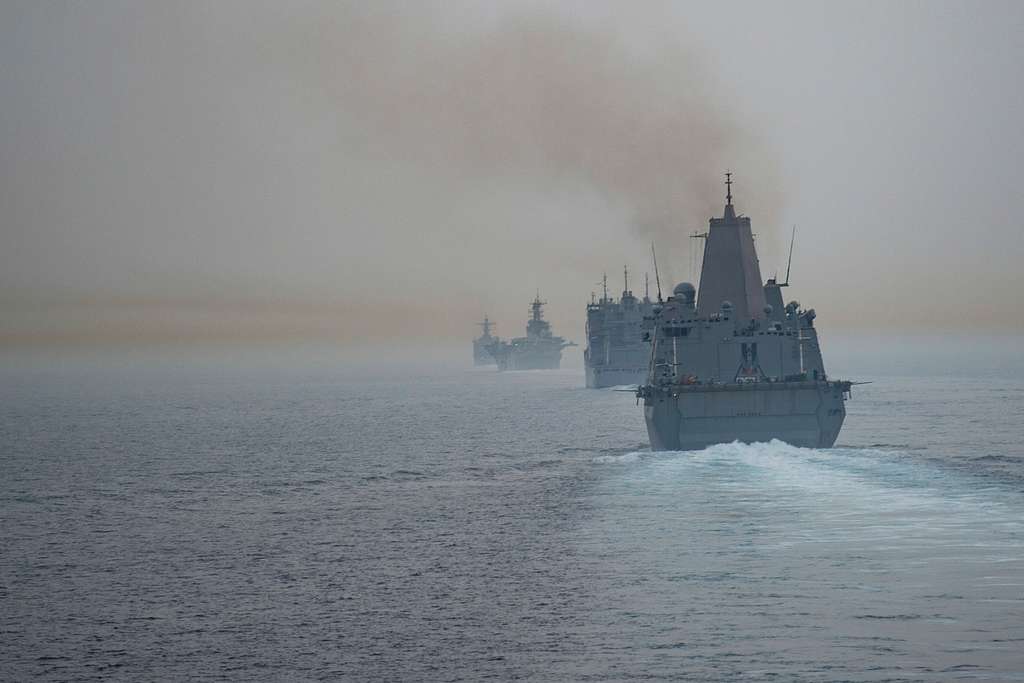
What followed traced a pattern now familiar enough to diagram. A week after the MOU’s signing, Iran struck a ship in the strait; the U.S. answered with what it called “contained” strikes. The two sides traded fire, then agreed to stop. Shipping crept back—reaching 49 transits on July 7, the most since the war began. Then Iran hit three more tankers, Washington revoked the oil-sales license it had just granted, and the exchange escalated into the largest U.S. operation since the truce: some 90 targets along Iran’s coastline in a single night, then widening to bridges, ports, and the perimeter of the Bushehr nuclear power plant. Iran answered with missiles and drones targeting U.S. bases in Kuwait, Bahrain, and Jordan. Traffic in the strait collapsed to 13 transits a day, compared to a prewar norm near 110.
Yet even as the two countries were exchanging fire, the diplomacy never fully stopped. On the day Trump announced the ceasefire was over, Qatari and Pakistani mediators were already working on the next steps in the process. Iran’s parliamentary speaker declared that the strait would open on Iranian terms, not U.S. threats. Meanwhile, Vice President Vance answered that the artery had to stay open—each side restating the same unresolved grievance, this time with ordnance attached. Strike, pause, shuttle, repeat: The sequence looks like a truce failing. But it is better understood as a bargain being priced.
By early August, the two sides were nearing an agreed-upon price. Trump called off a threatened follow-on assault he had billed as the biggest since World War II, and the diplomacy shifted to Muscat, where Tehran—still refusing direct talks with Washington—agreed with Oman on a two-lane workaround: inbound traffic through Iranian waters, outbound through Omani ones, toll-free for an initial period. Both sides now say a deal is close; but Iran still says the strait stays shut until the blockade lifts, while Trump vows never to accept tolls.
Fighting as Bargaining
The pattern has a pedigree. Scholars of war termination have converged on a finding at odds with the way Americans imagine wars ending: Most wars do not end in “unconditional surrender.” They end when both sides accept terms. Paul Pillar’s classic study of war termination, “Negotiating Peace,” treats combat and diplomacy as a single process: Each side fights to improve the terms it can demand at the table, and talks to lock in what the fighting has won.
Korea is the canonical case. Armistice negotiations opened in July 1951, two years before the shooting stopped, and the U.S. Army’s official history of the period is appropriately titled “Truce Tent and Fighting Front.” The battles of those two years—fought over hills whose names became bywords for futility—were not separate from the haggling at Panmunjom. They were the haggling, conducted by other means.
The theory explains why. Wars begin and often persist, James Fearon argues in a foundational account, because each side has superior knowledge of its own strength and resolve, and has every incentive to bluff. Each strike and week of endurance reveals what words alone cannot prove, and wars end when the fighting has brought both sides’ expectations close enough to strike a deal. It is what Thomas Schelling means by the diplomacy of violence: force used to communicate what further fighting will cost.
By that standard, the current Iran campaign is textbook. A superpower that strikes 90 targets and then pauses, keeps a target list in reserve, revokes an oil license one week and dangles frozen assets the next is negotiating in a language it expects the Iranians will understand.
Adversaries of the U.S. have understood this well. Hanoi fought the last years of the Vietnam War under an explicit doctrine it called “fighting while talking, talking while fighting”—Le Duc Tho later told Henry Kissinger that the bloodiest battle of 1972 had been fought to pressure the Americans at the table in Paris. Tehran is running the same play with the Strait of Hormuz, periodically showing its ability to choke off this vital bottleneck in the international oil and gas market and to pressure the U.S. to abandon its war aims.
The Ledger
A bargaining war turns on two quantities: what each side can threaten, and what each side can bear. In the Iran war, the question is what price each side believes it has already paid and how much more it is willing to pay for an acceptable outcome.
Washington holds the stronger hand on paper: It is a nuclear-weapon state with the world’s most sophisticated conventional military and installations around the world, including in Iran’s backyard. It also has the power to cripple Iran’s disastrous economy further or offer it a lifeline. It can reimpose the naval blockade the memorandum lifted, restore the sanctions it eased, fund reconstruction, and—as the 90-target night showed—inflict damage Iran cannot answer blow for blow. But even U.S. firepower has limits, and the early-August pause in strikes came amid Pentagon warnings about depleted munitions stockpiles.
What the U.S. truly lacks is patience. Its public opposed the war from the start and is increasingly frustrated with the state of the economy just months before midterm elections that could end the president’s ability to meaningfully advance his agenda in the last two years of his term.
At the leadership level, the president has already blinked once, settling in June for a memorandum far short of the victory he had promised. He has indicated that he is “bored” of dealing with Iran and is already eyeing Cuba as his next target. Tehran watched him leave President Obama’s nuclear deal in his first term without a plan for what would come next; he left office in 2021 having failed to secure the comprehensive deal his administration promised. In his second term, he threatened regime change only to settle for a leadership reshuffle (for the worse). And he promised the obliteration of Iran’s nuclear program, only to agree to an MOU that did not secure any verifiable measures on the matter beyond a vague reiteration of claims that Tehran would not acquire a nuclear weapon. Now, the Iranian regime is betting Trump will blink again.
Tehran’s leverage is that the Strait of Hormuz is a dial, not a switch. Iran can throttle traffic from open to near-closed and back, matching pain to the state of the talks—the transit count serving as a barometer of its perceived bargaining position. Its nuclear program also serves as a negotiating card, and commercial satellite imagery showed Iran rebuilding damaged nuclear and missile sites at the Parchin complex and at a site called Pickaxe Mountain—which analysts read as a commitment to reconstitute what the war had destroyed.
Beneath this balance is a deeper asymmetry: For Washington, this was a war of choice prompted by a partner (Israel). The U.S. has also revised down its war aims from “unconditional surrender” to terms worse than the status quo ante. For Tehran, by contrast, this is a war of survival, and a theocratic regime fighting for its life will force its people to absorb costs the U.S. will not.
Iran does not need a victory at the end of this war: It can already present the outcome as a win. Not only is the regime still standing, but it has also been legitimized by the U.S. administration that talked the toughest talk, securing concessions that include its preferred language on key issues ranging from the presence of U.S. forces in the Middle East to the termination of all U.S. sanctions.
Neither government, though, bargains with a free hand. Fred Iklé describes the end of a war as not only a negotiation between enemies, but a struggle within each government over whether to end it at all. In Tehran, the Islamic Revolutionary Guard Corps maintains an even more dominant position following the leadership reshuffle caused by the war, now increasingly asserting control over political, economic, and military affairs. The guard has greater ability to shape the course of negotiations than it had in past iterations of U.S.-Iran talks under the previous leadership. And those within the Iranian system once considered hard-liners for opposing concessions to the United States now represent its mainstream.
A milder version of the same constraint binds the U.S. president. While some Democrats will accept a bad deal to end what they consider an even worse war and many Republicans will simply fall in line with the president, critics on both sides of the aisle have been vocal in their opposition to the administration’s chaotic Iran policy. Trump must sell any bargain to hawks in his own party, some of whom have a long history of opposing any negotiations with Iran and may see this as the one issue where they are willing to break with the president. Sen. Bill Cassidy (R-La.) called the initial ceasefire deal the worst American foreign-policy blunder in decades.
Allied Spoilers
In the study of how wars end, third-party spoilers are among the primary obstacles to reaching or sustaining a settlement. Stephen Stedman’s typology defined spoilers as parties who believe a negotiated peace threatens their power or worldview, and who will use violence to undermine an agreement. However, the Iran war displays a variant the literature rarely names: the allied spoiler—an actor within each principal power’s own coalition whose interests diverge on ending the war, and who has the capacity to reignite the conflict.
On the American side, that actor is Israel. Its operations in Lebanon have repeatedly undercut U.S.-Iran negotiations—most spectacularly when, hours before the memorandum was to be signed at the White House, Israeli jets struck Beirut, prompting President Trump to call Prime Minister Benjamin Netanyahu to stop. U.S. officials also reportedly grew concerned that Israel might assassinate Iran’s negotiators, and took the extraordinary step of warning Tehran. Then, as the ceasefire nearly collapsed, Israel passed Washington intelligence of an Iranian plot to kill the president—a report some U.S. officials read as an effort to sway his decision-making. While the White House almost certainly prefers an end to the conflict, Netanyahu’s competing incentives to continue the war through his election in October provide reason to spoil a deal.
Iran’s allied spoiler resides in its network of proxies, chief among them Lebanese Hezbollah. While the Iranian regime has sustained and in some cases created these groups for decades, its degree of control over them varies, and they each have their own interests. Iran has conditioned any deal with Washington on a ceasefire in Lebanon. Hezbollah rejected a U.S.-mediated agreement on Israel’s presence in Lebanon and fired 147 rockets at Israeli positions in a single day. Israeli strikes in response prompted Tehran to suspend the Hormuz talks.
The risk is no longer hypothetical: On Aug. 9, Yemen’s Houthis struck Saudi Aramco’s Jazan refinery, a reminder that Iran’s partners can widen the war even as the Hormuz channel inches forward. Each side’s ally holds a detonator under the other side’s negotiation, and neither Washington nor Tehran fully controls the actor most capable of wrecking its own deal. Hezbollah can provoke the Israeli response that collapses the American track, and Israeli strikes in Lebanon hand Iran the reason—or the pretext—to close Hormuz again.
Ending the War
What would a real end to the Iran war require?
The April and June truces, each shuttled into existence by Pakistani and Qatari mediators, halted the war before Washington and Tehran accepted they could gain no further advantage on the battlefield. The Islamabad memorandum deferred the key questions—a design weakness that academic research on ceasefire durability associates with truces that collapse. A durable deal would probably require several conditions unlikely to materialize in the coming months:
Clarity on Hormuz. The strait’s administration would have to be defined rather than finessed, as the memorandum’s ambiguity let both sides claim contradictory outcomes. Either Iran retains control of the chokepoint, or the prewar norm returns—the right of transit through an international strait that coastal states may not suspend. The two-lane arrangement now taking shape through Muscat attempts to finesse this question—and Washington has signaled it is not the deal it wants.
Spoilers Neutralized
Israel and Iranian proxies such as Hezbollah need to be bought off or reined in. Washington would need to induce or compel Jerusalem to cease operations through the agreement’s endgame, which is unlikely given Netanyahu’s electoral incentives. Iran would need to pressure Hezbollah to accept the deal and swallow—for now—Israel’s devastation of the group’s leadership, and rein in proxies beyond Lebanon to avoid escalation elsewhere that could reignite the war.
Acceptable at Home
Leadership in Washington and Tehran would need to be able to sell the terms at home. The academic literature suggests that the belligerents’ converging expectations of an acceptable end state are generally required to reach a deal. Ultimately, selling the deal domestically will be an easier task in Tehran as the authoritarian regime can easily suppress dissent, especially during a time of war. In Washington, this may be difficult in the months before the midterms. However, Trump’s grip on his party and Democrats’ support for ending a disastrous war could offer an easier path forward than would have been available to other presidents.
* * *
Given the difficulty of meeting these conditions, what is the most likely end state for the war?
The Korean precedent is sobering in both directions. After two years of fighting while talking, the war did end but under an armistice, not a peace. The parties remain technically at war, seven decades on. That is the realistic ceiling for optimism here, and that prospect will be set not only by the enemies across the table, but by the allies beside it.
All statements of fact, opinion, or analysis expressed are those of the authors and do not reflect the official positions or views of the U.S. Government. Nothing in the contents should be construed as asserting or implying U.S. Government authentication of information or endorsement of the authors’ views.