For Washington, All Roads Lead to Minsk
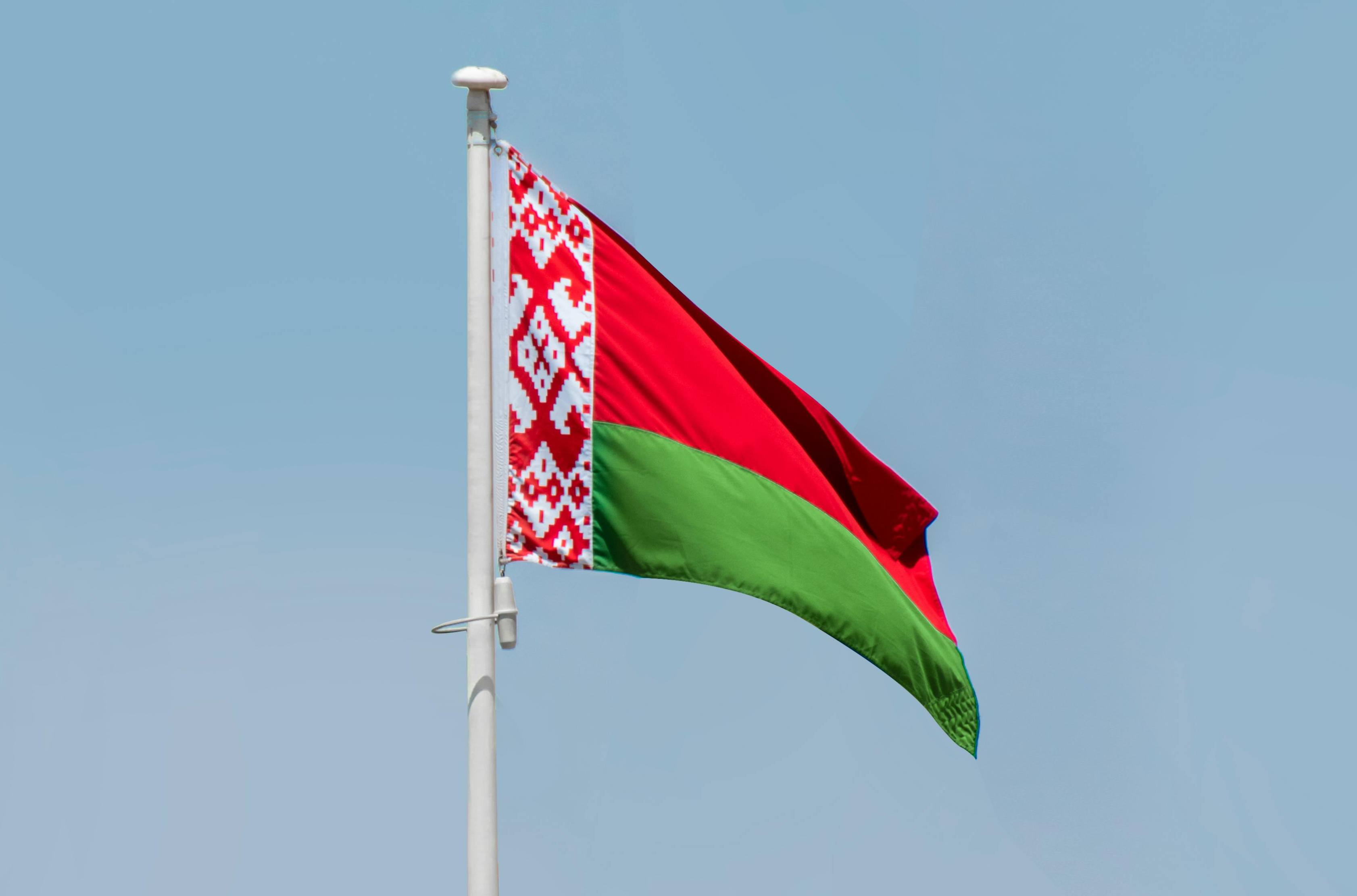

At the recent World Economic Forum, Canadian Prime Minister Mark Carney observed what he called “a rupture in the world order.” For evidence of that rupture, Carney could have pointed to how his own country in many ways has fallen out of favor with one of its most enduring and closest allies, the United States—while Belarus, long isolated by the West, has become a darling in Washington.
Take the potash trade, for example. Belarus and Canada are among the world’s top producers of potash, a U.S.-listed critical mineral used in fertilizers. As Belarus reenters the U.S. fertilizer market after the Trump administration lifted sanctions in December 2025, Canada continues to face tariffs on its potash exports.
These dynamics have been a two-way street. As Belarusian autocrat Alexander Lukashenka became one of the first world leaders to join President Trump’s “Board of Peace,” Trump rescinded Toronto’s invitation following Carney’s thinly veiled critique of Canada’s southern neighbor at Davos.
The U.S. has shown persistent interest in Belarus since early 2025, engaging in diplomatic talks and sending multiple delegations to Minsk. The initial purpose of those diplomatic talks ostensibly was to explore Belarus’s role—and specifically Lukashenka’s—in the Ukraine peace process and to secure the release of political prisoners, both Belarusian and dual Belarus-U.S. citizens who spoke against Belarusian authoritarianism Although there were some prisoner releases as a result of the talks, the public can deduce little about them otherwise—reporting mostly highlighted jokes between Lukashenka and U.S. envoy John Coale about weight-loss drugs or cuff links from the White House gift shop that Coale brought, with little substance on, for example, Washington’s position regarding the deployment of Russian nuclear-capable Oreshnik missiles in Belarus.
When I wrote about these developments in July 2025, it was clear that Belarus stood to gain immensely from the Trump administration’s rapprochement, but at the time, I still struggled to find a clear explanation for what motivated Washington’s high level of involvement after so many years of isolation. But events of the ensuing months have begun to raise some potential answers to how Belarus—and specifically Lukashenka—could be useful to Washington.
The Potash Deal
In December 2025, following yet another trip by U.S. envoy Coale to Minsk, Washington lifted sanctions on Belarusian potash. The sanctions, imposed in 2021 in response to human rights abuses, had targeted one of the Lukashenka regime’s key sources of revenue. While the situation on the ground has not improved per se, there seems to be a different approach toward the Belarusian regime under the Trump administration compared to its predecessor, which opted for pressure through sanctions and isolation.
Due to its use as a fertilizer, potash is a critical mineral for U.S. agriculture, but American farmers face rising input costs after the United States imposed tariffs on Canada, one of its largest potash suppliers. After the United States lifted sanctions, Belarusian potash reentered the U.S. fertilizer market. According to Bloomberg, the impact was immediate: Shares of major fertilizer producers fell, with Canada’s Nutrien down 5.6 percent, its sharpest intraday drop in over eight months, and U.S.-based Mosaic down 4.2 percent. Unlike these public companies, which must prioritize profitability, Belaruskali is a state-owned monopoly under Lukashenka’s direct control. This status allows Minsk to bypass market logic and trade at a loss to secure hard currency or diplomatic concessions. Even though ongoing EU sanctions force Belarus to rely on longer, more expensive routes through Russian ports, the state-owned giant can absorb these costs. Right now, what Lukashenka craves the most is solidifying ties with the White House.
From Washington’s perspective, this sanctions relief is defensible if the goal is to keep Ottawa in check as one of the major potash suppliers reenters the market.
Yet the potash deal alone does not explain the scale of U.S. engagement with Minsk. Sanctions relief could have been enacted with a signature in Washington. It did not require the appointment of a special U.S. envoy or repeated high-level travel to Belarus. Lukashenka craves American recognition far more than Washington needs personal access to him, suggesting that the visits themselves—not merely the outcome of sanctions relief—reflect a broader U.S. interest beyond agriculture.
What Lukashenka Knows About Venezuela
In mid‑December 2025, as the Trump administration ratcheted up pressure on then-Venezuelan President Nicolás Maduro, Lukashenka suggested in an interview with Newsmax that he could share “many interesting things” with Trump about Venezuela. He also claimed he was already talking to Americans about Venezuela more than to the Venezuelan government itself. While Lukashenka said that Maduro would be welcome in Belarus if he ever left office, he emphasized that he never actually discussed the matter with Maduro, who in Lukashenka’s view is “a strong man” unlikely to flee. Around the same time, the Venezuelan ambassador traveled from Moscow to Minsk twice within a month for a meeting with Lukashenka.
Having been in power for over three decades, Lukashenka possesses a deep institutional memory of personal diplomacy with heads of state. He knows Putin longer than any other current world leader. On the way to the Alaska summit with Putin, Trump even spoke with him by phone. According to U.S. envoy Coale, Lukashenka has acted as a communication channel between Washington and Moscow—“That’s a channel, okay? That’s very valuable.”
Lukashenka also has long-standing ties with Venezuela’s leadership. Hugo Chávez described him as a “brother,” and the ties remained close with the Maduro government—particularly in the military domain. Belarus has maintained a significant military-technical footprint in Venezuela since the 2000s, helping modernize its anti-air missile systems and participating in energy and construction projects.
In 2007, the Venezuelan military requested Belarusian support to reorganize its armed forces. According to Lukashenka, although Venezuela had purchased various air-defense systems and aircraft, “it lacked the military school” and training to operate them effectively. Belarusian specialists developed a unified national defense plan, integrating disparate systems into a single architecture and providing the expertise to operate them.
Beyond official channels, there is an “additional,” shadowy layer of cooperation: According to a 2008 El País investigation, at Hugo Chávez’s request, the Belarusian regime helped arm Colombian rebels, citing communications referencing Raúl Reyes, the second-in-command of the Revolutionary Armed Forces of Colombia, including a partially coded message that mentioned someone described as a “friend from Belarus”—later identified as Viktor Sheiman, then-secretary of the Belarus Security Council and Lukashenka’s closest adviser. While this is only one documented instance, it illustrates the kind of shadowy, high-level operations Sheiman oversees, including financial and covert dealings for Lukashenka’s closest circle.
The diplomatic appointments are also noteworthy: In 2012–2020, Belarus’s ambassador to Venezuela was Lt. Gen. Oleg Paferov, previously commander of Belarus’s Air Force and Air Defense troops. He was not a career diplomat but a seasoned military officer, reflecting Minsk’s prioritization of defense and technical expertise in its Venezuelan engagement.
Belarus’s military and technical cooperation with Venezuela has persisted into the present day. In November 2025, a Belarusian delegation visited Caracas for the third session of the joint working group on military-technical cooperation. This was not a routine diplomatic encounter; the delegation was led by Oleg Mishchenko, first deputy chairman of the State Military-Industrial Committee. As the former chief of communications for the Belarusian General Staff, Mishchenko is a career specialist in automated command and control systems. His expertise lies at the very heart of modern warfare: the digital architecture that allows disparate radar and missile units to function as a single, integrated defense network.
During the U.S. operation to capture Maduro, the Venezuelan air defense systems that were hit—the Buk‑M2E and Pechora‑2M missiles—were Russian made, but they sat on Belarusian MZKT‑6922 wheeled chassis, further illustrating the depth of Belarusian involvement in Venezuela’s military sector.
Based on decades of military and diplomatic cooperation, it is reasonable to guess that Lukashenka could offer the U.S. some insights into Venezuelan infrastructure and operations. While we cannot know whether any sensitive information was shared, Lukashenka’s eagerness for improving ties with the U.S., his personal connections with Maduro, and his previous role as a communication bridge with Putin suggest he might have tried to pitch useful insights to the U.S., ranging from Belarus’s ongoing projects in Venezuela to personal perspectives on dealing with Maduro.
Prisoners, Not Freedom
The Belarusian democratic opposition in exile has reacted to developments in Venezuela by suggesting that Maduro’s demise could foreshadow a similar fate for Lukashenka. These claims that the Belarusian regime is on the verge of collapse sound less like a strategy and more like hope filling an information vacuum.
U.S. policy toward Venezuela points to a different, more sober lesson. Washington focused on working with actors inside the existing system, rather than elevating the opposition, in part because CIA assessments indicated that the Maduro loyalists were better suited to lead the country and maintain stability. For the Belarusian opposition, which is not part of the U.S. negotiations with Lukashenka, the Venezuelan example highlights the need for realistic assessments of what can be achieved from exile and which levers of influence actually exist inside the country.
Lukashenka has released some of the regime’s most high-profile political prisoners, including Nobel Peace Prize laureate Ales Bialiatski and several of the regime’s most consequential political opponents. This does not look like a move made out of desperation. If anything, it suggests confidence in controlling the domestic situation—while trading prisoners for rapprochement with Washington.
About 1,100 remain behind bars, though U.S. envoy Coale hinted that it is realistic to release all of them.
Domestic repressions are far from over. Those who were freed with the help of Americans were not simply released—they were immediately exiled, transported to the Belarusian border, many without any documents. They are now seeking refuge in Lithuania and Poland,while UN human rights experts warn against the growing risk of statelessness. Notably, one high-profile prisoner released during the previous round of negotiations, Mikalai Statkevich, refused to leave his home country, remaining in the neutral zone at the Belarus border—only to be escorted by an officer—and then found later in the same prison he was released from.
As Belarus trades prisoners for U.S. sanctions relief, the authorities are masking the scale of ongoing repression by making political trials more opaque.
Behind Closed Doors
So far, there has been little progress on the original purpose of U.S. engagement with Lukashenka: Belarus’s potential role in Ukraine peace talks. Since early 2025, the U.S. has framed diplomatic talks with Belarusian counterparts around the idea that Lukashenka could help advance dialogue with Putin. Despite largely formulaic public statements, Coale remarked that Lukashenka gave useful advice on the war in Ukraine. Yet the meetings continue, suggesting that substantive issues are discussed behind closed doors, while the public is presented with lighthearted details—gifts like White House cuff links or shared drinks—that serve as a distraction from the real negotiations.
However, the core security issues Belarus poses in the region—to both NATO and Ukraine—remain conspicuously absent from public discussion. For example, in December 2025, Russia deployed the “Oreshnik” missile system in Belarus, with a range of up to 5,500 kilometers. Around the same time, Ukrainian President Volodymyr Zelenskyy raised concerns that Shahed drones are being guided toward targets in western Ukraine using antennas and other equipment installed on Belarusian territory near the border. So far, there have been no public signals from Washington on whether, or how, these issues have featured in the talks behind closed doors.
Lukashenka has carefully crafted his resume for the Trump era—and now appears to be the primary beneficiary of a year of negotiations: retaining power, securing economic concessions, and steadily reinventing himself as a useful interlocutor for a new phase of American diplomacy. At the same time, credit is due to U.S. negotiators for insisting on a humanitarian track and securing the release of political prisoners.
For now, the most responsible assessment is that we are operating in partial darkness, with the broader implications of U.S.-Belarus engagement still uncertain—it is unclear how much international legitimacy Lukashenka will gain through Washington’s engagement, or what role he will play in regional security while continuing to support Russia’s war in Ukraine. However, one thing is for certain: President Trump is known for his transactional approach to foreign policy, and his administration always expects to get something in return.