Foreign Terrorist Designations Pose Civil Liberties Concerns
On Nov. 13, the Trump administration announced that it would be designating four European “Antifa-linked” groups as terrorist organizations. A few days later, on Nov. 20, the State Department officially added these groups—described as “anarchist” or “anti-capitalist”—to its list of foreign terrorist organizations (FTOs). Although these designations may be lawful, they pose a profound risk to the civil liberties of American citizens—especially in light of President Trump’s demonstrated willingness to use the law to punish his perceived enemies.
FTO status is typically reserved for groups that have killed Americans, targeted U.S. security interests, or demonstrated the capacity and intent to do either, such as al-Qaeda,the Islamic State, Hezbollah, and the Iranian Revolutionary Guard Corps. The purpose of designation is to expose, isolate, and delegitimize terrorist organizations. Designation as an FTO brings significant legal consequences; members of a listed group may be expelled from the United States and have their assets seized.
The newly designated groups, however, look nothing like the foreign terrorist organizations historically designated under U.S. law.
The new designees—Antifa Ost in Germany, the Informal Anarchist Federation/International Revolutionary Front in Italy, and the Greek collectives Armed Proletarian Justice and Revolutionary Class Self-Defense—share certain characteristics. Each is small, hyper-local, and loosely organized. Their acts of violence consist of low-level street fights, failed or symbolic bombings, and property damage, directed at domestic political targets like neo-Nazis or police. The groups have no apparent U.S. security nexus, no apparent transnational agenda, and no demonstrated interest in harming Americans. Experts have described these entities as “barely existing” groups, not structured terrorist organizations. Only one of the four, Antifa Ost, identifies with anti-fascism. The others do not claim the label and are not viewed in their own countries as part of any Antifa movement.
The designations raise civil liberties concerns in light of the Trump administration’s demonstrated willingness to use the Justice Department as a tool for punishing rivals, including directing indictments against his perceived enemies, such FBI Director James Comey and New York Attorney General Letitia James. After designating several drug cartels as FTOs, Trump has recently ordered lethal strikes on boats in international waters with no apparent legal authority. These events mean that new FTO designations are cause for concern.
Background
In late September, after the assassination of conservative activist Charlie Kirk, Trump issued a presidential memorandum directing the National Joint Terrorism Task Force to focus on “domestic terrorists” whose common ideologies include “anti-Americanism, anti-capitalism, and anti-Christianity.”
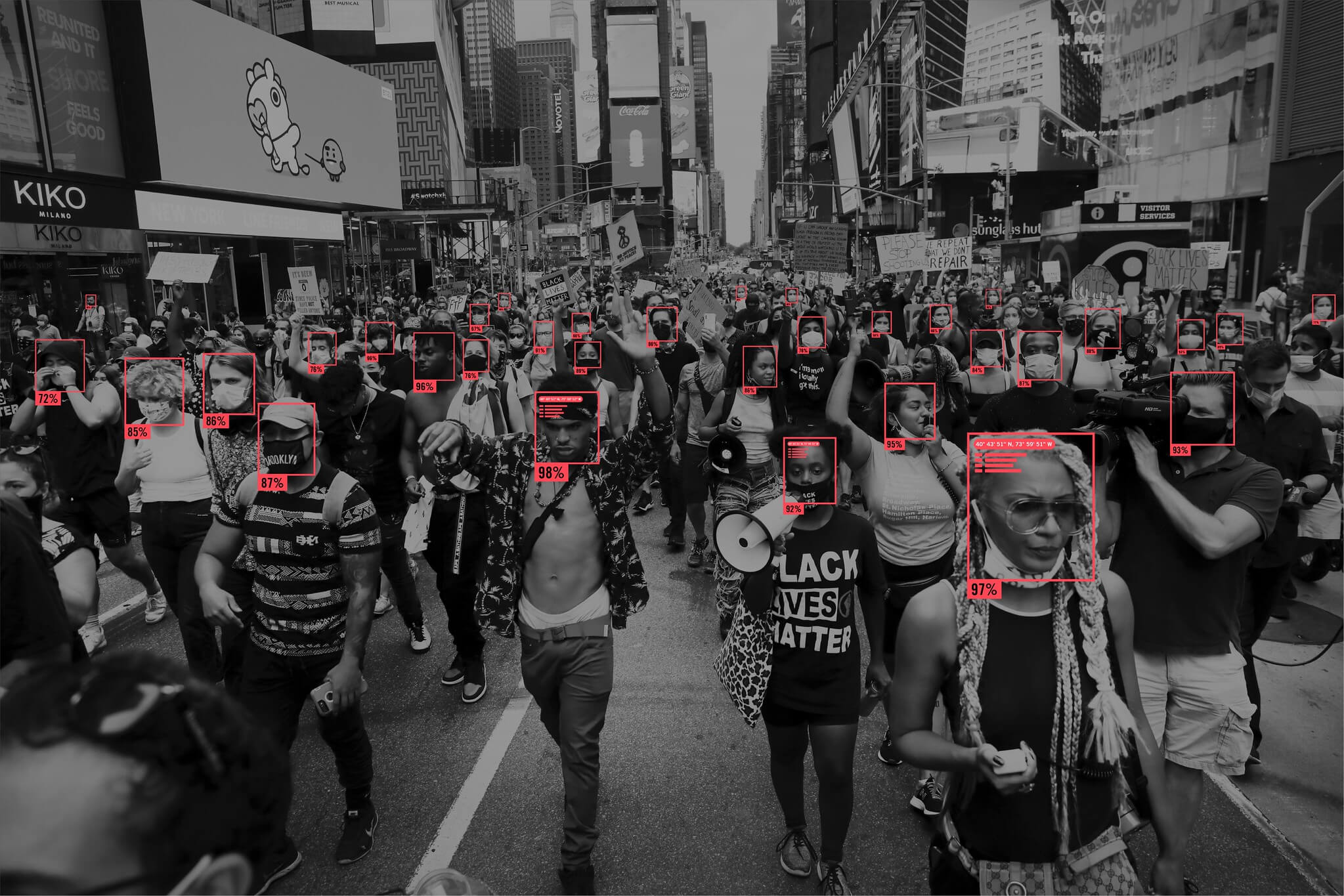
The anti-fascist label seems intended to encompass a breathtaking range of targets, from immigration-justice groups protesting Immigration and Customs Enforcement violence to the organizers of recent “No Kings” rallies. These organizations’ common feature is their vocal opposition to the administration’s current policies. None of them, however, are foreign. None are violent. This rhetoric raises the possibility that such a label will be used to manufacture a foreign nexus to convert political speech into criminal activity.
The danger is compounded by the nature of the term “Antifa” itself. As former FBI Director Christopher Wray stated in 2020, Antifa is “not a group or an organization” but rather “a movement or an ideology.” Thomas Brzozowski, a former Justice Department counterterrorism counsel, put it more bluntly: “[D]esignating Antifa as a ‘domestic terrorist organization’ is equivalent to designating fascism or communism: It is a political statement, not a legally operative act.”
Trump’s loose use of the term “Antifa” as a catch-all label for Americans engaging in protest activity creates the risk that the new designation of FTOs could be used to justify criminal investigations. By stretching a statute built for global terrorist networks to encompass marginal foreign groups with no relationship to the United States, the administration can manufacture a foreign nexus and thereby unlock counterterrorism authorities that could never be used against domestic political activity on its own.
Unlocking Counterterrorism Authorities
The FTO designation exposes individuals to criminal prosecution for knowingly providing material support to the group, such as goods, money, or services, including one’s own labor. Americans suspected of interacting with a designated group can also find themselves targeted for investigation or prosecution.
Unlike domestic terrorist investigations, probes involving foreign entities permit the government to use the Foreign Intelligence Surveillance Act (FISA). In contrast to traditional wiretaps, which require a court order finding probable cause of criminal activity, FISA permits the government to conduct electronic surveillance so long as it can show probable cause that the target is acting as an agent of a foreign power, including an FTO. And FISA’s in-camera, ex parte process means the government’s narrative proceeds largely unchallenged.
Once a foreign terrorist organization is named, the government may initiate foreign intelligence investigations based on a tenuous associative link. With Antifa—a movement that is decentralized, ambiguous, and in many contexts almost organizationally nonexistent—that link can be manufactured with ease.
The danger extends beyond sweeping material support charges. Federal agencies can begin surveilling a vast range of domestic actors, activists, writers, nonprofit organizations, or anyone who criticizes the administration or uses the word “fascist” to describe its conduct on the theory that their speech, associations, or political expression are connected, however tenuously, to a “foreign Antifa” entity. In this way, the designation functions less as a counterterrorism tool and more as a gateway to foreign intelligence surveillance of domestic dissent.
History shows what comes next. When national security surveillance turns inward, it is rarely confined to its stated purpose. The FBI’s COINTELPRO of the 1960s targeted civil rights leaders, Black liberation activists, antiwar groups, and critics of government policy. Today, COINTELPRO is regarded as having targeted individuals not because they posed national security threats, but because they challenged those in power. Indeed, Martin Luther King Jr. was wiretapped, smeared, and harassed under the guise of “subversive activity.”
The designation of Antifa groups may be about foreign threats, but it also supplies a convenient legal pretext to treat domestic critics, immigrant-rights activists, or even donors to disfavored nonprofits as extensions of a “foreign terrorist enterprise.” By constructing a nominal foreign nexus, the administration could target Americans through expansive FISA surveillance: secret wiretaps, electronic monitoring, and metadata collection triggered merely by alleged links to the newly designated foreign Antifa groups. It wouldn’t be the first time—FISA’s history is full of oversight breakdowns, and even its recent reforms have done little to alter the court’s entrenched, nonadversarial design.
The government could also pursue material support charges, sweeping in protest organizing, mutual-aid work, or charitable giving that the government characterizes as indirectly benefiting the foreign-designated group. This would have a chilling effect, shrinking the public square as people avoid public discourse for fear of being targeted for investigation or prosecution.
The possibility is exacerbated by the Supreme Court’s ruling in Holder v. Humanitarian Law Project, upholding the application of the material support statute to speech aimed at teaching designated foreign groups how to pursue lawful, peaceful objectives. As David Cole notes, this marked the first time the Court approved criminalizing speech advocating only nonviolent, lawful ends on the theory that such speech might indirectly assist a foreign organization. The Court reached that conclusion because the speech was coordinated with a foreign terrorist organization, placing it, in the Court’s view, within the realm of foreign affairs and national security where normal First Amendment protections give way.
***
As with so much of the executive’s recent overreach, other branches of government are not powerless. Following the COINTELPRO abuses, Congress conducted oversight hearings and exposed wrongdoing. It can do so again, forcing transparency and, if necessary, reversing the FTO designations.
Courts also have a role. They should carefully police the boundaries of these authorities by requiring a genuine nexus between Americans swept under the “Antifa” label and the foreign groups actually designated, no different from what they demand in other FTO cases. That straightforward evidentiary check would prevent the government from converting a political epithet into a gateway for secret surveillance. Without such guardrails, we risk finding ourselves in a country where the most secretive powers in national security law have been quietly repurposed not to protect America, but to monitor its critics.
-final.png?sfvrsn=b70826ae_3)