Hearing Dispatch: A Catch-22 for the Pentagon Press Corps
Judge Paul Friedman hears a motion to compel compliance with his order to restore press access to the Pentagon.
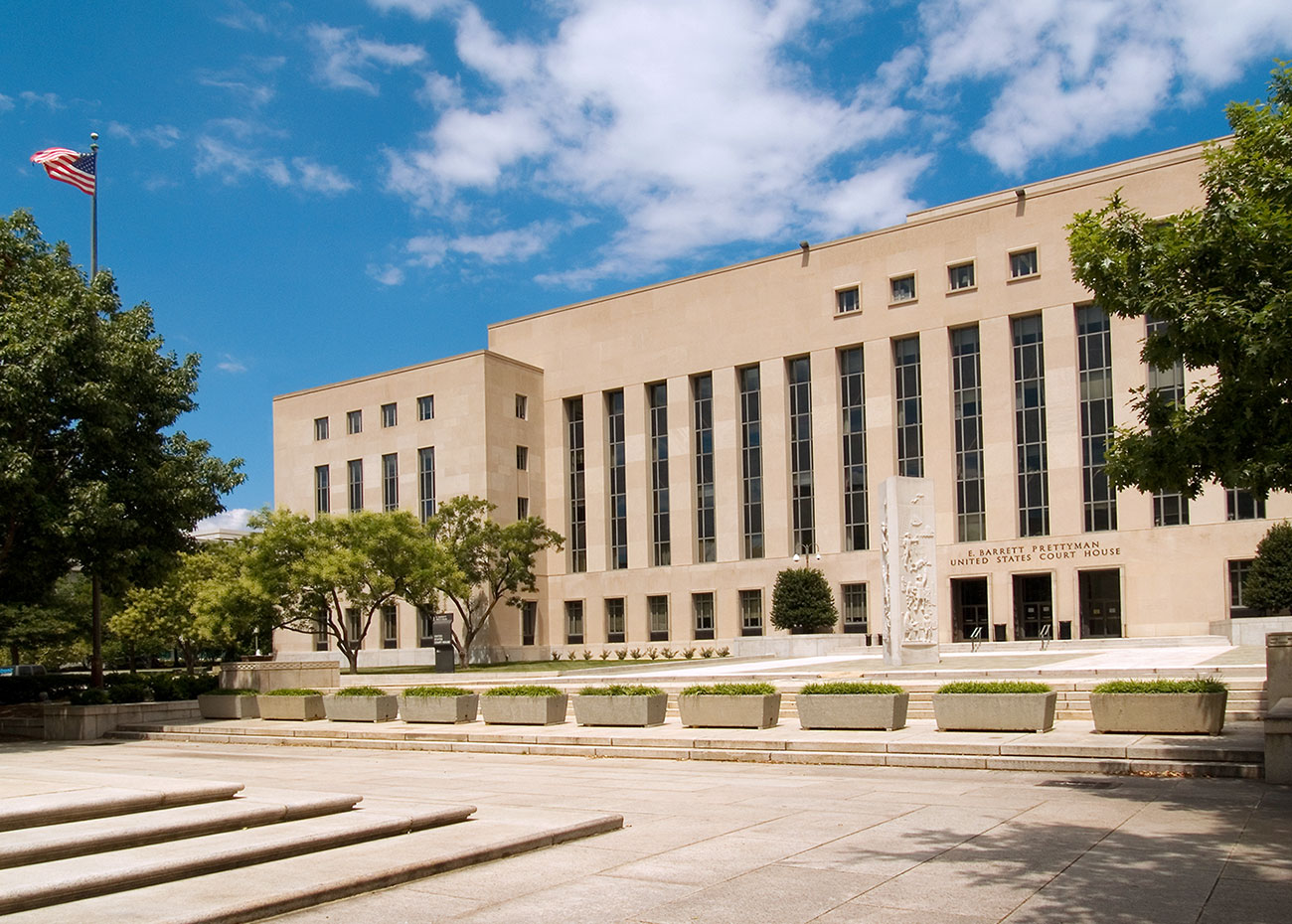

Judge Paul L. Friedman of the U.S. District Court for the District of Columbia smiles throughout most of this week’s hearing in New York Times v. Department of Defense—a surprise, considering the subject is, to borrow plaintiffs’ language, the “contemptuous abrogation” of an order he issued less than two weeks before.
Last fall, Pete Hegseth instituted rules for Pentagon press access so transparently impeding independent journalism that even the most ideologically discordant organizations found themselves in rare harmony: Institutions ranging from the progressive New York Times and NBC News, to Fox News, all the way to the notoriously conservative Newsmax refused to sign on to the policy. Their reporters, divested of their credentials, packed up their belongings and left the building.
The alternative would have been to accept the Department of Defense’s assertion that their access was a “privilege extended by the government and not a constitutionally protected right.” The Times disagreed so vehemently with that point that it took the issue to court.
Judge Friedman, in the end, disagreed as well—ruling on March 20 that the Pentagon’s constraints on press access violated the First Amendment’s protections against unreasonable and viewpoint-discriminatory restrictions on speech as well as the Fifth Amendment’s due process guarantees. The challenged provisions of the policy were declared unlawful and vacated and enjoined; the press credentials—known as PFACs—of plaintiff Julian Barnes and six other Times journalists were ordered reinstated; the situation returned, or was supposed to return, to the status quo ante.
“Those who drafted the First Amendment believed that the nation’s security requires a free press and an informed people,” Judge Friedman wrote in his opinion. “That principle has preserved the nation’s security for almost 250 years. It must not be abandoned now.”
To which the Department of Defense responded by issuing a revised policy that imposes similar restrictions as the previous—crucially, dictating the terms on which reporters can attempt to obtain non-public information related to national security. That’s not just what the Times says in the motion to compel compliance that it filed last week. It’s essentially what the government says, too.
“We used more words to say the same thing and to foreclose creative misinterpretations,” Cmdr. Tim Parlatore, special adviser to the self-styled Secretary of War, said in an interview, to, of all outlets, the New York Times. (The Defense Department also added insult to reinjury by closing the Correspondents Corridor that has for years served as a workspace for credentialed journalists covering the military—even physically tearing down the old signage designating the area. Now, reporters can’t enter the main building unescorted, and they will conduct future business in an as-yet-unfinished annex.)
Typically, the government doesn’t admit it’s contravening a judge’s order to the very entity that took it to court to secure that order to start with. But this administration, again and again, proves itself incorrigibly, and often illegally or unconstitutionally, atypical. Which is what brings your correspondent, along with many of the correspondents exiled from their eponymous corridor, to the E. Barrett Prettyman Courthouse at 9:30am on a Monday morning to watch Judge Friedman cheerfully preside over the hearing of the Times’s motion to compel compliance.
Using Worse Words to Say the Same Thing
“Defendants are blatantly, brazenly flouting the court’s order,” Theodore Boutrous begins, somewhat less cheerfully, for the plaintiffs. The interim policy is “a thumb on the nose” to Judge Friedman. After all, the judge stated in his ruling that the notion that vacatur would compromise safety and security on Pentagon premises was unpersuasive, whereas press access had “great value.” Nonetheless, the Department of Defense is turning around and eliminating unescorted access for safety, insisting that doing so is necessary thanks to the court’s order.
The Defense Department did (eventually) reinstate the press credentials. “But the PFACs are now a worthless piece of plastic.” Over the course of the hearing, Boutrous provides two analogies: One, an employment discrimination case in which an employee’s termination is ruled wrongful, but when her employer welcomes her back to work, it’s with zero pay and terrible duties. And, two, a case in which a court orders one party to return a seized vehicle, and they do—after they take out the engine and have at it with a sledgehammer.
The defendants’ strongest argument is obvious, and Judge Friedman wastes no time in presenting it to the plaintiffs: The new policy excludes all journalists, regardless of viewpoint. Why can’t the Department of Defense bar everyone, as long as they’re not picking and choosing? Boutrous replies that the new policy is still viewpoint discriminatory, because it is “targeted at those who refused” the earlier policy. The people who didn’t refuse—a collection of right-wing podcasters and provocateurs such as Matt Gaetz, Laura Loomer and former MyPillow CEO Mike Lindell—“don’t care.” They “don’t go” to the Pentagon. “They don’t desire to report independently,” and if any of them do, their loss under the revised rules is “collateral damage.”
Indeed, not only were the defendants “not fully complying.” Because their rushed weekend revision of the policy was prompted by nothing other than the court’s order—the same Commander Parlatore said so himself—they were retaliating.
The rest of the plaintiffs’ presentation covers specific gripes with the new policy. The previous hearing focused on the meaning of “solicitation.” The judge was concerned that prohibiting solicitation of non-public information meant barring the mere asking of a question by a journalist to someone in government. Now, the government has replaced the term “solicitation” with the phrase “intentional inducement of unauthorized disclosure,” defined (not very helpfully) as “intentionally encouraging, inducing, or requesting” the disclosure of various types of non-public national security information. Again attempting to hoist Commander Parlatore by his own petard, Boutrous notes that this is an example of “using more words to say the same thing.”
Judge Friedman objects: This inducement standard actually “sounds much worse to me.” This prompts Boutrous to revise his semantic strategy for the remainder of the hearing, so that he states the government is using worse words to say the same thing.
The next problem the Times has with the policy involves the establishment of what Boutrous refers to as an “inquisition panel” to deal with possible infractions of the draconian standards. If a reporter writes a story that includes unauthorized information with no source named, he explains, there’s a presumption that it violates the press policy. Next, “in their graciousness,” the Defense Department lets the journalist come in to try to rebut the presumption. This is simply another avenue “for unbridled discretion to find in the department’s favor.”
The Pentagon Press Office, Boutrous says, is hereby transformed into a “police squadron.” A correspondent points out in the elevator after the hearing that this procedure also places journalists between the rock of burning a source you promised you wouldn’t name by naming them after all and the hard place of losing your credentials by adhering to professional ethics.
It is difficult, Boutrous says, “to describe how a government agency in good faith” could have read the government’s order and responded this way. Finally, he notes, this isn’t to their benefit either: “We’re at war [with Iran].” (Judge Friedman is unlikely to make a finding one way or another on that last point.)
Is This Kafka?
The Department of Justice’s Sarah Welch has a simple point to make—or try to make: The government, she says, was always free to compose a new policy after the old one was vacated. The Department of Defense reinstated the PFACs and removed or rewrote the vacated provisions. What more could the plaintiffs really ask for? It’s “run of the mill,” she says, for the executive branch to write rules to replace those a court has struck down.
She proceeds to attempt to convince the judge that the new policy does comply with his order. The ways in which journalists can lose their credentials have “changed from open-ended”—recall that the ruling criticized the standards’ vagueness—to “an exhaustive universe.” She homes in on the definition of “intentional inducement of unauthorized disclosure,” arguing that it is not only clear but also carefully tailored: including both mens rea and knowledge on the part of the journalist that the specific employee isn’t authorized to disclose the information under at least one of three specific statutes.
Judge Friedman asks how a journalist can possibly be expected to know that. Welch responds, essentially, that this is a reason the policy goes easy on reporters. More complicated rules mean they can more easily get off the hook. She also points to six safe harbors—including “asking questions of authorized personnel, regardless of subject matter” and “communicating with…personnel through official channels for public disclosure of information.” (These safe harbors, Boutrous will say later, refer exactly to the “spoon-fed” stories Judge Friedman criticized the government for encouraging even as it cracked down on real independent journalism.)
Plaintiff Julian Barnes, she says, may have been confused in his declaration where he suggested the policy would hamper his ability to chat with press officers who sometimes want to remain anonymous, even if they’re an authorized source. Clearly, she says, the safe harbors would shelter that conduct.
Judge Friedman finds the matter slightly less than clear. How, he wonders, do the safe harbors work with the presumption? Likely, he’s realizing that the Department of Defense won’t know a source is authorized if the source isn’t named—so the presumption would still kick in, and the reporter would still have to go through “convoluted procedures to rebut” it. The arrangement, he observes, creates a chilling effect.
Next, Judge Friedman wants to know about the “inducement” language, repeating that he sees it as “worse” than the “solicitation” standard in the old policy. Welch references the Supreme Court’s decision in United States v. Hansen, interpreting the statement that “speech intended to bring about a particular unlawful act has no social value; therefore, it is unprotected” to mean a journalist isn’t entitled to First Amendment protection if he asks “for something prohibited by Congress.”
“I thought I answered that question,” says Judge Friedman. “You can always ask.” All a Department of Defense employee has to say is that he can’t answer. “Do you disagree?...You can’t possibly disagree.” Journalists can ask a question at any place, at any time, of someone in government.
Merely asking a question is okay, says Welch. That’s “ordinary journalistic behavior.”
But inducement with scienter and mens rea isn’t, responds the judge, rhetorically.
“That’s exactly right,” says Welch.
“I’m not saying that’s what I think,” says Judge Friedman.
Judge Friedman, as the defense’s presentation draws to a close, brings up an anecdote from Julian Barnes’s declaration. The story comes across as convoluted because it is convoluted: The Pentagon Press Office, upon restoring the Times journalists’ PFACs, told them that following the closure of the Correspondents Corridor they could use a new press area located in the Pentagon library. But to their knowledge, the only way to access the library on foot was through a corridor the press is no longer allowed to walk through. So the Press Office staff told them they could use a shuttle bus to get there. But their PFACs didn’t provide them permission to ride the shuttle bus. So the Press Office told them to come back the next day. Later, they were told they’d be given permission to ride on the shuttle bus.
“How weird is that?” asks Judge Friedman. “Is this Catch-22? Is this Kafka?”
Legalistic Noncompliance
Commander Parlatore, speaking to the press outside the courthouse after the hearing, insisted that there is a door on the other side of the library, next to a parking lot. (This is near where the shuttle bus drops off its passengers.) But if you neglect that fact, he said, and “don’t bother to actually try to find out the truth, yes, that can create a false impression of a Kafkaesque situation.”
The commander also disputes the Times’s characterization of how the presumption would operate in practice. He suggests that, actually, it would only come into effect if a would-have-been source reports a journalist attempting to extract information from him—promising anonymity as inducement—to his superiors, just as he would report a request from a Chinese or Russian spy.
This tactic from the commander is similar to the defense’s assertions throughout the hearing that the plaintiffs are simply befuddled by various aspects of the oh-so-clear policy—that the intended effect isn’t so offensive after all, if you just read a little more carefully. To which the plaintiffs reply, about the Department of Justice’s interpretation of the hastily reworked rulebook: “Counsel is just theorizing. She doesn’t know. Nobody knows.”
The government’s other overall strategy, of course, is to steer the court away from considering the substantive challenges to the revised policy at all: to argue that the Department of Defense is technically, if not spiritually, in compliance, and therefore a hearing on a motion to compel isn’t the right venue in which to consider any objections the Times or anyone else may have to the altered rules. Instead, they should start over. They should craft a revised complaint for a revised policy, and with full briefing the process should begin anew.
“We’ve seen this movie time and time again in recent months,” Theodore Boutrous argues in his rebuttal. The courts strike down an administration policy; the administration says they’ve changed the policy; and they keep flipping the judicial calendar back to its beginning upon each revision so that they never really have to do what the courts said to do after all.
He’s right that we’ve seen it before—notably in Alien Enemies Act cases such as J.G.G. v. Trump and litigation involving the gutting of executive agencies such as USAID—and keep seeing on repeat: This is a form of “legalistic noncompliance,” the process by which the government contorts the language of the law to conceal the reality that it is ignoring the law altogether. A motion to compel like this one extends an invitation to a judge to ensure those efforts don’t stay hidden.
This is meant to be a runaround, argues Boutrous for the Times. “They’re back in here with a lot of words that are hard to understand—”
“They’re easy to understand,” interrupts Judge Friedman, smiling.