How Hungary Escaped Electoral Autocracy

Editor’s Note: The electoral defeat of Viktor Orbán is a turning point for Hungary, and perhaps for all of Europe. My Georgetown University colleague Daniel Kelemen details how Orbán rose to power and exploited the European Union, and how his opponent, Péter Magyar, managed to turn the tables.
Daniel Byman
***
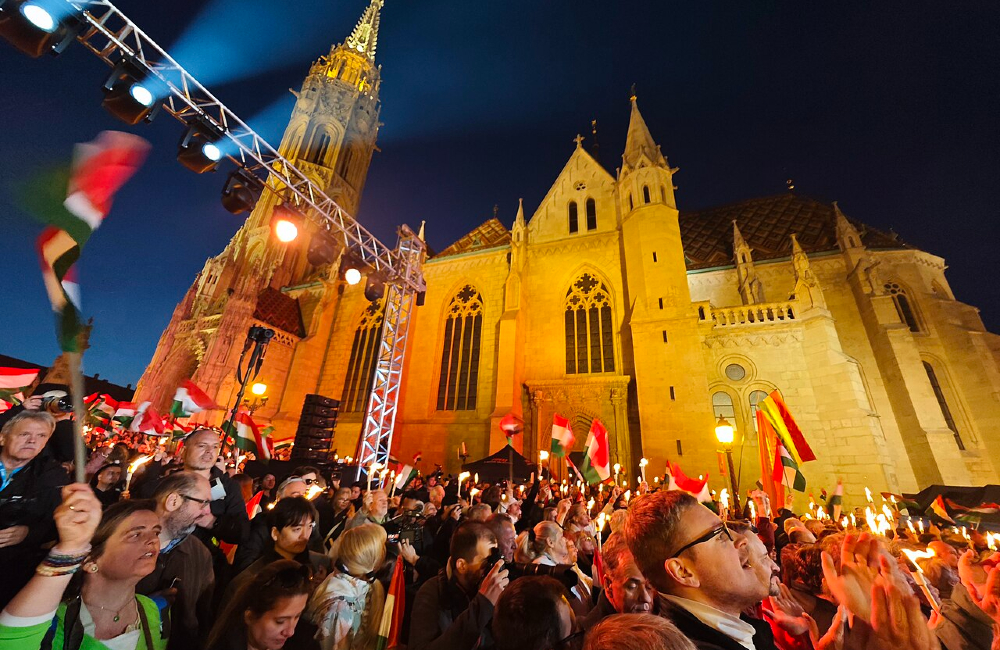
In 1989, a dashing young Viktor Orbán launched his political career with a speech at Heroes’ Square in Budapest, calling for a transition to democracy and for the Russians to get out of Hungary. Last week, Péter Magyar rallied his supporters at the same square, calling on them to end Orbán’s political career to restore democracy and get the Russians out of Hungary.
The scenes dripped with irony. In a generation, the young democrat had become an aging autocrat. In 1989, Orbán had stood up to the Soviets and helped topple the communist system. Eventually he became the most important European asset of Vladimir Putin, a former KGB agent. When Orbán’s party Fidesz (the Young Democrats Alliance) was founded, it was a youth movement that didn’t accept members over age 35. Just over 35 years later, Fidesz was ousted by a new youth movement.
Not long ago, Orbán’s grip on power in Hungary seemed unbreakable, and few expected that such a sweeping victory for the opposition was possible. What does the fall of Orbán indicate about the nature of his electoral autocracy? How did Magyar’s Tisza party win in such a rigged system? And what does the regime change in Budapest mean for the European Union, for Trump and Putin, and for aspiring autocrats across Europe and the world?
Orbán’s Downfall
First, analysts should be careful not to draw the wrong lessons. Germany’s leading center-right newspaper, the Frankfurter Allgemeine Zeitung (FAZ), drew precisely the wrong lessons in an editorial titled “What the EU can learn from Hungary,” published immediately after the election. The FAZ said it showed “Democracies work—and do not need moral finger wagging from Brussels.” Oy. Anyone familiar with the role of Germany’s center right in supporting the Orbán regime, and eventually in shifting its support to Magyar, can only facepalm in exasperation.
In fact, pressure from Brussels played a crucial role in ousting Orbán, as did the decision of center-right parties in Germany and across Europe to finally break ties with him. From when he came to power in 2010 until 2021, Orbán’s Fidesz party was a member of the pan-European center-right party alliance called the European People’s Party (EPP). Germany’s Christian Democrats are the largest party in that group, and Angela Merkel was a stalwart defender of Orbán, working to block any meaningful EU sanctions against him as he dismantled Hungarian democracy. Germany’s automobile manufacturers, which developed a huge presence in Hungary during this period, appreciated her services.
With the protection of Merkel and the EPP, Orbán violated the rule of law and other fundamental EU norms with impunity—and laughed all the way to the bank as he did. Hungary was the largest beneficiary of EU funding in per-capita terms, and Orbán enriched himself, his relatives, and his friends on EU funding and used it to prop up a patronage network that sustained his regime. Finally, at the end of 2022, after his party had been pushed out of the EPP and Merkel had left office, the European Union began suspending some of its funding to Hungary due to the government’s corruption and persistent violation of rule-of-law norms. The suspension of EU funds contributed to an economic slowdown in Hungary over the past couple years and started unraveling Orbán’s patronage network.
That economic stagnation and the declining living standards so many Hungarians experienced were crucial to Orbán’s downfall. Many voters understood that there was corruption in the Orbán regime, but they had been willing to tolerate it so long as they saw their living standards improve. In the past few years, however, high inflation and stalled growth have led Hungary to fall behind regional peers, and voters took notice. Orbán plundering the country and renovating a lavish Habsburg estate for himself and his family became too much for Hungarians once they saw their own living standards deteriorating.
Magyar appealed to voters by promising to dismantle Orbán’s corrupt mafia state and to revive growth. Magyar also made normalizing relations with the European Union and restoring the flow of EU funds central themes in his campaign. And this resonated. His supporters chanted “Europa! Europa!” and “Ruszkik haza!” (“Russians go home!”). Moreover, Magyar’s Tisza party joined the European People’s Party—so the very center-right bloc that had for so long protected Orbán now supported his opponent.
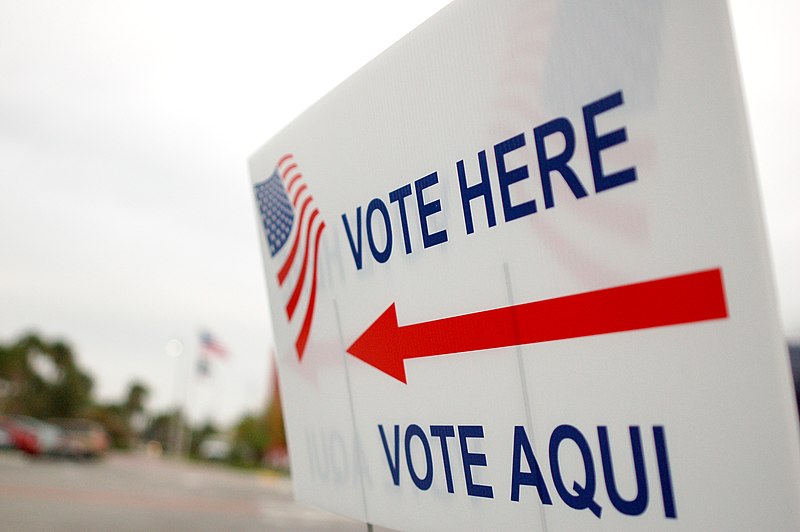
Magyar rose to fame by highlighting the high-level corruption within Fidesz—including one scandal involving child sex abuse. He managed to unite almost all opposition forces under his leadership, calling on them to join together to oust the corrupt Orbán regime. Orbán had tilted the playing field heavily in his party’s favor, not only by taking control of most of the media in the country and using state resources to help fund his party’s campaign, but also by rigging the voting rules in favor of Fidesz. Ironically, one aspect of this ended up backfiring: Orbán had always expected the opposition to be divided into multiple parties while his party would remain the largest single bloc, so he had rigged the electoral system to give a huge advantage in parliamentary seats to the party with the plurality of votes. But when the charismatic Magyar managed to unite the opposition and attract the most votes, his party ended up benefiting from the system Orbán had assumed would advantage him.
Shockwaves
Orbán’s fall will have political ramifications for Hungary, for the European Union, for Trump and Putin, and for aspiring autocrats more generally.
For Hungary, Magyar’s sweeping victory should mean a return to pluralist democracy. Many observers had worried a new government would be unable to dismantle the deep state Orbán had entrenched during his 16 years in power. However, by winning two-thirds of the seats in Parliament, Magyar can amend the constitution and dismantle the institutions Orbán installed to cement his party’s hold on power—for instance, to control the media, the judiciary, and key sectors of the economy. In anticipation of that, many Orbán lackeys will likely flee their sinking ship in the coming weeks. In fact, this has already begun. Hungarian Foreign Minister Péter Szijjártó is apparently holed up in his office shredding documents this week to cover up his treasonous collaboration with Moscow. Magyar has made it clear he will turn away from Moscow and toward Brussels, and the European Union has made it clear it will respond warmly. Hungary’s EU funds will likely start flowing again soon. As the funds return and as Magyar dismantles Orbán’s system of crony capitalism, Hungary will have a much better chance to revive economic growth. In the long term, the health of Hungarian democracy will depend on the emergence of robust opposition parties to Magyar’s Tisza that are also committed to liberal democracy. But for now, Tisza enjoying almost unconstrained power may be just what is needed to dismantle Orbán’s system.
For the European Union, the fall of Orbán removes the Kremlin’s Trojan Horse within the European Council and will make pursuing a common foreign policy—particularly with respect to Russia and Ukraine—far easier. Orbán repeatedly used his veto power in foreign policy to undermine sanctions on Russia and support for Ukraine—and to extort benefits for his government in cases where he finally did provide his assent. Moreover, as was recently revealed, the Orbán government was reporting confidential EU proceedings directly to the Kremlin, making a mockery of the whole idea of a common foreign policy.
Ukraine’s President Volodymyr Zelenskyy celebrated Magyar’s win as “a victory of light over darkness.” To be clear, under Magyar, Hungary will not become Ukraine’s staunchest backer in Europe. For instance, Magyar does not support fast-track EU membership for Ukraine, and he has previously said he would not support Hungary directly sending weapons to Ukraine. However, Magyar has made it clear he supports Ukraine in the war, and he promised to end Orbán’s policy of pursuing close ties with Russia and antagonizing Brussels. Under Magyar, Hungary will no longer threaten to veto EU sanctions on Russia or aid for Ukraine.
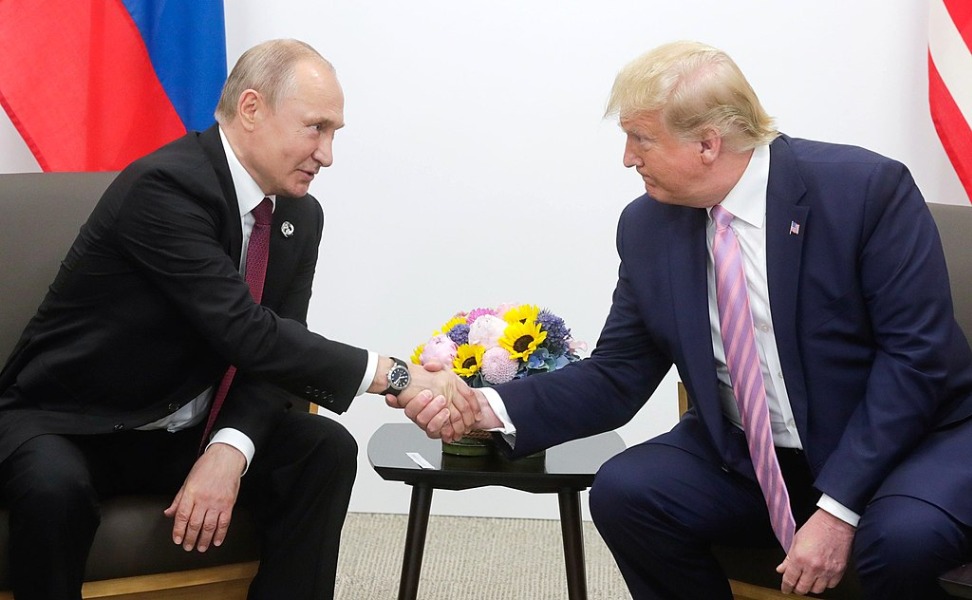
Orbán was both Putin’s and Trump’s staunchest ally in the European Union. For Putin, he was a well-positioned asset in Brussels. For Trump, he was a model on a miniature scale of the sort of enduring electoral autocracy the U.S. president dreams of consolidating in America. Orbán is also the role model for electoral autocrats elsewhere in Europe—figures like Robert Fico in EU member state Slovakia or Aleksandar Vučić in EU candidate state Serbia. Orbán demonstrated for years that one could dismantle rule-of-law and democratic institutions while still benefiting from EU funding and attracting foreign direct investment from Western European firms.
The fall of Orbán serves as an ominous warning to such leaders, and as an inspiration to the citizens who dare to fight them. The warning is that eventually the European Union may stand up to such regimes and cut off their supply. The inspiration is that if voters manage to unite and mobilize, they can oust corrupt autocrats from power even where they have tilted the playing field heavily in their own favor.