Lawfare Daily: ‘The Criminal State’ with Lawrence Douglas
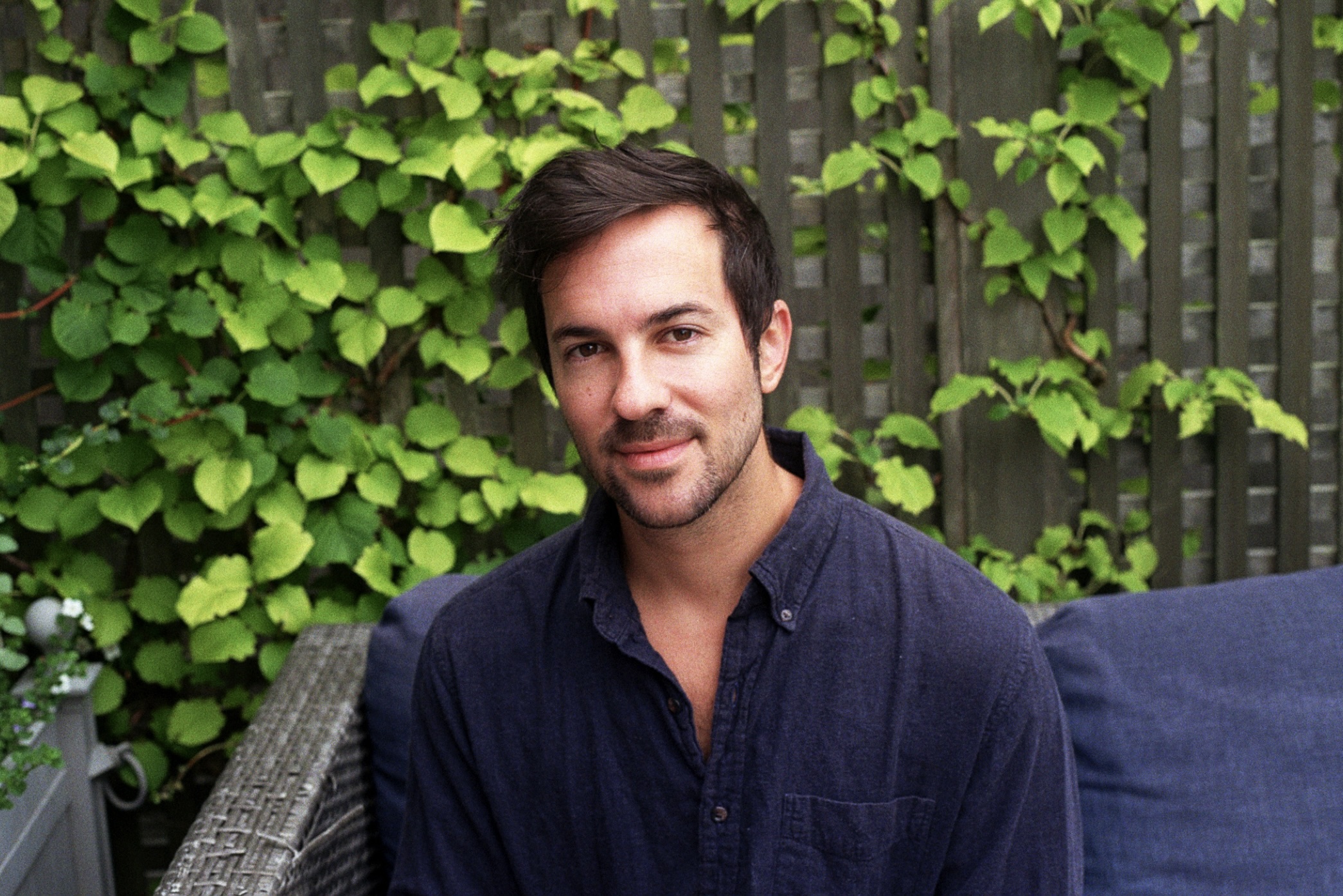


On today’s episode, Lawfare Managing Editor Tyler McBrien sits down with Lawrence Douglas, the James J. Grosfeld Professor of Law, Jurisprudence, and Social Thought at Amherst College to discuss Douglas’s new book, “The Criminal State: War, Atrocity, and the Dream of International Justice.”
They talk about how and why international criminal justice shifted from a focus at Nuremberg on the crime of aggression to an “atrocity paradigm,” as well as the “belatedness problem” and other limitations of atrocity trials. They even get into Douglas’s thoughts on casting decisions for Robert Jackson, Herman Göring, and characters in last year’s film “Nuremberg.”
To receive ad-free podcasts, become a Lawfare Material Supporter at www.patreon.com/lawfare. You can also support Lawfare by making a one-time donation at https://givebutter.com/lawfare-institute.
Click the button below to view a transcript of this podcast. Please note that the transcript was auto-generated and may contain errors.
Transcript
[Intro]
Lawrence Douglas: How
do you then deal with a situation which the state itself. It becomes the agent
of criminality and you know, how do you deal with perpetrators or collaborators
who behave out of what one actually SS person described as the comfort of
obedience? You know, how do you deal with crimes of obedience as opposed to
crimes of deviance?
Tyler McBrien: It's
the Lawfare Podcast. I'm Tyler McBrien, managing editor of Lawfare,
with Lawrence Douglas, the James J. Grosfeld Professor of Law, Jurisprudence,
and Social Thought at Amherst College.
Lawrence Douglas:
When it comes to something like a crime against humanity or genocide, even if
it's conducted within interest, stately within a confined state, you can
basically be tried by any court anywhere, and on one level you can say, oh,
that's a great thing.
That's a real vindication of human rights. But it also gives
rise to all sorts of possible politicization and possible unseemly abuse to my
mind.
Tyler McBrien: Today
we're talking about Lawrence's new book, “The Criminal State: War, Atrocity,
and the Dream of International Justice.”
[Main Podcast]
Lawrence, you've described your new book in various ways that
I've seen. You've called it a revisionist account of the development of
international criminal law over the last century or so. You've also called it a
conceptual reconstruction of the field, and my favorite, a tale of rupture. So
first I was just hoping you could give us a bit of a lay of the land what
you're up to in this book.
Lawrence Douglas:
Yeah. So, I do have those three different elevator pitches. In fact, I could
even add a, another one which says which would say that the book is about how
the field of international criminal law was both formed and deformed by its
response to Nazi Germany. And I guess what I meant by the notion of the rupture
or the conceptual overview was that, I think if you look at most books about
international criminal law, they basically treat Nuremberg as the great early
precedent. Then you have some problems during the Cold War. Then finally you've
kind of find a renewed dedication with the UN tribunals in the 1990, and then
finally with the International Criminal Court.
So it's more or less kind of like a somewhat linear story with
bumps along the road, and I guess one of the main interventions I'm trying to
do in the book is to say that, actually, Nuremberg approach was this aggression
based approach, which ultimately fails in my mind and is replaced by the more
recent focus in international criminal law on what I call crimes of atrocity.
Tyler McBrien: Right,
and so this failure of the aggression paradigm, leading to this shift in the
atrocity paradigm, at least for me this narrative placed that shift a lot
earlier. The aggression paradigm seemed doomed sooner—I don't know, maybe
doomed is too strong of a word, but sooner than I, at least I had previously
conceived of it.
So where do you see this shift having happened? Where do you
place it in the narrative?
Lawrence Douglas:
Yeah, well, maybe I should just explain a tad more, more fully about what I
just mean by the aggression paradigm.
And if you go back to Nuremberg; today, when people look at
Nuremberg, I think they tend to think about Nuremberg almost as a Holocaust
trial. And in fact, I've been to a number of conferences which almost kind of
treat Nuremberg that way. But in fact, that wasn't what Nuremberg main focus
was. It was not focusing first and foremost on the Nazis crimes against
humanity.
The main focus of the Nuremberg trial was on the war of
aggression that Nazi Germany had launched both on the West and the East.
That's, that war of aggression at Nuremberg is called crimes against peace. And
it really was the centerpiece of the prosecution's focus and the judgment on of
the international military tribunal. In their concluding judgment, the judges
of the Nuremberg Court describe the crime against peace as the supreme
international crime.
And part of the idea was, you know, Nuremberg was trying to
create this kind of edifice of international criminal law for the post-war
period, and the notion was that by focusing on aggression would really be the
centerpiece of this emerging system of international criminal law. And that's
really kind of what I mean by the aggression paradigm. This focus on aggression
as the centerpiece of this emerging system of international criminal law.
And as you point out, Tyler, I try to argue in the book that,
that, that focus, that paradigm, it starts to unravel really quickly. So
sometimes when people refer to Nuremberg, and sometimes people refer to the
Nuremberg trials in the plural. And just to kind of remind your listeners by
singular, we're really talking about the international tribunal, first basic
international criminal court in human history, collaborative exercise by the
United States, Soviet Union, France, and Great Britain. And the Nuremberg
Trials, plural, that refers to these 12 subsequent trials that were conducted
by the U.S. military, basically in the same courtroom as the international
trial.
They had this nice sort of wood panel courtroom in the Palace
of Justice in Nuremberg, and the American military conducts these 12 subsequent
trials of total of about 185 defendants. And that trial program of the American
military is meant to build on the Nuremberg focus on aggression. And rather
than contributing to that emphasis, it ends up, kind of unravels it.
And the unraveling kind of leads to a much greater focus on
crimes of atrocity, war crimes, crimes against humanity. And then this kind of
emerging concept of genocide and much less of a focus on aggression. And we see
that same trend occurring in the companion trial to Nuremberg that takes place
in Tokyo, the international military tribunal for the Far East.
Tyler McBrien: Yeah.
I wanna pick up on that, the line that you talk about the famous line from I
believe the final judgment of the Nuremberg trial that, the war of aggression
is the supreme international crime and that it contains within itself the
accumulated evil of the whole. It almost seems that this would fall on
contemporary ears in a bit of an odd way, given that, as you mentioned, the
popular conception of Nuremberg as focusing on the intrastate crimes of the
Nazis, and interstate, I guess, against, especially the Jews.
I guess I, yeah. I wanna talk about, you know, more of how this
shift happened of the subsequent trials, but then also of the trial of Adolf
Eichmann in 1961 in Jerusalem. How did that trial also continue to contribute
to this shift?
Lawrence Douglas:
Well, so just focusing on the quotation that you just mentioned, that this is
the supreme international crime. Again, this is the holding of the court at
Nuremberg, and it contains within itself the accumulated evil of the whole. And
another way to put that is that they basically, this is the Nuremberg tribunal
basically treated war crimes and these crimes against humanity, which is the
term with which they used to bring in evidence of the extermination of the Jews
of Europe—
They kind of treated them as knock-on effects of the war of
regression. So basically the idea is, hey, if you didn't have this criminal war
of aggression in the first place, you never would've had war crimes or
extermination either. So they kind of treat 'em as knock-on effects.
When you go to the Eichmann trial, this is the trial that takes
place in Jerusalem 1961 of Adolf Eichmann, who really wasn't what we might
describe as a major figure within the Nazi state, but we can kind of think of
him as the chief logistical officer of the extermination policy of Nazi
Germany, he's basically the one who kind of worked out the logistics of sending
over a million Jews, largely from Western Europe to these killing centers in
the east.
And that trial very consciously tried to decouple or move away
from the logic of Nuremberg. And really try to say no when you're talking about
this kind of state-sponsored extermination, state-sponsored genocide, that's
kind of a crime sui generis. It's a unique crime and you can't simply
understand it as a knock-on effect from the war.
It really was a crime that has its kind of own logic, its own
meaning and it has to be understood differently. And I think that trial, which
really galvanized a tremendous amount of attention, not just in Israel where it
took place, but, and specifically in West Germany and the United States, it
really worked to kind of elevate the status of these atrocity crimes.
Again, what I would say, first and foremost, genocide, crimes
against humanity. Also, maybe a little lesser a degree, severe war crimes.
Really kind of saying thou, those crimes, they are the chief crimes in
international criminal law, and they deserve more of our attention or attention
than does, let's say, state aggression.
Tyler McBrien: And
there was this a conscious choice by, let's say the prosecutors in the Eichmann
trial. Was this a strategic choice? What motivated, you know, this continuing
the shift, especially in the prosecution of Adolf Eichmann?
Lawrence Douglas:
Well, I think there was, particularly among, let's say Jewish observers, there
was a lot of unhappiness with the Nuremberg trial.
Nuremberg was largely a trial by document. If you look for
example of the number of Jewish survivors who testified at Nuremberg, only
three of them testified their testimony. I think if you kind of just count the
number of pages, I think their testimony, sums up to about 100 pages of
transcript in a over 10,000 pages of the Nuremberg transcript.
And so there were a lot of, there was a pretty strong sense
that Nuremberg failed to do adequate justice to the extermination of European
Jews. And so in that sense, the Eichmann trial really tried to reverse that.
Really tried to say, look, this is not a trial about aggression. This is a
trial of what we think is the more foundational offense.
So it's not as if they were engaged in, you know, a direct
attack of what I would describe on the aggression paradigm. But they certainly
were very consciously attempting to create a trial that would galvanize
interest on the genocide of the Jews of Europe. Another thing that, that
basically contributed to the success of Eichmann is, you know, as I mentioned,
as I just mentioned, Nuremberg really focused on documents and the idea of the
prosecution was documents.
You know, that it's harder to impeach documents that the Nazis
themselves produced, they're kind of sturdier evidence than eyewitness
testimony. At the same time, it contributed kind of to a dullness of the
Nuremberg trial. You know, everyone kind of thought Nuremberg was going to be
this spectacular, basically a legal spectacle.
And in fact, in the words of Rebecca West, this famous
journalist who covered the trial, who incidentally also had an affair with the
American judge on the trial, Francis Biddle, but Rebecca West kind of famously
described Nuremberg as a citadel of boredom, largely because the prosecutor
spent a lot of time just reading documents aloud in the courtroom.
And at Eichmann, the Eichmann trial also tried to correct that
by basically organizing the trial around the testimony of survivor witnesses.
And that also played a big role in galvanizing attention to the trial because
the survivor testimonies really were quite riveting, and they did a quite good
job of vetting the witnesses in advance to make sure that basically good
courtroom storytellers would be asked to testify.
Tyler McBrien: I
wanna bring in the title of the book and the concept of the criminal state. And
to do that, I would love to hear why you chose to start the book where you did,
which is this debate in Germany over the statute of limitations for, by much
more ordinary or prosaic crime, if you wanna put it that way, of murder.
Of course, this is much more complicated given in post-war
Germany given the crimes of the Nazi state. Take us to the beginning of the
book. Why did you start it there?
Lawrence Douglas:
This it's kind of interesting, you know, Germany I think has the, you know, the
deserved reputation of being a state, which has done a pretty good job of
confronting, you know, this horrific past and that's represented in the Third
Reich.
At the same time, if you look at the German legal system, it
compiled a pretty pathetic record of dealing with, in prosecuting former Nazis
many of which ended up living in particularly West Germany. And then, you know,
come 1990, which we just now call the Federal Republic of Germany, once East
Germany basically disappears.
And one of the things, this is kind of, you know, legal
technicality, but your audience loves legal technicalities. So, crimes against humanity
and genocide. Crimes against humanity is first recognized as an international
crime, basically at Nuremberg. So we're talking about, obviously after the war,
Nuremberg, the main trial takes place from, you know, November ‘45 until
October ‘46.
Genocide is first recognized as its own freestanding,
independent crime in international law in 1948 with the UN Genocide Convention,
very first convention that is passed by the fledgling United Nations. What
German jurists decide in the very early years of the Federal Republic, West
Germany at the time, they decide that charging former Nazis with crimes and
against humanity or genocide would be a violation of the new basic law of
Germany because it would represent using retroactive law.
Again, it's sort of a kind of crazy conclusion. No other
European state accepted that, but basically it was like, because these laws against
crimes—crimes against humanity, genocide were only first recognized as law
after the war. You can't use them as prosecutorial tools because that would be
a violation of the bar against using a retroactive criminal statutes. Kind of a
crazy conclusion.
Well, that meant that they had to rely on a domestic law that
was in place basically during the Third Reich for the purposes of prosecuting.
People who are responsible for Nazi at atrocities statute they rely on is the
murder statute. But the murder statute was actually controlled by a statute of
limitations, and it was a 20-year statute of limitations at the time that this
important interview takes place.
So what that meant, a 20-year statute of limitations meant,
that come 1965, the statute of limitations on all Nazi-era crimes was about to
toll. So come, you know, May 8th, the end of the war in Europe in 1945, come
May 1965, the statute of limitations was about to run.
So this created this kind of really interesting interview that
took place in Der Spiegel, the German News Weekly in 1965 between Rudolf
Augstein, most famous publisher in Germany at the time Ran der Spiegel and Karl
Jaspers, who was arguably the most important living philosopher.
And they're arguing about this whole notion about whether
statute of limitations should be extended, which really hadn't, turned into
kind of not just a national debate, but an international debate because people
were appalled by this idea that, wait a second, come May 1965, German
prosecutors are gonna be unable to charge any SS man, anyone associated with
Nazi genocide, with anything.
And one of the things that Karl Jaspers, one of the arguments
that he makes. In talking about the urgency of extending the statute of
limitations, he basically says, you know, you have to reckon that the Nazi
state was something completely different than anything we've seen before. It
was a verbrecherstaat— Verbrecherstaat just translates as
criminal state and by criminal state.
I think he critically was trying to make a distinction between,
let's say, a bad regime. On the one hand, we've seen many bad regimes over the
course of European, and we can say even American history. But a criminal state
for him was a state in which basically every major apparatus of the state,
let's say it's bureaucracy, it's military, it's administration of justice, all
of these basic institutions have been turned towards criminal ends.
And for Jaspers, he was really trying to get at something, you
know, I think he was just trying to emphasize the how novel that was and how
that kind of represented a rupture with standard kind of political
understandings of Western states.
Tyler McBrien: And
what was the upshot of this label of the criminal state—
As you mentioned there were several challenges associated with
the aggression paradigm, but also several new challenges, a arise out of this
concept of the criminal state. Could you talk a bit more about that in, in
raising this concept?
Lawrence Douglas:
Yeah, so I think for Jasper and he wasn't the only one who used this term
criminal state, Hannah Arendt in her kind of famous book, “Eichmann in
Jerusalem,” he also talks about the Nazi state as a criminal state. You have
other people also kind of using this parlance and you know, part of it was
trying to show just kind of conceptually how difficult it was to metabolize
given, you know, kind of longstanding beliefs in, you know, Western political
thought, legal thought about the kind of normative distinctiveness of Western
states.
Now we can kind of interrogate those assumptions, but there was
a pretty powerful ideology which associated Western statehood with, basically
the apogee with the height of human civilization and suddenly, you know, how do
we make sense of the fact that one of the great pillars of civilization,
Germany, the land of Dichter und Denker, of poets and thinkers, that it
suddenly became this completely deformed agent of criminality.
So that was one thing, kind of this conceptual challenge of how
do we metabolize that? And then, or generally, you know, anyone who has studied
law knows that criminal laws usually understood as a domestic system. And in
that domestic system, crimes are basically kind of considered deviant acts.
Now, deviant acts, I don't mean that they're committed by, you
know, deviant personalities, but just deviant, you know, on the definitional
sense that it's the state that defines what crimes are and criminal behavior
deviates from the norms and laws that the state has created. Well, how do you
then deal with a situation which the state itself becomes the agent of
criminality and, you know, how do you deal with perpetrators, collaborators who
behave out of what one actually SS person described as the comfort of
obedience.
You know, how do you deal with crimes of obedience as opposed
to crimes of deviance? And so I think those are kind of two of the things that
Jaspers and people like Arendt we're trying to get at. But the challenge is
posed by the advent of this thing they called the criminal state.
Tyler McBrien: Yeah,
and let's get into some of those challenges. I mean, I think on the one hand,
this may sound familiar to anyone who knows that a lot of international
criminal prosecutions are levied against those in command and control
positions, for example.
But maybe a more lay listener could hear this idea of the
criminal state and worry that it would absolve individuals within the state of
any sort of criminal liability or accountability. But it doesn't quite do that.
And I, one of the reasons you bring up of why the criminal state may be a
helpful concept is because, you know, not every person in the Nazi state fits
the stereotype of this SS sociopath. So talk about some of those trade-offs
there with the, this concept.
Lawrence Douglas:
Right. So, and it's, it kind of, as you're suggesting, Tyler, one of the things
that I'm talking about in the book when I use the term criminal state, so I'm
not trying to make it I'm not looking at the literature and there is a
literature that says, oh, maybe we can actually try a state as a criminal,
basically as a criminal itself.
So there is an attempt by some, you know, legal thinkers to
kind of import concepts from corporate criminality, because under certain
circumstances you can actually treat a corporation as a criminal and they try
to argue maybe we can treat a state as a criminal. Well, that's not really my
concern.
My concern is how the agents of the criminal state the
perpetrators, the leaders, the perpetrators of the crimes of the criminal
state, the collaborators and accessories in the crimes of the criminal state,
how they can be prosecuted. And again, to look at the prosecutorial problems
that the, that arise when you're basically dealing with, you know, members of a
state apparatus who are participating in crimes.
And one of the things that, you know, I also try to point out
in the book is if like at Nuremberg, you're really focusing on the crime of
aggression, the crime of aggression is almost by definition a leadership crime.
The only people who can be charged with a crime of aggression that is for
launching you know, an aggressive war are the very top echelons of the state
because they're the only ones who really have the power to make those kinds of
decisions.
But if you turn to crimes of atrocity, you know, things like
genocide, crimes against humanity, well, those are more what I could describe
as vertical crimes. And by vertical crimes I simply mean they often run from,
you know, the very heads of the state through a bureaucratic organization all
the way down to frontline perpetrators and accessories.
And there you're talking about, you know, tens or even hundreds
of thousands of people who could be implicated in the crimes of the state. And
that obviously creates enormous prosecutorial problems. You know, any kind of
prosecutorial program then is going to be in, in certain ways a symbolic
program.
And, you know, on, on some level, the, even a successful
prosecutorial program is almost going to highlight the, you know, relative
impotence of the prosecution to kind of mount an adequate response because it's
gonna be, you know, just a fraction of the total people who are responsible.
And the prosecution is almost gonna highlight the, you know, the discrepancy
between the laws sanction, even if it's a severe sanction and the magnitude of
the crimes that are being prosecuted.
Tyler McBrien: And
before we turn to the new challenges that arise out of the shift to the
atrocity paradigm, could you just close the loop for listeners of slotting this
idea of the criminal state into this shift from the aggression to the atrocity
paradigm? Again, why did you seize on this concept to explain the when and the
why of this shift?
Lawrence Douglas:
Right. So I think if you go back and you know, if we talk about a criminal
state, one question you could come up with is, you know, what's the
paradigmatic crime of that criminal state? And obviously Nuremberg had a very
clear answer. Its answer was aggression. That said, you know, one of the things
I try to point out in the book is Nuremberg had a pretty confused understanding
of what they meant by the crime of aggression.
So if you even look at the charter of the Nuremberg tribunal, Nuremberg
sets out three substantive crimes that the 22 defendants were being tried for
crimes against peace or war regression, war crimes, crimes against humanity.
And if you look at the charter's definition of war crimes, it's pretty clear. They
give a pretty precise definition. You look at their definition of crimes
against humanity, pretty precise definition.
You look at their definition of crimes against peace. There's
no definition at all. They basically punt on the definition. And the reason I
think that is, is pretty important is because even at the, this London
Conference that takes place in the summer of 1945, before the trial starts in
which delegates are hammering out the details of the trial, you know, basically
working out the exact structure of the charges, structure of the court itself.
You have this really interesting conversation that takes place
between Robert Jackson—He's on leave for, from his position as associate justice
on the U.S. Supreme Court to basically run the U.S. prosecution. And this Andre
Gross, who is a French professor of international law. He's also a delegate at
the London Conference, and one of the things that Andre Gross asked Jackson, he
says, well, wait a second. What makes a war of aggression criminal? If there
are no war crimes committed in its prosecution and there are no crimes against
humanity, I'm just not sure what, why is, let's say, violating the territorial
integrity of another state, why is that a criminal act if it's not associated
with any war crimes or crimes against humanity?
And Jackson basically kind of gets all impatient and says, you
know, that's ridiculous. Look at what Nazi Germany has done. The way they've
waged their war of aggression is through war crimes in crimes against humanity.
And that basically is exactly how the prosecution and the court at Nuremberg
accept the crime.
But that question that Gross asked Jackson is never
satisfactory answered. It basically haunts post-Nuremberg efforts to define this
crime of aggression, it becomes very difficult. Whereas if you're dealing with
something like genocide or crimes against humanity, we have pretty solid
definitions and we have a pretty solid idea that a genocidal state is a
criminal state.
Tyler McBrien:
Because you brought up Robert Jackson, now all I can picture is Michael
Shannon, who portrayed him in last year's movie, Nuremberg. So, as
tempted as I am to ask you what you thought of the Nuremberg film with
Russell Crowe last year—
Lawrence Douglas:
You're welcome to ask me.
Tyler McBrien: Well,
what did you think?
Lawrence Douglas: I
thought it was pretty poor. I thought it was a pretty poor movie. I thought
Russell Crowe is very good as Göring, but I thought both you know, the actors
who play the psychiatrist and the actor who plays Robert Jackson, very good
actors, but I thought they were pretty badly miscast. And, you know, if you
wanna see a great Nuremberg movie we could see suggest going back to Judgment
at Nuremberg, which is not about the international tribunal, but about one
of the American trials.
But that's a great movie, that old Spencer Tracy movie. But
anyway, didn't love it.
Tyler McBrien: I hope
most of our listeners have seen that, but if not, we will, we'll put it in the
show notes.
But it, you know, one thing I was trying to parse when reading
your book is what you think normatively of this shift, whether it was prudent
or appropriate or good and because you, you do such a great job also of raising
the new challenges associated with the atrocity paradigm in terms of
jurisdictions, basio-temporal challenges this belatedness problem that you talk
about.
So what were these new challenges that arose out of the shift
to the atrocity paradigm?
Lawrence Douglas: To
just answer the first thing you mentioned, I do think it was appropriate to
shift to atrocity crimes. I mean, I think that really is something like, I
think it also connects with the development in human rights law.
I think human rights law actually develops in part a response to
this shift and attentive to the shift. So, you know, on some level I think it's
normatively correct. I think it was almost, you know, in a way also legally
inevitable. But, as I try to point out in the book, you know, there are big
problems with the prosecution of these crimes of atrocity.
And some of the problems have to do with you know, these
jurisdictional problems, some of 'em have to do with these temporal problems.
That's what I was talking about, the way in which these crimes of atrocity
explode, you know, spatial temporal limitations that we normally associate with
criminal law.
And if that sounds overly abstract, all I mean by that is two
things, is, you know, one thing is that, these crimes of atrocity, they have no
statute of limitations. So beginning of our conversation, we were talking about
the unseemly struggles that Germany went through in, you know, having to rely
on its ordinary murder statute to deal with you know, the prosecution of World
War II-era atrocities.
Well these crimes of atrocity, they aren't controlled by any
statute of limitations. And so as a result of that, you kind of get these
superannuated trials. In fact, Germany ultimately faces all this pressure to
abolish its statute of limitations for murder and does so, so you have these,
you know, bizarre things like, I think in the book I mentioned this trial of Irmgard
Furchner, she was the secretary to the commandant at the Stutthof concentration
camp. She was convicted in a courtroom in Germany when she was 97 years old. So
just recently, just a couple years ago, she was convicted. But the bizarre
circumstances, she ends up being tried in a juvenile court.
Why? Because her original tenure as a secretary to the
commandant at Stutthof began when she was 17 years old. She hadn't yet reached
the age of maturity under German law, and so this trial that takes place 80
years later of a 97-year-old woman has to be conducted in a juvenile court. So
it raises all these kinds of issues about what are the purposes and justice of
these, you know, really belate, you know, late in the day trials.
And then there's also the spatial element that these crimes of
atrocity, they basically give rise to this thing called universal jurisdiction.
And universal jurisdiction is basically the idea that jurisdiction is conferred
simply by the nature, by the severity of the crime itself. So for example, if
you go into a convenience store here in the United States and you know, murder
a clerk in a convenience store, that's certainly an awful, horrible thing. But
is it a universal crime that you can be tried for if you actually, you know,
fly for a vacation, let's say to, you know, anywhere, let's say Sri Lanka.
Could it Sri Lankan court try you for murdering someone in a
convenience store in the United States? The answer is clearly no. But when it
comes to something like a crime against humanity or genocide, even if it's
conducted within, intrastately, within a confined state, you can basically be
tried by any court anywhere, and on one level you can say, oh, that's a great
thing. That's a real vindication of human rights. But it also gives rise to all
sorts of possible politicization and possible unseemly abuse to my mind.
Tyler McBrien: So the
atrocity paradigm, as you mentioned, has in turn led to new legal concepts,
which in turn raised their own challenges. But another upshot of the attempts
to get around this belatedness problem, perhaps attempts to avoid the
awkwardness of this trial that you mentioned.
You know, it's one of those moments that's, ‘what are we doing
here,’ is you took it to an interesting place to me, which is connecting it to
this desire to avoid the crime's ever happening. And the way to do that is
through humanitarian inter intervention, as it's called. So this responsibility
to protect doctrine—
Can you talk about that connection? I thought that was a really
interesting strain there.
Lawrence Douglas:
Exactly. And I really think that is a, an important upshot. You know, I think if
you're really thinking about the logic of trying to fight atrocity crimes,
well, any kind of juridical response, any kind of prosecutorial response, it's
kind of after the fact.
You know, the atrocities have already occurred, and anyone who
thinks that, well, it still has an incredible value because it's gonna deter
some future regime from engaging in genocide—I think that's a pretty naive
assumption. I don't think these proses—genocide prosecutions have any kind of
real deterrent effect, or if they do, it's impossible to say.
I mean, how do you make an argument for a negative effect? So
the logic really pushes to a more robust response. In fact, if you look at the
Genocide Convention itself from 1948, it basically says there's an obligation,
you know, to make sure that these things don't happen. And that seems to push
in the direction of some type of intervention.
And by intervention we really kind of ultimately, I could
suppose mean, you know, military intervention. And if a genocide is ongoing,
then it's gonna put a lot of pressure on, you know, some really kind rapid
military intervention. And that itself is an incredibly fraught thing. You
know, the wars of humanitarian intervention now.
Some people might say that very concept war of humanitarian
intervention is oxymoronic, but it did, you know, it seemed to be relatively
successful in the case of the NATO Air War over Kosovo in 1999. And yet, if you
look for example, at the UN authorized intervention in Libya in 2011 which was,
you know, under the kind of, retooled the doctrine of humanitarian intervention
and called it Responsibility to Protect, that turned into an absolute
catastrophe.
And even now, you know, I don't wanna necessarily draw a direct
connection to what's going on in Iran, but anyone who thinks that you can get
rid of some really nasty regime in a simple way, and therefore stop it from
engaging in atrocities against its own people—That's pretty naive as well.
And obviously we've learned the hard way about the difficulties
of engaging in anything remotely like regime change, even in circumstances when
it seems entirely justified and in the interest of some type of humanitarian
concern.
Tyler McBrien: Right,
so if we take this idea of humanitarian intervention as at least one attempt to
overcome or sidestep the challenges associated with atrocity trials, there are
still, as you write about, benefits or there is still value in the atrocity
trial beyond what a trial can accomplish in terms of delivering justice.
I'm speaking about these, what you call didactic elements. So,
so what are, what is still the value though of, or the, yeah, the benefit of an
atrocity trial, even given its associated challenges?
Lawrence Douglas:
Yeah. Even given its limitations. I agree completely. And in the book, I do try
to say, look, there is an unmistakable value to these trials, and part of the
value is, you know, it's a kind of symbolic, expressive value.
They do have a tendency to kind of galvanize international
intention, which I think is important. I think the idea of a genocidaire living
out their life in the comfort of a home just rubs us all the wrong way. So I
think there is an important expressive function in saying we are not going to
permit this crime of this magnitude to go unpunished.
And obviously they can perform, you know, these other
functions, they can give survivors an opportunity to unburden themselves in a
public setting. You know, I think we almost, I'm not the first person to
observe this, you know, the way in which we kind of live in this age of
testimony or this kind of, this age of victimhood.
And so, you know, these trials do perform a valuable function
in that they perform almost kind of a public recognition of the suffering, or
they commemorate the suffering of victims of these mass atrocities. You know,
they also can play a positive role in developing a preliminary historical, you
know, responsible historical account.
Now there's some people who say, oh, well, courtrooms are not
the best venue for creating a history of a difficult episode, leave that to
professional historians. I would kind of challenge that. I think very often
these trials do a pretty good job of. Not just creating a archive that future
historians can work from, but also from just you know, establishing the
outlines of a pretty responsible history that can guide political
understandings of, you know, a really unfortunate episode in human history.
And again, I don't wanna necessarily overemphasize this, I'm a
little skeptical sometimes of this term, transitional justice, but I think, you
know, these trials can also in a way help criminal states or, you know, bad
regimes, or not everything has to be criminal state, but you know, some kind of
regime that has engaged in mass crimes to transition to some kind of more
positive democratic future.
Now, again, I would take that with a grain of salt, but I think
it's we shouldn't overlook at least the partial capacity of these trials to
contribute to these positive ends.
Tyler McBrien: No,
that's a really helpful transition to where I was hoping to end, which is a
place of cautious optimism, if you want to put it that way.
You know, it's, I often struggle to end discussions about
international criminal justice and international law, especially right now on,
on such a note. But I did stumble upon something that you said to—in their
column, New York Times column I believe, several months ago where you said,
some people say that the glass is nine-tenths empty when it comes to
international justice or the history of international justice, but you like to
say it's one-tenth full.
So I think that's fair to categorize as cautious optimism.
Where do you see this paradigm that is still, I guess, hegemonic heading and in
terms of addressing these challenges and limitations, why do you see international
justice as one-tenth full rather than nine-tenths empty?
Lawrence Douglas:
Well, you know, again we don't wanna end on a bummer.
So, you know, obviously there are lots of reasons to be
concerned about what's going on in the world today, especially when it seems
like, you know, you have these three most powerful states who seem to be
operating with some type of impunity. And you know, you have people like Stephen
Miller got a lot of attention basically saying that, well, foreign relations
are based entirely on force and basically might makes right—
Which is, you know, kind of a reversal of the whole project
that emerges out of Nuremberg through today, whether you're focusing on
aggression or you're focusing on atrocity, that actually there is not just
norms, but there's law that is meant to constrain even the most powerful state
actors and you know, does that law operate on these powerful state actors?
Well, you know, you can be pretty pessimistic on it, but you know, I think we
need to have realistic understandings.
You know, even if you look at something like the Yugoslavia
tribunal that the UN created in the early 1990s to deal with the atrocities
that emerged outta the Civil War there, you know, the knock on that tribunal
was, oh, it's only gonna be try small fish. It's never gonna get the big guys
like Slobodan Milošević, the former president of the Czech Republic, it's never
gonna get Radovan Karadžić, who was the president of this breakaway Republic of
Srpska. It'll never get Ratko Mladić, who is the general, who is responsible
for the Srebrenica massacre in 1995.
And lo and behold, to the surprise of everyone, the tribunal
ended up getting all three of them. And you know, Milošević dies during his
trial. But in the case of Karadžić and Mladić, they're both convicted given
life terms—and, you know, is that predicting that Vladimir Putin is one day
gonna see his you know, be put on trial at the Hague. No, I'm not necessarily
predicting that.
But again, these things are very difficult to predict and so
that's why I like to emphasize the one-tenth fall rather than the nine-tenths
empty.
Tyler McBrien: Well,
that does seem like a good place to end the book is the “The Criminal State: War, Atrocity, and the Dream of
International Justice.” It's a really riveting history and unfortunately
also extremely relevant and urgent to today. Lawrence Douglas, thank you so
much for joining me.
Lawrence Douglas:
Real pleasure talking with you, Tyler. Thanks so much.
Tyler McBrien: The Lawfare
Podcast is produced by the Lawfare Institute. If you wanna support
the show and listen ad-free, you can become a Lawfare material supporter
at lawfaremedia.org/support. Supporters also get access to special events and
other bonus content we don't share anywhere else. If you enjoy the podcast,
please rate and review us wherever you listen. It really does help.
And be sure to check out our other shows, including Rational
Security, Allies, The Aftermath, and Escalation, our
latest Lawfare Presents podcast series about the war in Ukraine. You can
also find all of our written work at lawfaremedia.org.
The podcast is edited by Jen Patja, with audio engineering by Cara
Shillenn of Goat Rodeo. Our theme music is from ALIBI Music.
As always, thanks for listening.