Lawfare Daily: Crypto, Corruption, and Cons, with Ben McKenzie

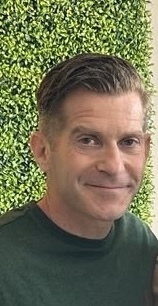

Ben McKenzie, co-author of “Easy Money: Cryptocurrency, Casino Capitalism, and the Golden Age of Fraud,” and writer and director of the new documentary, “Everyone Is Lying to You for Money,” sits down with Lawfare Senior Editor Michael Feinberg about his years-long deep dive into the cryptocurrency industry and why his research makes him skeptical of its literal and figurative value.
To receive ad-free podcasts, become a Lawfare Material Supporter at www.patreon.com/lawfare. You can also support Lawfare by making a one-time donation at https://givebutter.com/
Click the button below to view a transcript of this podcast. Please note that the transcript was auto-generated and may contain errors.
Transcript
[Intro]
Benjamin McKenzie:
All cryptocurrency is computer code stored on ledgers called blockchains that
obscure the identity of the people that are transacting. But if it's just
computer code that doesn't actually do anything in the real world, then you're
sort of just investing in the idea of it, right? Or you're using it to commit
crime.
Michael Feinberg:
It's the Lawfare Podcast. I'm Senior Editor Michael Feinberg, and I'm
here today with actor, director, and writer-journalist Ben McKenzie.
Benjamin McKenzie: I
think that really gets at the heart of sort of the fundamental misunderstanding
of cryptocurrency. Even Bitcoin has people behind it. There are developers who
maintain the operating system.
It's not like you can just create these things and they exist
on their own and they sort of have, they have to exist with people because we
made them up.
Michael Feinberg: Today,
we are discussing his new film, “Everyone Is Lying to You for Money,” a deep
dive into the secret side of cryptocurrency.
[Main Episode]
We're gonna very much get into the substance of the film, but
like you, at the outset of the project, I was very much a newcomer to the idea
and field of crypto.
And having read your book now and watched your film and done
some independent research, I find myself very much in agreement with your
conclusions. So to keep this sort of interesting, I'm gonna steal a page outta
John Stuart Mills playbook and ask you as a sort of anti-crypto advocate to
sort of step outta your own skin for a moment and try and give me the best
argument you can think of to promote any aspect of crypto, whether it's it has
a positive use for society or it's filling a gap that otherwise would go
unfilled. Just if you were a crypto proponent, what would you say to me?
Benjamin McKenzie:
Sure. I love this framework. If I were a crypto proponent, I would say the
regulated financial system sucks.
It's deeply unequal, unfair, the banking system is deeply
flawed and rent seeking, I would say in many ways. And there are many people
all over the world who suffer as a result of that. I was just doing another
interview earlier and a journalist was pointing out there's a woman in
Afghanistan who's not allowed to bank under the Taliban's rule and she's
running a company and so she was using Bitcoin to make payments.
So Bitcoin is a tool, right? Just as money is a tool and it
could be used for good or for ill, I would say that's the most, you know, sort
of charitable argument I can make for it.
Michael Feinberg:
Alright, so let's spend the next, you know, 50, 55 minutes demolishing that
argument.
Benjamin McKenzie:
Yes.
Michael Feinberg:
Because I think neither of us fully buy into it, and I suspect that the
demolition will occur naturally as we sort of walk through the film and your
own journey.
And I think it's with your own journey that I'd like to start.
The film and the book. The book is called Easy Money, by the way. It has
a different title than the film, but they tell largely the same story, which is
a sort of pilgrim's progress of somebody who was not particularly familiar with
the crypto industry, gradually became aware of it, became concerned about it,
wrote a couple of journalistic pieces, mildly, or at least, you know, sort of
softly critiquing it, and by the end of the journey is writing an entire book
and a film arguing that it is probably one of the more corrupt economic
endeavors in American history.
So I don't think I'm spoiling the plot to say that before you
began this journey, you were not primarily known for economic journalism or
public advocacy or testifying in Congress?
Benjamin McKenzie:
Yes.
Michael Feinberg: How
did you go from acting into, what I will call without judgment, advocacy
journalism?
Benjamin McKenzie: I
received an undergraduate education in economics at the University of Virginia.
I majored in economics in foreign affairs, which is their fancy
way of saying international relations. But I've always been interested in
economics. Interestingly enough, not because of the math—I'm very bad at math,
and that probably kept me from becoming an economist. But I always was
interested in behavioral economics and I always thought it was sort of
interesting that, the popular perception of economics is as this sort of dry
mathematical science, whereas in reality, the way I see it, and the way many
behavioral economists see it, the study of economics is really a study of human
behavior in many ways. Human behavior on an individual level, and then on a,
you know, group level, societal level.
So I've always been interested in that. I've always also been
interested in true crime. I love true crime and my favorite kind of true crime
is what I like to call stupid crime, which is where criminals are sort of
obviously committing crimes often in broad daylight, sometimes via tweet, and
then they get caught and then they turn on each other because of course, the
criminals aren't actually a community.
They are, you know, benefiting from each other's criminal
activity briefly and then turning on each other as soon as they possibly can.
And so when I stumbled upon crypto in 2020, it was the throes of the pandemic,
showbiz was on ice. There really was no way to practice my profession when we
didn't know how bad this pandemic was gonna be and I was tearing my hair out.
You know, I was, let's see, around 40 years old and had a
couple kids and was just, what do I do with my life here? My buddy came to me
and said I should buy Bitcoin, old friend named Dave. A lot of people have had
this experience, but Dave gave me terrible financial advice when I was younger,
encouraged me to invest in a, an obscure stock, a company that had supposedly
produced synthetic blood.
It wasn't Theranos, but it was some sort of precursor to this
idea. Anyway, we put money into it and promptly lost it. Dave was scamming me,
but I, you know, took that to heart when he came back to me in 2020 and said, I
should buy Bitcoin, and almost immediately I was very, very suspicious. I mean,
the first thing that I was suspicious of is the word, you know, in economics currencies
do things.
They're a medium, medium of exchange, unit of account and store
of value. Medium of exchange means you can buy and sell stuff with them. Unit
of account you can run your books with them and store of value that any good
currency, the value stays relatively consistent over time.
It was very clear, almost immediately, that Bitcoin couldn't do
any of the three functions of money. I couldn't go to my neighborhood deli here
in Brooklyn and buy a bagel with Bitcoin. They would look at me like I was
crazy. I didn't quite know why that was yet, but we can talk about that later.
Some of it has to do with the technology itself.
But it couldn't be a medium of exchange and it couldn't be a
unit of a counter store of value because the price was so volatile. It was, you
know, jumping. People love to celebrate the jumps up, but the jumps down are
quite dramatic. And so, you know, the fact that Bitcoin was the price was
jumping around like a rabid on amphetamines made me think that this is not a
currency and it wasn't being used as a currency. It was being used by my money,
Dave and others, as a form of investment.
People were putting money into it, hoping to make money off of
it through no work of their own. That is an investment, or should be under
American law. It is how you define investment in American law. But crypto
hadn't been classified that way, so. As it was in the news and just kept
growing and growing as the celebrities got involved, particularly in 2021 I
just felt like I needed to speak up and so I reached out to a journalist, Jacob
Silverman. We started writing articles about it and built up our bonafides
enough to where we could sell a publisher on a book project.
We started reporting on that. And that's when I turned the
camera on and just figured I would document, you know, whatever I found along
this this investigatory journey that I was on.
Michael Feinberg:
Okay. So you actually hit on a couple threads I wanna pull throughout this
interview. And you mentioned one thing that I wasn't planning on discussing,
but I think it might be fruitful to actually take a look at, you pointed out
the dichotomy between a currency and an investment vehicle.
And there certainly are cases, not to get like too economically
nerdy on this, but like there are mechanisms where something can be both. I
mean, people do invest based on exchange rates and stuff like that, but it's
pretty uncommon to have something be proposed both as a unit of currency and an
investment vehicle, when there is not a preexisting exchange infrastructure,
which has accepted it as a tried and true idea, right?
Like we can bet on things like the yen or their renmonbi, or
not BET, I guess, but speculate on where they're gonna be in position to US
dollars, but those forms of currency and viewing them as investments.
They've been around a long time. Bitcoin has not. It has no
real track record or historical analog, and to me, that would make it a very
risky investment. Now I'm not somebody who is particularly aggressive
investments, so maybe I'm not the target audience or mark or whatever you want
to call it, but you did mention that you were sort of fascinated by behavioral
economics.
I am guessing if we're roughly the same age, when you were UVA
studying it, it was very much at the time where a couple professors at
University of Chicago had published some very popular books explaining in plain
English, what do behavioral economists do? Why does it matter? How does it
differ from classical models where everybody is a purely rational actor?
And we don't need to dive into the weeds of that. There's
plenty of books and articles and probably documentaries our audience could
follow up with, but it's all about incentives. And I guess what I'm wondering
is for something as unproven is bitcoin, what is the incentive to put all of
one's savings in it, as many people in your film do?
Benjamin McKenzie: Right?
The incentive is you're gonna get rich quick. I mean, it really is quite
simple. It's a get rich quick scheme wrapped in a certain modern sounding
techno babble.
But to just focus on the investment side for a second, one
thing that really needs to be stated, so blindingly obvious, we often just sort
of skip over it, is Bitcoin and cryptocurrencies are quite a strange investment
because what are you investing in?
What is the tangible real-world asset that your investment
represents? You know, all cryptocurrency is is computer code stored on ledgers
called blockchains that obscure the identity of the people that are
transacting. But if it's just computer code that doesn't actually do anything
in the real world, then, you're sort of just investing in the idea of it,
right? Or you're using it to commit crime and investing in the idea of it is
kind of predicated on other people investing in the idea of it.
There's a couple of things in economics that are sort of worth
pointing out, one is called Greater Fool Theory, which is that the price of a
speculative asset rises and people start investing in it and they assume that
they can buy it and then sell it to a fool greater than themselves.
And this can last for quite a long time. It's a fun game.
Everyone wins on the way up, but as soon as you know, it tops out and you're
the biggest idiot left holding the bag, it's not quite as much fun. The other
thing is what Robert Shiller pointed out, Robert Shiller, you know, obviously
one of the most famous behavioral economists and his work influenced me more
than probably anyone else. He talks about naturally occurring Ponzi schemes
where the price of a speculative asset rises far beyond any relation to its real-world
value. People notice that and then buy it, thinking that it's going to continue
to go up, which of course, sends it further up, which of course brings more
people in.
And so it just goes around and around, and these things can
last for a very long time. And so that's how I started to view crypto is
basically, you know, the only thing you can really do with cryptocurrencies is
gamble. Bet the price is going up or down, speculation, but it's really
gambling, I would say, because there's no asset underneath it.
And then crime you can use it to, you know, but because you can
obscure your identity, you can do things, you can send something of value
somewhere instantaneously anywhere in the world and you're avoiding people
knowing you are, you're also avoiding the banking system with all of its pesky
rules and regulations, so.
Michael Feinberg: For
those who don't know if you make certain types of cash transactions at a bank
that are irregular in size or groupings or time periods and over a certain
dollar threshold, you're automatically gonna generate something that's called
the suspicious activity report, which banks are mandated to pass on to the
government and are often used to predicate criminal investigations.
If you try and avoid suspicious activity reports and you do a
number of transactions under the dollar threshold, you could be charged with
something called structuring, which is specifically to avoid SARs. But from
what you're saying, there's no overarching regulatory mechanism on Bitcoin that
serves a similar function.
Benjamin McKenzie:
Yeah, and it, the technology itself is innately difficult to track, right. I
mean. Because you don't know who controls each of these addresses, sort of like
accounts and because there are these other things called mixers, crypto mixers,
where basically you send your cryptocurrency to a site and they, they mix it
with all these other cryptocurrencies, and it comes out the other side with its
identity obscured even more.
And because transactions don't have to happen on the
blockchain, you can have what's called an over-the-counter transaction where
you're transacting cash and exchange for cryptocurrencies, so the technically
the address hasn't moved. You never see any transaction, but in fact, ownership
has changed.
So there's all sorts of ways to use cryptocurrency to
facilitate criminal activity, and to give you a sense of the size of the
criminal activity that's facilitated. There's a crypto company called Chainanalysis
that came out with a study last year. Or sorry, early this year, about last
year that found that approximately $154 billion of illicit activity had been
financed via cryptocurrency.
$154 billion in one year, it is an extraordinary amount of
illegal activity. A lot of it is money laundering, but it's also sanctions of
evasion, tax evasion, its child sexual abuse material. Jeffrey Epstein was an
early investor in crypto in Bitcoin. We can talk about that. And so, you know,
you really are talking about a massive amount of crime.
So when, when you asked the John Stuart Mill question earlier,
and I advocated for sort of like people can use crypto for good. That is true.
People can use it for good. Of course, it's a tool. But realistically, if you
were being adults here, and you would know this better than I and your former
profession, what are people using this for?
On average, they're using it, the retail public is gambling and
the criminals are using it to. You know, get paid for their crimes. And the
crimes are really, you know, fascinating. It's Russian oligarchs selling
sanctioned oil to the Chinese via crypto and exchange for drones that they send
to Ukraine.
I mean, it's stuff like that. It is really wild. So it has
enormous social costs. I think that's just something that ought to be put at
the forefront when we're talking about crypto and practically what it does and
what it's used for.
Michael Feinberg: So
even if it was a reasonable sort of libertarian leaning substitute for
government issued currency, what you're saying is there's still even then would
be a lot of negative externalities that get born by the rest of society,
including those who don't use crypto at all.
Benjamin McKenzie:
Yeah, and we should interrogate the premise that you can have a currency devoid
of, you know, government issue. So if the money doesn't come from the
government, where does it come from?
The crypto folks don't like to talk about this, but the answer
is corporations. In the case of cryptocurrency, it's not just World Liberty
Financial, Donald Trump's corporation that issues his currencies, but it's also
Bitcoin. The overwhelming majority of the Bitcoin that are mined currently, are
mined by multi-billion dollar corporations, some of which are publicly traded.
So if corporate money seems like a good idea to you, if you'd
like corporations to have even more control over our daily lives and even more
influence in our economic and financial system, then okay, but I would argue
that's a really bad idea, and I think the majority of the public believes that
as well.
They just don't quite perhaps see it as clearly as I do because
they haven't spent four years or five years looking at this. But that really is
the answer. It's corporate money, which is also called private money as opposed
to public money. We've actually even tried this before. So we don't have to
think in theoreticals, we can go back to the wildcat banking era of the 19th
century.
America was trying to expand West, trying to provide credit for
folks that were west, being like Michigan at this point or far west. And so
banks were allowed to issue their own notes, their own currencies, as long as
they held a certain amount of state bonds. It was called the free banking era
and also the wildcat banking era.
And it was called the wildcat banking era because you were
allowed one chapter for your bank and you would often set it up as far away
from your depositors as possible, where the wildcats roamed and once you had
their money, what's to stop you from taking off with it? So there was a lot of
fraud.
There was a lot of instability. Sometimes it worked. It worked
better in New York than it worked further west. But the overall takeaway I
would say is that the system did not work that well and was eventually replaced
by a central bank. And that's really been the story of money. You know, over
time, I would say, or one of the central themes is that because money is a
fiction, we made it up.
It's just a social construct like government or religion. It
relies on social consensus, obtain that social consensus by force with a
monarch or a dictator or emperor in the past, or you can achieve it via
democracy in, in, in our system quasi democracy perhaps. And aspirational
democracy.
And so the story of crypto is really kind of false in so many
different ways. It sort of can't work fundamentally, technologically, we could
talk about that, but also historically it has failed in the past. And just should
seem like a bad idea to the majority of the public who is already suspicious of
corporations and their power.
Michael Feinberg:
Alright, so let me play devil's advocate on a couple of the points you've
raised and the arguments that are gonna be implicit in my questions are not
necessarily, well, they're definitely not ones I believe, but I think we should
address them.
The first is, earlier in the conversation you talked about
crypto not being backed by anything. In other words, it's not a real
representation of something fungible, right? Like there are certain currencies
in the world that are backed by actual physical assets or minerals or something
along those lines.
And for a long time, the United States tender was backed by
gold, and there is a decision in the 70s, for a variety of reasons, to go back
from that. And you know, today the only value that American currency has in a
marketplace is essentially the backing of the federal government, this sort of
implicit trust that the government of the United States and its institutions
will hold long enough for transactions to be completed, investments to run
their course.
In other words, it's a sign of stability. How is crypto
different from that, except that it just doesn't have the 250-year history of
the United States? Or is that lack of history enough to make us doubt it?
Benjamin McKenzie: And
doesn't have the 25- year track record of the world's most powerful country
that, and also the most powerful country that's ever existed in human history?
Yeah, that's a pretty big distinction, I would argue. I mean, I
do think it's different. Look, we should talk about the gold standard though
actually as well, if you don't mind, because crypto advocates will also make
this argument that sort of, there used to be real value to our currency because
we were on the gold standard.
But when Nixon abandoned it in the 70s, you know, it's been
untethered from anything that's sort of real in, in the real world. I think
that fundamentally misunderstands the nature of money because why is having
this pretty thing called gold valuable? It's valuable, not because it's the
most scarce mineral on the planet.
It's not. But because other human beings have for centuries,
millennia, really assumed it to be valuable. It's been traded all over the
world for a very long time. But there are real disadvantages to a currency
being tied to anything that is that tangible. And lemme give you a specific
example.
During the Great Depression, prior to the Great Depression
specifically, we were on the gold standard, and there's a great book, Lords
of Finance by Liaquat Ahamed on the,
Michael Feinberg: I
have it sitting up on the shelf.
Benjamin McKenzie:
Yeah. Great. So he chronicles the central bankers at the time of the major
powers, the U.K., the United States, and France.
And because the powers of the world at the time were all on the
gold standard, when the economy suddenly shrunk, there was very little that
they could do to expand the money supply, and so the economy just folded
inward. People stopped buying and started hoarding and the ripple effects were
sort of enormous.
So it makes a very persuasive argument that one of the
contributing factors to the Great Depression was the insistence on relying on
the gold standard, a standard that, of course, ultimately was scrapped. I think
that's really important for us to understand. Let me give you a counter
example, which would be COVID, right?
When COVID hit and the economy could have easily crashed in an
extremely dramatic way, right? If people can't go about their daily lives and
be productive or large swaths of them, then the economy could go south very
quickly. And these social constructs like money, like government, like religion
they're ultimately quite fragile.
You know, if there's a massive event, a global pandemic, and
people lose faith in, in the government or in the currency, then things can get
really bad really fast. So what did the government do? It printed a ton of
money. It flooded the zone with money. We can argue of how well it did.
In many ways it not do it that well, but the overall strategy
worked. The economy didn't crash. It had a very quick recovery. And yes, we had
inflation and yes, that's something worth talking about and whether we could
have managed that better, but we prevented a global depression, you know, that
is a very good thing for the world and something that is not possible, I would
argue, if we were still on the gold standard.
Michael Feinberg:
Yeah, and I mean, I think we should note, and this is a little awkward for me
'cause I very much used to move in these circles, but I think the supporters of
going back on a gold st—like they're on a pretty far libertarian fringe at this
point. It's this sort of thing you see in Robert Hyland novels and some think
tanks out on their own peninsula.
So I don't want people to walk away from this, at least from my
point of view, thinking that this is, that's a real option going back on the
gold standard in today's modern world. That was my unintentional editorializing
on our conversation.
Benjamin McKenzie: No,
I'm really glad you brought it up because I think that's true.
I mean, you obviously can find some economists from what's
called the Austrian School who are more sort of gold buggy, but it's really
hard to find a mainstream economist who believes the gold standard is even
worth considering again. And sorry, I should have made the correlation between
the gold standard and crypto more clear.
What the crypto advocates argue is that Bitcoin's limited
supply, only 21 million Bitcoin can ever exist makes it scarce and so it makes
it like a digital gold. But they fundamentally misunderstand even the gold
standard because, or really scarcity. Scarcity could only exist if demand
exceeds supply at the price of zero.
And I would argue that really if this thing is a Ponzi scheme,
then there really is, it's limited supply, but it's not scarce. I use an
example in the book where the difference between limited supply and scarcity.
Imagine I live in Brooklyn. Imagine I owned the rights to all the dog shit in
Brooklyn.
All of dogs’ poop. Not the dogs themselves, but the feces.
There's only so many dogs that can exist. There's so many times they can
defecate. What I have is, you know, a monopoly over a limited supply of a
certain good. But is what I have scarce? No, because no one wants to buy my dog
shit.
It is just dog shit. And that's what I would say. Crypto is
economically, it's a vehicle for crime and as an asset, it's it's dog shit. I
think Warren Buffet referred to as rat poison, which is another way of phrasing
it, I guess.
Michael Feinberg:
Alright, so I had a couple other questions I wanted to ask you, but I'm gonna
put them aside because your statement about the Austrian School spurred a
thought in my mind that I think we should follow up on, and I don't think has
been covered in any of the other interviews or writings you've done on this.
Austrian School is essentially a group of economists who take
their inspiration largely from Hayek and von Mises.
And have a pretty laissez-faire to say it mildly attitude
towards how economies should function. And I think what we see in the
progression of the Austrian School is you start with Hayek and it begins with
what I think is actually a very persuasive critique of command economies and
how they are unreliable profits of pricing.
I, I don't know how else to put it in a colloquially fashion,
but you have Hayek and then it goes to von Mises who takes the ideas of Hayek
and promotes them into a more political sphere. And probably, in my estimation
at least, loses a little bit of the intellectual credibility that the movement
started with.
And by the time you get to our era, you have individual
theorists in both the economy and political science—I'm thinking people like
Murray Rothbard, who really take the ideas that I think are fundamentally good
ideas and stretch them past the breaking point in this almost utopian vision of
how society should be structured.
And I don't wanna just pick on the right, I think there are many
economists, I'm thinking of some of the individuals who were prominent in
Greece when it had its financial catastrophe a decade or so back. Who took the
ideas, if I was trying to be provocative, I would say Marx, but I'm not trying
to be provocative.
You know, they were sort of Keynesians on steroids. And I think
the further they got from the general theory of Keynes and the stuff he talks
about and the economic consequences of the piece, they started broaching out
into larger societal diagnoses that were outside the sort of strict parameters
of the financial sector.
So I think this does happen on the left and the right, and you
know, economic ideas have a certain amount of intellectual currency in any
society, largely because it's sort of this sacred mystery that a lot of people
just don't understand. But it also, inevitably, economic ideas have political ramifications
and oftentimes, the second and third order consequences of those ramifications
are not ones the original thinkers intended.
Now, let's bring this back to the subject of your film and the
book. Bitcoin is the result of a theoretical paper published by an individual
or a group of individuals who use a pseudonym and the New York Times actually
published an expose yesterday purporting to potentially identify the individual
behind it. But there's this, what I will call a manifesto, a white paper, what
have you, spelling out the promises of cryptocurrency.
Now, Adam Smith spells out capitalism, Karl Marx spells out
Marxism, Keynes, spells out Keynesianism, and all of these philosophies, if
taken to an extreme, can have both very positive and very negative effects.
Do you think that the corruption and instability that seems to
naturally flow from Bitcoin is baked into its founding principles, or do you
think this is a value neutral idea, which somehow goes off the rails?
Benjamin McKenzie: I think
it's more the former. I think Bitcoin advocates fundamentally misunderstand the
nature of money.
One of the things that they argue in the white paper is that
you could create a trustless money, a money that doesn't require trust. All you
have to believe in is the computer code, and you can see the computer code in
front of you on this public ledger called the blockchain. And therefore, we can
ignore and avoid having to, those pesky things like human trust and human
social interactions and economic interactions.
And that's just wrong because computer code doesn't fall from
the sky. People write computer code and whether Satoshi Nakamoto is Adam Back
or somebody else, or Adam Back and Hal Finney working together, another
cryptographer who's since died. We don't know, but in some senses, economic,
economically, it doesn't matter because you can't trust code only the people
that write it.
And to give you a very vivid example, Sam Bankman-Fried, who I
interviewed for the film, who’s now doing 25 years in jail for stealing his
customers money. The way that he stole the money was he told one of his
employees to change a single line of code inside the FTX source code so that
his trading firm could borrow, if you're listening to this, I'm using air
quotes, borrow from the exchange. In other words, steal his customer's money.
I think that really gets at the heart of sort of the
fundamental misunderstanding of cryptocurrency. Even Bitcoin has people behind
it. There are developers who maintain the operating system. It's not like you
can just create these things and they exist on their own and they sort of have,
they have to exist with people because we made them up. You know, these are all
made up, human, social—you can't have a social construct without social,
without society.
And so I think it's wrongheaded and then it ultimately is very
dangerous. Ultimately, it's extremely dangerous because it does two things. It
undermines the belief in this, undermines the rest of our belief in the rest of
the system. And it furthers schemes and frauds, as well as criminal activity.
And the combination of those is really sort of the you know,
the deadly poison that we're facing today.
Michael Feinberg:
Okay, so you mentioned Bankman-Fried, and I do want to talk about him a little
bit, not because I find he himself a particularly interesting character, but
his story is the catalyst for a lot of how views about cryptocurrency change
over time.
And I wanna talk about three groups that I really see as having
promoted cryptocurrency as a legitimate going concern. The first is
celebrities. The second I would say is a group of financial journalists who
frankly, by their training, should have known better. And the third is the
political class. And I think it's important to take them in that order with
increasing importance.
So let's just sort of go through each of them. There is a
moment in your film where I think you start cursing at a Matt Damon commercial
that ran during the Super Bowl. And this isn't to just dunk on Matt Damon, but
there were a pretty good number of celebrity endorsers of cryptocurrency, and I
was wondering if you could sort of dive into why you think that might be.
I realize I'm asking you to armchair psychologize, but is it
just simply a matter of doing an endorsement like any other commercial
endorsement?
Benjamin McKenzie:
Yeah, I mean, it's very simple. They were paid in real money to convince you to
take your real money and turn it into something else. They were, maybe not
explicitly, but implicitly, offering you financial advice, which is illegal,
technically speaking, if you're not a licensed financial advisor.
But more to the point, they, you know, celebrities have always shown
products. I have fun in the movie, you know, even my wife is an actress, has
done hair commercials before. There's nothing wrong with celebrities shilling,
you know, consumer products like, you know, haircare or soap or cars or
whatever.
But a shielding a financial product is a very different thing,
you know? There's all sorts of rules around financial products because we
really want customers or investors, excuse me to be fully informed and to be
protected in the event of you know, fraud or even just mismanagement of their
funds.
And so that's why securities and the proper classification of
cryptos as securities is so essential to getting a hold of this thing. You
know, I think that the celebrities, I, you know, I would never be able to know
what was inside their brains, nor would I try, and of course it would vary from
person to person, but the essential thing that I was so angry about is that
they shouldn't be doing it, period, because it's a financial product.
And they weren't thinking about it clearly or were just sort of
accepting that this was okay, even though they did it to sell somebody on
something, they didn't. Probably know much about themselves and weren't exposed
to, 'cause they weren't buying the crypto. It was the other people. Matt Damon
wasn't out there going, buying Bitcoin and Ethereum or whatever.
Somebody should ask him about that. Actually, I've never
thought about that. He has he ever bought any? But they weren't doing it. They
were getting paid in U.S. dollars, so that's why I got so angry. The celebrity
thing's pretty straightforward to me, having been in showbiz for you know, 20
plus years, like the crypto companies come to the major agencies.
There's only a few talent agencies left because of the
consolidation in the entertainment industry. They have a massive marketing
budget and they say, you know, we'll pay X dollars for this level of actor, and
they work their way down depending on who's willing to do it. And you know,
when you're talking about a Ponzi scheme, you have to get, the more it grows,
the more people you need to get into the scheme to keep the thing afloat.
And so it makes sense that at its peak, in terms of popular
perception at its peak in 2021, 2022, the crypto companies needed the most
people, famous people in the world to chauffer for them. They're sort of, you
know, the largest megaphone possible to reach the largest audience. But that
didn't make what the celebrities was were doing, right?
It simply sort of explained logically why it happened. So yeah,
I was outraged at the time, and I have a laugh at it in the movie, but I was
really pissed off.
Michael Feinberg:
Alright and I should note, like I will say something, you will not probably
brag about yourself, but there's even a point in the film where you're asked to
give advice on crypto, and it's very clear that you want to tell people to do a
180 and run far away, but you do point out like, I'm not a financial advisor.
I'm not giving financial advice. Just be careful. So kudos to you for not, you
know, doing the exact opposite that you are critiquing.
But there's another group that also played a real role in
promoting this, and I'm talking about financial journalists. I would humbly
argue that there are very different tiers of financial journalists and some who
are writing legitimate in-depth stories for the FT, or the Wall Street Journal,
or what have you. And then there's a tier that's on cable news screaming and
telling you how to invest your money.
But at one point in the film, there's a scene of Michael Lewis
sitting down and doing a sort of hosted round table with Sam Bankman-Fried, and
Michael Lewis is somebody who I would probably put closer to the legitimate
tier. I mean, definitely put closer to the legitimate tier of journalists than
I would the screaming heads on minor cable networks.
How did otherwise educated, financially literate individuals,
who are probably familiar with the history of crashes and scams, like I can
guarantee you that you know, Michael Lewis could very well explain why building
an entire economy on the price of tulips in Holland was not a good idea—Why
wasn't he able to see around the same corner with crypto? And I'm not asking
you to talk specifically about Michael Lewis, I'm just using him—
Benjamin McKenzie:
Yeah sure. Well, so stepping back a bit I agree with your analysis there and
I'm so glad we were able to talk about this because it was one of the things
that was most frustrating to me.
I'm obviously not a journalist by training, and I was working
with a journalist, Jacob Silverman, who wrote the book with me, but I was new
to the world and I was sort of befuddled as to how people who were, should at
least have a, I mean, they should have more than a passing familiarity with
economics, if they're finance journalists, how they could take this thing
seriously and not at a minimum, critique it or interrogate it from a, you know,
a sort of objective framework where you're sort of questioning all the logical
inconsistencies that we've gone over in crypto.
So I was deeply frustrated by it. What I came to learn was
quite depressing. On the lowest end of quote unquote journalists, you have a
lot of online outlets where journalists are paid to write, by crypto companies,
to write articles. I mean, I don't wanna cite any specific examples because I
don't want to get sued, but like, this happens a lot.
And there are crypto outlets specifically that, you know, have
a kind of a complicated history with this, tortured history with this. So
that's the low end. But you work your way all the way up to Michael Lewis, who
I agree. I mean, Michael Lewis, it kind of broke my heart, I mean, his first
book, Liar's Poker, was probably the work that influenced me the most in
terms of being willing to write a book about financial markets that was much
for, from the behavioral side, had a sense of humor was kind of demystifying
finance, because if you read that book, it's about his days—He worked briefly
for Solomon Brothers, I believe and was just, you know, it's a, Liar’s Poker,
it's about the culture of Wall Street rather than the sort of intellectual
trappings of it or whatever, market structure, things like that. Very good
book. And Michael's a very good writer.
I was deeply disappointed in his embrace of Sam publicly. You
know, why was he in that conference? Who flew him there? Did they put
him up? Like, you know, this is sort of financial entanglements with the star,
potential financial entanglements with the star with the focus of your book.
That, you know, for most journalists would be, you shouldn't do that. I mean,
to be blunt because it's creating a conflict of interest.
I critiqued his book quite seriously. I wrote a whole review of
it in—people can read it if you want, but I was very frustrated. He did things
like, there's a scene he recounts in the book FDX is collapsing and there's a
conversation between Sam Bankman-Fried and two of his colleagues on the balcony
of the penthouse in The Bahamas where they're all staying, and his re—in his
recounting one of the colleagues, when Sam says, ‘oh, I'm really worried we're
all gonna go to jail. You know what do I do?’ And Sam purportedly says, ‘well,
you didn't do anything wrong, right? So you should be fine.’ And the guy says, ‘well,
I don't know. Maybe I did.’ He says, ‘oh, well, you know, it's gonna be all
right.’
You know, something like that. And so sorta paints Sam as the
sort of responsible guy, you know, who's like kind of trying to be a good
shepherd here. It paints the colleague as the one who may have committed
crimes, and it's recalling it in dialogue. You know, it's as though it's an
actual scene, but there's an asterisk at the end of the scene and at the bottom
of the page it says effectively, this is from Sam's retelling. This is based on
a single source supposedly from Sam Bankman-Fried. Come on, man. Come on. What
are we doing here? I am not a journalist by training, but it doesn't take a
journalist to know that is, you know, should be unacceptable.
So I don't know what happened with Mr. Lewis. He's still an
incredible writer and he can turn a phrase like nobody else. I wish I was as
good a writer. But I think what's frustrating for me is that he, you know, he's
supposed to be writing nonfiction here, but the lines are getting pretty
blurred, and I don't know why—I don't know why he didn't change course,
actually in the interim, because I thought what would have been very smart to
have done was to enter in the same place where you believe that Sam was, you
know, like a, like so many other people, was this incredible you know,
mathematical savant and innovator and entrepreneur.
Then as that's revealed to be false, realize you were duped
too. Put yourself in that role and be humble about it. And I think that could
have been a fantastic book. But he didn't do that. He doubled down and was even
saying things like his book was a letter to the jury, you know, trying to
influence them to have, I guess, some sort of sympathy for Sam.
I mean, that is, I don't know. I don't agree with that. I went
to the trial. He was there, occasionally. All of the journalists were naturally
seated on the prosecution side. That's where the court officers sat us. Michael
Lewis was the only one on the defense’s side.
Michael Feinberg: I
just have two more questions for you.
One is a continuation of what we've been speaking about just
now, and that is the third group that was really involved in giving soccer to
this industry. And that's politicians. You host a number of video clips and a
number of still photographs. A very influential and powerful politicians
engaging, what I will just call, shilling for the crypto industry.
Ted Cruz has a speech, which I think in this day and age comes
off particularly bad. But one of the things that really interests me is towards
the end of the film, you go and testify before Congress about what you've
learned. And the hearing is specifically in response to Sam Bankman-Fried’s criminal
activity, like at this point it's been charged, it's been adjudicated, we have
proven beyond a reasonable doubt that the foundations of this entire house were
just sand.
What amazes me is as you're giving the testimony, knowing what
the public knows now about what was going on, there are still some senators who
preface all of their questions with a defense of the crypto industry, and they
end almost all of their questions with a jeremiad against regulating it.
Is this just as simple as regulatory capture?
Benjamin McKenzie:
It's regulatory capture and it's corruption. I don't know how else to put it. I
mean, I guess it's perhaps legal corruption in some senses. Thank you, Citizens
United yet again, but the crypto industry has spent enormous amounts of money.
I'm talking like over $200 million in the 2024 cycle.
There's a a group that did a study that estimated that
something like 40, 40 something percent of all corporate contributions in the
cycle came from the crypto industry alone. You know, that's more than the
defense industry and you know, pharmaceuticals and all of them combined. I
mean, it's really sort of a staggering amount of money.
And they used it as both a, they use it as both a carrot and a
stick. So if you are friendly to them, they will give you money, if you support
the sort of legislation that they want passed or have passed. And if you're
critical of them, even in sort of mild ways, they will come after you. And they
did specifically with Sherrod Brown, who was the chairman of the committee when
I testified in 2022.
I mean, all he's doing is calling a hearing because there's
been this massive Ponzi scheme that's imploded and it's in the news, it feels
like something we should be talking about. And in retaliation, the crypto
industry spent $40 million boosting a literal car salesman, Bernie Moreno, who
won. Now the crypto industry isn't always successful.
Sometimes they spend tons of money and people lose anyway. But
one of the interesting things that the crypto lobby does, much like APAC, is
they obscure what it is, they're, where the money's really coming from in the
sense that the, you know, they create these super PACs with these sort of
benign names, you know, protecting America's future or something. I'm making
that up.
I don't know if that's one of them, but like, things like that.
And yet they're really crypto, crypto packs. So why do you need to do that if
your cause is so just so the sad truth is, and this is one reason why I wanna
be, I'm so glad to be here at Lawfare and I wanna speak up so clearly
here and express my opinion informed by years of research because I think it's
critical for Lawfare’s listeners who are very well informed and listen
to these things and have a lot of political capital themselves to spend.
It's extremely important to understand that it is not just the Republicans
who are, have been co-opted by the crypto lobby, the GENIUS Act, which was a
bill that was passed last year that allows corporations to issue their own
currencies in the form of stable coins, 100 Democrats voted for that, including
Hakeem Jeffries, including Chuck Schumer, including my current Congressman Dan
Goldman in New York's 10th.
That's outrageous, or it should be outrageous. If the
Democratic Party, I'm a Democrat, I'm a liberal, progressive. If the Democratic
party stands for anything, it should be anti-corruption. And it is really
galling that these representatives of the people are doing something that goes
against the wishes of the people.
Because if you look at the polling, the majority of the public
is deeply skeptical of crypto and for good reason. So I'm quite angry that
members of the Democratic lobby have been, in my opinion, co-opted, and I'll be
speaking out on this every chance I get.
Michael Feinberg:
Well, I'm glad we could afford you that opportunity here.
And I just want to cover one more thing that is not in the film
but plays a pretty decent part in the beginning of your book. And I want to
cover it because I think it's probably, if you look at my life and career and
interests and your life and career and interests, this is the only common part
of the Venn diagram.
I spent my career in counterintelligence, which meant I was
dealing with CIA on a weekly, if not daily basis, and at one point in the book,
it seems to me very much that CIA is trying to recruit you. So, as I told you
before we began, I would not be a good member of the FBI family or alumni
community or what have you, if I did not take a, an opportunity to poke CIA in
the eye.
So let's sort of walk through what that experience was like and
just, you know, be as ridiculing and sarcastic as you want.
Benjamin McKenzie:
Alright. Well, I don't know if I'll be able to satisfy your urge for
ridiculing, but I'll do my best to portray it as I remember it. We were at, South
by Southwest in 2022, the big music tech film conference in my hometown of
Austin, Texas.
And we were at an event, we were getting a beer at the bar. It
was some event for NFTs. It was ridiculous. And I get a tap on my shoulder, I
turn around and there's a guy who says something like, are you who I think you
are? Or something like that. And you know, I, because I've been on tv, I'm kind
of used to people recognizing me for various things.
And I say well, yeah, I'm an actor and I'm assuming he wants a
picture or something or just to say, hi, whatever. And he says, I'm with the
government. Do you have a second? Okay, sure. So, I walk over—and this guy was
different. He was, he, it was an NFT crowd, so it was a lot of asymmetrical
haircuts and people dyed hair and weird, you know, it was a very, like, I guess
he would call it hip, definitely hipper than me, crowd.
But this guy was wearing like, you know, like the, you know,
the government issue—
Michael Feinberg: Well,
you do open your book with Henry Public, so I don't think you could disavow all
hipster affiliates.
Benjamin McKenzie:
That's true. That's true. I'm a, like a middle-aged Brooklyn hipster, I guess
on some level. But the, these guys were wearing sweater vests and, you know,
collared shirts and they seemed very out of place.
The group that he walked me over to, and basically, yeah, they
said they were very various, people, you know, working inside the government.
And crypto had been an interesting thing for them, it had been useful to pay
sources specifically overseas. One guy said that, and you know, we had a little
chitchat for a while and then the guy that approached me said, Hey, you know,
can I take you are you guys around? Can we meet up? You know, can I take you to
dinner and you know, I was new to journalism, but I figured, as this is a sort
of a voyeuristic work of reportage, when the CIA asked you dinner, go to dinner
with the CIA, what's the worst that could happen?
So what happened was Jacob and I went to a dinner with this guy
and one of his colleagues, or former colleagues now in, in private, the private
sector. And it was a bizarre night. You know, because I kept trying to
understand, are these guys actually CIA or are they just sort of, you know,
pulling my chain 'cause they wanna hang out with with Ryan Atwood from the OC
or you know, he is like, can you be a source for me? And I was like, I don't
think I feel comfortable with that.
And, anyway, it was a very amusing evening involving an
enormous amount of vodka in the form of martinis and steaks, all I'm assuming
on the government's tab, so I do apologize to the public for that, but it was
at least entertaining evening out and I decided I would not go further with
that gentleman and his colleague in terms of interacting with them.
And sure enough haven't spoken to 'em since, but fun chapter
for the book.
Michael Feinberg: And
at least you got a good meal out of it. If I can say anything for CIA, it is
that their budget is enormous and it's reflected in how they cater their source
meetings and it's reflected in their cafeteria, which is easily the best
government-run dining outlet in Washington, but I think we will leave it there
before we go off on too much tangent.
Ben McKenzie, thank you again for joining us. I would be remiss
if I did not note that Lawfare is based in D.C.. as is a lot of our
audience, and you will have an opportunity, if so, inclined to see Ben talk
about the film and do a Q&A at the American Film Institute on, I believe,
April 20th and April 24th in Silver Spring.
I'd encourage you to check out the film. So thank you again.
Benjamin McKenzie:
Thank you. And if anyone needs information on the film that all of the
information is on the website, which is everyoneislying.com. But I will be in
the DMV for that week, for those two screenings, and we'll have some special
guests.
I think there's gonna be some fun folks to talk to and yeah,
come out. It's a fun movie. It's, you know, that we've had a pretty serious
conversation, but as hopefully you can attest to Michael, it's a fun,
lighthearted movie. I try to keep it short and sweet. And hopefully it, it's
nice to see it in the theater.
It's played the festival route. It's nice to see in the theater
amongst fellow members of this community, which is a pretty broad community,
right? I mean, it includes, it's basically everybody who's kind of frustrated
with the state of affairs here and the fact that everyone is lying to you for
money.
So, come out support and I hope to see you there.
[Outro]
Michael Feinberg: The
Lawfare Podcast is produced by the Law Fair Institute. If you wanna
support the show and listen ad-free, you can become a Lawfare material
supporter at lawfaremedia.org/support. Supporters also get access to special
events and other bonus content we don't share anywhere else. If you enjoy the
podcast, please rate and review us wherever you listen, it really does help.
And be sure to check out our other shows, including Rational
Security, Allies, The Aftermath, and Escalation, our
latest Lawfare Presents podcast series about the war in Ukraine. You can
also find all of our written work at lawfaremedia.org.
The podcast is edited by Jen Patja with audio engineering by Cara
Shillenn of Goat Rodeo. Our theme song is from ALIBI Music.
And as always, thanks for listening.