
How the U.S. Military Learned to Embrace AI Warfare


Editor’s note: This piece reflects work completed during the author’s Tarbell fellowship at Lawfare and does not represent the views of the Center for AI Safety.
***
Since 2017, the U.S. military has been working on “Project Maven,” arguably its most significant artificial intelligence (AI) project to date—and easily its most famous. The CEO of Palantir, a company that was instrumental in building Maven’s flagship AI-enabled software platform, boasted in December 2024 that the project has “really changed the history of the world.” This framing is surely corporate hyperbole, but recent news suggests Maven is already influencing U.S. military operations: In the first half of 2026 alone, Maven’s software has reportedly supported the U.S. in waging war against Iran and capturing the president of Venezuela. Give the underlying AI systems a few years to improve, and what now reads as boastful may read as merely premature.
The tale of Project Maven is now public with Katrina Manson’s new book. Despite her extensive experience as a journalist covering related matters, it is hard to fathom how Manson managed to acquire so much information about the project. It has been exempt from reporters’ Freedom of Information Act (FOIA) requests for years, beginning not long after Google’s involvement prompted national news and controversy in 2018. The program’s budget is classified. Yet through hundreds of interviews and doubtlessly time-consuming research, Manson has uncovered enough details to walk through Maven’s history in depth, ranging from early mishaps battling Somali terrorists to genuine contributions in defense of Ukraine.
This history is unavoidably technical, but Manson makes it personal as well. The book offers detailed profiles of key figures in the project, especially Marine Col. Drew Cukor, who ran Project Maven from its inception in 2017 until late 2021. One person who worked on the project describes Cukor as “Elon Musk-esque,” adding that “[e]ven if you hated him, you still saw the brilliance and you wanted to learn.” Another early Mavenite calls Cukor “a psychopath ... in the best way.”
Given that leaders of military projects generally seek to control information about their efforts, readers might wonder whether Manson sometimes received a curated view of Maven. Nonetheless, her tone is consistently neutral and journalistic; she often spells out conflicting perspectives, allowing readers to draw their own conclusions. This fact-finding, even-handed storytelling makes her work stand out. It is rare to find a book that unpacks a U.S. military project with such depth and neutrality, particularly when the project involves fundamentally shifting America’s approach to war.
One similar example is Fred Kaplan’s “The Insurgents,” which describes efforts led by Gen. David Petraeus to adapt to modern conflicts in Iraq and Afghanistan. (Kaplan recently published his own review of Manson’s book in the New York Times.) But “The Insurgents” does not revolve around a weighty new technology, as “Project Maven” does with AI. With that distinction in mind, the closest historical analogue may be Richard Rhodes’s “The Making of the Atomic Bomb,” especially the sections focused on the history of the Manhattan Project.
Project Maven’s Capabilities and Impact
To understand the impact of Project Maven, it’s important to consider prior efforts to leverage software for military intelligence purposes. Manson begins her story 25 years ago in Afghanistan, only a few months after 9/11, when U.S. forces moved to seize the Kandahar airport. During that operation, Cukor used a computer loaded with Google Earth, Microsoft Office, and in-house military software. Excel tables collected the names of al-Qaeda targets, while PowerPoint diagrams illustrated connections between people. These systems weren’t very helpful.
A decade later, in 2011, Cukor helped the U.S. start using Palantir’s data management platform in Afghanistan. It was “immediately a hit,” according to Cukor, garnering 250 users within eight weeks. For example, Palantir’s system helped track information with potential relevance to the Taliban’s creation of improvised explosive devices, including fingerprints and weather patterns. By synthesizing data from different sources, it revealed at one point that U.S. forces had raided a single location no fewer than 20 times.
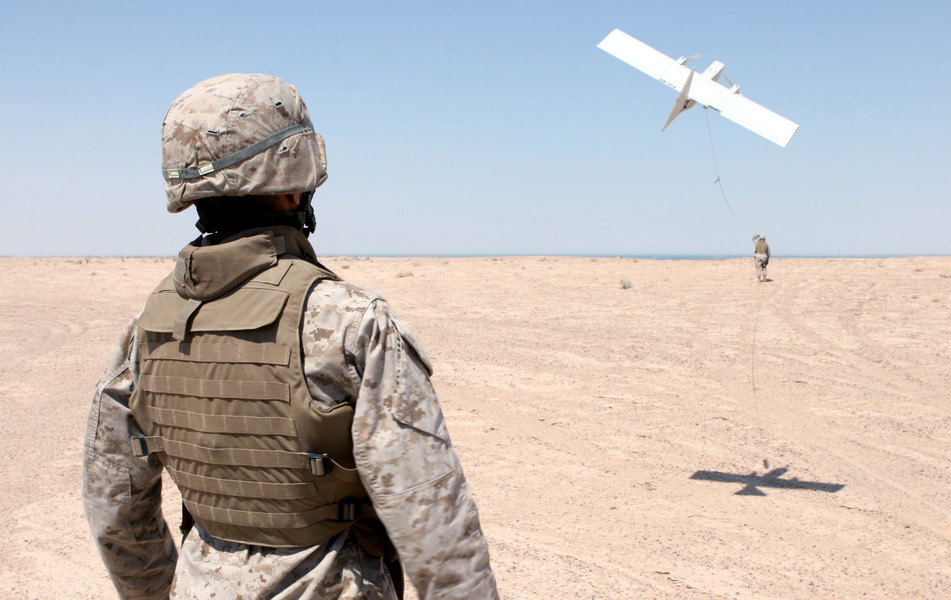
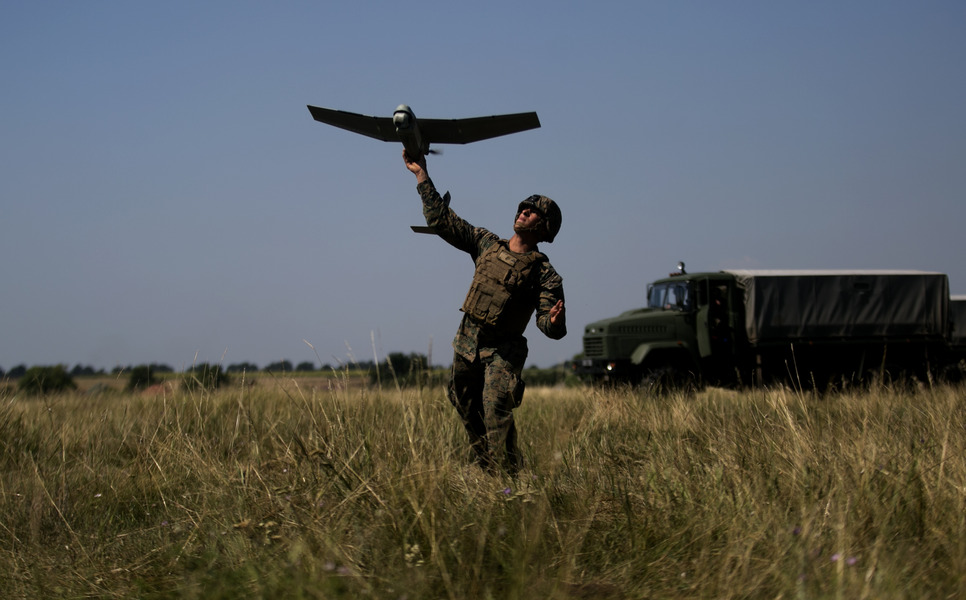
AI entered the picture several years later, while Cukor was working at the Pentagon. He conceived of a project to use AI for processing and analyzing video footage from drones. The deputy secretary of defense at the time, Robert Work, expressed enthusiasm and asked for a demo. A colleague of Cukor’s subsequently visited San Francisco and paid $120,000 for a startup to train an AI model on unclassified drone videos; this enabled a demo in which the AI system could “put a white dot on the screen every time a specific object showed up.” Though rudimentary by today’s standards, the model’s capability impressed the audience, including Deputy Secretary Work. With his formal approval in April 2017, Project Maven officially commenced.
Cukor began hiring early employees and enlisting help from both Silicon Valley startups and tech giants, including Google and Microsoft. Work wanted Maven to field AI in the real world by the end of 2017, and the team succeeded, deploying algorithms in Somalia to identify different kinds of objects in drone footage. Yet the special operators found Maven’s software useless and disconnected it—“[i]t may as well have been in a closet,” writes Manson. Over time, with help from a Maven contractor, the operators found that the AI models could sometimes help them by detecting people and vehicles. One early sign of Maven’s promise came during a live U.S. raid, when an algorithm noticed someone hiding in the bushes that none of the human screeners had seen. Even so, Maven’s AI-powered detections were incorrect more than half the time.
Maven’s usage grew in 2018, reaching over 60 sites, including at least eight in Afghanistan. Many potential users remained reluctant, but the technology improved: Besides drone data, Maven algorithms were analyzing text, photos, security camera feeds, and even blimp balloon footage.
Despite this progress, Project Maven also experienced a major setback: In a widely publicized 2018 incident, Google employees protested strongly once they discovered their company’s involvement. Eventually, Google decided against renewing its Maven contract. It also announced its new AI principles, including a promise not to use AI for weapons or surveillance (less than seven years later, it dropped that commitment). Despite the employee uproar, Google’s algorithms did support Maven’s efforts in Afghanistan through the end of its contract in 2019. After that point, the Maven team continued using these algorithms, just with a different company maintaining them—until that company was acquired in early 2020 by Apple, which put a stop to the Maven work.
Early military users typically incorporated Maven’s AI-powered object detections into whichever platform they were already using to view drone footage. Cukor began working with a few organizations in 2018, including Palantir and Johns Hopkins University’s Applied Physics Laboratory, to create a Maven-specific platform for displaying data, videos, Maven’s detections, and more. Over time, Palantir largely won out with its prototype, which eventually became the “Maven Smart System.” This success was much-needed for the company, whose business relationship with the Pentagon had appeared to be winding down—Maven’s support “brought Palantir back to life,” according to one Mavenite.
In 2020, the Army’s 18th Airborne Corps began testing how Maven Smart System could directly assist with military targeting. Maven also began training AI models to process satellite photos—unlike drones, satellites are less likely to be shot down or electromagnetically jammed.
Maven’s breakthrough moment arguably arrived when the U.S. came to Ukraine’s defense against Russia starting in February 2022. By May, after resolving some early technical difficulties, the 18th Airborne Corps was frequently passing “points of interest” to the Ukrainians. These packages—named euphemistically to avoid implying that the U.S. was directly fighting against Russia and thereby entering the war—often included the elevation, time stamp, and slightly imprecise location data for potential targets to strike. After the U.S. gave Ukraine high mobility artillery rocket systems (HIMARS), which can fire GPS-guided missiles, it became even easier for Ukraine to strike Maven-identified targets. On some days, the 18th Airborne Corps shared 70 targets with Maven’s help; on a record-setting day, they passed along 267.
From that point forward, Maven spread throughout the U.S. military. Maven is now used by the Army, Marine Corps, Navy, Air Force, Space Force, and Coast Guard. It supports combatant commands focused on Europe, Africa, the Indo-Pacific, the Middle East, homeland defense, special operations, and space. In the spring of 2025, NATO acquired its own version of Maven Smart System from Palantir.
The Ethics of Autonomy
The book’s AI coverage extends beyond Maven alone; it also discusses other military efforts to advance AI and autonomy, which sometimes operated independently from Maven. These include enabling over 30 boats to “all ‘talk’ to each other autonomously,” developing an aerial drone that selects and fires at maritime targets, and producing autonomous weaponized personal watercraft. “America has a lot of jet skis, so it’s neat that we can weaponize them,” noted a person familiar with that project.
Creating lethal autonomous weapons is controversial. Manson devotes a chapter to the political resistance against them—and the lack of serious policy results, including even a consensus definition for “autonomy,” after over a decade of efforts—at the United Nations. These so-called killer robots operate differently than Maven Smart System’s assistance with targeting in Ukraine, since Maven keeps a human in the loop. But Manson’s reporting highlights how Maven’s detections allow for humans to take a smaller role in the targeting process, thereby shrinking the gap between AI-assisted targeting and fully automated targeting. One officer described “concurring with the algorithm’s conclusions in a rapid staccato: ‘Accept. Accept. Accept.’” Gen. Chris Donahue, who expanded Maven’s early Ukraine support as commander of the 18th Airborne Corps, later agreed wholeheartedly that Maven was a weapons system, adding that “[u]ltimately all this stuff will become automated.”
Perhaps the strongest reason for the United States to automate war is to remain globally competitive. This argument gains force if major conflict could erupt at any moment—a prospect that recurs throughout the book, with the phrase “World War III” appearing 10 times. An undated draft analysis of future threats for the Marine Corps to address, commissioned from Stratfor by Cukor, argued that “[a] nation not prepared to wage existential war because it is rare faces catastrophe.” Donahue, speaking with Manson after returning from Ukraine, put it more fatalistically: “Your adversaries are going to choose for you that you have to do this.”
The adversary that remains top of mind throughout Manson’s book is China. She spends a chapter examining the notion of an AI “arms race” between the U.S. and its chief technological competitor. This high-stakes framing of AI development is grounded partly in a genuine sense of Western vulnerability: According to one U.K. defense official, U.S. counterparts sometimes whispered in private briefings that “[w]e’re not ready” for a Chinese invasion of Taiwan. When Manson asked a Chinese official about Beijing’s plans for AI warfare, his cryptic reply offered little reassurance: “It is very difficult to know what’s in the mind of your enemy.”
Some believe that, beyond enabling the U.S. to stay competitive with adversaries, AI-enabled tools can help empower the U.S. military to do good in the world. In the early days of Project Maven, Cukor would give some algorithm vendors a book about civilian-led efforts to rescue Yazidi women who had been abducted and abused by ISIS. He believed that if AI had been providing better intelligence insights at the time, a U.S. rescue mission might have been possible.
Similarly, when a U.S. drone strike tragically killed 10 civilians during the U.S. withdrawal from Kabul—without any assistance from Maven—one Maven team member blamed Google’s resistance. “Those ten Afghan civilians would have been alive if the effort led by Project Maven to deploy AI on military drone camera feed[s] had not been delayed,” he asserted in a LinkedIn post. In other words, by providing more accurate intelligence, stronger AI models might lead to fewer civilian casualties.
They also might help reduce incidents of “friendly fire,” in which the U.S. mistakenly attacks its own forces and those of its allies. Fourteen years after witnessing this sort of fratricide in 2011, a key Maven team member argued to Manson that “[a]n algorithm would never have taken that shot” because it could have recognized patterns that humans failed to notice at the time. “The machine can’t be worse than a human,” he claimed.
Not everyone is convinced. “People always say it will save lives. And they don’t really specify how,” said one Google engineer who had opposed the company’s early partnership with Project Maven. Taken literally, her complaint is easy to dispute: AI can save lives by rapidly spotting civilians and warning signs that humans might miss. But it is true that the broader net impact of warfare automation on civilian deaths is unclear.
For example, in the wrong hands, AI could help bad actors commit atrocities, similar to Russia’s drone attacks on Ukrainian civilians. Additionally, multiple people with U.S. military experience tell Manson they suspect that waging war through screens and algorithms might desensitize combatants to the moral and mental toll of killing. Meanwhile, more efficient means of targeting could lead decision-makers to pursue a higher volume of strikes, including in places that risk civilian casualties.
Some of the ethical justifications for pursuing military autonomy become less convincing when analyzing the fairly mundane motivations of some of the people leading these projects. Business executives at companies such as Palantir and Google can earn a lot of money by partnering with the U.S. military. Watching one’s own company’s stock climb while proving doubters wrong is often satisfying: Palantir’s CEO blurted out to Manson that he’s “always had the fantasy of having a drone company that could take fentanyl-laced urine and spray it on short sellers.” Other people might be motivated by the genuine power and influence of working on military AI, which may already be affecting the fate of nations. “Everyone wants to be known as the new Robert Oppenheimer and go down in the history books,” observed one former Mavenite.
Other motivations seem plainly unconcerned with ethics. “I want to reduce the non-American population,” answered one Maven job applicant in response to the question “Why do you want to work here?” The early Maven team reportedly “celebrated” this answer and offered the applicant the job. An influential team member sometimes recited that “[t]hose who can, build and test performant AI; those who cannot, talk about AI ethics.” (In fairness, he claims he only meant to convey that he was more afraid of ill-performing AI than unethical AI.) Another Mavenite simply said the quiet part out loud, envisioning AI’s contribution to warfare as a way to “fucking kill people all the time.”
* * *
When viewed from afar, the incorporation of AI into military operations seems as inevitable as the incorporation of AI into many other activities. After all the moral outrage at Google, the company’s algorithms still ended up in Afghanistan, and Microsoft and Amazon were happy to take its place. In 2022, a pointed skeptic of Maven began leading the agency that had absorbed many of Maven’s core lines of effort; within only a few years, he was fully sold on the project. Recently, when Anthropic resisted the Pentagon’s push to expand how its AI models could be used in military contexts, other companies were more willing to acquiesce, including a familiar name: Google.
Now, less than a decade after Maven’s start, it’s hard to imagine the Pentagon turning back, especially if the relevant laws remain permissive. The latest budget request from the Department of Defense—also known now as the Department of War—calls for a $58.5 billion investment in AI-enabled command and control, plus another $54 billion for autonomous and remotely operated systems. This small fortune could yield far stronger AI capabilities than the U.S. wields today. As Manson rightly emphasizes at the close of the book’s introduction, “AI warfare can go wrong. And it is already here.”
.jpg?sfvrsn=118b03e5_5)
