Lawfare Daily: External Powers Competition in Africa: Aid, Security, Tech—and African Agency

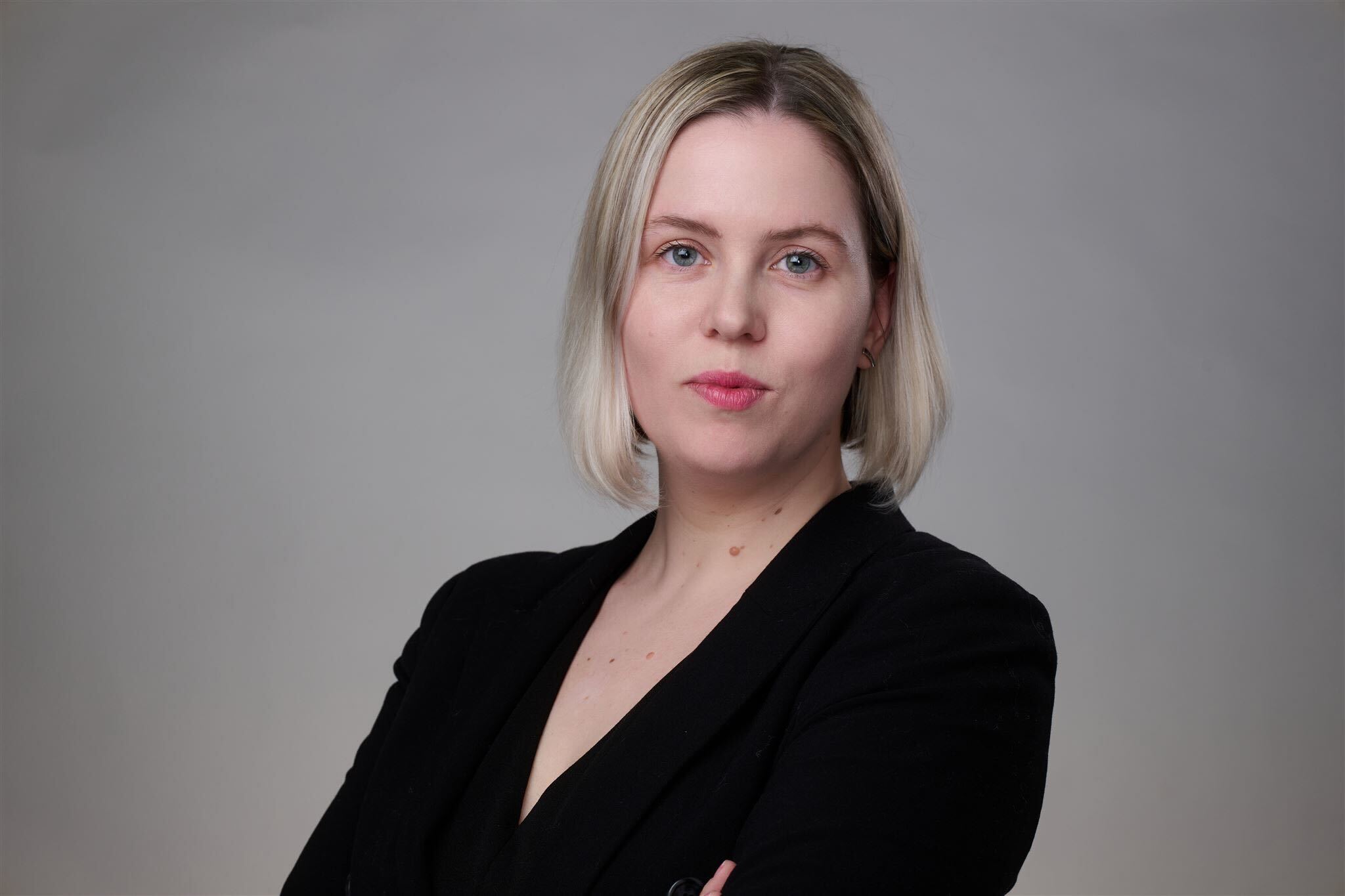
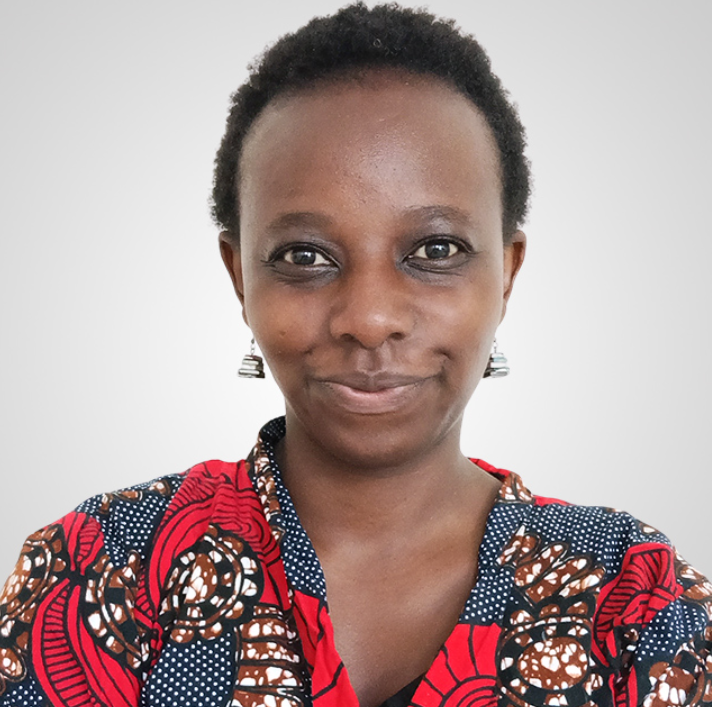
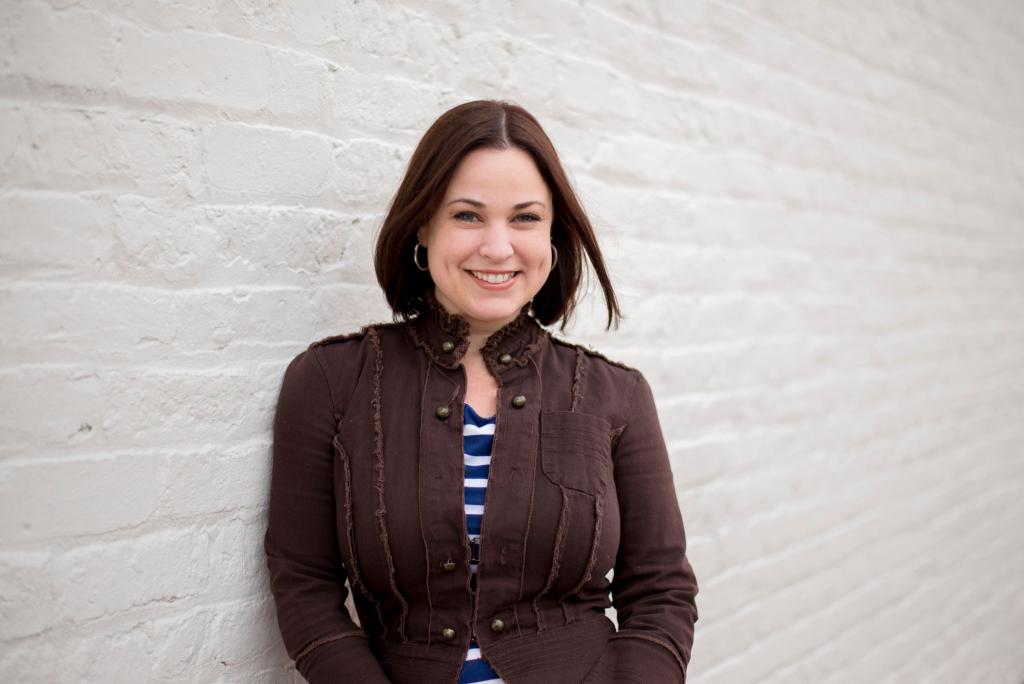
Katsiaryna Shmatsina, Eurasia Fellow at Lawfare, is joined by Beverly Ochieng, senior security analyst at Control Risks and non-resident expert at the Center for Strategic and International Studies (CSIS), to examine how external powers compete for influence in Africa—and how African states are responding.
They discuss the shifting priorities of the second Trump administration, including a “trade not aid” approach, stricter visa policies, and growing pressure on African governments to accept irregular migrants deported from the U.S.
The conversation explores the evolving strategies of key players—the U.S., China, and Russia—alongside the rising influence of Turkey, the UAE, and the European Union’s more diffuse forms of engagement.
They also discuss public perceptions of foreign involvement, China’s Belt and Road Initiative and its digital expansion, Russia’s use of private military contractors and information operations, and the increasing role of African regional organizations in shaping the agenda.
To receive ad-free podcasts, become a Lawfare Material Supporter at www.patreon.com/lawfare. You can also support Lawfare by making a one-time donation at https://givebutter.com/lawfare-institute.
Click the button below to view a transcript of this podcast. Please note that the transcript was auto-generated and may contain errors.
Transcript
[Intro]
Beverly Ochieng: With
the UAE, there's a variety of interests. There's sports. There's agriculture.
And there's the allegations of the role that they're playing in Sudan as well
as in Chad. They've been providing budgetary support, for instance, in Chad,
and military support quite robustly.
Katsiaryna Shmatsina:
It's the Lawfare Podcast.
I'm Katsiaryna Shmatsina, Eurasia fellow at the Lawfare Institute
with Beverly Ochieng, senior analyst at Control Risks.
Beverly Ochieng: And
I think as long as a lot of African institutions continue to be heavily
dependent, in particular, of western aid, then it means that a lot of quality
decisions remain under some form of influence, even if it's not overt.
Although there's a lot of hesitation when it comes to calling
out unfair policy agendas, or being able to just properly leverage their own
sense of sovereignty and authority.
Katsiaryna Shmatsina: Today we're talking about the great power competition in Africa, the latest trends, and how the African leaders are responding.
Competition among external powers in Africa is nothing new. The
most obvious players, the U.S., China, Russia, have long been active across the
continent. While China and Russia have expanded their presence through
infrastructure projects, arms sales, the U.S. has traditionally leaned on
development aid and democracy promotion.
But this landscape is evolving. With Trump back in the White
House, Washington is shifting gears, cutting aid, tightening immigration
policies. China is moving from big infrastructure to digital technology. Russia
is leaning further into military support. And in this episode we are exploring
how all of this is reshaping Africa's global relationships and how African
leaders are responding.
Let's start with the U.S. Since Trump's second term has brought
a number of policy shifts, what impact has this had on US engagement in Africa,
especially in terms of foreign aid cuts, restrictive visa policies, and the
demands or asks of the Trump administration to accept regular migrants from the
U.S.
Beverly Ochieng:
Yeah, I mean that's a good place to start, obviously, Kate, because Trump 2.0
obviously means that Africa is sliding much further down on the global geopolitical
agenda. And I think at the time when Trump was in part the first time, there
were other shocks such as COVID-19, and then afterwards you had the war in
Ukraine, which then meant that there was a huge political shift in terms of
priorities and anything that was happening on the continent was either
bypassed, completely ignored, or just did not get as much adequate attention.
There was the sort of very mini U.S. Africa summit. Can barely
call it that because only, what, four or five heads of states from the
continent went there.
They're largely from West Africa, Mauritania, Senegal,
Guinea-Bissau, Liberia, being represented. There was the comment that Trump
made where he, the Liberian president, you know, sort of expressed what his
country was anticipating from the meeting, and then Trump says, you know, such
good English. And it just feeds back into some of the ideas or stereotypes
around what goes on in the continent.
And even just how the policy positioning of the U.S. might be
coming from into the, you know, into engaging with African leaders. But of
course, despite that, despite the fact that there is no longer the global
agenda, there is still a feeling that African leaders do have to leverage
certain things to be able to continue maintaining those relations, whether it's
diplomatic, economic, whether it's security.
So, in the wake of Trump's tariffs, some of which have held,
some of which are still quite uncertain, and some of the sweeping visa policies––so,
visa bans for select countries like Chad or Somalia and Sudan––there's been
varied responses, which obviously says a lot about the dynamic relations there
are on the continent with the U.S.
Some countries like Somalia, for instance, have decided to
revamp their biometric data system to be able to ensure that they have a means
of identifying nationals, because security issues are among the reasons that
they are facing or they are now currently under visa ban. Chad, by contrast,
decided to apply reciprocity in which they said, U.S. nationals are also not
allowed to come into the country.
Mali also imposed similar visa bonds for US nationals, about
$10,000 for them to come in. So it does tell you that there is some sharp
concerns or sharp reactions by African leaders who want to instill a sense of sovereignty
and respect and a tit for tat. But they're also countries that are willing to
make concessions, because they want to remain politically relevant.
They still do need diplomatic and security assistance. They do
have very critical relations with the US to continue going, but by and large,
it is still opening room for other diplomatic actors in the region. Competition
is still quite high, and I think at the moment, even though transactional has
always been at the root of diplomacy, it is a lot more pronounced given what
everyone is trying to offer as leverage to be able to either get attention or
to be able to get some formal political clout or even the fact that.
There are clear things being put on the table for people to be
able to gain access to parity, diplomatic and security cooperation.
Katsiaryna Shmatsina:
As a follow up on certain countries accepting the irregular migration from the
US or deportees, however you would call it. Is there a way to track, like, what
are the rules for how those people are being deported?
Is there a way for them to get out of those detention centers
to, you know, leave the country? What happens to them?
Beverly Ochieng: I
mean, for the African countries, receiving them––in a difficult place. So South
Sudan, for instance, received South American nationals same as Eswatini. These
are people who do not come from the region.
In South Sudan in particular, there is instability. So it makes
it difficult for the government to be able to provide any meaningful
facilitation for foreign migrants or deportees who are arriving in the country
to be able to go back to their home countries. And part of it was just making a
concession because the U.S. essentially banned visas for everyone in South
Sudan, including for diplomatic and for nationals.
And then in terms of the administrative issues in Ghana,
there's already been Supreme Court rulings that this was an illegal instance
where Ghana received foreign nationals or foreign deportees, and they were
trying to also offload them to Togo, which further complicates whether they're
able to receive facilitation.
Some of them are actually West African nationals. But, you
know, Africa's not a country. Different countries have different migration
policies, different means of facilitation. Interconnectivity on the continent
is really quite difficult, so imagine having to move someone from South
America, from Eswatini, all the way back to their home countries.
There's also the issue around. The kind of social tensions
that's likely to elicit many of the deportees that Trump is proposing to send
to various African countries and other countries are people who are allegedly
with very disturbing, I suppose, criminal records. Going into countries already
have fairly fragile judicial systems, fragile policing systems, where they may
not have the same language, they may not be able to understand their rights or
may not be able to express that.
So it does put those countries in a bind and being able to
facilitate the return of deportees back home or even if they are staying in the
country, is there possibility that they'll be able to get the kind of
rehabilitation that they need to be able to integrate to the society?
Will people accept this? That's also not very clear. There has
been some very strong reactions in Ghana, for instance, in Nigeria when they
were being proposed to receive migrants. The government itself said that they
are not in a position to do so, because they're already facing considerable
economic and social strains.
So when you think about all of those underlying issues, then
you add on to that irregular migrants, some with criminal records, some coming
from far-flung areas. It does put considerable administrative, financial, and
societal strain.
Katsiaryna Shmatsina:
Do you have a sense of what is the rationale of the US administration to cut
back the foreign aid?
Okay. That has to do with sort of saving money, redirecting
them to the domestic American needs. But while, let's say China, Russia are
interested into some security cooperation they're not doing this out of
charity. They're fighting for influence, possibly getting access to resources
like raw materials.
What is the American interest in dealing with African countries?
Trading? Is it, is there like trade ties still relevant, or some investment
projects? What is––Americans are still, what are they still maintaining?
Beverly Ochieng: I mean,
there has been the slogan going around of “trade not aid.” So we did see the
quite drastic cut of USAID, which has meant that public health systems,
education, which were dependent on the work that USAID was doing, have now
essentially been, you know, they've been left orphaned, financially orphaned.
And I think part of it was because, according to the Trump
administration, this wasn't really fulfilling their needs, it wasn't providing
any sort of economic opportunities for the U.S. But there's only so much I can
say on their behalf.
But on the other hand, also, there's the AGOA agreement, which
allows for, you know, African countries to be able to trade, whether it's
various goods, materials, and services, you know, with more favorable tariffs.
So when you think about that, the losses for African countries
obviously do stand out to be a lot more. And I suppose because the
administration is leveraging on the fact that African countries have been able
to broadly benefit from open bilateral trade relations and aid, then they
should be able to allow U.S. businesses to invest in the region.
Think about the D.R. Congo peace agreement. Part of the
underpinning issue is that. There may be some prioritization for us businesses
to invest in the mineral sector in DRC. And DRC was also offering this offer
the template of what Ukraine was trying to get out of its deal with Russia and
the U.S., for the peace deal. Leveraging its minerals.
And it's interesting, because it's not that different from what
China and Russia are doing or any individual. Particularly with Russia, if you
think about like the Central African Republic, the fact that mineral resources
are being leveraged for security corporation, albeit with a sort of private
paramilitary group.
With the U.S., they're trying to ensure that U.S. businesses
are able to have a foothold. In the region, particularly in areas where they're
either indirect competition with China, so DRC is one example of that, but also
areas where they may be able to provide a bit more intervention. And we've seen
the Sahel being touted as a possible area where the U.S. would want to increase
its business interest in the country despite the insurgency.
But ultimately, as I said, transactionalism––and that means
being able to benefit directly financially through economic leverage––is
probably what the U.S. is looking to pursue, especially for a region that has.
You know, a lot of resources to be able to offer and to give it a competitive
edge. Even when you look at its competitors such as China, Russia, and the
emerging partners such as Turkey, the UAE, they've been able to get into quite
strategic areas with critical minerals at stake, with expansive corridors like
the Lobito Corridor, which would then connect the Great Lakes region and the
Southern African region.
If you are able to use that to expand supply chains, and then
you have the access to those minerals directly, I suppose that would broadly
interest the American market and also the Trump administration.
Katsiaryna Shmatsina:
Let's turn to China. So for a long time it has focused on large-scale
infrastructure construction under Belt-Road initiative, and also has a lot of
controversial perception about the due diligence. Is there like a debt trap? And
the environmental impact and whatnot?
I wonder, is there any shift we are observing from Chinese side,
shifting towards digital infrastructure such as telecom or data centers, and
what does this mean for the recipient countries?
Beverly Ochieng: I mean,
I think the digital transition has always been there.
So even before you move into data centers, the majority of
people on the continent have been able to access, you know, the internet,
WhatsApp, mobile services because of Chinese mobile phones, which have largely
flooded the market. It's not necessarily a security risk, but I suppose because
of, you know, the perceptions around, you know, surveillance technology.
But it has enabled there to be much wider digital penetration.
So, people in rural areas are able to send WhatsApp messages, are able to
transfer money, but with mobile phones are able to access Facebook and other
social media outlets using smartphones, affordable smartphones that have come
from China.
Another transition that's quite crucial is that of broadcast
media from analog reception to digital transmission. A couple of, a handful of Chinese
entities have been able to distribute digital setup boxes in very far-flung
areas, whether it's in Kenya, in Zambia, in Zimbabwe. StarTimes is one company
that has done this and that has enabled a lot more countries to shift from
analog transmission towards digital reception, and they're able to access both
local television channels and watch international broadcasts.
And there were timelines that had been set for this. And no
other country provided that infrastructure, but China did. And so obviously it
does give them a bit of an upper hand in terms of being able to even continue
with other forms of digital transition. We did see that when AI technology was
largely being held back, particularly by the U.S., then you had, was it DeepSeek
that sort of came into the market and, you know, was quite a rival challenger
to what the U.S. has been offering with, you know, OpenAI and ChatGPT, and
there's gone to be various versions of that.
And beyond just that, there's also the sort of infrastructure
and support that is being given to local media or African media by Chinese
outlets, whether it's training journalists, whether it's supporting with their
transition towards using more digital-faced media to be able to access a much
bigger audience, both on the continent and away.
And even ensuring that they have a sense of empowerment, and
being able to draw from their own narratives and to give that a platform on
more international outlets. And then is when you move into whether there will
be data centers on the continent.
There's currently very little in terms of policy around what
happens with data centers and AI as it spreads across the region. And I think
that'll be the sort of next frontier and how African governments negotiate
that, especially when they're trying to open up space for that. Because there
is, in terms of infrastructural capabilities, space for that to take place on
the continent. And there might be a lead from China or other Asian countries
that are looking to invest in that.
In terms of technology, China has always been there for quite a
long time and they've been able to enable most African countries to have access
to information, communication, and gadgets that are able to allow them to have
dynamic connectivity
Katsiaryna Shmatsina:
With DeepSeek. I just cannot help from bringing up this comment, do not ask DeepSeek
about what happened in Tianenmen, you know.
But it could still bring you other useful search results, such
as other AI tools. I wonder, I would like to elaborate a little more on the
African states’ perception of China. Do you see the leadership in African
countries is kind of changing attitudes towards maybe screening Chinese
investment offers or infrastructure projects or digital cooperation, do they
weigh the risks and the benefits that come with such cooperation? Or maybe
there are some countries that are more prone towards signing whatever the offer
is coming their way.
Beverly Ochieng: I'd
say broadly speaking, there's been a lot of welcoming towards Chinese investment,
partly because quite a number of African countries do have active loans,
infrastructure loans, with the Chinese government, and they would want to be
able to either continue making repayments on terms that are equal. So recently
Kenya switched its, you know, dollar loan into a yuan loan, which then enables
China to continue having a foothold in the region.
But another thing is also, part of it is consistency, and the
interconnectivity that has been provided by the, you know, the Belt and Road
initiative, which has ensured that infrastructure is more or less aligned
across the region.
There hasn't been much in terms of screening. Anecdotally, at
least, things that I've heard from people who either send delegations to the
country is, you know, they will go in, they will have a discussion. There's
also the joke about African leaders or African delegations not necessarily
having notebooks to just note down what is being said, to make sure that they
can ask questions later on, and simply coming back and announcing that such and
such agreement has been signed.
In many instances, there's not like a public referenda about
this. These are seen in the interest of bilateral partnerships between two
countries. There hasn't been a pronounced concern about the loans or about how
indebted African countries are. I think it's mostly around how well this
infrastructure is working in terms of connecting people and being able to
ensure that there's business.
And a lot of this also tends to be publicized around certain
anniversaries. S,o whether it's the Belt and Road Initiative, whether it's
marking China-Africa Cooperation, or China cooperating with different
countries, there'll be a lot more pronounced rhetoric to reflect it positively.
But of course now there's a diversity of partners, which then means that people
are not limited to just having to operate with China.
There was a period where it was the dominant partner, but now
you're seeing that Turkey's coming in, for instance, and doing a lot more
defense, providing some supportive infrastructure, providing even more robust
military support. You are finding that the UAE and various other Middle Eastern
states are also considering leveraging infrastructural production, because they
also need to be able to access, whether it's areas for agriculture, export
processing livestock farming and things like that.
So I think ultimate it's because it does not sit in contention
with other partners. Unlike instances whereby, and this has probably been a lot
more robust in the Sahel, where countries feel that integrity issues cannot
allow them to operate the same environment as say, Russia, China, and its
allies.
With most other countries, as long as there's a sense of
coexistence and you compartmentalize where these countries are operating. So
one in infrastructure, one could be in energy, one could be supporting the
military, then it works in terms of theoretically speaking, complementarity.
But also it means that, sometimes, when there is a breakdown in geopolitical
relations, it's very difficult for you to be able to hold one or another party
to account.
Katsiaryna Shmatsina:
You touched on other external powers beyond again, the obvious three, and we'll
definitely follow up on that. But before, let's just look at Russia and briefly
discuss what is it, Russia's footprint in Africa? Is it the military training?
the private military contractors? I guess like my main question is what is it,
what brings Russia into Africa? Is this just the raw materials pursuit or
something else?
Beverly Ochieng: I
suppose part of it is also the sentimentality around the relationship between
the former Soviet Union and the continent. And the role that USSR played with
being able to support just newly independent African governments, whether it
was education, military training, especially during the period of the Cold War.
And so that has been the underpinning effort around its
continued presence. It’s able to continue tapping into that as a means of
ensuring continuity. Of course, as Russia started to sort of lose its position
in the global stage, that's the annexing of Crimea, it did shift back to those
allies on the African continent.
And the way the ways in which certain vulnerabilities, whether
it was political instability coupled with weak regulations and oversight, would
enable the infiltration of, say, Russian paramilitaries and the kind of
leverage you've been seeing in terms of being able to provide a sense of
partnership or continuity while leveraging on those resources.
I suppose it depends on a case-by-case basis. Russia has a lot
of defense agreements across the continent. They've always been the leading
supplier and provider of weapons and other logistical for militaries across the
continent. So you will find MOUs between government to government, whether
it's, you know, Lesotho or South Africa or Zimbabwe or Kenya.
Those exist and those are pretty much along the lines of other
bilateral cooperation. But with certain countries––and now we've seen that with
the CAR being one of the big, sort of, incubators of Russian influence––it’s
come alongside other issues. So the Russian paramilitaries, who initially were
a means of plausible deniability for the Russian government, came in to be able
to leverage security services having been welcomed by the government in
exchange for mineral concessions.
Alongside that were media campaigns, which were enabling Russia
to gain a sense of popularity and to be seen as an ambassador of goodwill,
particularly for a country which the conflict had raged for so long, there had
been such a, you know, high levels of instability. Russia did support the peace
agreement between the rebel groups and the government in 2019 in Khartoum in
Sudan.
So they were playing both a diplomatic role, but also sort of
quasi-diplomatic role and quasi-security role through the paramilitaries. In
the Sahel, it's become a lot more of a geopolitical contest. There has been
some level of disruption, especially when you look at what played out in the UN
Security Council, right at the time when Mali, for instance, accused France of
supporting terrorists or of surveilling the country.
When it came to the withdrawal of the UN peacekeeping mission,
eventually, and when it just comes to the general breakdown between the Sahelian
relations and the international community, and the mistrust that has prevailed
over time. Underlying that is also disinformation campaigns that have been
carried out by groups like the Wagner Group, as well as its success of the
Africa call, which has continued to sort of launch off of the prevailing
mistrust.
Russia is not the reason for the U.S. or France or the EU
disengaging from the region. They tapped into preexisting sentiment using media,
paramilitary networks to be able to do so. And it's not as clear cut as ‘Russia
is receiving minerals in exchange for security.’
In the Sahel, it's a lot more complicated than that, because
there are still some pretty strong regulations, and the Sahelian military
rulers prefer an, you know, an engagement whereby Russia is able to get some
minority stakes. It's able to support them with building a refinery. It's able
to help with establishing a robust processing zone and being paid for that, as
opposed to being in direct control of those concessions.
And it also says a lot about the perception of the level of
Russian influence and how much governments are willing to pave way or give up
their sense of sovereignty and agency towards the Russian government. They have
an easy relationship with them in that they're things which they never really
have to be held accountable for.
There are arrangements which then allow this military, you
know, governments to establish quasi-political relationships that allow them to
maintain a sense of popularity, which will not then be undermined by Russia
questioning their political choices and things like that. So you hear a lot
about win-win partnerships and win-win relationship, and it's largely because
of that.
And it's sometimes a bit overblown depending on the context. So
Russian paramilitaries are currently only in about five African countries out
of more than 50. That's less than, what, 10% if I'm getting, if my math is
right. But their activities make it seem as if the entire continent is
flourishing with paramilitaries who are busy influencing everyone on what
Russia says and what Russia does.
The awakening, or at least what is being seen as a largely
Pan-African awakening, has been sort of a long-running issue where various
people, young people are thinking a lot about their own relationship with
former colonial powers, but Russia's been able to ride on that wave in such a
way that it's become a diplomatically destabilizing factor in a very small
fraction of the continent.
Katsiaryna Shmatsina:
On your social media, you mentioned that you've been tracking Russian mercenary
activity in Africa, including, you know, previously Wagner group. How do you do
that, and what are your latest findings?
Beverly Ochieng: So,
yeah, a lot of the sort of stalking is social media, because, in an environment
where very little information tended to be publicly available about the
presence and activities of paramilitaries, there was social media, Telegram,
where they do have channels, where they share some of their activities. And
they became a lot more open over the years.
Initially with the Central African Republic, it felt like
following a boogeyman. You would hear about in the media, but there were not
enough pictures.
And then eventually, of course, when the President Touadéra was
campaigning for the elections, they were sort of part of his security
contingent, which sometimes felt a bit surreal. And then there were a couple of
Instagram pages that I came across over time.
There was one called Religion for Men, which claimed to show
paramilitaries in the Central African Republic. And then I followed it down
into Telegram. And then I was able to sort of find a lot of pages and like
subgroups where there'd be conversations about where paramilitaries are, both
in the Ukrainian frontline eventually, and also in parts of the continent,
mostly Mali, the Centarl African Republic and to some extent Equatorial Guinea.
Some of those channels have actively documented alleged
atrocities and human rights abuses by the paramilitaries, and I think there are
some movements towards trying to bring [inaudible] to the International
Criminal Court, although now with the transition from for the Wagner group, the
death of its founder in various other things, accountability might be quite
difficult.
And then a lot of it was also what has been documented by
rights groups, some of them based in Northern Mali, especially after the
capture of Kidal in 2023, there was quite a bit of activity in northern Mali
involving Russian paramilitaries. And then, what is being said in the media
about them? And being able to just get a
sense of, where are they being spotted now, what are those activities?
Is it just joint military operations? Is it allegations of
looting? Is it allegations of extrajudicial killings? Is it just them
documenting themselves? And in many instances, they're just documenting
themselves sometimes, with children sometimes with women, sometimes with young
men. Sometimes they're just on patrol.
And it gives you a sense of where they are, how they want to be
perceived. In some instances, they did want to be seen as heroes as people who
are coming to, you know, save people from terrorist groups, as they put it. But
how they also perceive what are terrorist groups can be a source of tension. Because
the way the governments that perceive militants and terrorist groups, those
that are officially proscribed and groups that are simply against the
government, does lead to a sort of fog of war, especially in the frontline.
I've been doing much less of that, because I think the material
moved from, initially it was humor, jest. Some of it were just cartoon videos
where there were troll fronts. And then it became a lot more darker because
there were instances where they were documenting allegations of, you know,
cannibalism.
There were instances where they would be, you know, showing
some pretty gory material, you know. In, in terms of interacting with that can
be quite traumatic, but even more so for communities and have to be exposed to
that level of violence. They are now on Twitter, which is––I mean, X, Twitter,
which you still call it, and it feels even stranger seeing them there.
So in Western Mali, where there has been this monthlong, over a
monthlong blockade of key route between Senegal and Mali, there one instance
where they posted a video of them carrying on patrols and various other things
that they're doing in terms of outreach, I would say, to be able to show that
they are very close to the public and that their activities are above-board.
But it doesn't sit, it sits awkwardly with the sort of denial
by the governments themselves, that they are present in the country. And even
the sort of distance that we still see with Russia, despite the fact that the
Africa Corps is now under the defense ministry. But I think that also allows
them to continue, you know, distancing themselves, whenever instances of
tensions or alleged atrocities emerge. That means that it's very difficult,
especially for victims to be able to find any sort of recourse and instances
where they alleged that there have been human rights violations against them.
Katsiaryna Shmatsina:
Let's talk about the other external powers sort of coming to the continent, such
as Turkey, UAE.
What are their strategic goals? And are their approaches similar
or different from the obvious three powers?
Beverly Ochieng: By
and large, it is still about being able to have influence, but they have chosen
a slightly different strategy in that we know, for instance, with the U.S.
having always been the sort of hegemon, sometimes it always feels like it's
quick to take credit for various things, and that still seems to be happening
at the moment with various peace deals.
Turkey has been playing both in terms of peacemaker, but also being
able to support war efforts in different parts of the continent. So, in
Ethiopia, Turkish drones being used in the conflict in Sudan that has also come
up, including Iran. In the Sahel in particular, the purchases of military
drones by the Sahelian military rulers, because they have been needing to sort
of reinforce the capacity of the air forces, that's been a very strategic goal
for them.
But Turkey also offered to broker peace talks between the D.R.
Congolese rebels and the government. They have been sort of playing. A role in,
to some extent with peacemaking in Somalia. They opened up a really big
military school together with the Somali army, and they are very very well-revered
and very well received in Somalia, in particular because of longstanding
defense corporation and humanitarian support.
Turkey has also invested quite heavily in education, water
projects. There was something I remember from Niger some years ago, and various
socioeconomic initiatives. So it's quite robust, and it's quite widespread, and
because they are a strategic defense partner, both even in Europe as well as in
Asia, being able to play that dual role in the continent has also been
interesting.
With the UAE, there's a variety of interests. There's sports. There's
agriculture. There's the allegations of the role that they're playing in Sudan
as well as in Chad. They've been providing budgetary support, for instance, in
Chad and military support quite robustly. They're also in, involved in the
mineral sector, in the gold mining sector across the region.
And formally also, like in Guinea they, one of the biggest
players in the bauxite are,a in the bauxite sector has been they've had
operations of the country. So it's quite robust. It's both being able to
leverage on various concessions, whether it's mineral, economic, strategic
concessions, as a way of gaining partnerships.
And the UAE has a robust number of infrastructural projects
across the continent. Ports, for instance, on DP World and various other
entities across the continent, which interconnects a lot of the areas. That's
also an area that's been administratively, at times, handicapped by various
countries.
And there has been some contention around that in Tanzania, for
instance, when DP World was making its entry, there were concerns about the
length of the period of the concession, which is about, I think 30 years. And
there was discontent around yielding something so strategic to an external
partner for that long.
And part of the argument by the Tanzanian government was that
this would allow them to achieve administrative efficiency in a port area that
could be quite competitive within the East African region.
Here in Senegal as well, where they are developing the port in Ndayane.
There's only one deep sea port on this part of the West African coast, and
that's in Togo. So being able to build that infrastructure so it's not just
something that China is doing. There are other countries that are thinking of
other forays to also improve the supply chain for themselves.
Turkey has also entered separate port agreements with other
countries, maritime agreements which would also probably allow them to boost
maritime security. It is an area that is often not fully thought about in many
instances. I think the maritime environment tends to be thought of in terms of
migration, rather than being able to enforce or to be able to improve the
capacity of maritime defense, but also having more robust security measures
around port installations.
Katsiaryna Shmatsina:
I would suggest now to talk about the agency of the African leaders themselves,
and perhaps talk about the major regional players who are the, so to say, the
rising powers, or, like, who are the stronger players on the continent at this
point? What are the major alliances––not the sort of formal alliances existing
on paper out there, but the actual players?
How do they cooperate and also how do they work with Russia,
China, U.S., and whoever else wants to, you know, to come to the continent?
Beverly Ochieng: I
mean, so broadly speaking, you have the African Union, which is the continental
block political block primarily, and in terms of their political clout overall,
the general consensus is that it's almost nonexistent.
There is a way they present a unified policy agenda, for
instance. It is agreed that African countries are in supports of the two-state
solution. They recognize Palestine. And they had been very vocal against the
war in Gaza. Even when this came up in the UN General Assembly, there was a
conversation about, oh, should African countries have rather talked about the
conflict in the country.
But to some extent, the recognition of Palestine is sort of
progressive. So they were already on the ball with that before even France or
Spain or the UK did so, right. So you have that as the main entity and it, see,
it sits in Ethiopia, which sometimes puts in the complicated position,
especially with the conflict in Ethiopia, where it's not able to really, like,
put its foot down. In some instances, negotiations or its political leverage
over that has always been undermined.
Or even with the war in Sudan and the extent to which it has
affected the region and the fact that as an institution it kind of came too
late with coming up with peace and intervention measures, or even thinking
about a stabilization mission or being able to mobilize humanitarian support.
Then you have the various regional institutions, which are, you know, their
member states are quite varied.
So, where I sit in West Africa, you have the Economic Community
of West African States, which I think in the nineties was quite a powerful
organization. They are still, and by and large, the majority of African
institutions are still heavily funded by the European Union, to some extent by
China, and by the U.S. Nearly 50% of their budgets would be coming from, you
know, the sort of Troika. Which sometimes mean that––it doesn't necessarily
mean it compromises the policy agenda, but it also means that sometimes they
can't always speak up against them because they rely on that as a lifeline, as
an administrative lifeline.
So you have ECWAS on this side, which in the 1990s, probably
early 2000s was able to effectively intervene against instability, civil wars
in Liberia, in Sierra Leone, coups and other forms of instability in countries
like Togo and Ghana and so on, they were able to sort of put their foot down on
that.
But in the last five, six years, with all the military coups
that have taken place and with the level of foreign interference or the
allegation of foreign interference, ECWAS, does find itself in a slightly
uneasy space.
Russia is sort of the big supporter of what is now the Alliance
of Sahel States (AES), which is Mali, Burkina Faso, and Niger. And they've
broken away from ECWAS, which leaves ECWAS with three members less, nearly 60
million people, in a completely different bloc.
And there's an interesting way in which that is its own
geopolitical war, because ECWAS, according, especially to the Sahel military
rulers, is being influenced by France and being influenced by the EU while the AES
is like this sort of, it's patron is seen to be Russia.
So that sort of contest is taking place here as well. But the
break wasn't as acrimonious because of the influence of some of the internal
powers. So Senegal, for instance, and Togo were the main mediators. And Senegal
is largely seen as this beacon of stability. It just had a new government come
in 2024 and knew being that the opposition won, but the fact that they were
able to ensure that the acrimony was reduced, and that we didn't see, the
Russia-West war completely undermined, continued relations between ECWAS and
the AES does demonstrate that it is possible to allow African institutions and
countries to leverage themselves to be able to ensure political stability. In that
sense has been an area that is overlooked in terms of diplomatic efforts in the
region.
Case in point, I suppose with the East African community, you
know, where I come from in Kenya, which has expanded considerably in recent
years, now Somalia is one of the latest members. D.R. Congo was also one of the
latest members. You have South Sudan, you have a variety of countries with very
varied internal issues, which do have regional ramifications.
The EAC comparatively has not been as much of a dominant player
in the DRC peace process. We've seen the U.S. stepping in and coming in and
basically driving the entire process. Qatar as well, was taking, was mediating
between the two presidents, Rwanda and DRC. So there's a variety of partners
who are either backing, making way forward or completely dislodging regional
internet and regional partners in their role in peace and security.
In many instances, you'll find that, when a peace process is
taken over by Qatar or the U.S. there's a general backing by the by, you know,
whether it's African Union or the EAC or ECWAS. In some ways it reduces their
responsibility. They kind of, you know, would just be seen as a, we are here to
support.
We're here to provide vocal support. We're here to make sure
that there's a follow up, but the mechanisms internally to be able to do so,
largely because of lack of capacity, but also concerns about how you may be
seen to be overstepping sovereignty in another country means that they reduce
their role quite significantly.
And I think as long as a lot of African institutions continue
to be heavily dependent in particular of western aid, then it means that a lot
of policy decisions remain under some form of influence, even if it's not
overt. Although there's a lot of hesitation when it comes to calling out unfair
policy agendas or being able to just properly leverage their own sense of
sovereignty and authority.
Katsiaryna Shmatsina:
I would suggest to have a look at the public opinion perceptions. And of
course, like, Africa is not homogenous. There are different political cultures.
But I wonder, let's say, if I think about Russia, how Russians are sort of
effectively communicating and selling the narrative that we stand against
colonialism, we stand against the evil West with you, or I've also seen some
attempts to almost like opt in, let's say, Christian Orthodox in Ethiopia
versus again, like the evil West.
Have you seen any of this play out here? I guess here I talk,
there are two different questions about the public perception of those external
powers, and then, certain narratives like the colonialism sentiments, how this
all plays out?
Beverly Ochieng: I
mean, in everyday conversation, you won't necessarily always find like people
having discourse around, oh, do we support Russia? Do we support China? People
are just sort of getting by.
But these do come up at certain points. You know, people might
feel, oh, it's really great that China built this road and I've been able to
travel between X, Y, Z and X, Y, Z, but hadn't happened, not necessarily
because they feel like, oh, they really owe their debt to China, but it's just
like noting with appreciation that this happened because of this. Right?
But obviously at a higher level it does become contentious. It
does become a lot more pronounced when, for instance, when I think of a couple
of examples, when the war in Ukraine broke out, there had been quite a strong
statement by the Kenyan, I think he was the permanent representative in the UN.
And he made some reflections on colonialism. And how Russia's actions are no
different from that and just not just within my own circles, but various people
who kept wondering on whose behalf he was making the statement. It was, in the
moment, historically very right to say, right.
It made Kenya obviously continue to stand out as a western ally,
as being very well aligned with what the west was thinking around the Russian
invasion. But at the same time, many people, they were quite disconnected from
this war. And the conflation with colonialism was not necessarily well welcome,
because colonialism was a very different experience for African countries,
depending on who was the colonizer, depending on, you know, the kinds of abuses
that took place, how well it's been acknowledged, and even how much is enough
in terms of reparations, right?
The conversations about colonialism continue because people are
always learning afresh about what the British or the French or the Portuguese
may have done to them. And in some instances it can be quite emotive,
especially when thinking about, whenever a leader, whether it's Macron or the
current king of England, stops short of apologizing or acknowledging, then that
becomes a point of robust debate in terms of whether they're doing enough.
When it emerged in Cameroon, for instance, recently, I think
Macon basically opened up the files for people to know the kinds of alleged
atrocities that French colonial occupiers committed in the country, there was
another point of discourse, despite the fact that it's widely perceived that
the West has been an enabler of the current presidency in Cameroon.
So there are things that become flashpoints for those
conversations. And of course, the way Russian networks operate is, at least
from the things that I've observed, is the rhetoric and the narratives are not
sophisticated and they haven't changed.
They will still bring up, oh, the French have done this, they've
sponsored terrorists, they're not good for you. This is what they’ve done. They
did for you colo––during the colonial period. So there's no shift in terms of
nuance, in terms of depth. It's very simplistic and it's the kind that just
drives an easy sense of anger. It's not the kind that will lead to any sort of
meaningful, robust conversation publicly in the media around what colonization
has meant for people.
It's a way of just driving resentment, I think, rather than
meaningful discourse. And that works perfectly for its intents and purposes,
because I don't think it's necessarily in Russia's interest for there to be a
big public debate and rapprochement in particular Because it wouldn't just be
the debate. It would be like the, we have now all forgiven each other, all is
well. I think it's about being able to use that as a driving factor to continue
extending influence.
But there's also people who are trying to take more ownership
of it. There was a very interesting campaign, and I think it's sort of ongoing
and on, on and off, going on behalf of the Burkina Faso military ruler Traoré,
who's quite a popular figure with many young people, even people who I
generally think are ideologically reasonable, I find myself getting into
arguments with friends, with peers about what's real and what's not. And that
blurred line is what has sort of facilitated some of these narratives, how he's
seen as a sort of liberator. How it's compared with Sankara.
Some of it is being driven by Russia, but some of it is
genuinely out of people's sentiment that they do see comparisons between these
people, and ultimately, this is still something that benefits Russian
narratives, even if they're not the ones driving it. The kind of media
narratives that are emerging whereby AI generated videos in support of, you
know, the Saheli military rulers and various other leaders who are seen to be
similarly politically inclined, whether it's a Senegalese president or you
know, what's happening in [inaudible] at the moment and the Pan-Africanism,
which can sometimes really flatten out the nuance narratives around
colonialism.
But I think they something that feels like consolidating
ideology around that, even when there are certain contradictions within it
around how it should be perceived. So there's very layers in which––very many
layers in which it is operating and within which Russian media propagandists
are benefiting from it, when they push out content that is targeting African
audiences or even the diaspora.
Katsiaryna Shmatsina:
As we wrap up, I have a final question to you. As a researcher, what are the
major trends that you suggest to watch in the nearest term?
Beverly Ochieng: I
would say one, definitely how narratives are forming and cementing themselves.
There's a lot of people who are, I suppose, with the liberalization, so to
speak, of the media or the continent––part of it is because of technology
access, as I've mentioned earlier, access to smartphones, access the internet––there
are a lot of narratives that are coming out from the region, which are not
necessarily a true reflection of what's happening everywhere. That they are
becoming increasingly combative, especially with mainstream media. And how that
affects foreign relations is going to be quite interesting to watch in the
coming years.
It's really good to see young people mobilizing, whether it's calling
for political change. You've seen that in Morocco, in Madagascar, in Kenya. But
at the same time, what is the kind of information they're interacting with and
how does that empower or disempower them in terms of decisionmaking? Because at
some point, they will be the ones in that position where they decide policy
agenda, where they decide interregional relations, where they decide diplomatic
outreach and approaches. And what that means for consistency and continuity.
Another thing is obviously with the unreliability of the U.S.
at the moment, whether it comes to visa restrictions, whether it comes to
tariffs, and what that means for how other geopolitical competitors position
themselves in the region.
I think China has repeatedly said that people should not be
bullied into making decisions. And it's interesting because inasmuch as China
is trying to open its space, not a single African country was visa-exempt when
they issued their list of countries that can go into, you know, go into China.
So that's one.
But even just alliances within the continent and how much the
continent is reflecting on interregional relations in a world where
geopolitical relations are becoming increasingly unpredictable, and what are
the things that are going to supercharge that or boost that?
Is it going to be foreign influence? Is it going to be
technology? Is it going to be more protest movement? Because with the lack of
aid, with the lack of economic partnerships that are quite robust, it means
that socioeconomic pressures are going to increase. And younger people are
going to want more and more out of their governments. And how that aligns with
the geopolitical space will be interesting to see.
Katsiaryna Shmatsina:
That is a great place to leave it. Beverly. Thank you so much for this rich and
insightful conversation.
Beverly Ochieng: Thank
you as well, Kate.
The Lawfare Podcast is produced in cooperation
with the Brookings Institution. You can get ad-free versions of this and other Lawfare
podcasts by becoming a Lawfare material supporter through our website,
lawfaremedia.org/support. You'll also get access to special events and other
content available only to our supporters.
Please rate and review us wherever you get your podcasts. Look
out for our other podcasts, including Rational Security, Allies, The
Aftermath and Escalation, our latest Lawfare Presents
podcast series about the war in Ukraine. Check out our written work at lawfaremedia.org.
The podcast is edited by Jen Patja and our audio engineer this
episode was Cara Shillen of Goat Rodeo. Our theme song is from ALIBI music. As
always, thank you for listening.