Lawfare Daily: Grand Conspiracy with Molly Roberts
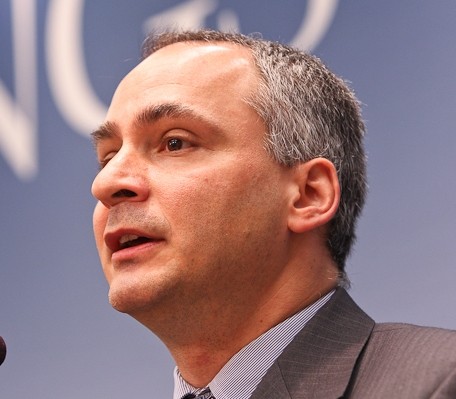
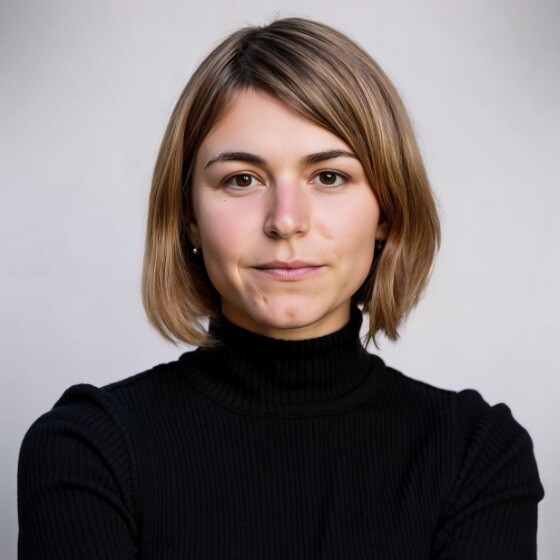
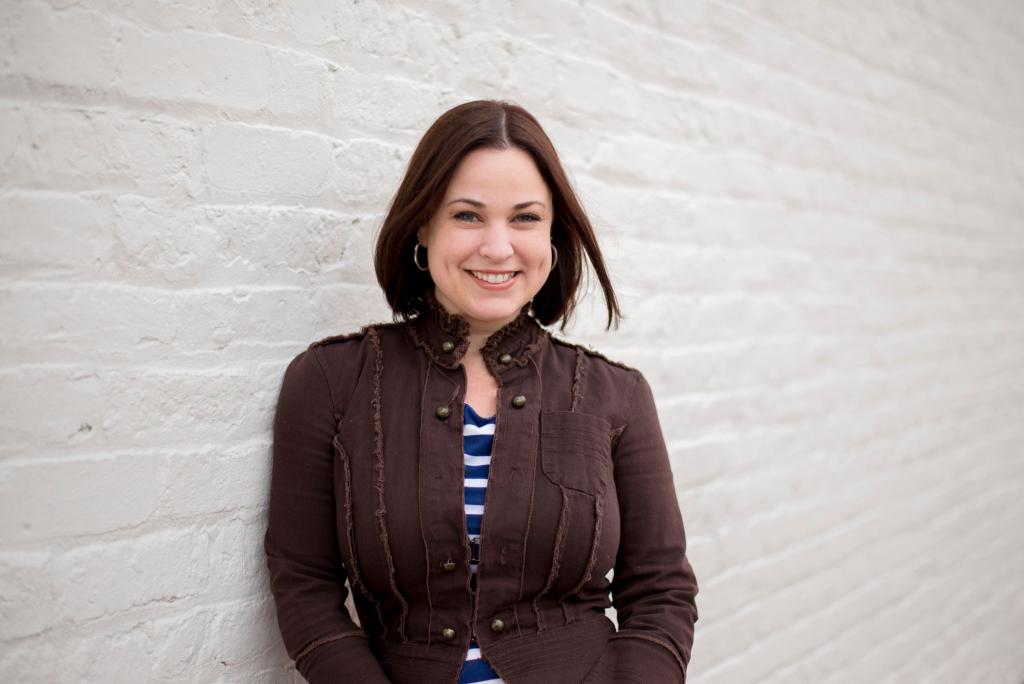
Lawfare Senior Editor Molly Roberts joins Editor in Chief Benjamin Wittes to discuss her new article on the so-called “grand conspiracy” investigation, which is now the subject of a grand jury probe in Florida. The “grand conspiracy” posits that a single conspiracy to foil President Trump’s electoral prospects binds together the Russia investigation from 2016, the Mar-a-Lago search, and the Jan. 6 and classified documents prosecutions during the Biden administration.
To receive ad-free podcasts, become a Lawfare Material Supporter at www.patreon.com/lawfare. You can also support Lawfare by making a one-time donation at https://givebutter.com/lawfare-institute.
Click the button below to view a transcript of this podcast. Please note that the transcript was auto-generated and may contain errors.
Transcript
[Intro]
Molly Roberts: Our
understanding is that there is a sitting grand jury investigating this, and we
have to take it seriously because that means that the people it's investigating
are possibly going to end up in a courtroom defending themselves against these
charges, if that grand jury issues an indictment.
Benjamin Wittes: It's
the Lawfare Podcast.
I'm Benjamin Wittes, Editor in Chief of Lawfare with Lawfare
Senior Editor Molly Roberts.
Molly Roberts: We
know, and we have reports already on the interference, collusion investigations
from multiple sources that haven't found that there was any of this sort of
malfeasance that the prosecutors will ostensibly be describing.
So why did they think they'll be able to show facts contrary to
that?
Benjamin Wittes:
Today we're talking grand conspiracies. Not little conspiracies, not ones that
only take a short period of time, but really big ones that go on forever and
ever and ever.
We wouldn't be talking about it, folks, except that a grand
jury in the Southern District of Florida is hearing evidence on this matter,
and by the way, is being supervised by Judge Aileen Cannon. So, Molly, what is
a grand conspiracy?
[Main Episode]
Molly Roberts: I
believe it's a conspiracy that's really super extra big. You wanna know what the
grand conspiracy is or what a grand—
Benjamin Wittes: Well,
yeah, I mean, I think this is the first time we've ever done a podcast on a
grand conspiracy as opposed to merely a conspiracy.
And I want the listenership to understand what the difference
is.
Molly Roberts: Well,
of course this one involves Donald Trump, so it has to be grand. The grand
conspiracy in this case is a plot, so large-scale that it spans multiple
elections. It ties together officials you'd never think would be tied together.
Basically, it's a conspiracy that's outside the bounds of a
usual conspiracy case because the people involved in it don't really plausibly
seem to have been able to enter into an agreement at all.
Benjamin Wittes:
Alright. It sounds like you're making fun of the grand conspiracy and that I'm
also making fun of the grand conspiracy.
So, let's start with the question of why we're taking this
seriously enough to have a podcast about it rather than doing snarky tweeting.
Why are we talking about the grand conspiracy?
Molly Roberts: So
we're talking about the grand conspiracy, not only because Donald Trump himself
and various officials in his administration have been talking about it over the
course of particularly the past few months, but 'cause there is specific action
now in southern Florida that suggests that the Department of Justice is
actually beginning to investigate this theory that they have that's become, to
be known as the grand conspiracy.
Benjamin Wittes: So
in other words, we're taking it seriously because there's a–
Molly Roberts: 'cause
they're taking it seriously.
Benjamin Wittes: –sitting
grand jury in Florida, whether or not it's taking it seriously, it was convened
in order to investigate it and therefore we have to take it seriously, right?
Molly Roberts: Yeah,
exactly. Our understanding from the evidence available is that there is a
sitting grand jury in Fort Pierce, Florida investigating this grand conspiracy.
We're not supposed to know that because grand juries are supposed to be
conducting their proceedings in secret, but various MAGA allies and even
Attorney General Pam Bondi herself have been pretty loose lipped about what's
going on.
So our understanding is that there is a sitting grand jury
investigating this, and we have to take it seriously because that means that
the people it's investigating are possibly going to end up in a courtroom
defending themselves against these charges if that grand jury issues an
indictment.
Benjamin Wittes: Or
even just dragged through the process, grand jury process of a grand jury
indictment, whether or not there are any indictments.
Alright, not to be coy, but what is, to the extent that we
understand it, and I will admit that in my case the understanding is limited, what
is the allegation that is being investigated by this grand jury in Florida?
Molly Roberts: Yeah,
I think that any reasonable person's understanding has to be limited here
because this theory is not particularly coherent, but I will do my best with
that caveat to explain it. The grand conspiracy essentially is that Hillary
Clinton—and by the way, Hillary Clinton in the grand conspiracy is diabetic, she
has heart and lung disease, and she's on heavy tranquilizers to control her
fits of anger, aggression, and cheerfulness.
Benjamin Wittes:
According to whom? Like who? Who has articulated this vision of the grand conspiracy
as starting with a diabetic Hillary Clinton?
Molly Roberts: Yeah,
so there are a series of document dumps in which the grand conspiracy has sort
of been spun out, and a lot of these occurred over the summer.
So first in June, CIA Director John Ratcliffe released, which
basically was just a reassessment of the 2017 Intelligence Community
assessment. And the only conclusion he came to was that the high confidence
conclusion that Russia aspired to help Trump win then was too confident. And
that intelligence officials nonetheless had made that determination and he said
that amounted to a manipulation of intelligence.
So the officials that he was complaining about, there were CIA Director
John Brennan, Director of National Intelligence, James Clapper, and FBI Director
James Comey.
And then, Tulsi Gabbard, the current Director of National
Intelligence, also did three dumps of documents. So one of those was a
declassified Republican staff report from the Devin Nunes-led House
Intelligence Committee. One of them was a whistleblower account and one of
them, the most kind of explosive one, was the so-called Durham Annex, and
that's in reference to U.S. Attorney John Durham's report from when he was
special counsel charged with ascertaining whether the crossfire hurricane collusion
investigation was improperly motivated.
And the Durham Annex, supposedly, was discovered by FBI
Director Kash Patel inside burn bags in a secret room, and it's a bunch of
communications that show that Obama was trying to protect Hillary Clinton by
framing Putin and Trump. And it turns out that the Durham Annex didn't show up
in the Durham report 'cause Durham himself said the documents were likely
forged.
These are likely Russian source documents. And it's in those
that you get kind of the most insane stuff here, that you get allegations of
Hillary Clinton telling these officials, or these officials finding out, that
Hillary Clinton needs to be protected from the investigation into a private
email server.
Then those officials saying, ‘Okay, to do that, we're just
gonna get Trump in trouble instead. And we are going to make it look like Putin
was trying to help him win the election. And we're going to rely on bad
intelligence, including the Steele dossier to do that.’
Benjamin Wittes:
Alright, so listening to you talk about this.
Molly Roberts: I
sound crazy?
Benjamin Wittes: You
sound crazy.
Molly Roberts: Yeah,
I feel crazy.
Benjamin Wittes:
Well, you sound like a kind of parody of Jim Jordan, but I am trying to figure
out—the grand conspiracy, as I understand it kind of starts with. Hillary
Clinton and the intelligence community assessment and dwells excessively on the
Steele dossier, and then it kind of migrates to the Mar-a-Lago raid, which
involved a completely different set of characters, you know, years later.
And then it has to do with the indictment of Trump, both for
the January 6th case and the classified documents case. And there seems to be
this idea that there is a single unified conspiracy that transverses time and involves
a whole bunch of people who didn't even know each other or don't know each
other, never worked together, and just involves all of the allegations against
Trump being false.
And I'm trying to figure out how you get from that kind of mélange
of nonsense to a grand jury investigation, as in what, is there some narrative
thread that involves an actual crime that binds all this together? And if not,
what is it doing in front of a grand jury?
Molly Roberts: Yeah,
where to start and even harder, where to start that doesn't make me sound even
crazier.
So, I guess one place to start would be the Mar-a-Lago
question. This ties a lot of the allegations against Trump together. Doesn't
totally tie all of them together, it doesn't really bring in Ukraine, it
doesn't bring in, doesn't really bring in Jan. 6 except to the extent that it
brings in Jack Smith via Mar-a-Lago.
So, the basic allegation there is that, and this goes back to
those burn bags, that in the burn bags, there were records that tied together
Russia, Durham’s investigation Mar-a-Lago investigation. Therefore, they are
connected and ah, again, I'm sorry, I sound crazy, perhaps the connection was
that the Mar-a-Lago search for classified documents was actually an attempt to
get back documents that would've revealed all the malfeasance in the Russian
interference, collusion investigations that were happening earlier.
So that's how they tie those two things together. But I think
the other reason Mar-a-Lago is really important here is—it's getting to your
question of how does this get in front of a grand jury?
And more specifically, how does it get in front of this grand
jury in Florida? Because Mar-a-Lago is in Florida and we're talking about a
case that sounds like it's pretty much based in the beltway. So it's Mar-a-Lago
that gets them to Florida and Florida's really convenient for a few reasons.
The first of which is that it has a super friendly U.S. attorney.
So this case cropped up in other U.S. attorney's offices over the months, some
version of it, mostly focusing on John Brennan, but it stalled out in multiple
places in the Western district.
Benjamin Wittes: Because
it's insane.
Molly Roberts:
Because it's insane. Because it's insane. Yeah.
Like a U.S. attorney, and I mean this happens all the time now,
but a U.S. attorney in the Western District of Virginia was even forced to
resign related to some version of the grand conspiracy because he didn't wanna
sideline a high-ranking career prosecutor who was skeptical of it.
And then in other districts they just gave up. Nobody got fired
or forced, was forced to resign, but they gave up. But, this guy Jason Reding
Quiñones, who is the U.S. Attorney for the Southern District of Florida, has,
it seems been way more receptive. And so, he has already issued subpoenas out
of the Miami office for several of these officials we've been talking about,
and there have been indications mostly coming from this kind of MAGA activist,
Article III Project founder Mike Davis, and—
Benjamin Wittes: We're
gonna get to Mr. Davis in a moment.
Molly Roberts:
Alright. Alright. All right. Yeah. Alright.
Indications from Mike Davis that Quiñones, who Davis describes
as his very good buddy, is standing up this grand jury in Fort Pierce,
specifically, which Mike Davis had been calling for years, to investigate the
grand conspiracy. So Mar-a-Lago kind of gets you to Florida.
Benjamin Wittes: Right,
and it gets you to a particular judge in Florida.
Molly Roberts: Right,
Mar-a-Lago gets you to Florida. Fort Pierce gets you to a particular judge, and
that judge is Aileen Cannon. And of course, we're familiar with Aileen Cannon
from the classified documents case in which she eventually dismissed it, for
Jack Smith having been improperly appointed, but was just very friendly to the
president throughout.
So, you said Mar-a-Lago gets you to that judge, and I would
quibble with that a little bit, I think that's part of the problem here.
Mar-a-Lago is not in the same division as Fort Pierce. Mar-a-Lago is in West
Palm. So really, this should be going to a grand jury in West Palm if they're
going to be using Mar-a-Lago as the reason that it's in Florida at all.
Benjamin Wittes: I
mean, it should be in the District of Columbia.
Molly Roberts: It
should not be here. It should not. It's, sorry,
Benjamin Wittes: It
should be here in the FBI.
Molly Roberts: Yes.
No, well, yes, and the burn bags, it was in, again, it popped up in all these
other places.
Benjamin Wittes: Oh
yeah. That was in the Western—that was in Virginia, right?
Molly Roberts: We're
going all over the, I was gonna say all over the country, but we're at least
going all over the coast with this one.
But yes. So Mar-a-Lago gets you to Florida, already a little
strained. And then, for whatever reason, we've also gone to Fort Pierce, which
is even more strained because that's not where Mar-a-Lago is, but nevermind, that's
fine. You can choose your district, even if it seems a little suspicious that
you want it 130 miles away from the Miami office, but you can choose your
district.
And Aileen Cannon is the only sitting judge in Fort Pierce. As
it turns out, this does not 100% guarantee that she would ultimately be
presiding over the case if it makes it to the that point. And it doesn't
guarantee that she'll be presiding over the grand jury all the time, but she
will be doing so every alternating month.
Benjamin Wittes:
Alright. I'm still hung up on this question and we're gonna keep coming back to
this: What the heck is this about?
Is the grand conspiracy, the idea that there was a deep state
plot to prevent Donald Trump from being elected in 2016 or that there was a
deep state plot to get him charged in 2022? Or, as I think, both?
And what on earth do they have to do? Like what's the
connection by which John Brennan and the creation of the intelligence community
assessment in 2016, 2017 and Jim Comey, Barack Obama, and Hillary Clinton who
are out of office and gone, you know, not running for, you know, not part of
the political system, can be part of a conspiracy to get Trump Mar-a-Lago
searched in 2021, 2022.
And similarly, who are the conspirators? How is Jack Smith
connected to any conspiracy that happened in 2016? These seem like, like what
is the notion that there is a conspiracy here at all?
Molly Roberts: I
mean, it's so strained. It's really difficult to answer the question, but I
believe that the conspiracy is to prevent Trump from getting elected in any
election, ever.
So that ultimately means to prevent him from being on the
ballot by charging him with crimes and hoping he'll be convicted of them. And
originally, it just means don't get him elected by smearing him. So you're not
gonna stop him from being on the ballot, although, well, you're not gonna stop
him from being on the ballot.
There's no way they could have moved fast enough to stop him
from being on the ballot if he were, you know, if it, even if it had been
proven that he'd colluded. But it's not to get him elected.
So that's the conspiracy. They all wanted to do this. They were
all working in concert across time to make sure that Trump didn't get elected
and the, that kind of ends with the final effort, which is this prosecution.
But also it's a coverup, sorry. Also, the Mar-a-Lago search is
a coverup of them trying to have not let him get elected the first time. That's—
Benjamin Wittes: Okay,
so normally in a conspiracy, there has to be an agreement.
Molly Roberts: Yes.
Benjamin Wittes: A
conspiracy is an agreement to commit an illegal act.
Molly Roberts: Yes.
Benjamin Wittes: With
some overt step taken in furtherance of that agreement. So has there, is there
any, in any of the voluminous, high-quality literature about the grand
conspiracy, is there any suggestion about when, who formed such an agreement?
Molly Roberts: Only
in kind of the earliest stages. There's the suggestion, and again, a lot of
this is in the discredited Durham Annex, but in the early stages, there's the
suggestion that there were conversations between Obama and his intelligence
officials about framing Trump to protect Hillary.
But there's nothing that they have to suggest, that's supposed
to show that the Mar-a-Lago classified document search involved an agreement
with any of those people or had anything to do with the coverup. They don't
have that.
All they have are these recently released documents showing
that FBI agents were concerned that there wasn't probable cause, but they don't
have emails from FBI agents saying ‘we're gonna do it anyway because we wanna
frame Donald Trump more. We wanna cover up what Obama did in 2017, 2016.’
Benjamin Wittes: I'm
still struggling with the coherence of this thing.
Molly Roberts: I
mean, me too.
Benjamin Wittes: You
know, coherent enough to create the basis for a grand jury investigation. But
let's leave that aside and return to a name that you mentioned of somebody who
really appears to be one of the animating spirits behind this, which is Mike
Davis.
And as I've looked at this material, I've been surprised he's
not a government official, and yet he seems to be remarkably knowledgeable
about the conduct and foundations of this investigation, and he keeps making
statements that, you know, purport to reflect what the Southern District of
Florida is doing, purport to reflect things about this grand jury that, you
know, are supposed to be secret.
So who is Mike Davis and why does he seem to the shadow
prosecutor behind the grand conspiracy case?
Molly Roberts: Yeah,
so Mike Davis is a Federalist Society lawyer who has gone on to found the
Article III Project, which is basically trying to be a more MAGA version of the
Federalist Society. He and Jason Reding Quiñones are, my understanding is,
friends from way back and in fact, it's Mike’s—
Benjamin Wittes: Quiñones
is the U.S. Attorney in Florida.
Molly Roberts: The
U.S. Attorney in the Southern District, exactly. And in fact, part of the
reason Quiñones has been installed in the Southern District is that Mike Davis,
who is very active in sort of the MAGA influencer podcast world, who's very
well connected, was pulling for him. So Quiñones, who doesn't have a great
past, he, I'm gonna try to find exactly what he, I believe it was in the same
district, that he left the office.
Because he had basically not impressed his supervisors, he was
not doing well at the job. He had a bad performance evaluation. I just wanna
make sure that I, yep. Same office, Southern District Miami, U.S. Attorney's
Office.
He had left that office previously and now he's back in there
leading it. And this is partly because Mike Davis was pulling for him. He said
this would be a great guy to have in there and sent kind of the message, this
would be a loyal guy to have in there.
Benjamin Wittes: Is
your impression that he was put there in order to run this investigation, in a
kind of Lindsey Halligan, or was he put there for general reasons of loyalty
and then Mike Davis or somebody came to him later and said, ‘Hey bud, you wanna
do a grand conspiracy investigation?’ What's the order of operations here, to
the extent we know?
Molly Roberts: Yeah,
I think that it's sort of some combination of the two. Mike Davis has been, for
a long time, advocating for this grand jury to be stood up in Fort Pierce, so
it's clearly something that has been on his mind.
But we saw versions of the grand conspiracy, or matters that
have now been pulled into the grand conspiracy, as I said, appearing in other U.S.
attorney's offices and then eventually in the fall, they seem to have been sort
of consolidated in Florida, where Reding Quiñones issued upwards of two dozen
subpoenas to a bunch of those officials we were talking about.
So I think it's a bit of a mix. I think that he was put there,
generally, to be useful, but also this is a particular effort with which he can
be useful. And as those inquiries were stalling out elsewhere, it seemed like
the right time to kick this off down in the Southern District.
Benjamin Wittes: Do
you have the sense that this is Trump-driven, or is this Mike Davis-driven?
So, I look at this and I say at some level this is the sort of
paranoid fantasies of a whole bunch of MAGA people who are, you know, convinced
that the Russia investigation was a corrupt effort to get Trump, and convinced
sort of that subsequent investigations flowed from this fruit of the poisonous
tree, which is the Steele dossier, a proposition for which there is actually
zero evidence of any kind, but people really do believe it.
But there's another side of it, which is Trump's own very deep
belief that the Russia investigation turned into the Ukraine investigation
turned—and he talks about the hoax, this hoax turned into that hoax, turned
into this hoax, turned into January 6th hoax, turned into the
classified documents hoax—
And he has this sort of unified field theory of all the
investigations against him, that it was just sort of one giant hoax that was
directed against him that had ever-morphing forms. And the grand conspiracy
kind of reminds me a little bit of a set of Trump tweets. What's his role in
this?
Molly Roberts: Yeah,
I think it's a hard question. I think that, you see Trump saying what you said.
You see Trump sending out tweets that say ‘They impeached me twice. They
indicted me five times over nothing. Justice must be served!’ These tweets
where he's not distinguishing between the types of things people did to him and
where he's essentially saying, this is all one enemy from within that wants to
destroy the country by destroying me.
So he has it all put together like that, but also he doesn't
mind whether you get Letitia James for mortgage fraud. He doesn't need her,
necessarily, to be part of some grand conspiracy with a legal theory
underpinning it. I think Trump is content as long as everyone gets prosecuted,
to have them prosecuted for whatever is most convenient, right?
Benjamin Wittes: In
fact, he kind of likes, you know, Letitia James charged him or sued him for
mortgage fraud. He brings a mortgage fraud case against her.
Molly Roberts: Yes.
Benjamin Wittes: You
know, Jim Comey,
Molly Roberts: says
he's a liar,
Benjamin Wittes: says
he's a liar. He accuses Jim Comey of lying.
Molly Roberts: Yeah,
right.
Benjamin Wittes:
There's the, he likes the kind of parallelisms of these things.
Molly Roberts: And
there is a parallelism here with a Jack Smith count that we can get to in a
bit.
But my guess is that Trump is not thinking on the level of, and
we could actually legally allege, a grand conspiracy. I think he likely wanted
the prosecutions about the Russia hoax specifically, which is, what was the
quote unquote Russia hoax specifically, which is what was happening initially
with scrutiny of Brennan and other officials related to that intelligence
assessment.
I think it is way more the machinations of people far lower
down the food chain who have brought this, appear to have brought this, to
Florida and appear to be spinning it into this narrative and legal theory that
is the grand conspiracy.
And again, to even get it to Florida, you need to allege
something grand to get those issues with John Brennan from the beltway to
Florida, you need to tie them to something totally actually unrelated, like
Mar-a-Lago.
So that I think is kind of instrumental. It's just to get it
down there. And I don't think that was necessarily on Trump's mind, ‘Oh, we
need to get this to Florida, where we have a friendly judge and a friendly
prosecutor.’ I think that's people kind of trying to do this work for him and
it's certainly convenient that it's something that, narratively, he's very much
on board with, something that he has described to this big hoax.
Benjamin Wittes:
Alright, so let's talk about how a grand conspiracy investigation proceeds. You
start by issuing a whole bunch of subpoenas. They've done that. Then presumably
you start hauling people in to give testimony before a grand jury.
At some point when you do that, somebody is gonna move to
quash, the grand jury subpoena, saying, ‘wait a minute, what are you even
investigating?’
And I am waiting, like I, I'm—a lot of that litigation would
take place under seal, but this is where the identity of the judge becomes very
important. Because if you have a normal judge, and a normal judge can be a
Democratic appointee or Republican appointee, a normal judge who is not known
to have taken wild liberties with the law in support of Donald Trump.
You know, it is fairly easy to see how eventually a prosecutor
who cannot articulate a coherent legal theory of what they're investigating
without sounding like a crazy person runs into some trouble, right. You
actually do need a theory of a law that you're looking at.
Molly Roberts: Yep.
Benjamin Wittes: And
conduct that would if true, violate the law.
Molly Roberts: Yep.
Benjamin Wittes: What
are the mechanisms that you see by which the judges of the Southern District of
Florida and the 11th Circuit Court of Appeals might actually end up looking at
some of this stuff?
Molly Roberts: Yeah.
So, and I think you're right, I think it's gonna be difficult for them to
explain what they're actually trying to prosecute here, and they'll have to
identify the statute, which Mike Davis has hinted as this conspiracy against
Wright’s Statute, and that's the parallelism I was pointing to, which is that
conspiracy against Wright’s was actually count four in Jack Smith's January 6th
indictment of Donald Trump that was interfering with voting rights, and I think
that they would attempt to make a similar case here.
The kind of other weirdness of this is that they have not, to
the targets of any of the subpoenas, articulated any particular crime except to
Brennan's lawyer. They've articulated a lying to Congress charge, but that
would not be involved in this conspiracy, that would have to be a separate
charge.
So you can see them saying, ‘oh, we're investigating lying to
Congress,’ but it wouldn't even work with their ‘conspiracy against Wright’s’
theory, which is the only way that you get it to Florida. So again, I see them
having trouble explaining this theory to a judge.
How does it get to a judge? Well, like you said, the
defendants, their attorneys could move to quash a subpoena. If Judge Cannon
refuses a request to quash it, they could resist the subpoena. Or if Judge
Cannon rules that their testimony can be compelled, they could resist that and
that could conceivably bring it into a courtroom and it could eventually bring
it to the 11th Circuit.
If it gets to the point that a grand jury hands down an
indictment, then of course they can motion to dismiss the case, and that's
another way that you get it to move up the chain of the courts.
Benjamin Wittes: But
you also, you have a weird situation here in which they do seem to have
successfully engineered the fact that the grand jury is being supervised at
least some of the time by Aileen Cannon, and any indictment presumably would be
in her court where she is the only judge and there is some— I mean that is a
bit of a feat of engineering.
Molly Roberts: It is
a bit of a feat of engineering and Brennan's lawyer has written a letter to the
chief judge requesting that she intervene to prevent the case from being
steered toward Fort Pierce, but he wrote that over the holidays, this grand
jury was scheduled to start sitting this week, January 12th.
We haven't heard anything, so that doesn't mean that if an
indictment were eventually handed down, she couldn't make sure that the case
didn't end up in Judge Cannon's courtroom. Judge Cannon is the only judge
sitting in Fort Pierce, but that doesn't mean necessarily in the Southern District
that she's the only judge who would hear it.
They have kind of a complicated wheel system that involves
neighboring divisions, but has exceptions, but also has exceptions for
unanticipated emergencies. And one point, also, that if the Mar-a-Lago
classified documents case is brought in that, the defense for any of these
people could bring up, is that it was Aileen Cannon's courtroom.
She was involved in that case. Should she be overseeing this
conspiracy case that could involve a prosecution that she presided over?
So anyway, the answer to your question is yes, it's a
remarkable feat of engineering. I do wonder, and this may not be connected at
all, I don't wanna be being a conspiracy theorist myself, whether the fact that
Aileen Cannon is now duty judge in Fort Pierce only every other month when she
was initially supposed to be duty judge in Fort Pierce for the entire year, I
wonder if that's the chief judge, who I believe has interfered with Cannon
previously, in a way that was favorable to the prosecution in the Trump cases. But
you can tell me if I'm wrong.
Benjamin Wittes: I
believe that the, I'm not sure it's the same chief judge but I would have to
look that up. There was definitely a moment where some of her colleagues,
including the chief judge, came to her and said, ‘are you sure you're up to
this?’
Cause she was sort of brand new and they, I think, urged her to
step aside, given the way she had handled the pretrial litigation or the pre-indictment
litigation, and she refused. That's what I'm not sure I remember the details of
it, but yes, there were prior interventions, and of course there were
aggressive interventions by the 11th Circuit on more than one occasion.
Molly Roberts: Right.
Benjamin Wittes: So,
you know, this is a problem judge in a conservative circuit who has a bad
relationship with a court of appeals that has had to step in to correct her
with respect to this set of issues a number of times.
Molly Roberts: Right.
So I wondered whether it was at all possible that change in scheduling for the
duty judge was a move by the same chief judge to at least mitigate against what
was going on here because this grand jury has been stood up in Fort Pierce, but
the subpoenas were initially issued out of Miami, so you know, you wouldn't, it
was a kind of gearing up for the case to be steered to Fort Pierce, but hasn’t
happened yet,
Cause the grand jury would sit for longer than these remaining
three weeks of January. Was this a way to make it at least, so it wasn't going
to be a case that purely Judge Cannon would be looking over, but it could also
be a coincidence. You know, it's an order by the chief judge that amended the
schedule, but it doesn't have any reasoning in it. So it could just totally be
a coincidence.
Benjamin Wittes:
Right. And so, as it is now, depending on when one filed a motion to quash, and
you would know as a defense lawyer, January's a bad month. February's a good
month. March is a bad month.
Molly Roberts: Yep.
Benjamin Wittes: Do
we know which months Aileen Cannon is supervising the grand jury, and which
month somebody else is?
Molly Roberts: Yeah,
you just said the bad months in good months.
Benjamin Wittes: Oh,
I got right?
Molly Roberts: Correct.
Yeah. Well, the coin flip. Yeah. So Aileen Cannon is there now in January, and
then next month it'll be this judge who is a Miami-based judge, David Leibowitz,
I believe his name is, and then back to Canon and so on.
Benjamin Wittes: So,
one way to expect is like February 1st, you get a slew of motions to quash.
Another possibility though, is that it's easier to talk about a
grand conspiracy and tweet about it than it is to investigate it. And if
you're, you know, okay, so you're Mr. Quiñones and you've gotta, you've gotta
actually investigate and create a prosecutable case out of a combination of
nonsense and, you know, a time warp, right?
And people who don't know each other. And so what will actually
happen is it will focus in on a few discreet questions that are not grand
conspiracy questions like, did John Brennan lie to Congress?
Molly Roberts:
Exactly.
Benjamin Wittes:
Answer no, but okay. You, but you can investigate that question, right.
Do you have a sense of what, other than issuing 24 subpoenas to
a group of former officials, this investigation has actually consisted of, at
this point?
Molly Roberts: No, I
don't.
Just issuing the subpoenas, which, by the way, is itself
somewhat performative because my understanding is they were largely for highly
classified information that these people don't have, presumably don't have. If
they did have it, we'd have a whole other problem on our hands. So we have no
reason to—
Benjamin Wittes: These
people, Trump has already stripped of their security clearances.
Molly Roberts: Yes.
Right.
Benjamin Wittes: And
so they, they don't have access to this material, but it does, I suppose, force
them to go search their records to make sure they don't have it. You know,
it's, it is a pain in the neck. Alright, so now the grand jury is sitting. We
haven't had any indication of anybody being called to testify to it, right?
Molly Roberts: Not
that I know of.
Benjamin Wittes: So
one possibility here is that this is an invest—it's kind of a ghost
investigation of a grand conspiracy, right? Like that there's, when you
actually sit down to do it, you can whisper in Mike Davis’s ear, ‘oh we've
convened a grand jury.’
But like, when it actually comes down to doing anything, that's
a tricky, much trickier business and one possibility we should keep in mind is
that nothing happens.
Molly Roberts: I
think that is 100% correct. The case, as you have pointed out, doesn't make any
sense. You shouldn't want, if you're these prosecutors to have to end up in a
courtroom explaining this case and explaining, ‘yeah, it's a conspiracy case
where I need to prove that these people entered into an agreement with the
specific intent to violate someone's statutory or constitutional right.
But, I can’t really identify an agreement, and I can’t really
show intent. Certainly, I can't show that intent and that agreement had
anything to do with the specific right to vote or to appear on the ballot of
Trump or his supporters.’ You don't wanna do that.
Benjamin Wittes: And
any witness you bring in there and you ask that question, John Brennan, you
know, were you trying to—did you have an agreement with Hillary Clinton and Jim
Comey to prevent people from voting for Donald? He would look at you like you
were insane, right?
Molly Roberts: Yes! Like
you've been looking at me when I was trying to describe this throughout the
entirety of the podcast. He would,
absolutely, he would.
And what they would have to show was that these people did all
these things entirely in bad faith. That was what they were trying to do, that
they didn't have any other reasonable basis to be doing this investigation.
And how can you show that? We have, we know, and we have
reports already on the interference, collusion investigations from multiple
sources that haven't found that there was any of this sort of malfeasance that
the prosecutors will ostensibly be describing.
So why do they think they'll be able to show facts contrary to
that?
Benjamin Wittes:
Alright, so there's another possibility though, and that is what you might call
the ‘Lindsey Halligan YOLO’ possibility. You know, everything that we're
saying, I would've said the month before Jim Comey was indicted for lying to
Congress, which he did not do.
And then if you have a prosecutor who just doesn't give a shit
and says, you know, I'm gonna, on my third day in office, indict him anyway.
You can actually, and one thing about conspiracy law is that it is, it really
is quite malleable, right? And it gets rid of all kinds of statutes of
limitations problems because, you know, if a conspiracy that never had a
beginning date and has never ended and continues until now, if it's grand
enough, you get rid of all your statute of limitation problems.
And so, I'm—another possibility is that, you know, you have a
friendly judge, you have a compliant grand jury, and that's a hypothesis, I've
been pretty impressed with grand juries this past year, but a compliant grand
jury and you're willing to lie. You can kind of get anybody to indict anybody
for anything.
So I'm curious whether you think the grand conspiracy might
have legs because of the combination of forum shopping and a kind of nihilism
on the part of the prosecutorial team.
Molly Roberts: Maybe.
Like you said, one likes to think better of the average grand juror than that.
To me, I can imagine, again, grand juries, ham sandwiches, I can imagine
managing, if again, you're nihilistic enough about it, if you're willing to
lie, if you're willing to YOLO it, I can imagine getting somewhere on some sort
of conspiracy related to the interference collusion investigations, even though
again, there's no “there” there.
I get hung up on the connecting it to Mar-a-Lago. That's where
it seems to me like it is just, so much of a leap that it should be difficult
for any even semi-reasonable person to be convinced of it. But of course,
Mar-a-Lago again is what gets you to Florida. So that seems like a big problem
for them.
Benjamin Wittes: So I
have a different problem, which goes back to 2016 and the IAC, which I, you
know, for my sins in life is a record I know really well which is, I don't know
who your witness would be, right?
You somehow, you've gotta put on a witness that show, who would
testify to somebody with firsthand information using admissible evidence.
Not stuff that John Durham wrote eight years later, or six
years later, seven years later. But you know, somebody who actually can testify
to firsthand facts as to the intention of a group of people that they
formulated an agreement to throw the election to Hillary Clinton, diabetic
Hillary Clinton because you know, like I know a lot of people who were involved
in that process.
Molly Roberts: Yeah.
Benjamin Wittes: None
of them is going to testify that this was a corrupt process designed to deprive
voters of the right to elect, of their constitutional right, to elect who was
clearly the person of their choice.
And by the way, who won anyway.
Molly Roberts: We
forget about that part, don't we? Yeah. Right.
Benjamin Wittes: I
just, I'm hung up on the
Molly Roberts: Twice!
Benjamin Wittes: first
part of the conspiracy. I don't understand what evidence you would ever think
you could put on in court that even hints in that direction.
Molly Roberts: Yeah,
no, I mean, all you have quote unquote evidence-wise is these document dumps,
right? I can't think of a person either who is going, who would've firsthand
knowledge to the—
Benjamin Wittes: But
documents don't testify.
Molly Roberts: Right.
No, exactly. I can't think of a person who would testify to them. One of them
is a disgruntled whistleblower, but his only story is that he didn't think that
the Steele dossier was included in the ICA and then he found out that it was,
and then he was mad about it.
That, there's nothing there.
Benjamin Wittes:
Right. So let me sketch out a hypothesis for you, which is the moment that this
investigation shows signs of actual life as opposed to being the kind of
investigation that you announce a grand jury and then it kind of vanishes, you
will have motions to quash filed in even numbered months.
But that there is a reasonable possibility that what will
happen is that this is the last time we will ever talk about the grand
conspiracy because it's 30 to 40% too dumb to have, to have enough legs to
actually do anything with.
Which would you bet on, if you were a betting woman: too dumb
for legs or we're actually gonna spend some time this year litigating in even
numbered months only, over the grand conspiracy grand jury subpoenas.
Molly Roberts: I'm
going to bet on some subpoenas being issued through this grand jury and some
litigation emerging related to that if only because then it will make me sound
slightly less crazy for having explained this whole grand conspiracy that
supposedly is being heard in Fort Pierce right now and being pursued by the
administration.
Benjamin Wittes:
Folks, on that bold prediction, which I think unfortunately is probably right.
Every time I have predicted that something is gonna peter out,
'cause it's too dumb, somebody ends up getting indicted and that's why I am
taking the Letitia James hairdresser story very seriously.
But by the way, if Sandwich Guy does not get folded into the
grand conspiracy, Mike Davis will not have done his job.
The culmination of the conspiracy was the moment that Sandwich Guy
threw that sandwich at the CBP agent.
Molly Roberts: That's
good. That extends the statute of limitations even longer.
Benjamin Wittes: It
does. Folks, we're gonna leave it there. Molly Roberts, thank you for joining
us today.
You can find Molly's excellently insane story about the grand
conspiracy on Lawfare.
And, you know, look, folks, we're sorry. Sometimes we have to
bring you content like this.
[Outro]
The Lawfare Podcast is produced by the Lawfare Institute.
You can get ad-free versions of this and other Lawfare podcasts by
becoming a material supporter of Lawfare at our website lawfaremedia.org/support. You'll
also get access to special events and other content available only to our
supporters.
The podcast is edited by Jen Patja, and our theme music is from
Alibi music.
As always, thanks for listening.