Lawfare Daily: How Two Intelligence Community Veterans View the Iran Conflict, with Chip Usher and Aaron Faust

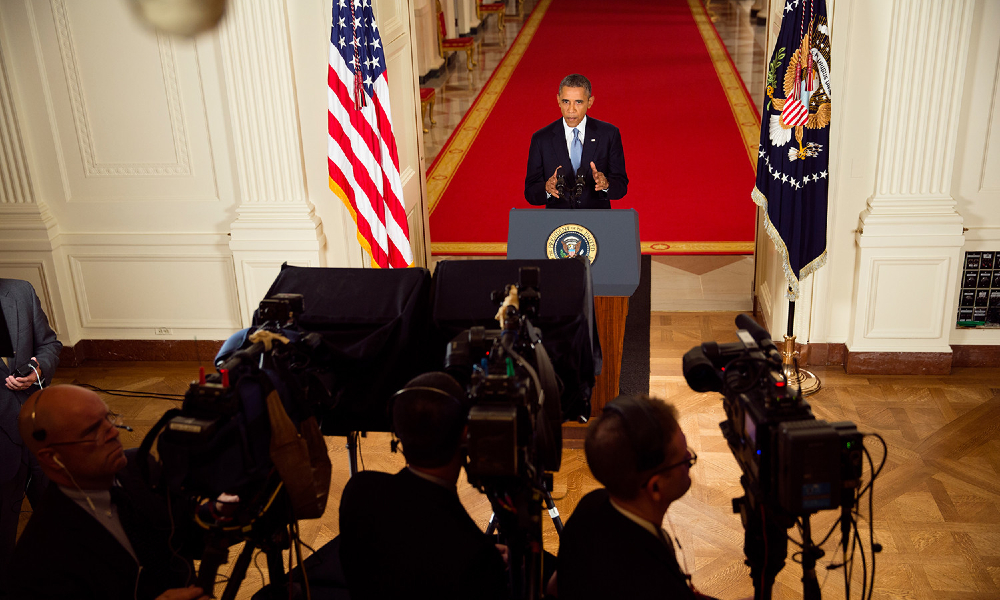
.jpg?sfvrsn=fe86d28c_3)


On today's episode, Lawfare Senior Editor Scott R. Anderson sits down with two veterans of the intelligence community to get their take on the ongoing Iran conflict.
Before leaving government last year, Aaron Faust was a senior official in the U.S. Department of State's Bureau of Intelligence and Research (INR), where he had previously served as Division Chief for Iran, Iraq, and the Arabian Peninsula. William "Chip" Usher, meanwhile, is the Senior Director for Intelligence at the Special Competitiveness Studies Project and a professor of practice at the Bush School of Government and Public Service at Texas A&M University. He previously spent 32 years with the Central Intelligence Agency (CIA), much of it focused on the Middle East.
Together, Scott, Aaron, and Chip discuss the national security threats that Iran presents, the challenges that large-scale military operations against Iran were expected to present, and where the Trump administration—and Iran—may take the conflict from here.
For more of Chip's analysis, read his newsletter "Fault Lines" and check out his podcast, "Intel at the Edge.” You can also find Aaron's satirical takes on current affairs on his Substack, Ridiculocracy.
To receive ad-free podcasts, become a Lawfare Material Supporter at www.patreon.com/lawfare. You can also support Lawfare by making a one-time donation at https://givebutter.com/lawfare-institute.
Click the button below to view a transcript of this podcast. Please note that the transcript was auto-generated and may contain errors.
Transcript
[Intro]
Aaron Faust: You know, I think we did plan for interceptors, but only up to a certain timeframe, and we're fast approaching, if we haven't already arrived at the timeframe, when we will start to run out and our allies will start to run out of interceptors of the kinds that can actually stop the Iranian missiles.
Scott R. Anderson: It's the Lawfare Podcast. I'm Senior Editor Scott R. Anderson, here with Chip Usher, the senior director for intelligence at the Special Competitiveness Studies Project, and a 32-year veteran of the Central Intelligence Agency, and Aaron Faust, who was previously the division chief for Iran within the State Department's Intelligence and Research Bureau.
William "Chip" Usher: If all we did was agree to cessation of hostilities tonight, the Iran that we would be left with, yes, seriously degraded, but you know, certainly more, you know, angry and committed to re-arming itself. You know, perhaps taking a fresh look at its nascent nuclear program than ever before.
Scott R. Anderson: Today we're talking about the war in Iran, how he got here and where it might be going.
You can find more of Chip Usher's analysis on his Faultlines newsletter via Substack, and you can find Aaron's satirical take on current affairs at radiculopathy.com.
[Main Episode]
So Aaron, I wanna start with a little bit of a level set for folks who may not be as deeply immersed in the Iran questions and Iran problems that folks who deal with Middle East policy have been dealing with for decades.
Talk to us a little about what the consensus has been around the real threats that Iran does present, or at least challenges Iran presents to U.S. national security and has for a while, and also give us a little bit of sense of what the dominant U.S. strategy has been for the last decade or two.
Aaron Faust: Sure.
Well, I think, really, you're seeing a lot of the threats that we've all been concerned about right now, that we've all been concerned about for a very long time. So Iran has always had the ability to affect the free flow of oil and energy through the Persian Gulf in the Strait of Hormuz. We saw that during the Iranian-Iraq War, which led to our navy facilitating tankers through the particular time, Iran has support organizations like Hezbollah and Iraqi militia groups, Hamas, et cetera. I dunno if we call the Houthis proxies, they're more partners. We can get into that later if you're interested. And those proxy organizations in particular during the Iraq War in Lebanon, et cetera, have killed Americans, including Marines in 1983 in Lebanon.
Obviously we know about the IEDs during the Iraq war, which Iraqi militia groups and the IRGC directly were responsible for hurting Americans. And so they in some ways have a direct threat to the United States. They also sense the killing of Qasem Soleimani in 2020. You know, they have directly targeted and claimed that they're going after President Trump—pfficials at that time that were involved in that assassination and we've seen extra security being given to and more recently taken away from some of those individuals.
So they're targeting in many ways, Americans directly. We also have had concerns, obviously, for a long time about their nuclear program and their ballistic missile program, and the concern is if their ballistic missile program ever gets to the point where they can fire a missile, that it can hit the United States, and especially if that missile is nuclear tipped, that is obviously the biggest threat to the United States homeland that we see and the biggest threat to Americans.
So we've been spending a lot of effort for a long time now in making sure they don't get a nuclear weapon and making sure that their ballistic missile program is in a box or no longer for that matter.
They're also a huge threat to our allies. Of course, Israel. They can hit Israel with both proxies and missiles, as we've seen in the last couple years. They can hit our Gulf Arab allies with missiles, and they can threaten their energy infrastructure. They've done during this conflict, and they did previously in 2019 and in other years.
So Iran has, you know, sort of a multifaceted array of options to hurt Americans and American interests, both political, economic, and geostrategic. To add one more thing, I think they've also been proliferating technology to Russia, for example, and to use drones in Ukraine. That's been a big one of late.
And we've also seen them proliferate the same kinds of drone technology in particular in recent years to other countries around the world.
Scott R. Anderson: So we saw the Trump administration take military action against Iran last year as well. In the summer, we saw a limited strike following the initiation of a military campaign by Israel against Iran where the Trump administration opted to make a limited set of strikes against nuclear facilities in Iran, obliterating it, in the president's words, though I know assessments of that were somewhat mixed in other quarters.
And then by my reading, although feel free to disagree with us as people who probably watch this closer than I did, it seems the administration then quickly pivoted to pressure the Israelis and cruises, the Israelis to wind up their military operation to having a essentially achieved one of their main objectives of constraining the nuclear program.
Chip, talk to me a little bit about the Trump administration's approach there. How consistent was that with the approach the United States is usually taken towards Iran, and why did it adopt that more constrained model that it appears now to have abandoned six to eight months later?
William "Chip" Usher: Well, I think you're referring to Operation Midnight Hammer which was another combined U.S.-Israeli operation, obviously last summer, that in the presence where it's obliterated Iran's nuclear capability and perhaps the reason for restraint, at that moment was derived some, maybe two factors in my view.
One is the objectives were limited, and they were narrowly focused on the nuclear weapons program. And then the second, you know, may have been the analysis or assessment at the time as to how fragile or shaky internally the regime was in. And I think that assessment probably went through a very significant recalibration later in January of this year when Iran saw a very, like unprecedentedly large public protests against the regime that it reacted to quite brutally estimates vary, but they killed anywhere from seven to 30 of their own citizens. But it marked little bit of a high watermark for the domestic unrest of that country.
And so I think that may partly why the Trump administration took a different approach with the campaign that it launched in late February.
Scott R. Anderson: So we see the administration plan to undertake this much more substantial military operation earlier this year, a really substantial campaign aimed at substantially, you know, degrading Iranian military capabilities, hitting Iranian middle military political leadership. Although I know there's some—Israel has played a greater role in certain of those strikes in the United States has, but certainly part of the broader campaign.
This isn't the first time that this idea has been raised. Certainly we've heard it in public discourse. We've heard it raised by public allies like Prime Minister Netanyahu in the past. So there's some sense about what we expected that might look like.
So in January before we knew clearly what the administration was headed on, what would you have thought, Chip, about what an operation like that might present the challenges it might present, risks it might present compared to something much more limited constraint, like what the administration pursued previously? And how have those predictions come to pass, which ones have fallen short and which ones maybe have kind of exceeded even the expectations of informed watchers like yourself>
William "Chip" Usher: Yeah, sure. Yeah. And just to clarify for the listenership out there I'm not privy to what the intelligence community briefed to the White House or the Pentagon prior, during or since the kickoff, the conflict. So this is sort of my educated guesstimate, if you'll.
But look, I think the intelligence committee more than likely, sort of presented the straight facts and analysis, sort of derivative of what Aaron and I you know, when we were in service. And those themes would probably have been as follows, that Iran is, you know, ideologically committed and that ideology runs deep in, in the country.
Despite the wave of protests that we saw in January, you know, yes, people can kind of take different cuts at this, but I would say maybe 10 to 15% of the Iranian population are like really the base of support for the regime. But when the population of over 90 million people that's not inconsequential.
And they clearly control the military, the security forces, and most importantly the Iranian Revolutionary Guard. So the idea that just a swift decapitation campaign would be enough to change the character and nature of the regime is not likely to have been something that the intelligence community put forward to the administration.
It may have been something the policymakers assumed or had hoped for, but I don't think it would've been necessarily reflected in sort of my understanding of how assessments have been compiled in the past. And the other element of this is Iran time and time again, has demonstrated the willingness and the capability to rally.
It's sometimes to initiate, but in a very asymmetric method. And you know, sometimes this is referred to as horizontal escalation. And that's exactly I think what we've seen played out. And there certainly was precedent when prior flareups and prior crises between the United States of Iran, where the response coming from the regime was sometimes covert, hidden, delayed, hitting soft targets, not just punching back at the U.S. military, but sometimes targeting civilians or civilian infrastructure, using a variety of means at the disposal, which Aaron spoke to, including cyber, including proxies and using terroristic techniques.
So certainly, those two elements would've been there and again, we're not privy to the dialogue that existed prior to 28th of February between the intelligence community and the White House.
But had they sort of presented what is unfolded. An intelligence community would've pointed to this horizontal escalation risk. And certainly based on, you know, every war game and every scenario that I ever participated in would've included the warning that the straight would be under threat from drones from missiles, from fast attack boats, et cetera.
So more than likely, those elements were delivered—Policy community in the military makes made its own determination based on their assessment of our capabilities and what the political objectives may or may not have been, but probably that was the flavor of what was provided.
Scott R. Anderson: So Aaron, in the lead up to kicking off this military operation, we did see some measures that I think have been interpreted, at least in hindsight as preparing for some of these contingencies. Saw a large military buildup, including capacities that could be used to help, you know, shoot down ICBMs and drones and help defend, to some extent, defend maritime traffic.
At the same time you saw other measures not pursued, for example, much coordination with allies. At least that as far as we can tell from media reports, a number of allies seem to be, have struck fairly by surprise, by this action, at least by my account. Although, again, I welcome correction on that.
What is your sense about how prepared the administration seemed to be going into this for this whole range of contingencies? Where have they been caught by surprise and to what extent is it surprising where they've been caught by surprise? Where is the delta for the things that we might have expected them prepare for, but they have, don't seem to have had plans or contingencies in place to address those yet.
Aaron Faust: Sure. Well, I think you see with just sending ground forces now, I think it's the Marines and the airborne that are being sent over right now. They clearly did not have, with all the military buildup, they did not have the ground forces in place to do any kind of, in this case, probably limited operation to seize car island or to do any kind of boots on the grounds.
I'm also not privy to whether there are any, you know, special forces in the region that could go in and somehow do more battle damage assessments on some of the ballistic missile sites or some of the nuclear sites to potentially even, you know, Secretary Rubio recently said when asked about, you know, how do we know about the nuclear program and what's going on with all the uranium that's still in the country? He said, well, we're gonna have to go get it.
And so I'm not sure if we have people in the region right now who could go get it. At the same time, it seems like there wasn't a lot of thought put into exactly what is the strategic objective that we're here to accomplish, because as Chip mentioned, back in June, it was a much more limited objective.
It was to degrade the nuclear program. Not to eliminate it, but certainly set it back destroy as much of it as possible, et cetera. It was not to decapitate the regime, although I think the administration would've been happy if the people had risen up as they would, you know, and during this attack and overthrown the regime.
But that was, you know, more, it was more of a limited objective. The objectives that they've stated officially, even on the White House website, and I know there's been a lot of, you know, the administration has gone back and forth at about exactly what they're going for is the total destruction of the nuclear program, so they can't develop a nuclear weapon, the obliteration of their missile program, including all of their production facilities, launchers, et cetera.
They don't really say anything about drones actually on Whitehouse.gov, but I think that's also. A big part of it, the destruction, kind of total destruction of the Navy, and then severing their proxy networks.
Those are all extremely maximalist goals. And to achieve those goals, you either need to at, you know, you have to do something extreme. You either need to produce regime change so that you have somebody new in power that you can talk to. And I'm not advocating that I'm just, this is just my analysis of what would be required to get there.
Or you need to do some kind of ground-based invasion with U.S. troops, proxies, whatever it is to make sure that you can go get this material, you can secure these sites. You actually know if you blew up a building, if there were things inside of it that were destroyed as well, or whether they were moved ahead of time or you know.
So those are really hard. Iran is four times the size of Iraq. We didn't do so well there. And so, you know, that option doesn't seem like a particularly great one to me. And so in all of the administration statements, I haven't heard yet exactly how they're going to square this divergence in the means that they're using, which are purely military with some kind of, if you're not gonna overthrow the regime and you're not gonna go in and kind of do these more difficult things that are gonna put American, you know, troops lives at risk, how are you gonna square that circle between the political objectives that you're trying to achieve at the end of this thing and the military means that you're using?
William "Chip" Usher: Just to amplify something that Aaron pointed to, and that is the drone threat. I'm very certain that the intelligence community included the drone threat because we've been tracking shaheds for quite some time being launched against Iraq.
They provided shaheds in the production capacity to Russia. So very much a central focus for the intelligence picture. But it is, it's a little bewildering and a little frustrating that the United States, which had the—After several years of conflict in Ukraine, which has been just a crucible for the future of conflict involving drones, and they have companies, and they're American companies and others, they're providing, you know, pretty sophisticated drone versus drone and other counter drone technologies that could have been prepositioned, should have been repositioned to deal with this threat.
And I think now there's a rush to get some of these capabilities in place. But this was foreseen. And it's a little frustrating that we weren't sort of more, more quickly at learning the lessons from Ukraine and incorporating that into the strike plan.
Aaron Faust: And the other thing that I'd add, I think is on interceptors, you know, I think we did plan for interceptors, but only up to a certain timeframe.
And we're fast approaching if we haven't already arrived at the timeframe when we will start to run out and our allies will start to run out of interceptors of the kinds that can actually stop the Iranian missiles. And so, if Iran had 2,500 missiles, as I think you know, before the conflict started on February 28th, something like that, and the Israelis have said they've, you know, destroyed 700, a thousand of those, well, there's still a lot of missiles left, right?
And so if we don't have enough interceptors for those missiles, even if we have degraded Iran's capability to fire missiles and drones by 90% or 95% whatever, you know, the Secretary Hegseth and Prime Minister Netanyahu have put out there. It only takes a few, you know, well-placed strikes on Israeli nuclear reactor on, you know, Gulf energy infrastructure to really send the region into chaos.
And as Chip has pointed out actually in some of his good articles, to get more interceptors, we probably have to take them from other parts of the world where we really need them.
Scott R. Anderson: I think this gets at something that you've hinted at in somebody you're writing on Faultlines, Chip, which is the little bit of a disconnect between what I think you described, it's fair, I'm paraphrasing you aggressively because I can't remember exact phrase, but something like a fairly tactically brilliant campaign, certainly at the coordination level between Israeli and the United States, really impressive what they've been able to accomplish to some extent, cutting edge, particularly in those first few days of the campaign.
And then a little bit of strategic drift where we don't have a clear sense about where this is leading. Talk to us a little bit about that. I mean, what is your sense about where the administration seems to be going strategically on this, we have these stated objectives that are unrealistic, right? Flat out.
What are its actual objectives seem to be based off of its conduct and in particular, how do they align with Israel? 'cause we're seeing a little bit of a departure in terms of targeting Iranian oil facilities or energy facilities, I should say, targeting, you know, there's some points of friction, a couple, a few other areas.
The duration of the campaign, it seems like there's at least reports that the Israelis are more nervous about the Americans wanting to end the campaign sooner. So what does that tell us about how the two partners in this military campaign who have been really working hand in glove might have viewed the strategic objectives perhaps a little differently.
William "Chip" Usher: Well, a lot of ground to cover there. So let's sort of take it, you know, bit by bit, you know, first of all, let's ground ourselves in what chairman of the joint chief of staff, General Kane identified in the first day of the war are the military objectives, which are clear, right. Even as they are ambitious.
So, you know, the key line there is we're going to eliminate Iran's ability to project force beyond its territory. I think early days when we were witnessing the, just the massive air campaign with precision guided munitions just take apart Iran's conventional military capabilities. So they, they don't have an air force anymore.
They really don't have a navy. They're going now after smaller boats, the remnants of their, you know, wherever floats they're trying to chase down. And they've been chasing after the ballistic missile, launchers production and storage facilities, and they've been stunningly successful at that and at also going after leadership and a key infrastructure of the regime.
And yet, okay, that objective of preventing Iran from projecting force beyond its borders may not be achieved because of these asymmetric because you can knock out all the missile launchers that you can find, be assured you've got all of them. That doesn't account for other ground launch cruise missiles, and it doesn't account for drones, and it doesn't account for terror attacks and it doesn't account for cyber-attacks.
So in aggregate, it is a severe degradation of the capabilities of the regime. But you know, even by the more restrained or constrained or tightly defined objectives set up by General Kane, you know, the maximum goals for the U.S. may not be achieved.
On the political side like, there’s been tons commentary on this, which, you know, I share some of the criticism that you see, that strategic goals politic administration has articulated, have been all over the map. Not just to degrade or prevent them from projecting force, but regime change, potentially enabling, encouraging setting the ground for a popular revolution, ending the threat of Iran, to use very sort of sharp and grandiose words.
But you know, this sort of gets at what we were talking about a minute ago about sort of essentially eliminating an entire regime or changing its character. I think there may have been a variant of this where they were hoping that the Venezuela model would hold true and decapitation of the senior leader and those in his close inner circle would give an opportunity for some IRGC colonel or somebody to rise up who was more pragmatic, maybe, you know, just as devoted to the ideology, but more willing to deal with the United States to remove its nuclear capability and to make nice with Israel and the rest of the region.
Again, I think a, any student of Iran would've told you that was highly unlikely, that's a rather deep ideology and, you know, these people are very vested in the system as it exists. So, you know, I think it was predicated on some faulty assumptions there.
What it is now I think, is under constant review because of Iran's ability to shut down the of and to punish us because it's, it struck some of our facilities in the region, including diplomatic facilities and a small base in Kuwait, and certainly our allies starting with Israel, but now including many of the Gulf Arab states and perhaps even Turkey.
So, you know, that's kind of change the calculus, I imagine. Probably something we can talk about later about what sort of, what does the administration do now, but it's still rather unclear—What is the politically acceptable or perhaps sellable outcome from this? Because arguably, if all we did was agree to a cessation of hostilities tonight, the Iran that we would be left with, yes, seriously degraded, but you know, certainly more, you know, angry and committed to re-arming itself.
Perhaps taking a fresh look at its nascent nuclear program than ever before. You know, the previous leader, Supreme Leader Khamenei, had a fought law against developing a nuclear weapon. Now you could, you know, quibble whether it was believable or not, but you know, in some ways he was a big break on that system from actually developing, right.
They were always two weeks, a few months, they were getting closer and closer, but they hadn't accelerated. Now that their stockpile of highly enriched uranium is basically entombed that Pickaxe Island near Isfahan. You, they don't have that option right away, but if they ever do dig it out, you better believe, you know, they might take a page out of, you know, the Libyan book or you know, what the Ukrainians learned years ago, our only guarantee of survival is actually to do this thing.
And now they've got a another of what it means for them strategically to close the strait and, you know, all they have to do is threaten it and, you know, tankers stop, and insurers pull back contracts. So I think they've sort of, they're full of themselves as to what they might be able to achieve and their ability to outlast. This onslaught contributes to their victory narrative.
I asked about the differences perhaps between the United States and Israeli objectives, and here what I'll say is I very closely with the Israelis about half my career and posted in Telaviv and I pretty familiar with how they view the existential threat from Iran.
I think what we have seen since the 7th of October, Hamas’s, you know, brutal attack against Israeli civilians is a recalibration of really sort of Israel's strategic calculus. And I think on the table now is a desire to create chaos amongst their enemies to, to sow destruction.
I think on this side of the pond we tend to worry about day after. And, you know, even if your enemy is unstable, is that necessarily in your long-term interest? I think the Israelis don't care at the moment. I think they see it, at least in the short-term interest, to create disruption in Lebanon and Syria, you know, as they can in Yemen and certainly in Iran.
So that's, I think why you're seeing this sort of intensification of their strikes against leadership targets and besiege and other security force targets inside Iran in recent days, 'cause I think they're just trying to race it, race to get as much done before President Trump calls it and ends this.
I think the U.S. is in a different position. We have broader responsibilities, broader vulnerabilities and concerns. And so I think we do need to think about reopening that strait. And we do need to think about protecting our Gulf allies from these as threats. I think that's a key difference. It did wasn't so apparent early days, but it's becoming more and more apparent the deeper we get into this.
Scott R. Anderson: So a big variable in all of this has been the regime in Tehran. There may have been optimistic hopes early on that the decapitation strike that started this military operation that to some extent the military operation appeared to have been timed around being able to accomplish that eliminated not just Ayatollah Khamenei, but also you know, a good chunk of the leadership elite national security wise politically around him.
There was a hope, obviously, that this might destabilize things, but it hasn't clearly born fruit. Yet the regime still seems to be to some extent, at least by my non-expert observation, relatively to some extent in control to the extent anyone is, and certainly we're not seeing any sort of uprising or assertion of an alternative authority.
So, Aaron, talk to us a little bit about what we know about the regime, how it's structured. Chip’s mentioned the depth of the ideological commitment. The penetration of those sorts of loyalists through regimes like the IRGC, talk to us about how we, what we knew about the regime its structure and its resilience potentially before this operation started back in January, and what we're learning about it now that may inform where it may go from here.
Aaron Faust: Yeah, I think it's a misconception that you can decapitate the Iranian regime. The Iranian regime is not a personalized dictatorship like we see in some other places in the Middle East. It's not like Saddam Hussein where the state was very much caught up in his person. And the way that happens in Egypt, for example, and in maybe some other places, or it was in Assads, Syria, for example.
The Islamic Republic, even though the supreme leader has a lot of power and is the commander in chief, et cetera. And a lot of huge national decisions cannot be made without his say so, it's a regime of institutions.
So there are a lot of overlapping institutions. They have a parliament, the modulus, they have an executive, they have ministers. They also have several different councils and the supreme leader's office itself, they also have a whole group of something called the Bonyads or the kind of social service they've grown over the years and have become a huge point of corruption actually in the country as well. But there are institutions within the state that have produced a lot of leaders.
A lot of the people within the military in Iran, within the IRGC, et cetera, even if they, we would think of them as slightly lower-level leaders, have been doing their jobs for decades. A lot of them, you know, their bonds just from a personal's perspective, were forged in the crucible of the Iran-Iraq War and the war against us in the two thousands.
And they've continued to operate together. And so even if you kill the supreme leader and a layer or two down in certain particular organizations, there are people there who will need to find their footing. It's undoubtedly, I'm sure them some consternation and I'm, you know, there are some open-source reports suggesting that they are having some, you know, difficulty meeting or convening and maybe even making decisions, which may, you know, poses a problem actually even for our negotiating with them.
But overall, they have a pretty deep bench in terms of leadership. And so the notion that you can kind of just cut off the head of the snake or snatch the supreme leader or, you know, like we did with Maduro in Venezuela, doesn't, that model does not apply to Iran.
At the same time, we've also, you know, talked about how Iran is an enormous country. There's a lot of localized control among the governors. They seem to have pushed down authority and decision-making authority to the governor at, or the, you know, local level in terms of police and the military.
By many accounts, and so the regime can kind of continue to operate. The other thing about the opposition is even though we have seen increasing levels of protest and discontent because of, mainly because of the economic situation in Iran, the opposition is relatively leaderless. They're relatively atomized, and so there is not necessarily a leader that can just call everybody to the streets.
And even if they did, the people with the guns are the besiege militias, the IRGC, the police, local police forces. And as we saw in January, the most likely scenario is that they would get gunned down and massacred. Now you never know when there's gonna be a revolution until there's gonna be a revolution.
But even in the case of some kind of revolution where let's say the top layer or two of the regime is overthrown, or you do actually get this general somewhere. I don't know where we'd find him, but if you got a general hypothetically who was willing to deal with us, like Delcy Rodriguez is dealing with us in Venezuela, there's no guarantee that what would come after would necessarily be, you know, any better given any kind of regime change or scenario, you know, or revolutionary scenario.
Scott R. Anderson: Another major dynamic and variable in this conflict that you've already flagged for us, Chip, is the strategy of horizontal escalation. Iran has responded by expanding the theater of hostilities, launching attacks against Gulf Allies as far as Cyprus, and a handful of cases. You know, now hitting energy infrastructure, kind of deepening the horizontal escalation in different contexts.
And we're also seeing kind of a, I don’t know if I'm coining a phrase or not, but a kind of secondary horizontal escalation. And now you now have Israel actively expanding operations in response to the horizontal escalation by Hezbollah into Southern Lebanon by some accounts, by their own accounts that their senior officials intending to do what to Southern Lebanon about the… what they did to Gaza, establishing a buffer zone of some sort, uprooting the infrastructure that they built there.
So talk to us about how far this might go from here, what has the Iranian strategy of this horizontal escalation looked like and how much further can it go both in terms of targets, where you know hostilities may be brought and what the types of targets are that they may be able to start engaging in.
So far, at least we haven't seen clearly substantial terrorism, but we know that's been a toolkit in the past. I'm wondering when we might, should be worried, anticipating seeing that, and what the kind of time horizon and geographic of all this might be.
William "Chip" Usher: Right. So there, there are two shoes that haven't dropped yet, and you mentioned one and that is Iranian inspired or funded or directed terrorist attacks.
And these, you know, they have in the past operated in the United States and Latin America and Europe. So you know, this could be in the offing operations take several weeks, months, even years before they come to fruition. So again this may be one of those asymmetric responses that, that is delayed and targeted at a soft target a civilian gathering or a synagogue or a school or something.
So we haven't, you know, I'm sure our intelligence services are busy chasing, you know, every threat thread that they've identified and tried to prevent something. But we've also seen warnings issued already by the FBI domestically, to be on guard for this sort of thing. The second shoe that hasn't dropped yet is a concerted response, a military response from the Houthis in Yemen, and I honestly can't explain it to you.
They have the capability to launch not only intermediate range cruise missile attacks against Southern Israel, which they've done repeatedly, but then they also have the ability because of where they're situated geographically, to shut down another waterway, the Bab al-Mandab, the entrance into the Red Sea, which they have done previously.
I imagine that, you know, my interpretation of some of the statements from Iranians leaders since the killing of Khamenei, has sort of invited all of their partners and proxies to, to join in the fight. Something that Hezbollah did in fact do, and the Houthis haven't yet. And they may be just biding their time or waiting for the right moment.
Or maybe there's, you know, they're taking a warning from what they've seen of the success of the U.S.-Israeli operation and wanna set this one out. I sort of doubt the latter. I think it's maybe picking the moment of their choosing, but that's what I would anticipate next is something that has occurred but we need to keep very close eye on, is just the other day, they launched a medium range ballistic missile against our facility at Diego Garcia, which is in the middle of the Indian Ocean.
They missed two shots. One was intercepted, one fell harmlessly in the sea. But if you go to the other side of that range ring, it, it covers about half of Europe. And if they've got another couple and they want to get attention from the world, they might change the azimuth on some of those launches.
And that's gonna rattle people in Europe and shock the world. If they do something like that, a real escalation on their part. So that's you, that's the other thing that I, I'm looking for and I hope never occurs, but it's in the kit. And, you know, the other last thing I'd say is, you know, they've shut the strait, probably there's a plan of the United States to, you know, try to forcibly reopen it, you know, kind a combination of force and maybe negotiation.
But down the road, will they have cause to demonstrate once again, the ability to reach out and touch shipping in that waterway with a drone or a, you know, a improvised surface vessel bomb. And, you know, that's out there. And I do worry about that.
Aaron Faust: One question I have is whether they will, even if it's in negotiations, will they allow the strait to open without some kind of new condition?
You know, they've floated the idea of, you know, paying a tax, you know, for boats going by and things like that. So after getting hit so hard, after being able to show that they can close the strait, even without much of a navy, just with, you know, what they have and the fact that they sit right there. You know, the straight was open before we started this.
So any kind of agreement that is not just the straight open with any other kind of costs that are inflicted on the world economy or shipping or whatever, it's, that is a strategic, you know, we are worse off then than we were even before we started striking.
Scott R. Anderson: The next question of reopening the strait obviously, that's the nub. Now that's the focus of conversation. We know the pain is building economically for the world. Crude oil prices are over a hundred dollars by most measures and potentially climbing. We've seen the administration take somewhat dramatic and politically awkward to be generous about it, measures like dropping sanctions on Iranian oil at sea to be able to surge oil into the global markets to keep prices low.
But there are only so many of those tools in your toolkit that you can deploy in the short term. It's just buying time at this point.
So Aaron, lemme come to you first on this. Chip, I'd welcome your thoughts. You have, where do we see this effort to opening the straight Go next. We hear a lot about Kharg Island potentially seizing it, holding it either as kind of leverage over the Iranians as a means of helping secure maritime traffic, energy facilities, variety of things.
We know there are U.S. ground troops moving towards the region, or at least it's been reported that's the case, which would presumably be a necessary component of any operation to take and hold Iranian territory in a meaningful way. What do the different approaches to either opening the straight and or taking Kharg Island look like?
And do we have a sense from looking what the administration's looking like, where it's seeing the risk, cost benefit of those different options where it may be leaning?
Aaron Faust: Sure. So with the caveat that I'm not privy to the current plans about what the, you know, our ground forces are gonna do on their way to the Gulf, you can see a range of scenarios, and there are many—
But on, on one side I think is the more military scenario where you do actually seize Kharg Island, you hold the Iranian oil. Economy hostage and you forcibly with you know, naval capabilities with air cover, et cetera. Force open the straight, maybe you chaperone the boats, boats through.
And in those scenarios, Iran is going to try as much as it can without destroying its own, you know, oil export terminal to hit us as much as possible. And so we would be, we would need extensive defensive capabilities and any of those cases to accomplish that.
A middle ground is kind of, I think what you're seeing right now is the threat of that, again, without knowing whether they actually plan to do it. The threat of that, along with trying to negotiate with the Iranians to open the straight and on the other side, is sort of us, westop firing, we kind of swallow hard and we negotiate hard after that.
And there's even maybe a fourth option, which is a little bit what we saw in the Bab al-Mandab when the Houthis closed that you know, a couple years ago, which is this situation which we may even be seeing the start of whereby Iran, because it has the capability to fire on ships. It's letting some boats through, but not others they're doing then, we are kind of cut out to a certain extent and maybe the Gulf countries are negotiating directly or China is negotiating directly or somebody is negotiating directly and either making payments or promises or whatever it is so that their ships or ships that are going to deliver oil to them or natural gas to them are getting through the straits and the Iranians agree not to fire on them.
That's at least—and Chip, I'd love your take as well. That's how I see particularly this particular Strait of Hormuz scenario
Scott R. Anderson: Chip. I'd be curious about your views on this and let me add one more variable. The prospect of deploying ground, obviously is a domestically, politically, very challenging proposition.
It's something that the administration has all but said it's never officially ruled it out, but as strongly suggested it's not going to happen early on. And now obviously maybe walking that back or leaning towards that reserve possibility that this is something we're gonna do. But it comes with legal questions, political questions, political risks, legal risks, but then also foundationally risks to U.S. soldiers.
What does the risk profile look for these sorts of different options that Aaron’s laid out for us, service members and those involved.
William "Chip" Usher: Okay, so let, lemme get, remind me if I don't touch on it, the end, but lemme kind of get there in a windy way. Alright.
First, looking at this looming battle for Homuz. Let's compare the strategic importance of, you know, restoring resuming normal energy and supply chain activity throughout that region. And, you know, we had talked a bit earlier about the Iranian regime. It is built for resilience. They are used to being the underdog. For them to survive is to win.
So in my estimation, you know, shared by Danny Citrinowicz and several other observers out there seizing hog island and holding hostage Iran's ability to export oil will, will obviously devastate their economy, but I don't think it's gonna be enough to persuade the regime to capitulate and not in a tight timeframe. I think it might eventually, if it were really held for an extended period of time, but I think it would take an extended period of time.
Meanwhile, okay, the continued closure of the strait, there has been a lag, but already, and with increasing urgency, the global economy is gonna feel the impacts of that closure. You know, just to remind everybody, you know, about 20% of global oil supplies travel through that regions, account for a significant portion of imports for some of our allies in East Asia, particularly Japan, South Korea, and China and other states and those, some of those states are already imposing very draconian energy conservation measures because of what has happened and what they anticipate happen.
I think the Philippines is encouraging, you know, their public service workers to, to stay home. And South Koreans are encouraged not to take as many showers. I mean, this is already being felt. And it's not just oil, it's L&G, liquified natural gas, and, you know, another product that people don't pay that much attention to, helium, which is a critical component in the manufacturer's semiconductors. That's a byproduct of the production of LNG and the straight accounts for about 30% of global supplies there.
And so, you know, increasingly our global economy and our consumer products, manufacturing systems are all critical on semiconductors and already TSMC and others are making adjustment plans for loss of helium and digging into their, to their supplies. And the stores getting bare. Alright. And there's fertilizer and aluminum. So this has been a bit of a lagging issue, but it's gonna accrue more and more.
And, you know, this is the mother of all oil shocks and every major recession has been proceeded by some sort of energy shocks. I think we can't rule that out. The longer this goes on, the worse and worse it gets for the United States and the global economy, and that is a disparity with what I see, the impact that is gonna be on the regime.
Okay. So let's talk about the operation and I won't get into, you know, we don't have, we're not play toy soldier. You know, I get into the tactical details.
Scott R. Anderson: Another podcast will come. I'll have you back on.
William "Chip" Usher: another podcast probably. But listen, retired Admiral Mark Montgomery has spoken eloquently with the foundation for the defense democracies, you know, he's sort of outlined what it would take and what it would take would be significant. You would need to have a large ISR surge to sort of really monitor, put the iso r on, on that stray to, you know, monitor everything that's going on in Iran and the, and their close waters.
Sort of change your air posture to, to put combat air patrols up on continuous orbits with our drones to strike targets of opportunity when they arise, you'd have to deploy probably several ages destroyers. So a significant portion of our navy would have to be deployed there. And this too would take time and people.
Maybe three weeks, four weeks—wait, four weeks. That's doubling the length of this conflict. And you're gonna be deep into that period of economic aim that many foresee, and it may not be enough. So chasing ballistic missile launchers is one thing. They tend to be large, you know, overly large trucks, pretty obvious visible signatures.
You know, we're pretty sophisticated at doing the scut hunting as opposed to the early nineties these days, but it's a different game when you're trying to track down, you know, short range cruise missiles and drones. Drones, you know, you park them in a garage. Park them under a tree and they're very difficult to find them all.
And it doesn't take but one or two to strike a civilian, you know, very large crude container ship to, to knock it out or just eliminate whatever confidence you may have infused back into the insurance market, into the commercial shipping companies. And they'll once again peel back and shut down their activities.
And so the Iranians could you know, they, we might start an operation, we might beat them back and they might just sit back and watch, we'll let 2, 3, 4 of these tankers go by, but the fourth one we're gonna hit, okay. And that will instantly close the strait again, and it will, you know, put the administration back in the same pickle that it finds itself.
So, you know, it's unpalatable. And certainly not what this administration would wanna do, but they'll have to negotiate that somehow with the regime. I think ultimately, you know, the alternative is to go all in, right? Put troops on the ground in southern Iran to help reopen the street.
You asked about the risk and the cost. Kharg Island is one thing. It's 400 miles away from the Strait of Hormuz. It's not really part of this fight. It's about something else. It's about putting something that Iran cares about at threat to try to sweep clean the near coastal regions around the strait.
It's about a hundred miles of coastline and it's rugged terrain. Okay? It the reports that we're seeing of, you know, 4,000 Marines, 2,000 quick reaction, 82nd airborne troops, that's a fraction of the number of troops it would take to secure and hold this swath of territory for any period of time.
And it would be sort of a counterinsurgency campaign, you know, with IRGC, Navy or other forces, you know, running around trying to, you know, shoot and scoot with drones, taking bot shots at whatever troops we have put on the ground there. It would be a hard slot. You know, that's quite apart from what has also been about a completely separate operation around Isfahan to somehow disinter the remaining stockpile of 60% highly rich uranium that Iran may be holding onto.
And that's an extremely difficult mission of a totally different order, but would, you know, require troops to secure a, you know, a mountain area and it's, and the valley entrances and excavate what the U.S. Air Force and the Israeli Air Force had buried under, you know, tons of hard rock. If we in the war today, it would take the Iranians months to dig it out, you know, are we gonna have special forces for months? I think it's really sort of beyond the—
Aaron Faust: And I think I'd add to that as well on the political side and the negotiation side. So, Chip has very eloquently explained all of the problems with the scenarios that I laid out earlier. And even, you know, going and getting the uranium, et cetera, they're extraordinarily difficult.
But also on a, on the political front. If you look at the way the Iranians have negotiated in the past with us, even when we've come to limited agreements or understandings with them it takes a long time. And that's just the way they negotiate. But also the, and it is totally different from the way the Trump administration so far has negotiated.
So far, we've had Steve Witkoff and, you know, Jared Kushner through the … I believe, you know, talk to the Iranians and we essentially put out our maximal demands. You shall give up your nuclear program and your missile program and you shall you know, several years support to processes, et cetera, et cetera. Our maximal demands that we are now trying to achieve through military means.
And the Iranians, of course have never agreed to those in past diplomatic negotiations, and they're highly unlikely to agree to them in the future. Even if you can get somewhere with them like the Obama administration did on the JCPOA, without commenting on either the, whether that was a good or a bad deal, they did eventually get to some kind of understanding.
That is a long process, at least in my estimation. My assessment would be that we'll take a long time to negotiate any kind of, I mean, the Strait of Hormuz is easy compared to those issues, right? So even on the Strait of Hormuz, they can both from a military sense, from a survival sense, and from negotiation, you know, perspective.
They can just draw this out. And as Chip mentioned, you know, most of the costs accrue to the United States. Obviously we can keep killing them. We can keep blowing up more stuff. But as Chip mentioned, they can rebuild it. How long do we wanna continue to do that while we are suffering the economic costs as the midterms come, you know, as other deadlines that the administration cares about, start to accrue, you know, and at one point do one of the great things about no longer being in the IC, I don't know if you feel this also Chip is, you can actually assess what the about do—make assessments about our own administration instead of just foreign actors.
And so exactly how are we going to deal with these things. Is a real huge question that I have. At what point does the president, who seems to both not want to back down, he doesn't like this kind of TACO talk. On the other hand, he also, I think in the past he has sort of both been on, on the one hand, you know, very pragmatic.
On the other hand, he will kind of back down when he is pressured, which Trump are we going to get, you know, in this situation? And then of course you have the Israelis talking to him. You have the Gulf Arabs talking to him. You have a lot of, you know, people within the administration who have different viewpoints on this, talking to him and how is this all gonna shake out?
That's, those are really, you know, I can't predict what's gonna happen. But that's, those are really my concerns about the future.
William "Chip" Usher: Can I add something just real, real quick, Scott? Yes. You know, people in the administration should take note that they dropped their 15-point plan for ending the war. And, you know, within 24 hours, this remnant of the regime had a response out, you know, with their own set of demand that matched the maximalist demands the Trump administration had put four with their own set of maximum that's very telling. This is a regime that is with it enough to respond and play the diplomatic game coherently. And we should remember right, they held our hostages for 444 days.
They could have released them earlier, but they didn't. They didn't to extract a cost from President Carter. They released within hours of President Reagan taking office. They are not gonna just be satisfied with, okay, stop the hostilities let's all go back to our corners. No, they're gonna seek to extract a, from the Trump administration for doing this, and that's gonna be politically painful and it will take time. Aaron is absolutely right.
Scott R. Anderson: Well, I think that is about as good a point as one could ask for to leave us on as we are all looking forward to seeing what exactly happens in the days and weeks to come.
Until then, thank you, Aaron, thank you, Chip, for joining us here today on the Lawfare Podcast.
William "Chip" Usher: Thanks for having me. It's a real pleasure.
Aaron Faust: Thank you, Scott. Really appreciate it.
Scott R. Anderson: The Lawfare Podcast is produced by the Lawfare Institute. If you want to support the show and listen ad-free, you can become a Lawfare material supporter at lawfaremedia.org/support. Supporters also, get access to special events and other bonus content we don't share anywhere else. If you enjoy the podcast, please rate and review us wherever you listen. It really does help.
And be sure to check out our other shows, including Rational Security, Allies, The Aftermath, and Escalation, our latest Lawfare Presents podcast series about the war in Ukraine. You can also find all of our written work at lawfaremedia.org. The podcast is edited by Jen Patja, with audio engineering by Hazel Hoffman of Goat Rodeo. Our theme song is from ALIBI Music.
And as always, thank you for listening.