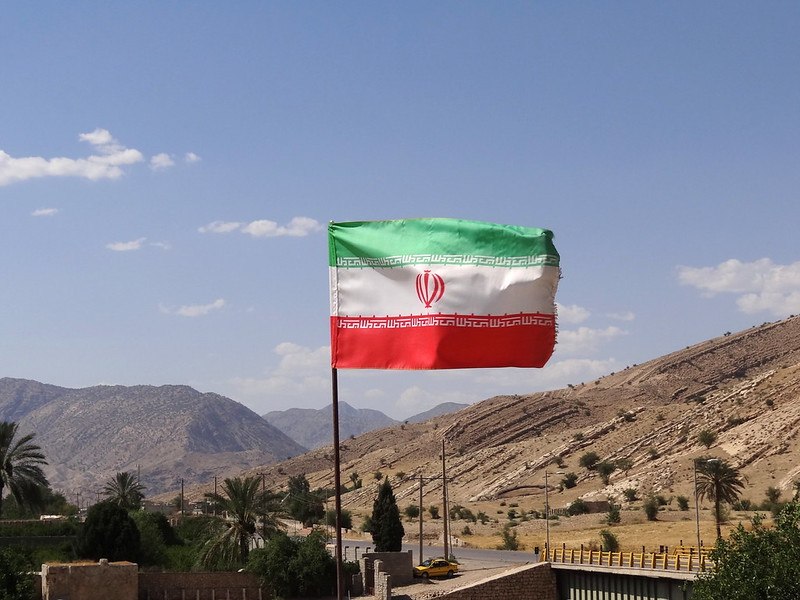
Lawfare Daily: Inside Iran's Complicated Relationship with Russia



On today’s episode, Lawfare’s Ukraine Fellow Anastasiia Lapatina talks to an expert on Russian foreign policy in the Middle East, Director of the Eurasia Nonproliferation Program at the James Martin Center for Nonproliferation Studies at Middlebury College Hanna Notte, about the relationship between Iran and Russia, and how far their cooperation can go in the context of the U.S.-Israeli war against Iran.
To receive ad-free podcasts, become a Lawfare Material Supporter at www.patreon.com/lawfare. You can also support Lawfare by making a one-time donation at https://givebutter.com/
Click the button below to view a transcript of this podcast. Please note that the transcript was auto-generated and may contain errors.
Transcript
[Intro]
Hanna Notte: After
the invasion of Ukraine, Russia kind of cools towards cooperation with Western
states on the Iran nuclear dossier. It becomes more defensive of Iran, less
interested in mediating, less interested in putting pressure on the Iranians,
and then basically a window of opportunity to restore a nuclear deal closes by
the fall of 2022.
Anastasiia
Lapatina: It's the Lawfare Podcast. I'm Anastasiia Lapatina, Ukraine
fellow at Lawfare with Hanna Notte, the Eurasia director at the Center
for Non-Proliferation Studies at Middleburg College, and an expert on Russia's
foreign policy in the Middle East.
Hanna Notte: Vladimir
Putin does not want ruin his personal relationship with, with Donald Trump
because of the war in Ukraine. So you see this kind of interesting bifurcation
between the Kremlin and then everyone else in the Russian system who can be
moved forward leaning in criticizing the United States.
Anastasiia Lapatina:
We spoke about the complicated and often misunderstood relationship between
Iran and Russia and the role that Moscow has been playing in the ongoing war in
Iran.
[Main Podcast]
I think most people know that Iran and Russia are quite close,
and most people probably have heard about the role that Iran is playing in
Russia's war against Ukraine, supplying Russia with Shaheds and giving it its
drone technology. But actually the relationship between the two countries in
history has been quite tense and very hostile. So can you just talk a little
bit about that?
Hanna Notte: Yeah,
indeed. I mean the, the Russia/Iran relationship has a history of mutual
mistrust and, and mutual grievances. I would say this is basically rooted in
the history of Soviet occupation of parts of Iran during the Second World War, Soviet
support to Iraq during the Iran Iraq War of the 1980s after the Islamic
Revolution in Iran in 1979.
Soviet/Iranian relations were quite strained because the
Islamic Republic then embraced this kind of militant expansionist ambition and
radical Islam, and that was perceived as a challenge by the Soviet leadership
at the time. So this is kind of the, the Cold War history.
Then from the 1990s, you have a shift in the Russian/Iranian
relationship and greater cooperation. But a theme, Anastasiia, that kind of
stays throughout in the relationship is one of mutual mistrust in the sense
that Russia always worries that Iran will abandon the partnership for the sake
of normalization or sanctions, relief from the West, from Washington and Iran
kind of worries the same worries about the same. So this is always a
relationship where this historical mistrust plays a role.
I think it's also rooted in the fact that economic relations
never go really deep. There's always a hesitancy on the part of Russian
businesses to get deeply involved in the Iranian economy. The transit
infrastructure between the two countries was poorly developed. Obviously, they
were also competing for the same markets when it came to oil exports, for
example. And then when it comes to defense cooperation, something that I'm sure
we'll talk about a little bit more.
There's also disappointments on the Iranian side because some
of the capabilities that they want from the Russians, they're not given, and so
you have sort of a range of factors that limit the relationship historically.
Anastasiia Lapatina:
What are Russia's interests broadly in the Middle East, and how does Iran fit
into that map of interests?
Hanna Notte: So
Russia's longstanding interests in the Middle East, and by the way, I would say
that those did not fundamentally change with the full scale invasion of Ukraine
in 2022. Those fundamental interests include security interests, economic
interests, and what I would call status.
So with security interests, Russia always wants to prevent
challenges, Islamic radicalism, terrorism, those kinds of security threats from
spilling over from the Middle East to Russia's own neighborhood. Let's not
forget that Russia has a large Sunni Muslim population, especially in the North
Caucasus, so the linkage is between its own Muslim population and radical Islam
in the Middle East is always first and foremost on the minds of Russian policy
makers.
But from 2015 and the Russian intervention in Syria. Russia
also acquires a foothold because it is expanding its military presence in the
country to basically engage in power projection vis-a-vis NATO from the Middle
East because it has that kind of capability in Syria. So it, it, it, it
basically gives Russia another platform to poke U.S. forces, to harass U.S. forces
to basically engage in what we call coercive signaling, vis-a-vis NATO from the
Middle East.
Then there's economic interest that Russia pursues in the
region that are fairly, fairly limited. There's mostly arm sales to the region,
which have been going down for the last few years. There's Rosatom building
nuclear power plants in a number of countries, especially in Egypt and in
Turkey, but also trying to make forays into other countries. There is the
important Russian coordination with the oil producing states of the Gulf in
OPEC Plus. That makes the relationship with Saudi Arabia and the UAE particularly
important.
Now, the UAE also becomes really important for Russia after the
full scale invasion of Ukraine, you know, in a number of ways as a location
where vessels of the shadow fleet get reregistered as a haven for Russian oligarchs,
or for Russian business people to open their businesses as a hub for the
transshipment of dual used goods. So the UAE is quite important economically.
And then, then there's the element of status. You know, Russia
in the Middle East has a legacy of, of a Soviet role and presence that it
retains after the end of the court war with the presence in Syria. It obviously
inserts itself quite dramatically back into the Middle East with the
intervention in Syria in 2015, and what that does is it gives Russia basically
leverage to have a seat at the table when it comes to the region's, different
conflicts, not just Syria for quite some time, but also the relationship with
Iran gives it leverage vis-a-vis Israel and the Gulf Arab states because
everyone in the region understands that Russia has this special relationship
with the Iranians.
Everyone's worried about the kind of support that Russia can
give the Iranians, and so this gives Russia cards to play vis-a-vis the Gulf
Arab states and Israel as well.
Anastasiia Lapatina:
Russia also played a key role in negotiating the Iran nuclear deal. So I'm
curious, what has been Russia's position on the Iranian nuclear program and has
that position changed at all over the past several decades?
Hanna Notte: Yeah, so
the Russians have a longstanding role on the Iranian nuclear dossier. I mean,
first of all, Russian companies. Rosatom is involved in the Russian civilian
nuclear energy space at busier for a long time, since the 1990s, I think taking
it over from a German company.
And then as a diplomatic player, Russia is involved from the
beginning through the 2000s. Russia never vetoes a UN security council
resolution on the Iranian nuclear dossier. Russia always goes along. That is
also another source of friction in the Russia/Iran relationship because Russia
doesn't veto those kinds of sanctions. It just tries to limit them to limit the
blow against Iran, but it, it supports the resolutions.
It then becomes a party to the JCPOA and plays an important
role mediating here. And then importantly, after the Trump, the first Trump
administration withdraws from the JCPOA in May 2018. Russia is quite an active
player in trying to restore the nuclear deal, and that, Anastasiia, is an
effort that continues all the way through February 2022 and the full scale
invasion of Ukraine.
So even up to that moment, Russia is actually quite a
constructive player in Vienna trying to mediate between the Iranians and the
IAEA. This is obviously when the Biden administration has returned to office in
2021 and tries to restore the nuclear deal. Then things change after the
invasion of Ukraine.
Russia kind of cools towards cooperation with Western states on
the Iran nuclear dossier. It becomes more defensive of Iran, less interested in
mediating, less interested in putting pressure on the Iranians, and then
basically a window of opportunity to restore a nuclear deal closes by the fall
of 2022, because two things happened at that moment.
There's the Iranian crackdown on protestors and there is news
emerging that Iran is providing Shahed drone technology to Russia. And at that
point, Washington and European states basically say returning it to the nuclear
deal with Iran is no longer our priority. And the point I would make to you
here is that I don't think it's fair to say that Russia is the only, let alone
decisive factor why these negotiations fail. There's like many things coming
together, but certainly the Russian position did not help.
I don't think that means that Russia's position changed in the
sense that Russia now wants Iran to have a nuclear weapon. I don't think that
is the case. I just think that Russia, confronting the West over the war in
Ukraine sees no longer any utility in cooperating with the west on nuclear
nonproliferation. It just drops on the list of priorities. And then basically
what we see over the last few years and increasingly over the last few months
after the 12 day war in the Middle East, and of course now is that Russia is
shielding Iran quite aggressively at the United Nations and at the IAEA.
Anastasiia Lapatina:
You've mentioned the Syrian Civil War several times, and understand that it was
sort of a watershed moment for the Iran Russia relationship. Can you just
describe why that period of time was so important for Iran and Russia and, and
how that relationship changed then?
Hanna Notte: I mean,
Russia intervened in the Syrian Civil War to save the Assad regime from
collapsing at the time mostly with its Air Force. That was an air campaign that
the Russians conducted in Syria, and Iran and Iranian proxies were constituting
more of the sort of ground force. So I think what you have emerging at the time
is for the first time, actually a kind of military coordination between Russia
and Iran in support of a joint partner or ally, the Assad regime. And so some
of those ties, military to military ties between the Russians and the Iranians
becomes a lot more institutionalized during that period.
And of course, it also leads to a thickening of the political
relationship because together with Russia and Iran and Turkey you have the
emergence of what's called the Astana Troika, the Astana group that also
coordinates politically on the Syrian conflict. And so I think that kind of
collaboration leads, you know, to another qualitative change in the
relationship.
Anastasiia Lapatina:
Of course the next sort of critical moment for the relationship is, as we've
mentioned, the full scale invasion of Ukraine and the relationship really
deepens and grows.
Then, I'm curious, how have other regional actors in the Middle
East have been reacting to this, and I'm thinking, for example, of Israel,
which as a relatively close or had relatively close relationship with Russia
because they're both present in Syria. So how, how are other actors in the
region reacting to this new relationship?
Hanna Notte: They
certainly don't like it. The fact that Russia and Iran are cooperating even
more after the full scale invasion of Ukraine, I think there is an element of
understanding here, actually a sort of, well, what's Russia going to do? Of
course they're going to cooperate with Iran, you know, sort of these kinds of
countries will, will, will cooperate together.
We have to understand that. But they don't like it and they try
to limit it and they try to confront it. And I think there's basically sort of
two strategies that we see emerge over the last few years when it comes to
regional players, what the Israelis do, especially after Hamas attack of
October 7th, 2023 is simply just taking on Iran and its partners in the Axis of
Resistance ever more aggressively.
Israel basically just says, well, we're gonna just deal with
this problem with military force. And so what you see is a continued weakening
of Iran and its partners at the hands of Israel and the situation in which the
Russians are actually quite impotent because also Iranian positions and Iranian
assets come under attack in Syria by the Israelis.
This is before the fall of the Assad regime, and Russia tries
to sort of send some deterrent messages to the Israelis at the time. It also
steps up its own military patrols along the Golan Heights, but basically Russia
is not really in a position to prevent Israel from doing what it wants to do.
Israel also, I think through that, sends certain messages to
Russia that there are red lines when it comes to, when it comes to defense
cooperation with Iran, and that's also what the Gulf Arab states are doing. I
think they are mostly leaning politically on Moscow not to do certain things
with Iran and its partners.
And I'll give you one concrete example where we saw this play
out. There was at some point a concern that the Russians would give anti-ship
missiles to the Houthis, a Yemeni group that is a close partner of Iran, and we
know that Mohammed Bin Salman basically weighed in with the Kremlin and, and
asked Russia not to give this kind of support, and the Russians refrained from
doing it.
So, you know, we, there's basically certain capabilities that
we know the Iranians have wanted from Russia for quite a long time, especially
Su-35 fighter aircraft and also S-400 air defenses, and Russia has not given
those kinds of systems to the Iranians. And I think at least part of the
explanation for why is that Russia is aware that both Israel and the Gulf Arab
states have these kinds of red lines when it comes to defense cooperation.
Anastasiia Lapatina:
Are there any other limiting factors for Russia and Iran on how close the
relationship can get apart from the regional dynamics?
Hanna Notte: Yeah, so
I'll name a few. So the first thing to say is that they are not military
allies. In the classical sense maybe we'll talk about the strategic partnership
agreement a little bit later. But one limiting factor throughout, I think is an
a Russian aversion to military entanglement on behalf of Iran. So we didn't see
Russia intervene directly during the 12-day war last summer, and we see the
same now. Russia does not want to take those kinds of risks on behalf of Iran.
The other factor that limits the relationship, I've also hinted
at already, which is the economic side of things. Economic cooperation, you
know, never has gone truly deeply. There's just kind of limits for how Russian
companies want to invest in Iran, which is a battered and very weakened
economy. After years of sanctions, the two sites have tried to develop that
kind of cooperation.
The Iranians have claimed in recent years that Russia has
become the biggest investor in the Iranian economy. But let's not forget that
both of these countries are heavily sanctioned and have limits in terms of
investing anywhere right now. And so, you know, Russia, Russian support has not
really been able or capable of really softening the blow of Western sanctions
against Iran, the Iranian economy, even before this war was in tatters,
basically. So there's an economic limit here.
And I would say finally there's currently one limiting factor
also for the how, how much Russia is going to do for Iran, and that is actually
the Trump administration. Because I think the Kremlin will for as long as it
wants to stay on good terms with Trump because of the war in Ukraine, avoid
antagonize him, stay on his good side. Russia will calibrate how much support
it is going to give to Iran in the context of the current war. It's a very fine
balancing act that the Russians have to walk.
Anastasiia Lapatina:
You've already mentioned the strategic partnership agreement that run in Russia
signed. That was gonna be my next question. As far as I understand, it's a very
broad treaty that encompasses all sorts of industries and corporation in
different fields. But is there anything that's really, that's really important
for the current moment?
Hanna Notte: Yeah, I
think the key for the current moment to understand is that this partnership
agreement, which was negotiated over a very long period of time does not
include a kind of mutual defense clause or mutual defense assistance clause
that would oblige the two parties to come to each other's aid at the moment of
kind of a direct military attack unlike the Russia/DPRK agreement, for
instance.
And I think maybe sort of interesting to note here, because the
assumption is usually that there's no mutual defense clause because the
Russians didn't want it, when in fact, I understand that both sides didn't want
this kind of clause to be included. The Russians did not want it, but the
Iranians didn't want it either because they also do not want to obliged to come
to Russia, direct military support. And as we know, we have seen DPRK troops
supporting Russia in the war against Ukraine, but we have not seen Iranian
military doing so.
Anastasiia Lapatina:
And why is that? Why, why are both Iran and Russia kind of allergic to, to come
to each other's defense sort of militarily on the ground directly?
Hanna Notte: I mean,
again for Russia, it is an of Russia does not want the kind of NATO style
military commitment, having to commit itself to getting militarily entangled on
behalf of a partner or ally anywhere in the world. That's just not the Russian modus
operandi.
I think for Russia, you know, Russia wants these kind of
partnerships to be of concrete utility to Vladimir Putin, but it, he doesn't
want these partnerships to, to come at the expense of what Russia's core
interest. And at the moment that is prosecuting the war against Ukraine. So
that's why you see that kind of avoidance on the Russian side, they just don't
think about alliances in the way that we do within NATO.
And on the Iranian side, I think there's also this very, very longstanding,
actually rooted in the Iran-Iraq War experience, principle of self-sufficiency
when it comes to their defense industry, when it comes to their military, and I
think that principle of self-sufficiency also explains why they don't want to
engage in these kinds of commitments.
Anastasiia Lapatina:
Let's finally talk about the U.S./Israeli war against Iran. How has Russia been
reacting, sort of diplomatically, politically, rhetorically to the war?
Hanna Notte: Yeah,
the, the Russian reaction is multifaceted. It has several layers. So I wanna
sort of differentiate on, on two levels.
First of all, I wanna differentiate between the initial
reaction and now kind of 12, 13 days on. Because I think the initial reaction
just looking a lot at kind of the Russian commentary, what were experts saying,
what was written in the Russian press, and of, of course also how the MFA
reacted. I think there was quite a bit of shock, you know that this war came,
that Ayatollah Khamenei was killed within the first 24 hours of the operation.
You know, this kind of American impunity just acting undeterred
by anyone proceeding with this operation, I think caused like a little bit of
shock in the Russian system; was unwelcome, I think, because Russia also had
tried to deter this military action.
But it's also quite clear to me that this initial Russian
reaction has now given way to the sense that Russia can benefit, because even
though the war has in some ways been a display of U.S. military capability and
superiority, certainly if we compare it to Russia's military operation against
Ukraine. It's unclear at the moment whether the United States can convert these
military means into any stable or durable political end game.
And so the war might continue. And of course, that's when
Russia smells an opportunity to extract some concrete benefits from itself,
from a war that it initially did not like. So that's the first kind of thing.
The temporal element, Russia's reaction is evolving.
The second differentiation I'd like to make is that we see this
bifurcation in reaction between the Kremlin and Putin specifically, and the
Russian MFA and other actors. And that's a continuation of a theme that we've
seen over the past year. The Russian MFA will come out and criticize the United
States and Israel quite aggressively at the United Nations on the security council,
in its media campaign, calling this an illegal war, kind of rubbing against the
U.S. on the UN Security Council, shielding Iran.
And the Kremlin will be more careful in what it says, even
Putin's reaction to the killing of Khamenei. I think he talked about a cynical
murder, did not name the United States or Israel directly. And the reason here
is quite obvious: Vladimir Putin does not want to ruin his personal
relationship with, with Donald Trump because of the war in Ukraine. So you see
this kind of interesting bifurcation between the Kremlin and then everyone else
in the Russian system who can be more forward leaning in criticizing the United
States.
Anastasiia Lapatina:
At the same time, there has been all this reporting recently that the Russians
are sharing intelligence with the Iranians, including sort of targeting
strategies for their drone attacks and sharing some of the experience the
Russians have from attacking the Ukrainians.
How does that fit with what we've just said was sort of Putin's
diplomatic track with Trump and with the U.S., and also was, was the fact that
they're sharing intelligence surprising to you at all, or is that just quite
consistent with the relationship?
Hanna Notte: So to
start with your last question, it did not surprise me because I think that kind
of knowledge diffusion, Russia looking at some of the operational lessons that
learned in the battlefield in Ukraine, where we know that Russia has used Shahed
drones for years, you know, in increasingly sophisticated strike packages,
upgrading the original Shahed technology, having lots of experience trying to
circumvent air defenses in Ukraine. It obviously has a wealth of operational
knowledge.
That's like an obvious thing maybe to share with the Iranians.
And, and in a way it's sort of the least that Russia can do, having originally
received the technology from Iran and having also been quite limited in what
else it can do for Iran. So it's not really surprising to me that we should see
that kind of assistance at this moment in time.
How does it fit with this, with the, you know, sort of Putin
trying to stay on good terms with Trump? Well, I think the Russians are showing
that they can walk and chew gum at the same time. You know, they can, on the
one hand, play this game of helping Iran on the margins, and they're doing that
militarily to increase the pain for the United States to give some assistance
to an Iran that might not be an ally, but it is a partner, and Russia wants to
show that it is a partner. So it's, it's doing some assistance on the military
side.
They're also sending humanitarian aid to the Iranians via
Azerbaijan. And again, they're sort of the great power that is most
forward-leaning in shielding Iran on the UN Security Council. Also, to sort of
show that Russia is the one that's trying to end this conflict that wants to be
a mediator.
So they're doing this and then at the same time trying to not
spoil the relationship with United States, or in fact with the Gulf Arab states
or Israel. It is a balancing act. It suggests to me that we will not see Russia
becoming totally brazen in giving military support to Iran. I think it will
stay calibrated. But this is not the first time that Russia is sort of trying
to play different sides of the conflict, especially in the Middle East. They've,
they've done it for many years and they do it all the time.
Anastasiia Lapatina:
Is the war hurting or benefiting Russia–or maybe both?
Hanna Notte: Well, I
think now that we are 13 days into the war, I think we can safely say the
verdict is that for the moment, the benefits for Russia outweigh the costs, at
least in the short term.
We have two clear benefits that are becoming apparent. The
first is the rise in the oil price that has led to the fact that the United
States already last week allowed Russia to ship crude oil to India again. And
in fact, announced this week that their restrictions on Russian oil for any,
any purchases of Russian oil were temporarily taken off the table. I believe
that it's until April 11th that the Russians are allowed to ship oil that's
already loaded.
And so this different energy analysts and analysts of the
Russian economy are now running their numbers in terms of how much support this
is going to give to the Russian budget. But we know that the Russian budget had
come under growing challenges over the, over the last year in particular
because of declining revenues from oil exports. So this is a very welcome
respite. I think that this is given giving to Russian state finances. So this
is the first, I think, and most important benefit.
And the second is over the question of diversion of Patriot
interceptors that would otherwise go to Ukraine, that now have to go to Gulf
capitals to replenish the, the, the stockpiles there. And the longer that this
war lasts, I think the more this will become an acute issue potentially for
Ukraine if, if, if fewer Patriot interceptors, go to Ukraine.
So these are kind of the, the two very tangible benefits I see
here for Russia, there's the question over a, a diversion of political
attention away from Ukraine and from the negotiations to end the war in
Ukraine. But I honestly think that this factor only really matters if you
believe that Russia was actually seriously negotiating prior to this Iran war.
I did not see indications that this was the case. I, I do not think that Russia
had reached a point where it was willing to negotiate seriously. And so I see
this sort of issue of political attention perhaps as a little bit less
pertinent.
But I will also maybe end on a note to say that I don't think
that this war is just good for Russia. I do think that there is a sense in
Moscow that this American administration is really entirely unpredictable. Not
just unpredictable, but also counter to expectations and hopes one year ago
that this would be very much a non-interventionist American administration that
would focus on the Western hemisphere.
We have seen the Trump administration quite willing to use
force or coercion against Russian partners with Maduro in Venezuela earlier
this year, now with the war against Iran. I think there's a lot of concern in
Moscow that Cuba could be next, and if the Trump administration chooses to use
military force against Cuba. There's very little that Russia can do about it.
So yes, there are all these benefits right now and they're,
they are important for Russia because the real priority, I think is subjugating
Ukraine. But there's also this element of a Russian passivity or impotence
becoming exposed by this American administration that is again, not confining
itself to the projection of power into the Western hemisphere.
And I'll give you sort of one other example where this is
becoming apparent. The U.S. administration's also quite interested in the South
Caucuses where it has launched all sorts of economic deals with the Trump route
for international peace and prosperity with JD Vance, just making a trip to the
region only recently.
These are initiatives that Russia does not like because clearly
Russia sees this region as its own sphere of privileged interest. There might
be another silver lining for Russia here with the Iran war, because the Iran
war I think could also set back or delay some of these American projects in the
South Caucuses. But you know, this kind of conduct by the U.S. administration I
think is alarming people in Moscow to some extent.
And it has also, and I'll end by this it has also led some
people in Moscow to basically say, you know, even if we're talking with the
Trump administration, fundamentally the Americans cannot be trusted. And we,
you know, would have to be ready for, for talks happening and then Trump
changing his mind and coercion being leveled against us too.
Of course what people will then also note though, is that what
happened to Maduro and Khamenei can never happen to Putin because the big
difference here is that Russia has nuclear weapons. Russia plays in a different
league from Iran and Venezuela. And so that has also been noted in the Russian
commentary.
But you know, I, I think sort of to give you my bottom line
here, Anastasiia, I think really the short term benefit are now quite apparent
and are quite important to the Kremlin. But these more fundamental challenges I
think, and the sense that, you know, this U.S. administration is not to be
trusted, is also being mixed in in the way that people in Moscow discussed this
war.
Anastasiia Lapatina:
Hanna, this was very interesting. Thank you so much for joining us again.
Hanna Notte: Thank
you for having me.
Anastasiia Lapatina:
The Lawfare Podcast is produced by the Lawfare Institute. If you
want to support the show and listen ad free, you can become a Lawfare material
supporter at lawfaremedia.org/support. Supporters also get access to special
events and other bonus content we don't share anywhere else. If you enjoy the
podcast, please rate and review U.S. wherever you listen, it really does help.
And be sure to check out our new other shows, including Rational
Security, Scaling Laws, Allies, the Aftermath, and Escalation,
our latest Lawfare Presents podcast series about the war in Ukraine. You
can also find all of our written work at lawfaremedia.org. The podcast is
edited by Jen Patja. Our theme song is from ALIBI Music. As always, thanks for
listening.