Lawfare Daily: John Bridgeland on National Service and Civil Defense Amid Geopolitical Uncertainty
.png?sfvrsn=94f97f2c_3)
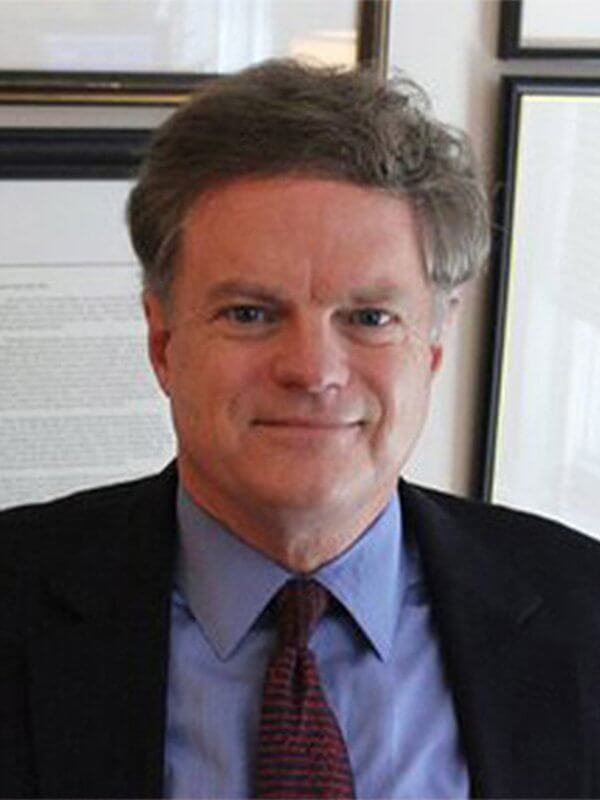
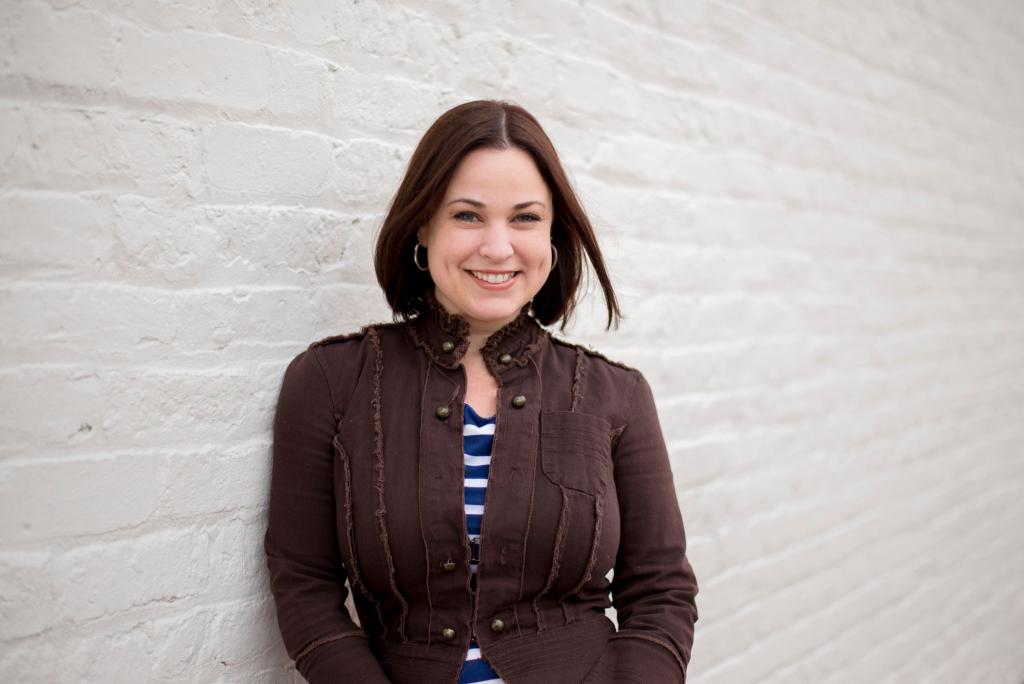
John Bridgeland, Executive Chair & CEO of More Perfect & former Director of the White House Domestic Policy Council & National Service Czar, joins Kevin Frazier, Senior Research Fellow in the Constitutional Studies Program at the University of Texas at Austin and a Tarbell Fellow at Lawfare, to examine America’s general preparedness for a large-scale conflict and its culture of service (or lack thereof). The two also discuss ongoing efforts to reform and expand military, national, and public service opportunities.
Read the National Commission on Military, National, and Public Service Report.
To receive ad-free podcasts, become a Lawfare Material Supporter at www.patreon.com/lawfare. You can also support Lawfare by making a one-time donation at https://givebutter.com/lawfare-institute.
Click the button below to view a transcript of this podcast. Please note that the transcript was auto-generated and may contain errors.
Transcript
John Bridgeland: And
so the spirit of service and sacrifice, in some senses, is more important than
ever. And yet the threats post-9/11 turned out not to be as much about
terrorism, but of changes in the climate and disasters of all kinds that are,
you know, ripping through the middle of our country or our coasts in ways that
are having direct effects on livelihoods.
Kevin Frazier: It's
the Lawfare Podcast. I'm Kevin Frazier, senior research fellow in the
Constitutional Studies Program at the University of Texas at Austin, and a
Tarbell Fellow at Lawfare, joined by John Bridgeland, executive chair
and CEO of More Perfect, and former director of the White House Domestic Policy
Council and national service czar after 9/11.
John Bridgeland:
Kennedy said the Peace Corps will be truly serious when a hundred thousand
Americans are serving in it every year. Imagine the effect that will have on
our foreign policy, our understanding of other peoples and nations, and even
our national security.
Kevin Frazier: Today
we're talking about national service. About 70 years since President Kennedy
inspired us to ask what we can do for our country, there's increasing debate
about whether our reliance on a volunteer force and low rates of volunteerism
are suited for an age that demands collective action.
[Main podcast]
A week into the pandemic, the National Commission on Military,
National, and Public Service released a report outlining a bold vision for
military, national, and public service. Unsurprisingly, that report didn't
exactly make headline news given all the other things that were going on at the
time.
But that report and the notion of civil defense and national
service deserve renewed attention. A glimpse to our East shows the perils of
failing to adequately prepare for an intensive war effort.
Ukraine, for example, has struggled to recruit and retain
soldiers in the war with Russia. Per the Financial Times, Ukrainian prosecutors
opened 60,000 cases between January and October this year against soldiers for
abandoning their positions, almost twice as many as they initiated in 2022 and
2023 combined.
A look to our West gives reason to question if the U.S. ought
to heed Ukraine's lessons, as China seems increasingly likely to take
aggressive military action against Taiwan. There are few folks better suited to
talk about the past, present, and future of civil defense and national service
than John Bridgeland, or as I, as his friends call him, and hopefully I'm among
them, Bridge, who formerly served as a national service czar under the Bush
administration after 9/11.
And Bridge, I think it's great to ground this conversation in
your foray into becoming national service czar, a position that I guess few
people would even though existed at the time. So what was it that transpired
for you on 9/11 that eventually moved you into this important role? And then we
can dive more into what those responsibilities were and what you're currently
pursuing.
John Bridgeland:
Sure. Kevin, nice to be with you. I just say, you know, I had formative
experiences early in my life that shaped my interest in this topic in service
and national service, public service. You know, I grew up at a time in the
1960s, 70s, and 80s when national leaders in public service were extremely
inspiring and called Americans to serve their community and country.
And by the way, across political parties, people like President
John Kennedy and President Reagan, Senators Bobby Kennedy and Senator Howard
Baker. They truly tapped into the spirit that's within us, the better angels of
our nature, and called on Americans to do extraordinary things. And of course,
they were a generation that had served in World War II.
Tom Brokaw would call them the Greatest Generation. And the
feeling from that generation was palpable. And deepen our culture growing up.
Of course, in my family, my parents, who grew up in the Great Depression and
had the service ethic, almost by necessity reinforced it and I had regular
opportunities to serve in my school, through my church, in my community,
president of the student government, piqued my interest in public service.
And finally as I went on in my education to college, I was
going to major in history and literature, and I had professors like James Q.
Wilson and Robert Coles and Richard Goodwin, who inspired me into government or
public service, which was one of the topics, as you know, of the Military
National Public Service Commission.
And I'll never forget, James Q. Wilson ended his Gov-30 course
by saying, men are good enough to make democracy possible, yet bad enough to
make it necessary. And the pursuit of happiness was not just an individual
right, but a cooperative enterprise that we help one another achieve. And so
after, interestingly, in 2001, I was appointed by President Bush to be director
of the White House Domestic Policy Council.
We were, focusing on education, faith based initiatives,
Americans with disabilities, climate change, National Park centennial, a whole
host of domestic issues. And then four planes were turned against the American
people in three locations, and my whole job changed. I found myself in the
Situation Room twice a day looking at issues related to how do we keep the
American people and communities and infrastructure safe.
But in that context, a White House operator, my phones were
lighting up like a Christmas tree. People offering to help. And a White House
operator connected me as one kind of example, to a couple from Seattle who are
restaurant owners. And remember, all the planes were grounded in the United
States for a couple of weeks. They were driving in their 1970s van across the
United States.
Kevin Frazier: Only
in Seattle are folks still driving 1970s vans in the early 2000s.
John Bridgeland: Yeah,
that’s it. Driving their, their van with their restaurant, you know, tools and
operation. And they set up a staging ground to feed the first responders at
Ground Zero. William Langewiesche would write a book called “The Unbuilding of
the World Trade Center,” where he says that initially Americans, you know, fled
the disaster, but soon people across race, ethnicity, class lines started
running toward the disaster to help.
And it was that spirit in the country, that I shared that story
with President Bush in the Oval Office and he said, Bridge, I want you to
create an initiative that will foster a culture of service, citizenship, and
responsibility. And we went on to create one of the largest national and volunteer
service programs in U.S. history. And I can talk more about that if that's of
interest.
Kevin Frazier: Yeah,
no certainly of interest. And I think what's really profound about your
remarks, not only looking at the period of the 1960s to the 1980s, where we saw
these bipartisan calls to service, as I was talking with you earlier, I'm a bit
of a constitutional law nerd. And so I'm currently studying the Army Clause.
And at the founding the expectation was that everyone between
every male between the ages of 18 and 45 would enlist with their state militia
and be ready and prepared to fight when called upon to put down insurrections
or when called upon by the federal government to respond to invasions.
And so it's always funny to me when you see some folks who are
on the one hand will say, hey, let's look back at what the founding fathers
envisioned about service. Or how we interpret the Constitution. And then they
forget this expectation that, hey, at the founding, we did have that
cooperative mentality that the common defense involved a common response to
providing that defense.
John Bridgeland: Yes.
Kevin Frazier: And I think also what's crazy to consider
is that in that period of the 1950s, a lot of folks don't realize just how many
civilians mobilized around the Cold War to help with this civilian defense
efforts. So for folks who want to go down a Wikipedia rabbit hole, you can
learn about the Civil Air Patrol.
You can learn about the Ground Observer Core, where we had
people just sitting, looking, waiting for planes to appear in the sky, trying
to help with the U S defense. And so I just think it's really inspiring to recall
that this notion of service has been pervasive throughout the U.S. history, and
now it's really a moment where we can try to galvanize more energy toward that.
So, I'm curious to hear more about your early initiatives in
the Bush administration. What were some of the key programs you all rolled out,
and what were the effects of those programs?
John Bridgeland: So
the first thing we did was to do a review of what every president and
administration had done and said about national service, public service,
volunteer service.
And of course, building on what you just said, Kevin, I'm so
excited to learn more about your work and what you're finding. But you know,
these were citizen soldiers in the revolution. They didn't really have any authority,
it was a ground up effort. But Washington and Madison were so worried that in
founding a government in a country so strongly on rights, future generations
distant from the revolution would neglect their duties to serve. And so, they
envisioned the formation of a national university with which would cultivate the
citizen habits and kind of an ethic of service and culture of service.
But every single president had really important things to say
about service. Washington said, when we assumed the soldier, we did not lay
down the citizen. Adams said the duty to serve, you know, ends but with our
lives. David McCullough told me that John Adams, who was the first occupant of
the White House, one evening he went out in his pajamas because a house nearby
was on fire.
Kevin Frazier: Wow.
John Bridgeland: And he went out with the fire
department, of course, the volunteer fire department inspired by Benjamin
Franklin, you know, to help neighbors in need.
Kevin Frazier: And my
hunch is that those were flame retardant PJs. If I had to bet a dollar, I don’t
think so.
John Bridgeland: You
know, every president had something really significant to say about service,
but it was really, you know, Teddy Roosevelt with a speech at the Sorbonne,
William James, who talked about the moral equivalent of war. And then of
course, Franklin Roosevelt, who creates the Civilian Conservation Corps, which
is the largest civilian national service program in our history.
It was, within three months, 250, 000 young unemployed men who,
you know, were, you know, otherwise festering and starving in the streets to
get deployed into our national parks and public lands. They, over the nine
years of the program, 3 million Americans, you know, feed themselves and their
families. They plant a billion trees, build fire towers, restore 84 million
acres of land, which is equivalent to our national park system today.
And, but interestingly, after 9 /11, the first question we
looked at was why not enlist 18 to 24 year olds in mandatory service. They can
pick, they can serve in the military. They can serve in civilian national
service. They could serve in public service. And our White House counsel said,
well, that may run into problems with the Constitution.
But we later got a legal opinion, this is after I left the
White House, showing that you could structure a mandatory civilian national
service system that did not run afoul of the 13th Amendment's prohibition on
involuntary servitude, the 5th Amendment, you know, deprivation of liberty, and
1st Amendment, people serving in things that, you know, violated their free
exercise, free speech.
But unfortunately, there's no political support for a mandatory
system, even though there seems to be a stronger appetite among young people,
interestingly, in some recent polls, for being called to serve and even
required to do so.
Kevin Frazier: And I
think what's startling to me, if you look at that national commission report
that we'll post in the show notes, you get a sense of that hunger for service
and how the demand is there, the supply isn't. So for example, there are only
75,000 Peace Corps opportunities. We know there are far more Americans who
would want to serve in the Peace Corps than that allotment.
John Bridgeland:
Actually, Kevin, on that. So when we came in after 9/11, Peace Corps was only
5,500 slots, Peace Corps. You may be talking about Ameri, AmeriCorps was only
50,000 slots. Senior Corps was only 400,000. Anyway we almost doubled the Peace
Corps up to 8,800 slots; AmeriCorps from 50,000 to 75,000; Senior Corps up to
600,000.
And then we created a whole slew of new and expanded disaster
preparedness and response programs, medical reserve corps, community emergency
response teams, fire corps, volunteers and police service, citizen corps
councils in every state. We did that in large part because we thought it would
be necessary to prepare for, prevent, and respond to waves of terrorism.
And it turned out, that, thank God, that didn't happen. It
turned out that was the infrastructure to prepare for, you know, man made and
natural disasters of all kinds. And it's still some of the largest and most
effective national service infrastructure today.
Kevin Frazier: Thank
you for the real time fact check. That's why we have experts like you come on.
John Bridgeland: Yeah, of course.
Kevin Frazier: Can you talk more about that nexus you
all anticipated between national service opportunities and preparedness for
attacks or disasters and how there is such a tight connection there?
John Bridgeland: Yes.
We, one, it's a kind of an ethic of responsibility and service and sacrifice
that needs to be imbued in the culture because, you know, we have the luxury in
some ways of growing up with relative economic prosperity, you know, compared
to the Great Depression.
You know, we're not in the middle of one of the world Wars. The
terrorism attack, you know, was obviously the first attack on the continental
United States since the War of 1812, of course, Pearl Harbor and Hawaii. But
it, you know, we've lived at a time of relative ease compared to prior
generations. Of course, that's not universal.
And so this spirit of service and sacrifice, in some senses, is
more important than ever. And yet the threats post 9/11 turned out not to be as
much about terrorism, but changes in the climate and disasters of all kinds
that are, you know, ripping through the middle of our country or our coasts in
ways that are having direct effects on livelihoods and the environment.
And experiences of people in their homes and workplaces. And so
the infrastructure that we build up, Medical Reserve Corps, Community Emergency
Response Teams, on and on, has been invaluable. Now there's a new Public Health
Corps that we worked on with the CDC and HHS coming out of the COVID pandemic.
It's another example. There's a new FEMA Corps that we worked
on. And interestingly, the White House, when President Biden's team came in,
they reached out to us and asked for a modern national service proposal. So we
wrote what we called a 21st century Civilian Conservation Corps, which they
renamed the American Climate Corps.
And within 48 hours of its announcement, over 50,000 Americans
signed up for it. So there's a huge appetite in the country to serve and to
serve on issues that are, you know, pretty relevant to our defense and our
security.
Kevin Frazier:
Obviously we know there's a huge demand for these opportunities to share my own
experience with attempting to serve.
So I was accepted into the Air Force JAG program, was two weeks
to going two weeks before I was going to head to Georgia for bootcamp and then
was notified that I was medically disqualified for an eating disorder I had in
the fourth grade.
John Bridgeland: Yes.
Kevin Frazier: And not to toot my own horn. I'm pretty
good lawyer or at least a legal thinker, you know, Berkeley trained me well
thanks to the professors there. My mile time was pretty dang impressive, I got
to say as well. So no signs of issues.
And yet this issue from fourth grade helped me back from a
meaningful service opportunity. Can you talk about some of the barriers that
folks face when they're just trying to serve? They're raising their hand
saying, take me, let me help.
And knowing about folks who, you know, may have smoked
marijuana within the past six months or something like that. What are some of
these barriers that maybe need more addressing?
John Bridgeland: So
I'm glad you raised it. So remarkably 77 percent of people who apply to the
military are disqualified. So you're not alone.
Kevin Frazier: I
guess that makes me feel a little bit better. But you know, if anyone with the
DOD is hearing this, please look over my waiver request.
John Bridgeland: And
it's for medical or physical conditions. It's young people who haven't finished
high school or they've dropped out of high school because a high school degree
or equivalent is required to enter the military. Bad behavior, criminal
history, drug history can all disqualify you. And so that's a national security
threat.
And so what we did after 9/11, and the numbers weren't quite as
high, the percentages weren't quite as high for disqualification at that time
they've grown. But what we did was we worked with the U.S. Selective Service
System. And we said, why not send information to the 70, you know, to the
today, it would be the 77 percent, that people like Kevin Frazier, who for, you
know, even in your case, sort of a, an old and odd reason are disqualified from
wanting to serve your country in the military could actually do a year of
civilian national service and programs like City Year and Habitat for Humanity
and Teach for America or whatever it is your interest is. Or the N triple C,
which is almost, has kind of a military style approach to it, and living in
barracks and in teams as a bridge year to then reapply and be more prepared to
enter the military.
And so interestingly, in the last, I gave a keynote at the
Peace Corps a couple of months ago on this very topic of the, you know, some of
the recommendations from that commission you referred to. And we're working
with the U.S. Selective Service System to resurrect what we did after 9/11 and
get information out to people like Kevin Frazier, who want to serve their
country in the military, are disqualified and could do a year of civilian
national service. Or they could, frankly, they could do public service,
government service as well.
Kevin Frazier: You
mentioned earlier that there seemingly isn't a political will for some of these
bolder, broader initiatives, but there are some positive signs. So for example,
in California, there's a chief service officer, Josh Friday, who is helping
lead a new generation of Californians to engage in service opportunities. What
are some other bright spots you see for momentum building towards greater
preparedness, greater national service opportunities?
John Bridgeland: I'm
glad you mentioned it. Interestingly, when Arnold Schwarzenegger came in as
governor and Maria Shriver was first lady, and I'm close to Maria and her
family, she reached out to me and said, would you write up a proposal for a
California service initiative?
So we did. And one of our top recommendations was to be the
first in the nation at the state level to basically have the position that I
had in the White House, which is to be a national service, or the secretary of,
of service and volunteering. And so Governor Schwarzenegger and Maria Shriver
brought into their cabinet, a cabinet level position for national service and
volunteering.
And Josh Friday, who's extremely capable and David Smith and
the people who work there is that chief service officer today. And what that
does, you know, we've learned from history, think about it, Civilian
Conservation Corps, Peace Corps, VISTA, Senior Corps, AmeriCorps, Freedom
Corps, all these initiatives, they all are connected to and require strong
presidential leadership.
And so what we're seeing today, because, you know, the worry
and the fear is that some of these programs, you know, which are half the size,
of when we grew them after 9/11, you know, maybe slated in the new
administration for elimination, like was done in the in, in his prior term.
There's a lot of interest and a lot of energy at the state level.
We partner with Governor Spencer Cox, a conservative Republican
from Utah, who was chair of the National Governors Association, on one of the
most comprehensive national service programs in the country, with service year
fellowships at the center of it, across all these nonprofits and educational
institutions in Utah.
We partnered with Governor Wes Moore, a Democrat from Maryland
for about a decade on a service year campaign. And then he led an incredibly
creative effort to create a service year option for kids coming out of high
school. And one of the compelling aspects is, if you're out of state and you do
a year of service in Maryland, you qualify for in state tuition, which means
you save $28,000 in tuition costs. So it's almost like a GI bill.
You serve your country, in this case you serve your state, and
you'll get, you know, you'll get benefits that'll put you on a path to get a
good education and on to a decent job.
Kevin Frazier: Wow.
That's and I think giving folks an opportunity to meaningfully serve their
community also can help initiate that culture of service that you mentioned
earlier.
I think everyone has either heard of or listened to a podcast
about Robert Putnam and ‘Bowling Alone.’ Robert Putnam, of course, has also put
his finger on the idea that we've moved from a culture of we to a culture of
me. And I think for so many folks, there just aren't those meaningful
opportunities to say, this is how I can meaningfully engage with my community
in a sustainable and meaningful fashion.
So I'm a big advocate for pro bono opportunities for lawyers,
for example. But in law school, you know, it's a 50-hour obligation, usually on
disparate projects where you're not necessarily fully immersing yourself in a
community. You're not necessarily really gaining big skills, but it's those
small projects that you are mentioning at the state level.
For example, the Idaho Heritage Project at the University of
Idaho College of Law sends lawyers or sends soon to be lawyers out to rural
counties to practice law for an entire summer.
John Bridgeland: Right.
Kevin Frazier: And just those small initiatives, if we
can scale them up, can really start to transform our understanding. But I'm
keen to hear from you on how this intersects with our current national security
threats and opportunities.
So, as I mentioned at the intro, you know, we're seeing, for
example, in Ukraine, the limits of relying on a voluntary force. And eventually
if we see some of these large scale conflicts, unfortunately we may see quickly
a high rate of attrition that requires we turn to a draft sooner than later.
And I know that's a four letter word for a lot of folks to hear the word draft.
It sends off a lot of alarm bells.
What's your understanding of how that would operate right now if
unfortunately we saw a conflict with Taiwan that required massive mobilization.
Are the gears ready to go? Are we, are, is the SSA here, the Selective Service
Administration, are they ready to go? Or would we have a high rate of response
if we needed it?
John Bridgeland:
Yeah, it's interesting. I think, you mentioned Bob Putnam, so I first have to
just put a little note on his extraordinary work. He wrote “Bowling Alone,” but
he also wrote a more recent book called “The Upswing,” which shows that the
same gloomy trends we have today, you know, economic inequality, political
polarization, even hate fueled violence, a lack of trust in one another and in
institutions, in this culture of narcissism instead of a culture of we.
We had that in the Gilded Age after the Civil War. But it was
community based association, voluntary association, service that pulled us out
in the turn of the last century.
And these explosion of all these organizations, settlement
houses, boys and girls clubs, big brothers, big sisters, American Red Cross, on
and on that gave Americans opportunities across differences to serve together,
to solve problems, drove a 60 year upswing in greater political comity, social
cohesion, trust in one another in institutions, economic equality, and a
measurable culture of we instead of I.
And to your second question really about, you know, threats to
national security, General McChrystal, who commanded our Joint Chiefs of Staff,
You know, Special Operations Command actually reinvented it, made it highly
effective.
You know, worries that when less than 1%, actually a fraction
of 1%, serves in our nation's military, it leads to the complacent assumption
that serving the country is somebody else's job. And so I know the military is
always, you know, working to boost and make more effective their recruitment. I
think this civilian national service pipeline, if we expand it significantly,
can also help.
And I would say that, you know, the one thing that can give us
comfort is that in an age where we have a very, you know, high tech lower
manpower military than we needed in World War I and World War II that does act
as a little bit of a insurance policy, if you will. It's not all about human
capital these days. The technology is becoming ever increasingly sophisticated
to prosecute war. And so that's a big factor, I think, in the equation.
Kevin Frazier: Yeah,
it's really interesting. I've heard some analysis that our current selective
service requirements, I believe it's 18 to 26 years old, that you have to
maintain your registration.
Arguably, we may be more in need of folks from 26 to 40, but who
have that technical experience, who have that sort of career knowledge, who
would be more helpful in, let's say, programming the next generation of drones
or overseeing some of these technical operations. So that's really interesting
to kind of shift as you're pointing out, this isn't a sort of bayonet led force
we're going to see anymore, right?
Warfare is going to change in the 21st century. And we should
adjust for that reality especially with that sort of defensive posture at the
forefront of our thinking. And so I guess, Bridge, thinking about the next
year, are there any other signs of positive activity you want to highlight or
other notions that are giving you hope about broader national service trends?
John Bridgeland:
Yeah, I'd say, you know, one other thing that connects to your good inquiry
around the relationship between Civilian National Service and national security,
we did the first ever survey of 11, 000 returned Peace Corps volunteers for the
50th anniversary of the Peace Corps, and it was remarkable.
First of all, 98 percent of Peace Corps volunteers would
recommend it to a family member, a child, a grandchild. a parent, a grandparent.
You know, there's an 82 year old Peace Corps member right now, so it's for all
ages. But what was really compelling and interesting is 62 percent said that
the Peace Corps they believe the Peace Corps approved our national security.
And it also showed that obviously, you know, the experience of
getting to know an American, that the view of Americans when they first entered
the country was sometimes pretty grim. But by the end of their service, It was
pretty high. And so, you know, I call it a diplomacy of deeds. Sometimes, you
know, the lived experience of living with people in Hudson Villages and helping
them solve their own challenges working side by side is likely more effective
than just shuttle rhetoric and diplomacy.
So it is the power of a diplomacy of deeds. And Kennedy, when
he first launched the first batch of Peace Corps volunteers, walked back into
the Oval Office with Harris Wofford, who was a dear friend who helped Sergeant
Shriver found the Peace Corps, and Kennedy said the Peace Corps will be truly
serious when 100,000 Americans are serving in it every year.
Imagine the effect that will have on our foreign policy, our
understanding of other peoples and nations, and even our national security. And
so I think I just wanted to mention that because there's such a powerful tie.
On your question about the current state of national service
efforts, you know, it's interesting, President Trump on the campaign for his
first term, he was asked about civilian national service. We actually kind of
had someone tee up a question in a town hall in New Hampshire. And he said, national
service is a beautiful thing. All these young people, you know, coming together
and trying to solve a problem. He goes on to say, you know, the current
president hasn't done it and anything about it, and I will, you know, I will do
a lot.
Now he went on to zero out the AmeriCorps and VISTA budgets, I
think Peace Corps was, you know, was sustained at some level and the Congress
saved some of the corporation programs. But I think where the real hope is
moving forward, at least in the next few years, is The marriage of military and
civilian national service through the U.S. Selective Service System and having
people recognize it's sort of a continuum. You know, we need both. We need
public service too.
Second, innovations with governors all across the country.
Getting them to step up and create civilian national service opportunities for
people in their states.
And then there are things like the American Climate Corps that
because of the Bipartisan Infrastructure Act and the inflation reduction law,
are providing a lot of resources to the parks and the forests and energy
infrastructure that corps members can be stipended for and help meet.
I would just say this, we've learned from history though, like
the CCC, you need bold goals to meet big needs. You need presidential
leadership. We created a White House council, coordinating council, across a
dozen agencies in a White House office that I led after 9/11, and that led to
the largest expansion of national service then and since.
And we worked on something called the Serve America Act with
Ted Kennedy and Orrin Hatch and John McCain. And it passed and got signed into
law in 2009. The big idea was, you know, you can't expect the Peace Corps or
the Corporation for National Community Service, which have tiny budgets, you
know, to expand national service beyond where they are. In fact, they,
unfortunately, today, they're fighting cuts to those programs.
But what these departments and agencies that have massive
budgets and massive needs, the National Park Service alone has a huge
maintenance backlog, and conservation corps could help address many of those
needs. And so the idea of the Serve America Act was to create a Energy Corps, a
Veterans Corps, an Education Corps, a Conservation Corps, connected to these
departments and agencies.
And we need a bigger effort in the field to fulfill the promise
of that great law that was named the Edward M. Kennedy Serve America Act as
Senator Kennedy, whose family had been committed to service over a lifetime in
war and in peace and created many of these programs as he was as he was dying
in a hospital bed.
I, can I tell you an anecdote?
Kevin Fraizer: Please.
John Bridgeland: I'm on a soccer field and I, you know
how your phone it rings and it says unknown.
Kevin Frazier: Yeah, usually I just hang up on those.
John Bridgeland: I know but the unknown sometimes I
don't so I picked it up, thank goodness. And he said Bridge. I said yes, said
this is Ted Kennedy. I said senator What a privilege to hear from you and he
said you know that and he was ill, you know, he was on the way out. So the fact
that he you know, call me or you know, anyone who'd worked on this project
would just showed you what an extraordinary leader he was in person.
He said I remember my brother talked about passing a torch. And
I said, yeah, I was only three, but I remembered later. And he said, well, we
really blow torched this thing. The Kennedy Serve America Act, you know, was a
blowtorch to the idea of expanding civilian national service for up to 250,000
Americans a year. If we got to a million a year, that would be a quarter of an
age cohort.
And we believe that could move the culture and so Stan
McChrystal and Alan Khazei and a group of us through this initiative called
More Perfect are working to, with a great group of leaders, to try to expand
civilian national service in the United States and make appropriate linkages to
military history and public service, which is also in desperate need as we were
losing all these people in our government service that are so critical to make
the operations of government work.
Kevin Frazier: Well,
I think with that message, the evocative notion of a blow torch of
opportunities and national service, we'll have to leave it there, but thanks so
much for coming on Bridge.
John Bridgeland:
Kevin, thanks so much for having me. Thanks for what you're doing. And please
share your latest research. I can't wait to see it.
Kevin Frazier: The Lawfare
Podcast is produced in cooperation with the Brookings Institution. You can
get ad-free versions of this and other Lawfare podcasts by becoming a Lawfare
material supporter through our website, lawfaremedia.org/support. You'll
also get access to special events and other content available only to our
supporters. Please rate and review us wherever you get your podcasts.
Look out for our other podcasts including Rational Security,
Chatter, Allies, and the Aftermath, our latest Lawfare
Presents podcast series on the government's response to January 6th. Check
out our written work at lawfaremedia.org. The podcast is edited by Jen Patja,
and your audio engineer this episode was Cara Shillenn of Goat Rodeo. Our theme
song is from Alibi Music. As always, thank you for listening