Lawfare Daily: Political Change in Madagascar and Kenya
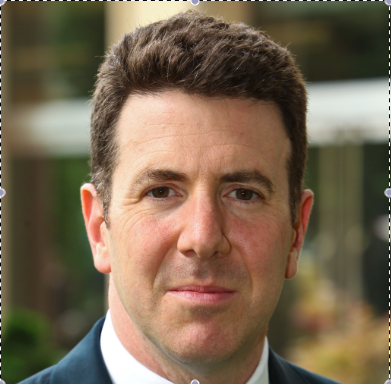

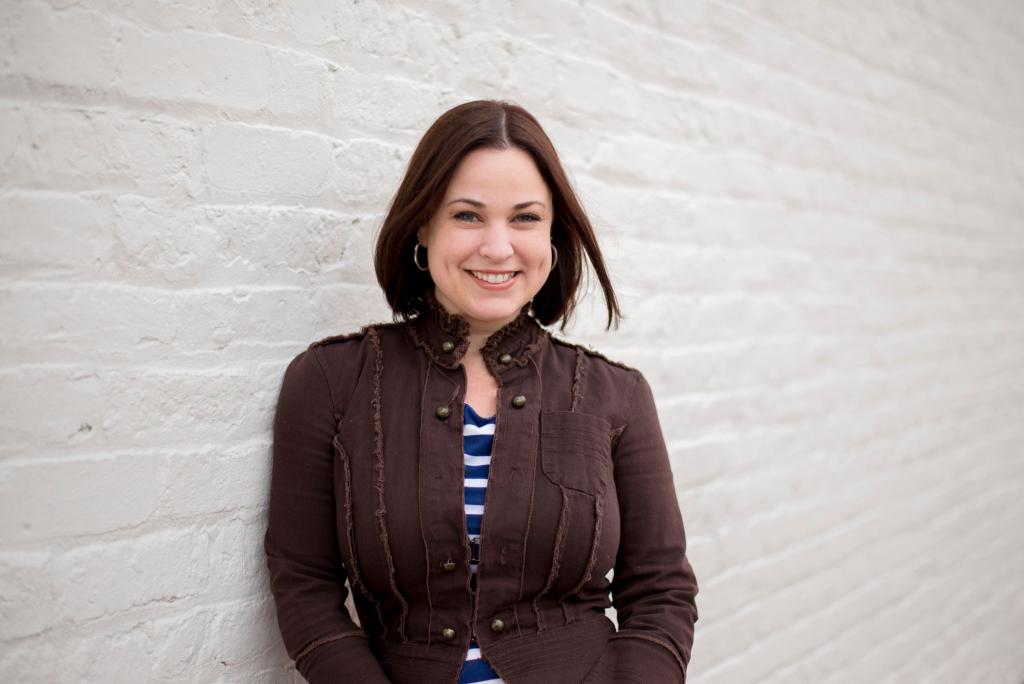
For today's episode, Lawfare Foreign Policy Editor Daniel Byman sits down with Holly Berkley Fletcher, a former senior CIA Africa analyst, to discuss the recent coup in Madagascar and the death of Kenyan opposition leader and political giant, Raila Odinga.
They discuss the reasons for the coup and how Madagascar's neighbors might respond. Berkley Fletcher also explained Odinga's legacy and how his death might change Kenya.
To receive ad-free podcasts, become a Lawfare Material Supporter at www.patreon.com/lawfare. You can also support Lawfare by making a one-time donation at https://givebutter.com/lawfare-institute.
Click the button below to view a transcript of this podcast. Please note that the transcript was auto-generated and may contain errors.
Transcript
[Intro]
Holly Berkley Fletcher:
The high court affirmed his power for now, but said elections should take place
in 60 days, according to the constitution. He said that they will take place
within two years. So, it's obvious this is not at all constitutional or
democratic by any means, even though the protesters have welcomed this
intervention.
Daniel Byman: It's
the Lawfare Podcast. I'm Daniel Byman, foreign policy editor of Lawfare,
and I'm here with Holly Berkeley Fletcher, a former senior CIA Africa analyst.
Holly Berkley Fletcher:
That's going to be a real test, because I think if it's a free and fair
election, he definitely could lose. He's definitely vulnerable and while
Kenya's had transitions of power, they've never had an incumbent leave office
after losing.
Daniel Byman: Today we're talking about the coup in Madagascar and the death of a giant in Kenyan politics.
[Main episode]
Let's start with Madagascar, and the last week seems to have been
quite significant. On 14 October we had the military take power. And that was
after a pretty dramatic set of events before that. Now talk us through simply what happened and where we are
today.
Holly Berkley Fletcher:
Yeah, well, it's dramatic and it's not, for Madagascar. This is actually their
fourth coup since independence and there's been many other attempted coups. And
the president who was just ousted himself came to power in a coup in 2009.
There's been fragile democratic progress since then. But this
situation really developed very rapidly. The last coup took place over months
before the president––the then-president––was actually ousted.
This has happened in weeks. It started September 25th with the
beginning of youth-led online organized protests that we've seen in a number of
countries of late, protesting the economic situation, very high unemployment,
very high poverty, and then most immediately water and power cuts, devastating
water and power cuts up to 12 hours a day. Power cuts, which obviously makes
productivity really difficult and further harms the economy.
So the protest continued for a couple of weeks and the security
services were cracking down. A couple dozen protesters were killed in that
period.
And then on October 8th, President Rajoelina well tried to
quell the situation by sacking his entire cabinet, and saying that he would
resign in a year if he hadn't addressed the water and power situation, and
promising never to run for president again.
That did not do anything to diffuse the situation. And so a few
days after that, an elite military unit––not a combat unit, but a, this sort of
central nerve, this nerve center of the Malagasy military took over. They mutinied
and they took over, and met very little resistance from the rest of the
military and quickly consolidated their power.
The president fled the country. He tried to dissolve parliament
from exile, to force elections, but that didn't work. And the military declared,
the head of that unit declared himself in power and the high court acquiesced.
So that's where things stand. The high court affirmed his power for now, but
said elections should take place in 60 days according to the Constitution.
He said that they will take place within two years. So, it's
obvious this is not at all constitutional or democratic by any means, even
though the protestors have welcomed this intervention.
Daniel Byman: So, you
mentioned there have been four coups. What's going on in Madagascar that makes
it so coup-prone?
Holly Berkley Fletcher:
Well, like many, you know, developing economies and democracies––or the absence
of democracy––you know, they've never had strong institutions. They've never
had a stable constitutional order. The Constitution has been amended and
rewritten and altered many times and has not been a guiding force in the
country.
Again, very weak institutions. And so what usually happens in
these cases, and we've seen this certainly all over Africa, is that the
military becomes the strongest institution. They have the weaponry, but they
also have, over time, they build up bureaucratic expertise as well. And so in
certain cases, you could legitimately say the military is the most competent
institution in a government.
That was certainly the case in Sudan with the overthrow of Bashir.
So, you know, that's a common pattern that you see all over the world,
particularly in Africa and particularly of late. There's been a number of
coups, particularly in West Africa. And once you have a coup-prone government,
you tend to have many many coups.
They tend to feed off of each other once the precedent has been
set.
Daniel Byman: Holly,
what led, I guess, former President Rojoelina to lose the support of the
military, the very people who had put him in power?
I mean, I get why ordinary people might be protesting because
they haven't had electricity and prices are high, but why did the people who
put him in power turn against him?
Holly Berkley Fletcher:
Yeah. Well, it's a rather different situation than in 2009, where, you know,
the president then, Ravalomanana, you know, the country was really politically
divided. Rojoelina was the mayor of Antananarivo at the time and really led––he
was a, very young, he was like 35.
He was actually too young to be president. That was a sticking
point at the time. He was a former DJ. Big businessman in the capital. And he
led a popular movement against the president who had a pretty solid base of
support, particularly with the business elite. He was actually a strong U.S.
ally. And so that conflict split the military, and split the country
politically and became protracted.
This is a very different situation. Rojoelina has now been in
power, I mean, really, he's been in power since 2009. There was a, there was a
president in the middle there who was his, really his, ran as his proxy. They
had a falling out eventually, but he originally was the president as Rojoelina’s
proxy.
So he's really been in power since 2009. And you know, he has
not delivered on many promises. He's, again, the youth are––you know, he's no
longer young and exciting. The youth are disenchanted, to say the least. He's
seen as very corrupt. And he's had plenty of opportunity. He also, he was just
reelected less than two years ago in a very flawed contest that the opposition
largely boycotted.
So he's grown more authoritarian as well. Turnout was very low
in that election, showing widespread disillusionment. His political support is
evaporated. He, his supporters in Parliament pretty much dissolved when all of
this started. And the military, the CAPSAT unit faced no real opposition from
other parts of the––brief opposition from one other unit, and then that
dissipated as well.
So it's a very different situation politically that the
military's intervened in.
Daniel Byman: So,
when we think about military coups, sometimes it's done in defiance of the
people, with the military shooting on crowds.
In other cases, the people are delighted the military has
replaced an unpopular leader and that what the military is doing is not only
restoring good government, but eventually going to bring about a more
democratic system.
How should we categorize this one? Is there any kind of longer-term
hope that this one might be something that is actually in the interest of the
people of Madagascar.
Holly Berkley Fletcher:
I mean, time will always tell.
Of course, we saw the Bashir regime in Sudan collapse under
popular protests that the military––at first there was, they cracked down, but
then eventually they supported that. Although the tensions between civilians
and military never did dissipate completely in Sudan, but still, you could
argue that one was a military coup on the backs of a popular protest.
Another one that I can recall was in Zimbabwe when the military
really ousted Mugabe. They sort of sat, they did a sit-in until he resigned.
They kind of did it the gentlemanly way. But they forced him to resign, and
then they immediately handed over power to a civilian. And people were
thrilled.
There were, the military was out on the streets with the people
as well. But of course, that didn't work out for the people of Zimbabwe either
because the regime basically was perpetuated in the next administration.
So, time will tell with this one. Last time this happened, the
AU and the regional body SADC got very involved in negotiating an end to the
crisis and successfully ushered Madagascar to genuinely Democratic elections in
2013.
So, you know, we could see a situation like that again. I think
the difference here now is there's really a civilian power vacuum that there
wasn't in 2009 and then leading up to 2013, because the military supported a
movement led by the mayor of Ant––the then-mayor of Antananarivo, now President
Rojoelina.
So there was sort of a ready-made civilian that they handed
over power, and then he was the one that was involved in negotiations. Now, I
really haven't seen any evidence that there is a civilian leader in place. The
rivalry between Rojoelina and former President Ravalomanana has continued this
whole time, like since 2009.
And that has been the major political divide in the country. But
I've not really seen, I've been looking to see any response from Ravalomanana, and
I haven't really seen anything. So, I'm not sure he's much of a force anymore.
It's not clear to me who is waiting in the wings. Certainly, this youth
movement, as many of these are, is very grassroots, leaderless, organic, internet-driven.
And so that's sometimes difficult to graft on a political head.
Similarly, Sudan, that was a grassroots movement that never
really acquired a strong civilian political leader. And that became a problem,
a big problem in Sudan. And undermined, and ultimately helped to undermine that
transition.
So we'll have to see what happens here, but I do expect the AU
and SADC to once again try to negotiate a settlement and a transition. SADC has
already suspended Madagascar again. The AU is probably going to do that as
well, according to their rules.
But I think the international situation is quite different this
time, and they, these regional bodies don't have the leverage and the clout
that they once did. And neither do the French, neither does the U.S. The
international situation is very different and it could be that this military
government is able to resist pressure and remain in power. But it just, it's an
open question as to now.
Daniel Byman: Do the
external bodies––whether African or European or international––do they have any
leverage? Is there anything they can do other than, kind of, you know, wag
their finger?
Holly Berkley Fletcher:
Well, last time, again, these suspensions, Madagascar seemed to really, you
know, this made them sit up that, that they were suspended from these bodies. The
U.S. also arrested aid.
Madagascar, by the way––this is an interesting fact that seems
so far removed from the current situation, but Madagascar was the first country
to get a Millennium Challenge account. If you remember back to what, the
Millennium Challenge, you know, these countries that showed promise and sort of
met certain requirements. Because Mark Ravalomanana was a reformer and he was a
U.S. ally, and so his government was able to secure an MCA and an AGOA
agreement, which is, that's about to expire.
But now, you know, I will say the, Madagascar's economy is in
very bad shape now, which might propel them to cooperate. But on the other hand,
there's different actors that are ready to continue assisting and supporting
them, including the UAE. And, of course, China's a big trading partner.
France is a big trading partner, but France’s influence in
Africa has dimmed significantly, has really been run out of West Africa and has
not done anything to stem the tide of coups in West Africa.
The protestors were very anti-French. They saw Rojoelina as a
French puppet. So I think France’s influence is greatly diminished.
And then we'll see with the U.S. The Trump administration
hasn't said anything as of now that I've seen. They have threatened Madagascar
with high tariffs, very high tariffs. That could be a, a stick, I suppose.
And then the Russians are kind of in the mix too. They've been
playing both sides of the political divide in Madagascar for a while. Madagascar
has a lot of minerals that various nations have wanted to get in on. And also, Russia
has wanted to, has been scouting for naval logistics base locations in the
region. So, that's another point of possible leverage for Russia.
Daniel Byman: I want
to switch over to Kenya. But before I do, I want to try to take a stab at
looking forward in Madagascar.
If you're making, you know, reasonable predictions, what's a
good scenario and what's a bad scenario, say, two or three years down the road?
And if you're betting, which one would you bet on?
Holly Berkley Fletcher:
I mean, ideally, of course, that there will be a transition to another election
and civilian rule. But I think with these youth protests, and we can sort of
transition into Kenya 'cause it's a similar dynamic that we're seeing there, I
think in these developing democracies with these youth protests, there's really
a sort of leap that, that countries need to make. That are potentially fraught,
but if they can make them, I think it, it opens the door into a new era of
governance that's more responsive and accountable to the people.
But you know, in many countries, including Kenya and Madagascar,
the politics have been dominated by these elites. And they may have good
elections and they may have, you know, competitive and even, you know, credible
elections. But at the end of the day, the elites are kind of a, they have the
same interests that are not really the interests of the people or the national
interest.
And these youth protests have been, you know, a real wake-up
call in that, you know, the normal personalist politics that is, in some
countries like Kenya, that's very ethnically driven are, you know, not holding
water with the next generation. And they're seeing more of an alliance on
generational terms across different ethnicities on economic, on the issue of
economic opportunity in particular.
And, you know, the political elite are––it's a wake-up call for
them. And it's a, and it's a huge adjustment for them. And if they're willing
to, if some, you know, enterprising politicians can sort of speak to that, and
champion that, and sort of develop a vision for the country that speaks to
these needs, there's a real opportunity there to, to again, ascend to the next
stage of democratic development.
Obviously, Kenya's way way farther down that road than
Madagascar. But unfortunately, the risk is that the elite will further entrench
and go in an authoritarian direction in order to preserve their power against
this new generational challenge.
Daniel Byman: Okay,
well let's switch over to Kenya. So, a day after the coup in Madagascar, we had
another dramatic development, which is the towering opposition figure Raila Odinga
died.
Tell us about him. Tell us about his accomplishments, his
legacy, and what we should be looking at or thinking about when we think about
his passing.
Holly Berkley Fletcher:
Yeah, well this hit me kind of hard, personally. You know, I grew up in Kenya
and then I met, you know, I followed Kenya as an analyst for many years and
even met Raila Odinga.
And so he's been a presence in my own life. And my whole life, really,
I remember him as an opposition leader during the fraught years, the Moi years
when I was growing up. He was, at that point, he was detained for several years
and tortured. And he was imprisoned for four years. And then he came out of
prison, and after a brief exile came back and really led, was the, one of the
key opposition leaders that put together what would be opposition politics for
the next several decades in Kenya at a lot of costs to himself and his
followers.
The nineties were very brutal and bloody as Moi tried to hang
on to power in the new era of multi-party democracy. And then Odinga, you know,
formed, was a, the architect of a grand coalition in 2002 that defeated the
ruling party.
He did that through sort of making a deal with Kibaki, who was
elected in 2002, on the premise that they would push through a new constitution
that checked, better checked executive power.
And then when Kibaki didn't deliver on that promise, Odinga
fell out with him. Anyway, he proceeded to run for president, like, for the
next few––the last four elections he'd run for president.
But most people believe he really won the 2007 election against
Kibaki, and that election was just blatantly rigged at the national level. They
altered the tally and Kibaki was sworn in in the middle of the night, which
sparked huge electoral violence.
And once again, Raila Odinga––everyone called him Raila, so if
I call him Raila, then forgive me. Raila Odinga––Odinga, you know, was the, you
know, then the, helped negotiate the peace. He was made prime minister in a
newly created position, transitional position. And then he was the one that
really got the new constitution ultimately passed and promulgated in 2010.
And that has been an important document for Kenya. Its original
constitution was really written to preserve a powerful presidency and then
multi-partyism was sort of grafted on top of that.
The new constitution is a truly liberal democratic document,
and it has devolved power around the country. Not without hiccups, there's some
downsides to devolution, but it brings more checks to executive power. And it
brings government closer to the people.
Probably the biggest change of the constitution is a much more
independent judiciary, which has repeatedly checked the president in the past
several years. So, Odinga is the architect of opposition politics in Kenya, and
really I would consider him if not the father, a father of the
new constitution.
And on balance––he's not a perfect person, he certainly
enriched himself along the way with access to, his own access to power, and he
certainly played ethnic politics like the rest of them––but on balance, I
consider him a shepherd of Kenyan democracy and certainly a towering figure.
He's arguably had more influence than certainly any of Kenya's
recent presidents. Your colleague at Georgetown Ken Opalo divided Kenyan
history into three eras: the Kenyatta era, the Moi era, and the Odinga era. And
I think that's probably about, about right. I will say that in later years he,
his sort of political game of playing elite power politics to get reform
concessions transitioned into what appeared to be, to a lot of people, more of
a just self-preservation tactic.
And it kind of became this well-worn, cynical shtick in many
people's eyes with fewer results. And he's made deals with, you know, Kenyatta
and Ruto that did not really pay off in terms of actual progress for the Kenyan
people. And he also was caught flatfooted by these youth protests.
And so his death in combination with these youth protests, I
think is really, it is really a new era for Kenya. And we'll have to see what
happens. But I do believe he, on the, on balance, deserves a lot of respect and
honor. The nation is in mourning across, you know, ethnic lines, and I think
that speaks to his enormous legacy for Kenya.
Daniel Byman: So, let
me kind of talk, not just legacy, but future. And so as we look at, you know,
really the passing of a giant, what are some of the institutional challenges
that remain for Kenya? And are there chances things might continue to improve,
or is this a case where losing, you know, this major figure actually could set
things back substantially?
Holly Berkley Fletcher:
No, there's a huge opportunity here. I mean, to go back to my earlier point
about these, sort of, new generation of politics and how the elite, political
elite need to adjust. And if Raila were, had remained––Raila needed to adjust. Like
I said, Raila was part of this political elite and was increasingly out of step
with the needs of the times.
But when he was alive, he really kept a stranglehold on his
party and on opposition politics, and there wasn't much room for newer voices
to emerge. There was, in the last few years, more tension between him and his
party and movement than in previous times.
The last sort of deal he made with Ruto, there was a lot of
pushback from his own party for that. But now that he's gone, there's clearly a
huge––it's a void, but it's also an empty stage for someone else to come up on.
And if that person can be a new kind of politician that, again, is looking not
to just their own power and preservation, or their own ethnic community’s
positioning, but can capture some sort of vision for the country and the public
good, and that speaks to the aspirations and disillusionment of the new
generation, then I think there's a tremendous opportunity.
I think the danger is that, again, Ruto––and there's already
been signs in response to these protests––that Ruto’s government will go in a
more authoritarian direction in an effort to control this movement and to
control his hold on power.
Ruto is enormously unpopular. So unpopular. I was just there
over the summer and didn't meet a single fan, of any tribe, that was a fan of
Ruto’s.
But he will run again in 2027. And that's going to be a real
test, because I think if it's a free and fair election, he definitely could
lose. He is definitely vulnerable. And while Kenya's had transitions of power,
they've never had an incumbent leave office after losing.
So that would be a big deal. And a big test.
Daniel Byman: That
seems like a nice way of thinking about the future. Both the real risks, but
also, as you say, the potential that you may have a new generation that really
moves things forward. Holly Berkeley Fletcher, thank you so much for educating
us today.
Holly Berkley Fletcher:
Thanks.
Daniel Byman: The Lawfare
Podcast is produced in cooperation with the Brookings Institution. You can
get ad-free versions of this and other Lawfare podcasts by becoming a Lawfare
material supporter at our website, lawfaremedia.org/support. You'll also get
access to special events and other content available only to our supporters.
Please rate and review us wherever you get your podcasts. Look
out for other podcasts including Rational Security, Allies, The
Aftermath, and Escalation, our latest Lawfare Presents
podcast series about the war in Ukraine. Check out our written work as well at lawfaremedia.org.
The podcast is edited by Jen Patja and our audio engineer this
episode was Cara Shillenn of Goat Rodeo. Our theme song is from ALIBI music. As
always, thank you for listening.