Lawfare Daily: Rep. Sara Jacobs (D-CA) on Congress’s Role in Foreign Affairs
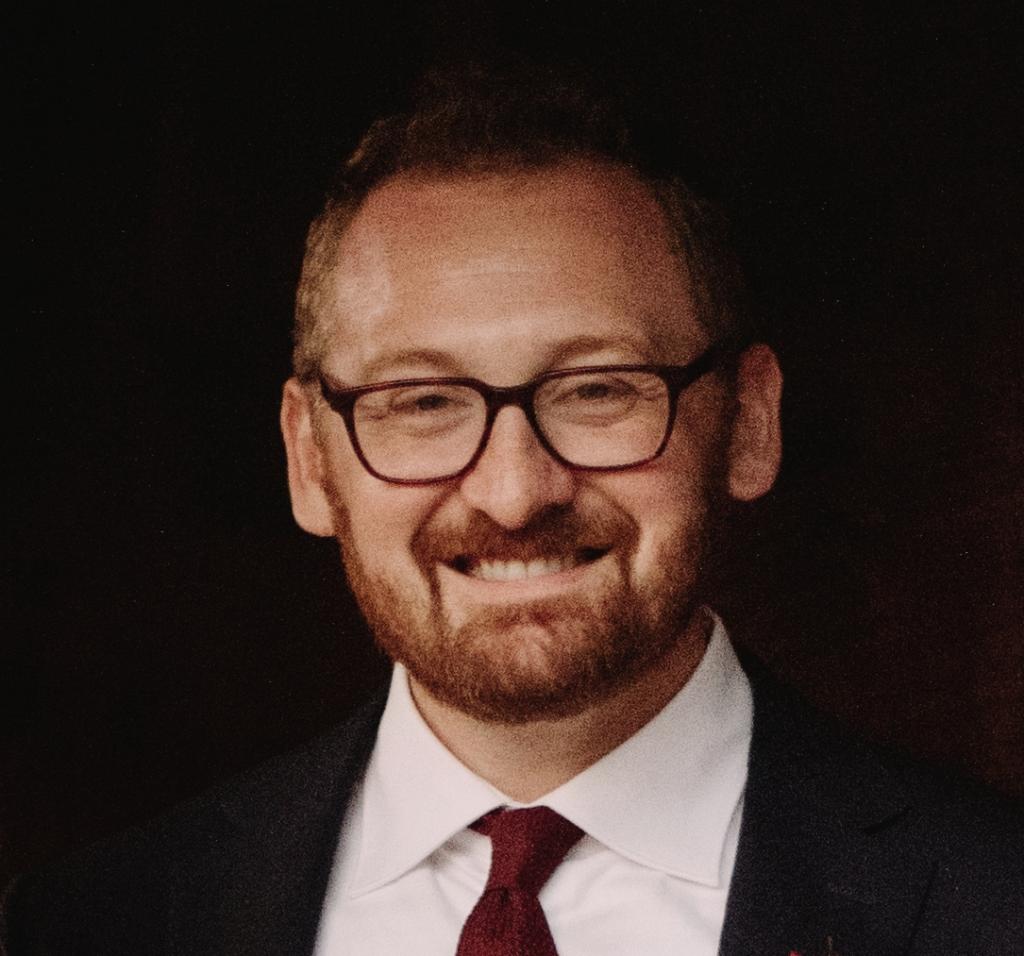
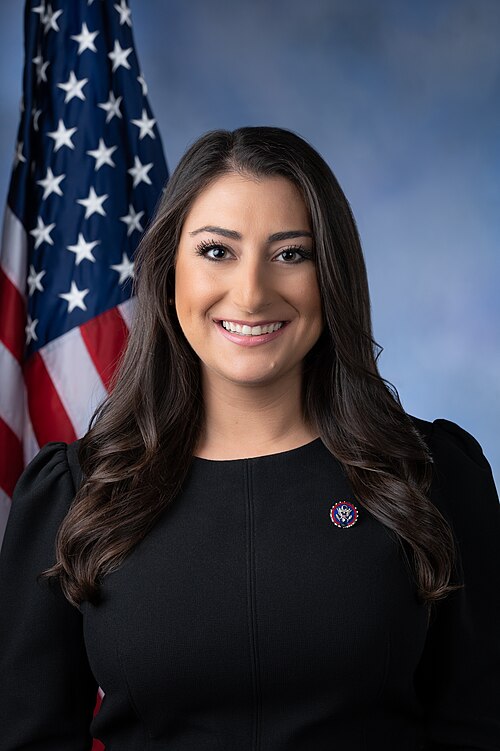

On today’s episode, Lawfare Senior Editor Scott R. Anderson sits down with Rep. Sara Jacobs, who represents California’s 51st congressional district. As a member of the House armed services and foreign affairs committees, Rep. Jacobs has taken a lead role on an array of foreign affairs-related legislation. Before being elected to Congress, she worked for the U.S. Department of State and the United Nations.
Together, Scott and Rep. Jacobs discuss her and her colleagues’ efforts to oppose the Iran war and how she hopes the House will approach the issue in defense-related authorizations and appropriations later this year. From there, they discuss Rep. Jacobs’ work on bipartisan legislation relating to foreign assistance and expeditionary diplomacy. Finally, they step back to consider the role that Congress currently plays in foreign affairs and national security, how that role may change if the House or Senate changes control, and what could help Congress be more effective in the future.
To receive ad-free podcasts, become a Lawfare Material Supporter at www.patreon.com/lawfare. You can also support Lawfare by making a one-time donation at https://givebutter.com/
Click the button below to view a transcript of this podcast. Please note that the transcript was auto-generated and may contain errors.
Transcript
[Intro]
Renee DiResta: Hi,
I'm Renee DiResta, a contributing editor at Lawfare. You may have heard
me on our podcasts talking about online influence operations or platform
governance, or read my writing on the messy intersection of tech, democracy,
and free expression. What makes Lawfare different, and what makes me so
proud to be here, is that the whole team produces bold, fearless commentary
that synthesizes across disciplines: law, technology, national security,
policy.
As emerging technologies move faster than the policies meant to
govern them, that kind of analysis is essential. Lawfare is a 501(3) nonprofit.
Everything that we produce is free with no paywall, but that only works because
listeners like you step up. Head to lawfaremedia.org/support and become a
material supporter.
Just $10 a month, or more if you're able, makes a real
difference in helping us tell the stories that hold power to account. Plus,
supporting our work gets you access to member-only perks like the ad-free
podcast feed, monthly ask us anything opportunities, invites to special events,
and more. It's a win-win. Thanks for listening and for supporting Lawfare.
Rep. Sara Jacobs: And
I think that's really what we have right now, is oversight, is asking the
questions, demanding investigations, trying to make sure that even if sort of
the political atmosphere at the Pentagon has changed, that the CENTCOM
commanders are still retaining that capacity and expertise and including the
civilian harm mitigation measures in their targeting.
Scott R. Anderson:
It's the Lawfare Podcast. I'm Senior Editor Scott R. Anderson with
Representative Sara Jacobs of the fifty-first congressional district of
California.
Rep. Sara Jacobs: We
are going to have to do a lot of oversight, and in the foreign policy space
specifically on Venezuela, on Iran, on the use of our military in domestic
instances.
Scott R. Anderson:
Today, we're talking about the role Congress plays in foreign affairs and
national security and where it may go from here.
[Main Podcast]
So Representative Jacobs, I want to start with an observation.
You are a bit of an outlier for the simple reason that I think the conventional
wisdom in American politics is that foreign affairs, national security are a
bit of a back burner issue. They're not what motivates voters. They're not the
top of a lot of people's political calculus. But when you go to your website,
when you look at your press releases, I did a little exercise and looked back,
and they're almost all about foreign affairs and national security, at least
over the last several months. You have to go pretty far back in 2025 to find
two in a row that aren't.
Talk to us about where you see foreign affairs and national
security fitting into your role as a member of Congress, why you seem to be
giving it such a priority, and how it fits both with your, your duties as a
representative and your, your mandate from your constituents.
Rep. Sara Jacobs:
Yeah. Well, look, when I ran for Congress, you know, I'd worked at the State
Department and the UN, and everyone told me, like, "Don't talk about
foreign policy. Don't talk about foreign policy." But the fact of the
matter is, actually, people are interested in, in knowing what your ideas are
and what your plans are.
And, you know, foreign policy is a back-burner issue until it
isn't, right? We know that the war in Iran, for instance, is very front and
center in voters' minds right now because prices are up, and it's really
impacting their day-to-day lives. And I am very fortunate to represent an
amazing community in San Diego that is, you know, a border community, a port
community, the largest military community in the country, and has a huge
refugee and asylum-seeker population and a lot of immigrants.
And so, you know, for my district, for my community foreign
policy is very present, and these aren't sort of far-off theoretical ideas. You
know, we talk about the war in Iran, I think for a lot of people it's showing
up in their daily lives in prices which it is for my constituents for sure, but
it's also showing up in the fact that we've got 2,500 San Diego Marines off the
coast of Iran right now.
We've got a number of our service members in San Diego who are
on 48-hour deployment notice. Like, this is actually the real lives that are,
you know, being impacted by this conflict. This is the, the real life of my
constituents, and it is, you know, pretty shameful to me actually that so many
of my colleagues are really willing to, to put them in harm's way, to let them
potentially sacrifice their lives without any real plan or strategy.
And so that's why I spend so much time working on and talking
about foreign policy because it really is an incredibly important part of, you
know, our country and our national security and also my constituents' lives,
and it affects everything. It affects our security. It affects our economy,
right? These are...it's, it's, it's all related
Scott R. Anderson: So
let's start with the Iran war because obviously that is a topic that's hard to
miss these days, hard to avoid, and affecting so many things here in America
and around the world. You have been a leader in the House of the effort to
oppose the Iran war, specifically through the use of resolutions that are given
expedited procedure through the War Powers Resolution.
So there have been two concurrent resolutions in the House, I
believe six joint resolutions in the Senate. Those have so far lost across the
board. None have been adopted, fairly slim margins, and I should say narrowing
margins, mostly partisan, a little bit of bipartisan trade over. Talk to us
about where you think the strategy is likely to go now that we've passed both
the important for the War Powers Resolution 60-day mark two Fridays ago.
Now we're past that period where at least under the War Powers
Resolution it says the president should have terminated hostilities, all the
executive branch's arguments why that isn't here. And also we're in a point
where we, we may be seeing, as we're recording this, the ceasefire breaking
down. It seems like we may be reaching the end of this period of relative
stability and relative low violence that we've had over the last few weeks.
Where do you think this effort to oppose the war in Iran is
likely to go from here in the House and the broader Congress?
Rep. Sara Jacobs:
Yeah, look, I oppose the war in Iran because I think that it is a strategic
mistake, and it is literally putting my constituents' lives at risk, and we
have already lost 13 service members, and there's only bad options at this
point, which is why every president before Trump has declined to actually use
military force to prevent Iran from getting a nuclear weapon because actually
the most sustainable way to do that is through a diplomatic negotiation, which
now the Trump administration is trying to do, but with a worse hand than we had
before.
The Congressional Progressive Caucus, of which I'm a member,
will be introducing War Powers Resolutions every single week so that we always
have one that's ripe so that we can force a vote and put Republicans on the
record on, you know, whether they stand with the Constitution, stand with our
troops, or whether they're willing to rubber stamp whatever Donald Trump wants,
even if it makes no sense and actually doesn't make our country any safer.
And that's what we'll continue doing. But the War Powers
Resolution is only one option that we have in terms of how we can oppose this
war. We know that there will at some point be a supplemental funding request
coming to us. The number has ranged from, you know, $20 billion to $200
billion. We're still waiting to see what number they actually send to us.
But I think it's incredibly important that all of my colleagues
reject that supplemental funding request because we know that the courts have
seen that if Congress funds something, even if we haven't authorized it, that
is seen as a de facto authorization. And so I think looking both at our annual
appropriations bills, which we are working on right now, and whatever
supplemental funding request comes down, making sure that we are actually using
Congress's power, the power of the purse, to prevent Donald Trump from doing
anything more in this reckless, illegal war will be incredibly important, both
for the practicalities of it and for the legal underpinnings of it.
Scott R. Anderson: So
we are getting to that critical point, as you know, where we're gonna have
potentially this supplemental appropriations request, defense authorization,
defense appropriations bills later this year, an opportunity where the tables
turn a little bit on the leverage with Congress and the president. The
president can't veto those easily, so it's a narrower margin to get something
enacted into law.
What do you think the focus should be in terms of what Congress
should be seeking in those laws? We can assume, I think, opponents of the war
aren't gonna get everything they would want. What do you think is most
important? Well, how would you triage the different legislative asks Congress
could insert into that legislation?
Rep. Sara Jacobs:
Yeah. I think the most important thing that we need to do is fence off funding
and say that no funding can be used for this illegal, reckless war in Iran, and
that's one of the best tools Congress has had. It's actually the way Congress
was able to work to force, for instance, you know, the Vietnam War to end,
other conflicts, making sure that, you know, we are saying that funding can't
be used for this purpose, that is specifically prohibited, is the best tool
Congress has.
We have a number of bills that would do that in terms of
Venezuela, in terms of Iran, and I think it's important that we try and get
that into whatever broad package ends up going through in terms of
appropriations and the National Defense Authorization Act.
Scott R. Anderson:
Another issue that has come up in the context of Iran, but also Venezuela, and
particularly the maritime strikes happening throughout the Caribbean and the
Pacific over the last seven or eight months or so, is this question of civilian
casualties, the blending between the categories of combatant and civilians, and
then disproportionate impact on civilians as a result of military operations.
It's a big issue that got a lot of attention from Congress and
the last administration, and then that, a lot of those efforts have been
criticized by the current administration, the current Secretary of Defense Pete
Hegseth. Talk to us about the status of those issues. Where do you think this
issue is?
You're co-chair of the Protection of Civilians in Conflicts
Caucus. You've been following this. What are the big deficits that we're seeing
under current action, and what should Congress do to try and address those?
Rep. Sara Jacobs:
Yeah, so a couple of years ago, in a bipartisan way, we were able to get a
number of provisions around civilian casualties into the National Defense
Authorization Act that, for instance, mandated a center of excellence on
civilian harm mitigation that institutionalized the Civilian Harm Mitigation
Action Plan that Secretary Austin had put in place that mandated certain
civilian harm positions and activities be done at the different CENTCOMs.
And this administration has largely gutted all of those efforts
and, you know, are trying to do sort of checking the box so that they're not
technically breaking the law, but not actually following the law in terms of,
of what we had intended. And again, this was passed in a bipartisan way in the
National Defense Authorization Act.
A lot of what we're doing is trying to do oversight to make
sure that, for instance, even if the, the titles have changed of people's jobs,
that there are still people who are doing the specific civilian harm mitigation
tasks and jobs that we know are incredibly important, for instance, in
targeting, and that these investigations are happening when an incident
happens.
So for instance, I led over half of the Democratic caucus on an
oversight letter asking about the U.S. strike on the girls' school in Minab,
and we are still waiting answers on that. DOD says the investigations are
ongoing. But we know that that is maybe the most public and, and biggest of the
civilian harm allegations in Iran, but not by any means the only one.
And so we're continuing to do that oversight. And I think
that's really what we have right now, is oversight, is asking the questions,
demanding investigations, trying to make sure that even if sort of the
political atmosphere at the Pentagon has changed, that the CENTCOM commanders
are still retaining that capacity and expertise and including the civilian harm
mitigation measures in their targeting, and that we are then working so that
when we are back in power, those, those folks are, you know, still there in the
institution and we can quickly rebuild.
I think a lot of times when I talk about civilian harm
mitigation, people think I'm just like, I don't know, a lefty who doesn't want
people to die, and it's true, I don't want people to die unnecessarily. But
it's also incredibly important because we know that civilian harm And when we
or our partners or allies are hurting and killing civilians in conflict
actually really impacts our national security.
We know that that is one of the main drivers to violent
extremism, for instance. If you look at sort of all the empirical studies on
what leads communities or people into violent extremism, acts of violence by
the state against themselves or someone they know is one of those main drivers.
And so I actually think it's incredibly important because in a lot of these
cases, we say we're trying to fight violent extremism, but then we are doing
one of the very things that is one of the biggest drivers and is just building
more anti-American sentiment instead of solving the problem we are saying we're
there to solve.
So I think it's incredibly important, and actually I was able
to ask Admiral Paparo the INDOPACOM commander about this, and he said the same
thing, that civilian harm mitigation is an incredibly important part of
American national security, and that's why he continues to prioritize it even
as this administration is sort of gutting the statutorily required civilian
harm mitigation efforts within the Pentagon.
Scott R. Anderson: So
we've talked a lot about the defense space, and you are, of course, on the
Armed Services Committee, but you're also on the Foreign Affairs Committee
which oversees the other big parts of our foreign policy apparatus, State
Department development. So let's talk about that a little bit. You have been
very active in the foreign assistance space over the last, your last term in
Congress or in the course of this Congress.
You, if I recall correctly, I think sponsored or certainly
supported legislation to try and stop the shutting down of USAID. I don't
believe it moved forward. Obviously, USAID has been shut down at this point in
all but name effectively. You've also introduced more recently some legislation
aimed at reforming foreign assistance, shifting towards a more locally based
model that actually has some synergies with at least some rhetoric, some
targets, some objectives.
The Trump administration, people supportive of what the Trump
administration have done, has done aligns with that a little bit. There's a
little bit of synergy there. And notably, that's a bipartisan piece of
legislation. You're co-sponsoring it I believe with one of your fellow
representatives, Republican Young Kim out in California.
Talk to us about where you think foreign assistance should be
going in this moment where it has seen such a sea change in the institutions
and the mechanisms we've usually approached it through. Where do you think it
should go? Do you think there's bipartisan support for that? A- and what is
Congress's role in shaping that and driving that forward?
Rep. Sara Jacobs:
Yeah, I mean, if you had told me in December of 2024 that introducing a bill
saying that no funds can be used to change USAID like, that were done in a
non-statutory way would be controversial, I would've thought you were crazy.
That would've been, like, a broad bipartisan bill. But of course, by February
2025, that was not the case, and we've seen this illegal gutting of USAID, and
I think it's clearly illegal and really problematic in terms of Congress's role
and how we make sure that, you know, laws that Congress passes, statute that
Congress creates, actually get enforced.
And I think, you know, while I don't know exactly what that
looks like, I think that brings up a whole other conversation about what kind
of structural reforms we need to make sure that Congress can actually enforce
and implement the laws that we are passing. But I think you can both
acknowledge that what the Trump administration did on USAID was wrong and
illegal and has killed many people, and also acknowledge that this is now an
opportunity for reform and to improve how aid is delivered because while I wouldn't
have done it the way Donald Trump did it, I think we, we were working on USAID
reform and foreign assistance reform well before this, and we shouldn't just
rebuild what we had before.
Actually, there were a lot of reforms that were needed. And so
one of the big reforms I think we need is how we bring other countries into
this conversation and really make it more of a partnership. And, you know, I'm
the ranking member on the subcommittee on Africa, and so I talk to a lot of our
partners in the Global South all the time, and what I heard from them after,
you know, USAID funding was pulled is that, you know, these, these countries
were not like, "Oh, no, we need the funding back." They're like,
"Oh, we should use this as an opportunity to be more
self-sufficient," because countries don't want to be dependent on aid, and
we shouldn't want them to be dependent on aid.
And so that's why we're focused on locally led development,
making sure that we're investing in local actors, local partners, building
capacity on the ground instead of just sort of the way we've traditionally done
foreign assistance that is, you know, very U.S.-centric.
I think we need to be focused more on government-to-government
support, which will also include a lot more monitoring and, you know,
protections because we know that that kind of support can be ripe for
corruption and, and we'll need that sort of protection. But having clear
benchmarks and timelines on, you know, what an off-ramp looks like, having
clear buy-in from other countries in terms of what they're putting forward,
really thinking strategically about what it is that it makes sense for the U.S.
to do versus what it makes sense for our partner countries to do.
In full transparency, I think Congress is partially to blame
here, right? Because through the appropriations process over the years, we've
had so many earmarks on what foreign assistance can go to that it has left the
folks on the ground very little room to operate. So I think in, in Mozambique
prior to the Trump administration, something like ninety-five percent of all
foreign assistance to Mozambique was already earmarked by Congress as to what
it had to do, and a lot of what Congress earmarks is this very sort of
disease-specific work, right?
Because you have advocacy groups that focus on this that then
ask for these specific appropriations requests that end up in the
appropriations bill. And, and it all makes sense why we got to this place
because people care a lot about a specific issue and wanna make sure it gets
funded, and the way to do that is to have protected funding for it.
But if you actually take a step back, what actually makes more
sense would be for the U.S. to really focus on health system strengthening and
let the countries then do the more specific disease-specific work within that
health system strengthening that we're doing. And we've been able to do that.
Like, I think PEPFAR was a really great example of how you can work on
disease-specific work and also be doing that health system strengthening.
But really thinking more holistically about what, what does it
make sense for the U.S. to do? How do we make sure we're building these
off-ramps and clearly working with our partner countries in partnership and not
just as this kind of like thing we give you that you are then dependent on, I
think is incredibly important as we move forward. And, and I do think there is
bipartisan appetite to really rethink what our foreign assistance can be and,
and how we do it.
Scott R. Anderson:
And another area that you've targeted for reform recently is the State
Department, and critically the conduct of diplomacy. In the past, you've been
active about efforts to try and get the State Department to look a little more
towards predicting trends in conflict.
You supported establishing a center for conflict analysis in
the State Department. Now more, more recently, you've got another piece of
bipartisan legislation co-sponsored with Michael Baumgartner, I believe,
Republican from Washington State, talking about expeditionary diplomacy, a, a
topic that's very close to my heart as I was briefly an expeditionary diplomat
of sorts back early in my career, but a topic that is a little in the weeds for
a lot of people.
Talk to us about why this stands out to you as an issue worth
addressing on the part of Congress and what Congress's role is in shaping the
way the United States goes about diplomacy. I mean, why is it or why does it
need to be Congress's role to open up that space or to encourage the executive
branch to pursue expeditionary diplomacy?
Rep. Sara Jacobs:
Yeah, so I think, like, taking a step back, right? I think part of why our
foreign policy is so distorted starts in Congress because we pass these huge
defense budgets and then pass paltry funding for the State Department and
USAID. So then when we go into other countries, it's the military who is then
able to go out to these hard-to-reach areas.
It's the military who has money that can actually, you know,
provide assistance and, and work with other militaries in other countries. And
so then we shouldn't be shocked when in other countries, their militaries
become much more powerful because that's, you know, that's the assistance we
can give, and then that's where we see coups and other things happening.
And so to me, it all starts from that fundamental issue, which
is that we've over-securitized and over-militarized our foreign policy, and
everything sort of flows from there. And that's where you know, I think
expeditionary diplomacy fits into that because in, you know, I worked in the
Bureau of Conflict and Stabilization Operations at the State Department, and we
often saw that the travel requirements, the travel restrictions were so severe
for, for our State Department folks that it was only the military that could
show up to certain meetings in certain places because they were the only ones
that could travel there.
And then the face of America in other countries is our
military, and that's not really what we want, right? We want our military to be
doing military things. We want our diplomats to be representing the United
States. And I think it's important that it comes from Congress because in many
ways, Congress is part of the problem, right?
We, I mean, I wasn't here yet, but we as Congress launched so
many hearings and investigations on Benghazi. And while what happened in
Benghazi was horrible, those investigations, I think, really overcorrected and
made it so that diplomats couldn't really go out of the capital or out of the
perimeter at all, and that makes it really difficult to do their jobs.
And if we have diplomats who are only in the capitals and only
inside the perimeter, that means they're really only talking to elites, and
that means we're not getting a real picture of what's happening in those
countries. And I think that can, you know, contributes a lot to when we get
surprised by things like people in Niger being angry at America for, you know,
the role we're playing in military in their country.
And, you know, if you're only talking to elites, you're not
getting that perspective, and then we're getting surprised by these coups and
by these conflicts in other places because we're not actually really talking to
the people of those countries. We're talking to the politicians and the elites.
You know, in Somalia, as, as you probably know, the U.S. Embassy is in the
airport complex, and diplomats aren't allowed to leave the airport complex to
the point where when there are meetings that the U.S. government needs to
attend outside of the airport complex, it is our military who's going because
even our ambassador cannot go to those places, it, you know, because of
security protocols.
That, that shouldn't be how we're doing things. And so Michael
Baumgartner and I both worked at the State Department, and we both kind of
worked in this space, and we really came together and looked at what do we need
to do to move the ball forward and to, to make a more permissive environment so
that our diplomats can really be doing their jobs.
Scott R. Anderson:
So, you know, a theme of a few of these pieces of legislation we've hit on is
the bipartisan support, the fact that you found these partners across the
aisle. And I wanna drill into that in this foreign affairs context. I mean, we
all know partisan divisions make certain things hard in Congress, to say the
least.
I think that's obvious from the outside. I'm sure it's even
more obvious from the inside. And it's a real pressure. I mean, inevitably,
particularly in the foreign affairs space, a lot of what Congress is doing is
responding to problems in the world that are being addressed one by, way by the
incumbent administration, and that is, in a two-party system, always gonna line
up awkwardly for one side of the aisle or the other in Congress.
Yet you found ways on a couple of these issues to at least find
bipartisan partners and maybe eventually drive it forward to progress through
enactment. Talk to us about w- your strategy for doing that. Where do you think
the areas for bipartisan cooperation in foreign affairs are? Are there certain
techniques for identifying or approaching them? And then how do you turn
bipartisan co-sponsorship into legislation in the end?
Rep. Sara Jacobs:
It's a good question, and you know, I'm, I'm glad you asked it because I feel
like in the news, all they show is us fighting, and there is a lot of fighting,
I don't wanna minimize that, and a lot of important things to fight about.
But if you kind of go one level down to the super, of the super
political things, there's actually a lot of bipartisan work happening. And in
some ways we've actually been able to do more bipartisan work than ever because
Speaker Johnson basically has lost control of the Republican conference. And
so, like this Congress alone, I think we've had six successful discharge
petitions, which is the way you get around the speaker.
That's more than the entire rest of Congress combined, the
history of Congress combined. And so, you know, the way I think about working
in a bipartisan way is that I don't think it's about how you get the most
watered down, lowest common denominator version of something that you can get
everyone to agree with, because then in many ways you're like saying you're
doing something and then you're not doing it, and that actually is worse and
creates that sort of cycle of mistrust.
The way I think about bipartisanship is what are the big things
we each wanna do? Where do those overlap? And then how can we find ways to, to
work on that? And actually in the foreign policy space, it doesn't always
cross-cut in the same sort of partisan lines you would think. Sometimes you'll
actually see like on war powers and Congress's role, it's often progressives in
the Democratic Party and the Freedom Caucus in the Republican Party who are
working together on those issues.
And I do a lot of work with the Freedom Caucus of all people,
on those kind of war powers and, and, and other issues. And the key to me is
figuring out, like, you know, Michael Baumgartner and I, he's a new member we
traveled together to Iraq, and he was talking about his experience there, and
that's where through those conversations and, you know, developing a re- a real
relationship with each other, we found that we had common interest in trying to
figure out how we can get diplomats to be able to leave the perimeter more.
Young Kim worked on the House Foreign Affairs Committee with a
staffer on it before she got to Congress, and so she'd been thinking about
these issues a lot. And while that's not really the experience of most of my
colleagues here, right? Most people start in state and local government and
move up and are really much more focused therefore on those state and local
issues that they're more comfortable with.
For those of us who have worked in the executive branch, who
have thought about foreign policy a lot, there is actually a lot more
commonality than not in terms of, like, figuring out what we can do from
Congress to make the institutions and the sort of structures of our foreign
policy work better.
Scott R. Anderson: So
we're approaching a moment, obviously, with the midterm elections, where we may
go from a Congress that has, by slim margins, but nonetheless been controlled
by the same party as the president, to one where one or both chambers very well
might switch control.
The question then shifts to what the toolkits are that are
available, and particularly what new toolkits one or both chambers might
develop. We saw during the second half of the first Trump administration, for
example, the House lean into litigation much more than it's done previously,
pursue more oversight techniques a little more aggressively through the courts,
using the courts to back up their oversight authority.
Particularly in the foreign affairs national security space,
what sort of tools do you expect a Democratically controlled House or Senate to
lean on? Do you think they should lean on? And are there things that they can
do to empower themselves to be more effective in their role of oversight, or
are there other functions in the foreign affairs national security space come
twenty twenty-seven when we may have a Democratic House or a Democratic Senate?
Rep. Sara Jacobs:
Yeah. Look, I think that we are going to have to do a lot of oversight, and in
the foreign policy space specifically on Venezuela, on Iran, on the use of our
military in domestic instances, and it will be incredibly important that we do
that oversight. And I also do think we need to think about what are some
structural changes we can make to make sure that Congress is actually able to
do that oversight.
And, you know, I, I don't have a fully fleshed out vision of
what that looks like, but I think it could be, you know, making sure we have
more staff at CRS who can do some of it and have that expertise thinking about
what kind of sort of legal advisory work we need to have Congress so we're not
only dependent on the executive branch's legal opinions on things.
And I think oversight will be an incredibly important piece. I
mean, we haven't even had a single open hearing on the Iran war yet, and we've
lost 13 service members billions of dollars, and there's still not been a full
actual congressional hearing on this. We've had classified briefings, but no
real hearing, and that's a problem, and that's something we need to fix when
we're in the majority.
But even amidst all of that oversight that we need to be doing,
I also think there are still areas of opportunity where we can actually move
the ball forward even under this president. I think reforming foreign
assistance and, you know, building that back up is one of those areas. I think
potentially working on some war powers things with our Republican colleagues
and sort of the role of Congress is another area.
And I do think that we need to be able to hold both of those
things at the same time. We need to be doing rigorous, rigorous oversight and
accountability work, and we need to still be looking for ways that we can come
together and move the ball forward even under whatever construct we're working
in in the next Congress.
I think both of those are possible. And, you know, in
particular, the National Defense Authorization Act tends to be a place where
you do get some of those grand bargains, where you can make some of those
deals, where you really can move the ball forward, and I'm hopeful that, that
we will do it. You know, I've been working on a lot of military quality of life
issues that I think we can still get done, in particular, you know, getting IVF
and fertility treatment for service members covered by, by TRICARE, the
military insurance program, but I, I, I think there are others.
And really making sure that we're being strategic about sort of
doing both of those things well I think will be really important. And, you
know, I know your listeners often are the people who have the best ideas on how
we can be doing our oversight work and, and rebuilding Congress's power, so
please send them in because we are looking for all of the creative ideas that
we can find
Scott R. Anderson: So
I wanna take the kind of the blue sky one level higher now because we could, in
theory, be at a point in the next few years of major reform.
That's something we talked about a lot. A lot of people thought
it might have come after 2020, little areas did, but nothing quite at the scale
people anticipated. There's still a lot of talk about it, particularly because
so many people do feel that Congress has either conceded to greater role, you
know, in war, in foreign affairs, in a variety of other set of issues, or is
not been able to effectively push back on its institutional inter- interests
against this administration.
There are people on both sides of the aisle that have
maintained this around different sets of issues. What, particularly in this
issue space, foreign affairs and national security, would you like to see
Congress move towards at a, as a body, as a legislative body? If it gets a
majority that wants to reassert itself as an institution, what will that take
in the set of issue spaces?
Is it you know, a state authorization bill? Is it a change to
the War Powers Resolution? What would be your top-tier item to have Congress
focus on if we get to one of these reform moments like we had, you know, after
the Vietnam War?
Rep. Sara Jacobs:
Yeah. No, I, I, I think we will be there, and I'm hopeful we will be there. And
I think it's incredibly important. I mean, Congress is a co-equal branch. We
should not be a passive observer. And I'll be honest, when I worked at the
State Department, I didn't really think much about Congress. Congress has, you
know, long abdicated its responsibility here, and frankly, the executive
branch, under presidents from both parties, has long taken a very long leash.
And I think we need to be clear-eyed and honest about the fact
that a lot of what the Trump administration is doing is based on precedent
from, you know, Obama, Biden, Clinton, others, and that this hasn't, you know,
he's taken it to the extreme and to its limit. I heard one scholar say that
it's like we left a bunch of loaded guns around the White House and, well, you
know, he's the one who actually used them.
Like, we're also responsible for leaving all those loaded guns,
and I think that's a really good way to think about it. And so I think we need
to be looking at it from a couple of different angles. So one is, what are the
institutional reforms Congress needs to be able to actually be a co-equal
branch?
And, you know, that looks like more capacity, potentially our
own legal analysis, so we're not relying on the Office of Legal Counsel, things
like that. The second is, what are the legislative fixes we need? Clearly, the
War Powers Resolution of nineteen seventy-three isn't working as we want it to.
I think we need to reform that.
I think we need a reform of the Insurrection Act. I actually
introduced that with Chris Deluzio because I think it's clear that that has the
potential to be misused, and I think we should do a deep dive on all of the
different things that the Trump administration has been misusing or has the
potential to misuse and really clean them up and tighten them up and make sure
that Congress's intent is clear there.
So that's the, the legislative piece, right? So You know, we
need to, we need to build our own capacity. We need to look at closing
loopholes and reasserting our power in terms of war powers. That also means
repealing and replacing the 2001 AUMF that has been stretched beyond any sort
of rational interpretation of it, in my opinion.
But then we also need to look at, you know, what are the
proactive things Congress needs to do to reassert our power, and that's where I
do think we need to get to a state authorization every year, just like we do
for the defense authorization. And I can tell you, I'm on both the Armed
Services and the Foreign Affairs Committee.
Like, because we do a defense authorization every year, the
military does feel more like they need to respond to us than the State
Department feels like they need to respond to the Foreign Affairs Committee.
Like, that is just a fact. And so by doing that every year, by reasserting our,
our actual role, I think we will be able to change that dynamic in a helpful
way.
I also think we need to, you know, look at rebuilding foreign
assistance, what that looks like, really make sure that it is coming from
Congress, what those reforms look like and what the future looks like, and not
ceding all of that to the executive branch, whether it's the Trump
administration or an incoming Democratic administration.
I think, you know, Congress needs to begin working on that now,
and, and those ideas need to be coming from Congress. And we need them to be in
statute. And then I also think we need to look at, like, you know, in a lot of
ways, we've eroded our own authority by, you know, letting authorizations
expire but still appropriating funding, appropriating for things, you know,
Congress actually doesn't necessarily support.
And so I think we need to look at all of those different things
and, and tighten them up. So I wish I could give you, like, this is the one
priority we need to do, but the fact of the matter is we kind of need to take a
holistic institution-wide approach and look at all of the ways we need to
address this.
Scott R. Anderson:
You know, part of your job as a representative isn't just representing your
constituents and voters, it's also speaking to constituents and voters helping
them understand their role in the governmental process, in the democratic
process. When you speak to your constituents, how do you encourage them to
think about these foreign affairs issues and how they affect their lives?
How do you move foreign affairs issues from the back burner to
the front burner for voters? And are there lessons there that other legislators
and frankly other citizens might be able to take on board about how they think
about this issue set when they go to the ballot box?
Rep. Sara Jacobs:
Yeah, I mean, I talk a lot about it in terms of costs, right?
We all notice and pay attention when there's a war in the news
every day, when we're seeing bombs dropping, and we know that that costs a lot
of money. And if we actually, as a government, did the more preventative work,
if we did our foreign assistance well, if we did that kind of conflict
prevention well, that actually would save us a lot of money, but it doesn't end
up in the news.
And so to me, talking about, you know, how we can do that
prevention work tends to really resonate. And again, my district is not
necessarily representative here. We are a very international place, so it just,
by its nature, people feel the foreign policy more. But I also think we don't
tap enough into diaspora communities.
I think diaspora communities are a really great bridge because
they see how f- U.S. foreign policy directly impacts their loved ones in other
countries, and they can help translate that to the communities that they live
in now. And I feel like we, as a foreign policy establishment, haven't done
enough to, to really tap into that, that diaspora community.
But the last thing is I feel like part of why we haven't been
able to really resonate with people on foreign policy is because for a lot of
people, they felt like there's this bipartisan elite consensus in Washington, D.C.
that doesn't really take into their lives or their needs, and we haven't really
given them a vision of what a foreign policy can look like that will actually
make their life better and will produce a sort of common good that they can be
a part of.
And so I do think a big part of this is also having a
proactive, forward-looking vision of the role the United States can play in the
world as it looks now, not harking back to some nostalgia about U.S. hegemony
and unipolarity, but how the U.S. can be a leader in the U- in the world as it
looks now in increasing multipolarity, and then why having that leadership role
matters for Americans and for Americans' national security, whether it's
because we need those coalitions to actually be able to have more power in this
increasingly multipolar world, or because we need partners to actually be able
to address things like pandemics and climate change and AI and things that are
supranational by their very nature, and that we won't be able to solve on our
own.
And I think the more we can have that sort of forward-looking
approach, the more people will feel bought in to what the U.S. role in the
world can be and why they want to be a part of it.
Scott R. Anderson:
Well, we are out of time but that's an interesting and a good note, I think, to
end our conversation on Representative Sarah Jacobs. Thank you for joining us
here today on the Lawfare Podcast.
Rep. Sara Jacobs:
Thanks for having me.
[Outro]
Scott R. Anderson:
The Lawfare Podcast is produced by the Lawfare Institute. If you
want to support the show and listen ad-free, you can become a Lawfare
material supporter at lawfaremedia.org/support. Supporters also get access to
special events and other bonus content we don't share anywhere else.
If you enjoy the podcast, please rate and review us wherever
you listen. It really does help. And be sure to check out our other shows,
including Rational Security, Allies, The Aftermath, and Escalation,
our latest Lawfare Presents podcast series about the war in Ukraine. You
can also find all of our written work at lawfaremedia.org.
The podcast is edited by Jen Patja with audio engineering by
Hazel Hoffman of Goat Rodeo. Our theme song is from Alibi Music. And as always,
thank you for listening.
_transits_the_caribbean_sea_(36534339183).jpg?sfvrsn=ac022da4_5)