Lawfare Daily: Revolutions and the Rule of Law


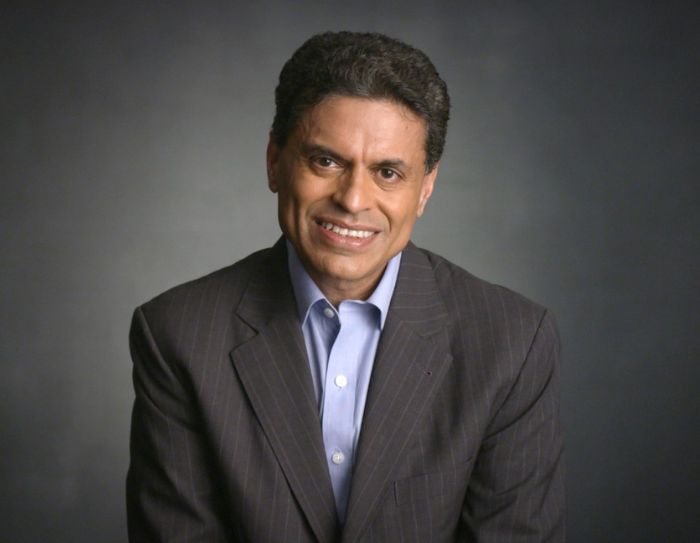

In this episode, Michael Feinberg interviews Fareed Zakaria, whose book “Age of Revolutions” has just been issued with a new afterword in light of the return of the Trump Administration. The two discuss intellectual, cultural, and populist revolutions from history and what those events have to teach us about our current political moment.
To receive ad-free podcasts, become a Lawfare Material Supporter at www.patreon.com/lawfare. You can also support Lawfare by making a one-time donation at https://givebutter.com/lawfare-institute.
Click the button below to view a transcript of this podcast. Please note that the transcript was auto-generated and may contain errors.
Transcript
[Intro]
Fareed Zakaria: We
don't have a lot of recourses to go to, because so many of the checks were
institutional. Congress was meant to do something about this, but it's not
written in the Constitution that it has to.
The President is not meant to call the attorney general and
direct him or her about what to do, but that's a norm, and it's a norm that
developed after Watergate.
Michael Feinberg:
It's the Lawfare Podcast. I'm Michael Feinberg, public service
fellow with Lawfare, here today with Fareed Zakaria, anchor of CNN's “GPS”
and the author of “Age of Revolutions.”
Fareed Zakaria: In
some ways, we have a more informal and weaker set of constraints and checks and
balances now compared to many European countries, which learned from us, and in
the fifties, sixties, and seventies enacted into law those checks and balances.
[Main episode]
Michael Feinberg:
Today we're talking about Fareed's new book, “Age of Revolutions.” We're going
to be discussing how revolutions, intellectual, cultural, and political have
affected society and the rule of law throughout the ages.
Now this book has an afterword, which makes very clear that it
has some applicable lessons to our current moment, particularly in light of the
2024 election and what's occurred since the inauguration.
But the research and writing took place before that outcome was
determined. So, I was hoping you could give us a little bit of the background
on what the genesis of the topic was, and how you came to write this particular
work.
Fareed Zakaria: Sure.
And it actually started a long time before. I mean, from, in its conception, it
really began in 2012––2011, 2012––when I started to notice something that
seemed very strange, which was the rise of the Tea Party.
And what was interesting about the Tea Party was it was an
insurgency within the Republican party. And the Republican party tended to be
thought of as very hierarchical, you know.
It was the more traditional of the two parties. It was
dominated by a, almost a kind of canonical sequence of candidates that would be
elected, would be nominated and renominated.
The old line was always the Democrats have to fall in love with
their presidential candidate. You know, think of Kennedy, Obama, Clinton. The
Republicans have to fall in line. You know, they're just as, like, the next guy
who's––you know, I mean, this is a party that nominated Richard Nixon five
times to its presidential ticket.
And suddenly you had this bottom-up insurgency that was tearing
the Republican party apart, that you remember the period, the cavalcade of
speakers that have to resign.
And I thought, something is changing about politics more
generally. And I started to look into it and found that what I was seeing
everywhere was this shift. And it was a shift that was really about a change in
the basic concerns that had been dominating political parties.
So if you think of the 20th century as basically a contest
between the right and the left about the role of the state in the economy, that
would predict for you almost all political contests of that period.
So, you know, almost everywhere, what you had was working class
voters, blue-collar voters voting left of center, white-collar workers, richer
voters voting right of center. And the left wanted to tax more, regulate more,
redistribute more, and the right wanted the opposite.
But now you were seeing it was all getting mixed up. Suddenly
the Tea Party was mostly working-class people, and they were taking over the
Republican party. Meanwhile, the Democratic party had become more and more a
kind of white-collar, professional, educated party.
So I said to myself, why is this happening and when has it
happened before? My instincts are always to go back to history because I
believe, you know, nothing is new under the sun. We are, we're always, there
are some echoes of what has happened before.
And so I go back and start to look at periods like ours, of
tremendous economic, technological, and social change, and asked myself, what
was the politics that came out of it?
And that's what, you know, what the book produced, which was a
sense that every time you have these massive accelerating changes forward, you
always get a backlash.
And interestingly, the backlash often has, while it has strong
economic basis, it takes on cultural forms. People start to feel like their
world is being turned upside down and they want to go back to the way things
were. You know, make America great again.
The “again” is the most important part of that slogan. It's a
politics of nostalgia set against a fast-changing world.
Michael Feinberg:
Yeah. One thing that's worried me about our current era to a certain extent is
when I see the sort of historio-cultural based nationalism, what it really
reminds me of is the Völkisch movement in late-19th century Germany. The
sort of stuff that, you know, Herder and Vico would later write about.
And, you know, all the historical cases I'm aware of, there
seems to be a real turn inward in the polity that's affected.
Given that, and given that Trump very much ran on the Make
America Great Again slogan, in which he was really talking about domestic
policies and domestic culture, is anything he's done on the global stage––we've
seen more military adventures or misadventures in South America than we
would've expected, we've seen an emphasis on trade deals––do you think there's
any tension between what he promised his voters were going to be his priorities
versus how we're conducting ourselves on the international stage?
Fareed Zakaria: Yeah,
it's a great, it's, first of all, it's a great historical point. The period I
agree with you that seems most similar is actually the late 19th century.
I mean, it gets really, it gets really bad in the twenties and
thirties. And that is another period, particularly the thirties, of backlash
against globalization, against immigrants, against Jews, all that.
But you know, in its softer form and it's––in some ways the
parallel is more accurate is the late 19th century rise of those
conservative nationalist movements, some of which tend to be tended to be quite
controlled, if you want to say.
Bismarck and Disraeli found the electorate was feeling the
sense of cultural anxiety and unease, and they appealed to them with a certain
kind of patriotic conservatism.
And then there were others, Karl Lueger in Germa––in Austria,
and people like that who became, who turned it in, who weaponized it and made
it much more hypernationalist, and particularly in those days, antisemitic.
That was the coin of the realm. When you wanted to sort of say
to people, I am, believe in blood and roots nationalism, it, there was always a
kind of antisemitic tinge to it.
And so, you know, what our version of it is obviously––and it's
a different kind and I don't think Trump is in any sense antisemitic––but there
is a similar kind of conservative nationalism and an anti-globalism.
So that gets us to the question of, you know, whether there's a
contradiction here. And you're right to, to point to something. Because I
think, here's the tension: Trump is a kind of strange character who represents
many strands within this movement, but he's also a person, and a personality.
And he loves to strut the world stage. You know, he loves being
the kind of most important leader of the most important country in the world.
And therein, I think, lies the tension. Because on the one hand, a lot of what
he's doing is straight out of the old fashioned nationalist playbook. It's
protectionism, turning inward, anti-immigration stuff, immigrant bashing, more
hemispheric stuff, less concerned about the world abroad.
But he loves––you know, as he keeps pointing out, he wants to
make peace everywhere. He wants to be seen as the guy who is bringing peace in
Africa, in the Middle East, in South Asia, of all places. Taking credit for
things that he, you know, as far as we can tell, had very little to do with.
And that part of him clearly occupies a large part of his ego
and his headspace, but I don't think his base cares for that at all. And you
can see in Vance the more true expression of the MAGA ideology, which is much
more akin to these historical perils we've been talking about.
But look. You know, you have had that too in history.
I mean, you had all the tendencies we were talking about, and
then you got a kind of crazy king in Germany, Wilhelm II, who was himself like
a kind of guy who wanted to strut the world stage and wanted to show off and
show Britain that he had a bigger Navy than theirs and all that kind of thing.
And then that, in some way, was a material part of World War II.
But at its core, I think Vance represents MAGA’s ideology in a purer form than
Trump, who is a little bit all over the place just because he's Trump.
Michael Feinberg:
Yeah. It's funny that you mention Bismarck and Disraeli as the two sort of
historical reference points, because I agree with you on both of those for very
different reasons.
His ideology and his sort of cultural conservatism that is
really unmoored from any sort of conservative policy is very similar to Bismarck.
But at the same time, he really has Disraeli’s, sort of, peacocking
affectations of wanting to be at the center of attention.
And there's a real contradiction there, quite frankly. And it
does seem like Vance is sort of the next leader who tries to resolve this.
Fareed Zakaria:
Exactly. And I think what both the Israeli and Bismarck got right was that in
moments of great cultural anxiety and change, the working class can be appealed
to on the basis of nationalism, patriotism, you know, almost a kind of blood
and soil ideology.
And that that could work even better than the left's attempt to
appeal to them on the grounds of working-class solidarity, you know? And so
Trump has been very good at figuring out how to appeal to a multiracial working-class
audience, not by promising them, you know, economic freebies, you know, tax the
rich, any of that.
In fact it’s the opposite. He gives tax cuts to the rich, he
cuts Medicaid. And yet he's able to appeal to these people.
How? By this blood and soil kind of national solidarity. And
that's pure Bismarck and Disraeli.
Michael Feinberg:
Yeah, and it's worth noting that the very phrase “culture war,” it's something
we lifted from Bismarck. Because he expressly talked about a Kulturkampf when
he was trying to build his coalition during the unification of Germany.
And this isn't a new technique. This wasn't born with Pat
Buchanan's speech when George Bush got nominated. This is something that really
goes back to the aftermath of the early to middle 19th-century
revolutions.
And this is probably a good point to move from abstract talk
about history to your book in particular. And your book is interesting in that
it can sort of be bifurcated into a historical account for the first half, and
then the second half in the application of those lessons to trends in current
day political science.
And to the extent we can sort of classify works of history, the
academy used to be very big into demarcating different schools. You had social
history, you had intellectual history, you had diplomatic history, military
history, and there was always sort of a changing tide of fashion in that.
And if I had to classify the first half of your book, I would
probably use the term intellectual history. How have ideas changed over time,
and how have those ideas, when put into practice, caused mass movement? But
because I had that inclination, I was rather surprised when the first historian
you cite is actually Marc Bloch, who most people know from his work in the
French resistance.
But before that, he was a stalwart of the Annales School in
France, which for those of our listeners who are not as deep into this stuff,
was a method of historical interpretation that very much relied on what I'm going
to probably inaccurately call intractable factors. Things like geography, the
location of a nation-state, this sort of setup that humans have little control
over.
And then later in the book you allude to, a couple times, Eric Hobsbawm,
who was probably the most able and intellectually rigorous of the 20th-century
historians who were really influenced by Marxist analysis.
And I'm curious: both those thinkers have a sort of
deterministic, almost, philosophy of history that one normally doesn't
associate with the history of ideas.
So I was wondering if you could sort of just talk about how you
approached the historical field in general when writing this book, and what
sort of schools of thought you would say you subscribe to the most?
Fareed Zakaria: Yeah,
that's a very, that's a very profound question because it raises kind of really
the question of––it's almost epistemological, of how do you study the world? How
do you look at the world?
So I come to it partly, you know, you would detect something
real because I come to this as a social scientist more than as a historian, and
so I'm always looking for exactly the question you're asking.
How much of what we see in the world is determined by some
great forces that are shaping the world, and how much of it is determined by
the accidents of history, a personality, a particular leader, a particular
moment that went one way or the other.
And so I find that the structural historians––let's put Bloch and
Hobsbawm in the same category, the people who talk about the underlying
structures––there's a very powerful case to be made that they're able to make,
you know, that there are these very large realities that determine the shape of
these societies or the shape of the world.
So, I, the way I'd like to think of it is, I sort of start with
that, and then I layer on, you know, okay, there are these structural
realities, but then there are these moments that make a huge difference in
terms of how a society goes.
And the point I was, would be using Marc Bloch to make––which
is I think a very important point in human history and in western history in
particular––was the dawn of capitalism and trade, and how it transformed societies,
how it transformed the West, how it transformed Europe.
And what Bloch reminds us and paints this wonderfully vivid
picture of Europe in the Middle Ages, was that the entire society was organized
in completely non-market, non-transactional ways. It was a, it was, you know,
medieval society was essentially a kind of, you know, feudal system where the
aristocrats, the landowners ruled. The peasants underneath, had deep
obligations up to the landowners.
The whole thing existed as a coherent system. There was––it was
all relationships and power. No transactions, no agency. You know, there was
no, no market transactions that took place. The peasants did what they did for
the for the landlord because they owed him that fealty.
And then comes global-, you know, capitalism, trade,
globalization in its modern form, and completely upends that old, that society.
And so that was why I was using Bloch.
And you are right with Hobsbawm, the reason I use him is
because the biggest change in human history, I would argue, was the Industrial Revolution.
And that seismic event probably changes more about human history than anything
else.
And you know, so when you're beginning to talk about the, you
know, the effect it had, and what 19th century politics looks like, that's the tsunami.
That’s changing everything.
And then you have to try to understand how each political
leader at the time tried to navigate through that tsunami of change. But to go
from a world of peasants and farmers to a world of workers and industrialists
and merchants, which was what happened essentially between 1800 and 1900 in all
of Europe.
That's the big change. And Hobsbawm, as you know, understood it
and described it better than anyone else.
Michael Feinberg: Yeah.
I am very much not a Marxist by any stretch of the imagination, but for any
listeners who read the book we're discussing today that Fareed wrote, and want
to learn more about the topic in the area, you could do much worse than Eric Hobsbawm’s
four-volume history of modern europe.
The, I mean, the most germane volume would be “The Age of Revolution”
that we're speaking about now.
Fareed Zakaria: But I
just want to say one thing about Marxist, because you raised an important point
that nowadays, in today's world, you know what, Hobsbawm’s Marxism in his
history––he was also a practicing Marxist and a and had incredibly, in my
opinion, stupid and irresponsible political views––but his Marxism in his
history meant he paid a great deal of attention to the changes in the economy,
the changes in technology, the changes in what Marx used to call the base and
how that affects politics, what Marx called the superstructure.
So it's, it is really nothing more than a very intense focus on
if the entire nature of the economy changed, how did society change?
Michael Feinberg: So
let, yeah, I mean, I agree with that characterization of Hobsbawm on all
fronts.
I would actually extend it to most of the historians of his
school. I think, I think his teacher was Taylor. If they weren't in a student-teacher
relationship, I know they were contemporaries who had a very similar, rigorous
approach to economic and status-based history that led to some pretty
irresponsible political opinions in contemporary times.
We could talk about this for hours. I'm fascinated by the
debate. But I do want to get back to your book. And I want to unpack everything
you just said, because I think it really gets to the gist of the arguments
you're making, not just about history, but about the revolutions you cover and
their applicability to the present day.
And you really focus on, to use a different historian's
terminology, you sort of start with the transition from status to contract. From
a society based upon non-economic hierarchal relationships, to one where
economic change and advancement fundamentally changes society.
And you don't start in the usual place. Most of these sort of
histories start with 1789 in France, or 1848 in various European locales. You
start during the golden age of Holland. I was wondering if you would sort of
explain why you thought that was the best place with which to begin your
narrative.
Fareed Zakaria: You
know, you bring up such an interesting point, because I was thinking of
starting with France.
And then the more I read and the more I researched, I realized,
you know, we have a tendency, all of us in life to focus a little bit more on
failure than on success.
So we look at the revolutions that went awry. You know, I think
about it when we think even the term revolution, we think French Revolution,
Russian Revolution, Chinese Communist Revolution, it's all these cataclysmic
events.
But really, the extraordinary revolutions that took place
before that, the Dutch Revolution, which creates the modern Dutch Republic,
which becomes the richest country in the world that invents modern
globalization. The British who, you know, create the most peaceful,
constitutional, enduring political system that then also dominates the world
economically for 300 years.
Those we think less about because, you know, they're not, they
don't end up with the guillotine. They don't end up with the Soviets taking
over, you know, Russia.
So I sort of almost went backwards and found myself, you know,
looking at––I'll be honest, I thought I was going to start with Britain in
1688, the Glorious Revolution, as being this extraordinary peaceful
construction of a liberal constitutional political system.
And then I started to read more deeply and I was very
influenced by the work of Stephen Pincus, who was a, was then at Yale, I think
he's now at Duke, who did wonderful, exhaustive research and made you realize
that almost all British ideas about modern economics about, even about politics,
in large part came from Holland, came from the Netherlands.
And the Dutch were really the beginners, the inventors of
modernity in politics and economics. They have a republic. They don't have, you
know––it's the first, it's the first important example of a break from the old
politics of kings and courts and things like that.
And they succeeded wildly. And that is really the beginning of
the, the breakaway that Europe makes from the rest of the world. You know, if
you look at that simple graph that Angus Maddison does, the great economic
historian, of per capita GDP over, you know, from 1000, it's basically a flat
line.
And then it starts to nudge up when Holland breaks out. And the
Netherlands starts to actually be making real progress in terms of per capita GDP.
And then Britain.
This is called the small divergence. And then you get all of
Europe adopting it. And then you see this hockey stick graph. And that's the Great
Divergence, where Europe finally breaks out of, you know, millennia of poverty.
And all of it starts, really, with the Dutch Republic. The, you
know, the creation of a modern society based, as you say, on contract and
individual rights and capitalism and trade, rather than status and hierarchy
and power.
Michael Feinberg:
Yeah. It's funny, when I first studied the American Revolution in depth, as an
undergrad and then later in law school, every single professor or instructor I
had always tried to drive home the point that what made the American Revolution
so special, so different from other revolutions, is it was the only one that
did not result in a terror.
You didn't have a Robespierre, you didn't have a Stalin, you
didn't have a Cultural Revolution or a subsequent Gang of Four.
Reading your book, I realized, that's actually wrong. There's
quite a few revolutions that do not result in utter societal chaos and bloodletting.
Fareed Zakaria: Yeah.
We think, as I say, we think of the failures, but we forget the successes. And
we tend to focus a lot on the American one because it's familiar to us.
But as you know in the book, I make the point that the American
Revolution is an odd one, because it's mostly a war of independence with some
elements of a revolution thrown in.
What America fundamentally does is break with Britain and break
with the political system of a monarchy and create a republic. And that is a
huge, seismic, world-historical change. But what it doesn't do is change very
much at all about the social structure that America lived by.
It accepts slavery, accepted the entire plantation system of
the South, which was essentially feudal and anti-modern. It even accepted the
quasi-aristocratic system in the north, you know.
Other than Shays’s Rebellion, which doesn't, which is a failure,
there's never an effort to reorder the social relations in the United States.
What it is is a break from Britain and a break from monarchy.
The real social transformation of America happens with industrialization and
the Civil War.
Michael Feinberg:
Yeah, I mean, we should point out, Shays’s Rebellion was not just a failure. It
was fairly brutally crushed by the very individuals who had organized and
fought the original revolution.
So there definitely is a conservative element, but your
description of the American Revolution sort of cuts against the grain of a lot
of other commentators on it.
And I find it curious. You rely a lot on Bernard Bailyn, whose “Ideological
Origins of the American Revolution” is––inasmuch as there is an infallible
classic in the historical realm, that's one of them.
But his most famous student is Gordon Wood, whose take on the
American Revolution. And its political and social effects is actually quite
different than yours.
Fareed Zakaria:
Correct. So yes, we are really getting into the weeds here, but this is
actually you are pointing out the most important debate about the origins of
America and its political system.
And these are the two great, great scholars. I have to confess
that when I read Gordon Wood, the, his classic book on the Constitution, “The Creation
of the American Republic,” it is the most compelling account of the creation of
the Constitution and the constitutional system.
But when he engages in the debate with Bailyn, I feel as though,
you know, Bailyn has the more powerful, persuasive argument about the strong
elements of continuity. And by the way, Edmund Morgan at Yale would've made a
very similar argument, I think.
And Gordon Wood is sort of, there's almost, I can, I want to
say, but there's a kind of an American patriotic you know, cry. “But no, we
were different. We were more radical. We were more egalitarian than that.”
And I appreciate that. I've always been very influenced by
historian at Harvard, whom, when I was a student there, I came to admire
greatly. Richard Pipes.
Pipes was a conservative, but wrote the most important history
of the Russian Revolution. And I say, he was a conservative anti-communist, but
also, and also, but also a great historian. And he said to me once––and he
wrote this in one of his books, you know, generally speaking, the established
mainstream view of history and historical developments gets things about right.
And then professors need tenure. And they start dissenting. And
they start revising. And the revisionist history always adds an important
element of clarification, but if you're trying to understand the actual story,
very often the first, you know, the first big interpretation, it is you're sort
of getting at 70% of the truth.
Which I think is the way I would describe Bailyn and Wood. Bailyn
gets, you know, in, in terms of––and particularly if you think about this by
looking around other countries, what is striking about the American case is the
extraordinary element of commonality between free revolutionary America and post-revolutionary
America. You know, when you think about the Russian Revolution, the French
Revolution, things like that.
And the colonists, of course, say this in the Declaration of
Independence. What they want is a return to what they regarded as the rights of
Englishmen that were granted to them by the English Constitution, which George
III, this horrible, evil usurper of power had abrogated. They wanted, you know,
to get back to the Tudor contract that they had been promised.
And I think that really does get at a very powerful part of the
American story, which was that there was a, you know, there was a very strong
common law tradition that America was able to preserve through the Revolution
and into the 19th century.
Michael Feinberg:
Yeah. In that sense, you can almost see the American Revolution as less a
revolution and more, sort of, a counter-reformation against the excesses of
George III.
Fareed Zakaria: That's
how we describe in the Declaration of Independence, you know?
Michael Feinberg: Yes.
So I'm glad you mentioned your time at Harvard, because I think this actually
offers us a bit of a good segue to talk about the latter half of your book,
where you diagnose the upheaval in contemporary American society, which institutions
seem to be remarkably unequipped to deal with.
And the reason I bring up your time at Harvard is I believe you
studied under Samuel Huntington for at least part of your time. And he's sort
of unfairly known almost solely for his work on civil-military relations. But
if you actually look at the bulk of his output, he wrote a lot about the
interplay between historical institutions and political institutions and
outside forces.
And I think what we're seeing now, and you really get at this
in the afterword to the new edition of your book, is so many of the
institutions, which we thought were really unassailable in America––whether it
is an independent media, or the three branches of government as independent
entities, or the majesty of the law as epitomized by the larger law firms––they're
really showing their foundations to be much more susceptible to change than I
think any commentator would've thought possible.
I was wondering if you'd be willing to sort of hypothesize as
to why that is.
Fareed Zakaria: I think
you, you raise a very important point, and I think you're right to point out
that, you know, there, there, these institutions just turned out to be a good
bit more fragile than we thought they were.
And it relates to the point we were just talking about. So, the
United States has many––many of the elements, the core elements of the American
political system rest on a kind of common law tradition, which involves norms
and procedures and, you know, certain deferences and certain institutional
expectations, but are not written out detailed in the law or in the, you know,
in the Constitution in, in kind of very specific ways.
So you take the power of the president, right? The power of the
presidency is kind of vague. It's Article Two. Article One very clearly is the power
of Congress, and it clearly suggests that the Congress was meant to be the main
branch of government.
As you know, in the first go around they created a republic,
you know, a Constitution, and the Articles of Confed––so, so weak that it
almost collapsed.
And then they create this system where, okay, Congress is
number one. Presidency is number two. President's main job is to faithfully
execute the laws. But it has this vague term which says the executive power
rests with the president. And that, you know, then kind of grew because of
various things, and it became larger and larger.
And the Cold War then creates a kind of permanent imperial
presidency, as Arthur Schlesinger called it. And that happens, you know, Nixon,
Watergate, Vietnam. And you have a whole series of ways in which these powers
are curbed, but again, very much with an expectation that there will be checks
and balances.
You know, Madison believed that Congress would always play the
role of checking the president's power, because that, you know, Congress had
this power, and its institutional, bureaucratic prerogative would always be to
push back against the President.
And I think he probably thought the courts would do the same. Certainly
John Marshall did.
And after Watergate––I mean, Watergate and Vietnam suggests the
system has broken down. The president's, you know, as we remember, very care––that
incredible line when Nixon says “if the president does it, it means it is not
illegal.” Meaning the president can do whatever he wants, you know, in his
power as president.
So we put all these constraints on the presidency, but many of
them are, again, constraints by norm, by practice, right? And what Trump now
represents is the breakout phenomenon, because what Trump has said is, ‘I'm
going to try and assert maximal presidential power. I will force my party,
which controls Congress, to accept a completely subordinate status.
He apparently jokes that he's actually president and speaker of
the House all rolled into one.
I will bully the courts by both threatening not to obey, you
know, rulings, and in various ways pushing the limits of that approval. And I
will interpret the executive power to, to the absolute maximum extent it can. You
know better than I, there's a, you know, whole theory called the unitary theory.
And what's fascinating to me is we don't have a lot of
recourses to go to, because so many of the checks were institutional. Congress
was meant to do something about this, but it's not like written in the
Constitution that it has to.
The President is not meant to call the Attorney General and
direct him or her about what to do, but that's a norm. And it's a norm that
developed after Watergate. You know, before that, the president had appointed
his brother as Attorney General in the case of Kennedy, and the president had
appointed his campaign manager, as president, in the case of Nixon.
And so all that was an, you know, anti-Nixonian norms that had
developed. And so we confront a problem that the United States as the oldest
constitutional democracy has, which is many of these things that the world has
learned from us, they have enacted into very specific laws, for example, with
regard to judicial ministry in most Western democracies.
But we have not. We have this old Tudor polity where a lot of
it is just norms. And if the president, as with Trump, decides he's going to
break all these norms, it’s not clear what you can do.
And we're all, I think we're all looking at this and thinking,
you know, yeah, what does one do? And I––frankly, I think John Roberts is
looking at this and thinking, what do I do?
How do I, you know, because the president has made very clear
that he intends to intimidate the Supreme Court, and we are going to have to
watch and see whether the Court pushes back or not. But in some ways, we have a
more informal and weaker set of constraints and checks and balances now compared
to many European countries, which learned from us and in the fifties, sixties,
and seventies, enacted into law as checks and balances.
Michael Feinberg: I'm
having a thought that is making me want to play devil's advocate just for a
second. But it's what I'm forming as I speak, so I apologize if we take a sort
of circuitous route to an ultimate question. The point you raise is one that I
don't think has been driven home enough in contemporary commentary on our
political moment.
The overwhelming majority of how our government functions and
how our society functions, as you astutely point out, is not based on written
rules. It's not based on statutes. It's based on informal norms and customs.
One thing that a lot of the revolutions you talk about in the book have in
common is that they do overthrow regimes which are very similar to that.
You know, the Napoleonic Code, which ultimately replaces the
French monarchy’s rule by fiat is one of the most detailed written systems of
jurisprudence in world history. And it replaces something that was largely
unwritten at all, which was the sort of French legal regime under the monarchy.
But where I want to push back is if I look at pre-World War II
history, there is one example that jumps out to me of an incredibly well-written,
detailed architecture of how to have a democratic republic without giving into
any sort of economic animal spirits or cultural movements. And the example I'm
thinking of is the Weimar Republic.
Fareed Zakaria: I
thought you were going to say that. Yeah. Yeah.
Michael Feinberg: So
something's happening here. Is there just a way in which we need to approach
the concept of revolutions from an almost fatalistic perspective? And that
regardless of the regime you have, there's something that are inexorably going
to occur from time to time.
Or do you think there is a middle ground between the unwritten
norms of the American Revolution and the Glorious Revolution and the almost
hyper-articulated architecture of something like Weimar?
Are we just not getting the balance right, or is this all
inevitable?
Fareed Zakaria: Well,
it's a multi-billion dollar, you know, whatever.
It's a very, it's a very big and important question.
Michael Feinberg: And
it's an unfair one, 'cause I'm essentially asking you to come up with a theory
of world history on the spot.
Fareed Zakaria: No no
no, it’s a very fair one. Because what you're pointing out I think is the very
informal American system has clearly run into trouble. But the very formal and
elegantly articulated and laid out system of Weimar was overwhelmed by the
Nazis.
So what's the right answer? So, my own view of Weimar has
always been that it was the most advanced democratic constitution at the time
in the world. And really is an amazing document when you read it. And Weimar Germany
advanced human rights and individual rights far more than most people realize.
So that you know, if you were to ask yourself, will you rather
be a Jew in Germany in 1931 versus a Black in America? It wasn't even close.
You know, a Jew in Germany could, could be a judge or could be a foreign
minister, could be a, you know, a banker. Could be a great, renowned, and repute.
And that was the extraordinary advance of Weimar.
I think what Weimar tells you is that any constitution, no
matter how well-designed, if it has to face the body blows of, you know, World
War I, the massive humiliation of defeat in World War I, plus millions of
people died.
Then, you know, the extraordinarily punitive war operations
that Britain and France insisted on piling on Germany.
Then the crazy levels of hyperinflation that I think, you know,
most people don't understand, we are talking about 5000% inflation. Inflation,
that would mean that the price of bread would quadruple or quintuple within an
hour or two. So whether you bought the bread at 8:00 AM versus you know, at
10:00 AM was, you know, a question of the bread going from costing $10 to $50.
Then the Great Depression.
That is the context in which the Nazis come to power. And by
the way, there's a period of enormous social change.
You do have massive migration from the East, largely of
persecuted Jews who come into Germany, because Germany was ironically the most
hospitable place for Jews at the time.
So you put all that together, and you've created a, you know, a
time bomb that nothing could probably have contained.
So I don't regard the collapse of Weimar as a sign that the
Weimar constitution was, was badly designed or written. And I think we probably
need more constraints, you know, more constraints.
Let's take one example: the presidential pardon. It is clear to
me that this is, we've gotten to a point of madness.
You know, you have created a royal prerogative where the
president can simply, willy-nilly, pardon anybody for any reason. Does not even
have to provide a reason. And Trump, you know, in a kind of almost imperial
fashion, answered the question about this latest pardon by saying, ‘I didn't
know who the person was. Somebody told me, pardon him. I pardoned him.’
What is a better expression of almost a kind of royal absolutism
to say, ‘I'm so powerful. I don't even need to give you an answer. I don't need
to give you a reason. I can even admit that I didn't even know who I was pardoning.
And I just pardoned the person, right.
To me, that, like, breathtaking defiance of law suggests what
we need is, you know, I mean, I would hope that––we have no way of amending the
Constitution anymore, it's, you know, it's become almost impossible.
But the next president, I hope––and I will articulate this as and
when the person comes into power––should create a system around this. And these
would be norms, but create a pardon review process. Where a group of jurists is
assembled, appointed maybe by both parties. The president, you know, if anyone
can, a petition for pardon, they have to look at the case and make a
recommendation.
And the president, the implication would be, we'll go by those
recommendations. Right now there's nothing in law, but that's the best we can
do.
But clearly we need something because we, right now, have a
system that's not just rife, you know, that is geared for corruption. It is
being used for corruption.
Michael Feinberg:
Alright, so parts of your statements just now discomforted me immensely. And
you can probably anticipate why, but I'm going to articulate them anyway.
You check off a few factors that you think led to the
instability of Weimar. Mass migration of previously economically, ethnically,
and politically oppressed minorities. The expansion of rights for discrete
groups that previously did not have them. Economic change in a fashion that
does not lift up most of the boats of the ocean.
Let's look at another factor that you didn't mention but was
present in Weimar Germany, which was the tendency of industrialists to support
ultraconservative figures that they thought they would be able to control and
direct.
Now, let's fast forward three quarters of a century. Massive
migration from South America to the United States. The expansion of, you know,
civil rights protections to the gay, lesbian, transgender, intersex community.
The willingness of Silicon Valley to financially back very extremist candidates
under the theory that those candidates will support regulatory schemes
beneficial to their industry.
I think you see where I'm going with this. How do we pull the
switch on the tracks and avoid a similar fate?
Fareed Zakaria: So I
think you, you lay out a very compelling set of parallels. And I don't disagree
with any of them. I would just say, you know, the intensity of almost all of
them was much greater in Weimar than in this case.
And the best example of that is the economics. So, you know,
the United States over the last 30 years has been the country in the world––the,
it puts particularly among the rich countries, that has navigated all these
social changes, all these economic changes, technological changes, better than
anyone else.
I mean, you know, the data is clear. The U.S. and the Eurozone
economies were about the same size in 2005. Today, the U.S. economy is twice
the size of the Eurozone economies. U.S. wages and Eurozone wages were around
the same in the early 2000s. U.S. wages are now 50% higher. So U.S. has
actually done extraordinarily well.
Yes, we have some distribution issues that are very realm and
we have inequality that has been rising. But even there, by the way, in the
last six or seven years, you have seen, you know, wage growth at the bottom
pick up quite substantially.
So I think that we are just not in as bad a position. I think
it's, you know, and don't forget the humiliation of World War I, the huge
numbers of war death, the hyperinflation.
You know, inflation in the US went up to 11%. I think inflation
in Germany at one point was, you know, 11000%. So it's just an order of
magnitude difference.
But I do agree with the point you're making, that, that––you
know, and that's sort of the point of the book. These patterns recur. And you
know, every time you see the things you described, you do see a backlash.
You do see people weaponizing that backlash, and that's what
you're seeing here. I just don't think it will be so successful that American
democracy will disappear the way Weimar democracy did.
Michael Feinberg:
Well, on that hopeful note, I think we will bring things to a close. Fareed
Zakaria, thank you very much for coming on the show, and believe me when I say
I sincerely hope that your notes of optimism have more [inaudible] then my
sense of fatalism. I will cross my fingers that your diagnosis is correct.
Fareed Zakaria: Thank
you so much. This was such a rich and fascinating conversation. I hugely
enjoyed it and learned a lot from it.
Michael Feinberg: The
Lawfare Podcast is produced in cooperation with the Brookings
Institution. You can get ad-free versions of this and other Lawfare
podcasts by becoming a Lawfare material supporter at our website,
lawfaremedia.org/support. You'll also get access to special events and other
content available only to our supporters.
Please rate and review us wherever you get your podcasts. Look
out for our other podcasts, including Rational Security, Allies,
The Aftermath, and Escalation, our latest Lawfare Presents
podcast series about the war in Ukraine. Check out our written work at lawfaremedia.org.
This podcast is edited by Jen Patja and our audio engineer this
episode was Cara Shillenn of Goat Rodeo. Our theme song is from ALIBI music. As
always, thank you for listening.