Lawfare Daily: Seeking Meaning at the Soviet Collapse, with Joseph Kellner

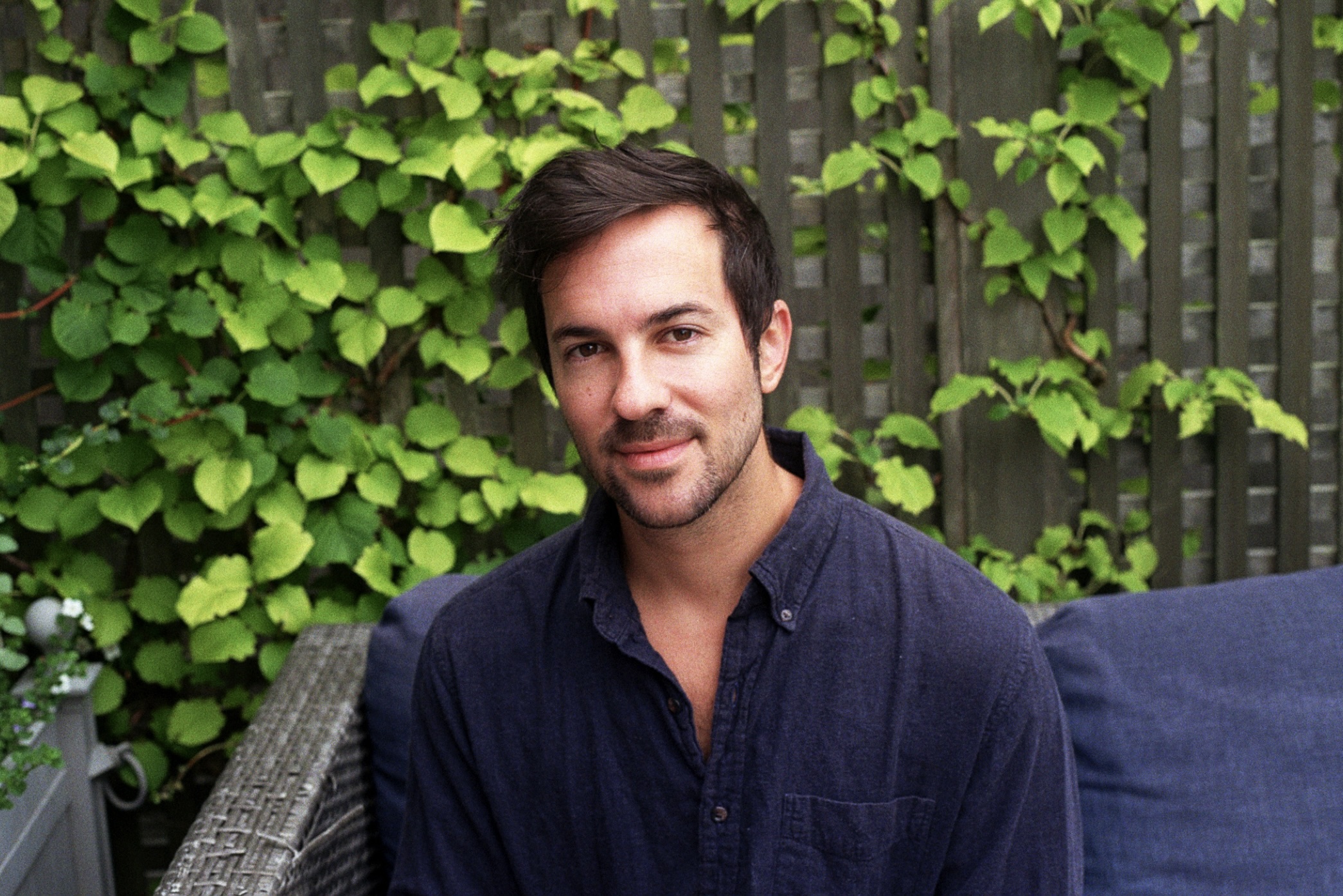
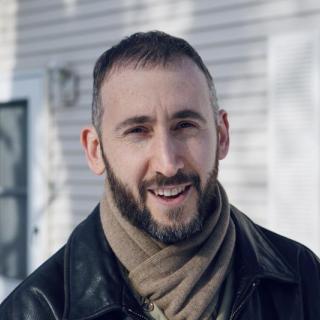

On today’s episode, Lawfare Managing Editor Tyler McBrien sits down with Joseph Kellner, an assistant professor of history at the University of Georgia to discuss his latest book, “The Spirit of Socialism: Culture and Belief at the Soviet Collapse,” which examines the millions of Soviet people who embarked on a “spirited and highly visible search for new meaning” during the dissolution of the U.S.S.R.
They discuss the questions of epistemic authority, of cultural identity, and of history's ultimate meaning that drove people to seek new spiritual meaning during this period, as well as the era’s many colorful characters, including Hare Krishnas, astrologers, doomsayers, and neo-Pagans who pushed bio-healing, folk baths, and other answers to these questions. They also talk about why, when a superpower declines, shared reality dissolves.
To receive ad-free podcasts, become a Lawfare Material Supporter at www.patreon.com/lawfare. You can also support Lawfare by making a one-time donation at https://givebutter.com/lawfare-institute.
Click the button below to view a transcript of this podcast. Please note that the transcript was auto-generated and may contain errors.
Transcript
[Intro]
Joseph Kellner: But
ultimately Putinism seems to present a clear answer to ‘where does truth
derive?’ Well, it is in the media. It's in the government. There's sort of a
single voice that has now been consolidated around the Putin government.
Tyler McBrien: It's
the Lawfare Podcast. I'm Tyler McBrien, managing editor of Lawfare,
with Joseph Kellner, an assistant professor of history at the University of
Georgia.
Joseph Kellner: The
sense of Russia's identity and of its place in time, this sort of takes the
crisis and says, yes, this is just a ripple, but in fact, this is the center of
the world. And so all those things really appeal to people. And appeal to
people not just for narrow political reasons, nationalist reasons, but because
it is something you can hang your hat on. It's some orientation in the dark.
[Main episode]
Tyler McBrien: Today
we're talking about Joseph's new book “The Spirit of Socialism: Culture and Belief
at the Soviet Collapse.”
So Joey, I want to start with some of the main arguments in
your book, especially that of the movement which you've termed the ‘seeking
phenomenon’ at the time of the Soviet collapse and transition.
Could you speak a bit about the main thrust of the book? And
also I'm really curious where the seeds of this idea came from for you.
Joseph Kellner: Sure,
I'll describe the book first and then can return to the origins of it.
The central, kind of, hook of the book is that around the time
of the Soviet collapse, there was a very very public, visible flourishing of
radical new worldviews and orientations, spiritual groups, apocalyptic sects,
alternative visions of science and history, that all came out of the woodwork
at once, and from a country that had been officially atheist and fairly subdued
in these regards.
And so all of a sudden people are amazed at where these people
came from and how all these ideas were fostered in the Soviet period
underground, as it were.
And so my book takes, starts with what I've called the seeking
phenomenon, this general really really frenetic search for new meaning and new
orientation in the early nineties in Russia.
And it asks, how did this happen? In the sense of why these
ideas, where did these people come from? And more importantly, why? Why at that
historical moment are there so many people engaged in this mass search for
meaning?
And part of the answer lies in the specifics of the 1990s in
Russia, which was a really extraordinary period of time, a crisis on a level
that I think most Americans fail to appreciate.
Not just a material crisis. So there was a material crisis,
there was a economic contraction on the scale of the Great Depression in this
country. Really dramatic drops in health outcomes and life expectancy. So all
the hallmarks of just a, an economic crisis.
But there's also a moral crisis alongside that. There's a
really sharp rise in violent crime in drug and alcohol abuse. Advertising is
plastered everywhere, on what had previously been fairly stately, if drab,
cities. Pornography is completely unregulated.
And so it's a really difficult time to raise kids. It's a
really troubling time on the moral level. And then all of that on the
background of what, five years ago, had been a very high-functioning
superpower.
A country that had won, you know, 20-plus Nobel prizes, that
had competed at the top levels of international sport. A country that had led
the world into space, had provided free education and housing and healthcare,
guaranteed employment to 300 million people.
And so the whiplash of a very short period of time from, say,
the mid-eighties to the early nineties, plus the economic crisis creates just a
disorientation on a level that, that I think is difficult to wrap our heads
around as Americans.
And it is the new orientations that people are looking for. All
of these things people are seeking. What they share is some kind of orientation
in the world where there is no sense of the past or the future, there's no
sense of who we are. And so people go seeking. And the seeking phenomenon grows
in that really particular crisis.
Tyler McBrien: Yeah.
I think that, I just want to jump in quickly and say that's one of the reasons
why I love the book is because of––I think to a lay reader who just hears about
the premise, there are a lot of counterintuitive things happening.
You know, I think for someone who's not as well-versed in Soviet
and post-Soviet history, there's this idea that maybe the end of the Soviet
Union would've been this great opening and a flourishing. But as you said, and
also, you know, the, just the, but the nature of the collapse and the speed at
which had happened created this disorientation and as you put it a few times,
this loss of the past and the future, that really comes through in the book.
I want to get to that second part of the question, though,
before we get into some of how this seeking phenomenon manifested in some of
these colorful characters and movements. But to go back to that, that second
part of where this idea came from for you personally?
Joseph Kellner: So
the origins of the book are kind of curious and very specific to Berkeley,
California, where I did my graduate work.
My academic supervisor was, at the time he was writing a book.
He was very deeply invested in religion and belief, and he was writing a book
that framed Bolshevism as a sort of apocalyptic sect that emerged at a similar
time of spiritual fervor in Russia leading up to the revolution.
And, you know, Lenin is the prophet and the revolution as a
sort of apocalypse. It's a very interesting book, very provocative book. I
wasn't sold on it, necessarily, because I had never thought about religion and
spirituality all that much just because of my upbringing. I, it was not really
on my radar.
So in Berkeley, there's a splinter of a splinter of the sixties
left called the Revolutionary Communist Party, USA. Of course. And they run a
bookstore and we were, they were hosting a talk by a North Korea apologist. And
I'm taking this in a strange direction.
I had never, I didn't know that those existed. I didn't know––I'd
never heard anyone sort of, giving me the North Korean line on things. And so I
went, and before this talk began, they played a video of their leader, who's a
guy named Bob Avakian.
And I don't remember what he was speaking on. He was standing
in front of a curtain, no background. And when he's began speaking in this
video, I recognized, first of all, that he was very gifted at it.
He spoke in sort of fully formed paragraphs, really rigorous
logic. He was funny and he was personable when he needed to be. He could usher
the crowd's anger really well. And I noticed that the crowd around me was
completely rapt. I mean, silent, inspired by this person.
And in this moment, it really struck me how plausible it was
that people, that masses of people move in mysterious ways. That belief, which
is really hard to quantify and to observe, really might be an inextricable part
of culture and of politics. Like I saw the makings of kind of a political sect
in the way that my supervisor was describing it. Not a successful one, but all
the same, I was really moved by this experience.
And I went the next day to my supervisor's office. I told him
about this experience, and then he immediately started talking about his
experience at the nineties in Russia and the spiritual fervor of that time, and
how many people there were claiming to be the second coming, and how many
people were claiming utopian solutions to the crisis of the period.
And so we sort of decided together that I would pursue it, I
would meet these people. I would try to get some understanding of the spiritual
element of the Soviet collapse. And so in that roundabout way, I became very
invested in spirituality, in radical ideas and worldviews as kind of an
important constituent part of history.
Tyler McBrien: Yeah,
it really pushes the boundaries of what many people, I believe, think of as a
dichotomy of science and faith, and also faith in politics and separating the,
these things.
But the book complicates these borders quite well. And it
almost, you know, you start to think where does religion end and politics
begin?
And all of these parallels with political theology. So I think
by way of opening up that conversation, I want to get to some of the case
studies that you lay out in the book structured around four case studies and a
lot of colorful characters in between. So, I just want to throw it open, you
know, what were some of the movements or characters that are really exemplary
of this seeking phenomenon that you're describing?
Joseph Kellner: Yeah,
you're absolutely right that the boundaries of faith and science in particular
get very blurred. And I think that's a product of having these people, having
grown up in a science state, a state that considered itself to be sort of the
forefront of rationality and planning.
And yet communism did require faith. And so you, upon
inspection you realize that defining either religion or science is virtually
impossible. And there's all kinds of creative recombination of these things.
And the seekers as I call them, they come to all kinds of interesting combinations.
These masses of people on the Soviet streets, in the metro stations, gathered
in parks, they're really an eclectic mix and that's one of the only qualities
that they shared.
The best catchall term is the esoteric. So they, these are
people who believe there's some truth in everything if only you look. These
truths can be put to practical everyday use, and so it, it serves to just seek and
seek and talk and read and keep finding new ideas. That's the spiritual climate
generally.
And within that, there are some dominant currents like you
suggest. And the book is a collection of case studies. I took up four currents
that rose above the rest in some way––not because they won some contest of
ideas, but together they capture or they relate to all the others.
So the first chapter is on astrology. Astrology was truly a
mass phenomenon, impossible to miss at this time. And the leaders tended to be
trained scientists. So right there, this mixture of, of science and faith.
The second chapter is on the Hare Krishna movement, which was
very successful, very visible at the time. And Russians’ memory is kind of the
shorthand for the movement, Hare Krishna were just the face of this phenomenon
for a lot of people.
The third chapter was about apocalyptic sects. And there was
one in particular that endured till 2015 when I was doing my research. They had
a leader who claimed to be Christ and they built a new Jerusalem, of a sort, in
Siberia. They migrated from the cities to Siberia. And I was able to go there
and live with them a while and write about their beliefs and their experience
of the collapse.
And then the final one, the most controversial, both at the
time and probably for its inclusion in the book, is this hugely popular and
radical revision of history called New Chronology. Bestselling books that
alleged, among other things, that the Mongol invasion never happened, that the
Old Testament was written after the New Testament. A total psychedelic
rewriting of world history that possibly millions of people came to believe.
I'm sure we'll return to New Chronology 'cause this is the chapter that I feel
like has garnered the most attention so far people seem the most interested in.
And it really is an extraordinary story, both the history he
lays out and why so many people came to believe it. So those are the four, four
chapters and from there they touch on all kinds of other currents that interact
with these.
Tyler McBrien: Yeah,
as you mentioned we'll definitely want to dive into that last chapter. Because
unfortunately I think readers are, or listeners rather, are getting a sense
that this was not a phenomenon that is necessarily isolated to this period of
the Soviet collapse. It may very well hold lessons for our moment and our
current environment.
But I guess by just digging in more of what united these
groups, the esoteric, what were some of the questions that animated all of
them, this search for meaning beyond that or what, you know, what were these
groups searching for?
Joseph Kellner: I
group the questions that they're asking into three categories, three baskets.
And I emphasize questions, because it really is less about what they find and
what they believe than what they're asking and what they feel is important to,
to know and understand about the world in this crisis. And here too, like you
suggest, this is where people start to see our own moment in the mirror.
The questions that guided this search were of authority, so
intellectual epistemic authority. Who can we believe, who can we trust? Where
does good information come from? And at the time there was basically a collapse
in faith in the government. All of, sort of, published history came to look
like whitewashed Soviet propaganda. People just didn't know where to look for
authority and so who should we believe? Where does truth derive?
The second is questions of identity, which in the Russian
context often takes a form of East versus West. Are we Westerners? Are we
Europeans? Is there something distinctly Eastern about us?
But more generally, what does it mean to be Russian? What is
this country which suddenly has, you know, at the time of the collapse, no
identity in the world? No national anthem, no sense of itself? It's just what
happened when the Soviet Union collapsed. You just end up with this sort of
rump country called Russian Federation. And so who are we? Questions of
identity.
And the last one is that all of these different currents
concern themselves with the shape and the direction of time. Where have we come
from? Where are we headed? What the Soviet Union had was a very clear sense of
time and its arc and the direction of history. And when that is fully
discredited, that, I think, is sort of the deepest measure of disorientation.
And so people are looking for some sense, some shape of time
that they can meaningfully affix their life too. Time is just a constant theme
in all of these different groups, and one that I probably focus on the most
because it's just a very provocative and interesting way to think about faith
and belief, as well as politics, history.
Tyler McBrien: Yeah,
that really brings forth the theme of the loss of both the past and the future.
That comes through really intensely.
I want to just trace the rest of the narrative here, at least
in Russia. What became of these, this movement or these movements? Many
listeners, when they think of the late nineties in Russia, they think of this
sort of rugged capitalism that really takes root, the oligarchs taking over,
and then eventually Putinism.
So, can you trace Putin's Russia back to this moment? In terms
of it, it––one led to the other, or is it more so a story of displacement and
Putinism starting to answer these questions for people, so they no longer
needed to participate in the seeking phenomenon?
Joseph Kellner: It's
much of the latter. And that, that's a very astute observation, because
Putinism really does have answers to these questions. And I'll return to that.
There's no straight line from the seeking phenomenon of the
early nineties to the present or to the Putin era, which really starts at the
immediate end of that decade. I think of it more as a consolidation, sort of, a
selection of ideas in circulation that consolidate into this new sort of state
ideology.
There's a really wonderful book called “Revolutionary Dreams”
by Richard Stites that's a history of the 1920s in the Soviet Union, which was
likewise a really intellectually vibrant, experimental time in Russian culture.
A lot of utopian visions of what communism was supposed to look like and what
the future held for Russia. Which, as Stites has it, doesn't get replaced by
Stalinism, but Stalinism makes its selections from the utopian visions on offer
and essentially distills them to a single official version. And still utopian,
still revolutionary, but repressive of everything else.
And I think a similar pattern you can see in the nineties. These
people, they're not repressed in the same way, but all of these movements
fizzle to a greater or lesser extent. I mean, Russians still love astrology. There’re
still Hare Krishna. I was able to talk to these people.
But ultimately, Putinism seems to present a clear answer to ‘where
does truth derive?’ Well, it is in the media, it's in the government. There's a
single voice that has now been consolidated around the Putin government. Identity:
we are a distinct civilization from the west, with the west playing a sort of
boogeyman in this long historical scope.
Russia carving out a special mission for itself in the world, basically
to preserve tradition and values and humanity where the West has discarded
them. This is all the Putin vision of Russian identity.
And then even on the level of sort of time and history's
direction, there is this neo-imperialism, or whatever you want to call it, that
Russia's greatness having been temporarily suppressed, is inevitably returning.
And so this ideology paired with really strong control of media, of textbooks,
has supplanted the kind of eclectic revolutionary dreaming of the 1990s.
Tyler McBrien: You
know, as you spoke about Putinism, it struck me that I guess the question I
wanted to ask is, do all successful political movements need to have.
Answers to these three buckets of questions. I'm thinking right
now and not to jump around too much, but a bit about Trumpism and the MAGA right
and an article from earlier this year, I think from Naomi Klein and Astra
Taylor, in which they sort of laid out this argument that, if I'm not
misreading it, that sort of, at least European fascism in the thirties and
forties gave some hopeful vision of the future, something of which they could
not locate in modern day Trumpism.
So setting aside whether or not that argument is compelling, do
all successful political movements need to have these features? In other words,
do they need to have some sort of millenarianism and, you know, identity and––yeah,
I guess how far down the road of political theory are you prepared to take this
kind of argument?
Joseph Kellner: I'll
start more safely and narrowly, because I'm not a political scientist. I
haven't––as soon as I, I pronounce a general theory, somebody will come up with
an obvious exception.
But no question that the current political formation in this
country, MAGA formation, responds to very similar questions.
So in terms of the epistemic crisis of knowledge in the current
day, it's no coincidence that conspiracy theory is a primary mode of discourse
in the United States right now. This was very much the case in the 1990s in
Russia. And there is a deep conspiratorial current within Putinism as well. Conspiracy
theory, to me, is a mark of this kind of breakdown of shared authority.
Identity crisis, I mean, is quite easy to find here. There's no
agreement on what America is, what America was, what it stands for. What we call
identity politics is just raging through every political conversation.
And so there's a very dramatic fight for what it is to be
American, and I think that the MAGA movement has a far clearer answer to that
than the center or the Democrats in this country. It is an interesting
exception or an interesting difference that Naomi Klein is right to point out
that the vision of the future is a lot less clear.
I would say that the primary current in––not just here, but
across the West right now, is a sort of reactionary nostalgia. There are very
few people who believe in the positive future, and I think what makes the 1930s
so fascinating is that, despite the economic crisis and despite the misery and
the collapse happening all over the West, there are many visions on offer for
the future, fascism and communism the most prominent.
But it is not the sense of hopelessness that seems to permeate
our politics today. The best idea we can come up with is a nostalgia, of a type
that there was a time when we were great and you just need to undo the various
cultural you know, perversions that have arisen since who knows when, the
fifties or sixties, the 1860s.
They never, that's not a clearly answered question. But there
is not a grand vision of the future. It's still a vision of time though, and
it's still an answer to this question of time. The answer is simply that, we
just need to go back.
Tyler McBrien: In
keeping with these themes of disorientation and going back in time, I want to
jump back to Anatoly Fomenko and ask you to elaborate on his work and why you
included it.
But I'm also really curious why you think this chapter in
particular of this extraordinary conspiracy theory and his work has really
resonated with people today in the present.
Joseph Kellner: Yeah,
I mean, the book––so the book hasn't been out long, but the few responses I've
had focus on Fomenko.
And it's not totally surprising. He's really an extraordinary
figure and his theory, his new chronology theory is really extraordinary. And I
will say right off the bat, it is not easy to summarize because it is––again,
the word I always come back to is sort of psychedelic. It is not internally
coherent.
But my best attempt––Flamenco postulates, and he claims this is
all based on hard science and astronomical observations. He's a mathematician,
I should say. He's trained as a mathematician, and in fact he's a very
accomplished world-renowned mathematician.
He posits that all of historical time can be broken into four
pieces: Pre-classical antiquity, the classical period, medieval period, and the
early modern period.
And if you cut these into four blocks and you shift the back
three forward, that is to say you take the classical, pre-classical period and
you just move it forward 1500 years, and you stack all them on top of each
other, remarkably, you find that our histories of these periods map onto each
other perfectly.
Which is to say he, he believes that history is actually only a
thousand years long. Everything we know about history happened in the last
thousand years, and we have mistakenly made copies. We've separated them in
time. We've confused, let's say, the Roman Empire with the Byzantine Empire.
Which I guess they were the same, but in fact they are the
same. Literally we have shifted Jerusalem and Troy and Rome to three different
cities, when in fact, historically, they're the same city.
There's all these ways that he sees similarities that he
assumes are the same.
Are you with me?,
Tyler McBrien: Yeah.
I was saying Listeners, if you're feeling disoriented, just, just wait.
Joseph Kellner: Yeah.
So hold on, I'll get you there. The central historical actor in Fomenko’s telling
is a forgotten empire called the Slavic-Turkic Horde, or The Great Empire,
which ruled basically all the known world between the 14th and 17th centuries.
And as I said at the beginning, he believes there was no Mongol
invasion. In fact, the Mongols were part of this Slavic-Turkic Horde. When
Marco Polo visited the magnificent Mongol capital, he was actually visiting
Yaroslav, a city on the Volga, which has been confused with Karakorum, and confused
with several other cities.
More generally, his history begins in the 10th century in Rome––which,
again, is the same city as Jerusalem and the same city as Troy. And the general
story of history is the ascent of this great empire, the Slavic-Turkic accord,
which lived in ethnic and religious harmony. Christian––I should say the
original world faith in this telling is Christianity.
And only in the 17th century does this formation start to split
up. Christianity splinters into Judaism and Hinduism and Islam. They're all
derived from Christianity. And by about the 17th century, his history gets back
in sync with our own before the 17th century. He basically makes total hash of
what we know of the past and rewrites it in this way.
Now the conspiracy element is that all of this history has been
obscured by the Romanovs, who usurped the throne of the Great Empire. And they
did this with German help.
And so there's a Western element here, Westerners who conspired
with the Romanovs to bury the history of the Great Empire and to divide and
conquer, to separate the Slavs from the Mongols, from the Turks, and sow
discord in order to gain power.
This theory garnered millions of readers in the 1990s. Fomenko was
all over the television. He was in every newspaper. And these books were the
centerpiece of bookstores through the early 1990s.
And so whether or not you follow me––and again, there is
something ultimately impossible to follow about this theory––it became an
orientation for a whole lot of Russians in the 1990s.
Tyler McBrien: Yeah, it
sort of evokes for me an almost Adam Curtis like element. And that's why I was
trying to sift through why this wouldn't be further destabilizing for people
rather than offering them some sort of stability.
Do you have a sense of that? Of why this wouldn't be, actually
cause more disorientation? Of, actually, everything you knew is collapsing and
then also you know, these concepts of history are actually also on shakier
ground than you thought.
What is it doing for people that I think, you know, really made
it a, a sensation in the nineties?
Joseph Kellner: It's
a great question because, for my rendition––and I should say, the books
themselves are not a whole lot clearer. There's, they're huge volumes. He––dozens
and dozens of books on different things, and they're not easy to read. And so
taken as texts out of context, it is hard to tell what they mean, exactly.
The most common answer, among anglophone scholars anyway, is
that it's just a nationalist parable, that there is this great Russian empire
that had been suppressed and––suppressed by the West.
I think that is not quite right. I think that oversimplifies
Fomenko. What really matters is that at this time––you know, your question is,
why didn't this disorient people further?
But the disorientation was so deep and so total already that Fomenko
is entering a context where people have no sense of their past or their future.
The 1980s, so the Gorbachev period of glasnost and perestroika,
the essential character of that period is that, was of revelations about the
Soviet past. So everything that had been suppressed––mostly the crimes of
Stalinism, the great purges, the enormous human cost of collectivization, major
historic crimes that had been swept under the rug, to the extent that people
had no confidence in historians to narrate the past.
In 1989, I want to say, they canceled the history entrance exam
completely. So there just was not, for high school students an entrance exam to
take, because history had been rewritten so dramatically in the previous years.
Teachers were writing the newspapers outraged because they'd been teaching lies
to their students all this time.
And so nobody had any sense of what the Soviet past actually
was. It had all been trashed.
And looking forward, te country is in such a deep crisis. In a
crisis that we can now look back on as finite, but there's really no sense, at
the time, of how deep it can go. There's no natural bottom to a crisis like
that.
And so it's not a matter of rewiring or rethinking history. It's
that people are prepared to believe anything, to an extent. And Fomenko is
offering something coherent and some vision of the past that Russians can take
pride in. There was this great empire. It was tolerant, it was peaceful.
There's some resemblance to the Soviet Union, but that's a separate line of
argument.
And to the three questions I ask, Fomenko is an authority
people trusted. He is a really accomplished mathematician speaking in the
language of math, which is completely impenetrable to you and me. And so you
kind of take on faith that this guy must know what he's talking about if he is
so confident, and he has so many numbers and formulas behind what he's saying.
And then the sense of Russia's identity and of its place in
time, this sort of takes the crisis and says, yes, this is just a ripple, but
in fact this is the center of the world.
And so all those things really appeal to people. And appeal to
people, not just for narrow political reasons, nationalist reasons, but because
it is something you can hang your hat on. It’s some orientation in the dark.
Tyler McBrien: So
we've gone to some pretty heady places. Or psychedelic as you put it in terms
of Fomenko in this conversation.
So I want to ground us back into the present day as we near the
end of the conversation. And I want to read just a quick line from a piece that
you adapted your book from in Jacobin magazine.
You sort of spin up this hypothetical, toward the end, where
you write “How easy it is to imagine that in the near future, a patriotic shit
stir might start feeding key documents of early American history, royal charters,
Aztec codices, plantation records, ship manifests, Puritan sermons, into their
preferred anti-woke LLM toward a revisionist history of this country.”
And I gotta say, it is extremely easy to imagine that for me,
at least it was for me. And I'd be, would be surprised if someone is not
already doing that. So in, in thinking about this history and this period and
the lessons that one can draw from it, how should we be thinking about the
current moment in the U.S.? What other than, you know, this kind of
hypothetical are you looking for in terms of where this is heading?
And the second part of this question is, what can political
movements learn to push back against periods of disorientation and
misinformation and conspiracy theories? What can we do, if that's not too hard
of a question?
Joseph Kellner: Well,
I'll postpone my answer. I'll have to think about what we can do. 'Cause it is
a tough one.
It is easy to imagine. I'm sure people are doing that right
now. And I think the other key part of that, is that I'm sure people will
believe it. Because people believe what AI is telling them. We don't have
sufficient critical reading of sources on the internet. I mean, we haven't for
a very long time.
And so the parallels are very easy to draw. We definitely have
a crisis of intellectual authority. Like I said, we have conspiracy theory rife
in the political discourse. We have no sense of our past, our future, and so
forth. The crisis is here, in some respects.
What's missing, for now, I think, is a true economic crisis. I
mean, all of the distorting effects in our politics are helped along by vast
inequality. No question about that. There are already huge numbers of people in
an economic crisis, but a true economic crisis, which, you know, is always
around the corner, we're always expecting––debt ceiling crisis, AI bubble
bursting, fossil fuel transition, all these things threaten the economic order
as it is, I would expect to bring really dramatic transformation. And maybe
that's not the boldest prediction, but I think the parallels with Russia in the
1990s are definitely there.
How do we push back? How do we orient ourselves? How do we
establish––and I think the first category of intellectual authority, how do we
establish some kind of shared reference points in this country? Well, so the
first thing I'll say is––and then this is something I take comfort in and I try
to convey to my students, is that nobody can tell the future. And historians,
least of all.
It is very easy to draw trend lines downward from here. It is
very easy to throw up parallels with the fascist turn in the 1930s. That is
easy to do and it's a whole cottage industry.
But history is fundamentally unpredictable. There is no saying
what happens next, and it's wholly plausible and with plenty of historical
precedent that what looks like completely unstoppable drift to the right or
towards authoritarianism can fracture and splinter.
And so I'm not hopeless, even if I don't have a clear vision of
what the future ought to look like. I think that we have all of the crises of
the Russian 1990s minus maybe the economic, and getting on the same page
requires, at a minimum, a very different relationship to the internet. The
internet has such an atomizing effect on our public square or what had been a
public square.
And so it may be that we need a crisis on the internet, which I
think is brewing. I mean, I think that we have a system where people are
actually coming to really resent the internet titans and actively looking for
alternatives to having our information provided to us by, you know, algorithms,
by one major tech company or another.
And so that formation isn't going to last forever. I don't know
what comes after it, obviously, but I would like to think that it's a
constituent part of our, of the problem. And people are actually––and I'm
basing this largely on students, people assume that students actually want to
be on the internet and want to be using AI for their work and want to be on
their phones, and it's just not the case.
There is a major backlash against the internet, and I put a lot
of hope in that. I put a lot of hope in a reaction to the atomizing and
disorienting effects of the internet.
But I don't have a program for you, a political program.
Tyler McBrien: Well,
if nothing else, maybe this conversation will once and for all put an end to
the teleological view of history.
But short of that, I just want to thank you for really
fascinating if at times unsettling, perhaps conversation about a wonderful
book. The book is called “The Spirit of Socialism: Culture and Belief at the
Soviet Collapse.” Joey Kellner, thank you so much for joining me.
Joseph Kellner: Thank
you so much, Tyler.
Tyler McBrien: The Lawfare
Podcast is produced in cooperation with the Brookings Institution. You can
get ad-free versions of this and other Lawfare podcasts by becoming a Lawfare
material supporter at our website, lawfaremedia.org/support. You'll also get
access to special events and other content available only to our supporters.
Please rate and review us where we get your podcasts. Look out
for other shows, including Rational Security, Allies, The
Aftermath, and Escalation, our latest Lawfare Presents
podcast series about the war in Ukraine. Check out our written work at lawfaremedia.org.
The podcast is edited by Jen Patja. Our theme song is from ALIBI
Music. As always, thanks for listening.