Lawfare Daily: The End of New START? With John Drennan and Matthew Sharpe


New START, the last bilateral nuclear arms control treaty between the United States and Russia, will expire in February 2026 if Washington and Moscow do not reach an understanding on its extension—as they have signaled they are interested to do. What would the end of New START mean for U.S.-Russia relations and the arms control architecture that had for decades contributed to stability among great powers?
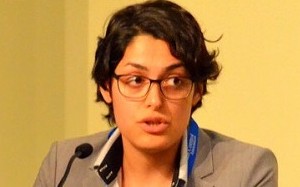
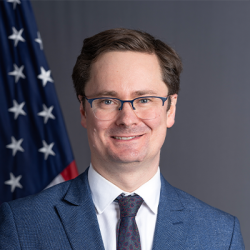
Lawfare Public Service Fellow Ariane Tabatabai sits down with John Drennan, Robert A. Belfer International Affairs Fellow in European Security, at the Council on Foreign Relations, and Matthew Sharpe, Fellow at MIT’s Center for Nuclear Security Policy, to discuss what New START is, the implications of its expiration, and where the arms control regime might go from here.
For further reading, see:
- “Putin’s Nuclear Offer: How to Navigate a New START Extension,” by John Drennan and Erin D. Dumbacher, Council on Foreign Relations
- “No New START: Renewing the U.S.-Russian Deal Won’t Solve Today’s Nuclear Dilemmas,” by Eric S. Edelman and Franklin C. Miller, Foreign Affairs
- “2024 Report to Congress on Implementation of the New START Treaty,” from the Bureau of Arms Control, Deterrence, and Stability, U.S. Department of State
To receive ad-free podcasts, become a Lawfare Material Supporter at www.patreon.com/lawfare. You can also support Lawfare by making a one-time donation at https://givebutter.com/lawfare-institute.
Click the button below to view a transcript of this podcast. Please note that the transcript was auto-generated and may contain errors.
Transcript
[Intro]
John Drennan: The U.S.
government has pointed, both in the context of New Start, the questions around,
you know, how close Russia is to the limit? Have they gone over?
And so I think if the U.S. is considering accepting this, it
has to come with some sort of counteroffer that includes, to the extent
possible, a way to kind of verify what the Russians are saying around adherence
to the central limits
Ariane Tabatabai: It
is the Lawfare Podcast, I'm Ariane Tabatabai, public service fellow at Lawfare
with John Drennan, Robert A. Belfer international affairs fellow in European
Security at the Council on Foreign Relations, and Matthew Sharpe, fellow at MIT
Center for Nuclear Security Policy.
Matthew Sharpe: I
would point out that the question that's on the table here, right, has like all
the makings of great television. We've got like a deadline, good guys and bad
guys, weighty decisions that are both important in security terms, but also
that can be made by the president alone.
And so, I do feel like an element that maybe shouldn't be part
of the discussion, but might well anyway, will be just how does this narrative
play out publicly and domestically, in terms of the ability of the president to
sort of resolve a crisis in a very visible way?
[Main episode]
Ariane Tabatabai:
Today we're talking about New Start, the last standing bilateral U.S.-Russia
Nuclear Arms Control treaty, which is set to expire in February.
Okay. We're recording this on Tuesday, November 25th. And John,
I'd like to start with you. Can you tell us a little bit about what folks
should know about New Start and outline some of its key provisions? What does
the treaty do?
John Drennan: Yeah,
absolutely. And so New Start is the last remaining strategic nuclear arms
control treaty between the United States and Russia.
Its contents focus on intercontinental range offensive nuclear
weapons. So what we would call, you know, traditionally the triad:
intercontinental ballistic missiles launched from silos, submarine-launched
ballistic missiles, and nuclear-armed heavy bombers.
And so I would say kind of the two big picture items for
understanding New Start are, on the one hand, it is the lowest––it established the
lowest negotiated cap on systems and warheads, the central limits of the
treaty.
But those are its three categories of aggregate limits. And so
they don't actually dictate for structure, which gives both the U.S. and Russia
the flexibility to design how they're deploying their ICBMs, SBMs and heavy
bombers in a way that makes sense for their own national programs.
So that's the one big bucket. The other is that when it was
functioning properly, and I'm sure we'll get into this later, New Start had a
very intrusive-by-design verification regime.
So this included things like onsite inspections, various types
of data exchanges launch notifications for the systems covered by the treaty,
and a mutual commitment not to interfere with each other's national technical
means of verifications.
So that's basically things like not interfering with satellites
that are verifying the different systems covered by the treaty for either side.
It also created a bilateral consultative commission, the BCC, which allowed
both sides to raise implementation-related issues in a structured way.
And importantly, this also included things like resolving any
questions that arose from the introduction by either side of any type of new
strategic offensive system. And so I'll go over the quick timeline in a second.
But this was important because the treaty now has been around for 15 years and
this mechanism allows each side to raise any concerns about systems that.
Have been developed since the treaty was signed. And so, you
know, overall the treaty doesn't cover every weapon in either side's arsenal,
but it has provided a significant––and verifiable, which is the really
important part––break on strategic offensive systems. And this in turn has
helped inject some transparency, if not predictability, in the bilateral
nuclear relationship.
And so just very briefly, a kind of quick overview of the
timeline. It was signed in April 2010 between then-U.S. President Barack Obama
and Russian President Dimitri Medvedev. It replaced or superseded the treaties
that came before it, it then entered force in February, 2011 after a pretty
lengthy ratification process in the U.S. Senate.
And originally it was designed to last for 10 years, with the
option to extend once for five years by mutual agreement, which both sides
executed in 2021, leading the last five-year timer basically to start in
February of that year. Which means we're looking at a looming deadline of the
end of New Start in February, 2026.
So about two months from now. And I'm sure we can discuss more
of this, but I'd note that the verification piece of the treaty has faced more
difficulty than the central limits piece.
And––though that actually started with the COVID-19 pandemic. Inspections
were paused in early 2020 because of the pandemic, but then Russia refused to
start them after it invaded Ukraine, the full-scale, it's full-scale invasion
of Ukraine in February, 2022. And then Russia announced it was fully suspending
the implementation of the treaty in February, 2023, while still maintaining
compliance with central limits. So basically refusing to do any of the
verification-related parts of the treaty while still maintaining those central
limits.
And so that brings us to today. Putin at the end of September
announced that he was willing to do a one year basically political agreement to
extend just the central limits piece of the treaty. And we can get into this
more later too, but as far as I know, there hasn't been a firm answer from the
White House on this.
You know, the president has said that it would be bad if New Star
goes away. It has, the nuclear piece has surfaced as one of the points in the
28-point piece proposal that's been floating around the past week, the peace
proposal for Ukraine. But that you know, I think as we've seen over the past
week is far from agreed yet.
Ariane Tabatabai:
Yeah, that's a really great kind of overview of the provisions and the timeline
of events Matthew, can I now turn to you to kind of put some meat on this
timeline that John painted for us? And tell us a little bit about the
international political and arms control context in which New Start was
developed and signed in 2010, as he mentioned, under President Obama's
administration.
And then one thing that I don't know if John mentioned is that,
you know, the treaty was signed in Prague. President Obama also famously gave a
pretty important speech on nuclear weapons there. So can you kind of, unpack
all of this a little bit and talk to us about what that context looked like
which will then help us kind of talk a little bit about how that context is
different today in a bit.
Matthew Sharpe: Yeah,
no, of course. Thanks Ari. I, you know, the timing, as John laid out, is, I
think, hugely significant. You know, the Prague speech that you mentioned is in
the first year of the Obama administration. And remember that we're kind of
just on the tail end of the George W. Bush administration at that point.
Widely perceived, I think by the international community and by
the arms control community in particular as having turned away from, or walked
away from in some cases, a lot of these structures. In, in instances both
broad, like in the case of the invasion of Iraq, but also more specific to the
nuclear realm with respect to the ABM treaty there was this sense that the
United States was not playing the same role that it had through the Cold War
and then through the nineties.
And so the Obama administration takes office, the Prague speech
and a number of other efforts are early, trying to kind of turn the page on
that dynamic and to express that, you know, we're coming back to a lot of these
structures and the April, in April, 2010 when we sign new start, it's this
incredible month in, in the world of nuclear issues where in the space of a
couple of weeks, you sign New Start.
The Nuclear Security Summit is convened in Washington, the
first of those summits. A real elevation of the profile of that issue at the
leader level. And the NPR is rolled out with a new negative security assurance
that makes reference to nuclear proliferation commitments and that you're
familiar with. And all of that, not entirely by accident, then rolls right in a
couple of weeks later to the 2010 NPT Review conference.
And so I think there's this enormous building in that year of,
you know, this is not just a speech that was given in Prague, but there's a lot
of action behind it. And New Start is absolutely a part of that.
So the NPT review conference in 2010, that ultimately becomes,
the only of those five years, every five years review conferences in the past
25 years, that's managed to reach consensus.
And so there, it's a complicated structure. There's a lot of
inputs. And so it's hard to say you know, did New Start get––how much credit
does New Start get for the success ultimately in 2010 of those parties of the
treaty reaching consensus and an action plan and sort of a way forward?
But you can look back and really see that the U.S. clearly had,
at the time, a view that this was enormously beneficial to our NPT diplomacy.
You see a lot of emphasis in U.S. statements placed on New Start. And the
language that we're using is really about, you know, how does this get folded
into our Article Six requirements related to disarmament under the NPT? And
what kind of contribution are we making to the, what President Obama had
announced as an objective of reaching a world without nuclear weapons, but even
sort of very…
Now, what would seem like very unusual joint bilateral
statements with the U.S. and Russia to the NPT parties talking about New Start,
it's hard to imagine that today. And you know, the US does a site event on New Start
at that review conference. And so I think a lot of eggs in the basket of.
This is our contribution. This is how we're trying to, like,
anchor ourselves back in that multilateral nonproliferation in arms control
community.
And so in that sense, just hugely impactful.
Ariane Tabatabai:
John, can you talk a little bit about what New Start meant for the broader US
Russia relationship at the time when it was signed?
You know, the following decade, of course, ends up being fairly
complicated, right, with the invasion of Ukraine. And then as you mentioned we,
you know, Russia announced that it was suspending its implementation of the
treaty. And there were the complications with COVID. Can you unpack some of
that a little bit so that we can kind of bring it to today?
How has that relationship evolved over the past decade and a
half?
John Drennan: Yeah,
sure. So the Obama era, as we'll remember, was the era of the reset in U.S.-Russia
relations. Even though I think there were some troubling signs about downturn
in, you know, what the future would look like, but, you know, fast forward, New
Start remains in effect.
Both sides are adhering to it. And there's, you know,
occasionally some grumblings, but I think both sides kind of agreed that this
was an important piece of helping to maintain some degree of stability in the
bilateral relationship. But then I mentioned at the top, the, once we get to
2021, we're looking at the decision to extend or not New Start for five years.
And both sides agreed that this was an important treaty for the
relationship. And so, you know, at this time, we're––the, around the time of
making this decision, inspections had remained paused.
And a big factor, like I said, was the pandemic itself. 'Cause
that prevented people from traveling, you know, you couldn't do anything in
person. Both the U.S. and Russia had different approaches to managing the
pandemic. But they're still maintaining data exchanges, launch notifications,
that type of thing, so remaining in compliance with those pieces. But I would
say that, like you mentioned already, the kind of the major breakdown of
everything for the treaty––minus the central limits piece, which both sides
have maintained––was Russia's full-scale invasion of Ukraine. Which as we know,
Russia launched in February, 2022.
That summer, the U.S. tried to restart inspections because the
pandemic had lessened to a point where I think travel was becoming possible
again. Russia said no pretty firmly. Basically it said that it would, this
would provide restarting inspections, will provide the U.S. with quote unquote
unilateral advantage because as part of the U.S. response to the, Russia's
invasion.
They clamped down on granting Russians’ visas so there would be
issues with flight crews getting access to the U.S. You know, there were
problems with overflight permissions over U.S. allies because a lot of European
airspace had been closed to Russian flights. So that type of thing was the
excuse for no inspections.
And then, you know, we're sort of having this crisis in the
relationship that's getting worse since the invasion. And in November 2022,
there was supposed to be a BCC meeting, the Bilateral Consultative Commission,
which Russia decided to quote unquote “postpone.” And in that, it blamed the U.S.
for not taking Russian priorities into account.
They said explicitly that arms control wasn't immune from what
was going on in Ukraine. So kind of really explicitly tying New Start to its
war. And so if I can just briefly flag some broader context here, as I'm sure
everyone remembers, this was a time when nuclear issues were very much in the
news.
At this point in the war, Russia had failed to capture Kyiv in
three days, like many speculated. It had refocused to the Donbas in Eastern
Ukraine. But things weren't, you know, going as quickly and as smoothly as I
think the Russians themselves expected. And so by late September, we're at a
point where Russia has to partially mobilize, you know. It's facing Ukrainian
forces on the battlefield that are regaining some initiative.
So feeling like it's not steamrolling like it like Russia was
expecting to. And then around this time, Russia started to signal that they
were considering nuclear strikes against Ukraine. And this was taken seriously
enough by the U.S. government that the then National Security Advisor, Jake
Sullivan, said publicly that Russia would face catastrophic consequences if it
used nuclear weapons.
So I think there was some concern that this was more than just
an empty threat. And then into October, just ahead of the planned BCC, I don't
know if you remember, but the Russians started talking about the potential for
Ukraine to use a dirty bomb, which was a bit you know, sort of seems to come
out of left field.
But there was a lot of speculation that the Russians were using
this as pretext to use their own respond preemptively, something like that. So.
The relationship's already in crisis. And then it gets particularly tense as it
becomes possible for the verification side of New Start to kind of restart.
And so then we get into 2023, and the State Department released
its annual implementation report to Congress, which kind of details all of the
aspects of the treaty that Congress needs to know. And so in this, they note
that they can't actually certify Russian compliance.
They didn't say explicitly that Russia's not in compliance, but
that they can't certify compliance because of these issues with inspections,
the lack of BCC.
And then in February of that year, 2023, Putin makes this
announcement that Russia is suspending implementation of the treaty fully. So
no more participation in any of the verification measures, no more data
exchanges, that type of thing. You know, importantly, said that Russia would
maintain central limits, but it's just effectively just a political promise at
this point.
And so ultimately the war obviously becomes the all-consuming
issue in the bilateral relationship. So I think it's expected that it would
have follow-on effects on arms control. The U.S. approach historically has been
to try to compartmentalize arms control from these broader issues in the U.S.-Russia
relationship.
But like I said, the Russians kind of lashed these two together
in Ukraine. You know, so when Putin was talking about the decision to suspend,
he pointed specifically to the U.S. and its allies trying to inflict a quote
unquote, strategic defeat on Russia. He claimed that the U.S. was behind
Ukrainian probing strikes on Russian facilities that were linked to a strategic
deterrent.
So there's these accusations coming out that the U.S. is
affecting the treaty through the war from Russia. But then at the same time,
you know, you use this announcement to suspend implementation, to reiterate
some longer standing grievances, which Matthew mentioned, like reiterating
claims that the U.S. doesn't respect Russian concerns about missile defense.
He brought up NATO, nuclear sharing, brought up claims that the
U.S. was not compliant with certain counting rules and that type of thing. So,
so kind of put another way, the Russian government kind of had some concerns
predating the war, but the treaty held. But then the war kind of is critical
for understanding how those existing issues became magnified and then how new
ones tied to the battlefield specifically escalated to the point where Russia decides
to no longer implement most of the treaty.
Ariane Tabatabai: So
we talked at the beginning about Putin offering an extension of the treaty.
President Trump has sort of said that, you know, this is a treaty we can't
afford to see end. So, but as I understand it, the treaty can't technically be
extended.
Right, John?
John Drennan: Yeah,
that's right.
Ariane Tabatabai: So
what are we talking about here?
John Drennan: Yeah,
so basically what Putin is offering is a one-year political agreement
effectively between the U.S. and Russia that both sides will continue to abide
by the central limits specifically. So the caps on deployed warhead systems,
launchers, all of the kind of core limits within the treaty. And then absent
anything, as I understand it, absent the verification piece of the treaty. And
that would start from February 5th, 2026 when the treaty expires.
Ariane Tabatabai:
Okay, so let's dive into this piece of it a little bit more. John, I'll turn to
you first, but Matthew, you should feel free to jump in here too.
Let's talk about the pros and cons of this approach that is
sort of on the table, I guess. And let's start with the cons. If you were
advising the administration against an extension––and we will link to a piece
in the show notes later on that kind of lays out some of this—what are the
reasons why you would advise against it?
What are the cons, here, of taking Putin's offer?
John Drennan: Yeah.
Some of the cons—so, so I think it accepts the Russian claim that arms controls
linked to Ukraine. Which, historically, like I said, the U.S. has tried to keep
separate, you know. Maintaining the central limits. As far as I understand,
there's not that much that can actually happen in one year.
And so, you know, we can kind of talk about the Russian reason
for proposing this now, but I think, you know, adding a one-year limit
basically would just kick the can down the road. And we would be facing this
problem again. You know, we could blink and we'll be back here in November 2026
talking about the same set of issues.
So you know, what's achievable in terms of what the US can do
with its own arsenal is, there's not that much that can happen in one year.
Matthew Sharpe: Ari,
I guess I, I would add on the kind of cons list, I'd add to John's point, and
he mentioned this 2025 State Department report about Russia's compliance, which
makes the point really clearly that, look, we don't think they're kind of
flirting with the central limits, maybe bopping a little bit above them but not
in a way that's too significant, but underscores pretty forcefully that because
of the suspension of all of those verification tools and confidence-building
tools that John walked through, we're not able to track that number with the
fidelity that we would want. And so I do think there's a real element here.
If the proposal, and again, this is a sort of once, you know,
first blush, first encounter proposal from the Russians, that does not mean
that the answer is yes or no, right? There's a lot of room to negotiate and
evolve. But if what was on the table was, we're going to agree to separately
maintain for a year our adherence to the central limits and nothing else, then
I think in effect what you're asking of us, of the United States, is ‘just
trust us.’
Like, ‘we're going to abide by this limit. We're not going to
give you the tools that you need to see it happening, which are very central
to, to New Start and to arms control generally. So just take our word for it.’
And I think it's really important to note that Russia has a
long history of failing to earn that trust in implementation of arms control.
And so the verification pieces are there for really important reasons. And so I
think a con, as articulated by Putin, of this proposal would be that you're
left without the tools to have confidence that you're getting what was on
offer.
The other piece that I would add in, and then give it back to
John, was just that there's a question of credit here, and a sense of just how
normal are things in this nuclear-armed control space.
You know, in the September announcement from Putin, he
explicitly calls out the kind of relevance to the NPT of whether the Russian Federation
and the United States move forward with New Start or let it go by the wayside?
I think you see the Chinese also very active out there, looking to push
responsibility in that disarmament and NPT context onto the U.S. and Russia and
away from themselves in the context of a really significant nuclear buildup
that we can talk more about.
And so I think the question of who is perceived in that
international community as being a champion for norms and a champion for the
institutions that have been there for a long time and who is seen as the
obstacle to moving forward is clearly important to Russia and it's clearly
important to China.
And I would argue it should be important for us as well. And so
there's a lot of nuance there about how does this actually move forward. And
how do we position ourselves to make sure that we're prevailing in that
diplomatic encounter, that has implications well beyond the bilateral
relationship.
Ariane Tabatabai:
Yeah. I want to come back to the question of China and then the broader norms
in a second. John, is there anything else you wanna add on the cons piece here?
John Drennan: Just to
underscore what Matthew said about the, kind of, ‘just trust us’ piece. You
know, I think the U.S. government has pointed, both in the context of New
Start, as Matthew mentioned, questions around, you know, how close Russia is to
the limit, have they gone over? But this has come up in other examples of arms
control treaties, most notably the U.S. withdrawal from the INF Treaty.
And so I think, you know, if the U.S. is considering accepting
this, it has to come with some sort of counteroffer that includes, to the
extent possible, a way to kind of verify what the Russians are saying around
adherence to these central limits.
Ariane Tabatabai:
Okay. Let's now turn to the pros. Matthew, let me maybe start with you. Again,
if you were kind of advising the administration right now, why, what are some
reasons why you would recommend taking Putin's offer?
Matthew Sharpe: I
guess I'll––let me nudge your question just slightly, Ari. I think my––I would
in the end come down on the side of, we should engage in this offer. And we
should try to say yes to something that preserves at least elements of New Start
for a little bit longer.
But there would be some pretty important caveats there, as
opposed to just a straight yes to the offer on the table now. And I would kind
of chart those out in a couple of dimensions.
The first, and I think the easiest, is the multilateral one
that I mentioned before. I think like, like was the case in 2010. The end of
New start in February will be just a couple of months before the next NPT
review conference in April. And I think there's a lot of positivity that comes
from something being pushed forward, not letting it just fall away, that then
spills over in helpful ways in that NPT lane.
And conversely, if it evaporates and is gone in February,
that's really not a helpful input into that conference. And so I think people
can debate about how much weight to attach to those multilateral objectives.
But I think it's clear that there are some U.S. objectives in those venues, and
that this decision has a lot of bearing on you know, one important encounter in
that lane.
So that's the first dimension where I think you come down with
a, ‘this is positive.’ And we can kind of argue about just how positive.
I think the second one for me would be the bilateral, and the
sort of bilateral strategic relationship with Russia specifically. And there I
think, you know, as John said, it's probably the limits themselves may be kind
of low cost and also low value, in the sense that neither of us is poised to
jump dramatically over those limits in the next year or two as I understand it.
But if there is an opportunity here to claw back some of those
elements either on the verification side, I think inspections are probably a
step too far, but data exchanges and notifications, you know, these things have
value. The channel of the BCC, just as a forum for dialogue and better
understanding, I think that has a lot of value.
If you can get some of those things swept in there and the
limits aren't actually costing you much on the timescales involved, then that
feels, for me, again, like a slight advantage to finding a way to extend this
with those important caveats.
And then I think the third and maybe the most challenging is,
what does it mean with respect to our engagement with China? And so you said
we'll come back to that at greater detail. But here I think it, it really is
important that we not be perceived as sort of letting China off the hook in
arms control discussion.
You know, they have a really important role here that we've
been trying to kind of rope them into now for multiple administrations. And
they need to realize that responsibility. And so, I think there are ways that
you can do that in the process of extending a bilateral treaty or at least
extending implementation of some elements of it, but there's a lot of messaging
that needs to come around that to make it clear that they're not being kind of
written out of the arms control dialogue in a way that I think that they would
very much welcome. And so I think that messaging needs to be part of whatever
happens in February.
Maybe last and least substantive but maybe also most relevant,
I would point out that here, the question that's on the table here, right, has all
the makings of great television.
We've got a deadline. We've got good guys and bad guys. You
know, weighty decisions that are both important in security terms, but also
that can be made by the president alone.
And so, I do feel like an element that maybe shouldn't be part
of the discussion, but might well anyway, will be just how does this narrative
play out publicly and domestically in terms of the ability of the president to
sort of resolve a crisis in a very visible way?
Ariane Tabatabai:
Yeah. That's great.
I also want to come back to that in a second, and the kind of
domestic obstacles and challenges that we've had over the past, kind of couple
of decades, but especially decade in terms of, you know, pushing these kinds of
initiatives through the Congress. Mostly in the non-pro space, but I think it's
relevant here too.
John, Matthew combines the question that I posed with the
question I was going to ask, which is you know, both talking about the pros of
taking Putin's offer, but also what would you advise the administration to
actually do? Can you answer both of those questions?
John Drennan: Yeah,
absolutely. I, you know, I'm kind of with Matthew on this one.
I think it is a––it would be a yes, but it has to come with
some sort of counteroffer or dialogue to the extent that, you know, we have
time left to actually have any conversations. And I think there are some low
hanging fruits on the inspection side in terms of data exchanges Matthew
mentioned.
And I think, you know, you could call for convening a BCC or
even, you know, sort of a new, when––we can rebrand it if necessary, but a new
strategic stability dialogue where there's a substantive piece, where the sides
talk about what the main issues are for any sort of future follow-on treaty or
negotiation process, but then also come up with a timeline to actually execute
those discussions.
And so I think there are some things that the U.S. could push
for that if the Russians end up showing up for that would suggest there's a bit
of seriousness behind the, just the one-year extension proposal otherwise. You
know, it's just a year basically, and there's no plans for what comes after it.
Ariane Tabatabai: And
John, let me pause here for a second because something else that's been in the
news recently, in addition to the proposal to end the Ukraine conflict, is new
Russian systems that had been announced in the past, but they're kind of back
in the news.
Can you talk a little bit about how these systems would fit
into your thinking here, and maybe just like top lines of what should people
know about the systems that they keep reading about in the news?
John Drennan: Yeah,
absolutely. So the ones we've seen in the past few weeks are the Burevestnik
and the Poseidon. The Russians announced two successful tests of the delivery
vehicles.
Not, as far as I understand, not actual nuclear armed tests.
And these are two of six systems that Putin announced back in 2018. He said
specifically that they were a response to the U.S. not scaling back its missile
defense plans, which Matthew mentioned already. But this is part of kind of a
broader story in the, the falling apart of the U.S.-Russia, bilateral arms
control architecture in general. And this goes back to the Anti-Ballistic
Missile Treaty, the U.S. withdrawal from it in 2001. And so some of these
systems very clearly fall under New Start’s counting rules.
For example, there's a new Russian ICBM, the Sarmat. There's a hypersonic
glide vehicle that they've been developing called the Avangard. But the Burevestnik
and the Poseidon specifically don't quite meet or match any existing category
under New Start. So Burevestnik is a nuclear power, nuclear-capable cruise
missile.
Putin has said––and you know, we should take that with a grain
of salt––that it can, it's capable of flying with its nuclear reactor forever,
and then can kind of drop out and strike targets.
And then the Poseidon is allegedly a nuclear-powered drone
torpedo hybrid that would be used for targeting cities, coastal infrastructure
you know, large targets like aircraft carriers. And it would basicallym from
how it's been described, create a massive radioactive tsunami.
And so these very clearly are not like anything we've
traditionally thought of in our standing nuclear triad. And so I think they, it
factors into my thinking in that they demonstrate how much has changed since
New Start was initially negotiated.
And so having mechanisms like the BCC and the treaty to discuss
what these systems are, exchange information about them to the extent possible,
talk about them both in relation to New Start and in relation to a New Start follow-on,
that's where having kind of this touch point is important and necessary.
Ariane Tabatabai: I'm
going to start to zoom out a little bit and kind of spend the rest of the
conversation on the future of arms control, and how we should think about it.
You know, John mentioned how much has changed in the bilateral relationship in
terms of capabilities. Matthew, you brought up the case of China. So I'm gonna
start to bring all of this together.
Matthew, let me turn to you first here. Should New Start
expire, we won't have much left standing by way of the arms control
architecture, if anything, whose foundations were laid out during the Cold War.
So I guess one question is why can't we do arms control in the
way we were able to do before? What are some of the obstacles that we face, I
guess in kind of two broad buckets of domestic and geopolitical?
And what should happen now? What are some key things that we
should be thinking about in terms of rebuilding that, that architecture, reimagining
it altogether.
Matthew Sharpe: Sure.
I, before I do, if I could just bump back for a second to the Burevestnik
question. I just wanted, you know, agreeing with John's points. Completely. I
do feel like it's been the US position for a long time now, right? That future
arms control with respect to Russia, needs to include all nuclear weapon
systems which would presumably include these kind of James Bond villain ones
that John was describing.
But the other piece that's there is, and I would argue is sort
of more present at the moment are the huge arsenal that Russia keeps of
non-strategic nuclear weapons, which also fall outside of New Start or other
treaties.
And so I think, you know, it's both important to keep focused
on the things that exist now and not the kind of dangling car keys of, here's
another super weapon that will someday be scary to you, but at the moment seem
to be mostly good at blowing up on the launchpad.
But at the same time I feel it's really important also to look
at arms control, not as one solution for every problem, but rather a kind of
layering of different solutions to discrete problems. And so while we need to
look at the totality of Russia's weapons, and then also we'll turn to China, at
the same time I think there's a risk of going down a pipeline where you say,
well, New Start doesn't cover those weapons, and therefore it's not useful. And
I think that's going too far. What you really need are solutions for every
problem and not one solution that kind of solves them all.
On your question about how arms control has changed, I think
there's another point that we didn't really mention here about New Start, which
is that a lot of the provisions that John laid out at the top are things that
have been either you know, directly borrowed or heavily influenced by other
instances of strategic arms limitation or control over the past 50 years.
And so I think New Start now has this kind of additional
baggage that it has to carry along with an additional responsibility of being
the last of these, this generation worth of work to find ways to manage this
relationship in a way that is stable and that makes us safer.
And so I think something, you know, you don't—these are tools,
these treaties are tools and not things that you get attached to, but there is
this kind of additional burden for new start of, if you lose this last one,
then all of that careful work done over, over 50 years to some extent goes with
it.
And so I think that's a narrative that is good to keep in mind
maybe to offer a counter narrative. I feel like the future of arms control is
actually pretty bright. It is different, but the objective here is to use
diplomacy and the kind of tools and elements of diplomacy as one tool with
which to advance our national security.
And so that national security is changing in important ways, and
so it should not be a surprise that the way that we use those tools and maybe
even the tools themselves also need to change and need to adapt, the same way
that our defense strategy and our deterrent strategy, they also need to change
and adapt. So, so too, is it true with arms control.
And so what are some of the ways that, that, that has to
happen? I think maybe the most important at the moment, or one of the most
important is the fact that this is no longer a bilateral problem. We've had the
luxury through the whole history of arms control, of really just having to
worry about the Soviets and then the Russians.
But now that's just not the case anymore. And I think DoD
reporting, public reports that have been kind of building over the past couple
years and U.S. diplomatic messaging has really made a put a lot of weight on
the fact that the buildup of China's arsenal means that we just cannot ignore
it anymore.
And so the distinction between a two player interaction and one
with three players is really incredibly significant in terms of the complexity.
And so I think it's natural that we should be kind of pausing and struggling a
little bit with how do we adapt those tools and build on them in a way they can
deal with not one pure nuclear power but two simultaneously.
I think the other thing that's going on, right, is that the
technology barrier to nuclear weapons is lower across the board. At the same
time, we're in the middle of this kind of build out internationally of nuclear
power and demand for it, and we should expect there to be a further spread of
nuclear related technology for peaceful purposes, for civilian purposes. But
that comes with a dual use risk. And so, you know, if three nuclear players is
more complex than two, you know, 10 would be exponentially harder to deal with.
And so I think our approach to arms control and our approach to
nonproliferation, which is heavily correlated in my view, have to somehow adapt
to that and make it work. I think there are technology changes that, you know,
the role of AI in nuclear conflict the role of AI in the development of nuclear
weapons or their enhancement, I think there's a lot of technology that comes to
bear here. And that's different now than it was before.
There are assumptions that we could make in the past that we
might not be able to make either now or in the not too far future. And then I
would add the kind of role of information. I think, I was thinking that if you
went back to 1970s negotiators on strategic issues who were trying to haggle
over how many inspections, and what exactly would you be able to see, and what
kind of equipment could you move in with you to visit some of these sites, and
you showed, you sat down and showed them Google Earth for 10 minutes, I think
it would, you know, it would blow their minds. And it would probably change what
they would ask for in those negotiations.
And so I do think the fact that we live in a very different
information environment than we have over the course of the negotiation of
these agreements in the past really is important, and it's goingn to change the
way things look in, in some ways, both in terms of things that we're capable of
doing without the agreement of the adversary, but also in the opposite
direction of how well can we really trust an announcement from a government
leader in a world of deep fakes. I think there, there are going to be new
complexities on both sides of the information piece.
And then finally you mentioned, if the Senate––I think there
are hard questions that we have to ask now about the way that we do this, I
mean, we have this kind of archetype of arms control negotiation that looks
almost like the Congress of Vienna or something, right from like the 19th
century. You sit down in these palaces in Europe and negotiate over protracted
periods of time.
And that's super important. Like the details matter a lot and
they're complex, and so you need the time to get that done. But, you know, the
challenges of moving treaties through our Senate are different now than they
have been in the past. Not insurmountable, I would argue, but certainly
challenging.
I think the ability of leaders to communicate directly and not
through emissaries is different than it was, you know, whether by picking up a
phone or by sending out something on Truth Social. Like that's a factor that we
have to take into account.
And then we've seen this dynamic now, where once the United
States enter into a treaty that's not necessarily for forever in the way you
might've assumed in the past.
And so what does that change about the kind of length of these
things? So as John laid out, New Start now, 15 years into its implementation,
is that the right timeframe for these issues? I mean, on the one hand. They're
complex enough that you wanna, you want to get it right and then keep things
around to ensure stability in good times and bad.
But on the other hand you know, our political cycles are
changing a lot faster than that. And so is that well-matched to the realities
today? So I think all of those differences are factors that I would say need to
be accounted for as, as we try to build the arms control tools with which to go
forward.
But I would emphasize that I think that's exciting, right? Like,
this is a moment for creativity for building new things, and I really do think
that there are solutions to all of this, and so we just have to go out and find
them.
Ariane Tabatabai:
John, before I come to you on the same question, Matthew you just left the
state departments where you were leading multilateral issues in the Bureau of
Arms Control, deterrence and Stability, which I guess is now––has emerged in a
new form as the Arms Control and Non-Proliferation Bureau.
Can you talk a little bit about you know, a lot of what we're
discussing here is also happening domestically against the backdrop of
reductions in force and, you know, the DOGE cuts, and all of the kind of big
workforce things that have happened.
And the family of bureaus at State that kind of oversees all of
these issues has been particularly hit. So can you talk a little bit about how
you think that will shape or pose challenges to this creative thinking that
you're urging us to be doing at this moment and what it means for our ability
to engage in these types of prolonged, complex multilateral negotiations?
Matthew Sharpe: Yeah.
Alright. It's a really good question, and I think there are kind of a couple of
things all happening at the same time that get at your point.
The first, I would say, is at the senior level. So, the state
underwent a pretty serious reorganization back in July.
And as part of that, the undersecretary for arms control and
international security––un-T in the parlance––that you capably advised in the
last administration was restructured in a way that doubled the number of
bureaus sitting under that undersecretary.
And so, you know, we now have an undersecretary just in the
past month, Undersecretary Dinanno is now in place in that office. But his
responsibility now includes counterterrorism, narcotics and law enforcement,
emerging threats, things that weren't on in that area of responsibility before
and now are.
And this, and I think that the impact of that, right, is that
there are only so many hours in the day. You know, these people are incredible,
but they have to sleep. And so, you know, your attention's just going to be
that more, that much more attenuated on these arms control issues.
And as you and I both know, that really does have an impact. If
you don't have the ability to get time on a senior official to make a decision
or to help shape a strategy, then that's an impediment. So that's one thing
that I see that's going on right now that is going to be a challenge.
The second is at the staff level, I think you can compensate
for that, that senior-level bandwidth with the cadre of just excellent experts
down in the bureaus. But that expertise I think also is somewhat at risk at the
moment. So, as you mentioned in the course of that July reorganization, the
bureaus of arms control in the Bureau of Non-Proliferation were merged. And of
the 19 offices between them, three were eliminated, including mine.
And so I think that's a mistake. I think a lot of those people
were very talented. They brought a whole lot of expertise to these
conversations. And they were all there to work, they were there to get the work
done. nd now we're missing them. And so I think that's sort of a second hand tied
behind our back, when we go into these discussions and we try to do this
analysis and we try to find the right way forward.
And then the other piece I think that is a factor here is
coordination. These are fundamentally interagency equities, and the solutions
have to be interagency in nature.
And I think the long history of arms control shows the presence
of DoD, now the Department of War, the important, the just critical input from
the Department of Energy on these issues relating to nuclear weapons. You can't
do these things without talking to and working with the interagency.
And I think we, we did that in the last administration
together. But right now, I think the, those coordination processes are just not
functioning in the way that they have in the past. And so that's a third
impediment. I think that has to be overcome.
I do want to say, on a more positive note, while I think––while
all those things have happened, there are still just phenomenally committed and
talented people working on these nuclear issues inside the State Department and
inside the broader government.
And so I'm confident that they will do everything they possibly
can to produce the best options and the best advice if they're asked for it.
And I think just a shout out, and a thank you to all of them for taking that
responsibility as seriously as they are is probably in order.
Ariane Tabatabai: I, echoing
all of that.
John, turning to you.
John Drennan: Yeah, I
think Matthew kind of covered the gamut of the issues around the future of arms
control and you know, I would just add maybe from a Russian perspective, or my
understanding of the Russian perspective, is that you know, they derive the
same benefits that the U.S. does from these types of treaties.
And so there's––I don't think there's an incentive just to, to
throw out everything. I think we're at a particularly fraught period in the
relationship. And, you know, we could, kind of dissect the different reasons
for Putin offering this extension on New Start specifically.
But, you know, part of it might be that actually kicking the
can down the road a year will lead to a different political situation where,
you know, an actual follow-on negotiation where we get into, you know, whether
it's at the strategic offensive system level like New Start, or, like Matthew
mentioned, covered battlefield systems. Or if, you know, the U.S. comes to the
table willing to discuss issues around missile defense.
You know, the Russians, I think I don't think they're eager for
an arms race, particularly when, you know, the future of the Russian economy
isn't totally clear, given everything that's going on in Ukraine.
And so I think that the willingness to engage in a negotiation
is still there somewhere. It's just going to be, you know, how does that
negotiation start? What form does it take? What issues are covered in the
future?
Ariane Tabatabai: And
John, so you worked Ukraine issues at DoD. So let me actually pause here and
ask you to maybe talk a little bit more about the potential implications of New
Start’s demise or renewal for the conflict, especially against the backdrop of
over the past––as you mentioned at the outset, the past, in the past week we've
seen kind of reporting about this proposal that is that has been floated around
that, you know, is slightly concerning.
But can you talk a little bit about how New Start fits into the
ongoing conflict? Which, you know, may still be ongoing by February or perhaps
President Trump will dissolve it. I don't know.
John Drennan: Yeah, I
think the jury's still out on the timeline there, but so the, like I mentioned
the White House response has not been to come out on a firm yes or no yet. I
don't know if anything's been communicated privately.
But we have seen in at least the initial draft of the 28-point
peace plan. I think it was point 17 said that the U.S. and Russia will extend
existing treaties on non-proliferation and the control of nuclear weapons. And
I think actually the draft called out Start One––which I think we're safe in
assuming was a typo because that expired in 2009, but, you know, stranger
things have happened.
So I would say that I think the U.S., that the administration
made a mistake in packaging this into the broader peace plan. As I think,
assuming that this is the only avenue that they're considering it, you know,
like, I hope that others in the administration are looking at this in a
parallel track, like, you know, yes, if we wrap up this peace deal in a few
days, it also conveniently includes this provision to extend the central limits
piece for a year.
But I, you know, I can't say for sure, and so I'm, I sort of am––at
this point, I'm hoping that others in the administration are still pursuing,
you know, the pros and cons like we've been discussing here of whether or not
to accept this proposal separate from the broader peace deal in Ukraine for
what it is.
Ariane Tabatabai: I want
to start to wrap up here, but I can't let you guys go without asking one final
question, which I guess has now been overtaken by news. But it could have, you
know, metaphorically blew up a couple of weeks ago, so let's pause on it for a
second and talk about the president's, President Trump's announcement that he
would be—that we would be resuming nuclear testing.
Now, there is not a ton of clarity about what it is he actually
meant. There's been some discussions in the community that he may have meant of
delivery vehicles. But let me just ask, to the extent that we can kind of, read
the tea leaves here, any reactions that you guys might have to, to this to this
announcement?
Matthew Sharpe: As
you say, I mean, it's been a little bit muddled on what exactly it is that
we're talking about resuming. I think it's––what probably it is not is
the, what we'd call explosive nuclear testing, something that creates like a
mushroom cloud in the desert or a big rumble in a crater underground.
That's something that neither we nor the Russians nor the
Chinese have done in this century. And I think it would be really, incredibly self-defeating
to try to push into that direction.
And I, I assume that's not what's under consideration here. I
certainly hope so. Some of the comments that the president made on 60 Minutes
and then I think by the CIA director, John Ratcliffe, on X suggests that what
we're really talking about here are what we would call supercritical nuclear
experiments or explosions.
So they're, they create a self-sustaining chain reaction in a
piece of a weapon or a weapon in order to study the dynamics and study the
properties and study how they're functioning. And that, in our view, would be
contrary to the comprehensive nuclear test ban treaty, which is not enforced
but was negotiated in the nineties, and also contrary therefore to the declared
moratoria on nuclear testing that, that all three––Russia, China, and us––maintain
in place here.
And so the State Department every year puts out a report on the
compliance of international players with their arms control and
nonproliferation obligations. And concerns on this area have been voiced with
respect to both Russia and China for the past couple of years.
And my, my assumption, I guess, based on the Ratcliffe X post
and the comments from the president that, that's what we're discussing here, I
think the question would be why? Why would we do that?
We in the United States have in place now a stockpile
stewardship program that has been heavily invested in, that gives the
Department of Energy tools that no one else has, equipment and facilities and
scientists and research and all the rest to make sure that we can answer all
the questions that we need to answer about the functioning of our nuclear
arsenal without that kind of testing, and certainly without explosive nuclear
testing. And that program has been just phenomenally successful and incredibly
impressive on the part of DOE.
And so I think as a result, we have this incredible advantage
right now in this area. And it seems really like a mistake in my view to give
up that advantage chasing something that we think less equipped and less
capable adversaries might be doing?
And so I think the much better answer to the concerns that are
being raised here are, what can we do in the face of denials from these
adversaries that they're actually carrying out the kinds of experiments that
we've expressed concern regarding? Would be, what kind of transparency can we
ask for? What can we ask of them? How can we put the burden back on them to
demonstrate that they're not breaking that taboo and breaking their moratoria?
And so I think that's probably better to prevent them from
doing things that are wrong than to start doing them ourselves when we don't
actually need them.
John Drennan: And if
I can just add, you know, on the timing piece, it seemed like––it's likely that
this is a, that the president's Truth Social post was in response to the Burevestnik
and Poseidon tests. So it was quite closely followed them.
And so I think for their part, probably the Russians were, you
know, one potential explanation is they were trying to do a fairly heavy handed
reminder to the US why they should get an answer on their year long extension
proposal. But I think it kind of––not backfired, but Trump's response seemed to
take them a little bit by surprise. You know, and so I think they took him
seriously, but not literally in, you know, the call for a return to testing
immediately.
Because Putin a few weeks later came out and started asking
for, I think it was something like proposals on first steps, potential first
steps for preparations for tests. So kind of several steps ahead of actually
getting to where the Russians would be planning these types of tests.
And then he reiterated that that Russia would only resume
testing if the U.S. did so first, so not––Russia wouldn't be the first one to
do what I think the Russians interpreted the test that Trump was arguing. And
then, just a little bit more broadly, I think, you know, the view here in
Europe seems to be that, you know, there's a general consensus that resuming
testing is bad for everyone.
I've seen a lot of commentary on the importance of the norms
associated with, around testing and, you know, and why the U.S. and everyone
else would not benefit from triggering any type of, you know––if we can call it
a testing race or something along those lines.
Ariane Tabatabai: All
right. That's a great place to leave it.
Thank you both for joining me. John, thanks for sticking around
at a late time over there in Brussels.
John Drennan: Thank
you so much for having me.
Ariane Tabatabai: The
Lawfare Podcast is produced in cooperation with the Brookings
Institution. You can get ad-free versions of this and other Lawfare
podcasts by becoming a Lawfare material supporter at our website,
lawfaremedia.org/support. You'll also get access to special events and other
content available only to our supporters.
Please rate and review us wherever you get your podcast. Look
at for our other podcasts, including Rational Security, Allies, The
Aftermath, and Escalation, our latest Lawfare Presents
podcast series about the war in Ukraine. Check out our written work at lawfaremedia.org.
The podcast is edited by Jen Patja and our audio engineer this episode was Cara Shillenn of Goat Rodeo. Our theme song is from ALIBI music. As always, thank you for listening.