Lawfare Daily: The Justice Department Throws Out the Proud Boys and Oath Keeper Cases
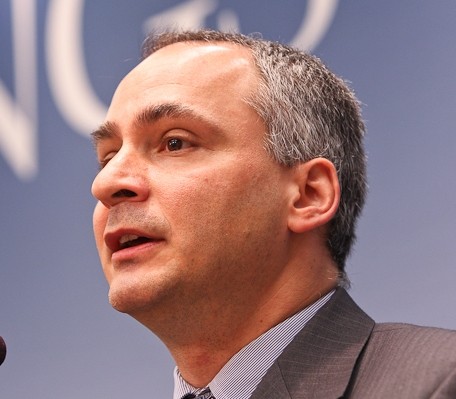
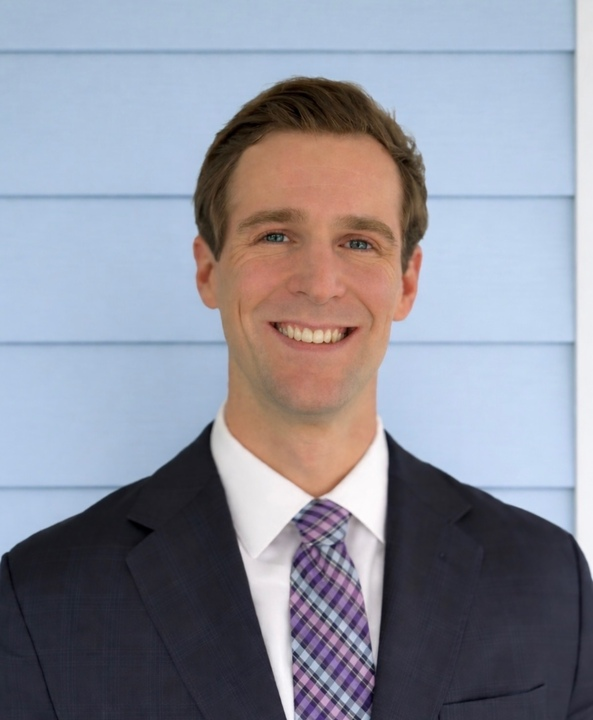
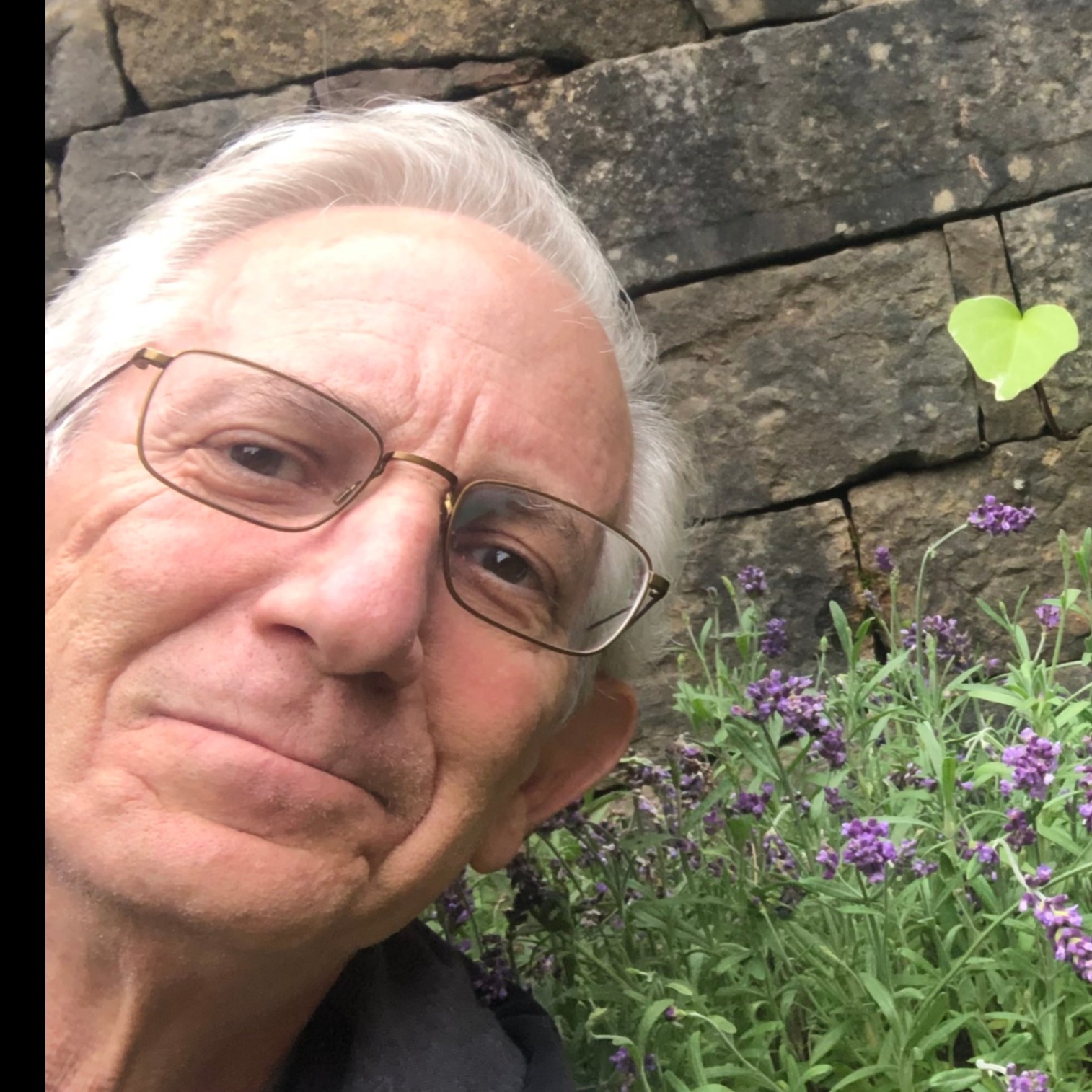
The Justice Department has moved the D.C. Circuit Court of Appeals to drop the Oath Keepers and Proud Boys seditious conspiracy cases, the last remaining criminal matters arising from the Jan. 6 insurrection. Lawfare’s Editor in Chief, Benjamin Wittes, sits down with four Lawfare contributors who had intimate involvement with the cases to discuss the decision: Senior Editor Roger Parloff, who covered both trials; Senior Editor Michael Feinberg, who investigated both the Proud Boys and the Oath Keepers; Public Service Fellow Troy Edwards, who prosecuted the Oath Keepers case; and James Pearce of Washington Litigation Group, who worked on the prosecution as well.
To receive ad-free podcasts, become a Lawfare Material Supporter at www.patreon.com/lawfare. You can also support Lawfare by making a one-time donation at https://givebutter.com/lawfare-institute.
Click the button below to view a transcript of this podcast. Please note that the transcript was auto-generated and may contain errors.
Transcript
[Intro]
Troy Edwards: I think
all of those convictions should stand right. Every single one of the January
6th convictions should stand because every single one of them went through a
fair due process and constitutional process of trial by jury or plea process
with discovery.
Benjamin Wittes: It's
the Lawfare Podcast. I'm Benjamin Wittes, editor-in-chief of Lawfare,
with Lawfare Senior Editors Roger Parloff and Michael Feinberg, Lawfare
Public Service Fellow LT Edwards, and James Pearce of the Washington Litigation
Group.
Michael Feinberg: The
sort of people who really would've pushed back about this have already been
fired or resigned for pushing back against other things. There is nobody at an
executive level who was very involved in these cases, who still remains. And in
terms of the larger, more prominent J6 cases, a lot of those people are gone at
the line level, too.
Benjamin Wittes:
Today, we're talking about the Justice Department's decision to drop the cases
against Oath Keepers and Proud Boys, which had been on appeal. These are the
highest value, most egregious January 6th cases, the ones that involved seditious
conspiracy. This is the final step in making the history of January 6th into a
legal nullity. So guys, I wanna start with just describing who we have on the
show today vis-a-vis these questions.
[Main Episode]
So most listeners will remember that Roger Parloff sat through
both of these cases, which were quite extended in district court and live
tweeted them for Lawfare. But Roger, start by telling us a little bit
about how you engage the Oath Keepers and Proud Boys cases.
And then, in order, Mike, LT, and James talk about your
involvement with these cases/investigations.
Roger Parloff: Yeah,
it was exactly that. I sat through all of them and I live-tweeted, and you can
find those somewhere on the internet, the site then known as Twitter. And I
think we tried to, we did try to put some of those on Lawfare.
Some take a long time to load, but I think the, roughly
speaking I think the Oath Keepers was around 28 days of trial. Troy, does that
sound right in there?
Troy Edwards: For
trial one of four.
Roger Parloff: Oh,
trial one. Yes. I, that's right. There were, I went to the first trial, which
is four top seditious conspiracy people.
That was Elmer Stewart Rhodes, Kelly Meggs, Jessica Watkins—actually
it's five—Ken Harrelson, and Tom Caldwell. And then I went to the seditious conspiracy
Proud Boys trial, which lasted longer. It was around four months. And that top
defendant was Enrique Tarrio, then Joe Biggs, Zach Rehl, and Pezzola, Dominic
Pola.
Am I leaving somebody out? I can't I think, oh, or Ethan Nordean,
the—
Troy Edwards: Nordean,
yeah.
Roger Parloff: Yeah,
who is really the lead defendant. So I saw the whole thing.
Benjamin Wittes: So
Mike, you know, the audience knows you for many things, but these cases are not
among them. You were these, they consumed quite a bit of your life for a little
while.
Michael Feinberg: Not
these cases specifically, but the general universe of tumult and investigation
and prosecution that consumed the FBI in the days, weeks, and ultimately years
after the events of January 6th. But my first interaction with these two groups
was considerably earlier than the public became aware of them.
I began my FBI career in Los Angeles, which everybody thinks of
as a very liberal, left-leaning city. But what a lot of people don't realize is
that when you get to the counties immediately south of Los Angeles, you have a
very febrile right-wing ecosphere, which throughout U.S. history has at times
tended toward the conspiratorial.
And this is famously they call it the Orange Curtain when you
go down to Orange County. And this was a very active area for like the John
Birch Society during the early years of the Cold War, later some white
nationalist motorcycle gangs. And in the early 2000 teens, I started hearing
about this group called the Oath Keepers, which unlike a lot of other groups
that were in that general area, they were pretty overt about who they were and
what they believed in and who their membership was. And this struck me as a bit
curious.
So I talked to one of our counter-terrorism analysts in the
office just to sort of get the lay of the land and the thinking then, as she
explained it to me, was that Oath Keepers are not a domestic terrorist
organization, but they are very much a gateway drug into groups that are now a
lot changed over the ensuing decade, and we will get to that.
But like I said, my first interaction was just, they were one
group among any, that was sort of adjacent to like the Constitutional Sheriff's
group and the sovereign citizen movement and just general individual
sovereignty, right-wing ideologues. But there was nothing at the time that
would indicate they would do something like, we'll get into this, establish a
quick reaction, force to storm the Capitol.
And it was very similar with the Proud Boys in that I first
became aware of them, not through anything that happened publicly, but because
Gavin McInnes the original founder moved to the same block as a family member
of mine in a very posh suburb of New York. And this led to questions from the
family member, me doing research once again, and once again, they were not
viewed as a particularly threatening group initially.
I mean, Gavin McInnes was at that point, sort of a media boss.
He was running Vice News, I believe, and then he left it and founded the Proud
Boys. And once again, they sort of metastasized into something far more
malevolent than they initially began.
The first time, I'd say the FBI really became aware of them,
was when it was discovered that they were providing security for Roger Stone
during the various phases of Mueller investigation. And there would be a whole
controversy about the fact that a SWAT team took part in the Stone arrest. That
was entirely because he was known to have armed Proud Boys protecting him.
Fast forward a little bit, January 6th happens, and as we clean
up the literal and figurative detritus of the riot/insurrection and we start
peeling things back, it appears that these two groups are very much involved in
a way that I personally would not have predicted from my initial introduction
to them.
Benjamin Wittes: And
what was your involvement in the post-January 6th mess of investigations,
including this one? These two.
Michael Feinberg: I'm
not gonna talk about my specific involvement, but I will say generally
beginning probably within a half hour of the breach of the Capitol walls, the
entire FBI Washington field office was on alert.
I remember seeing the news alert. It was still the pandemic, I
was actually at home that day and seeing the news alert, an alarm went off in
my head, obvious and like, you know, I'm probably gonna get called in. So I'm
just gonna gather all my tactical equipment change into something that I would
feel more comfortable carrying a long gun and wearing body armor in, and head
into the office.
And sure enough, as I was pulling into the garage of the
Washington field office, we got the alert on our cell phones for every single
agent to immediately get to the office.
Benjamin Wittes: And
without asking you how your, you were specifically used over the next several
months—
Michael Feinberg:
Yeah.
Benjamin Wittes: Let
me just ask you this, how long was it before your life returned to normal?
Michael Feinberg:
Probably about six months.
Benjamin Wittes:
Okay.
Michael Feinberg: And
it returned to normal in the Washington field office, but in 2023, late 2023, I
got a promotion that took me to the Norfolk field office, which by virtue of
being in southern Virginia, which has a very active right-wing militia presence
and being within driving distance of Washington, D.C., I think we had the
single highest concentration of January 6th cases of any field office other
than Washington, D.C., and maybe Philadelphia, simply because they had so much
of central Pennsylvania that was drawing people for the same reason as southern
Virginia.
This was all the FBI did for six months, and then it was a huge
proportion of what the FBI did for months and years after. It was, in every
sense of the word, the largest investigation the FBI has ever conducted. And
the two that we're talking about today are different in both degree and type
from the other cases, but I will hold off on explaining why until we get a
little bit later into things.
Benjamin Wittes:
Alright, LT, again, the audience knows you for many things, but less this than
some other things. This was a big part of your life as well.
Troy Edwards: Yes, I
was one of the five prosecutors on the Oath Keepers team. Although as with any
team, there were a ton of prosecutors around us that weren't in court that led
the investigation through to trial. And that investigation started, like Mike
said, pretty much immediately after January 6th, or on the day of.
And I ended up being one of the five that carried the
investigation through and into the four trials that the case culminated in with
a number of defendants that had to be split across about four trials: three
jury trials and one bench trial.
Benjamin Wittes: So
how much time did you and Roger spend in court together?
Troy Edwards: It's
remarkable to be on the podcast with him and be in Lawfare with him now
because I think we spent a lot of time together and never actually spoke to one
another directly.
Benjamin Wittes:
Yeah, it's a fun, it's a funny, it's a funny relationship that's, that you have
with people you sit in court with for very long periods of time and make a
point of not interacting with,
Troy Edwards: I think
I did a number of silent nods walking by because we knew that Roger was gonna
cover everything that happened that day, what we wrote that day, the mistakes
we made. And so we would often walk into court and be like, oh, Roger's here.
He is gonna catch if we make, you know, another mistake today out loud, or if
we write something the wrong, or have to fix it.
Benjamin Wittes:
James, you were not in court on either the Proud Boys or Oath Keepers case, I
don't think. But you were a, I don't know, a behind the scenes, eminence. What
was your role in these cases?
James Pearce: So
actually was in court on the Proud Boys case, but the description is generally
right. So I came over to the D.C. U.S. attorney's office from main justice on
January 8th, 2021, and put my hand up to volunteer and like, like many of the
folks who wanted to volunteer in the response, I basically said initially,
look, I'll do anything that, that would be helpful. And I had experiences as
both a trial level prosecutor and an appellate attorney. And the kind of the
initial thing that I was asked to do was, what many folks would do was just
hear a bunch of cases, go figure things out.
And I did that for a little while. And then you know, you know,
the proverbial building the airplane as you fly it, we sort of figured out
that, look, there's a need to develop a kind of architecture of charges. And
there's also a need to try to figure out the extent to which, you know, I think
as Mike's comments indicated, that there was involvement from more organized
groups, militia extremist groups.
And a role that, that I started to play was, eventually took on
the title of senior appellate counsel, and that was, again, building an
architecture of charges famously, or perhaps infamously, that involved the 1512(c)(2)
congressional obstruction, that made its way all the way up to the Supreme
Court.
But relevant for this conversation, I worked on the seditious
conspiracy charges and kind of shepherding that through developing the legal
theory in both the Oath Keeper and Proud Boy cases, writing a lot of the
briefing you know, I won't speak in detail about this, but doing a lot of the
discussion within the department about whether we could bring these cases and
on what legal theory and how we could defend them.
I argued that in front of Judge Kelly in the Proud Boys cases, or
case, rather and certainly worked with LT and then the members handling the
Oath Keepers team on that as well. But then, yeah when the cases went to trial
I was, I actually went and attended some of the Oath Keepers, the first trial
of those and then, you know, ended up eventually moving over to the special
counsel's office.
And so, kind of lost any formal touch with the teams but
certainly had been closely involved including on these two sets of you know,
the Oath Keeper and Proud Boy Cases.
Benjamin Wittes:
Alright, so let's do some basic history here. These cases get tried, they
result in convictions, including on the seditious conspiracy cases, the
charges, they produce long sentences. Trump comes into office, pardons
everybody, but does not pardon this group of people.
So, Roger, give us like the history of these cases from the
date of Trump's inauguration to today: How are these, as we might say in on
Passover, how are these cases different from all other January 6th cases and
what happened in them this week?
Roger Parloff: Yeah,
so on Inauguration Day, typically, we say he pardoned everybody. He didn't
literally pardon everybody. He did give clemency to basically all 1,583 people
that had been charged to that point. He gave different forms of clemency, three
buckets. And the first bucket was who we're talking about. He named 14 people
and said, these people, I'm commuting their sentences.
And they were all people charged with seditious conspiracy.
They weren't all convicted of it. 10 were convicted, four were not. And so they
were left with a conviction and the stain of a conviction and the collateral
consequences if they were in prison, as all but one, were they walked. At that
point, they, I think their fines and restitution were lifted.
So, it was the stain, but that is enough to appeal. And all, and
12 of them did, two others dropped out for other reasons. One eventually was
given harden—that was Tom Caldwell and a cooperator, Jeremy Bertino, his case
was dismissed. He had actually never been sentenced. So he, his sentence was
commuted before he was sentenced.
So there were 12 left and they were in three cases. It was
taking a long time to appeal. And so they had not—and the first briefs were
gonna be due to Friday the 17th, so tomorrow. And then, on Tuesday we got these
motions to dismiss the three cases. There was the Rhodes group, there was a guy
named Roberto Minuta, who was the second Oath Keeper group, and Nordean, who
was the Proud Boys group. Tarrio was given a pardon.
And I wonder, and you know, last weekend I was going over these
cases and I was saying, this is amazing that these are going forward. In a
legitimate way. I mean, all of the attorneys on them are career people.
They're, I think, Jocelyn Ballantine below and three people on above. I mean,
Pirro is on the briefs too, but career people otherwise. So I was puzzled.
And then on Tuesday there was this motion, it, the form of it
is, it's a motion to vacate conviction so that it can be remanded for
dismissal. There's a D.C. Circuit case that says I guess you can't go directly
to what's called a motion to dismiss 48(a).
It has to first be, the conviction has to be overturned.
Benjamin Wittes: You
vacate the conviction. You can't dismiss a conviction, you can only dismiss a
pending case. So you vacate the conviction. It gets remanded for presumably a
new trial with a direction to dismiss.
Roger Parloff: I
think so. I think the theory was also that 48(a), you dismiss a prosecution and
the prosecution is not still going when it's on appeal.
Troy Edwards: Right.
Roger Parloff: That's
how I remember that court ruling. So that's what happened and that's why we're
here. So, so this was 12 people charged with seditious conspiracy. Most of them
convicted, not all of them, and that's why we're here. Oh, and just to be
clear, 1,100 were pardoned and then 470 people that had been charged but not
yet convicted, the AUSAs were instructed to move to dismiss those under 48(a)
and they were.
Benjamin Wittes: So LT,
this is a totally unfair question to ask you as a prosecutor in the case, but
give me your best analyst answer to it anyway. Is there any argument that,
given that we've pardoned and dropped cases against everybody else, that you
know, why should these guys alone retain convictions? We've publicly said,
rightly or wrongly, parentheses wrongly, that this whole spate of prosecutions
was a grave injustice. And you know, a travesty on American justice.
So given that is the public position of the administration, is
there any particular reason why these groups of subjects uniquely should
continue to face prosecution?
Troy Edwards: This is
the most lawyer answer ever. I think that depends on whose lens we're filtering
the question through, because if it's the administrations, this is gonna be a
painful thing to say out loud. There's a logical core to it, which is if they
really believe January 6th was nothing but a lovely tour of hugs, then how
possibly can there be convictions that stand?
This seems to be in line with the insight that, you know, there
was nothing wrong done, and so everyone else got pardoned. This was a remaining
batch that ought to be pardoned. That's the, I think the prism that the
administration, if they're trying to be logical, would say.
From my point of view, it's also hard to answer because I think
all of those convictions should stand, right. Every single one of the January
6th convictions should stand because every single one of them went through a
fair due process and constitutional process of trial by jury or plea process
with discovery.
This middle ground question I think you're getting at is
merging those two lenses if assuming there are pardons, should these
convictions stand? Yes. I can't bring myself to say no, because I know the
process that it went through to get to that. I think to put my lawyer hat on,
the argument goes, Mike hinted at this, these convictions are different in
kind, right? Seditious conspiracy is a charge rooted deeply in the nation's
history, and you don't bring it lightly.
And if the facts met it and a jury convicted the defendants on
those kinds of elements that are required under something like seditious
conspiracy, then something seriously wrong happened and those convictions ought
to stand to be a reminder to the nation of where we ought not go. But again, I
pause, I think that about all these convictions I don't think that these stand
out such that it's appropriate that these other convictions drop.
I know that's probably not the, I'm fighting the hypo a little
as James would tell me if I were mooting this.
Benjamin Wittes: Mike?
Michael Feinberg:
Yeah. So, I will play the role of the less polished and eloquent and more
aggressive FBI agent to Troy Edwards's DOJ attorney.
I think there's a very good reason you treat these, this universe
of case is different from the average January 6th case, and it's largely, largely
a distinction based on the facts of how and why these individuals got to the
Capitol in the first place. And I think when you look at that, it leads you to
understand what they did was considerably worse.
And everything I'm gonna say is not to defend any January 6th
defendant. I think all of those prosecutions were righteous. I think in many
cases the sentences were too light, and I think we should have even been more
aggressive than we were in general.
But there is an argument that many of those offenders were not
there as part of any organized group, beyond a circle of friends or a community
organization, and a speech and rally gets outta hand with, I would argue,
prompting from officials in office, both from the White House and from
Congress, and matters snowball, momentum takes over. They breach the capital,
but in a sense, some of them are caught up in a wave. It's not to excuse it,
it's just to say it wasn't necessarily a premeditated act, specifically to halt
the peaceful transition of power in the United States.
With the Proud Boys and the Oath Keepers, we have something
very different.
These are groups, like actual, I don't know if they're
corporate entities, but I'm gonna use that in a colloquial sense. These are
actual organizations that had a planned scheme, in many cases involving
weaponry, in many cases that contemplated the possibility of extreme violence,
to travel to D.C. and if possible, if needed, interfere with the peaceful
transition of power that has marked our nation since George Washington left
office.
What they did is very different than your average moron who
went to a rally and just followed a crowd.
And I think there's something else to mention specifically with
respect to the Oath Keepers. Enrique Tarrio and the Proud Boys—since this is a Lawfare
podcast and not a cavern conversation, I'm gonna be a bit nuanced, but like,
this is somebody who has a, Tarrio, is somebody who has a history of petty
crime, an extensive history of petty crime, and a real lack of accomplishments
in any intellectual or legitimate endeavor.
Stewart Rhodes is a little bit different.
Benjamin Wittes:
Yeah. He shares an alma mater with Roger Parloff.
Michael Feinberg:
Yes.
Benjamin Wittes: Yale
Law School.
Michael Feinberg:
Yeah. Stewart Rhodes was a congressional staffer, I think for Ron Paul. He goes
to Yale Law School in the aftermath of 9/11 because he's convinced that civil
liberties are being infringed upon by the government. I think there's a bit of
the horseshoe stuff going on here, but like he goes to law school, and to the
best law school in the country, for reasons that many public interest lawyers
also went to law school.
In other words, he has intellectual rigor, a background,
accomplishments, opportunities that make him markedly different from your
average January 6th defendant. And I don't think it is beyond the pale to take
that into account when you're determining how he specifically should be
treated.
Benjamin Wittes:
Alright, James, I want to, having asked LT an unfair question, I'm gonna ask
you one as well, which is there any defense to make of this?
Is there any, you know, if I made you, you know, counsel for an
amicus who was gonna defend this decision, what's the best you can do in the
way of justifying what Jeanine Pirro did this week?
James Pearce: Yeah, I
mean, I'll start with the caveat that, that my views on this are pretty similar
to LT’s and to Mike's, but a, and I'll start with a sort of a cynical
observation, which I don't know if we've said this out loud, but frankly I
think it, it's it aligns with something Roger said was, it's sort of a surprise
it took this long for this to happen in some ways.
You know, certainly this group was not in the initial act of pardon.
They were commuted, as we've already mentioned. And so there was some sense
that they were different, but it was very hard to imagine that we would
actually ever move forward with continued prosecution in one sense or another.
I mean, look, you know, if I were asked to defend this, you
know, I probably would write something and say something similar to what the
very short motion did, authored by as Roger said a long-time government
attorney an appellate attorney who I know well and think very highly of.
It cloaks the argument in essentially prosecutorial discretion.
And if you have already decided as the executive branch has, and as the
Department of Justice has, not to pursue the prosecutions against every single
other individual who has been engaged, or was engaged in the events of January
6th, it's harder, then, to draw a distinction for these particular individuals.
I mean, I think the distinction that one can draw is precisely
the one that, that Mike just spelled out.
Benjamin Wittes: Not
to mention, you could draw the distinction that the president specifically
pardoned everybody else and directed their prosecutions to be dropped and
singled out these people to treat differently, gave them incredible windfall of
a commutation with the time served for often very long sentences, but did not
pardon them, and in fact, the president's own action treated them differently.
James Pearce: Sure. I
mean, you know, I think that's, I think that's exactly right. I mean, it's
interesting I suppose that the reasoning there was something along the lines of
what Mike laid out, or perhaps more cynically, again, it was just political to
say, look, we just don't want to take the hit of saying that we are gonna go
ahead and actually pardon individuals who have been convicted of conspiring to
use force to, to stop the execution of laws, the transition of power that as
Mike eloquently said as existed since the first president.
So, you know, I think frankly the only way to really go about
justifying it is just to fall back on, on prosecutorial discretion. And if
anything, the idea that discretion and the whole exercise of investigation and
prosecution is a core executive branch power, has been supercharged under the Trump
v. United States case, where it was identified as among the president's
conclusive and preclusive powers.
And so it is interesting, right? I mean, in the first Trump
administration, we certainly saw after the pardon of Flynn, you saw Judge
Sullivan appoint I think it was John Gleason, you know, former Judge Gleeson,
to come in as an amicus to, to sort of argue against whether this could happen.
You could see Judge Mehta and Judge Kelly taking a similar path
here. But, you know, A) we know what happened with Judge Sullivan, and B) you
know, as I just mentioned, I think the Supreme Court's decision in Trump v.
United States makes it awfully hard to imagine that you're gonna
successfully come in and argue that this act of prosecutorial discretion as
absolutely wrongheaded as I, and it sounds like basically the rest of us think
it is, that you're going to have a court undo it or you know, frankly, even if
you were to have Judge Kelly or Judge Mehta do it, that you would have an
appellate court, let alone the Supreme Court think that there is in fact the
discretion or power of courts to undo what the executive branch has decided to
do here.
Benjamin Wittes:
Right. Can I just be cheeky and say the best argument that you can make for
this as an appellate lawyer is because he can.
James Pearce: Yeah. I
think that's, I think that's basically right. And because he can and doesn't
have to tell you why.
Benjamin Wittes: Right,
Roger?
Roger Parloff: Yeah.
When I wrote a piece about the first wave of clemencies, the piece I think came
out in March, I mean, a year ago March. The name of the piece was “Evenhanded
Injustice.”
And so that's sort of what we are completing here today. I know
that prosecutors and FBI agents do see conspiracy as different, and especially
seditious conspiracy. It's a little blurrier to me down as a spectator because
a lot of the people that were pardoned in the first wave were really scary
people who did come there.
It wasn't a conspiracy, but they did come there planning to do
something. They came in body armor, you know, they came with tasers, they came
with spray, pepper spray, and some came with guns. You know, like Ryan Samsel,
you know, the guy who topple the first barrier onto a female police officer who
gets a concussion that is probably still, you know, disrupting her life today,
certainly for the first 18 months.
And, you know, nine priors mostly for assaultive behavior
against women. He's on parole for two felonies on January 6th. You know, these
are really dangerous people. I mean, David Dempsey, I think he, he got 20 years,
the government was asking for 20 against Ryan Samsel, and he, that was like the
middle of his guidelines.
The guy that tased Rodriguez, the guy that tased Fanon twice.
Benjamin Wittes: So
you think there's more of a continuum between
Roger Parloff: Yes. I
think there's a—
Benjamin Wittes: Than
the sharp line that Mike described.
Roger Parloff: Yeah.
Michael Feinberg: So
I'm gonna, I'd like to push back against that a little bit.
What the nation saw on January 6th in terms of dress, demeanor,
and weaponry, was certainly shocking to somebody who is not familiar with the
milieu in which these people operate. But to those of us who track domestic
terrorism and have worked in offices that are not in major metropolitan areas,
this is pedestrian.
There's an event called Lobby Day in Richmond, Virginia every
year where it is totally normal. I think it's abhorrent, but it is normal and
not out of the ordinary. In fact, it's expected that you'll get people who are
against what the state government is doing, marching up and down the street,
totally legally carrying M-4s, wearing ballistic vests and carrying tactical
equipment.
If you go to rural Michigan, you see the same thing on a
regular basis. If you go to Montana, you can see a different variety of it in
every county, and there've been a lot of individual standoffs over the past,
quite frankly, 50 years with these sort of groups. It just never entered the
conversation of the sort of people who don't follow what's going on in the
militia movement.
So if we, as agents, who investigate domestic terrorism all the
time and always have view those people almost as like sort of unserious cosplayers,
it's not to minimize the danger they pose or to excuse anything they did. It's
just simply to note that what they did in D.C. that day is not materially
different from what their day-to-day activity is in another locale.
Benjamin Wittes:
Well, except the part where they—
Michael Feinberg: Storm
the capitol—
Benjamin Wittes: Storm
the capitol—
Michael Feinberg: And
no, I'm not referring to their actual actions.
Benjamin Wittes: No,
I understand—
Michael Feinberg:
What I'm talking about is like the carrying of extensive weaponry, the wearing
of ballistic vests, the purloining of zip ties and chemical agents, like that,
like seeing that at a protest, like it might be abnormal on the mall—
It's not abnormal in most parts of the United States and that's
a sad commentary on where we are as a country, but it is what it is.
James Pearce: Can I
jump in quickly just because, so I think what Mike says is right, but I
actually tend to think that might support what Roger is saying more so in an
interesting way, which is that, look I'm gonna take a crack at trying to sort
of think about the Oath Keepers and the Proud Boys and the sort of specific
roles that they played on January 6th, and then also some of the other
defendants who were just pardoned and are not in either of those groups, right.
You know, the Proud Boys as, as surely this group knows, but
just to put it on the table, were the proverbial tip of the spear, and we're
among the first of the ones going in the building. Dominic Pezzola, you know,
breaks the glass on two 13 and that is, is sort of, you know, that their, Samsel
is, as Roger already mentioned, but they are there, they are right at the
front.
They are very violent. What they don't have and what
distinguishes them from the oath Oath Keepers are this development of the quick
reaction forces and the bringing of the arms into Virginia. And frankly, a lot
of planning that and discussion driven by roads but picked up by a lot of
others as LT knows better than I do, and that has been established factually
over the, was established factually over the course of four trials—
Interestingly, the Oath Keepers, and LT can fact check me on
this, were not as violent as many of the individuals who were in the Lower West
Tunnel, individuals who were not convicted as being part of, you know, a
conspiracy charge as part of working with the Oath Keepers or The Proud Boys.
The Proud Boys were probably more violent on January 6th. But
to Roger's point a moment ago, like there were people who were probably just as
if not more violent than Proud Boys or Oath Keepers, battering away at law
enforcement, not necessarily bringing weapons that they had, finding whatever
they could find, fire extinguishers, hockey sticks, all of these kinds of
things, right.
And it does, I think, raise this question of like, is there
really a meaningful distinction between these folks and the Proud Boys and the
Oath Keepers? I mean, yes, the idea of the conspiracies and again I'm happy to
have LT or others sort of challenge me on the way I've kind of talked about
the, how the oath keepers and the Proud Boys sort of, the, the differences.
But it's very hard to see when you really drill down and spend
a lot of time with these cases, as I know this group has, that there are really
any meaningful distinctions between the most violent of the actors on January
6th who are not associated with the Proud Boys and the Oath Keepers and those
groups.
You can draw a distinction between some of the other followers,
right? And those that didn't engage in violence. You know, cards on the table, I
think all of them deserve the convictions that they got, and none of them
should have been pardoned. But I do think it is fair to say that there are
gradations of culpability and gradations of severity of conduct.
But it's not necessarily so obvious that all of the Proud Boys and
the Oath Keepers are on one box and everybody else is somewhere else.
Benjamin Wittes: I
will just say on this that the gradations of responsibility are well-reflected
in the convictions and sentences themselves, which range from misdemeanor
trespassing, which is a huge, I think, plurality of the cases actually, to some
extreme violent activity. And the sentence ranges from a few days in jail to,
you know, 20 plus years. And so I don't think the criminal justice system was
insensitive to exactly the point that James is making.
So I, you know, one thing we have here is we have two people
who spent a lot of time in the courtrooms and I, from following Roger’s tweets
every day, I came away with a very healthy respect, both for Judge Mehta and
for Judge Kelly, who presided over these cases. And since, you know, we're
going to hear a lot about, you know, what an injustice these cases were.
LT and then Roger, I'm interested for your perceptions of,
these were multi-week trials. You guys sat through them. What did you make of
the trials?
Were there big open questions in your mind at the end of it?
Was there some dicey thing that made you anxious about the conviction? What did
you make of the trial?
Troy Edwards: I mean,
having done them I think that the, one of the operative questions that any
conspiracy charge, particularly seditious conspiracy charge goes into when
going into trial is will the jury see what the agreement was and that agreement
was reached by all the defendants, the government charged?
And a squishy thing about conspiracy is that agreements can be
reached in a number of ways in human behavior. It can be reached through
speaking and agreeing to one another. It can be reached by physically shaking
hands. It can be reached by a leader saying something over and over, and then a
bunch of people acting in line with that statement.
And so knowing all those amorphous ways that people can reach
agreements and have this kind of connection of mind around a criminal objective
is gonna always be something that the government is needing to prove and
questioning at the end does the jury see it the way the government presented
it, and you know, you've got the first trial with five defendants charged with seditious
conspiracy, and a couple of them were acquitted.
And I think that shows you that these D.C. juries, something
that's not talked about a lot is when the criticism is, well, it was always D.C.
juries, so these guys were gonna be convicted, or every January 6th defendant
would be convicted. I mean, even in the seditious conspiracy trials, D.C. juries
were parsing through the evidence and determining whether or not someone
reached that agreement and acquitted some of these people that the government
presented evidence of, that there was an agreement.
And I think that's there's really little better evidence than
that, that a D.C. jury, quote unquote, the D.C. jury was looking through
everything and combing through it. Pause. Now, maybe we'll get to this. Another
element of that educates kind of the conversation we just had a second ago is
when the government sought the terrorism upward departures, there was a
question of whether the courts would grant that in this context.
And obviously the courts did, and maybe we'll get to sentencing
in a little bit. But I think that's another way that you can kind of
distinguish in these gradations of severity of conduct is when the courts ended
up calling these folks terrorists by using the upward departure to enhance
their sentencing exposure.
Benjamin Wittes: Roger,
you were not a participant, but you were probably the single most present
observer. Were these fair and good trials?
Roger Parloff: The
most present with Brandi Buckman.
Benjamin Wittes: Yes.
Brandi Buckman, the estimable Brandi Buckman was always there as well.
Roger Parloff: Yeah. They
were great trials and we were very lucky to get these two judges: Amit Mehta,
appointed by Obama, and Tim Kelly, appointed by Trump. Very deliberative, maybe
deliberative to a fault with Kelly, but you can see it in the sentences, you
know, like in the Oath Keepers case, 18 years for Rhodes, 53 days for Tom
Caldwell, he drew distinctions, and four years for Harrelson. All of those
seemed, you know, to make sense to me and the trials themselves, four months
for the Proud Boys.
Now I think on appeal, if this had been a, you know, a
legitimate appeal, I think there would've been interesting questions about, in
neither of these cases did you have the sort of conspiracy that we see on, you
know, TV, like an Oceans 11 sort of thing where, you know, you go there and
I'll go there, and then we and the response to that was crime—the crime is not
seditious plan. It's seditious conspiracy.
They don't have to have a, you know, prove exactly what the
plan was. The plan was sort of overarching to block the certification through
any means necessary, and the barrier fell, and then everyone goes into action.
I'm not 100 percent sure what appellate judges, especially the appellate judges
we have now would say about that.
I mean, there's no question, you know, when everyone is
marching together I forget what the stack formation up the, you know, there,
there's, they're working together. But I, you know, I liked the one of the
cooperating witnesses, Matt Green in the, I think the Proud Boys case.
The barrier fell, you know, Samsel pushes over the, Samsel and
three other guys push over the barrier, not Proud Boys. And suddenly, you know,
this guy has been trained. He's been told, just listen, just follow
instructions, but we aren't telling you what the plan is. And su—and he says,
oh shit. This is it. This is it.
And they all do go into action. And they do, in coordination
help breach four barriers. So there's an element of spontaneity, even with
these conspiracy cases, and I'm not 100 percent sure what appellate judges,
Trump-appointed appellate judges would've—I'm actually, I'm pretty sure what
Trump-appointed appellate judges would say, but.
Troy Edwards: One
thing, Roger is and I don't think I hear very many people talk about it this
way when they talk about the unfair judges in D.C. Judge Mehta, I mean, I we
spent a lot of time together right in the courtroom over three years, but Judge
Mehta also oversaw a bench trial in the Oath Keepers case and acquitted one of
the defendants.
So it's another version of what I was talking about earlier
with the jury's doing that, the judge did that. And so there's the normal kind
of parsing through. There was plenty of rulings against the government by the
judge, which people can point out to retort this notion that judges were
biased.
But I think one of the strongest things to point to is he
acquitted one of the defendants that had gone into the Capitol as a member of
the Oath Keepers with the Oath Keepers. And I think that shows you, the judge
was parsing through the facts very carefully throughout his entire tenure of
these cases.
Roger Parloff: Can I
just add that I actually did an article fairly early on in this where I
compared jury verdicts to judge verdicts, judicial verdict, bench trials, and
they were essentially identical. And of course, the bench trial group was for
the most part, self-selecting to conservative seemingly conserv—you know,
Trevor McFadden and Carl—and the results were basically the same.
Benjamin Wittes:
Yeah. I mean, I gotta say, I, I've always thought the criticisms of D.C. juries
is, are a lot of nonsense. I've sat through a lot of trials in D.C. and I've
literally never seen a case where I thought a D.C. jury was behaving
politically, or, you know, I just, I know that there's a reputation that comes
from the politics of D.C. and let's be frank, the racial composition of D.C. but
I don't think it has much basis in fact.
So before we wrap, Mike, I wanna ask you and LT and James for
your sense of the impact of decisions like this on the institutions that you
worked in. Like you said, it consumed your life and consumed the FBI's life for
six months or more than six months. And then, you know, the president just
pardons almost everybody, or commutes almost everybody.
And then the U.S. attorney throws the remaining cases. Let's be
blunt about what's happening here. So what does it do? Do you have a sense of
the scuttlebutt in the Bureau about stuff like this?
Michael Feinberg:
Yeah. You know, it may surprise many of our listeners to know that I've grown
slightly cynical about the current iteration of the FBI, but I don't know that
this materially changes FBI culture or FBI incentives, simply because there has
been such a calling of both senior—this sort of people who really would've
pushed back about this have already been fired or resigned for pushing back
against other things.
There is nobody at an executive level who was very involved in
these cases, who still remains. And in terms of the larger, more prominent J6 cases,
a lot of those people are gone at the line level too.
I wanna know one thing from the perspective of an FBI
investigator that I feel kind of bad about, 'cause in criticizing how DOJ and
the FBI handled January 6th, I'm gonna implicitly be criticizing the
conversation we just had and viewing this through a legalistic perspective, focusing
on investigative and prosecutorial decisions, I would argue was a wrong
decision from day one.
To look at the events of January 6th and not think about it in
a larger cultural context, in a context of deradicalization and de-escalation
and in whether we needed new authorities to go after domestic terrorists more
aggressively, those conversations never happened, and I would humbly suggest if
we had responded to 9/11 or a smaller international terrorism incident and only
focused on a prosecution, we would've never actually diminished the risk of a
future event taking place.
Even without these pardons, I don't know that anything the FBI
or DOJ did after January 6th materially changed the landscape that gave rise to
these sort of people.
Benjamin Wittes: LT
you, I suspect, you think that the demoralizing factors in the Justice
Department are stronger than Mike thinks they are in the FBI?
Troy Edwards: Yeah, I
mean, I'll start with the shadow this casts and I'll try to end with some
sunlight, but before I do, I'll push back a little bit on Mike's point. I, and
maybe it's just 'cause I'm too close to the project, so I admit I'm probably
hopelessly biased—
In other words, to reframe what Mike just said, had we not done
these prosecutions, there would be no difference than where we would've been
now, without the pardons in the domestic terrorism landscape. I, that's gotta
be wrong.
The dampening effect across the organized boldness and explicit
actions of militia patriot movements, I think was noticeable and probably
quantifiable by measuring the breakdown of groups like the Oath Keepers, groups
like Three Percenters, groups like America First, that started rising in
getting more violent, as we saw, approaching January 6th.
And so maybe it's temporary, Mike, and we can find some middle
ground there, and maybe they would've regrown. But the prosecutions and the
widespread focus across the country on punishing what just happened on January
6th broke those groups and fragmented them in a way that I think had a
significant impact on that militia patriot movement.
But again, I'm possibly hopelessly biased and the, so, okay, so
the shadows of what these motions may cast. I mean, look, this will be a stain
on the institution of the Department of Justice for its history. It will never
go away.
We will always look back on this period of DOJ and see this as
a grave, one of its now cardinal sins that it has done this, because it's no
longer at the behest of the president and oh, the president pardoned and our
arms are up. DOJ is now complicit if it wasn't already before. And so this will
forever be a stain on the institution that Todd and others have now imposed.
And another shadow is, look, I suppose there will be
prosecutors and agents who may have a voice in the back of their mind, if
something goes wrong in America and wonder ‘Boy, am I gonna get crushed by this
with a presidential election coming up 12 months from now, am I gonna get fired
if the administration shifts?’
That's always a concern with the abuse or weaponization of a
criminal justice system, is you send a chilling effect across the public
servants that are supposed to not think about those things.
I would think that the right people are in those positions,
they're not gonna think about that, but we'd be silly not to wonder if this is
now gonna be a thing people are gonna worry about and it'd be reasonable. There
are people's lives that are uprooted by the firings and the dismissals of these
cases.
And so here's some of the sunlight. To me, it'll be a stain on
the institution, but the institution will be fine. DOJ will heal and it will be
rebuilt and it will look down on what just happened here and look forward on
the factual book that the department wrote and the FBI wrote and memorialized
in American history.
I mean, no one can be a serious human being and deny what
occurred on January 6th. They may lie to themselves or lie to the public, but
you will forever be a clown if you ignore those facts and talk about it any
differently than what happened. And everyone knows that. And so, I think that
the institutions will hold and be fine.
Benjamin Wittes:
James, you're one of the people who got crushed in the first wave of firings as
a result of, not these cases, but related cases that you worked on. You get the
last word today.
Is this a situation where, like Mike describes with the FBI, that
everybody who this could demoralize is already gone? Or is this a situation
where you're creating a large number of people who are gonna look over their
shoulders before they decide what cases to get involved in the future?
James Pearce: I tend
to agree with Mike that the folks that were most bothered by and involved in
and affected by these cases are probably gone, either voluntarily or
involuntarily at this point.
Benjamin Wittes: The
line is fuzzy.
James Pearce: It is.
Benjamin Wittes: Right?
I mean, I mean, you got fired. LT left voluntarily. Mike left voluntarily. But
I mean, talk about a continuum.
James Pearce: Yeah.
No I think that's, I think that's exactly right. And I wanna have the faith
that LT is describing, in an institution that's rebuilding itself. And I wanna
believe in that and would wanna be in involved in that.
But we are in dark times and it is very hard to imagine that
right now. And I'll just make one, I suppose final point that I don't think has
been explicitly said, which is if you view, as, I think it is quite fair to
view the group that is essentially being, you know, functionally pardoned
who's, whose prosecutions are now being definitively ended, assuming there's
nothing that happens in the procedures to change that, which I don't think
there will be, one aspect of that group, and I think Mike touched on this, is
that they were most involved in targeting the transition of power. Right. Which
itself was the result of elections.
And I think we've also seen from this administration, including
right at the end of March, you know, an executive order that focuses on
elections and, the potential consequences of this not only for the Justice
Department, but for a potential broader effort of sowing doubt about elections
and electoral results are the kinds of things that I would worry very deeply
about us not being able to rebuild institutions because that elections means or
the, you know, so that attack on elections means you don't have an opportunity
to have the kind of transition of power a away from the attack on institutions
that we are seeing.
And to the extent, and I think this is a point that both Mike
and LT were touching on, to the extent this most recent step, catalyzes or
emboldens those that would be inclined to attack the electoral process if it
doesn't go the way that they want it to go—That I think is quite frightening.
And that additional fuel to the fire, I think is something we
should all be very deeply concerned about.
Troy Edwards: And
James, just another element, I had not thought of that. Now consider that
increasing risk with the decreasing abilities of our institutions because of
the dismantling of the teams that are supposed to be focused on those threats.
James Pearce:
Exactly. So that,
Troy Edwards: Right.
Benjamin Wittes: We
are going to leave it there. James Pearce of the Washington Litigation Group,
Troy Edwards. Mike Feinberg, Roger Parloff. Thank you all for joining us today.
[Outro]
The Lawfare Podcast is produced by the Lawfare Institute.
You can get ad-free versions of this and other Lawfare podcasts by
becoming a material supporter of Lawfare at our website,
lawfaremedia.org/support. You'll also get access to special events and other
content available only to our supporters.
The podcast is edited by Jen Patja, and our theme music is from
ALIBI Music.
As always, thanks for listening.