Lawfare Daily: The Trials of the Trump Administration, April 17
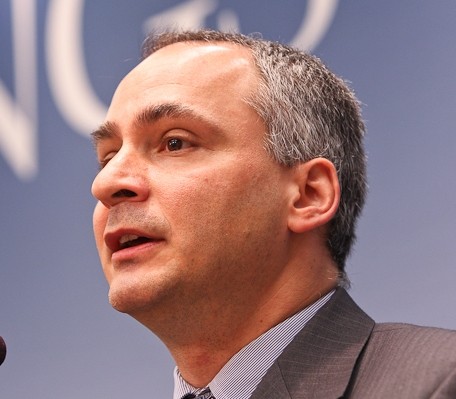
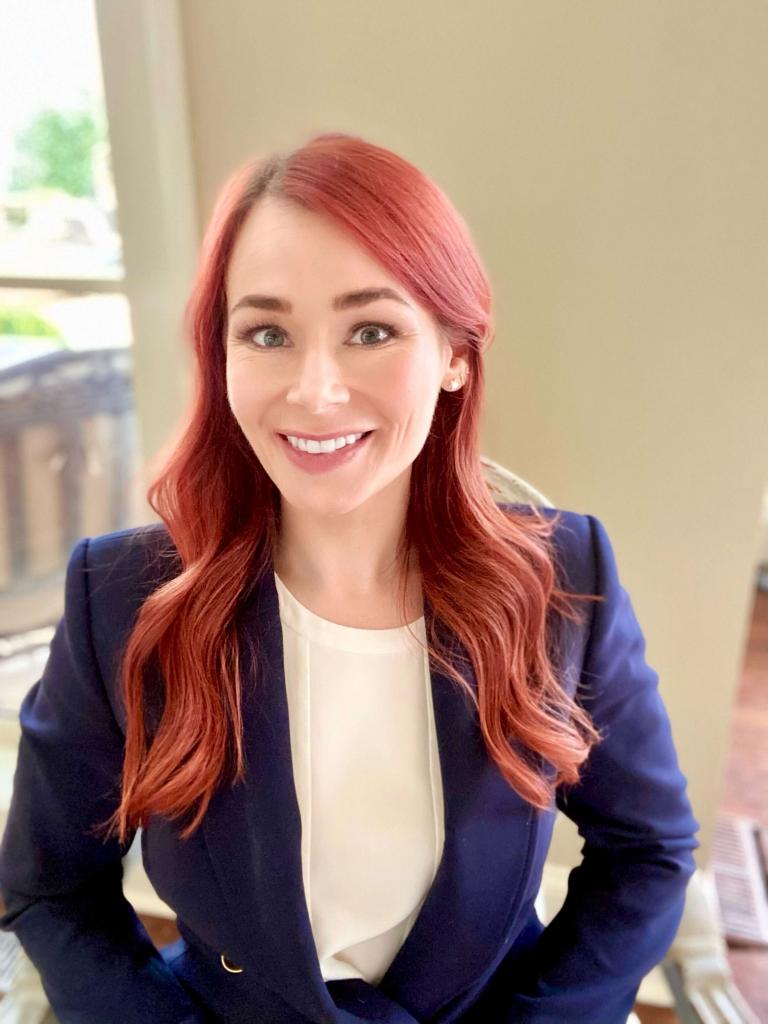


In a live conversation on YouTube, Lawfare Editor in Chief Benjamin Wittes sat down with Lawfare Senior Editors Anna Bower, Eric Columbus, and Roger Parloff to discuss the disbarment of John Eastman, the Justice Department dropping the last Jan. 6 criminal matters, a warrant issued in the first state criminal charges against an ICE agent, the firing of 6 immigration judges, and more.
You can find information on legal challenges to Trump administration actions here. And check out Lawfare’s new homepage on the litigation, new Bluesky account, and new WITOAD merch.
To receive ad-free podcasts, become a Lawfare Material Supporter at www.patreon.com/lawfare. You can also support Lawfare by making a one-time donation at https://givebutter.com/lawfare-institute.
Click the button below to view a transcript of this podcast. Please note that the transcript was auto-generated and may contain errors.
Transcript
[Intro]
Benjamin Wittes: It
is Friday, April 17th, 2026. It is 4:00 PM Washington, D.C. time, and you are
watching Lawfare Live. I'm Benjamin Wittes, editor-in-chief of Lawfare,
and I am here with a trio of Lawfare Senior Editors, Eric Columbus, Anna
Bower, and Roger Parloff. And we've got a busy agenda this week. So, let's get
into it.
Some of you may remember the name John Eastman, conservative
law professor from Chapman University, I believe. Wrote some wacky legal
opinions, made a speech on January 6th, and now he has been disbarred. Next
stop is Dancing with the Stars. Eric Columbus, give us the John Eastman update.
What is—and can the president pardon him and get rid of his
disbarment?
Eric Columbus: The president
cannot for multiple reasons. The president cannot get rid of the disbarment. Pardon
powers limited to offenses against the United States, which has been
interpreted to mean crimes against the United States crimes, federal crimes,
and Eastman has not been convicted of a crime and, a fortiori, he has not been
convicted of a federal crime, so there's nothing the president can do.
It would be like when Tiger Woods called—reportedly called the
president after he flipped his SUV on a California road. It would be the same
effect.
So, Eastman was, has been actually suspended since April 2024. And
this just kind of, makes it final. And,
Benjamin Wittes: And
this is California Bar, right?
Eric Columbus: This
is the California Bar. He, there was a trial, like a, an interminable trial, I
believe in 2024. It was then upheld on appeal. There's something called the
State Bar Court of California, which has its own court, a trial court, and then
court of appeal.
And then Eastman sought review by the California Supreme Court
which this week denied his petition for review. So, to summarize the lower
court the state bar court opinions basically the conclusion is that Eastman
lied in many ways. It's kind of the major conclusion and the ma—
Benjamin Wittes: Lied
to whom?
Eric Columbus: To
basically everyone. To courts, to his own client, president—the Trump campaign
and including Trump himself, lied to the American public in his speech on
January 6th, lied to Pence's top aide Greg Jacob. Used kind of misinformation
and theories. He didn't really believe in trying to persuade Pence that he had
the power to overturn the results. Lied to the media and the podcast with Steve
Bannon and in an article called—in the Claremont Institute's online publication—I
should say, lied to the public in that.
And these lies were basically about the existence of fraud in
the 2020 election. Both wildly, broadly stating that there was outcome,
determinant of fraud in the election. And also looking at specific, making
specific claims about things in specific states, which he did not have evidence
of support and that he knew he did not have evidence to support, 'cause
there's, there are emails and communications with other lawyers where he's
basically asking for evidence at various points and no one's able to give it to
him.
There's also a charge that he failed to support the laws of the
United States, meaning that he violated 18 U.S.C. 371 which I don't believe he
was ever indicted for violating.
And, but—That, that the bar alleges that he did in fact violate
that. And Eastman, in addition to deny denying the charges, kind of mounted a
half-hearted First Amendment defense saying in some of these instances that he
was acting as a private citizen. And that did not persuade the Bar Court at
all.
You may have a First Amendment right to spread misinformation
as a private citizen, but that it's much more limited when you're doing so as a
lawyer, as a member of the bar and officer of the court. And so—Go ahead.
Benjamin Wittes: Is
Eastman barred anywhere other than California? So it's like, is he still
entitled to practice law, but as a, you know, Wyoming lawyer or is he just like
not a lawyer anymore?
Eric Columbus: Well,
typically courts impose reciprocal discipline. If you're disbarred in one
state, you will eventually—I, there may be exceptions, but typically you'll
wind up being disbarred from everywhere else that you were a member of the bar.
I think he was a member of the bar in D.C. as well, and I think he has been
suspended there as well.
And that would probably, he'll probably be disbarred from D.C. as,
as well. And so the, and the court eventually decided to dis—their, they can
impose a variety of remedies. They eventually land on disbarment relying part
on the fact that Eastman is completely unrepentant about any of this.
Now, obviously you would expect someone who thinks he did
nothing wrong to be unrepentant, but the fact that they felt that he was, he
had done wrong in so many ways in, in between that post electoral period in
just a variety of aspects in court and out of court, made them conclude that
what Eastman preferred to was the death penalty.
Death penalty was the appropriate sanction.
Benjamin Wittes:
Alright, well I think John, who is welcome to come on Lawfare Live
anytime to discuss his matter will have to find a new line of work. Speaking of
situations, Roger, that the president does have the power to address, unlike
John Eastman's, the Justice Department, which we understand to be Trump's Justice
Department, moved to vacate convictions and dismiss seditious conspiracy
charges against the people who were not pardoned on the first day in office.
We had a Lawfare podcast entirely devoted to this
subject. But give us the overview for those who may have missed this.
Roger Parloff: For—Remember,
on inauguration day there were clemencies given to—Clemency in some form to all
1,583 people charged as of that point in the connection with January 6th. But,
and those fell into three buckets. There was a group that were only commuted.
They had their sentences commuted, that was 14 named individuals. And that was,
they were charged with seditious conspiracy. They weren't all, they hadn't all
been convicted of it.
And then the rest of the people approximately, somewhere
between 1,100 and 1,270 were actually pardoned. And these lines, this being the
Trump administration, the lines are fuzzy. But anyway, and then the rest, which
is about 470—no maybe well, 200 more, 300 more had their cases dismissed
because they hadn't yet been had judgments of conviction.
So the 14, two of those dropped out and there were one was
pardoned later, one had his case dismissed and there were 12 that were
appealing. And you can appeal even if your commute means the sentence is gone.
But you still have the stain of the conviction and so you can appeal and all
had. And so it was gonna be a significant appeal about Seditious conspiracy.
The eight Oath Keepers and four Proud Boys, the first of those briefs,
appellate briefs was finally gonna be due today, actually.
And so—April 17th and, then on Tuesday, the government moved to
ask the D.C. Circuit to, to vacate the convictions and remand saying that the
government will move to dismiss at the district court level under Rule 48(a).
And there might be some symbolic opposition to that.
But I, I think that the law is pretty clear that they're gonna
have the power to do that.
Benjamin Wittes:
Alright. Yeah I don't think there's going to be, there may be, judges may make
some noise about it, but I just don't think there's much, they have much
latitude to prevent it.
Anna Bower, one thing judges also don't have the power to
prevent is the Justice Department from firing prosecutors.
And there do seem to be some new firings at the Justice
Department. What do these ones involve?
Anna Bower: Yeah, so
we have a few news items this week regarding Justice Department, firings, or
removals from certain prosecutions. The first relates to a, the reported
firings of a group of career prosecutors who were involved in FACE Act
prosecutions during the Biden administration.
This came—
Benjamin Wittes: And
remind us what the FACE Act is, how it was used during the Biden administration,
and how it is being used now.
Anna Bower: Yeah, so
that's what I was about to get to, is that these firings came on the eve of the
release of a report by the Weaponization Working Group, as it is called in the
Department of Justice, regarding the weaponization of FACE Act enforcement by
the Biden administration.
Now, the FACE Act we've talked about a little bit before in the
context of the prosecution of Don Lemon, the former CNN journalist, who's being
prosecuted in relation to his coverage of the Minnesota church protest, the Cities
Church protest case. That prosecution relates to the prong of the statute that
prohibits impeding or obstructing access to church services or house houses of
worship.
But the main provision of the statute that people are probably
familiar with under the FACE Act and the reason that it was enacted in the
first place relates to basically, you know, people who were blockading or
obstructing reproductive health facilities. So namely abortion clinics, or what
is known as crisis pregnancy centers that often that offer alternatives to
abortion services.
Benjamin Wittes: What
does FACE stand for?
Anna Bower: Oh gosh,
Ben, what does—federal
Benjamin Wittes: Freedom
of Access to Clinic Entrances.
Anna Bower: Thank
you. That's—I was blanking there for a minute, so I'm glad that you swooped in
with the answer to the acronym. Yeah.
Benjamin Wittes: It's
really what the statute is about.
Anna Bower: Yeah,
it's, it that's what the statute is about.
We talked before, or maybe it's just that I've written about it
in the FACE Act piece that I wrote with Eric and LT, that the reason the church
services provision was put in was kind of as an afterthought. It really, in the
1990s, when this was passed, was all about incidents that had happened at
abortion clinics and reproductive health service clinics.
So, but during the Biden administration, you know, there, there
was a lot of enforcement particularly around blockading of abortion clinics.
That was an enforcement priority during the Biden administration. Of course,
it's very common for different Department of Justices to have different
enforcement priorities.
But this Weaponization Working Group FACE Act report focused on
this alleged weaponization of the FACE Act against anti-abortion protestors,
many of whom I will mention were convicted, but then pardoned later by Trump
during the start of his term. And the allegations here are basically that the
DOJ was working hand in hand with pro-abortion non-NGO groups. You know, they
cite numerous emails that were exchanged between DOJ officials and people who
were in these groups. Again, it is not unusual for DOJ to meet with people who
work with community organizations.
It, it is, that is not at all unusual and in fact, like the
week that this report comes out, there's reporting by Ryan Reilly at CNN that
DOJ itself under Trump met with pro-life groups at DOJ this week. But that
seems to be the kind of gist of this complaint is that there was this uneven
enforcement.
The report, I a few things that I will just quickly mention
'cause we have so much to get through. One thing that's really notable is that
it often cites conduct that occurred during the first Trump administration,
even though it's claiming that it's all about the Biden administration's
enforcement and contacts with pro-abortion groups. It also you know, just in
terms of addressing counter arguments, does not address, it mentions the fact
that there's, there are never before the Cities Church case been a prosecution
under the House of worship provisions that we've talked about. But it doesn't
mention that the reason why that is, is because it's long been seen as very
risky for the integrity of such a prosecution to pursue that a prosecution
under the house of worship provisions because it's kind of constitutionally on
shaky ground, given that there's this Commerce Clause argument that we flagged
in some of our writing at Lawfare.
So, there's just it seems to not really be a report that has a
whole lot of of firm ground to stand on. But nonetheless, a number of
prosecutors were fired as a result. So that is the FACE Act firings. And then
today, all right, so let—
Benjamin Wittes: So
wait. Let's talk about the conspiracy to frustrate the grand conspiracy
investigation.
Anna Bower: Yeah. So
then that's the second news item this week. Is that, and it's not clear to me
from the reporting that this person was actually fired, it sounds like, she's
just no longer working on the grand conspiracy case that's happening down in
Florida. It, that's the one that Molly has written about that relates to the
case that they're trying to create against John Brennan, related to his
congressional testimony, but then also potentially related to a broader kind of
conspiracy about efforts to, you know, ‘get Trump,’ basically is the kind of
gist of it.
And in that case, there's reporting that one of the career
prosecutors who's helping lead that investigation has now been taken off of the
case following you know, the fact that she's voiced some skepticism apparently
about the ability to actually create a criminal case against Brennan.
And then there's additional reporting that just came out as we
were starting this live that a former Judge Cannon clerk who's also a Todd
Blanche aid, has now been moved to work on this prosecution as well as other
prosecutions down in the Miami office. So, we're keeping our eyes on that case
because it seems like there's some potential developments happening there.
Benjamin Wittes:
Interesting. Alright. Meanwhile, prosecutors in Washington did something that
prosecutors often do, Roger, which is to show up at a construction site and ask
for a tour. So tell us what Jeanine Pirro people are up to at the Fed. And what
do you do when a bunch of prosecutors show up and demand a tour of your
construction site?
Roger Parloff: Yeah.
And I'm getting this from a New York Times article. I'm not sure if who broke
it, but they might have Colby Smith and Glenn Thrush. But we've been following
this case, of course, this non-case really. Yeah, it was Carlton Davis and
Steven Vandervelden, plus a chief invest—an investigator from DOJ.
Those attorneys are political appointees. Vandervelden is the
one that was is a dance photographer I guess as well. These were the ones who
presented the case against Senator Kelly and five other people that
participated in that video that the grand jury apparently rejected, reportedly
rejected unanimously.
And they showed up and they were told you know, you don't have,
an appointment, so we can't let you in. It's there safety restrictions. And so
they left. The, this is the case of course, that Pirro tried to get two grand
jury subpoenas and Boasberg quashed those. The, although there were a ton of
evidence that these were being served for improper purposes, there was no
apparent evidence of that they were being served for understandable purposes.
And the government had refused to an offer of proof, Boasberg
said, if you wanna show me some criminal activity or signs of suspicions basis
for suspicion we can go ex parte. And they refused. So anyway, this whole thing
seems to be holding up the confirmation of Kevin Warsh. His—Powell's term as
chairman ends May 15th.
He would continue on the board for a couple years if he wants
to stay. But judge, I mean, Senator Tillis is said he'll block the nomination
if they're still jerking around with Powell. So, and her—Pirro in the article
commented that any construction project that has cost overrun runs of almost
80% over the original construction budget deserves some serious review.
That's all they've got apparently. And of course the other
reason for cost increases from 2019 is that building materials costs have gone
up since 2019. So, the anyway, that's where that stands.
Benjamin Wittes:
Yeah. Not to mention that the cost overrun in government building material, building
projects is much more norm than exception and is never been generally
understood previously to imply criminal wrongdoing.
Alright. Well, one person who likes to infer criminal
wrongdoing from non-facts is Tulsi Gabbard, who this week made a criminal
referral to the Justice Department of a former intelligence community inspector
general. People will remember the name, Michael Atkinson, and the whistleblower
who started Atkinson's investigation in July, 2019 of the famous perfect phone
call between Trump and a little known at the time, a new president of Ukraine
named Volodymyr Zelenskyy.
Roger, why are we still talking about this issue?
Roger Parloff: Well,
this and here I'm getting my information from a bunch of Fox News, CBS, CNN.
And again, I don't know who was first. Yeah, so she made this referral.
Atkinson is a well-regarded guy. He had spent 15 years in DOJ becoming, before
becoming inspector general. He was fired by Trump in 2020.
And there's no discussion in the articles I've seen of what
statute this would be. We have a 29, you know, 2019 is at least six years ago,
so maybe and so, there's a maybe a statute of limitations problem, depending.
So we don't know. And we also don't know whether DOJ is taking this at all
seriously.
We just know that she made what she called, Tulsi Gabbard, a
criminal referral.
Benjamin Wittes: But
we have no idea what conduct either Atkinson or the whistleblower is alleged to
have engaged in that violated what law that a statute of limitations would not
yet have run on.
Roger Parloff: No
reference to anything criminal. The Fox News story seemed to think that Tulsi
was taking issue with whether this was a quote unquote urgent concern.
I think that's the magic language, and you would know more
about this than me, but when you're a whistleblower and or maybe Eric would but
it's the point at which the IG can show needs to show something to the
intelligence committees of Congress if the IG thinks this raises an urgent
concern.
And so there's an issue about that judgment call, how that
would be a criminal matter. I,
Benjamin Wittes: Yeah.
What—as I recall, the relevant provision on urgent concern is not a criminal
statute. And I believe it is if the IG believes it is an urgent matter of
urgent concern, it's kind of, you know, not like that has an objective
definition.
Roger Parloff: Right.
And the only other thing about it is sort of the timing. I, obviously when you
are making a criminal referral of an IG and of a whistleblower, you are
chilling future whistleblowers from coming forward. And we do have some things
going on now that might be who that may, perhaps there are whistleblower would
be whistleblowers looking at this and thinking maybe now is not the time.
I mean, we do know that there was a whistleblower with respect
to Tulsi herself. I don't know that there's anything to that, but of course
there ran is going on and who knows what’s out there?
Benjamin Wittes: No,
I think that's the critical point, that this is a way of saying to
whistleblowers in the intelligence community, we do not forgive, we do not
forget, if you mess with us it doesn't matter if the statute of limitations has
passed, we will come after you. And we have a very long memory.
And, you know, the world has very much moved on from the
whistleblower, but Tulsi Gabbard has not. And and the it's, it's important that
other people I guess not move on as well, given that she has the ability to
refer things to the Justice Department.
One point that you made that I wanna drill down on a little bit,
we don't have any indication at this point, do we, that the Justice Department
is doing anything with this. Right? It's—
Roger Parloff: No,
no.
Benjamin Wittes: Tulsi
released some kind of press release. Right. But that's sort of all it is right
now. Right?
Roger Parloff: Right.
Yeah.
Benjamin Wittes: All
right.
Anna Bower, some litigation that Lawfare filed or that
you and I filed bore some fruit today. Tell us about the Michael Flynn
settlement.
Anna Bower: Yeah, I
don't know that we've even talked about it on Lawfare Live, but there is a case
that exists in this world that is called Bower versus the Department
of Justice.
And it is
Benjamin Wittes: Which
Bower does that refer to?
Anna Bower: What do
you mean me? What do you mean?
Benjamin Wittes: I,
that's what I was just getting it to, you know,
Anna Bower: it's
Benjamin Wittes: not
like, oh,
Anna Bower: Anna Bower.
Benjamin Wittes:
Yeah, it's Anna Bower v U.S. Department of Justice. Right. Who's
Anna Bower: I was confused.
Benjamin Wittes:
Who's your co-plaintiff?
Anna Bower: Because I
was thinking who else works at Lawfare, whose last name is Bower?
We have multiple Annas but not multiple Bowers.
Benjamin Wittes: So
who's your co-plaintiff on that case?
Anna Bower: So my
co-plaintiff is you we are represented by the Civil Service Law Center and we
are seeking records related to settlement agreements executed by the Trump
Justice Department and as a part of that suit, which remains ongoing.
But the first record that we were able to obtain to last night
actually is the settlement agreement between Michael Flynn and the federal
government in relation to a suit that he brought in, which he alleged that he
was maliciously prosecuted for lying to FBI agents, although we should
certainly mention that he pleaded guilty twice to those allegations.
And ultimately of course was pardoned in November of 2020 by
Trump. And in relation to this civil suit that he brought after all of that in
which he saw it, I think it was $50 million dollars. The federal government
settled that suit. It was reported last month that settlement was for $1.25
million dollars.
The documents that we have confirmed and then now published on
the site confirmed that it was $1.25 million dollars. One of the more
interesting parts of the document that we received is that it carves out a
separate suit that Flynn has pending in the United States Court of Federal Claims
that relates to his retirement pay from the Army.
So that settlement does not resolve that suit and explicitly
carves it out. And then if you look at the docket for that suit, there is a
reference in a joint filing, last month to ongoing settlement discussions. So
it may well be that the federal government's going to pay Michael Flynn
potentially more than $1.25 million if there's a separate settlement agreement
that's reached in relation to his court of federal claims case.
So yeah, people can check out the document that we published on
the site and hopefully we will get more documents at some point as a result of
our case.
Benjamin Wittes: Including,
I suspect, the settlement documents in the case that is settlement negotiations
for which are now underway between Donald Trump and the IRS in Trump's $10
billion dollar lawsuit against the government.
What does it mean that there are negotiations underway, given
that Trump is both the plaintiff and the defendant?
Anna Bower: Yeah, so
it's not entirely clear if this is, if this means that a settlement is imminent
or if it, if there could be something else, some other kind of agreement in the
works. The reason I say that is that if you read the New York Times reporting
on—so there's a, and just to give people, you've kind of explained it, Ben, but
just to give people the background. This is Trump's suit that he brought for
$10 billion in relation to claims that the federal government didn't do enough
to safeguard his tax returns, which were at one point several years ago, leaked
and the New York Times reported on it.
And in relation to that suit, the federal government has not responded.
It's been in limbo for a while. And today, there was a filing in which the
parties asked for, you know, I think it was 90 days extension, so that they
could have ongoing discussions about ways to resolve the case.
If you read the New York Times reporting on this development,
you know, even though it sounds like this certainly means settlement talks, and
that's how I took it, the Times is reporting that, you know, although
settlement is certainly a possibility, it sounds like DOJ is discussing other
ways to potentially deal with the case, which might include asking the judge to
just put everything on pause until Trump is out of office.
Something to that effect that would tie, like, kind of put
things on hold until these conflict-ish, potential conflict issues could be
resolved. Of course, settlement still is a possibility. So we will see, but
it's not entirely clear what exactly this means. So, you know, stay tuned, I
guess, on that one.
But I wouldn't be surprised if it does lead to a settlement. So
yeah.
Benjamin Wittes:
Yeah, I just wanna say if Trump achieves for himself the same rate that he
achieved for Michael Flynn I forget what Michael Flynn asked for, but he got
asked for $50 million dollars, and he got $1.25. So that's, you know, like one
in 15. So Trump could get, you know, not $10 billion, but, you know, $750
million at that rate. So it's, you know, it's a good, it's a good game they've
got going on here.
Eric Columbus, the state of Minnesota has indicted its first ICE
agent and issued a warrant for him. What do we know?
Eric Columbus: So,
this is obviously been a topic that has been a much, dispute and discussion the
extent to which federal officers can be indicted under state law. This
presents, I think, a somewhat easier case. Easiest one of the easiest cases in
that realm. I don't know if it was deliberately the first one brought for that
reason.
But the facts here are that people are driving on state highways
in Minnesota, and it's an area where there's a lot of, like, traffic is kind of
lanes merge, and it's a, it becomes one lane at that point, and the guy sees
someone driving in the breakdown lane on the right, which can be somewhat
annoying to see, 'cause it's against the law, but it's a way to, to literally
to get ahead. And so he kind of like pulls over to try to block that other car
a little bit, just kind of playing with him a little bit.
And then he eventually gets back into his lane only to see that
the other car, instead of like zooming ahead is driving next to him and the
driver is pointing a gun at his at the first guy's head and basically is like,
what the fuck you doing? How, you know, how dare you try to cut me off? And the
driver's like, you know what the hell's going on and calls 9-1-1. So this guy
just, you know, pointed a gun at my head.
And it turns out that the guy in the breakdown lane pointing
the gun was an ICE officer who was driving back to the federal building, the
Whipple building in Minneapolis, to kind of conclude his shift, was not
involved in any, by his own statement, was not involved in any, enforcement
action while he was driving.
So then the question becomes, will become whether or not this
prosecution can continue. And the test that the courts use is that federal
officers are insulated from state prosecutions if the federal officer was doing
something that was authorized by federal law, and if the actions in question
regarding the indictment were, quote, necessary and proper in fulfilling their
federal duties. And so in the first part of that, it seems like it depends upon
how narrowly you define what the federal official is doing.
If you're referring to just like driving on the highway back to
the Whipple building then yes, that was authorized by federal law. If you're
referring to the more specific—
Benjamin Wittes: Usually
road rage bearing of arms is not encompassed in, you know, transportation,
right?
Eric Columbus: Yes.
And that is, is the, where it would probably fail in the second, the pro the
defense would probably fail in the second prong, whether the actions were
quote, necessary and proper and fulfilling their duties.
And there's no argument that he needed to, you know, point a
gun at another driver's head in order to fulfill his federal duty. So I would
suspect that a federal defense would fail. Of course, this doesn't mean that he
is guilty of the underlying crime of assault. We just have allegations at this
point, but.
Benjamin Wittes: So
do you interpret this as the state of Minnesota saying, let's litigate this
where the facts are really good for us, right? You know, like driving back to
headquarters does not include pointing a gun at the head of a stranger who's
not suspected of doing anything. Right. And let's get this established and then
we can talk about Alex Pretti and Renee Good. Or do you think this case, just
these cases just ripened in that direction?
Eric Columbus: It's
really hard to know. I mean, you can make, and just factually, it's hard to
know. And also it's hard to know whether or not that makes sense strategically.
'cause on the one hand, yes, as you said, you can kind of get this precedent on
the books the in a road rage case.
On the other hand, that case then becomes rather easy to
distinguish if you are involved in if the next case becomes a case where the ICE
officer is clearly you know, out on a patrol trying to enforce, involved in an
enforcement action and not just merely driving on a highway it becomes like it
easier to point to that person and say, Hey, this is very much not that
Benjamin Wittes: It's
true. Although I do think it is fair to say that if you can establish that
driving back to headquarters does not include pointing your service revolver at
a random driver, it becomes easier to say that detaining a protestor doesn't
involve shooting him when he's down on the ground and not threatening anybody.
Eric Columbus: No,
that's, I think that's a good point. Yeah.
Benjamin Wittes:
Alright. Anna, we have the latest TPS case that has arisen. First they came for
the Syrians, and I said nothing 'cause I was not a Syrian. And then they came
for the Ethiopians and I said nothing for, 'cause I was not an Ethiopian. And
then they came for the Yemenis—the Haitians, and I said nothing 'cause I wasn't
a Haitian. Then they came for the Yemenis and we had an oral argument in a case
called Abdo Doe versus Noem. First of all, why haven't they changed the
caption? No, she's so last week.
Anna Bower: Yeah, I
actually was wondering that myself. I do not know.
Benjamin Wittes: Then
they came for the Venezuelans.
Anna Bower: And I
think that we're actually missing even a few other countries on this list as
well. But yeah, so, so Roger has mainly been covering the TPS stuff for us. So
I defer to him on kind of some of the broader issues. But in SDNY before Judge
Dale Ho, who people might remember from the Eric Adams litigation, he is now
has heard argument on a motion from the groups that are representing Yemenis
with TPS status in which they're trying to postpone agency.
It's kind of like a preliminary injunction, but it's not
technically styled as that. It's an effort to postpone agency action on that
would terminate TPS status. And it was an interesting argument. It was also a
very lengthy argument. It was over two hours and then also a press conference
as well.
And it was attended by many people from the Yemeni community.
It, and it was very interesting, but it didn't leave me a lot of a good sense
about what Judge Dale Ho is going to actually do you know, I would suspect that
he's going to agree with the, like, I, I wanna say at this point, it's over a
dozen other district court judges who have found in various other cases that.
The termination of the TPS program it was unlawful because the
statute, as we've discussed before, sets out, you know, you have to consult
with the appropriate agencies. Although there is a jurisdiction s dripping
provision in which, you know, a court can't just sweep in and review the
substance of the determination that the Secretary of Homeland Security makes.
There's been these rulings on jurisdiction that basically what
a court can do is look at the procedure. And so here there was a lot of
discussion about, you know, what that procedure was. Was there a consultation
with the relevant agencies, which the plaintiffs here are arguing that at a
minimum means with the Secretary of State, potentially with Treasury,
potentially with the Department of Defense and like in these other cases, all
that there is in the administrative record about a potential consultation is
just like two or three emails back and forth in which there's not really any
substance about the conditions on the ground in the country itself. Which would
be the thing that you would have to consult about to actually, you know, make a
substantive determination about whether to change the TPS status for the
country.
But Judge Ho had a lot of good hypotheticals that he was
asking, you know, he was really trying to judge a sense—Yeah, he was getting a
sense of what the scope of the government's argument would be. So for example,
would it be sufficient for the Secretary of Homeland Security to call up the
head of the FDA and say, how's the cuisine in Yemen?
And then based on, you know, if the FDA says, oh, the cuisine's
great in Yemen, then based on that, would that be a sufficient consultation to
then, you know, change TPS status? So questions like that, that were very
insightful, but he didn't, you know, show a lot of his cards 'cause he had
tough questions on the other side for the plaintiffs as well.
Benjamin Wittes: I
like Yemeni food, by the way.
Anna Bower: Yeah, I
should mention that there is a TPS case that's gonna be argued before the
Supreme Court, I believe, this is where I need Roger to help me. I believe it's
next month.
Roger Parloff: This
is Miot. It's April 29th.
Anna Bower: Oh, it's
this month. Thank you, Roger. It's later this month. And I think that everyone
is kind of wondering, you know, what that argument will tell us about the fate
of these TPS cases.
Keep in mind, the court already last year lifted a stay on Judge
Chin, I believe it was his TPS ruling related to Venezuelans, the termination
of that status. And so, there's already potentially an indication about how the
court thing is thinking about this. But there was no explanation for the
ruling.
So it's not really clear. And that was a big theme of course in
this argument, which is that, you know, to what extent should Judge Ho be
thinking about what the Supreme Court did in that emergency docket decision.
So,
Benjamin Wittes: And
I will just remind people that the numbers when you're talking about TPS, is
are huge.
I know there's about a 100,000 Ukrainians in the United States
alone on TPS. I think the number of Haitians is like 400,000?
Roger Parloff: It's 350,000
Haitians. It's about 600,000 Venezuelans.
Benjamin Wittes:
Yeah, I mean, you're talking about very large numbers of people. They are not
illegal immigrants.
They are not, you know, they're here lawfully, but you can
change their status to that of undocumented or illegal migrants with the snap
of a finger if you revoke their TPS status. And so, the consequences for human
liberty and is, are very substantial across very large numbers of people of
quite diverse nationality.
Anna Bower: Yeah.
Yeah. I should mention, too, that the government has not moved to terminate TPS
status for Ukrainians. That actually came up—
Benjamin Wittes:
Correct.
Anna Bower: That
actually came up at the hearing because one of the arguments that's being made
by the plaintiffs in this case and also in some of the other TPS cases, is that
there's a racial animus, or an element of that's here, that is, and that the
TPS termination is pretextual.
And, you know, go ahead.
Benjamin Wittes: It's
a bit of an overdetermined variable, because on the one hand Ukrainians are
white and there is a non-trivial argument that, Hey, look you've revoked the
TPS for all the people from countries that are, or you've tried to, that are
Arab or Central American or South American or Caribbean and the, and not for
Ukrainians who just happen to be white, European people.
You could also say on the other side of that, that the
government is asking all kinds of things of the Ukrainian government. Right now
we are involved in a process with them, a negotiation process where we're
trying to get them to do things—mind you, things that we shouldn't be asking
them to do, like capitulate to the Russians.
But that there are, you know, other reasons why you might not
wanna stick this particular thumb in President Zelenskyy’s eye. Most of the
countries that we have revoked DPS for are countries that don't have functional
governments that were seeking things from. Venezuela is a bit of an exception
there, but, so it's a complicated question and I don't purport to know to what
extent race is a factor in the exemption of Ukrainians from this wave of TPS
revocations.
I will say that the idea that you're gonna send people back to
Yemen right now is abominable and, you know, like that's true irrespective of
their race or ethnicity or anything else. I mean, it's a, it's as crazy as the
idea of sending people back to Haiti or Venezuela right now. And you know, I
don't really know what else to say about it.
Anna Bower: Yeah. And
one, one other thing I'll just mention is like in Congress in relation to the
Haiti TPS termination. There was a legislation I believe that passed in the House
this week that, of course, I think is not, is potentially likely not to go
forward in the Senate. I, but I defer to Eric, who is more of a congressional
watcher on that.
But there were a few people on the Republican side who were
willing to support that legislation. So it's one of the rare instances that
we've seen where there's, you know, some pushback on Trump's immigration agenda
from Republicans, at least in the House. So yeah.
Eric, anything to add on that? Did I get that right?
Eric Columbus: Yeah,
I don't actually know about all that. I'll just say that in there are some
Republicans, most specifically Rick Scott of Florida, who have been sympathetic
to the concerns of the Haitian community. There's a big Haitian population in
Florida, and I could imagine him supporting that.
I'm not sure if they would get like enough votes to hit 60
there. And then of course, Trump could over, could veto unless there is a 67
vote majority, veto proof majority. But there, of course, there is no veto
proof majority in the House. So, veto would probably hold.
Benjamin Wittes:
Alright, speaking of things that have not held Roger the efforts by long
suffering Federal Judge Jim Boasberg, former I believe law school roommate of
Brett Kavanaugh, to hold the government accountable for deporting people in
violation of court orders, has run into the buzz saw of a D.C. Circuit panel
yet again and produced like 130 pages of text.
So what the heck is going on and why is it that the D.C.
Circuit panel is so excited to protect the administration from scrutiny from
Judge Boasberg?
Roger Parloff: Yeah,
well, it's now just a little over a year since it was April 16th of last year
that Boasberg issued his, first attempt to investigate criminal contempt
stemming from what happened last March 15th, a year ago, March 15th when he
thought that he ordered the government not to send Venezuelan class members to,
to l to out to another country.
And they sent 137 of them to CECOT under the Alien Enemies Act.
And we've now had we had a split panel. The first panel was two Trump
appointees Rao and Katsas. And there was a dissenter, and I actually forget who
the dissenter was the first time around. I think Pillard, I'm not sure.
And then that there was a motion for rehearing. And the
rehearing ended. It, it was denied, but it was a split. And six of the 11
judges said, well, it can now go forward. Because the reason for Rao's dissent
no longer held. And so the case came back and, and Rao was on the next panel
too.
And so was Walker, another Trump appointee, and the other was
Michelle Childs, who I think is Obama. And it was another two in one split.
That's what just happened. And they had issued another administrative stay.
That's another odd thing about both these cases. They were both stayed with
what's called an administrative stay, which is usually supposed to last about a
week.
Each one lasted about four months.
Benjamin Wittes:
Yeah. It's—That's a real departure.
Roger Parloff: Yeah.
Benjamin Wittes: From
practice.
Roger Parloff: Yeah.
I mean, you, and the reason for that is you issue an administrative stay
without giving any reasons. And it's not appealable because it's supposed to be
so temporary. So, so that's an odd thing too. And we're sort of in the same,
exactly same place we were before.
This time around, Rao mainly spoke about separation of powers,
concerns that would be involved in going forward. She had some, you know,
speculations of how might this go forward. She, if Boasberg started trying to
get discovery about the thinking inside the upper levels of DOJ and DHS, you
know, DHS had said this time around, what they did was they said, Noem made the
decision. That's all we're gonna tell you.
And so her position is, yeah, that's all they have to tell you.
And now you refer it to the DOJ and for criminal investigation and well, maybe
they will. And then Judge Walker sort of endorsed that and but he also came up
with sort of a gotcha reason of his own. He did endorse what Rao said. Then he
came up with a gotcha, one of his own, which was a, you know, Boasberg gave
this oral ruling. And then he had a little minute order, written order that
said, as discussed, the government shall not, is barred from removing the class
members.
And he says, well barred from removing. And since the class
members had already taken off and they were out of us airspace. They weren't,
you know, they'd been removed as far as I'm concerned. And so this order only
applies to the people still in the U.S., which would be the five name
plaintiffs who already had their own TRO. So he ex, you know, he interprets the
TRO out of existence.
And then I should say that Rao also, I'm sorry, but Rao also
mentioned that she felt the orders were too ambiguous to be susceptible to and
she used what's called an objective standard. So she's saying, yeah, they may
have in fact understood what Boasberg meant, but if you look at the order, the
order itself there's ambiguity.
It's sort of like a, a plain meaning sort of, or textualism
where you, that you might apply to statutes rather than to court orders. Childs
has an 80-page dissent, and she says, I think accurately, at its core, the
majority's analysis declares today that there can be no crime if an order
violated was not one perfectly written, rather than determine if the order was
perfectly understood. Such an approach is unsound.
Benjamin Wittes:
Yeah, I just wanna say 80 pages dissenting from the resolution of an
administrative stay has to be a record.
Roger Parloff: Yeah.
So, anyway, I think, you know, we're in another end bank situation and I think
the, this time around they cannot do anything less than take it, because the
last time around it seemed like relatively clear.
You had six out of 11 saying Let him do it. And but Judge Rao
felt nevertheless felt that implied that Boasberg had defied him because,
defied her and be, and she left out the six out of 11. Anyway, we should move
on.
Benjamin Wittes: All
right. Well, let's talk about a damages action in Maine against over the
detention of a gentleman with an H-1B visa.
What's the Maine Civil Rights Act and what is its application
to federal immigration enforcement?
Roger Parloff: Well,
that's the key question and unfortunately, I didn't you know, look it up. But
the plaintiff's lawyer believes that the Maine Civil Rights Act will encompass
a federal agent as a defendant.
I'm including it because it was just filed, but we've looked
there, these are rare, these attempts to bring damages suits against federal
officers. And this is the third one we've seen that, that I'm aware of. We had
the Idaho case where there was a joint task force, and so the theory became—
There's a federal conspiracy statute. They, 42 U.S.C. 1985, and
we also had one in Alabama where it was just Alabama tort law for what happened
to the fellow plus, a Federal Tort Claims Act, which doesn't go after the
officer, it goes after the United States. But this is just a new a new approach
and we'll take a look and see what happens.
Benjamin Wittes:
Alright, speaking of people the Justice Department is firing, we have six more
immigration judges who have joined the FACE Act prosecutors as being
unemployed. Remind us, Roger, why the Justice Department gets to fire
immigration judges.
Roger Parloff: Yeah
they really are just employees of DOJ. Now, and four of these six were
probationary, meaning they were there less than two years.
So they really are at will. And so, I think they don't have a
legal action to bring.
Benjamin Wittes: And
what was the great offense of these six immigration judges?
Roger Parloff: Well,
we know that two of them actually had ruled against the government in very high-profile
cases. The Rümeysa Öztürk case, and the Mohsen Mahdawi case.
In fact, we mentioned that a couple, when it happened a couple
months ago and we sort of joke that they were about to be fired, and here two
months later they are fired.
Benjamin Wittes:
Yeah. So if you are watching and you're an immigration judge, there's a real
lesson in here for you: don't rule for a Palestinian, just don't do it.
Roger Parloff: Yeah.
Benjamin Wittes: Or or
a Palestinian sympathizer. 'cause as her name implies Rümeysa Öztürk is from
Turkey, not Palestinian, but she, you know, she did co-write an op-ed in that
was sympathetic to Palestinian. Right.
So, just, you know, if you're an immigration judge and you
wanna keep your job, just make sure the Palestinians and their sympathizers in
your court get deported.
Roger Parloff: Yeah.
I, and I'll just and she has or Bondi had, already fired about a hundred. And
it's mainly, the things there are computations that if you were appointed by
Biden and if you have experience as a, defending immigrants before you became a
judge, those count against you.
Also, there are statistics, you know, about your do you, how
often do you grant asylum and how often do you grant removal? But I'll just
tuck in here that Öztürk herself just announced today, her team announced that
she is, has settled, she's going back to Turkey. She says this was her original
plan.
She got her, she finished her PhD. There is a settlement. And
so, they've moved to dismiss her case, couple of cases that are still pending,
but they want the judge in Vermont to keep jurisdiction to make sure the terms
of the settlement are followed.
And the ACLU announcement says something, I can't vouch for
this being true 'cause I haven't seen the DHS—I haven't seen the actual
agreement, which was apparently signed April 8th. But it says the government
also expressly acknowledged that her SEVIS information status, that's these Student
and Exchange Visitor Information Service that keeps track of your, whether
you're properly here, has been reinstated and that she was in lawful status at
all times that she was in the United States.
So I don't know if that's really part of it or not. I
Benjamin Wittes:
Well, that's a pretty big win for her. Yeah,
Roger Parloff: It
sounds like a pretty big win.
Benjamin Wittes: If
it's for real. Yeah. For those who don't remember the Rümeysa Öztürk case, this
is the woman who was literally snatched off the street by masked men on camera.
And stuffed into a car like this was Chile in 1973 or something.
Roger Parloff: And
there were five crucial cases that were used as as the symbol of this is what
will happen to you if you protest, do engage in pro-Palestinian protest. It was
her, Khalil, Mahdawi, Suri, I can't—I forget.
Benjamin Wittes: All
right. Don't worry about it.
Roger Parloff: Suri
and Yunseo Chung.
Benjamin Wittes: So,
let's, yeah, let's talk about Mahmoud Khalil, 'cause things are going a little
bit less well for him.
Roger Parloff: That's
right. His immigration judges are safe. They are reliably ruling against him.
And the on appeal, the Bureau of Immigration Appeals also ruled in against him.
So, and sort of, accepted all of the government's arguments.
This is before the Third Circuit, he had lost at the Third
Circuit panel. He still, at Liberty thanks, but, and is petitioning for
rehearing. But if the rehearing is denied, he would I guess, he would lose he
would go back into detention.
And the important thing about these immigration judge rulings
is that the theory of the Third Circuit ruling which rejected him, was that,
that they the, all of his litigation, all of his habeas were barred by
jurisdiction stripping provisions. And if that's correct, then he would have to
take the, you know, it, he would've been in custody for about a year now while
the immigration courts, which can't, which aren't even allowed really to hear
his constitutional claims go through his other claims, and only now would it be
reaching the appellate court.
And the appellate court is gonna be the Fifth Circuit because
he was rushed off to Louisiana, remember? And his immigration court is gonna be
the Fifth Circuit. So, yeah, it's not growing that great.
Benjamin Wittes: It
is, however, going better for Mahmoud Khalil who is not the subject of judicial
sanctions than it is for the DOJ lawyer in the Eastern District of California,
who is now the subject of court sanctions what happened in California?
But now you're muted.
Roger Parloff: I
would say it's still a lot worse for Khalil. This is more of a cri de coeur
than an important sanction. But I just we haven't talked much about this Central
District of California. There's a big detention center there that's the the
district that includes Sacramento. And this is a fellow who brought a habeas
and it just, you know, it's very like Minnesota.
The judge ordered him released and then wanted the a
compliance, a certification of compliance. No certification of compliance is
filed. And then, so he issues an order to show cause and then issues another
order saying return his documents so that his passport and his ID, so that he
can get, he won't be rearrested again between here and Utah where he was
arrested.
When he tries to go back and he says, confirm you know, confirm
that you've complied with this. And even though there's an an order to show
cause pending. He doesn't comply with that. And finally the, you know, the
explanation that he gives is a good one, the attorney there's, he has 300
immigration cases over the last three months.
He has dozens of responses due daily. He described it as a
triage situation. But the fact was you know, this, he had done, he had failed
to comply before in other, in two other cases. And he failed to comply twice
and here and once while the thing, while the order to show cause was pending.
So he's fined $250 and actually the judge doesn't say what his
authority is exactly, he doesn't say what sort of sanction that is. He, his,
the ci—cases he cited were civil contempt cases. He doesn't say this is civil
contempt. And I know the eighth circuit has some issues about whether civil
contempt is, would violate the sovereign immunity.
So, anyway, it's a, but it's a cri de coeur.
Benjamin Wittes:
Well, I will just say that this is the 415th case that has made it to our
government contempt and non-compliance tracker. And you can find it under the
heading Tovar v. Warden, although the name on the case caption on the
document is Eblis Alexander YT versus Warden.
Alright, let's talk about elections. Eric. We have a ruling out
of Rhode Island against the Justice Department, the latest effort to get voter
rolls from blue states. This is, I believe, the fifth such case. Tell us about
it.
Eric Columbus: This
is the fifth such decision. We talked last week about the decision in
Massachusetts.
Just to briefly recap, the Department of Justice is trying to
obtain unredacted voter rolls from all, basically all 50 states. Some states
have complied, some states have not. It's not entirely clear why the Department
of Justice wants this information. They are currently suing a whopping 29
states, plus a District of Columbia.
It's the only time I can think of where the federal government
is in litigation against the majority of the states. And their argument is that
Title III of the Civil Rights Act of 1960 entitles them to all voter
registration-related materials. And this court, the judge is Mary McElroy, who
was appointed as the very unusual position of being appointed both by Obama and
by Trump.
Her nomination expired under Obama before the Senate could vote
on it. And then Trump eventually renominated her. It's a district court
nomination, requires the approval of both senators, what's known as the blue
slip. And therefore it's fair to say that she's not the type of judge who a
Republican president would've nominated if he did not have that hurdle to
surmount in terms of approval by Democratic senators.
So anyway, she, like the Massachusetts Court before her last
week, she rules against, she looks at Title III of the Civil Rights Act of 1960
and says that it needs to and finds that the court, DOJ has not provided a
basis for its request as Title III requires.
She notes also that after—Because they've not, sorry, they've
not provided a basis for the request, 'cause they've not provided any reason to
suspect that any, there are any problems with voter registration in Rhode
Island and that, that federal statutes are not any basis to assume that federal
statutes that're relevant, such as the Help of America Vote Act or the National
Voter Registration Act are not being complied with.
Now, and she notes then that after the Massachusetts decision,
DOJ sent a letter to the courts in every pending case saying, look, if you find
that there's no, no basis there, we can file a what DOJ called a curing
elaboration letter. That would presumably contain some factual basis for their
request.
But the judge said, no, you know, it's not good enough. It's,
even if you did that, it wouldn't help you because you also have not
demonstrated a purpose for the request, which is also something required by
Title III of the Civil Rights Act of 1960. And it's not entirely clear what type
of purpose would satisfy the act.
And she said, well, it can't really be any purpose. It can't be
any lawful purpose because, and that's unrelated to the purposes of the statute
itself. Because then there would be no point in, in, in stating, in the text
that there you need to provide a purpose. So she, like some of the other courts
before her, said that the purpose needs to be related to investigating
violations of individuals’ voting rights.
And that is not at issue here where the kind of purported
theory, reason why DOJ wants these is that they're trying to assess whether or
not the states are pruning their voter rolls appropriately to take care of
people who are not still valid voters.
Benjamin Wittes:
Alright. Anna, Judge J.P. Boulee known to his friends as Crème, has denied
Fulton County's, sorry I just couldn't resist has denied Fulton County's motion
to force the government to turn over that evidence that it seized under the
watchful eye of Tulsi Gabbard herself.
What did he say?
Anna Bower: Yeah, the
Crème joke kind of, took me a second, Ben, but that's a good one.
Benjamin Wittes:
Yeah, you know, I, you get so few opportunities to pun on judges' names that we
just gotta take them when they come.
Anna Bower: Yeah, I
mean, judge, so Judge Boulee this order that he entered in, which he denied
this request from the county to compel additional evidence from the government.
Remember, they wanted the government at a minimum to have to
file some sort of declaration or proffer regarding the timeline of its
investigation. You know, when did this criminal referral happen? When did the
investigation actually start? Because it all goes to their pretext argument
that really this search warrant was executed because Harmeet Dhillon had been
unsuccessful thus far in getting through civil process the same records.
And in this order, Judge Boulee says basically like, I don't
know why you're asking me to get involved in this. Like, it's up to you to make
requests for this information. You know, it's I don't need to get involved
basically, like, but what I will do is allow you to submit further evidence
until April 27th.
So if you can get it through you know, a Tuohy request. If you
can get it through some other means rather than having to get me involved, you
know, I'll consider it, but I just don't wanna get involved. That's kind of the
gist of what he said in this opinion.
So, Ben, it looks like we won't get an order from Judge Boulee until
least after April 27th which is when the deadline that he set for Fulton County
supplementing its evidence.
So we will see if they are able to get anything. I suspect not
since the government has invoked privilege claims with respect to all of this
information that they're seeking. But there may be things in the public record
that they can supplement in terms of, you know, asking Judge Boulee to take
judicial notice of it.
Benjamin Wittes:
Alright, so, Roger, speaking of D.C. Circuit two to one opinions involving
Judge Rao, the D.C. Circuit has remanded the monument case. The—or I guess one
of the monuments cases, the can Donald Trump bulldoze the Justice Department
and build a giant ballroom—not the Justice Department, the East Wing and build
a giant ballroom on top of it, citing national security.
And this has also produced a lengthy dissent this time by Judge
Rao, but Judge Leon seems to have used enough exclamation marks to have
persuaded a majority that he should at least not get reversed.
What's going on the ballroom case?
Roger Parloff: Yeah.
So he had issued an injunction, which he himself stayed while for until I guess
today originally.
And the stopping construction on the ballroom because he said
Congress has to approve this sort of thing. But the Trump administration had
made, started making even before him the first time, claiming that there's all
sorts of national security reasons that construction has to continue, because
there's gonna be a bunker underneath.
There's gonna be—and it's vital to the president's security to
have the ballroom and, and so he put an exception in the injunction for safety
and security reasons. And immediately Trump went out and said, well, the whole
thing is, the whole thing falls into the Safety and Security Exception.
Benjamin Wittes: I
mean, a ballroom, a giant ballroom on the surface because there's a bunker
underneath.
Roger Parloff: Well,
the, yeah, the ballroom will protect the bunker and you know, the ballroom will
have all sorts of anti-missile glass and anti-drone stuff. And so it's all an
integrated whole, you can't do without any of the gilding even. It's all
national security.
And that went to the D.C. Circuit and they and then before it
went to the D.C. Circuit, the even the plaintiffs had asked for clarification
of this Safety and Security Clause because Trump was saying, I can do anything
still. And so two of them, two of the judges agreed I don't have it in front of
me, but they're democratic appointees, that—to send it down for a short remand,
clarify what you mean by where are the lines on the security and safety carve
out.
Then Rao dissented about 10 or 12 page, 12 pages and basically
accepted all of Trump's arguments. There's no standing, the balance of the
equities is clear 'cause, you know, it's vital to the president's safety and
security, and there was sufficient statutory approval citing statute that under
which Congress had a appropriated $2 million, $500,000 to, you know, for care
and upkeep of the White House, which doesn't really talk about a $400 million
ballroom. But anyway, we know where Rao is gonna be.
So it went back to Leon and he issued a 10-page ruling. He
tried to clarify I have to say it's not 100 percent. It's still clear.
Basically anything below ground you can do, and then those things that are
vital to protecting the things below ground you can do. So it, I don't know if
that's gonna satisfy people.
Benjamin Wittes: And
just to be clear, how many exclamation points were used in the clarification?
Roger Parloff: There
were three. Which, three out of 10 pages, it's a fairly low exclamation mark,
density 0.3. I think that's the lowest we've seen.
Benjamin Wittes: Okay.
It's important to keep track of these things and you get,
Roger Parloff: A low
energy decision.
Benjamin Wittes: Yeah
I, you look, you get, you can get the number of exclamation points in a lot of
media organizations, but the exclamation point density is really, that's the
value add that Lawfare brings.
Alright, last case this week before we go to audience
questions. Eric, the president did not prevail in his libel suit against the
Wall Street Journal regarding that Epstein birthday book. I'm stunned.
Eric Columbus: Well,
he has not prevailed so far. I would, I do not think he's going ultimately to
go to going to prevail, but is not over yet.
So this, as viewers may, listeners and viewers may recall
relates to an article that the Wall Street Journal published alleging that
there was a birthday book that was given to Jeffrey Epstein, I believe, for his
50th birthday, letters from friends, including a letter from Trump that
contained several lines of text framed by the outline of a naked woman, which
appears to be hand drawn with a heavy marker. A pair of small arcs denotes the
women's breasts and the future president's signature is a squiggly Donald, just
below her waist.
That is from the Wall Street Journal article about this. Trump
sued the Wall Street Journal for defamation for $10 billion dollars for the
suggestion that the letter might have come from him.
Benjamin Wittes: The
same $10 billion dollars that he sued the IRS for the leak of his tax returns
or a different $10 billion dollars?
Eric Columbus: Well,
he's, he is very consistent and, you know, 10 billion is one, one unit for him.
And he will accumulate as many as the, as defendants will give him. And so he
sued. After that, the Epstein Estate gave Congress the actual or an actual
birthday book, and it contains a letter that very much matches the Wall Street
Journal's description. That of course, does not prove that Donald Trump
authored it, but it does have his name on a page and in a manner that very much
matches what the Wall Street Journal said.
Wall Street Journal moves to dismiss the complaint. And it's,
it’s main points are one, this is true, what we said is true. Look at this
birthday book that the Epstein State gave to the Congress. And secondly, he has
not said that the, Trump has not pled in his complaint that defendants, Wall
Street Journal published the article with quote, actual malice, which we'll get
to in a minute.
The first point, whether the article's true, you would think
that would resolve the case. But the judge noted correctly that this is a
motion to dismiss and you can't really resolve disputed facts on a motion to
dismiss. And here, President Trump disputes that the art, that the thing is
real. And so, we'll, we can deal with that later. However, the actual malice
issue the judge did accept that and kicked the case on those grounds.
Now, actual malice is a term that the Supreme Court used in New
York Times versus Sullivan to mean like the standard that needs to be shown
in order to, to plead a defamation case against a public figure. Actual malice
is somewhat of a strange term, does not mean what a normal person would think
it means.
It does not mean you are acting maliciously. It means basically
that false—
Benjamin Wittes: The
reckless disregard, knowing or reckless disregard for the truth.
Eric Columbus:
Exactly. And Trump's complaint, the judge noted, does not allege that it, it
alleges in fact, kind of the opposite. It alleges that the Wall Street Journal spoke
with Trump about the alleged letter.
And Trump said that he didn't do it. And the Wall Street
Journal published Trump's denial. So the complaint confirms that, and the
article confirms that the defendants in fact, attempted to investigate. So, but
the court said, look, you wanna take another shot at this? You can we'll let,
I'll let you amend your complaint.
You've got two weeks to do so, April 27th. Trump has already
said he would do that. It's not entirely clear how he will amend the complaint
because the very facts in it undermine his case. But I'm sure he will come up
with something.
Benjamin Wittes:
Alright. We've got two audience questions. First one I think is for Anna from
the anonymous attendee:
Are there any avenues for challenging DOJ settlements with
Michael Flynn and potentially with Trump in the IRS matter? If so, who can
undertake such challenges?
Anna Bower: It's a
good question, and I'm not sure I know the answer. I mean, there so there often
are situations in which a court has to approve a settlement. So that's in cases
like you know, the Live Nation case, we've seen some discussion about
discussion—
Benjamin Wittes: —Class
actions
Anna Bower: Yeah.
Class, like that kind of thing. Here I really don't think that there's—I mean,
Roger, Ben, Eric chime in. I can't think of how a private actor or an
intervener would be able to challenge this. Can you?
Benjamin Wittes: It's
all but impossible to imagine for me in the Flynn case where you, where it's
really a private money damages question between the government and an
individual. Usually, the courts would take the position if there's no dispute
between the parties.
There's nothing for anybody else to, it's nobody else's
business.
Anna Bower: Right.
Benjamin Wittes: It
may be a little different with respect to the IRS and a very large payout where
there's an allegation. I mean, not an allegation clearly where there's a
self-dealing component. You could kind of imagine a situation there in which
somebody would come in as an intervener and say, wait a minute.
We want—but it's not clear to me who would have standing to do
that.
Anna Bower: Yeah.
Benjamin Wittes: I do
think like many courts might be a little bit might take a look if a party who
purported to have standing, sought to intervene on that basis because the
situation is so peculiar. But I can't think of who would have standing.
Roger, you were about to jump in.
Roger Parloff: No,
that's about where I was coming down. Yeah.
Benjamin Wittes:
Alright. Carol asks: If the DOJ claims to find improper or illegal voter
registration, do they have a legal mechanism to make a state remove those
voters or make it cumbersome for those people to vote?
Eric, Roger, Anna, do you, any of you have thoughts on that,
Anna?
Eric Columbus: Yeah,
Benjamin Wittes: Go
ahead, Eric.
Eric Columbus: Yeah,
sure. So, yeah and this I went into some of this in the article that I wrote a
few weeks ago for Lawfare. Basically the, it would be hard for the Department
of Justice to do that. There are, the states are required to make a, quote,
reasonable effort to remove ineligible voters.
And that just kind of means that you're kind of trying, in some
decent way. If the state believes that the person is a valid registrant and
they don't need to accept the Department of Justice's word for it the
Department of Justice can sue and it, but they don't, the suit cannot I don't
believe it can result in removing the actual person from the list.
That said, of course, voting for—an ineligible person to vote
is a federal crime. And if DOJ believes that a specific person is not just
improperly on the list, but improperly voted, they can prosecute that person.
Benjamin Wittes:
Alright, we're gonna wrap—
Anna Bower: Wait, I
would, I would just add that one way they're trying to do it is through the
weird post office executive order, elections executive order that that we've
written. I believe that it's Molly. It was a co-bylined article. I think it was
Loren Voss, maybe, and Molly who wrote about this.
And so you can check that out if you're interested in further
explanation of why it would be impractical for them to do the things that
they're wanting to do through this executive order regarding people on the
voter rolls.
Benjamin Wittes:
Alright, we are gonna leave it there, folks. Thanks this week to Eric Columbus,
Roger Parloff, Anna Bower, and guest appearance from Lucy the Dog.
[Outro]
This podcast is part of Lawfare’s livestream series, Lawfare
Live: The Trials of the Trump Administration. You can subscribe to Lawfare’s
YouTube channel, you'll receive an alert the next time we go live. The Lawfare
Podcast is produced by the Lawfare Institute. You don't like the ads on the
show, guys, you can get ad-free versions of this and other Lawfare
podcasts by becoming a Lawfare material supporter at our website,
lawfaremedia.org/support.
And if you haven't already done that, become a material
supporter of Lawfare. You can be like Carol and the anonymous attendee
and get your questions answered live on the show. You can participate in our
amazing live chat, which is just shockingly substantive. And you'll also get
access to special events and other content available only to our supporters.
For example, we're having a meetup in New York next weekend. And if you're not
a material supporter of Lawfare, you're not gonna get an invite.
This podcast is edited by the good folks at Goat Rodeo and our
audio engineer this episode was the most estimable Anna Hickey of Lawfare.
Our theme music is performed by ALIBI Music.
And as always, thanks for listening.
.jpg?sfvrsn=16c62278_5)