Lawfare Daily: The Trials of the Trump Administration, Feb. 13
In a live conversation on YouTube, Lawfare Editor in Chief Benjamin Wittes sat down with Lawfare Senior Editors Eric Columbus, Roger Parloff, and Anna Bower, Lawfare Public Service Fellow Troy Edwards, and Lawfare Student Contributor Peyton Baker to discuss the arraignment of Don Lemon and his co-defendants in Minnesota, affidavits released for the FBI search of Fulton County, the Justice Department’s attempt to wipe out Steve Bannon’s conviction, and more.
You can find information on legal challenges to Trump administration actions here. And check out Lawfare’s new homepage on the litigation, new Bluesky account, and new WITOAD merch.
To receive ad-free podcasts, become a Lawfare Material Supporter at www.patreon.com/lawfare. You can also support Lawfare by making a one-time donation at https://givebutter.com/lawfare-institute.
Click the button below to view a transcript of this podcast. Please note that the transcript was auto-generated and may contain errors.
Transcript
[Intro]
Benjamin Wittes: It
is the Lawfare Podcast. I'm Benjamin Wittes, editor in chief of Lawfare
with Lawfare Senior Editors Eric Columbus, Roger Parloff, Anna Bower, Lawfare
Public Service Fellow Troy Edwards and Lawfare student contributor
Peyton Baker. In the February 13th episode of the Trials of the Trump
Administration, we talked about the arraignment of Don Lemon and his
co-defendants in Minnesota, affidavits released for the FBI search of a Fulton
County Election Center and much, much more.
[Main Podcast]
It is Friday, February 13th, 2026. It is 4:00 PM in Washington,
D.C. and you are watching Lawfare Live. I'm Benjamin Wittes, editor in
chief of Lawfare, and I am here with Lawfare Senior Editors Roger
Parloff, Anna Bower, Eric Columbus, Lawfare Public Service Fellow Troy
Edwards, also known as LT, and the rare appearance by a Lawfare student
contributor, Peyton Bla-, sorry. Peyton Baker. Peyton LT, I think this is your
first time too. Welcome to Lawfare Live.
Troy Edwards: Thank
you so much.
Peyton Baker: Thank you for having me.
Benjamin Wittes: So
we are, we have a lot to get through today. And but let's start with the latest
grand jury that did not do as instructed. And this one, I think is a first in
that not only did it not vote to indict the people who the president's folks
were targeting, it seems to have voted unanimously not to, to indict them.
So, LT, what do we know about this rogue grand jury that has behaved
so inconsistently with what was expected of it.
Troy Edwards: Yes. I
mean, I, I'll, the only premise I'll push back on is I'm not sure which parties
acted so impermissibly or uncharacteristically.
Benjamin Wittes:
Well, that was the subtle implication of my question.
Troy Edwards: So just
as a framing for those not following carefully, the government appears to, at
the U.S. Attorney's Office in the District of Columbia, appears to have
presented an indictment to the grand jury for six Democratic lawmakers charging
a statute, often known as the Smith Act, which is a, a relic of the 1940s,
which essentially charges folks or prohibits folks from advising counseling,
you know, urging others to cause insubordination, disloyalty, mutiny, or
refusal of duty by any member of the military.
And if your First Amendment spidey senses are tingling, there's
a significant reason. The underlying conduct that according to the government
caused this, this violation was a video that was put out in late 2025 from
these democratic lawmakers, all of whom had previously served in intelligence
agencies or the military in some way, shape, or form, put out a video that
said, you know, essentially don't follow unlawful orders. Don't do it.
And so the government appears to have presented an indictment
to the grand jury to charge them with doing that. And so I think it's been
reported, like you said, Ben, that zero grand jurors voted to support this
indictment. It's, that's, that's remarkable, having been before the grand jury
a number of times for to present indictments.
Benjamin Wittes:
Yeah, I mean, that, that, that, that, that's a, I wanna pause over that
because, you know, the grand jury, unlike the petit jury, doesn't have to be
unanimous. It has to have a majority and it has to have a quorum of jurors
present. I don't think of them as generally. I mean, unanimity is not something
sought in a grand jury.
You, but you do get a, you, you, you, you would wanna be able
to get at least one vote, you know, just as a prosecutor before the grand jury,
right?
Troy Edwards: Yeah,
it, it typically, that's the goal. Although I, I will say in, in nearly a
decade with the department, I never spoke about success before the grand jury
as getting a vote–
Benjamin Wittes: Right.
Troy Edwards: –by a
grand juror. When I supervised other AUSAs, it was, it was how to conduct
yourself ethically and how to present a strong case. It wasn't try and get a
vote from a grand juror. Right?
Benjamin Wittes: Understood.
But I mean, if you, if, if you I assume you have never been no true billed as a
prosecutor?
Troy Edwards:
Correct. And I, I certainly, and, and that's not some proxy on my skillset.
Typically the government does a pretty good job of investigating a robust case
before it goes in and presents.
Benjamin Wittes:
Yeah. So, before we lose the opportunity tell us a little bit about you. You
were a prosecutor for the Justice Department until quite recently, not in the
District of Columbia, but you've practiced in the district a fair bit. Give us
a little bit of your the, the LT Edwards story.
Troy Edwards: It's, sure
thing. The the, the, the Department flavor is that I started at main Justice,
working at the National Security Division's Counter-Terrorism section. I
traveled the country and indicted mostly terrorism cases in grand juries in
across the country as part of the headquarters component at the Department of
Justice.
And eventually wanted to to do the field work myself. And so I
left and went to the U.S. Attorney's office that we're talking about here, the
District of Columbia, that a lot of folks poked fun, that I had left terrorism
for Tide pods. And that's because I started in the misdemeanor unit and learned
how to try a case and where that office, when it is operating in a normal
capacity, it is one of the premier training grounds to learn how to try a real
case because it is uniquely situated in the country such that there's a local
side and a federal side because of the nature of how the district is governed.
And so I was there for four years, four and a half years doing
the local stuff. And then eventually the federal side as well, doing January
6th work. Then I left to the Eastern District of Virginia in 2023 and was the deputy
chief of national security there, where I presented my own cases, but also
supervised others before they went in.
Benjamin Wittes: And
for those of for those who followed the January 6th cases closely, you were
part of the trial team in, in the Oath Keepers case.
Troy Edwards: That's
right. Yeah. There's there's number of trials, I think four or four in a row
that our team split up and, and handled.
Benjamin Wittes: And
tell us about the circumstances in which you left the department.
Troy Edwards: Yes.
I'm trying to figure out a way to do this without revealing too much of the
pain that I feel and still talking about it, but it, for anyone who has worked
in the department, this will ring true. I hope it becomes part of your DNA, it
is not just a job. And so in September, look, you're talking a bunch of crazy
government lawyers who have hundreds of thousands of dollars in opportunity
costs that they give up willingly because they believe in the mission. And so I
worked that 10 years.
And in September of last year I felt that the Department had
abandoned principles and ethics that underlie everything we did to enact
justice. The president had called for the prosecution of perceived enemies. And
within days, the White House had plugged in someone into my office, the Eastern
District of Virginia, and who then presented to the grand jury and received
indictments for some of those perceived enemies, including my father-in-law,
James Comey.
So by about 11:00 PM that night, I had puck my office up and
sent my resignation letter around to the office so my colleagues would know
that I, I was leaving.
Benjamin Wittes:
Well, welcome to Lawfare and welcome to Lawfare Live. For those
who are wondering, LT is here under the public service fellowship as have a
number of people you all know from the show before, Lauren Voss, James Pearce, and,
and Mike Feinberg.
So we continue to collect people on this show, the government's
loss being our gain. So I, I am curious about to go back to this, this no bill.
You know, sometimes when you get a no true bill in this administration, you go
back and try again. Particularly if you're Lindsey Halligan and you know, the
would be defendant is Letitia James.
You just sort of do it over and over again. But if you can't
get one vote on it, like you've got 23 chances and you're kind of 0 for 23 that
seems like a signal. Do you, is your working assumption that this prosecution
is dead at this point, or is your working assumption that we'll try again next
week?
Troy Edwards: Yeah,
that's a great question. And my mind has raced to places it's never raced to
with some of this because of how to out of the ordinary, this is. And so let me
take a step back and, and say something that I, maybe some of our viewers are
wondering. It's some, certainly something I hear in the public or my family,
right–none of them, none, none of whom are lawyers–which is, doesn't, the
indict doesn't, the grand jury just do what the government asks all the time (the
so-called ham sandwich).
Part of my pushback on that theory or that idea of how the
grand jury operates is that what's happening here is the government has a high
success rate for sometimes for two reasons in my mind. One is they've
investigated the heck out of a case before they get to that stage, and they've
thought through the questions a grand jury might have, but two is it's a grand
jury investigation. You are the legal counsel to the grand jury.
As a prosecutor, you can say things like, hey, if you have
questions, ask. If you have questions or you see holes in what we're presenting
to you ask, and it will inform how we conduct this investigation. And maybe we
won't ask for you to issue an indictment today. Maybe we'll go back and
continue this investigation. And so you can see how those two factors
conjoined, would lead to a higher success rate, not just that it's a rubber
stamp feature, and I, in fact, this case shows that.
Right. So to, to answer your–
Benjamin Wittes: I I
think the, you know, I, I, I've written this now a few times that the
impression of grand juries as a rubber stamp, if you are doing your job as a
prosecutor, this is a superfluous civil liberties protection. Just as if you
are doing your job as a prosecutor, ethically the, you know, requirement that
you not seek cruel and unusual punishments is a superfluous civil liberties
protection, but they're, they're not actually intended to protect against the
ethical prosecutor who's doing his or her job.
They're designed to protect against the malevolent government
that is trying to oppress people without evidence. And in that context, the
moment you see that arising, you actually see that it's a very real civil
liberties protection.
Troy Edwards:
Correct. Right. And it's, it, it, it's related to this principle.
You'll often see in, in jurisprudence around, you know,
selective prosecution or vindictive prosecution cases, that there's this
presumption of regularity in how the government operates when that presumption
is in play and warranted. Right. The grand jury serves as a, a less of a check
and more as a procedural step in, in finding some independent body that agrees
there's probable cause.
But to get back to your original question, what does it
indicate to us? I mean, it indicates two things in my mind that I don't know
which way it cuts. One is maybe they're just really bad at this and or the
facts and law are just so obviously missing that there was zero votes. I still,
I really can't wrap my head around that because you'd think that if you're
gonna go before the grand jury, you have some, some tendon to grab onto to say,
look, this strand is a better word for it. This strand right will lead to some
larger rope. But let me, let me present to you one strand to get no vote shows
me there may not have even been a strand.
The other thing that went through my mind is, my God is, is it,
it's even hard to say out loud 'cause I'm not sure it's right. Is this some
effort for Jeanine Pirro and her folks who went in to get the pressure off her
back, get Hegseth and President Trump and others offer back and say, look, we
tried, but there was some, I dunno, I'll put air quotes, deep state grand jury
that stopped us and man, we just couldn't present.
But the folks who went in presented a weak case and a lot of
defenses to then get no billed and say, wow, we tried. And I don't know. I
don't know that that's right, but it's certainly something that crossed my mind
when I saw zero votes.
Benjamin Wittes:
Alright. Let's turn to the civil side of that same video. Roger Judge Leon, Richard
Leon, now senior judge displaying his typical penchant for extreme punctuation
has ruled with Senator Kelly on First Amendment grounds that the effort to
demote him as a retired military officer, naval officer, and in response to
this video is illegitimate. And first of all, how many exclamation marks did he
use?
Roger Parloff: He
used 14 Ben which is a lot for most judges. It's actually less it's almost half
what he used in the WilmerHale ruling when he struck down the executive order
or, or barred enforcement of the executive order attacking William, WilmerHale.
Benjamin Wittes: It’s
true, although the, it was a much shorter opinion now.
Roger Parloff:
Exactly. WilmerHale was 79 pages, this was about 29 pages. So, you know, when
you look at exclamation mark density this actually had a higher density at
about point 0.48 exclamation marks per page compared to 0.37. So I assume he
was more outraged by, by this particular set of facts.
Benjamin Wittes: I
will point out that this. The two opinions had one entire sentence in common,
which was, please exclamation mark. Which appears in both, but this one also
has horsefeathers, exclamation mark, which did not appear in the early one,
earlier one. So, typographical, flourishes aside. Any surprises here?
Roger Parloff: No,
not, not really. It there, there were, of course this involves the same, for
the most part. It's the same video from November, which led to a letter of
censure from Hegseth on January 4th, which was also although that was not
appealable, it also began a process that would, that was obviously supposed to
lead to him losing his retirement grade or having it downgraded.
And so he sued to, to stop that. And, and he, he had a number
of grounds. But, Leon had signaled beforehand he wanted to focus on First
Amendment and, and so this was done on First Amendment retaliation grounds. And
the key hurdle is that in the military there is diminished First Amendment
rights for people in the military because of the need for discipline and chain
of command.
But of course, that has always been applied to active duty
service members. It's never been extended to retired service members. And
Senator Kelly was, is of course a retired, he retired in about 2011. He's a
Navy captain, 39 combat missions, four shuttle missions. He was an astronaut. And
so that was the key thing.
He also, there is a doctrine that he, he did not get into
speech and debate, but there is a doctrine that you get that legislators get
especially wide First Amendment protection. The, the line from a Supreme Court
ruling is representative government requires that legislators be given the
widest latitude to express their views on issues of policy.
It's actually, that's a 1990, a 1966 case involving, involving
Julian Bond, ho–
Benjamin Wittes: Wow.
Roger Parloff: Yeah who, when I was a kid, I thought
that's gonna be the first Black president and, and I was wrong.
But, but what had happened was he was, voted into the house the
state House in Georgia, and they wouldn't seat him because he opposed the
Vietnam War, and he opposed the draft. And, and they characterized that much
as, it's a close analogy really. They said, oh, well that's, you're basically
favoring burning draft cards.
And it's a little similar to here where, where senator, the
senator was saying, don't obey illegal orders. And he's saying, you, you are
saying don't obey. So it's, it's anyway, that's how it was decided. And it's a
preliminary injunction, so the case moves forward,
Benjamin Wittes: And
I, it, as I read the opinion, the, it seems pretty bulletproof on the merits.
If the thing has a weakness, it is gonna be on the procedural posture and
whether, whether the matter is ripe, given that there hasn't actually been any
action taken against against Senator Kelly, merely?
Roger Parloff: Yeah, that's
right. There was a, an so-called exhaustion issue, whether he should have gone
through his military and, you know, let it play out, see if his, his grade is
downgraded, then go through a military and the, the comp. I'm sorry, did you
wanna?
Benjamin Wittes: Well,
I, I was just gonna ask, it's, it seems to me that what panel on the D.C. Circuit
you get reviewing this question probably really matters for how big a deal the
ripeness and exhaustion of administrative remedies question is. Do you agree
with that?
Roger Parloff: You
know, I think it's pretty strong that when it's a First Amendment right that's
being chilled and it's really not just his, right, it's the rights of all
retired. I mean, there's, you know, you know, there's millions of retired
servicemen that would now have to think twice before, you know, criticizing Hegseth
aloud. I, I think it's a pretty strong irreparable harm right now. You can't
just let this languish while it goes through an administrative process for, for
weeks and months.
Benjamin Wittes:
Alright let's talk about Mr. Lemon's arraignment which took place today in
Minneapolis. We had our Minneapolis bureau out there for it.
Peyton is a, a student at the University of Minnesota Law
School on under the great Alan Rozenshtein and is moonlighted today as our
reporter in court, in in federal district court in Minneapolis for the
arraignment of Don Lemon and his co-defendants, right?
Peyton Baker: That's
right.
Benjamin Wittes: How
many defendants are there and what, what did you, what did you see at the, at
the arraignment?
Peyton Baker: Well,
there were four defendants being arraigned today that were there. Mr. Lemon was,
was, had both of his counsel surrounding him at all times: Abbe Lowell and the,
the Joe Thompson, I believe. And it was, it was packed, was packed. I was in
overflow room. We got–myself and all other media got an email late yesterday
that there would be a lottery for tickets because there were not nearly enough
available seats in the courtroom.
So I, I did not win that lottery, needless to say. And I was in
the, the overflow room. But it was–
Benjamin Wittes: Note
to all other courts in the country follow Minnesota, rather than having The Line
(capital T, capital L) you'll have many fewer very cold reporters.
Peyton Baker: Yes. I,
I waited inside the courtroom, so I was quite warm.
Even the overflow room was packed. There was many members of
the media there, but also the public was was there in and outside of the
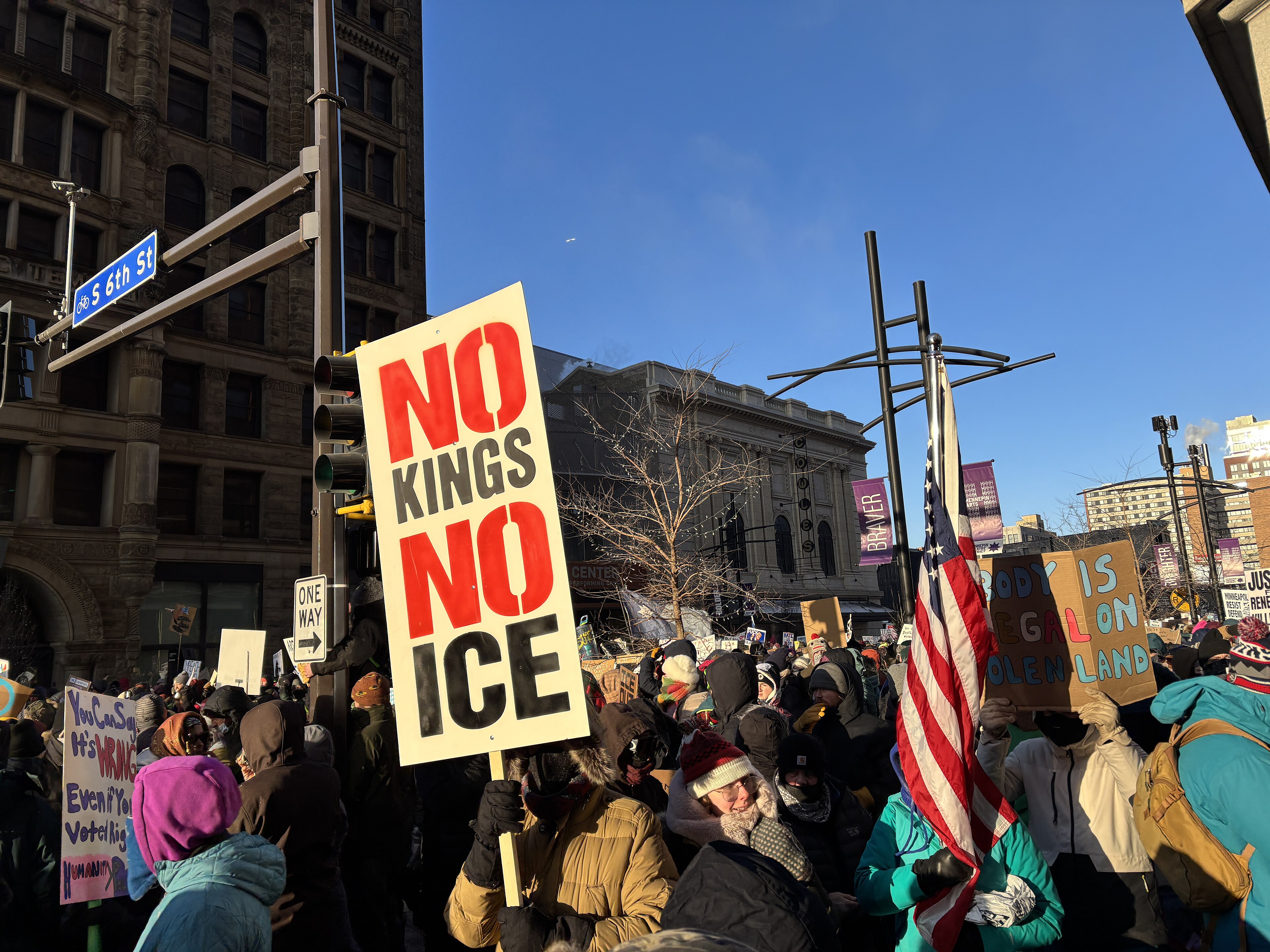
courtroom. There were crowds outside the main entrance. There were protests
with megaphones. Several people were, were wearing bucket hats with prints of
lemon on them and, and signs saying, protect free speech and, and things along
that theme.
But it was quite, quite the turnout.
Benjamin Wittes: Were
there any anti-Lemon protestors, like, you know, or was this a, a very pro
defendant crowd?
Peyton Baker: It was
a very pro defendant crowd. There were no anti-Lemon signs that I saw anywhere.
But again, bucket hats with lemons on them, dotted the crowd.
Benjamin Wittes: All
right. And normally an arraignment is a pretty uneventful affair. It's pretty
scripted. Defendant enters a, a, a plea and gets, they check whether he's okay
with his counsel. And they do some scheduling items and, you know, it, was
there anything additional in this hearing that is worth reporting?
Peyton Baker: There
are a couple of interesting instances. First, I mean, first I wanna note that
the defendants walked into the courtroom, smiling, shaking hands, flapping each
other on the shoulder.
It, it, it looked like a, a festive gathering at the
defendant's table. On the other hand, there, there were two government
attorneys–
Benjamin Wittes: And
may you all guys, when you go on trial for a felon, multiple felonies, may you
have a festive atmosphere at your trial at your arraignment. I mean, you know,
like, enjoy it.
Peyton Baker: It, it,
I mean, there were moments where it turned tense, but certainly it, it was
festive is the word to describe it in the beginning. At, at the government's
table there were two attorneys and they were silent during the entrance, buried
in their papers. So it was a notable difference.
In terms of the, the arraignment itself, the first sort of
notable thing that happened was there was a, an early dispute about release
conditions.
The, the government, said that they wanted to impose a
condition that Mr. Lemon would not be able to go to the church. And Mr. Lemon's
lawyers sort of immediately raised their eyebrows at that. Judge Micko waved it
off pretty quickly. He said he doesn't see any reason for that and he's going
to impose standard, standard release conditions.
But it did sort of, give an air of, of, of the, that was where
the tension started between these two parties. You could see Mr. Lemon's
attorney sort of bristle at that. Reading his the charges against him was very
standard. When he was asked about his plea, Mr. Levin smiled a big smile,
leaned into the mic and said, not guilty. It was pretty striking in that
moment. Beyond that, the other defendants all pleaded not guilty.
It was, it was very standard again, until a motion. Mr. Lemon's
lawyer again stood up to address a missing cell phone. That, because of, or, or,
was debated for five, 10 minutes. The, the Lemon's lawyer said that the phone
was taken in Los Angeles, that they were told it was going to be sent to
Minnesota, but they didn't, they hadn't gotten any confirmation that it was
they didn't know if there was a search warrant executed.
If it was, if there was not, they demanded the phone be
released immediately if it was a proper search warrant executed. They demanded
to know to get some clarity on, on where this phone was and what the process
was. And Judge Micko asked the government what, what the status of the phone
was. They said that it was currently with Department of Homeland Security and
that they weren't able to provide any more details than that at this, at this
time.
Judge Miko said that as far as he was aware, in in, in these
kind of instances, it's possible for the government to take a forensic image of
the phone and then give it back. And the government said that they're not able
to do that at this time and, and didn't elaborate beyond that. They said that
they'd hoped to get it back within the next couple of weeks, but it was, it was
very vague.
Benjamin Wittes: And
was there any resolution of the status of the phone?
Peyton Baker: Not
today. The judge said that he was going to resolve this once he's more properly
briefed, so, this issue has been pushed off.
Benjamin Wittes: All
right. Finally, is there any briefing schedule for any dispositive motions or,
I, I imagine there's gonna be like 20 such motions. I assume there was some
discussion right, of when we should expect them?
Peyton Baker: Well,
you know, there was not a concrete date set by the judge. But both parties
indicated that they will be firing filing additional motions and, and, and
briefing today. The government indicated that later today it was going to file
to have this case be deemed complex in order to be able to push push some
further scheduling down the road. Lemon's lawyers immediately stood up and said
they were going to oppose that. Which again, Judge Micko said he would, he
would resolve that on the briefs.
The other indicia of, of more motions to come was Mr. Lemon's
lawyers said they were gonna seek compulsion of grand jury to deliberations
because they, they have major concerns about the applicability of these
statutes to the defendant's conduct. And so both parties and, and, and Lemon's
lawyers also referenced that there, there may be other motions to come in
addition to that, but that it was going to be expedited. They wanna get this
thing moving. And the government showed the opposite signs. They, they wanna
slow this down as much as possible.
Anna Bower: So that
is ridiculous because the government tried to get them indicted and arrested
within a span of like, two weeks after the event. Sorry.
Benjamin Wittes: That's what, oh man. That's
interesting.
Anna Bower: Okay. Sorry, I just had to chime in there. Continue.
Peyton Baker: Well,
as I said, that's, that's all. The discussion about what's going to happen
next. Both parties are, are, are gonna file, you know, separate, separate
arguments about this and, and so we'll see what the judge says.
Benjamin Wittes:
Alright. So Anna, Eric and LT, you guys wrote a pair of lengthy articles about
this case. And I'm gonna throw this question to the lot of you without knowing
which of you is the right one to answer it. What do you expect to be the
trajectory? I mean, based on your pieces, I expect there will be a whole lot of
pretrial action and you know, a fair bit of litigation over whether there's
even a crime here.
What do you, how, what do you imagine the, the, the trajectory
of the case looking like? Are we talking about, you know, two or three months
of pretrial litigation and then a trial? Are we talking about should we expect
this thing to disappear like Comey and James, like in pretrial litigation? What
are we, look, what, what should we be looking for here? Anna, get us started or
LT get us started, I think.
Anna Bower: LT wants
to get us started?
Troy Edwards: No, I,
I was just gonna say, there's a couple angles to this. One is, what is the
culture of the court like? So in the Eastern District of Virginia, which is
traditionally called the rocket docket, because of how fast they move, it's a
culture that the bench buys into and, and kind of works with.
And so if this district operates in a similar playing field,
you know, they'll push right ahead. And the judge, it'll be a lot, it'll, a lot
of this will be determined on how hard the judge is willing to push reverse
engineering this.
To touch in what Peyton explained so well, this Speedy Trial
Act kind of complex case designation request by the government–there's a prong
in the Speedy Trial Act, which traditionally the government will use if this is
going to be a complicated case, factually, legally; there's a ton of classified
information; there's a lot of equity holders you have to deal with.
I'm struggling to see how any of the normal considerations that
make a case complex would apply here. It is, I, I think that motion ought to be
denied just on the facts that I see from the outside looking in. If that's
denied, then we're dealing with a trial date that'll be set pretty quickly and
they've gotta compress all that pretrial litigation in the next two, three
months. And so it ought to move really quickly.
And seeing how Abbe has operated in other cases, he will know
that and he'll be requesting to file motions within the next two weeks, is my,
my guess. Just not even touching the statutes or the challenges they'll lay
raise.
Benjamin Wittes: Do
you share my sense that this is a case that a, a a a judge is likely to look at
and say let's think very hard about whether a jury should get anywhere near
this? I mean, I, I look at this and I say at the end of the day, this is maybe
a state trespassing case. And nobody's entrance or exit was blocked there.
It's not clear to me that the FACE Act really secures any
right, that these people interfered with. I'm just having spent quality time
editing your all's piece. I'm still struggling to see a crime here. And if I
were a federal judge, I don't think I would let this case go to trial. Do you
think I'm being unduly optimistic?
Troy Edwards: No, no,
I don't. Look, there are portions of this case that I could see a reasonable
judge saying, boy, that seems like a factual question that a jury could look
at. For example, intimidation, right? Whether there is some reasonable belief
that someone has been put, their bodily harm has been, they've been subjected
to bodily harm.
There are obviously in the complaint affidavit, witness
testimony, victim testimony to that effect, those kinds of questions, I could
see a judge saying, yeah, traditionally that ought to go to a jury. There's so,
there's so much before that question that the government has to get through
that. An, a judge can reasonably look at this and go where there are
constitutional concerns with the Commerce Clause and the underpinning
justifications of how Congress has enacted this legislation.
And, and two, how the government has framed its case with
regard to the conspiracy charge and what the agreement is that any reasonable
judge ought to look at those questions first and say, yeah, this is, this is
not getting to a jury. We're gonna litigate this. And I typically, judges are
risk averse and we'll say, man, it, let's see how it proceeds. These are
perfectly reasonable grounds for a district judge to say, no, this, this isn't
getting past pretrial litigation.
Anna Bower: Can I
make the counter argument? Please? Not the counter argument 'cause I agree with
that. I mean, we wrote the piece together and with Eric and spent a very long
time on that piece, so I hope everyone reads it.
But I, I think that, like LT mentioned, there are some strong
arguments. I also think though people are really over selling or over pro-, I
don't know, what's the word? Over promising, over misunderstanding the First
Amendment potential challenges, sure. Because and part of that has to do with
the pleading standard and, and the way that on a pretrial motion, you have to
just look at the allegations in the indictment.
And the way that the government crafted the indictment is it's
like, it just does not, it, it like, it, it doesn't really comport with a lot
of the reality of what seems to have happened. But also it might be sufficient
to get through a bunch of these pretrial motions that you otherwise would bring
related to, you know, maybe some as applied First Amendment challenges or
sufficiency of the indictment for failure to state a claim or an offense.
So, so it's possible that this case goes to trial but
ultimately, like from what I can tell, these people just didn't commit a crime
other than maybe a state law trespassing violation. And so that kind of is the
core issue, is that they're being prosecuted for not doing what they're accused
of doing and, or for behavior that just does not fit with the statute and the
way that the government's trying to prosecute it.
Benjamin Wittes:
Yeah, and there's a very good illustration of this on at least two points in
the article which I do commend to people where it looks at the text of the
indictment and then looks at the video and just holds them up next to each
other. And it does not seem to, the video does not seem to reflect what is
alleged in the indictment.
Alright, Anna, speaking of actually complex cases let's talk
about Fulton County Georgia, where the case is so complex that it resides in
the realm of fantasy and you know, non-existent facts. We got the affidavit
released for the search warrant in Fulton County and it was like a bad
nightmare of what the, of what one might have thought this affidavit would be
tell us about it.
Anna Bower: Yeah,
Ben, I truly, I almost have no words still. I am speechless oh, how many days
later? And I feel like I have been cursed because these niche characters that
I've been following for years in my reporting on Fulton County are somehow
popping back up again.
But in the context of being government witnesses in a search
warrant who are being portrayed as reliable sources of information for election
information when in fact many of them have been spreading conspiracies for, for
years and things that are provably wrong. But, you know, I think more than
that, what's shocking is that I just don't understand how this affidavit that
was unsealed in support of the Fulton County election records search was found
by a magistrate judge to have, have probable cause that there's evidence of a
crime in the Fulton County warehouse.
So the two statutes, as we've discussed before, one is this
retention statute where you have to willfully destroy or fail to preserve
election materials that are supposed to be preserved for a period of 22 months
after an election. And those records are it, it's, there's a certain phrase,
it's like any records that are relating to an application to vote or any other
record requisite to voting.
And I think that's actually kind of important for one of the
main claims that is in this affidavit, which seems to be that, you know, the
probable cause for this particular statute, the retention one, is that there
were ballot images that were missing in Fulton County from the recount in Georgia.
Now, that claim actually is a, is a true one and it's one that Fulton County
has admitted to and is the result of number of different issues that Fulton
County had related to some of its chain of custody issues during the 2020
recount.
But those were not issues that a, have ever had any evidence of
intentional wrongdoing. It's a human error type of thing. And, and for years
now, you know, there's been investigation after investigation into this thing,
and no one has ever found that the missing ballot images are a result of
intentional destruction of records. More importantly, though, the promising a
crime in, in relation to this particular statute on missing ballot images seems
to be kind of an issue because a ballot image is not requisite to voting. It is
a duplicate of the physical ballot.
That is the thing that is actually counted when you put it in a
scanner after you vote in Georgia. And that physical ballot is the thing that
they went and got from the Fulton County warehouse. That is the election record
that is actually matters. So the ballot image is just a duplicate.
And yes, it is important for certain verification procedures
and elections. I don't mean to suggest that it's not, but a missing batch of
ballot images is not requisite to voting. And so I think that there's, there's
an argument there that from the get go, you kind of have a problem in crafting
or building a case on that.
But more so than that, all of the people who are talking about
these ballot images in, in the affidavit are people who like don't have
election expertise. It's, you know, Janice Johnston, who's, who's a, a former
doctor, who's the state election board member. It, it, it's just a jumble of
kind of claims that she's made about how the ballot images are missing. It's
kind of secondhand information from other people. It's, it's things that just
do not stand out as credible. And that happens. .
Benjamin Wittes:
Yeah. So where does this go from here? I mean, you have a, a emotion you know.
What's the state of the litigation over this at this point? Is it, is it just
revealed and the investigation now proceeds, or is there some active challenge
to it?
Anna Bower: Yeah, so,
we do have an act and sorry I didn't get to the second statute, but it's kind
of more of the same in terms of the analysis. So, more to come on that
hopefully in written form at some point next week. But in terms of where we're
going in this litigation we do have a motion for return of property that we've
discussed previously that Fulton County filed.
And remember when they initially filed that motion where they
were seeking the return of all the ballots that were seized they didn't have a
good sense of, of what was in the affidavit and how to really challenge the
lawfulness of it because it wasn't unsealed yet. And now that it's unsealed and
we have a sense of what's in it the Fulton County has said that they're going
to amend their motion or, or file something to supplement it.
And we have a briefing schedule on that. We expect a filing on
Tuesday from Fulton County to that end. And then the judge in Georgia, Judge
Boulee has set an evidentiary hearing on February 27th. I'm, I'm not sure if
maybe LT or like if Roger or someone who's you know, is fa-, very familiar with
criminal cases, has any experience with seeing a, a rule 41(g) evidentiary
hearing 'cause I have not seen one.
All of the rule 41(g) cases that I have am familiar with, which
are not a whole lot have not involved evidentiary hearing. So I'm very curious
to see what this evidentiary hearing even involves. And will it involve
something kind of like, like, like is it, is it almost kind of like, in this
case, will it maybe be like a Franks hearing type of thing, where you have the,
the, it's about maybe misrepresentations and omissions in the affidavit. It's
about you know, something to that effect.
Do you have the affiant testify? Do you like who testifies? That
kind of thing, I'm not really sure. Roger, LT, any thoughts on that? Or Eric as
well?
Benjamin Wittes:
Yeah. What does this hearing look like?
Roger Parloff: I'll,
I'll defer to LT on that if he has any experience.
Troy Edwards: No, I
mean, look, in my experience, they're not common. And I, I was not a part of
any hearing. Typically 41(g) we can resolve, if you're working together and
you're trying to find out how to return property, the government in good faith
can often resolve these before it gets to the phase of a hearing.
And so I'd be guessing, but, but Anna, I think you're not wrong
to say that the defense, may I say the defense, the, the folks moving the
movements may intersperse their arguments with trying to strip out at some of
the foundation of the search warrant. I think they may have an easier time by
also adding the duplicative nature or the nonsensical reason why the government
ought to keep these.
Right. Because part of the argument I think from the movements
could be you've taken, you can take digital versions, you've requested digital
versions, you don't need these physical ballots. So force the government to be
on its toes and justify why the physical ballots are necessary. That is
slightly different than stripping out the underpinning and attacking that of
the probable cause.
And instead just saying, okay, what you've done is not
necessary. Now I sense that that's probably where they would head if they want
the physical ballots back.
Anna Bower: Yeah. The
other thing I will say that I could imagine in terms of an evidentiary hearing
is like one of the disputed questions of fact, I think is how many boxes were
actually taken.
So it could just be that that's. Why we need to have a witness
is someone from the government to actually talk about here's where the boxes
are and here's how many we've got. Although I don't see why that couldn't be
done by a declaration. But yeah.
Benjamin Wittes: Any, any indication in the affidavit, Anna,
why the DNI needed to be present at the execution of the search warrant?
Anna Bower: No. And
that's and I, I was, hope I was, I was being too long-winded. So I apologize to
our listeners. I, I got, I got way ahead of myself talking about the retention
statute, so I didn't get to the foreign, the lack of a foreign nexus in which
there is none in, in this affidavit. So it remains to be seen why Tulsi Gabbard
felt that it was appropriate to be present for this search, where according to
the search warrant affidavit, there is nothing there to suggest that there's a,
a foreign interference nexus.
Roger Parloff: Can I
just add one thing? Of course also the, the, the affidavit or no one of the documents,
a declaration filed by Pitts, the plaintiffs by, by Fulton County mentions that
she shows up about eight hours into the search an hour before it ends. I mean,
it looks like she's there for social media or she's there for symbolism or, you
know, she's not a crucial part of this. It's some symbol.
Benjamin Wittes:
Alright. Roger, we've had a lot of action in the, in the field of illegally
appointed U.S. attorneys resisting their removals this past week. Give us a, a,
a round the horn of the rogues gallery of illegally appointed U.S. attorneys.
Roger Parloff: Yeah,
I think, and I will go through this quickly.
At this point six, six people, six, have been found to be
illegally appointed: Eastern District of Virginia, Central District of
California (that's like Los Angeles), District of Nevada, Northern District of
New York, District of New Jersey, District of New Mexico. We had movement in four.
The, we just had the government filed its fourth ahem, it's
it's, initial brief in the Fourth Circuit in the Halligan case, Lindsey
Halligan case. So that's their attempt to reinstate the, the indictments
against Letitia James and James Comey. And so it's both an argument that she
was properly appointed but failing that it's, that it was a paperwork error.
And the Pam Bondi sort of post hoc, nunc pro tunc
ratifications and supplemental appointments solve any problem. And, and you can
re res resurrect the indictments the in, in, in–
Benjamin Wittes: Well,
Lindsay, if you're listening and you have any thoughts comments, Anna is,
checking her phone for any comments that you may have by text.
Roger Parloff: Yeah.
And then I think yesterday we had the Ninth Circuit her argument in the case of
Sigal Chattah. She's the, she was the one who was found to be illegally
appointed in, in Nevada. And actually our colleague, or former colleague James
Pearce I spoke with him. He was a, a, he argued as an amicus there. He says,
and he says on the whole, the argument went well for us, challenging the
appointment and not well for the government.
One thing that I wanted to know because the way this is shaking
out although six have been disqualified in two cases in, in Los Angeles and in New
Mexico the, the, the person was nevertheless found to be properly appointed as
first assistant U.S. attorney and therefore, could continue supervising all of
the-. So it was basically the same as even though they can't be U.S. attorney,
they can be first assistant. So, and, and apparently that did not get much
attention at the argument.
In the Northern District of New York, that's where John Sarcone
was disqualified a week or two ago. And there the district court tried to
appoint a new person a very well qualified experienced guy. And, under 546(d) the
District Court can do that. And he was fired by Trump a few hours later. And
Todd Blanche wrote a tweet said, judges don't pick us attorneys POTUS does see
Article Two of the Constitution.
But actually Article two of the Constitution does say that
inferior officers can, if Congress likes, they can allow for, among other
things, judges to choose. So, anyway they have no–
Benjamin Wittes: It’s
actually pretty explicit on the point.
Roger Parloff: It's
totally explicit. And then the, the fourth I just wanted to mention, 'cause we
this the New Mexico one, Ryan Ellison he was found to be unlawfully appointed.
That was actually January 14th and for some reason I missed that one. And I, we
never sort of caught up and I thought, I, I should mention that's the, the
sixth one.
And it's actually a good opinion by Judge David Nuffer of Utah.
He's an OBO Obama appointee. It gives a good historical background on all on,
on, on these statutes. But like I say it has this sort of frustrating ending
where he decides that although yeah, he's unlawfully appointed, but the, the
Pam Bondi did appoint him as first assistant and he doesn't see how that can
be, what's wrong with that?
And that does seem to allow him to continue to supervise and
it's almost as if he were and I, I have a concern that maybe after all the dust
settles, that's where a lot of these are gonna end up.
Benjamin Wittes:
Alright Eric, let's talk about Judge Kelly on the Supermax. He has blocked
transfers of death row inmates whose sentences President Biden commuted to the
Supermax in Florence, Colorado. I have not read the opinion, but I assume it's
because you're not supposed to be using that to punish people.
Eric Columbus: It's a
due process issue. And, and our listeners may wonder why we are covering a
death penalty case, which we normally do not. And, and the the reason is that
it goes pretty squarely to the politicization of the Department of Justice.
President Trump is eager, anything that his predecessor Joe
Biden has done President Trump is eager to undo. And on his way out the door
president Biden basically emptied federal death row by commuting the sentences.
I believe 37 inmates who, you know, obviously have been convicted of doing
heinous stuff.
And one consequence of being removed from death row is that you
need to be physically moved somewhere else because there is a death row is a
literal physical place in the federal system. It's in, it's the special
confinement unit of the penitentiary in Terre Haute, Indiana, if I'm
pronouncing that the name of that town correctly. And so what that means is
that you need to go through an individualized process per BOP, Bureau of, Federal
Bureau of Prisons regulations about where the best place for you is to go.
And on his first day in office, Trump issued an executive order
directing the attorney general to address the facilities where these people
should be moved to. And he, I think, had, had also kind of said some rhetoric
about how, you know, we need to really punish these people. And Bondi started
the process. That was basically a sham process that Judge Kelly found. And the,
the outcome was, was pretty much predetermined that they would be going to ADX
Florence, which is the, the the, the highest, the most secure.
Benjamin Wittes: It's
the Supermax
Eric Columbus:
Supermax. It is a class of one, and you, you are not supposed to be there
unless it can, it's shown that you have no, you cannot be placed anywhere else.
It is obviously never fun to be in prison at all. But this is by far the, the,
the most restrictive environment to be in, within the federal system.
And the, plaintiffs in this case did basically receive process
in the sense of a, of a hearing and, and and written decision. But it was
basically all kind of a the judge found it was basically all kind of, kind of,
prearranged as to what the outcome would be. And apparently in the D, in the D.C.,
under D.C. Circuit law, there is a the, the, a specific case law about how you
have a, a liberty interest in not being moved to more restrictive facilities
within the federal system.
And that in some other, circuits that law does not exist. So if
this kind of keeps going up, it's possible that the Supreme Court could rule
against them on, on that ground. But I, I will note also that Judge Kelly is a,
a Trump appointee. He's someone who I've actually argued before in a, in a case
relating, involving January 6th and is very like, like most of the district
court appointees in the DC District Court. He is not very Trumpy at all. And
it'll be interesting to see where this case goes.
Benjamin Wittes:
Yeah, I've always found him a an excellent judge and I have a lot of regard for
him. Alright, speaking of politicized machinations at the Justice Department,
the Justice Department has moved to vacate the conviction of one Steve Bannon. I
don't imagine the defense will have any objection to that, but I also wonder if
the judge, and I don't remember what judge this is before would have any basis
to grant such a, such a motion. What, what's the status of this?
Eric Columbus: It's
before Judge Nichols who is another Trump appointee who is also in the kind of
more traditional Republican mold and is, is not particularly Trumpy, if you
will. He it, it's interesting to hear that, that Bannon did not receive a
pardon, at the beginning of the administration, his prosecution was for not
testifying before the January 6th Select Committee.
And I, this is actually another case that I worked on. I was I
represented the January 6th Committee and we filed an amicus brief in, in
Bannon's criminal cases. We were technically the, the victims of his, of his
crime. And why didn't Trump issue him a pardon while he was issuing all the
other January 6th pardons in, in, in January 2025.
And I was actually chatting with Kyle Cheney of Politico about
this, and, and Kyle suggested that Bannon may actually prefer this Rule 48
motion to, to vacate the conviction because it, it, it undoes the conviction
totally rather than a pardon which has in, in the eyes of some, and kind of an
imputation of, of, of guilt. But this is all kind of weirdly imaginary and
symbolic because Bannon was in fact committed convicted and did in fact do four
months of, of time in, in jail.
There is some kind of non-trivial issue in Bannon's case about
whether a, a good faith reliance on executive privilege or would face belief
that you are protected by executive privilege should shield you from testimony
in these situations. That that argument was foreclosed by a D.C. Circuit
opinion. But the, the government is not, to oppose Ben in, in making that, and,
and as Benon makes an argument before the Supreme Court, and so it decided just
to vacate the conviction.
Benjamin Wittes: And,
and will, is your impression that judge Nichols will have anything to say about
that? Or will he just see no conflict between the parties and so agree to it?
Eric Columbus: I
think that at the end of the day, he probably will feel constrained to ag,
agree to it. I mean, we've, we've seen things like this and I think with Roger Stone,
I believe back in the day.
Benjamin Wittes:
Yeah. Although that case was not resolved. This, this case was tried and
convicted. And there's a final judgment. The Stone case was still pending.
Eric Columbus: That's
true. I, I, I, this is a pretty rare situation and I, we are reaching the
limits of my knowledge of the law in this area. I, my instinct would be that
there would not be a basis for Judge Nichols to oppose it.
Roger Parloff: I, I
think that's right. I think there's been dozens of these at this point in in
the January 6th cases where they were on appeal and pe they had already been
convicted and, and the government moved to, to let them, to, to, to drop it.
And there's been no resistance at all by any court.
Benjamin Wittes: Interesting.
Alright, let's go turn to our immigration roundup, which is the
part of the show where all the cases have initials as case captions. Let's
start with UHA v. Bondi which involves the Trump administration's policy
of temporarily detaining everybody. Roger, what's the case about and what's
the, what's the status?
Roger Parloff: This
is about refugees. It's an important case, but, but I spoke about it last week
or the week before, I forget. This is Judge Tunheim in a, a Clinton appointee
in Minnesota. Yeah, the, the policy, it's a mis, it's a change in
interpretation that would req applies, is being applied to 5,600 refugees in
Minnesota.
And it means that if you have been, come in as a refugee and
after one year, you haven't already become a, a, a lawful permanent resident,
which I think is almost always the case, they arrest you, detain you with a
war, it's a warrantless arrest, and they ship you off to like Texas or New
Mexico. And and then they do an examination to see if you've become removable.
And the, it's a, a language in a statute that says any alien
admitted under section blah, blah, blah, shall at the end of such year period
return or be returned to custody for inspection and examination. And in 45
years, it's never been interpreted to mean this, it's been interpreted to mean
some sort of encounter.
You, it doesn't have to be detention, it doesn't have to be a rearrest.
You can come in and check in. So, he has he issued a, a TRO and this week he
also declined an attempt to dissolve it. There's it's after getting the
government's full, full argument, he said that to agree with, to accept their
argument would mean that the previous administrations had been violating the
law for 45 years.
Benjamin Wittes:
Alright. J.G.G. our perennial weekly favorite what's going on in the J.G.G.?
This is a big deal case now.
Roger Parloff: Yeah.
Judge Boasberg issued this order yesterday. It, it actually applies to a fairly
small number of people. It's a subset of it, the 137 that were sent to CECOT
under the Alien Enemies Act. And who were then prisoners swapped to Venezuela,
so they're no longer in custody. And some of them managed to escape into
neighboring countries. And we're only talking about those, that subset right
now. And he's saying, and a lot of them want to.
Yet their TdA, their this Tren de Aragua designation officially
lifted because it makes them it make, it's very dangerous for them whatever
country they're in to be to have this determination that they are ter a foreign
terrorist organization.
And so they, they, he, judge Boasberg says they can submit
written petitions, basically habeas petitions to him from the third country.
The A CLU lawyers will file them. And the expectation is by the ACLU lawyers
that these particular ones applying. It'll be so obvious that there's no
evidence that their TDA, that the government won't even have anything to respond
and there won't be a need for a hearing.
If there were a hearing, it would be an unbelievable logistic
crisis, very difficult. He also as a, as a alternate said, you know, if some of
these people want to come back to the U.S. the government has to facilitate
their return, but the understanding is they will be detained when they get
here. So I don't think anyone's gonna choose that option.
The other expectation, I mean, the government had said before
this, look, if you do anything at all, other than dismiss this case, basically
we're gonna mandamus your ass. And, and it was a very re it was unusual. It
didn't say that, but it was an unusual position to take. It just said, we're
through. We're not giving you any proposals. You, you dismiss it, or we, we go
up and, and so that's what we're expecting. I'm a little surprised it has
hasn't happened yet.
Benjamin Wittes:
Alright. Speaking of things that are sur aren't surprising the Fifth Circuit
has upheld the alien detention policy. I'm not sure which three initials this
case is, but what, what do we know about what happened?
Roger Parloff: Yeah,
the defendant is Buenrostro-Mendez with a hyphen in, in between. And so this
was not surprising. Like you said, it was two to one Edith Jones a Reagan
appointee, but I mean, real out, real right-wing, and Stuart Kyle Duncan, a
Trump appointee they were in the majority. Dana Douglas, a Biden appointee was
the dissenter.
And meanwhile we're waiting for we might get another, the Seventh
Circuit in the Castañon Nava case might it's already said it's likely
that they will. It's their position that that is, that the government's
position is likely wrong. We might get another weigh in from them. We're
waiting for a case in the Eighth Circuit.
Meanwhile, Kyle Cheney published some statistics. This won't
matter that we've seen it before. It makes no difference. But 373 judges so far
have ruled against the Trump administration policy on mandatory detention, 28
for. And of the 28 who are for, 20 are Trump appointees. And even among Trump
appointees that they're a minority. 44 Trump appointees have voted against the
policy, 20 for. So, anyway Kyle is still pretty on top of this.
Benjamin Wittes:
Alright Eric, remind us who Marimar Martinez is and what's going on with her.
Eric Columbus: So, Marimar
Martinez is a woman who in early October was shot five times while she was in
her car in Chicago by a Border Patrol agent.
Benjamin Wittes: I, I
gotta say from the pictures of her in the Chicago Sun Times, she seems like in
pretty good shape for somebody who was shot five times, just a few months ago.
Eric Columbus: I mean, Ben, I think you've got a, a, a future as
a DHS lawyer.
Benjamin Wittes: No,
I, I'm, I'm just like, she's, she is, you know, alive and, and I, I, I mean,
usually when you hear somebody's been shot five times, they're dead.
Eric Columbus: This
is true. This is true. So, you know, she and she should be thankful, I think
then to the–
Benjamin Wittes: Yeah.
That wasn't where I was going with this argument.
Eric Columbus: I
know. So she was shot five times and as, as normally happens when you are shot
five times she was subsequently indicted and right and charged with assaulting
federal officers. And she was the DHS initially claimed that, that, that she
was blocking agents and had attempted to ram them with her vehicle before she
was, was shot.
And the text messages that the agent had sent emerged during
the case in which he bragged about the shooting, and talked about how she had,
he fired five times and she had seven holes and, and how proud he was of that.
And the the government, the government dropped the case in I believe late
November, but she didn't quit at that point, and her lawyers didn't quit.
They, they fought to release evidence in the case, including
body cam footage that they felt contradicted the government story. And the, the
government just last week released a lot of that footage and released messages,
including kind of, kind of remarkable messages from Greg Bovino. Who had said
that, you know, you're, you're to the agent that you know, you're doing such a
great job.
I'm going to, you know, everyone's on your side, including El,
El Hefe was the term that was used according to the agent.
And he offered to, to delay the agent's mandatory retirement
age. And the, the, her release, the, and the government kind of fought tooth
and nail the release of the evidence, but she was, she it's just kind of this a
fascinating case study in how the tables turn in some of this litigation, right?
That, you know, first they shoot her, they in, they, they
indict her, and then things beginning to look not so good for them. So they,
they, they, oh, sorry. They, they, not only did they shoot her, indict her, but
they also called her a domestic terrorist, which is the guy of the, the, the
favorite term for DHS when they don't, when they're, someone is kind of
opposing what they do.
They call them a domestic terrorist. Like, just like they
called Renee Good and Alex Pretti after shooting them. And, but then the tables
turned. They eventually, not only did they drop the case, but evidence, more
evidence emerged about the, about the, the shooter and, and the victim kind of
kept litigating, even though she had the case had been dropped against her.
And the district judge ordered him to release things. And the
latest developments, not only did they have, they released evidence that is, is
more exculpatory towards the woman they shot, but they've announced that
they've put place on the, the shooter on administrative leave. So the, the
entire process has complete disaster.
Whereas if they, for them kind of politically in terms of
their, of, of how everything's looking, whereas they had, they had, they just
not bothered trying to indict her in the first place. This, they might have had
none of these issues.
Benjamin Wittes:
Well, I mean, it is a shocking case and and I guess it would be I, I mean it,
the only, it's, it's that said, given everything that's happening, it's not
surprising and it is a good thing. I think that some of these cases are turning
around and biting them in the butt. Because that may actually provide some
useful deterrent value particularly of some of these people who are you know,
end up facing charges themselves.
Troy Edwards: And,
and particularly how hard it is increasingly to bring Bivens actions.
Benjamin Wittes:
Exactly, exactly right.
Troy Edwards: It
provides a, a remedy.
Eric Columbus: Yeah.
And she, and she has said that she's gonna be filing a federal Tort Claims Act,
Benjamin Wittes: Alright,
so let's talk about California's no Secret Police Act. Eric, what is it and why
is it not going into effect?
Eric Columbus: So, I
should have actually written down, there were actually two pieces of
legislation that were are in involved in this case, the No Secret Police Act
and the No Vigilantes Act, the No Secret Police Act attempted is a, is a law
that California passed to forbid federal agents from wearing law enforcement
officers from wearing masks.
And the No Vigilantes Act requires them to display
identification that includes their agency and either a name or badge number. So
the federal government sued California to enjoin these two laws. This is un
unusual. But what happens every now and then federal government's suing a state
to do something like that, and it often is in the realm of immigration.
We saw it a lot under the Obama administration suing often
Texas regarding their immigration policies. And the government raised a Supremacy
Clause defense, sorry, nothing, not, not defense. But the, the federal
government is making a Supremacy Clause argument and, and kind of specifically
the intergovernmental immunity doctrine, which is kind of a, a, a court derived
doctrine that is, that kind of comes out of the Supremacy Clause which
basically says that you cannot, the government, the state government cannot
regulate the United States directly or discriminate against the federal
government or those with whom it deals.
So it's not clear what it means to regulate the federal
government. And the district court Judge Christina Snyder, who is a a a Clinton
appointee concluded that these, that neither requirement, the no mask
requirement and the name slash badge requirement do not really regulate the
federal government 'cause they do not impinge that much on its activities.
And that is, I suspect, is not something that this Supreme
Court would, would agree with, certainly in the, in the not, well, not
certainly, but maybe even more likely in the, in the, in the mask context. She
found that they had not really made the, that, that the state had, that the
federal government had not really made its case as to why it can't perform
their duties just as well if they're not wearing masks.
However, for reasons I don't really understand, the California
law applies only to federal officers, not to state officers. And California
could not really come up with a good reason for why it, it, it, it did. I mean,
California said, well, only some of our officers deal with the public and the,
the federal government's like, well, yes, but even for those, a lot of them do,
and you would not requiring them not to wear masks.
So what the judge said is like, look, you know, this this, this
discriminates against the federal government and therefore I'm gonna strike
down the mask. The no mask requirement. She did, however, allowed go into
effect the, badge requirement. I would expect that the federal government is
going to appeal. I don't think it has yet, but there's a stay. So I, I think
that she will just stay imposed by the district court itself. So I, I would
expect to see an appeal very soon.
Benjamin Wittes:
Alright, Roger. We have developments in our efforts to make sure that nobody
here on temporary protective status gets to stay. What what is going on with
south Sudanese and Nepali's, Honduras and Nicaragua TPS guests?
Roger Parloff: Yeah.
Maybe I'll, I I'll explain that. Yeah, there were these two developments and,
and one is pretty ominous really. You remember TPS, temporary protective status,
it's when there's a humanitarian crisis is a program that's been around since
1990 and the, a country will be designated like for 18 months. And that your
people, their people can come here and they can get a work permit and they can
try to stay.
And, and then the plaintiffs will tell you that the default in
the statute says, you know, that will be extended unless there's a finding that
conditions have improved. And the the secretary is supposed to talk to other
agencies, primarily the Department of State. Noem has stopped TPS for 12
countries. In many cases it's very obvious that she didn't consult with
anybody, not even State.
It's and, and so it, it, it, it, there's a, there would
normally be a strong sort of arbitrary and capricious quality. They seem like
pre, pre, pre preordained results. But there is also a, a statute, part of the
statute is a, says that there is no judicial review of the secretary's
determinations of, with respect to a designation, a termination, or an
extension of a designation. So that's a big hurdle.
And the way these cases have proceeded, when they do proceed is
that the argument is, well, we're not challenging the substance of the
determination, we're challenging the methodology. She didn't follow, she didn't
consult with anybody. It's not, it's a pretext, it's not real. So, those
arguments were successful in the, in the case involving people from South Sudan
in a this is District of Massachusetts, Patty Saris. That was yesterday.
And this does not involve a lot of people. This is I think
there are 232 TPS holders from South Sudan 73 applicants compared to like
600,000 Venezuelans, 350,000 Haitians. But you know, it is what it is. I think
this is a sort of, they call it a stay order. I think it's the equivalent of a,
of a preliminary injunction.
But the bad ruling for, for these cases is the Ninth Circuit,
which is and this involves Nepal, Honduras and Nicaragua. They granted a stay
of the lower court ruling of the lower court stay, so basically letting the TPS
termination go into effect against people from these countries, Nepal,
Honduras, and Nicaragua. Why that's especially surprising is that just 12 days
ago, a different panel of the Ninth Circuit agreed with the lower court to stop
a TPS termination involving Venezuela. And they drew a sort of thin
distinction.
But the Venezuela case Noem had tried to not just terminate the
designation when it would've naturally ended at the end of 18 months, but
early, a vactur of somebody else's which had never, which has never been done
before. And so they said that's different that, that's ultras. It's beyond your
power. The statute doesn't say anything. So it's not even covered by that
jurisdiction stripping one.
If this is the position of the ninth circuit which is a fairly,
you know, left of center circuit it, that's gonna be a tough one. It, it would
mean, you know, if that's what happens with the Haitians that would be fatal.
Benjamin Wittes: No,
it's, it's and these are really disruptive 'cause when you reverse TPS, you
basically create illegal aliens mass out of people who were moments ago here
legally. And so it's a, it's a very disruptive thing to do.
Alright, quickly, we've got two more cases to mention. Big day
for Rümeysa Öztürk, Roger?
Roger Parloff: Yeah.
Yeah. This was surprising. An immigration judge ruled in her favor. And I think
it surprised
Benjamin Wittes: Soon
to be unemployed immigration judge.
Roger Parloff: Yeah.
Yeah. I, we, this was earlier this week, February 10th. These rulings are not
easy to understand and usually they're, they're not public, but it was made
public and. She basically, I mean the two district courts had found that there
was it was unconstitutional. This is the Tufts grad student, graduate student.
You, you've seen video of her being arrested. She was arrested for she co-wrote
an op-ed in the Tufts Daily that was pro-Palestinian.
And and so, Marco Rubio tried revoked her visa. Her presence in
the U.S. was a, a threat to U.S. foreign policy, I think was the theory. And
two judges had said that was unconstitutional. And basically she sort of
followed that in addition, she seems to say, and which is quite interesting
that. The mere fact that you revoke somebody's visa doesn't make them illegally
here necessarily. As long as they're still fulfilling other obligations to, to
hold that visa. That part was really surprising to me.
Benjamin Wittes:
That's news to me.
Roger Parloff: Yeah.
Yeah. So anyway, actually the, the DHS spokesperson you know, on auto drive,
she said she called the, the immigration judge a rogue judge. So, I, I guess
that's a bad sign for that judge. But anyway, this doesn't mean the end of the
case probably. It might mean the end of the, the case has a second circuit
appeal that might be mooted. But I think the habeas will continue, especially
'cause the government might appeal the immigration judge's ruling to the BIA
which where I think they have a good chance of prevailing.
Benjamin Wittes: All
right. Finally, Eric what happened to the Hudson Tunnel Project and why are we
talking about that on Lawfare Live,
Eric Columbus:
Infrastructure is not exactly our bread and butter anymore than the death
penalty is, but this is another example of the president having fits of peak
and leading to litigation.
The Hudson Tunnel project is a, effort to build a new tunnel
over, under the, as you might guess, the Hudson river connecting New York and
New Jersey to supplement a single two tube rail tunnel that currently carries
200,000 rail passengers. And there is a a, a deal in 2023 to, to put this
tunnel through.
And however, at the end of September department of
Transportation issued a letter to the the Gateway Development Corporation,
which is the entity that is building the tunnel, saying that it had just issued
an interim rule removing various presumptions of social and economic
disadvantage from its disadvantaged business enterprise program and that you
can't do anything else regarding the Hudson tunnel.
And this was basically done at the end of, this is not
shockingly, it was done at the end of the fiscal year at a time where there
were were rare shutdown politics going underway. And this was viewed as a way
to, for Trump to get back at Chuck Schumer. It was also somewhat oddly timed
politically with the New Jersey gubernatorial election looming.
But and this is backstory is not really in the, in the case,
but the, we've seen a lot with a lot of these cases. They've been shunted to
the courts of federal claims in light of decisions by the Supreme Court on its
shadow docket holding that in contractual disputes and grant terminations.
Need to go through that somewhat time consuming process rather
than being adjudicated in district court. But this was a suit filed not by the
contract holder people whose contracts are canceled, but by the state of New
Jersey and the state of New York, who basically said, look, we are being very
much harmed by the cancellation of this project.
The judge agreed, and the judge therefore concluded that there
was no, the, the case could not be moved to the court of federal claims, and it
was properly in district court. And she, the def the government did not really
put up much of a fight on the merits. Their main argument was that it needed to
be, it was that it was in the wrong place and therefore she issued a, an
injunction, requiring the government to pony up the cash that had been
suspended. And the government appears to a, a, as of a hearing today, they said
that they, they've done so and they're not gonna appeal apparently.
Benjamin Wittes:
Alright. We have only one question in the queue. Andrew Steele since you are
not on the screen, I'm gonna read your question. Anna, Eric and LT in your article.
Oh. Here you are.
Andrew Steel: Hey everyone.
Benjamin Wittes: So
you can pose your own question.
Andrew Steel: Great.
So this is for the crew of Anna, Eric and LT. Thanks for the great articles
about this case. In the, the name of it is Minnesota Face Off article, you pose
the question of whether Lemon and the other journalist defendants could, could
raise a First Amendment free press defense, and then you cite three cases in
which that defense was, was considered and denied.
But my question is, is there a case where the federal
government actually attempted to prosecute a journalist for arguably news
gathering conduct and the defense was assessed and assessed in that context?
Because it strikes me that prosecution for actual news gathering would
implicate the First Amendment more than like breach of contract or search
warrants or something.
It's similar also to vindictive prosecutions that we raised as
like a very thin jurisprudence because there hasn't ever been a successful one
against the federal government. So yeah, just wondering if, if there is a
federal case that's kind of on point about a prosecution of a journalist?
Benjamin Wittes: Any
of you, can any of you think of such a case?
Eric Columbus: I
mean, there are things, there, are there prosecution? Sorry. The Julian Assange
prosecution is arguably on point. Obviously there are questions about the
extent to which Assange could be considered a a, a journalist. Unfortunately
for the question he wound up pleading guilty to a lesser charge.
And so the First Amendment issues were kind of untested.
There's another ongoing case involving a guy named Tim Burke who is a
journalist in Florida who's indicted under, actually under the Biden
administration for I, I, I'm not sure I'm getting this precisely.
But he was, he was, he acquired some, some outtakes of, I, I
believe Tucker Carlson interviews and he's in, he's charged with violating the
Computer Fraud and Abuse Act and wiretapping laws. I don't, his case is still
in progress. I don't know whether there have been rulings on First Amendment
issues. And I don't know, Anna or LT if you guys cases,
Anna Bower: Roger
might have some thoughts on the January 6th prosecutions 'cause there were a
few people who claimed that they were journalists or actually were journalists.
I'm thinking like Steve Baker was prosecuted. He pleaded out though, I think.
But then there was, I think at least one other person. So Roger, do you have
thoughts on that?
Roger Parloff: Yeah,
I, I, I think you might be thinking of Eddie Block, but he was never they
ultimately never charged him. That was a guy with sort of a, a photographer for
the Proud Boys. So I don't know. I, I don't, I don't know if it was ever
litigated LT, do you remember any case that was litigated?
Troy Edwards:
Partially in one of mine with Owen Shroyer from Infowars.
Roger Parloff: Oh, yeah.
Yeah.
Troy Edwards: We, the
government charged Owen Shroyer, who was part of Infowars, Alex Jones,
somewhat, number two, man. The government's perspective at the time, all of
this is kind of written out in filings, is that he was a legitimate defendant
and not a reporter or journalist and not operating within the, you know,
confines of what a journalist does that he ultimately ended up pleading, which
seems like a theme in a lot of these cases.
And so, while some of the public filings initially touched on
it, I don't recall there being any ruling from the judge on, on some of the
constitutional issues. One I was thinking too was Judith Miller back in the
early two thousands. But I can't, I honestly, oh-
Benjamin Wittes: That
wasn't the prosecution. That was a contempt matter.
Troy Edwards: Yeah
Eric Columbus: I
mean, that wasn't a prosecution, but it does, I mean it does, it's still kind
of the same point.
Troy Edwards: Yeah.
Eric Columbus: That people have gone to jail. And in her
case it was a civil–
Roger Parloff: Civil
yeah.
Eric Columbus: charge,
right? Yeah, but it's still, it's still going to jail because of what no one
disputed were news gathering activities.
Benjamin Wittes:
Well, there have been a lot of those. But I am unaware of any prosecutions.
Alright, folks, we gotta wrap.
Anna Bower: No, wait,
it doesn't, hold up. Can I just say though, like, it doesn't change like the,
there's the general principle that like there's no special journalistic
protection against generally applicable criminal laws.
And this is kind of the point I was getting to about the
pleading standard is really important to keep in mind here 'cause it's not like
the government is alleging that Don Lemon was doing journalism and then
prosecuting him for it. They're alleging that he did a criminal specific
criminal act, which me from looking at it, I don't think he actually did that
criminal act.
But that is what the, the pleading, well that's what they're
pleading and that's what the judge has to look at is those specific things in
the indictment. So it's kind of like, it's kind of hard to to say that, you
know, I, I don't know. I just think that the pleading standard here is gonna
make it hard and this fact that conspiracy law is so broad. So yeah.
Benjamin Wittes:
Alright. We're gonna wrap folks. We're already over time. Thank you to Eric, to
Troy, to Roger, to Anna, and to Peyton for joining us today. We're gonna be
back next week because the trials will keep trialing and the tribulations will
keep tribulation. And we will be back next week to chew over it all. Thanks for
joining us.
This podcast is part of Lawfare's livestream series, Lawfare
Live: The Trials of the Trump Administration. Subscribe to Lawfare's
YouTube channel to receive an alert the next time we go live.
The Lawfare Podcast is produced by the Lawfare
Institute. You can get ad-free versions of this and our other Lawfare
podcasts by becoming a Lawfare material supporter at our website, lawfaremedia.org/support.
You'll also get access to special events and other content
available only to our supporters. The podcast is edited by Goat Rodeo and our
audio engineer. This episode was Anna Hickey of Lawfare. Our theme music
is from ALIBI music. As always, thanks for listening.