
Cities Church Arraignment Signals Early Battles Over FACE Act and § 241
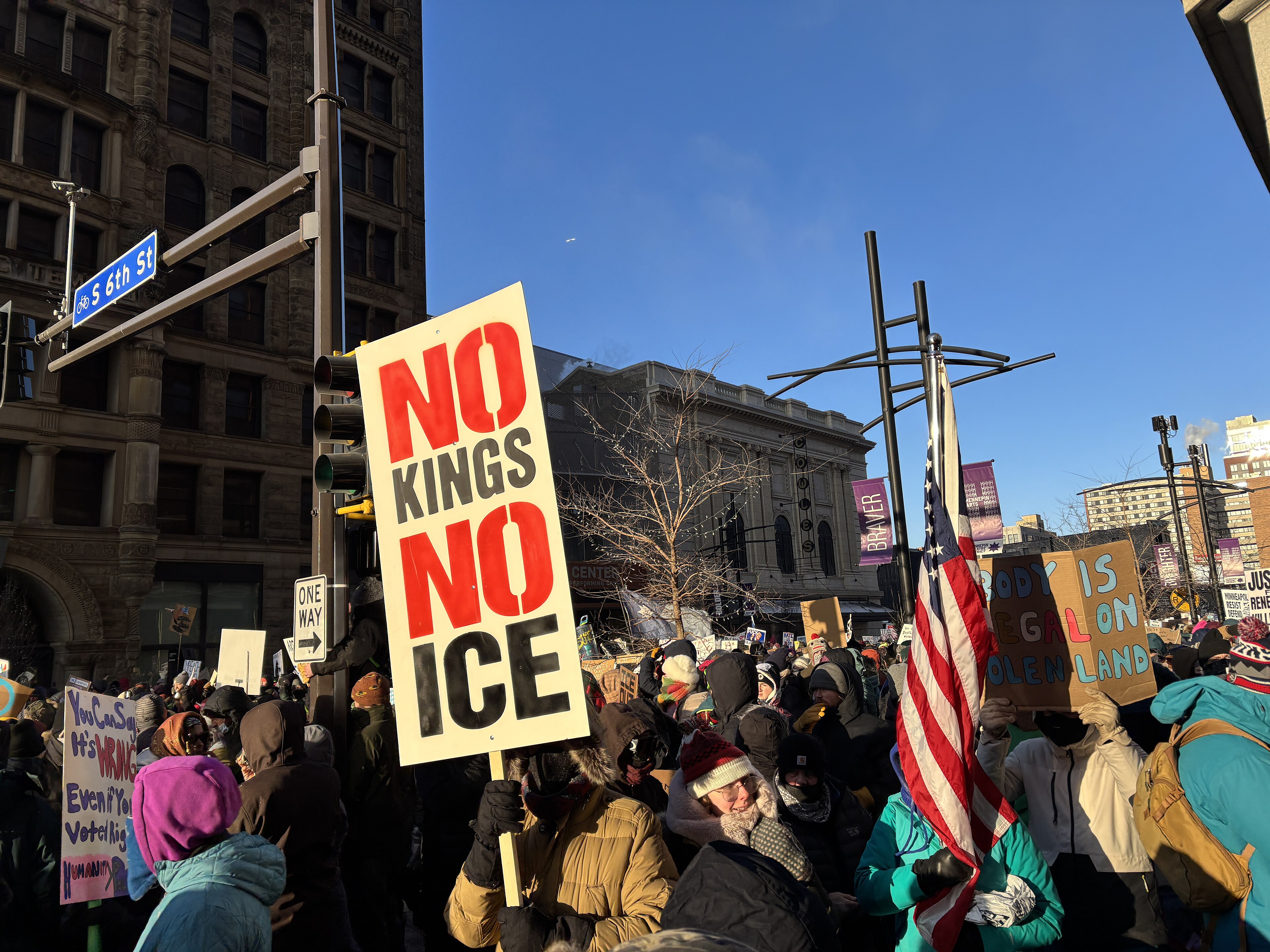
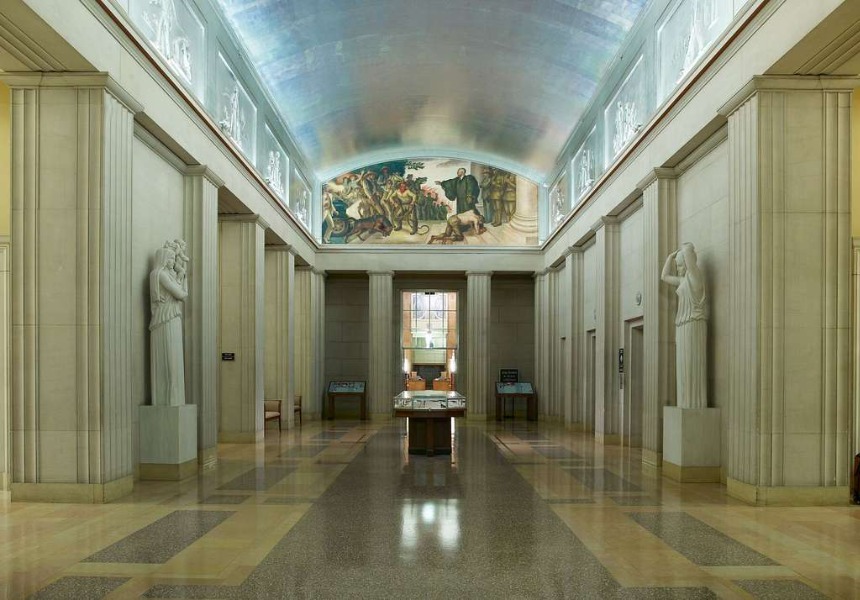
It’s Friday the thirteenth at 11:30 a.m., and camera crews are already clustered outside the Warren E. Burger Federal Building and U.S. Courthouse in St. Paul, Minnesota. The arraignment of five defendants is scheduled to begin at 1:00 p.m. Roughly two dozen demonstrators supporting the defendants wave American and Mexican flags. One sign calls on Congress to “Defund ICE.” Another demands the impeachment of President Donald Trump, Attorney General Pam Bondi, and Department of Homeland Security Secretary Kristi Noem.
The defendants—independent journalist and former CNN anchor Don Lemon, civil rights attorney Nekima Levy Armstrong, Jerome Deangelo Richardson, William Scott Kelly, and Chauntyll Louisa Allen—are being criminally charged in connection with the now famous protest at the Cities Church on Jan. 18. The case involves nine defendants in total; four were arraigned separately, while the five named above appear in court today.
When the doors to the overflow room open at noon, reporters and roughly forty members of the public fill the seats facing a bank of screens that will stream the proceedings from Magistrate Judge Douglas Micko’s courtroom.
By 12:50 p.m., most of the defendants and their lawyers have taken their seats. Abbe Lowell, lead counsel for Lemon, briefly enters the room to greet opposing counsel before stepping back out. Several other defense attorneys are seated with their legs crossed, chatting casually with their clients.
At the government’s table, by contrast, Acting Deputy Assistant Attorney General Robert J. Keenan and Counsel Orlando B. Sonza quietly review their papers.
At 12:55 p.m., Lowell reappears, this time with Lemon and former federal prosecutor Joe Thompson, who resigned from the Minnesota U.S. Attorney’s Office only one month earlier. Dressed in a well-fitted suit and glasses, Lemon smiles and shakes hands with his co-defendants before taking a seat. Compared to the government’s table, the defense side of the courtroom appears noticeably more animated.
Five minutes later, the clerk calls the room to order. “All rise,” the courtroom deputy announces, as Magistrate Judge Douglas Micko enters and takes the bench.
After briefly welcoming each defendant to the court, Judge Micko explains that they each will conduct initial appearances in order. He starts with Lemon. Lemon stands at the podium, flanked by counsel on both sides, as the court informs him of his rights and outlines the charges: one count under 18 U.S.C. § 248(a)(2), the Freedom of Access to Clinic Entrances (FACE) Act’s rarely-used religious worship provision, and one count under 18 U.S.C. § 241, conspiracy against rights.
When asked whether he understands the indictment, Lemon responds simply: “I do.”
The court then turns to conditions of release. Though Judge Micko indicates that he intends to impose standard conditions, the government wants more. Specifically, it requests an additional restriction barring Lemon from returning to Cities Church—the church he is alleged to have “attacked.” At this suggestion, Lowell raises his eyebrows; Lemon visibly clenches his jaw.
Announcing his decision, Judge Micko declines to impose the additional restriction. The standard conditions are sufficient, he says.
Asked for his plea, Lemon removes his glasses, flashes a smile, leans into the microphone, and responds: “Not guilty.”
Before moving on to the additional defendants, Judge Micko addresses the trial schedule. He observes that a nine-defendant prosecution involving significant evidence might qualify as a “complex case” under the Speedy Trial Act. Such a designation would extend pretrial deadlines and delay trial.
Keenan responds that the government intends to file two motions later that day: one seeking complex-case designation and another seeking an extension of the seven-day discovery deadline for “two to three weeks.”
At this, Lowell immediately rises to his feet. He tells the court that the government has previously suggested uncertainty about pursuing complex designation. This is the first indication that it has decided to move forward with it, he says. The defense intends to address the issue once the government files its brief, Lowell says.
Judge Micko defers the matter, stating that the court will consider any such motions in due course.
Lowell then previews additional defense filings. By the end of the day, he says, the defense will file a joint motion seeking disclosure of grand jury proceedings. He adds that the defense has “serious concerns about the application of these statutes” to the defendants’ conduct, and he plans to seek expedited motion practice on the matter.
The most pointed exchange of the hearing soon follows.
Lowell informs the court that, during Lemon’s arrest in Los Angeles, law enforcement seized his cell phone. The defense has received no clarity about whether a search warrant was obtained or how long the phone might remain in government custody, he explains. If no warrant existed when the device was seized, Lowell says, the defense will demand its return.
Keenan, on behalf of the Justice Department, responds that the phone is currently in the custody of the Department of Homeland Security and that he believes the search process is ongoing. Judge Micko asks how long that process would take. The government cannot provide an estimate.
Judge Micko notes that, in many digital-search cases, the government takes a forensic image of a device and returns the physical phone to its owner. Keenan acknowledges that such an approach can be used, but contends that it is not feasible “at this time.”
The judge then indicates that he will resolve the phone dispute once the matter is briefed. He moves on to the remaining defendants’ arraignments.
One defendant, Levy Armstrong, seizes the moment to frame the case against her in constitutional terms. Entering her plea, she tells the judge that she had no choice but to plead not guilty, “in honor of our First Amendment rights.” Another defendant, William Scott Kelly—known on social media as “DaWokeFarmer” and today dressed in a flannel shirt tucked into khakis and brown combat boots—delivers his plea emphatically: “I am not guilty on both counts, Your Honor.”
By 1:30 p.m., all five defendants present have entered not-guilty pleas, and the judge calls the hearing to a close. As the court recesses, defense attorneys smile and shake hands. The government attorneys exit without comment.
Outside the courthouse, the crowd has grown to roughly forty or fifty demonstrators. Several are wearing lemon-printed bucket hats. Protestors chant “ICE out” and “Drop the charges, support the press.” As Levy Armstrong and Kelly exit the courthouse, they raise their fists while supporters shout, “Protect free speech.”
The arraignments themselves had been procedurally routine. And the defense’s promise of motions to come—challenging the application of the FACE Act and § 241, seeking grand jury disclosure, and disputing digital evidence handling—is no surprise but a clear signal that the substantive fight in this case may just be beginning.
A couple of hours later, the first of those motions appears on the docket. It notes that grand jury proceedings are presumed regular and “ordinarily protected from outside scrutiny,” but not here. Asking the court to disclose grand jury proceedings, the motion adds, “To date, everything in this case has been irregular; we can assume the grand jury proceedings were too.”
-(2)-(2)-(1).jpg?sfvrsn=21cee67a_7)
