'When Life Gives You Lemons': A Minnesota Case Study in How the Trump Administration Warps Justice
The bizarre saga that unfolded in the weeks leading up to Don Lemon’s indictment illustrates just how far the Justice Department has fallen.

Over the past year, political appointees at the Justice Department have twisted facts, misapplied laws, targeted the president’s enemies, antagonized district court judges, manufactured emergencies—and relentlessly posted on social media through it all. Normally, these misdeeds are spread across multiple cases, each one a brushstroke in an emerging portrait of chaos at the Justice Department. But last month in Minnesota, a protest at a church service in St. Paul triggered a reaction that checked every single box.
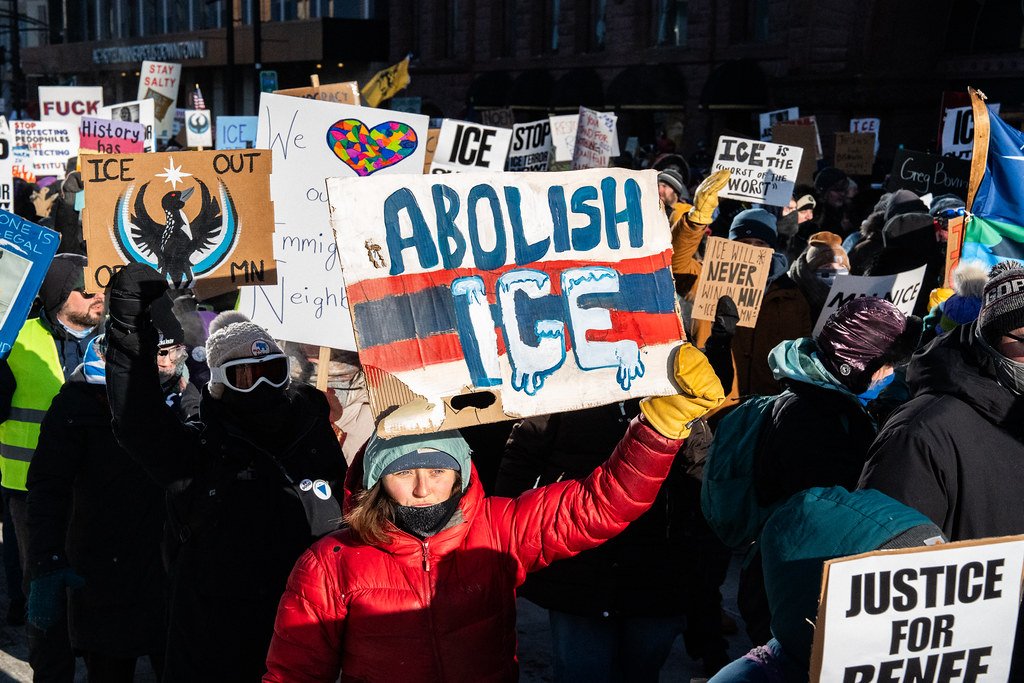
The Jan. 18 disruption at Cities Church was livestreamed by former CNN anchor Don Lemon, a journalist long despised by President Trump. Lemon followed the protesters into the church, where a top official in a local Immigration and Customs Enforcement (ICE) office reportedly serves as a pastor, and later interviewed several participants and congregants in the protest’s aftermath. As footage of the protest went viral on far-right corners of the internet, the Trump administration—mired in an onslaught of negative headlines because of its aggressive immigration enforcement efforts in Minnesota and a mass exodus of federal prosecutors—seemed to sense a chance to win publicity on more favorable political terrain.
In the weeks that followed, the government pulled out its full playbook to criminally charge and publicly vilify the protesters. It launched a series of highly unusual procedural maneuvers in court, accused a magistrate judge of bias, circulated an artificial intelligence (AI)-altered photo of a defendant, and staged the dramatic arrest of Lemon himself. Amid the chaos, the former acting U.S. attorney in Minnesota resigned—and joined Lemon’s defense team.
After several setbacks, the Justice Department ultimately got the headline it wanted: On Jan. 29, a federal grand jury in Minnesota returned an indictment against nine individuals, including Lemon and another journalist.
The substance of the charges, which we analyze in a companion piece, will soon face scrutiny in federal court. But the bizarre saga that unfolded in the weeks leading up to the indictment illustrates just how far the Justice Department has fallen. It is a stark example of how, during Trump’s second term, the Department of Justice has eroded long-standing norms, weaponized prosecutorial power, and turned the courtroom into a stage for political theater—a striking microcosm of how the Trump administration has prioritized spectacle over the rule of law.
“ON IT!”
Within hours of the protest, Assistant Attorney General for Civil Rights Harmeet Dhillon announced on X that the Justice Department had opened an investigation. White House Press Secretary Karoline Leavitt tweeted to share the news and to emphasize that “President Trump will not tolerate the intimidation and harassment of Christians in their sacred places of worship”—Dhillon responded, “ON IT!” Attorney General Pam Bondi joined in to stress that “[a]ny violation of federal law will be prosecuted.” Later that evening, Bondi noted that she had spoken to the church pastor and declared that “the intimidation of Christians” would face “the full force of federal law.”
Over the course of the next week, Bondi, Dhillon, and Deputy Attorney General Todd Blanche gave numerous interviews to a welter of conservative media, as Dhillon responded on X to right-wing critics urging them to move faster.
On Jan. 20, President Trump took to Truth Social to slam the “Church Raid” by “agitators and insurrectionists” who were “highly trained to scream, rant, and rave, like lunatics” and should be “thrown in jail, or thrown out of the Country.”
That same day, just two days after the protest, the government filed a criminal complaint and sought arrest warrants for eight individuals under two federal statutes: 18 U.S.C. §§ 241 and 248(a)(2). As discussed in much greater depth in our companion piece, Section 241—enacted during Reconstruction—criminalizes conspiracies to injure, oppress, threaten, or intimidate a person in the free exercise of any right secured by the Constitution or federal law. Section 248(a)(2), part of the Freedom of Access to Clinic Entrances (FACE) Act, prohibits the use of force, threats of force, or physical obstruction to injure, intimidate, or interfere with a person exercising religious freedom at a place of religious worship.
That same day, however, U.S. Magistrate Judge Douglas Micko declined to find probable cause, and thus declined to issue the arrest warrants, as to five of the eight proposed defendants, including Lemon and one of his producers. As to the remaining three, the magistrate judge found probable cause only under Section 241.
Dhillon reacted by blaming the magistrate judge’s wife, saying on Newsmax that “the magistrate judge, who is married to someone who works for [Minnesota] Attorney General Keith Ellison, who has had a lot to say about ICE and a lot to say about our FACE Act theory, declined to give us all that we were asking for.”
An “Unheard of” Request
Immediately, the Department of Justice sought to appeal to the district court the magistrate judge’s decision to reject the arrest warrants for five individuals. The judge assigned randomly to the appeal happened to be the district’s chief judge, Patrick Schiltz, an appointee of George W. Bush who clerked for Antonin Scalia at both the D.C. Circuit and the Supreme Court. (Schiltz is also the author of a remarkable 1999 law review article aimed at law students on the perils of working at large law firms, “On Being a Happy, Healthy, and Ethical Member of an Unhappy, Unhealthy, and Unethical Profession.”) He told the Justice Department that what it had asked him to do—review a magistrate judge’s decision to deny the government an arrest warrant—was “unheard of in our district” and every other district in the Eighth Circuit. He initially offered the Justice Department a chance to brief the issue and noted he would meet with all the other judges of the district at a meeting scheduled for the next day, Jan. 22, to discuss the issue with them.
When that Jan. 22 meeting was postponed—ironically, due to security concerns stemming from the first court appearance of two of the arrested church protesters and visits by Vice President Vance and Bondi to Minneapolis—Schiltz informed the Justice Department that he would rule on the government’s request after the meeting now scheduled for Jan. 27.
Dissatisfied with this timeline, on Jan. 23, the Department of Justice filed an emergency petition for a writ of mandamus from the U.S. Court of Appeals for the Eighth Circuit. To obtain a writ of mandamus—an order directing an official to do his or her job where the nature of that job is crystal clear—a party files a lawsuit against a court itself, asking a higher court to order the lower court to perform a specific act. Here, the requested act was the issuance of an arrest warrant for the five uncharged individuals.
In a typical mandamus action, the opposing party files a responding brief arguing that the district court should not be ordered to perform the action in question. But here, there was no opposing party, precisely because the magistrate judge had refused to initiate legal proceedings by issuing an arrest warrant for the five uncharged individuals.
In such a situation, the court of appeals may invite or order the district court judge to respond to the petition or invite an amicus curiae to do so. Because a writ of mandamus is among “the most potent weapons in the judicial arsenal,” the Supreme Court allows its use only where the petitioning party has made “clear and indisputable” that it has “no other adequate means to attain the relief [it] desires.”
Insisting that not a moment could be lost, the Justice Department requested that the Eighth Circuit issue a decision the very same day the government’s brief was filed. Curiously, only the names of political appointees were on the brief—a signal during the Trump years that the government has advanced an extreme argument that career attorneys refuse to be associated with.
“Dozens of protestors interrupted a Sunday worship service,” the Department of Justice noted in the brief’s introduction, warning that “the same church that was assaulted last Sunday faces serious, credible threats of another attack this upcoming weekend.” Meanwhile, the government claimed Judge Schiltz had “refus[ed] to review the magistrate judge’s determination.” Thus, “to prevent such an attack, this Court must immediately direct the lower court to sign the five remaining arrest warrants so that the Executive Branch can arrest these individuals and discharge its duty to protect the public safety.” The Justice Department argued that, other than a writ of mandamus, “[n]o other means are available to the government to obtain relief prior to the threatened resumption of criminal activity this weekend,” noting that no grand jury was available to meet in Minnesota until Tuesday, Jan. 27.
Judge Schiltz didn’t see that brief because the Eighth Circuit had sealed it at the request of the Department of Justice, which—in violation of Federal Rule of Appellate Procedure 21(a)(1)—hadn’t sent him a copy. Schiltz learned about it by means of an email from the Eighth Circuit informing him that morning, at 11:34 a.m., that a mandamus petition had been filed against him and that his response was due at 2:00 p.m.
So Schiltz wrote a four-page letter to the Eighth Circuit’s chief judge. “I apologize for addressing this letter to you,” he began, “but, for reasons I will describe, I do not have any other option.” He explained that the mandamus case had been sealed, that he had no notice the government would file such a petition, and that he was working from home because the extreme cold had forced the closure of the program that his mentally disabled adult son attends. “Apparently I am supposed to guess what the petition is about and guess what the mandamus petition says and then respond. I will do so.”
Schiltz guessed correctly that the petition was about the church protest. He noted that such an appeal was “unheard of” in his district and in, as far as he knew, any of the district courts within the Eighth Circuit, which encompasses Arkansas, Iowa, Minnesota, Missouri, Nebraska, North Dakota, and South Dakota. If the government objects to the denial of a warrant, he noted, it can add more information to the warrant application to establish probable cause, or it can present the case to a grand jury. (Unbeknownst to Schiltz, the government had argued to the Eighth Circuit that the magistrate judge “indicated that he was unwilling to review additional evidence on an expedited basis and directed the Government to instead seek a grand jury indictment.”) Thus, Schiltz told the U.S. attorney that, before ruling on such an unusual request, he would like to discuss it at the next meeting of all the judges of the district court.
In words dripping with contempt, Schiltz correctly intuited the thrust of the government’s brief:
As the Department sees it, if I do not issue warrants for the five additional suspects, “copycats” will invade churches and synagogues this weekend and disrupt religious services. Apparently, the government believes that the arrests of the leaders of the Cities Church invasion—whose arrests have received widespread international attention—will not deter copycats, but arresting five additional suspects will. The government has also argued that I must accept this as true because they said it, and they are the government.
He expressed befuddlement at the Justice Department’s actions. There was “absolutely no emergency,” Schiltz wrote, noting that none of the protesters acted violently, the leaders had been arrested, their arrests received “widespread publicity,” and the prosecutors chose not to present the case to a grand jury on Jan. 20, 21, or 22. “If the mystery petition filed by the government,” he concluded, “seeks an order from the Eighth Circuit forcing me to decide today—instead of Tuesday—whether to issue arrests [sic] warrants for the five protesters, I respectfully suggest that the petition is frivolous.”
A bit later, Schiltz filed a second response, apparently after the Eighth Circuit sent him a copy of the government’s filing. He did not hide his anger:
I apologize for responding in the form of an email. As I explained in my prior response, I am working at home today because of the need to care for one of my children. I am also dealing with a number of emergencies, including a lockdown at the Minneapolis courthouse because of protest activity, the defiance of several court orders by ICE, and the illegal detention of many detainees by ICE (including, yesterday, a two-year old). And I have been given a little over an hour to submit this additional response ... I have not “refused” to make a decision about whether to issue the warrants. I have told the government that I will make a decision on Tuesday, after I meet with my colleagues.
Schiltz slammed the government’s petition as illogical:
The government’s arguments about the urgency of its request makes no sense. As the government says, “dozens” of protestors invaded Cities Church on Sunday. The leaders of that group have been arrested, and everyone knows that they have been arrested. The government says that there are plans to disrupt Cities Church again on Sunday. Of course, the best way to protect Cities Church is to protect Cities Church; we have thousands of law-enforcement officers in town, and presumably a few of them could be stationed outside of Cities Church on Sunday. The government does not explain why the arrests of five more people—one of whom is a journalist and the other his producer—would make Cities Church any safer, especially because that would still leave “dozens” of those who invaded the church on Sunday free to do it again.
He also moved for the Eighth Circuit to unseal the government’s petition and his two responses. The court soon did so.
As the Department of Justice requested, the Eighth Circuit ruled that very same day—but it ruled against the government, in a terse two-sentence opinion without substantive explanation.
Judge Stephen Grasz, a Trump appointee, wrote separately that, in his view, the government had “clearly establish[ed]” probable cause for the five arrest warrants. But he agreed with the denial of the writ of mandamus because “the government has failed to establish that it has no other adequate means of obtaining the requested relief.” (The other two judges on the panel were Jonathan Kobes, also a Trump appointee, and Jane Kelly, an Obama appointee.)
The following Sunday came and went without the assault on Cities Church that the Justice Department had warned would occur without the arrest of the five individuals as to whom the magistrate judge had found no probable cause to issue arrest warrants.
On Monday, Jan. 26, the Justice Department filed a notice withdrawing its request for Judge Schiltz to review the warrant applications. Evidently, the government had read the writing on the wall: Schiltz’s extreme annoyance with the Justice Department’s substantive positions and its procedural gambits, as reflected in his responses to the mandamus petition, suggested that he would not look favorably upon its request.
The next day, Dhillon resorted to promoting social media posts that questioned Judge Schiltz’s impartiality and credibility by highlighting his previous donations to the Immigrant Law Center of Minnesota in 2019. According to Fox News, Schiltz responded to a request for comment, “I have donated for many years to the Immigrant Law Center of Minnesota. I have also donated for many years to Mid-Minnesota Legal Aid. I believe that poor people should be able to get legal representation.”
Dhillon also retweeted right-wing legal strategist Mike Davis’s praise for the Justice Department’s withdrawal of its request, which he said would save the Justice Department from “getting sabotaged again by radical Democrat judges.”
“The Memes Will Continue”
Meanwhile, the government moved to make life miserable for the three defendants whom it did secure warrants against.
Shortly after the arrest of one, Nekima Levy Armstrong, Secretary of Homeland Security Kristi Noem tweeted a photo of her being perp-walked by an agent. The agent’s face was pixelated; Levy Armstrong’s was expressionless. Hours later, the White House tweeted an altered image in which she was sobbing—and her skin was darker. White House Deputy Communications Director Kaelan Dorr then quote-tweeted the manipulated photo to add: “Enforcement of the law will continue. The memes will continue. Thank you for your attention to this matter.”
The government then sought to detain Levy Armstrong and the two other protesters. Generally speaking, the government can detain a defendant pending trial if it shows by a preponderance of the evidence that the defendant is a flight risk or by clear and convincing evidence that the defendant poses a danger to the community. Before a court can consider that analysis, however, the government must make a threshold showing that a detention hearing is even warranted to begin with. Those select instances are limited to certain offense categories reflecting a defendant’s potential dangerousness (18 U.S.C. § 3142(f)(1)) and cases reflecting a defendant’s potential risk of flight or obstruction of justice (18 U.S.C. § 3142(f)(2)). The government failed at step zero. Repeatedly.
Represented by two attorneys based in Washington, D.C., from Dhillon’s Civil Rights Division—but no one from the U.S. Attorney’s Office for the District of Minnesota—the government orally moved to schedule detention hearings for all three defendants, arguing that they posed flight risks. Magistrate judges denied all three requests.
The government appealed the magistrate court’s denials for two of the three—Levy Armstrong and Chauntyll Allen—to the district court. The government argued that they were charged with a “crime of violence” and that the alleged offense involved a minor victim (presumably referring to children who happened to be at the church during the protest), thus warranting a detention hearing under Section 3142(f)(1)(A) and (E).
U.S. District Judge Laura Provinzino disagreed. She noted that the charged conspiracy—allegedly an agreement to injure, oppress, threaten, or intimidate a person in the exercise of their federal rights—did not require physical force and thus could not be considered a “crime of violence.” And that the purported agreement did not involve a minor victim as identified under Section 3142(c)(1)(B), which is limited to victims of particular crimes not charged here. In sum, she concluded, the government “offers no factual or legal support for their assertions” and the “Court has found none.”
The government also argued that the defendants posed serious risks of flight under Section 3142(f)(2)(A). The government alleged the defendants had relocated to “a hotel in downtown Minneapolis,” “commit[ting] multiple traffic violations, including making rolling stops through posted stop signs,” “driving the wrong way in the hotel’s alley,” and meeting with “other adult women, moving between three separate hotel rooms rented by Levy Armstrong.” This evidence, the government claimed, illustrated “reckless” behavior and “preparations to flee or relocate,” warranting pretrial detention.
The district court was unmoved:
There is no evidence that (for example) the Defendants own homes abroad or even outside of Minnesota, or that they have family abroad, or close ties to a particular foreign country, or that they have made any plans or preparations to flee, or that they have ever knowingly evaded law-enforcement officers. To the contrary, Defendants have strong ties to Minnesota and did not flee (in fact, they are staying at a hotel in downtown Minneapolis known to federal law enforcement)—despite knowing that they were being investigated. The United States’ risk-of-flight evidence is simply speculative.
It actually may be worse than speculative. According to Levy Armstrong’s attorney, the government denied her request to self-surrender—another indication, if true, that the defendant did not pose a flight risk. And Levy Armstrong asserts that she had relocated to a hotel because of death threats. In other words, the Trump administration publicly and repeatedly posted about an investigation likely in violation of internal Justice Department policies (and certainly against well-established norms) and then argued that the people it posted about posed a flight risk because they relocated within the district, allegedly because of death threats that were arguably a foreseeable consequence of the administration’s rhetoric.
Even when the Justice Department finally succeeded on Jan. 29 in obtaining a grand jury indictment where it had failed before the magistrate judge, regular order did not prevail. “At my direction,” Bondi tweeted, “early this morning federal agents arrested Don Lemon, Trahern Jeen Crews, Georgia Fort, and Jamael Lydell Lundy, in connection with the coordinated attack on Cities Church in St. Paul, Minnesota.” The garden-variety arrest of individuals who have been indicted is not, typically speaking, the type of action that is undertaken at the “direction” of the attorney general—much less announced publicly by the attorney general.
Lemon was arrested at 11 p.m. on Jan. 29, ensuring that he would need to be detained overnight until an initial appearance the next day. Lemon claims, credibly, that he had offered to turn himself in but that his request was ignored. In an interview, Dhillon did not deny Lemon’s claim, instead suggesting the arrest was to avoid giving Lemon a chance to destroy evidence. That makes no sense: Any risk of evidence destruction was created by Justice Department leadership repeatedly announcing its focus on Lemon and others for 11 days.
After Lemon’s arrest, Dhillon retweeted Mike Davis calling Lemon one of “today’s klansmen” and later characterized the defendants’ conduct as “evil and menacing”—almost certainly in violation of the Minnesota district court’s Local Rule 83.6, adopting the Minnesota Rules of Professional Conduct, which prohibits lawyers in a case from publicly disseminating extrajudicial statements that may prejudice a jury trial. The White House’s X account posted a photo of Lemon touting his arrest for participating in the “church riots.” Above the photo, and accompanied by chain emojis, the post crowed, “When life gives you lemons…”
* * *
The Trump administration’s immigration enforcement efforts in Minnesota over the past two months have given it lots of lemons. So when a group of protesters angrily barged into a church accompanied by a man Trump had repeatedly called “the dumbest man on television,” the president’s team leapt at the chance to change the narrative and made a public spectacle of it. In what has become standard operating procedure for the Justice Department’s political appointees, the process was the point—protesters, judges, and norms be damned.
The question now is whether the indictment they secured will fare any better.