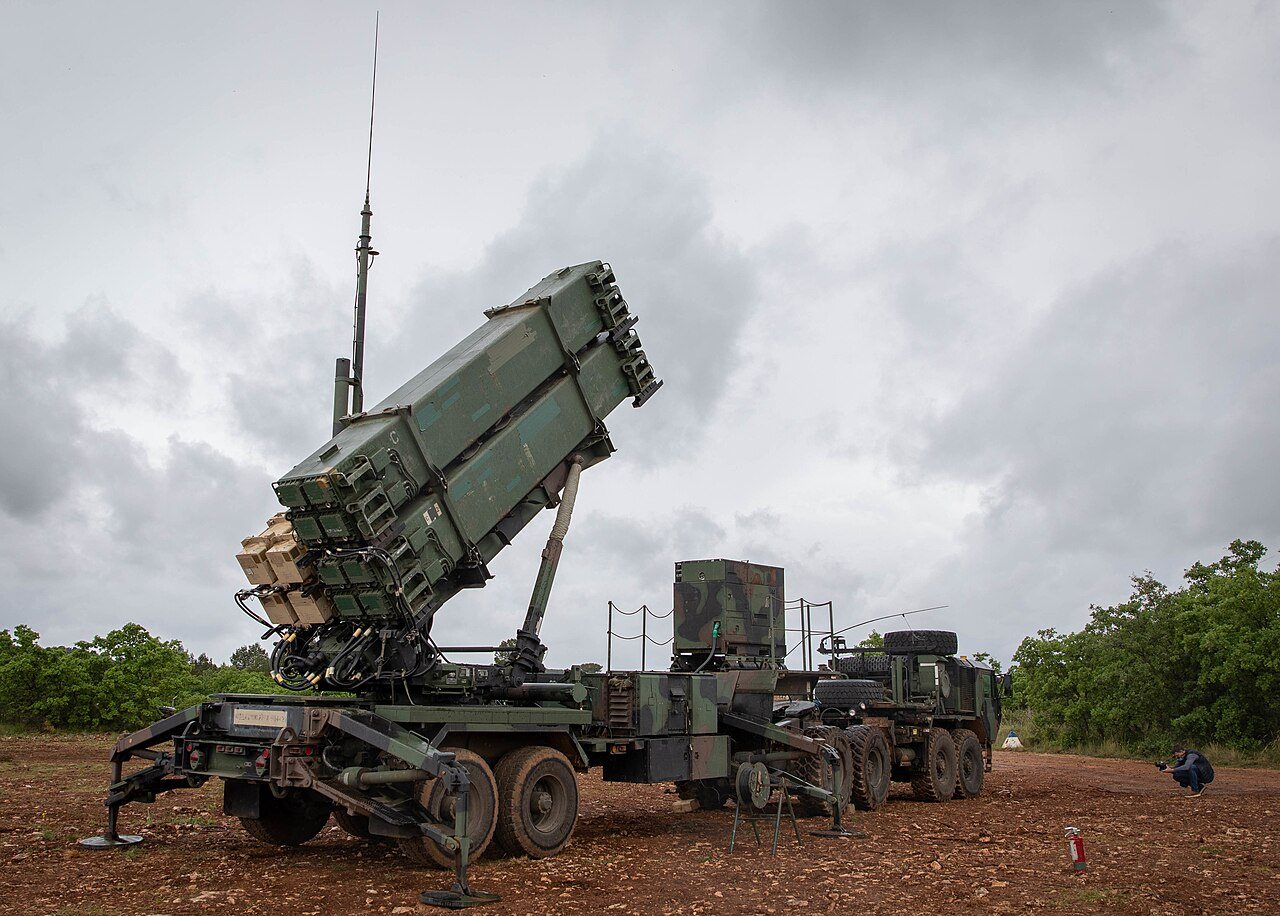
Lawfare Daily: The U.S. Strike on Venezuela and Capture of Nicolás Maduro




During a live YouTube discussion on Jan. 4, Lawfare Editor in Chief Benjamin Wittes sat down with Lawfare Senior Editor Scott R. Anderson, Foreign Policy Editor Dana Stuster, and Public Service Fellow Loren Voss to discuss what we know—and what we don’t know—about the legal issues raised by the U.S. strike on Venezuela and the capture of Venezuelan leader Nicolás Maduro. They spoke about what the administration's possible policy goals are in Venezuela, the potential legal justifications for the attack and capture of Maduro, and whether or not the United States is at war with Venezuela or some sub-groups.
To receive ad-free podcasts, become a Lawfare Material Supporter at www.patreon.com/lawfare. You can also support Lawfare by making a one-time donation at https://givebutter.com/lawfare-institute.
Click the button below to view a transcript of this podcast. Please note that the transcript was auto-generated and may contain errors.
Transcript
[Intro]
Benjamin Wittes: Hey
there, Lawfare listeners, Editor in Chief Benjamin Wittes here. It's the
end of the year. You know, you got your holidays, you got your little break
from whatever it is you do, school or work or whatever, and you've had your
presents, you've had your stuff, you've had your Christmas or Hanukkah, and now
we are here to ask for your support.
Lawfare is a 501(c)(3) nonpartisan non-profit
organization. We cover a broad range of issues on national security, law and
policy to keep you informed, but we can't do it without your support. This
year, nearly a third of law fair's revenue has come from people like you. If you
are not already contributing to Lawfare, please change that.
Go to lawfaremedia.org/support. You can be a monthly supporter
on Patreon or Substack, or you can make a donation on Givebutter on a one-time
basis. If you are already giving as much as you can or want to get involved in
other ways, please go to lawfaremedia.org/get involved. Thank you for
listening, and thank you for supporting Lawfare.
Scott R. Anderson:
What this does do, the thing that's gotten the most attention is that when
poses a restriction on the travel funds available to the Secretary of Defense,
basically saying you can't spend more than 75% of the funds made available to
you for travel unless you provide unedited video of the strikes that have been
conducted against quote, quoting here against designated terrorist
organizations in the area of responsibility of the United States Southern
Command.
Ariane Tabatabai:
It's the Lawfare Podcast. I'm Arianne Tabatabai, Public Service Fellow
here at Lawfare with my colleagues, Loren Voss, my fellow public service
fellow, and Scott Anderson, senior editor.
Loren Voss: I think
there are more concerns on a bipartisan basis of how the military might be used
abroad and how the terms of, of especially the 2002 AUMF might be stretched
more so than it already has been. And so I see this as though the example of
Congress trying to reassert that role and at least take these two AUMFS off the
table going forward.
Ariane Tabatabai:
Today we're talking about the Fiscal Year 2026, National Defense Authorization
Act, or NDAA.
[Main Podcast]
The president signed the NDAA for FY26 into law on December the
18th after it passed the Senate. The NDAA supports roughly 900 billion for the
national defense. And so today we're going to talk about the bill, the
provisions that we liked, what's in there, what's not in there. And I'm going
to start by talking a little big picture here, scene setting a little bit and
talking a little bit about two provisions or two sets of provisions that stood
out to me in, in very broad brush.
The first one is this tension that exists between the
administration's desire to continue to shrink the bureaucracy across the national
security workforce and departments and agencies that are relevant, including
the Department of Defense, State Department, and elsewhere, and this
congressional desire to perpetually add to said bureaucracy.
You know, one thing we haven't talked about too much as we've
discussed over the past year. The administration's efforts to downsize is that
yes, some of these department agencies have been have organically grown over
time, but that Congress has actually played a huge role in adding to them. And
so Loren and I are familiar with the offices of the Assistant Secretaries of
Defense that oversee maybe one, one and a half offices. And that is largely a
byproduct of the, the demands and requirements by Congress to continue adding
positions and offices and requirements for the agency. And again, there is a
real tension here, I think.
So a couple of these items to highlight quickly is that what is
an NDAA without a new ASD? A new Assistant Secretary of Defense we get a new
one here for International Armaments Cooperation. We get a new data czar for
FMS information and a new program to conduct defense industrial base
integration with allies and partners in the Indo-Pacific.
The other piece that the administration has been trying to kind
of get rid of and the Congress here asserts itself and, and says we are going
to maintain these things, is the Rangel, Payne, Pickering, and Veterans
Innovations Fellowships, really important pipelines for talent acquisition, the
national security workforce. And from my perspective, a really great thing that
Congress is maintaining these things.
And then the second thing I'm gonna kind of broadly talk about
before I turn to you guys for your initial kind of reactions is that this NDAA
to me reads as a little disjointed from where the administration is going in
terms of how it sees national security, where it wants to be focusing.
It almost reads like it is kind of aligned, more aligned with
the Biden National Security Strategy, or even Trump 1.0s, a national security
strategy, not this one particularly. And again, it, it seems to be Congress
really trying to take back some ownership and try to reframe how we are dealing
with the, with national defense and national security more, more generally.
It talks in the executive summary about the fact that we are in
what it describes as the most dangerous threat environment we've been in since
the end of World War II. And it largely talks about this, the driver for this
being the alignment between the four key adversaries, Russia, China, the DPRK,
and, and Iran. This is a framing that the, the administration has shifted away
from the previous administration. The Biden administration was really focusing
more and more on this at the end of its its term.
But you know, as we've talked about over the past few weeks in
various podcasts, Loren has a great piece on this in, in Lawfare this
month as well. This administration is not thinking about strategic competition
or major power competi, great power competition as much. It doesn't see Russia
in the same light as previous administrations. It sees China as more of a
regional and economic rival versus the kind of strategic competitor of the
past.
I'm not frankly sure what it thinks of the DPRK and its views
incorrectly. I think Iran as a diminished threat given that, you know, the
president I think views himself as having taken care of the Iranian nuclear
threat. So here Congress is trying to reframe this and is trying to kind of
conceive of the national defense and what's needed for it within that
framework. So let me turn to you, Loren first and see if you have any kind of
broad observations before we dive into more specifics.
Loren Voss: Yeah, I
mean, I think the first thing is, I, I agree with you. This NDAA does not align
with the national security strategy, but, you know, think about the, how the
NDAA is written and the timeline in which this was developed, right? This has
been going on for quite a while.
The NSS just came out. It does show a disconnect between senior
DOD leaders and Congress, but we've already seen that happening. Right. We've
already seen that, especially on the policy side of the house. You do see this
as very much Congress asserting what they think is important from a defense
standpoint.
Right? And so it's not the western hemisphere, it's more
focused on Europe and Ukraine. It's a reference to Korea. In numerous ways in
the NSS, like when they talk about Korea, it's all about economics or telling
South Korea that they should do more defense spending and do their own type of
deterrence. Right? And that's what you see.
So, you know, I, but I'm not surprised, this is what I expected
the NDAA to have is we've been tracking the various, you know, versions. And I
think when we think about threats and our adversaries, this is where we wanna
be focused in spending money.
The other thing I would say is, you know, some people say
Congress is reasserting itself here and, you know, maybe it is in a couple ways
didn't agree to the change to Department of War, right? That's not in there.
It's still the Department of Defense, but they could have gone a lot farther in
oversight than they did, as you can see by a lot of the controversial
provisions that didn't make it in. So I, you know, there's, there's some, some
good stuff there, but I don't think, you know, I'm quite as optimistic as other
people that this is really a congressional reassertion of power.
Ariane Tabatabai:
Great, and we'll come back to the oversight issues you're, you're talking about
in a, in a minute, Scott, turning to you, any broad kind of observations here?
Scott R. Anderson:
Generally agree. The one thing I would say about the workforce side, while
you're right, I think adding layers of bureaucracy new offices is, is something
that's a common output of these congressional acts.
A lot of congressional legislation, particularly in the defense
space or in the Defense Department, I should say, you know, there are other
nods towards kind of workforce quote unquote efficiency. You know, there's
steps in here to different hiring authorities kind of watering down certain
times of time and grade requirements in certain capacities, things like that. So
there are little nods to it.
There is a pretty substantial effort to start moving towards
changes in the foreign military sales systems and certain defense acquisitions
programs make it much more market based, less driven by kind of, you know, I
think milspec is the often phrase like the idea that defense department
developed sort of technology and systems and so, so those are real nods here.
And, and look, those aren't ideas that originated with the
Trump administration, all the Trump administration, I think has kind of
embraced them as part of its broader criticism of the government generally.
Those are ideas that a lot of people have been adv advocating for for a long
time. There were steps in that direction made in certain elements in certain
ways, by the Biden administration and by the first Trump administration.
But they are here and, and to some extent, so, you know, really
the, my biggest critique of the Trump administration's approach to government
reform is that it is thinking along it strictly in terms of one, one variable,
which is the sheer number of personnel 'cause if you change that, that's gonna
give you better or worse outcomes, it can definitely give you worse outcomes.
It doesn't mean you're gonna get better outcomes if you cut it
without giving much thoughts what they're actually doing and how they're doing
it. I think you can make the same critique the other way. I wouldn't, I
wouldn't look good, too focused on creating new offices because in the end it
depends on the size and the scaling of those and what they actually do.
Same with reporting requirements, and there's lots of ways the
defense department kind of can, the executive branch can push back on those, to
extent it really wants to or needs to. On the broader strategic level. I think
what you and Loren said is absolutely right. Look, this is clearly not the
national security strategy.
It should not be surprising anyone that this is down line with
the National Security Strategy 'cause the National Security Strategy was an
eccentric and odd document that reflects an eccentric and odd worldview that is
uniquely harbored within a corner of the Republican party that supports
President Trump and is among his core supporters not shared broadly even within
the broader Republican party.
There's a very, very strong contingent people who disagree with
it really, really seriously. And a lot of them are represented on the Armed
Services Committees, which tends to be, I think, represent a contingent that is
a slight, a more slightly hawkish oriented, conventional national security
conservative, even on the Democratic side.
That's why when you see these bills come out every year, they
both have to go through the Armed Services Committees. The Armed Services Committees
are gatekeepers, essentially their own jurisdiction. So they end up being a
little more small-c conservative bills than some people might like, including
in some of the ways to reign in the executive branch you might see under this
administration, in part because they're committees that don't necessarily
always have strong contingencies, even on a part, even if you were to see votes
along a partisan line, they tend to have Democrats more on board that tend to
be a little bit more friendly to strong visions of defense and hesitant to
really encroach too much on that 'cause that's who's drawn to service on their
armed services committees.
That said, the thing I would note about this, which I think is
interesting, is a, it really does reinforce a conventional view of priorities
and particularly geographic scope does not discuss the Western Hemisphere at
all, and specifically identifies the Middle East, Europe and Asia as the three
big spheres of concern. And then it spends a good amount of time laying out
specific provisions for that.
That's a sign that even though, yeah, this was written, you
know, started being negotiated, I think the first vote votes in the Senate
happened in July. And we know the drafts national security strategy didn't drop
internally until September, supposedly when Michael Anton finished writing the
first draft at the State Department before he left that I-.
This alignment, I don't think explains the whole thing because
if you really thought there was any sort of, you know, proximity between the
two different views there, you would've seen the committees probably spend more
time saying, well, what do we need for we Western Hemisphere and how should we
be supporting these operations?
My suspicion is that the, this administration probably didn't
communicate well with Congress and its Western Hemisphere policy, even though
it's become a center of its policy really was pretty nascent. Remember, its
military campaign only started in September, so that really wasn't really even
in play at the time this got kicked off.
It has been a, as it often is with this administration, a kind
of rapidly evolving, narrowly contained perspective until the president and the
White House have bid into it and then started to steer policy and their
preferred direction without really coordinating with people beforehand. And you
end up with things like this where now you have, even if you were able to get
Congress on board, think is a big question.
Now you have a year leg with the authorities. You may want to
actually back up your operation here. So, it's a problem. It's not just about
like, oh, they don't necessarily agree. They might agree, but because of
coordination problems, this administration is losing out on a year of
authorities that could have bolstered if it thought it could get them.
And if it just doesn't agree, well then that's another problem.
'cause it means you're, you're never gonna get those authorities if you
actually need them. So, long and short, it's, it's emblematic I think of a lot
of our trends we're seeing with this administration and it's again, somewhat
idiosyncratic and kind of worldview in the way it tends to approach these
policy questions, which is a narrow cloistered view of senior advisors without
broad consultation with even its own co partisans in the Congress.
And that causes is gonna cause problems down the, on the end.
And this NDAA may be kind of the, the first big symptom we see of that.
Ariane Tabatabai: So
we haven't even fully digested this NDAA and we're already looking forward to
FY27 is what I'm hearing you say, basically okay. So with this, let's quickly
turn to the three areas of responsibility that you highlighted, and then we're
gonna go back to the questions of oversight that we that Loren flagged the
beginning.
So, you know, as, as Scott you mentioned there are a number of
key provisions in this NDAA that aim to strengthen allies and partnerships that
try to bring back and enhance multilateral cooperation. And they're mostly
focused on the Indo-Pacific command on the European command and on CENTCOM so
the Middle East, essentially. Just to highlight a few of these things, and I'd
be really interested in what you guys, kind of what jumped at you as you were
reading through this, this beast of a document.
One thing that has been very much in the news is that there is
this prohibition of the reduction of U.S. force posture in Europe, number one. And
number two, relinquishing U.S. command of the Supreme Allied Commander for
Europe. So SACEUR, which is a leadership position in NATO. And normally this
position is dual hatted within the Commander for U.S. EUCOM. So, you know, this
is again, the Congress essentially coming back and telling the administration.
We understand you wanna do less with and in Europe, but we're
not going to let you quite do that. The other piece of it is focused on
Ukraine. There is an extension for Ukraine security, the Ukraine Security
Assistance Initiative through 2028. And then continued intelligence,
cooperation and intelligence support for Ukraine, really important pieces.
We have similar provisions, some overdue in the Indo-Pacific.
It's really, you know, broadly looking to increase the breadth and depth of
defense partnerships across this area of responsibility, including in terms of
exercises. There's one provision that encourages the Secretary of Defense to
invite Taiwan to the rim of the Pacific exercise.
It's a large international maritime exercise that happens every
two years. There is enhanced defense cooperation with the Philippines. One that
was really interesting to me was a program to co-develop and co produce crude
and on crude capabilities with Taiwan. And then something that I kind of
mentioned at the, at the outset, which is this initiative to strengthen
security cooperation across the defense industrial bases with allies and
partners in the Indo-Pacific.
And then to kind of round it up with CENTCOM. There are two
that I'm particularly interested in relatively low key, but really important
initiatives. The continuation of the integrated air and missile defense
architecture, which has been really significant for our force protection in the
Middle East, especially in the past couple of years.
And also support and cooperation with partners in, in the
region. And then the second is increased funding to capture lessons learned
from the counter ISIS cooperation with with Israel. So, Scott, let me turn to
you first here. What of these or other provisions kind of caught your
attention? What's significant here?
Scott R. Anderson:
You know, again, I, I think the main themes here are a high degree of
continuity. The most notable provisions are provisions that. Purport as you've
described. I think it's worth getting into exactly what they do. But they could
have the function of deterring or limiting the ability to lower troop U.S.
troop levels below certain levels.
Some one provision relates to South Korea, another provision
relating to Europe in addition to getting rid of the SACEUR command position
and other sorts of shifts in the U.S. posture there. Notably, these provisions
don't bar it outright. What they say is that, well, you have to give us 60 days
notice and you have to provide a requirements and certification to Congress
beforehand.
You have to do that, and then you get to then there 60 days
after those notices are required, and that includes a certification by a career
military official on the logic that a career military official is unlikely to
just roll, or less likely at least to just roll over to whatever the
administration wants and certify something they don't think is true.
Their own credibility on the line and the certifications
require certain specific findings about, we've consulted with, for example, the
Europe case, NATO allies. We've determined this isn't gonna compromise the
security of Europe, et cetera, et cetera, et cetera. Those are, you know, not lock
boxes, right? Those aren't strict prohibitions.
And there would be constitutional questions as to the extent to
which Congress can install a strict prohibition. It's not clear to me, it can't
necessarily but it certainly would raise constitutional questions. The
executive branch would almost certainly assert it can't. And then I'm not sure
how you really get that to a court to get a court to resolve it. But maybe
there's some way to do it. I'd have to, I'd have to think about that. This
presents the same problem, but really this is trying to leverage political
costs.
It's trying to say, hey, we're gonna make this too embarrassing
you for you to really do this, Mr. President because if you do this, you're
gonna have to publish all these public reports for us. And then you know you
are gonna be on the hook for making these sort of embarrassing certifications.
This has not always stopped. The Trump administration before the first Trump
administration made several such certifications in a variety of contexts, some
of which were pretty bald faced and being inaccurate and nonetheless proceeded along
the lines of that, I think of a few State Department reports regarding, I
think, use of child soldiers was one report and a few other cases way back in
2019 or so. You know, it's, it's not necessarily guaranteeing, neither is
delegating to a career official because the president gets to a point who that
career official is and can change who that is.
As, as this president and this Secretary of Defense have shown
a willingness to do it, but it's certainly gonna make it more painful for them
if they were decide to want to drop below those thresholds. Other than that, I
think you see a lot of continuity in points of consistency here. That's not
necessarily super new.
You do see an emphasis on different types of cooperation around
unmanned systems, both in Taiwan and in Israel and in a few other contexts
actually throughout this NDAA obviously that's something at the front of mind,
I think 'cause of the experiences in the conflict in Ukraine in Gaza, to a
lesser extent, unexpected role uncrewed, particularly uncrewed maritime vessels
are expected to play in a potential various Taiwan scenarios that have been
kind of documented in the last few years.
So you're seeing that become a real focus of sort of efforts
throughout this document as not surprising that pops up in the key, two key
contexts, Israel and Taiwan, right? There's also a variety of other sorts of
very specific cooperation, but I think a part that needs to be paid attention
to in the Ukraine context is, is what this doesn't do. It doesn't actually
provide that much money for Ukraine security assistance, right?
We're talking about $400 million. That's much less than prior
bills that provided, that's not necessarily surprising 'cause of this
administration and this congress and their posture towards Ukraine. But it is a
potential point of concern for Ukraine. Now that's, you know, security assistance.
That's money being paid or transfers in kind, things like that.
There still are other avenues Ukraine can use to get assistance
and including. We're paid for by Europe, which is a clear priority here.
There's also a lot of conditionality that's a little new that's built into
various elements here. You know, there's a few provisions where Congress
expressly endorses, look, support for NATO should be tied to commitments to
meet the 5% defense spending target set by NATO.
Again, that's not entirely new, but it's, it is being
emphasized and Congress is buying into that here. There's a lot of talk about
partner support including for U.S. deployments in Eastern Europe kind of on the
eastern edge of NATO and looking, setting up a mechanism by which partners,
NATO partners could pay for that U.S. deployment.
Notably, the joint explanatory statement that was released in
relation to this legislation kind of walks that back a little bit, says, hey,
before we use this, or, or essentially we wanna report on how you intend to use
this, we're gonna give it to you. But that doesn't mean we should just start
all of a sudden, you know, charging, refusing to deploy unless we charge these
things.
That's, it's more hesitant than that, but none, nonetheless
they are, did ultimately kind of give that sort of authorization. So there are
signs of that effort to, to, to put a little more scrutiny on U.S., security
commitments, particularly were uncompensated, unpaid, we at on the kind of us
dime. That's kind of a signature move of the Trump administration.
But as a whole, this looks a lot like NDAAs we've had for the
past in these three big areas, including the focus on these three big areas. I
think that's actually the biggest takeaway is the effort to maintain continuity
here between the NDAA, the Congress enacted under the Biden administration,
under the first Trump administration.
Ariane Tabatabai: Loren,
turn to you.
Loren Voss: Yeah, I
have a couple quick thoughts. I mean, the first one just on, on s you're, and
just how important that actually is from like a technical perspective, that
that be a, a U.S. person, you know, if we gave up that role, like our
coordination with NATO would be extremely limited, right? If that belonged to a
European country instead.
And so I think that Congress recognizes that, and that's why
this focus is there. So I, I personally was, was happy to see that specific to
INDOPACOM, you know, I think you see the, the sense of congress section that
they have in there where they really talk about, and you know, this is what we
were talking about before, like you, you, it goes back to how we previously
thought about things.
It's right. It's all about strengthening defense alliances and
partnerships. It's all about, you know, furthering the comparative advantage.
It's mentioned strategic competition with China. It's the old frameworks that
everyone's used to, but it does have some additional specifics in, in a couple
of the sections around there that I thought were more directive than some of
the NDAA provisions I've seen before.
Right? So the one that says you need a strategy to strengthen
multilateral defense and Indo-Pacific doesn't just say, come up with a strategy
and it has to talk about these kinds of things. It specifically says, and it
needs to do these types of things, right? Like expand engagements in this way,
do acquisition prioritization in this way, do command and control with allies
and partners, more frequent combined operations.
And so it gets, it gets quite tactical. I think you also see
that in the provision that you mentioned 1266 talking about uncrewed systems
encountered uncrewed systems. It's not like, look into working with Taiwan.
It's like, no, engage with Taiwanese officials for a joint program. That
includes co-development and co-production.
And so I, I found that some of the language, especially for the
Indo-Pacific, was a little bit more like tactical and directive than, than
we've seen before. Granted, there's been examples that are similar, but those
ones stuck out at me as, as them being very specific in what they wanted the
administration to do and trying to like keep there from being loopholes where,
you know, they might go in a different direction than what, than what Congress
wanted.
Ariane Tabatabai:
Okay. Would this let us move to the second bucket of things I wanted to
highlight, which is all things oversight and that are, there's a lot to unpack
here. At the beginning, we talked a little bit about what language we wanna use
with regard to Congress, kind of whether it's reasserting itself, whether it's
trying to kind of, you know, whatever language you wanna use.
But there is definitely some stricter recording requirements
that are peppered in throughout the document. I wanna pause on four oversight
issues here, and I wanna start Loren with you and talk about this kind of, you
know, over the past year we've seen a number of general and flag officers
removed from their positions. Very contentious series of events. JAGs being
removed.
Another cup of notable ones being the former Chairman of the
Joint Chiefs of Staff General CQ Brown, and the Chief of Naval Operations
Admiral Lisa Franchetti. A lot of this has been kind of, you know, in the
context of politics, it's been contentious because women have been removed JAGs,
black general and flag officers, and then folks who've been involved in
implementing the previous administration's DEI policies.
So now there is this requirement that is established for
notification, justification in some key cases, for the chairman, for example,
for the command commanders. What do you make of all of this?
Loren Voss: Yeah, I
mean, I think that there is really just this desire for transparency in these
cases. A lot of these removals came with no official statement on why they were
removed. So you get, you get a lot of contentious news stories, taking guesses,
but I think there's a role for Congress in trying to make sure that these,
these removals are appropriate. And obviously the president has this power but
it makes sense that Congress would want to understand why and what's happening,
right?
And so we were all tracking the service JAGs removals back in
February, a number of SASC members wrote letters to Secretary Hegseth asking
what happened, why I'm assuming they did not get a response or not get a
sufficient response. So what we have, you know, from that is that no, there's,
now there's a couple provisions, right?
So there's 1506, which is the removal of Army, Navy, or Air
Force judge advocate generals. And so if they're removed before the end of
their term, SECDEF has five days to provide notice to has and has on the
removal and the reason for removal. And so this is about transparency. There's
not really, like Congress can't then come in and say, no, you can't do that.
Right? But they do wanna know what is happening and why. And
then we have a similar section 911 or 911 APIN number for it. That's for
removal of members of the joint chiefs of staff and combatant commanders. And
in that case if they are removed or transferred to another position before the
end of the term, the president has five days to notify Congress and provide the
reason for removal.
So, you know, you kind of see some concern at the senior
levels. My guess is that Congress hasn't been getting the answers that they
were hoping to get on these removals and that they're, they have just as many
questions as the public does right now. And so this is a way for them to try
and get those answers. I would be surprised, though, if they, this actually
gets them the answers they want. Right. So, it's a good step, but I mean, we
often see what these notices have in them, and it's not the details that people
are really looking for.
Ariane Tabatabai:
Moving on, Loren, I'll, I'll stay with you here because you know, apparently
this year you've spent a lot of time thinking about very controversial issues
domestic deployments this time. There are, you know, as our domestic
deployments guru can you break down what the NDAA does and doesn't do on, on
this front? This is something that people have been waiting for.
Loren Voss: Yeah, I
mean, it doesn't do a whole lot. Let me just clarify that upfront. So we have a
couple interesting provisions, and I'll talk about domestic deployments, but
also like, military support to immigration, right?
And that's all kind of like wrapped up together here now. So
you have 1043, which modifies Title 10, section 723 which currently requires
military or federal law enforcement that's supporting civil authorities for
specifically civil disturbances. They have to wear markings. And those markings
have to be an individual identifier in some way.
It can be a name, it can be a number, right? Some way to refer
to them and the name of the armed force or federal entity in which they're
employed, right? So, you know, for military people, that's frequently last
name, right? And then it has service. But there's different ways you can do
that. What you see in D.C. is frequently people have black and white national
guard right on their back.
So you can tell so what this section does is it adds a whenever
military is providing support to civil authorities, which is a much broader
group of actions, then they must visibly display the name of the armed force in
which they operate, right? So that is I think, one way to identify as we
frequently see now federal law enforcement in camouflage confusing people on
the streets, on if, are these military, are these federal law enforcement? What
branch, you know, what, where are they coming from? What are their authorities?
This change will specifically say now, anytime military is on
the ground supporting civil authorities, not just for civil disturbances, any
kind of support to civil authorities, they must mark their military branch. And
so that is a much smaller change than some of the other provisions and
suggestions that were made earlier in the year and some other independent
bills. But it is, it is one thing that may help with that confusion. And so
then we also have a couple other things that I just wanna quickly flag.
There's some more mandatory training on government ethics and
national security law. So they have to do training on ethics and standards of
conduct for the government, unclear exactly what that'll look like and mean.
But there's also a requirement now, 90 days prior to deployment, there's
training on not just law of armed conflict and rules of engagement, but also
defense support to civil authorities.
The standing rules for the use of force, which is what you use
in peace time, right? And the code of conduct. There was a controversy back in
like April, where Army got rid of mandatory training on law of armed conflict
and code of conduct, right? And so this is while they removed it from annual
training, it was still part of pre-deployment training.
But this is putting in law that now all of these things are
part of pre-deployment training. Granted, it says as applicable, right? So
there might still be some domestic training that doesn't happen before some of
these domestic deployments occur, but it does look like they're trying to get
those topics that usually military is not trained on so that they have that
training before they do their domestic deployments.
There's not a reporting requirement as part of this, so we
won't know exactly what that training looks like, and if everyone gets it. It
could be, you know, an online computer-based 15 minute click through. So we, we
will see, but at least it's trying to get people to understand what those rules
are and how different they are in peace time on American soil than they are
from what we're, what the military's used to going abroad. So, you know,
excited for that.
There's also an extension of authority. For joint task forces
to support law enforcement agencies conducting counter-terrorism activities.
That's just an extension from FY27 to FY32, but just the idea that there will
be more military support for those types of JTFs specifically for immigration.
I just wanna flag a couple things that I thought were
interesting here. 10 53 talks about using DOD aircraft for alien removal
operations by DHS, which has been a controversial topic and in the courts,
right? So if DOD aircraft are used for alien removal, the SECDEF has to inform,
HASC and SASC, and runs through a whole bunch of details, right?
Like, what are the aircraft, what's the cost of doing this? And
you know, who is on the plane? That's not DOD. And then, you know, are, are you
using DOD personnel as part of Joint Task Force Gitmo or another DOD entity and
reassigning them to do removal operation? It also requests additional reports.
This one's really interesting to me.
The, the total number of aliens held at installations of the
Department of Defense, disaggregated by location and the period covered in a
report. So trying to track if we actually do have aliens being controlled by
DOD entities at certain DOD locations. And then the cost that, that is
associated with that for the DOD and then a final report on any time the
Department of Defense approves a request for assistance for immigration
enforcement operations, they have to report that to HASC and SASC and then, you
know, say like what they're going to do.
And which personnel will be assigned to it in those types of
things. So like really trying to do some more oversight in that space. When it
refers to DOD support to immigration. I will say though, what's almost more
interesting to me here is some of the stuff that was not included, right? So
you see quite a few things.
There was a Duckworth and Durbin amendment to Title 32 to make
it explicit that Posse Comitatus applies to Title 32 activities. So all the 502(f)
stuff, all the stuff that you would be seeing in Washington D.C. right now,
right? And, you know, that's the stuff that, so remember that's the hybrid
status. So it's a federal mission, but command and control retained with the
governors except here in D.C. where the president is the commander in chief,
even when in malicious status. So that, that didn't happen.
And there was a couple other types of, of provisions like that,
that I think were a little bit more forward-leaning that didn't make it in.
Ariane Tabatabai:
Okay, Scott, I'm going to turn to you now to talk about boat strikes. So, you
know, continuing on politically fraught challenges, the bill has been moving
and got signed against the backdrop of ongoing debates about the legality of
these actions in the Caribbean. The challenges that the Congress has been
facing in terms of getting answers from the departments and then separately,
but not unrelatedly mounting concern on the hill about a potential conflict
with with Venezuela. So, can you talk a little bit about what the NDAA does and
doesn't do on boat strikes?
Scott R. Anderson:
Sure. Well, the NDAA really only addresses one small aspect of the boat,
strikes question, at least as far as I can tell. There were debates about
efforts to put in more bold, restrictive legislation. Also, some recent votes
in the closing days of Congress about measures, including some that came very
close in the house that would've been imposed certain restrictions on the
president's ability to use military force either against Venezuela or to
continue these boat strikes.
Neither of those measures ended up passing. What this does do,
the thing that's gotten the most attention is that it imposes a restriction on
the travel funds available to the Secretary of Defense, basically saying you
can't spend more than 75% of the funds made available to you for travel unless
you provide unedited video of the strikes that have been conducted against
quote, quoting here against designated terrorist organizations in the area of
responsibility of the United States Southern Command that is parroting the
language that is often included in the reports of these strikes by the Defense
Department.
So it makes it hard them hard for them to say, no, these
strikes were not, are not the ones you're talking about. So that's a notable
disclosure requirement. But actually the, the media discussion of this con
disclosure requirement actually and the effort to, to tie it to funds, which is
a more assertive, aggressive move that the Congress does do and it does with a
number of other contexts, including in the NDAA has done in passed NDAas
usually saves until the executive branch is particularly egregious, or if it's
something that there is a higher priority for them.
But there's a number of other sort of disclosures. This also
gets at, it ties the same requirement also to disclosure of execute orders
under a provision of the 2020 NDAA. This was a provision that had said
essentially, look, when the, there are execute orders that float around to
orders, kind of, initiating large scale military operations. You need to
disclose these to Congress.
Evidently that's not happening or hasn't been happening with
the full scope that Congress wants to see. So now they're saying you're gonna
lose your travel funds unless you actually give us these things. Notably, they
also do this for a report. It's very close to my heart.
That's the quote report originally required by Section 1264 of
the 2018 NDAA. It's codified now at 50 U.S.C. 1549. This is the illegal and policy
frameworks report. There's a report that's supposed to be an annual report that
provides an update to the comprehensive report the Obama administration
released at the very end of its time in office that basically lays out the
executive branch's views of the legal frameworks governing the use of force and
when they change, executive branch is supposed to notify Congress within 60
days or 90 days, I can't remember off the top of my head.
And then publish an annual update report. The unclassified
version of which gets released to the public. Ben Wittes and I were plaintiffs
in a lawsuit that sued to get that report in 2020 and did ultimately succeed in
getting it when the Trump administration after publishing it the prior two
years, chose not to publish it that last year until we sued over it and eventually
they did several months late.
Trump administration has once again decided not to publish this
report this past year. It's usually due March 1st. Still haven't seen it. In
this case, this past report would actually cover the last year of the Biden
administration, the way it's interpreted as it covers the prior calendar year. We
haven't seen it yet and we'll have to see if we get another one on March 1st
this year or not, or else. Obviously further litigation may be an order either
by us or by somebody else.
Regardless, it looks like Congress is at least trying to. Call
the executive branch on its failure to actually provide this report because
they're essentially saying, look, we haven't gotten, it's not actually clear
from this, whether they're worried about the 60 to 90 day reports or the annual
report, but some obligation under 50 U.S.C. 1549 is not being met with.
And they're saying, well, unless you start complying with this,
you're not gonna get all your travel funds. Now maybe there's more brinkmanship
to be had here and what is compliance? And perhaps the administration has an
argument as to why it doesn't have to file any of these reports, even though
certainly the vote strikes strongly suggest a substantial shift in the legal
and policy framework as it was prior, under previously understood. We'll have
to wait and see.
But for the time being, at least Congress is, is staying on top
of these issues. And it's not just about the votes strike videos that we've
heard in the media. It's actually about a whole universe of other reports that
this administration does not seem to be providing.
Ariane Tabatabai:
Before we move on from all things oversight, are there any kind of burning
provisions that we haven't talked about so far that you'd like to underscore
Scott?
Scott R. Anderson:
Yeah, there's two that jumped out to me that I think are really interesting
worth looking at. One is at Section 1622, and this is a added provision that's
added onto the disclosure obligations around sensitive military operations.
These are, you know, operations usually pursued, kind of like
covert action, but they're it can be coordination with intelligence community,
a kind of different scope of activities. Notifications supposed to be provided
to congressional committees in this case. It interestingly adds this provision
or it essentially reiterates, you do have to disclose these to Congress and in
particular you have to tell us if they fail or something goes wrong.
And the joint explanatory statement, the report that the
committees issued in regard to this technically not a technically joint
explanatory statement 'cause this was not, NDAAs do not go through a
conventional conference process like other legislation does. But regardless,
they have, they usually produce one, they've produced one for this that's,
that's incorporated into it through section five of the NDAA itself as, as
having the same weight as a trave conventional JES in this case, they say
essentially, look, this applies even when they're doing it for intelligence
operations.
We really should be knowing and getting noticed about this. It
doesn't say it expressly. I am almost sure here they are talking about the
media reports that came out a few months ago about a failed sensitive military
operation that took place during the first Trump administration in North Korea.
Or there's an effort to implant a surveillance device at least
as reported by, I believe it was a SEAL team that ended up resulting the death
of several Korean civilians and a failed of that Operation Troops and withdrew.
That was a pretty big sensation when that report was reported on initially, I
believe, by the New York Times, if I recall correctly. And a notable part of
that report is that it was not disclosed to Congress at the time.
I read this reporting
obligation as pretty significantly saying, hey, we should be getting notice of
these things and we're putting you on notice. Doesn't tie it to any specific
sanction like it does with the legal and policy framework report and the
maritime strike videos. But nonetheless is calling people out saying, hey, we
do need to get these things which is notable and significant.
Another one that I think is kind of interesting here which is
more significant operational is Section 1061. This is a provision regarding
autonomous weapons systems that essentially requires that the relevant
congressional committees get a notification if any waivers are issued to
existing Defense Department guidelines or any circuit successor guidelines
regarding the development and use of autonomous weapon systems.
Those guidelines essentially pose a number of requirements,
checks a number, which are basically designed to ensure that you basically,
basically to ensure that they're safe, they're effectively implemented, and in
most cases aren't actually fully autonomous. They're still at least substantial
input from human beings or opportunities for input from human beings.
And this says essentially, if you're going to waive these,
which is a possibility set out in that instruction, that's DOD directive
3000.09. You have to notify Congress before you do that. Or I'm sorry, yeah, within
30 days of that happening, I should say, not before you do that. So, and not
only that, but provide a ratification explanation of them.
And this is kind of one of a couple of different provisions
that deal some of these emerging technologies, other things about artificial
intelligence that are kind of scattered throughout. But this one really jumped
out at me as, as an indicator of concern that some of these waivers might
actually be used in a way without full transparency.
Notably, they also include in here requirement disclosure of
legal reviews. So essentially saying, hey, you need to give us a full
disclosure, not just of the waiver and the explanation but also reports
regarding the development of these systems and the deployment of these systems
that are supposed to include legal reviews.
Those now to be, need to be disclosed to Congress too. Which
would be, I think, indicative of concerns about particularly compliance with
the law of armed conflict which features very prominently in that directive,
obviously is implicated by autonomous weapon systems and has been a friction
point with this Congress and this secretary of defense in this Defense Department
because the secretary has been focused on lethality and has been openly
critical of civilian protections and other things that stem from the law of
armed conflict or often implicate them. And so, there seems to be an effort
here to, to draw a little bit of a line protecting some of those equities.
Ariane Tabatabai: Loren,
do you have any oversight things that we didn't talk about so far?
Loren Voss: No, but
I, I just, I agree that this piece on DOD directive 3000.09 is, is crucially
important. I think it's gonna be really interesting to see what that looks
like. I mean, this this directive is all of the design, development, testing,
employment of autonomous and semi-autonomous systems.
Like it's incredibly important. People don't track it that
well, but it's also really complicated when you start talking about
semi-autonomous and autonomous systems and like how frequently you need to do
that oversight. Like every time the algorithm changes is what it says right
now, well substantially changes, but that's a heavy burden and a heavy lift.
And so I think that there's growing concern that like. If we
apply these frameworks, which are similar to our old frameworks for weapons
design, the standards are very difficult and we will probably end up trying to
like wave them in certain cases. And so I think this is what is coming out of
this, but I was trying to find like, you know, where did this come from?
What are the concerns? And there just isn't much out on, on
this specific provision. But I think this is something that everyone should be
paying more attention to and what kind of waivers we might see in the future.
I'm a little nervous about the timeframe, which is like, okay, after tell us
within 30 days, which then it's a question of, okay, well then what can you do
with that information?
But you know, this is just, to me, this is the one that I would
flag to have everyone look at more going forward.
Ariane Tabatabai: All
right, let's turn our attention to another notable thing, which is the AUMF.
And Scott, I'll start with you here, Loren. I'm sure you'll have thoughts too.
The NDAA includes the bipartisan legislation to repeal the 1991 and 2002
authorizations for the use of military force and formally ends the Iraq wars. So
this is big. Scott, you've done a lot of work here. Tell us what people should
know.
Scott R. Anderson:
Yeah, I mean, this is a pretty notable development. We've seen a proposal to do
this appear in NDAA is dating back to at least, I wanna say, 2019 or 2020
occasionally in other legislation as well. It has gotten multiple times by both
the House and the Senate, but not never through both fully in the version going
in.
And when it wasn't in both going in, it often got pulled out in
conference again, because somebody had reservations about this particular
legislation. Mike McCaul, who's previously chairman of the House Foreign
Affairs Committee, I know had been outspoken about having some reservations
about this.
Some other folks might have as well, but those appear to have
faded finally. And this proposal, which has always had a fair amount of
bipartisan support has been kind of spearheaded by Senator Kaine and Senator
Young on bipartisan basis in the Senate kind of finally come forward.
I've argued in writing for a number of years, dating back to at
least 2022, I think is the, the, the main pieces I published on this with Lawfare.
Earlier than that in podcasts and some smaller parts of larger pieces. This
is a good general step. This authorization, 2002, AUMF regarding Iraq in
particular, broadly worded and framed in a way that its scope has gradually
expanded pretty substantially to encompass a lot more than just combating the
Hussein regime.
Essentially was used to tackle all sorts of threats with any
sort of nexus to Iraq. And that is tricky in the Middle East because lots of
things have a nexus to Iraq, not least Iran. And my concern for many years has
been, well, this really seems to provide an available statutory vehicle. If you
had an administration that wanted to escalate dramatically against Iran and
didn't want to, you know, wanted to, to hedge its bets legally and not just
rely on Article Two authority to do so, meaning they wouldn't be subjective or
powers resolutions, other things, they, they could lean on this legislation.
And the first Trump administration did do that. This
authorization was cited alongside Article Two authority. That's a legal basis
for the Soleimani strike that took place in January 2020. You know, that's
always been a possibility that's out there removing this and is also as well as
the 1990 AUMF regarding the first Gulf War.
It's a good general housekeeping measure, but I think it goes
beyond housekeeping 'cause I think it actually does shut down a peripheral
authority authority that wasn't immediately gonna be invoked in the near
future. But I think that had actual meaningful and substantial risk profile
simply 'cause of the way this AUMF had come to be interpreted.
And shutting that down means that's not available anymore. If
the executive branch wants to pursue a major campaign to an extent that pushes
past what Article Two authority would permit, it's gonna have to come back to
Congress now to make that case and that that is how it's supposed to be
designed with these things.
So, you know, it's a good housekeeping measure. It's a good
general hygiene measure and underscores that you do need to think about the
ends of these things. And of course, this all feeds into the much larger, much
harder debate over the 2001, post 9/11 AUMF, which people have made similar
arguments about.
But that is much more actively relied upon for a wide variety
of military operations, most of which have substantial bipartisan support. So a
much harder complication about what do you do with that AUMF, do you replace
it? How do you modify it and how do you rescind it? But nonetheless, it shows
that there's at least still interest in engaging on this broader issue set on a
bipartisan based citizen on Capitol Hill. And I think that's, that's a good
thing,
Ariane Tabatabai: Loren.
Loren Voss: Yeah, I
think that this is probably, to me, one of the best examples in the NDAA of, of
Congress trying to reassert its role in a good way. As Scott said, this has
come up numerous times and there just wasn't enough support. So for it to
finally happen, now people can think, okay, well what's going on now? What
concerns are there now?
And I think there are more concerns on a bipartisan basis of
how the military might be used abroad and how the terms of, of especially the
2002 AUMF might be stretched more so than it already has been. And so I see
this as though the example of Congress trying to reassert that role and at
least take these two AUMFs off the table going forward.
Ariane Tabatabai: All
right. There's so much more we can talk about here from shipbuilding to nuclear
modernization pay healthcare, housing for service members and their families.
I'm sure we will spend the next year talking about different things here and
highlighting them and, and having conversations. But for now, I wanna ask each
of you to highlight any major provisions, authorities we haven't talked about
so far. Loren, what do you, what do you have?
Loren Voss: Yeah, I
don't think I have anything else right now. I think we talked about some of the
central ones, but it being 3000 pages, I think we're all trying to find some of
the, the hidden provisions in there right now.
Ariane Tabatabai:
Scott, do you have anything?
Scott R. Anderson:
Yeah. Three things I think are worth flagging, just 'cause I think they're
notable legal authorities that are, indicate bigger programs and are gonna see
a lot more use moving forward. And these things often end up in the NDAA.
We have to remember, for folks who don't follow this every
year, the NDAA is one of the kind of, in a lot of ways the last, or one of two
last omnibus legislation that has to pass every year. And therefore they become
very popular vehicles for moving legislation that maybe arguably should be
freestanding legislation. But the easiest way to get passed is by combining
with the NDAA.
And so these are all examples of that in terms of they do three
different things that aren't necessarily clearly related to the military
defense, but are important from a U.S. foreign policy perspective.
First is repeal of the Caesar Act sanctions. These are
statutory sanctions imposed on state of Syria that because they're worded still
applied to Syria even after the end of the Asad regime just over a year ago
now, they were substantially waived by the Trump administration, but there are
limits to how far the Trump administration could do that.
And they were worried correctly in my view and view of many
other people, that leaving these in places going to be big barrier to Syria,
being able to build itself back up economically in the post Assad era, because
companies would always be worried these sanctions are gonna snap back at a
certain point rescind them is a big move, a big step in the right direction.
It's got bipartisan support. Trump administration has been very
good to its credit on serious sanctions, aggressively moving to try and lift
and, and remove them along with allies, and they seem to be effective in doing
that. I think this is the last big statutory barrier they're, you're really
wrestling with at this point that you couldn't get away with still lots of
challenges on the Syria front, including regard to sanctions and other
measures. But nonetheless, this is an important one.
A second item is Golden Dome. This is the idea of a new missile
defense policy. You can tell from the name it's a Trump idea 'cause he called
it golden, not iron. And it terms of his preferred muscle missile system is
preferred. Metal, metal, like, I guess I should say, regardless. It's notable,
it's got full hearted endorsement by bipartisan, you know, Congress through
this legislation people are saying we are gonna lean into this. It's a pretty
complicated system, expensive potential system, raises a lot, a variety of
legal questions via a variety of policy questions. But nonetheless, people are
moving forward with it. Now we are seeing, we saw the money, a good chunk of
the money get you know, set aside for it originally with the One Big Beautiful Bill
earlier this year by President Trump and his Republican allies in Congress.
But now we're seeing a bureaucracy set up around it, a
statement of U.S. policy that shows Congress endorsement of this strategy. So
this is gonna be a real initiative. We're gonna see the system get developed
and deployed hopefully, effectively in the next several years at very big costs
to the Americans, but hopefully in a way that improves national security. We'll
have to wait and see to know for sure. But nonetheless, it's a pretty notable
initiative there.
The third thing I'll note, just because I'm an economic
statecraft nerd it's always worth floating these things. We saw the statute
authorization maybe picking that word up, but the, the shift of the outbound
investment restrictions that the Biden administration established towards the
end of its time in office, which are actually quite notable and raise a lot of
tricky legal questions were put into statute.
The Biden administration issued them strictly on the basis of
regulations under the International Words Economic Powers Act, the very broad
statute used for sanctions and currently the tariffs by the Trump
administration and a variety of other purposes. They were focused specifically
on China and specifically investments related to ai, quantum computing and
semiconductors and things kind of, they're kind of contributing technologies to
particularly ai but really both.
This statute puts it in statutory authority, puts it on
stronger grounds. These outbound investment restrictions that restrict
Americans from in investing overseas for the first time in these sorts of
technologies. It expands the scope of the sensitive countries. It's no longer
just China. Now, it's also Russia, Cuba, Iran, a lot of that. Countries you
would expect to show up on these sorts of lists.
Venezuela under the Maduro regime specifically. So I guess when
mad if Maduro gets removed, then we can immediately jump into their quantum
sector. But regardless very specifically laid out, and really interestingly in
my view, it lays out a statutory authority by which it's saying the Treasury
Department I think is implementing agency if I recall correctly, can actually
unwind these investments saying, we're gonna force you to divest from these if
you don't check properly, they're acting within bounds.
That's notable 'cause that's actually something that, while
that's been done in regards to the Committee on Foreign Investment in the
United States to foreign investors in the United States, it's never been done
to an outbound investor who's an American before. And Americans, among other
things, have taking clause protections to their property that almost certainly
would be devalued substantially. They were forced to unwind. So I'm not sure
how exactly this gets around and fits within our constitutional system. It
raises a lot of novel legal questions in my mind.
Something I, I'm actually interested in looking at this next
year, but now it's on statutory basis. So, the court's ability to avoid
reaching those issues, if they were to get litigated by, for example,
interpreting the IEEPA narrowly or otherwise getting around it, they can't do
that anymore. Now, Congress has enacted this, and in theory, that puts on a
much stronger grounds basically, you know, if, if it really faces a
constitutional problem, it looks like the court's gonna have to address it
unless there's some ambiguity in the statute, I'm not aware of if it gets
challenged.
So regardless, the the overall outbound investment regime, it's
a big U.S. policy initiative. It's gonna have big ramifications moving forward,
particularly in those strategic sectors. Which it also expands, I should note
to a couple other, like cybersecurity related applications and slightly broader
scope of strategic sectors, potentially significant there.
And then raise a lot of interesting legal questions that could
shape the contour of U.S. constitutional law and how it might restrict other
outbound investment restrictions or other outbound restrictions moving forward.
So something to keep an eye on if you are interested in these issues as I am
Ariane Tabatabai:
Okay with this, we're gonna spend our last minute talking about what was not in
the NDAA. And Loren, let me start with you. Is there anything that you wish was
in, in the NDAA or is there something that is just flagrantly missing from it?
Loren Voss: Well, I
mean, I think you can guess what I would say being the domestic deployment
person is, I would've loved to see more focus on that. And there's been
obviously a lot of proposals for reform just because a lot of the domestic
deployment law is so old and vague and has huge holes.
So there's, you know, I would've loved to see something on
domestic use of the military, whether that be 12406, and clarity on that, which
is all over the courts now on posse com. As we talked about before, you know,
amending the Insurrection Act like there's so many areas where legislation gets
thrown out there, but it's so controversial the changes never make it in the
document.
And so we're gonna see more domestic deployments, more support
to law enforcement, to immigration, to all of these things. And there's just
huge legal ambiguities that we have yet to close. So I would've loved to see
something in that space, but I'm a pragmatist. I wasn't expecting it.
Ariane Tabatabai: So, Scott.
Scott R. Anderson: Yeah,
I'm trying to think if there's anything in particular I would've liked to see
that wasn't in here.
I can't think of anything in particular. Maybe that's, 'cause I
was never that ambitious for what was actually gonna be found in here. I mean,
there's lots of things I would, I would perhaps do differently in a perfect
universe. Certainly. You know, the, if you look at the joint explanatory
statement that was released with the, the pseudo conference version of this
bill, it has a list like most of these things do, of all the provisions that
were in one version or the other and didn't make it into the final version.
As worth reading through that, 'cause it's interesting, it's a
lot of very specific provision about types of security cooperation with Israel.
In some cases with Taiwan and other cases with a few allies. In other cases,
sometimes you'll see those get kind of rolled into other provisions. Or in the
joint explanatory statement the committees will say who are involved in
crafting it will say, well, we didn't include this provision, but in another
related provision they'll say and give them consideration to this issue set
precisely 'cause they struck this specific statute or provision about it.
But they still wanna signal, hey administration, we want you to
take it seriously. People do care about this in Congress. A lot of stuff
regarding space development, there was actually like less on Space force stuff
in here than I might've expected. And it looks like some of that didn't make it
in for reasons that I'm not a hundred percent sure why, but it's something I
need to look into a little bit and understand a little bit better.
It's interesting to see where exactly this comes out. So I
don't know what exactly I would've liked to see here a little more. I mean,
the, the thing I would've liked to see if anything I think would be Congress
take a much bigger fight on its appropriations power and on fight against
agency efforts to restructure federal agencies, which the Trump administration
has undertaken.
You actually did see some of the latter. One thing that's
actually is really interesting, not in the, technically the NDAA part of this
bill, but was enacted alongside the state authorization bill and a couple of
other bills that were kind of rolled in the same legislation. The state
authorization bill, it actually codifies a good structure of the State
Department.
Interestingly, they basically say, hey, you have to have a
bureau of different regional affairs and an assistant secretary in charge of
it, which is kind of notable and to me seems to indicate folks in the Foreign
Affairs Committees who probably drafted this and then before it got rolled into
the, the NDAA together are worried about further restructuring of the State
Department in a way. That's gonna be a big problem.
And not, not without reason because that's something that we've
seen happen, although frankly the State Department has, has gotten away more
unscathed than certain other agencies. But regardless, it would've been good to
see more of that, and particularly on the kind of appropriations authorization
side because it is a big issue.
And does administration as drawing a line in the sand, that
would've huge implications if its current posture were allowed to stand. And
it's not clear the courts are gonna do anything about that in the near term,
but regardless, that's something we may see in next round of appropriations
legislation, which is gonna be fought over early in the next year.
There will be other bites of the apple. I'm not terribly
shocked it didn't find its way in here, but that is in my mind, one of the big
looming issues hanging over this Congress that it still hasn't squarely
addressed. And again, this is one of a, just a handful of opportunities to
really do that in a way the administration has to ultimately bite on the
legislation getting enacted cause it can't veto this legislation very easily.
And so it's a missed opportunity.
Ariane Tabatabai: And
other positive things here. One thing that is not entirely missing is climate
change. It has been reframed quite a bit, deprioritize certainly a little bit
as well. It's much more focused on installation, resilience and disaster
response, but, you know, pragmatic all around and, and continue some of the
important work that was previously done.
All right. Well thanks guys for this first attempt at unpacking
the NDAA. Again, I'm sure we'll have many more conversations on it in the year
2026.
Loren Voss: Thank you.
Scott R. Anderson: Thanks.
Thank you.
Ariane Tabatabai: The
Lawfare Podcast is produced in cooperation with the Brookings
Institution. You can get ad free versions of this and other Lawfare
podcasts by becoming a Lawfare material supporter at our website, lawfaremedia.org/support.
You'll also get access to our special events and other content available only
to our supporters.
Please rate and review us wherever you get your podcasts. Look
at for our other podcasts, including Rational Security, Allies, the
Aftermath and Escalation, our latest Lawfare Presents podcast
series about the war in Ukraine. Check out our written work at lawfaremedia.org.
The podcast is edited by Jen Patja and our audio engineer this episode was Cara
Shillen of Goat Rodeo. Our theme song is from ALIBI music. As always, thank you
for listening.