Lawfare Daily: Tomahawks, Trump, and Armed Neutrality for Ukraine

-(1).jpg?sfvrsn=8005020b_3)

In this episode, Lawfare’s Ukraine Fellow Anastasiia Lapatina sits down with Eric Ciaramella, a senior fellow at the Carnegie Endowment for International Peace, and Mykhailo Soldatenko, a scholar of international law and a doctoral candidate at Harvard Law School, to discuss the latest meeting between Donald Trump and Volodymyr Zelenskyy, armed neutrality for Ukraine, and how Ukraine can nudge the ongoing peace negotiations in its favor.
To receive ad-free podcasts, become a Lawfare Material Supporter at www.patreon.com/lawfare. You can also support Lawfare by making a one-time donation at https://givebutter.com/lawfare-institute.
Click the button below to view a transcript of this podcast. Please note that the transcript was auto-generated and may contain errors.
Transcript
[Intro]
Eric Ciaramella: I
think there has been way too much credulous, you know, belief that the Russians
are just ready to make a deal, and Putin wants to end the war, and, if only we
could just get the Ukrainians and the Russians in the room. And this bad blood
between the two leaders is the only thing stopping this brilliant, beautiful
deal. That is not a smart way to go about this.
Anastasiia Lapatina:
It's the Lawfare Podcast. I'm Anastasiia Lapatina, Ukraine fellow
at Lawfare with Eric Ciaramella, a senior fellow at the Carnegie
Endowment for International Peace, and Mykhailo Soldatenko, a scholar of
international law and a doctoral candidate at the Harvard Law School.
Mykhailo Soldatenko:
Russia also showed you in this war that it's ready to incur significant costs
despite the Western sanctions and support in order to reach its objectives in
Ukraine. Which means that there is a scenario under which they may just plan to
incur the same costs in order to try this again.
Anastasiia Lapatina: We
spoke about the latest meeting between Donald Trump and Volodymyr Zelensky, the
concept of armed neutrality for Ukraine, and how Kyiv can nudge the ongoing
peace negotiations in its favor.
[Main episode]
So, Ukraine's president Volodymyr Zelensky and President Trump
held a meeting at the White House on Friday, October 17th.
This was their sixth meeting since Trump's reelection. And
Ukraine's main item on the agenda for this meeting was persuading President
Trump to supply Ukraine with Tomahawks, which are these powerful, American-made,
long range missiles that Ukraine has been wanting to use for its deep strike
campaign against Russia.
Now, this isn't the first time that Ukraine has asked for these
missiles. The first time was almost exactly a year ago, but the Biden
administration back then completely rejected that idea. So Eric, could you
briefly just take us back to that debate about the tomahawks in October of
2024? Why were Ukrainian allies so adamant back then that giving Ukraine the
tomahawks was a bad idea?
Eric Ciaramella:
Thanks, Nastya. So as you mentioned this was one of the Ukrainian requests in
the so-called victory plan, which was authored in the final months of the U.S. presidential
campaign, as a way to put some new kind of theory out on the table in public
about what Ukraine hoped to achieve with sustained or even increased US
support.
And Tomahawk missiles were one of the requests. One of the
several requests, but they were maybe the flashiest item. And I think at the
time it wasn't taken particularly seriously because, you know, number one, our
stockpiles of Tomahawk missiles are quite limited. They're very expensive
systems.
Ukraine seem to be able to produce its own long-range systems,
drone systems more cheaply and, you know, target facilities inside Russia on
its own. And there was, I think also a bit of concern about the escalation
potential, you know, which is a constant consideration in the White House, I
think to the great annoyance of Ukrainians.
But you have to look at it from the American side where, again,
enabling Ukraine with American-made missiles to strike deep inside Russia is
still the consideration that any president has to think about. In this case,
you know, Ukraine revisited the idea, it seems with some maybe passive sort of
encouragement from the American side, because we actually saw some sort of
positive statements by President Trump himself, by Vice President J.D. Vance,
suggesting that it was really on the table in a way that it hadn't been in the
past.
From what I understood inside the U.S. government, there was a
thought that the Russians, you know, had shown over the summer that they were
not really interested in negotiating, in coming off some of their really severe
demands, and weren't taking the process seriously.
And so the United States needed to get a bit more leverage to
coax the Russians back to the table. And so the Tomahawks were, I think,
considered in Washington as a possible piece of that puzzle. But, as we know
now, on Monday morning, the 20th, as we're recording this, looking back over
the weekend and the coverage that we've seen, it seems like that discussion did
not go well.
And not only that, but the entire conversation between the two
presidents seems to have gone off the rails a bit.
Anastasiia Lapatina:
The, this issue of the Tomahawks, as you've said, has been sort of resurrected
and came back into the spotlight in, in late September after Trump and Zelensky
met on the sidelines of the UN General Assembly in New York.
And since then, as you've said, there were some sort of,
uncharacteristically of Trump, positive statements. They were very vague still,
you know, he'd say the U.S. may give Tomahawks, the U.S. may not, we'll see. It
depends on the course of the negotiations.
So it was very vague, but it was just the right amount of
vagueness to sort of give Kyiv a little bit of hope to cling to and be hopeful
before this meeting that happened on Friday. But it wasn't just the Tomahawk
issue.
I think these statements, they also aligned with all of these
other amazing statements from Trump that were sort of received as the most pro-Ukrainian
to date. He reportedly threatened Putin during a phone call, asking him how he
would feel if the U.S. quote gave a couple thousand Tomahawks to its adversary.
And Putin supposedly wasn't very happy about that.
And, you know, there were more comments about Russia being a
paper tiger, Ukraine potentially having the ability to liberate all of its
territory, which, you know, is a something we haven't heard in a long while
from any official anywhere, including in Ukraine.
So both of you, Mykhailo and Eric, as you're watching these
statements appear over the past month, how are you thinking about that? Are you
becoming a bit more optimistic or how are you analyzing that?
Mykhailo Soldatenko:
So, I was actually not entirely surprised by the change in the rhetoric. I
think this is rather a continuation of Trump's approach than a tremendous
U-turn because we remember how many U-turns were in the past.
And obviously it's hard to tell from outside how that works and
whether there is a sophisticated methodology out there. But it looks like, and
I think Trump said that on many occasions, that he considers himself in it as a
mediator. And so at a particular point of times, he defines who is more, it
seems like he defines who is more unreasonable, in his view, and then he would
push that party with all the rhetorical force and all the threats and side with
another party who he considers more reasonable. And he would change sides.
And we saw that on many occasions. You would here talks about
Russia being a paper tiger and Ukraine can liberate all its territories and
maybe even more. And then you would hear a change of the position that, you
know, Russia is strong, Russia is nuclear power. You have manpower problems,
and you need to make a concession.
So I think this is a sort of, at least how I see it, this is a
sort of a shuttle diplomacy in a way. And I think we all need––and especially
Ukrainians needs––to be clear-eyed, right. That if, again, after this meeting,
there would be another turn, that there are always risks that there would be,
you know, a follow up if Putin makes another concession in Trump's view.
So, and I think we, Nastya, we discussed this when Trump had
this, you know, positive rhetoric toward Ukraine that, you know, if Putin would
approach him with another concession––and it looks like this time Putin
promised to, reportedly––
Anastasiia Lapatina:
We'll get to, we'll get to what he promised. Yeah.
Mykhailo Soldatenko:
––according to anonymous sources, you know, evacuate forces from some parts of Zaporizhzhia,
Kherson in exchange for Donbas. And that was kind of enough in that, you know,
Trump's calculus to kind of, you know, then shift to another side and maybe see
whether he can get a concession.
And, you know, obviously this strategy presents risks for
Ukraine. But at the same time, you cannot exclude that under the right
circumstances, that may bring a negotiated settlement closer, where the
traditional kinds of diplomatic efforts failed.
Anastasiia Lapatina:
Eric, do you have thoughts?
Eric Ciaramella: Yeah,
I mean, I think Mykhailo is right that, you know, Trump really doesn't have a
sort of fixed position in this negotiation other than he wants the war to end.
And I think he has not thought critically or seriously about
what kind of outcome is more advantageous to United States, European security,
which the United States cares deeply about, or should care deeply about. And so
I think he pivots back and forth. And I think Mykhailo is right, that it's
mostly in the form of threats and rhetoric.
It is a very performative, if you can call it shuttle
diplomacy. I mean, I think it gives maybe a too much credit to him and a bad
name to shuttle diplomacy to call it, you know, this, what we're seeing happen
on social media. Because I think part of the issue is, you know, at the end of
the day, when he's talking tough on Russia, he's not willing to deploy any of
the leverage that the United States actually has.
And it does have leverage. Russia is not all-powerful. There
are things the United States can do to make it harder for Putin to continue
prosecuting the war. And I think Trump's revealed preference, at least, is that
he doesn't want to use any of that leverage. He seems to be a little bit more
comfortable using the leverage against Ukraine, which is withholding, or in
some cases suspending assistance.
But even the suspensions, you know, early on in the
administration, I think caused a blowback for him that, you know, he decided to
kind of lay off doing things like that. But, you know, if he's not willing to
actually take any policy actions, the bluffing and the bullying is only going
to get him so far.
And I think this is part of where, you know, I was sad to see
how this happened again on Friday, but I think it represents a fundamental
misunderstanding and misperception from the Ukrainian side of what's going on
in the United States. I think the Ukrainian side came to Washington with
proposals.
We can debate how smart those were from a policy perspective,
but I think they expected to have a, you know, a reasonable fact-based
discussion about the next steps in this negotiation. And when they got into the
room, it was emotional. It was all part of this bluster. And so, you know, I
think it makes the United States an extremely difficult counterpart to talk to
because you're not able to actually make any progress on the issues, because it
really just depends on the mood of, you know, one or two people, what they've
heard lately, and so on.
So, yeah, again I mean, I'm with Mykhailo that we're on a
rollercoaster. This is obviously a low point. It could change again, but
Ukrainians the next time would be wise to understand that nothing is permanent.
And when they hear really nice things coming from Trump's Washington, it's not
the same as a classical administration where, you know, credibility of certain
pledges and statements is actually meaningful. This is all part of the game for
Trump, and he can say one thing one day and then say the complete opposite the
next day, and there's absolutely no political ramification for him whatsoever.
He doesn't suffer at all from it.
Mykhailo Soldatenko: If
I may, just briefly. So, so I agree with Eric that there is a lot of emphasis
on rhetoric and threats, even though I think there is still some action.
So, at least according to the reports, the U.S. shared intel
about Ukraine striking Russian energy infrastructure. So I consider this to be
as an action, and this is, you know, for some other presidents that might be
considered escalatory in and of itself.
Second point, I think this, the scheme of selling weapons to
Europe, even though U.S. is not paying for this, this is still an action. And
by threatening Tomahawks when––and I don't know, like the fact that Putin
called Trump, it meant that he, maybe he considered that this is a possibility.
And I just give an example, even though like Ukrainians don't like it, but when
the Minsk agreements were negotiated, President Obama said that if there is no
deal, there will be offensive weapons from the U.S.
So you see how threats of offensive weapons, they can change
the calculus, and sometimes it may be even better when you have this card to
play in order to induce another side to avoid that and maybe to engage in a
reasonable negotiations.
Anastasiia Lapatina:
We keep sort of tiptoeing about this Putin-Trump call. So let's get into it.
The day before the meeting was scheduled to take place between Zelenskyy and
Trump, Trump suddenly posted a statement on Truth Social saying that he had a
call with Vladimir Putin. This was unannounced, and from all of the reporting
that we've seen since then, it's clear that call really derailed Ukraine's
plans for the meeting.
And it seemed to have a big effect on Trump's calculus. So,
what do we know about that conversation and how it might have affected Trump's
thinking?
Eric Ciaramella:
Well, you know, we don't know for sure what happened, obviously, in this call.
We can only go off the media reporting, which is, you know, in most cases
citing anonymous sources who, you know, it's hard to know for sure how things
were presented.
But it does sound like Putin gave his version of events
successfully dissuaded Trump from considering the Tomahawks and reiterated what
appears to be the longstanding Russian position, which is that Russia wants
Ukraine to withdraw from the rest of Donetsk Oblast.
And that's that. I mean, whether or not there was any offer
made beyond that I think is very hard to say, because this administration has
also repeatedly shown that it doesn't fully understand what the Russians are
communicating. We got a lot of mistaken analysis from the administration after
Alaska, which clearly the Russians later contradicted.
But I think you look at what the, you know, where we are today
as of Monday, and I think nothing has really changed in the Russian view. When
Trump posted after the meeting with Zelenskyy that he thought that everyone
should just stop fighting where they are, Dmitry Peskov, the press spokesman
for the Kremlin basically said, well, that's not acceptable, because the
implication is the Russians still want the rest of the Donbas.
So I, I just don't see really any major movement from the
Russian side. The outcome of this phone call, in addition to dissuading Trump
on the Tomahawks, seems to be yet another meeting, which is supposed to take
place in Budapest, Hungary in the next few weeks. I guess a replay of Alaska. Although
again, both Peskov and Yuri Ushakov, the foreign policy advisor to Putin, have
sort of been pretty direct that, you know, the preparations for this meeting
haven't really started in earnest. And so there's not really a detailed, you
know, working level conversation about what the agenda is.
Which again, if so, would be a repeat of Alaska where you just
had Trump and the senior people around him going in almost blind to this
meeting, improvising as they went along, misunderstanding what the Russians
were saying, coming out of it, thinking they got some brilliant concession from
the Russians, only to realize that they had no idea what was going on in the
first place.
So again, all of this diplomacy, I think it's great. I think
it's great that Trump is willing to spend significant time and political
capital to talk to the leaders and to work on this problem and to try and solve
the war.
I'm all for that. But to have successful diplomacy, you really
do need to prepare things in detail, and you also need to have a realistic
understanding of your counterparty. And I think there has been way too much
credulous, you know, belief that the Russians are just ready to make a deal, and
Putin wants to end the war, and, if only we could just get the Ukrainians and
the Russians in the room. And this bad blood between the two leaders is the
only thing stopping this brilliant, beautiful deal.
That is not a smart way to go about this. You have to
understand the origins of this war, and the fact that Russia still believes
that it can achieve most, if not all of its war aims by continuing to fight.
And you have to understand that, and you have to understand
what your own leverage is to try and change that calculus. If you don't, you're
going to keep hitting your head against the wall.
Mykhailo Soldatenko:
Yeah. If I may just add on the territorial questions. So, just to remind our
listeners. So, before the Alaska Summit, one of the reported reasons why it
happened because Putin reportedly told Witkoff that they are asking for the
removal of Ukrainian forces only from the Donetsk region.
And right now they're not claiming the removal of the air
forces from Zaporizhzhia and Kherson oblasts. And you know, on its face, this
is like a relative concession, but very little considering that this is a
sovereign Ukrainian territory. But what's important is that back then, according
to Russian constitution, they consider Zaporizhzhia and Kherson as their
oblasts.
So essentially, by making this concession Putin a acknowledged––and
we can, if that happened, Ukrainian side can say, so it means that your
constitution is not a red line anymore. And so what was reported––
Anastasiia Lapatina: I
think we need to give a little bit more context here, just briefly. So, Russia
currently occupies parts of Zaporizhzhia Oblast and Kherson Oblast, which are
in this, in Southern Ukraine.
It also occupies effectively all of Luhansk Oblast in the
majority of Donetsk Oblast. Those are in the east and they make up the
so-called Donbas region. And all of that plus Crimea––the Five Regions as
Witkoff would say, and other officials––Russia has incorporated all of them in
its constitution, despite the fact that it doesn't control all of them. Which
is an interesting move.
And they've done that to now play that card, which they've been
doing for years, that these territories are part of our constitution, hence,
sort of, there's nothing we can do about it, they must be ours. And so, the
Russians have continuously demanded that even though they don't occupy all of
the, all of this territory, they still claim all of it. And they want to
Ukraine to effectively voluntarily give up a part of its territory. A, a
non-small part as well. It's a pretty big number.
And this latest reporting shows that supposedly, potentially,
according to the Washington Post and its sources, during this call between
Putin and Trump on Thursday, before the meeting on Friday, that Putin demanded
Ukraine to give up the rest of Donbas, but said he's okay with just keeping
things as they are in Zaporizhzhia and Kherson. Is that right, Mykhailo?
Mykhailo Soldatenko:
I––even, so he said, reportedly said it even before Alaska. This time, and
according to anonymous reports, he said, okay, I'm ready to evacuate forces
from parts of Zaporizhzhia and Kherson Oblasts.
So, not only accepting that the Russian constitution is not a
red line anymore, but saying that showing––again according to report––showing
the willingness and flexibility on removing forces that from territories that
according to the Russian Constitution is there. And I think, for Ukraine,
removing forces from Donbas, as Zelensky said, this is a non-starter, but I
think there is still a chance that down the road, in negotiations, it's
possible to agree on the de facto line of contact.
Why? Because when we are discussing the territorial question in
isolation, this is just a condition for a ceasefire. When we look at the issues
in a, like broadly, holistically, we may connect and do a horse trading, saying
we would not evacuate our forces from any territories and we would not
recognize any territories.
But in exchange, we need to give something. And as I suggested
in my writing, something that Ukraine can give is non-alignment or neutrality.
And some analysts suggested that we can do a wire framework agreement. So,
people would argue that Russia would like, you know, that would be still a
non-starter or whatever.
It's important to understand that, and Eric rightly mentioned
that one of the main obstacles to negotiation is that Russia feels that it can
achieve its goals on the battlefield. And it's important then they think that
if there is an unconditional ceasefire it means they lose leverage, and they
would not be able to get any concessions, including on non-alignment or
neutrality at all.
Because if there is no fighting, there is no leverage from
their side. And I think like that's what's driving this whole thing. It's
unclear obviously, whether it's––Russia would concede to such an extent. But I
think that was not tested, because I didn't hear the word non-alignment on
neutrality from Ukraine and from Europeans so far.
Another point that Eric mentioned: I agree with him that
details are important. It would be useful to have, like, expert discussions
including on the, like ,on the framework agreement, potentially on how
Ukraine's armed neutrality may look like. At the same time, and I agree there
are challenges with this approach, but under certain circumstances the top-down
approach can also work, where you have an agreement among leaders in principle
on broader questions, an expert would finalize.
Again, there are risks for Ukraine here because I'm concerned
about this, Witkoff’s talk about territorial questions. But again, I think with
these carrots that Ukraine can introduce the contours of the potential
agreement may be improved. And again, it remains to be tested. Maybe Russians
would just, you know, insist and want to capitalize more, based on their
perception of their battlefield advantages.
Anastasiia Lapatina:
I want to circle back to all of that and do a deep discussion on basically
everything you just said. But before that, let's just quickly tell the audience
what actually happened in this meeting. That the gist of it is that nothing
much happened at the meeting between Zelenskyy and Trump. It lasted more than
two hours, and reportedly it was quite emotional.
There was some arguing, voices were raised, and ultimately as
of Monday when we were talking, Trump did not agree to give Ukraine Tomahawks.
After the meeting, he put out a statement, essentially just calling on Ukraine
and Russia to end the war and saying, it is time to stop the killing. Make a
deal. Very usual rhetoric from before.
What was interesting in that statement is, as, I think, Eric,
you've already mentioned, he said they should stop where they are. Let both
claim victory, let history decide. So that hinted at this territorial question
of, okay, where do both parties want to stop this? What are the territorial contours
of this?
So this phrase, they should stop where they are, freeze the
front line as it is right now, is that significant at all? Is that something
that we should take seriously as a, as part of this discussion?
Eric Ciaramella:
Freezing on the front line, you mean?
Anastasiia Lapatina:
Yeah.
Eric Ciaramella: Well,
I think if that is Trump's true position and he's gonna stick with it, it is
significant. Because it's the only area where he seems to be pushing back in a
consistent manner against Russian demands.
But the problem is that this is what he said in May as well,
when there was that brief moment of unity between Trump and the European
leaders and Zelenskyy saying, let's just have an unconditional ceasefire.
And then he reversed himself a couple days later. So, I just
don't know whether this is his actual position. And I would make this further
point to what Mykhailo was saying, we simply don't know whether there was any
actual flexibility in the Russian position because it's all based on anonymous
sources who may or may not have had an understanding of what it was that Russia
was saying.
There was indeed a, an American proposal by Witkoff back in May
for a withdrawal of Russian forces from the Zaporizhzhia nuclear power plant
and from the Kinburn Spit, which is the part of Kherson oblast nearest the
Black Sea, that would sort of lift the siege on shipping into Mykolaiv.
And these are relatively small areas overall, but this was an
American idea. It wasn't a Russian idea. And, as far as I understand, it was
never bit off on, so to speak, by the Russians. And I just think that, you
know, the constant position that's being reiterated in public is that the
Russians want the Ukrainians to withdraw from the rest of the Donbas, period.
They're not talking about neutrality and non-alignment.
And, you know, I think we can construct an analytical view,
which I think is a, you know, a fair and reasonable one, that this is one of
their core war aims. But the Trump administration presented basically that kind
of deal to the Russians early on in the administration, no NATO in exchange for
a ceasefire, and the Russians didn't follow up on it.
So I, I just, you know, I see the Russians at this point as
really focused on the first-order objective of taking the rest of the Donbas,
but only as a means to then achieve a broader objective of, you know, a
permanent foothold that would then allow them to dictate the terms of Ukrainian
foreign policy going forward.
Anastasiia Lapatina: Mykhailo,
you've mentioned that you think Ukraine could sort of nudge these negotiations
in the right direction by offering some of the carrots and giving up some of
the leverage it has, meaning agreeing to some form of neutrality. Can you make
that case, how you see it, what Ukraine could do here, and how that could help?
Mykhailo Soldatenko:
Yeah, so why I think this may work, even though we never know whether that
would work out at the end of the day, but this was not tried, but we had some
experience in 2022. So, when Zelensky and the Ukrainian delegation, in 2022,
publicly spelled out the word neutrality, there was a lot of flexibility on the
Russian side when it came to territorial questions.
Obviously, they didn't concede everything. But at least
reportedly, and based on the drafts that we have from Istanbul, back then,
there was no claim on paper, on Zaporizhzhia and Kherson oblasts at all. There
was a question, sides disagreed about how the Donbas lines would be, and they
Istanbul Communique that Ukraine released back then and reportedly again,
Russia, Russians provisionally accepted that Ukraine and Russia would discuss
in 10, 15 years the fate of Crimea and Donbas.
So I think it's important to remember that during these
negotiations, during the Trump administration, Eric rightly pointed out that
only Trump administration mentioned that NATO may be off the table.
If you look at the position of the Europeans in Ukraine, there
is a consistent position that Ukraine's future is in NATO, that this is
non-negotiable, it's for Allies to decide whether Ukraine would be in NATO or
no. And during the Istanbul, the Ukraine's position is about, neutrality cannot
be imposed on Ukraine.
So the question––
Anastasiia Lapatina: And
the argument from the Ukrainian position is of course that just as a matter of
principle, the world can't let Russia impose its will on Ukraine and on its
foreign policy, and dictate the future of Ukrainian foreign policy.
So it's not so much that Kyiv thinks it's going to actually be
a NATO in any short- to medium-term, but it's more like, as a matter of
principle, we can't give that win to the Russians.
Mykhailo Soldatenko:
Yeah. But at the same time, and I think, you can frame it this way and people
would say that it's sovereign right of a nation to choose its own alliances,
which is correct. But I think it's important to highlight here, it's the right
of a nation to choose alliances or not to choose them, and to choose neutrality
where it serves its interest.
And I wrote for Lawfare, I think you can make a good
case that armed neutrality, and so here we mean, I mean, robust defense and
deterrence capabilities. If it's guaranteed, and we can discuss how it can be
guaranteed, which is basically Ukraine would have robust armed forces for its
own defense, but would not participate in the wars of other countries.
So for example, if Russia––and people may have different views,
whether that's realistic or not––that if Russia attacks Baltics, Ukraine would
condemn this move, would consider some reactions like sanctions or whatever,
but its territory in its armed forces would not be involved in that conflict.
And you can make a very good case why the nation that fought for almost for
years right now don't want to participate in future wars.
Again, people can make arguments against this. They may say
Russians would demand limits on the capabilities. There would be less
incentive, which they have to support, which they have. But again, when you're
introducing arm neutrality, you can always say that this is your red line, that
there should be robust defense and deterrence capabilities.
And I think that was to an extent, Ukraine's position back in
2022, even though it'll be different right now considering how long this war
lasted.
Anastasiia Lapatina:
Am I right in understanding that this is sort of leverage that Ukraine has and
hasn't used it yet. And if, let's say Ukraine put this on the table and said,
we're willing to consider armed neutrality, that it would move the needle with
the Russians, they would consider negotiations potentially more seriously, and
they could even move in the question of territorial concessions, Donbas, et
cetera.
Mykhailo Soldatenko: I
think we need to be careful. We cannot predict what Russians will do based on
the prior patterns of their reactions. There is a possibility that their
position may become more flexible.
Maybe not, but it was not tried. I think this is, and it's,
that's important to highlight. And so here, I think there is––and this is the
last point that I made in this comment, that I think the Ukrainian leadership,
under the circumstances, it's in the Ukraine national interest to, to exhaust
diplomacy fully.
And without introducing this and checking whether there is an
acceptable outcome for Ukraine, I think you then cannot say that you exhausted
diplomacy fully.
This is not to accept that Russians are reasonable or whatever.
They are unreasonable in their demands. But I'm just saying that in this, at
this particular point, diplomacy should be exhausted.
Eric Ciaramella: I
guess I don't disagree overall with the idea of testing something like this, as
long as we go into it with the clear understanding that the visions of
neutrality and non-alignment, to date at least, have been completely
non-overlapping.
And I think you have to start from that understanding or else
you can quickly get yourself into a position where you are negotiating against
yourself only. The reason I say that is the concept, the underlying principle
of why Russia was pushing for this neutrality or non-alignment, was to make
Ukraine both defenseless or let's say incapable, at least, of resisting
full-scale Russian coercion. That was clear in the demands that they put on the
caps of the Ukrainian army and so on and so forth, this demilitarization demand
that Putin put when he started the war.
And secondly, the Russians have been very clear that they want
to sever practically all of Ukraine's defense relationships with Western
countries. That is a reading of neutrality and non-alignment which has
virtually nothing in common with, I think, Mykhailo’s proposition, which I
would support if it were doable, of a Ukraine that's heavily armed with
intensive deep security relationships with Western countries, but which is
outside of any formal military alliance and not on the path to NATO membership.
I think that conception that Mykhailo laid out is plausibly
able to guarantee Ukraine's security over the long haul. But I just don't think
the Russians have shown any inclination to consider that conception of
neutrality and non-alignment versus their own.
Mykhailo is right that when you get into a room, maybe things
start to change, and it's worth testing these kinds of things. But I think,
under no illusions, and I think he's right that it's kind of a small likelihood
of success, but maybe, why not try it?
Anastasiia Lapatina:
So you think that the West and Ukraine and Mykhailo, I guess, has a different
conception of neutrality from what is clearly being articulated from Russia,
where what the Russians want, regardless of what we call this, is Ukraine to be
defenseless and to essentially be a puppet state of Russia. And Russia having
sway over Ukrainian foreign policy, domestic policy, et cetera.
And there is no way that they're gonna be okay with an armed
Ukraine that can defend itself, even if it is without military alliances and
neutral, non-aligned state on paper. Is that––
Eric Ciaramella: That
is my personal view, that the Russians will not be okay with that. In the
current calculation of the Kremlin, which is that there's no reason for them to
stop the war because the war is going well for them.
In their view, I mean, in any objective analysis it's not going
well, but in Putin's view it's going well enough where he can keep, you know,
chomping away at parts of Ukraine and in a year things will look better. I
think if that changes, then you could have an opening to get the Russians to
consider something that looks a little bit more like Mykhailo’s proposal.
But I don't see it right now.
Anastasiia Lapatina: Before––Mykhailo,
I know you have response, before we get to that, it's probably worth mentioning
that this discussion about armed neutrality is pretty much nonexistent in
Ukraine's public sphere. Apart from, Mykhailo, frankly, your piece that you've
published in a leading Ukrainian outlet on the issue, I personally have not
seen any sort of public debates about it or think tank reports.
And it seems like the very war neutrality’s a very triggering
one, right? Because of course, that would require Ukraine to change its
constitution, to undo all of the thinking and the path that we've been on since
the Revolution of Dignity in 2014. So this idea of a neutral and, you know, the
idea of embracing neutrality still sort of a taboo in Ukraine, at least in, in
the public sphere.
Now I don't know what are the conversations in Bankova, and
behind the closed doors, and perhaps Zelensky’s thinking about it, but just,
you know, to, to, for some context of what's being discussed
Now, yeah, Mykhailo, you have a response.
Mykhailo Soldatenko:
Yeah. So I think, on your point, Nastya. And I think that's very important that
in the public sphere, especially in Ukraine, neutrality was presented as equal
to capitulation, and as equal to the reduction of armed forces.
So when you speak with people, they immediately jump into the
conclusion that this is some sort of a weak state without arms. Which is not
correct. And obviously I don't have a representative sample, but when I started
speaking with people, both those who, you know, are interested in foreign
policy and those who are just like ordinary Ukrainians, I think when you lay
out the logic, I think they start
understanding that it's not unreasonable.
Let me put it this way. And that's why I argued in previous
pieces that if you present a robust security arrangement, and here I think that
would be important. We could discuss it separately. I think Belgium likes
security guarantee or something like President Trump gave to Qatar.
If you combine it with that, then you have a kind of a good
case to present it to the Ukrainian population as a substitute to NATO. On the
Russian thinking, I think so, I agree with Eric that there are this ideological,
that they consider Ukraine as a sort of a part of their identity. They want to
call shots in this region to, you know, influence domestic and foreign policy
and the like. But I think they also have strategic considerations, and it's
important to kind of remember them.
So what potential benefit for them from the armed neutrality
could be a denial of Ukrainian territory to NATO, which is, from the military
perspective, I think, at least for the Soviet Union, that was important, and
that Austria was neutral during the Cold War. And another point, I think they
are concerned that Ukrainians may decide to liberate their territories down the
road.
I think that's a consideration from their side. And obviously
there are many Ukrainians who would still have a hope that sometime in the
future, when Russia is weak, we'll go there. And I think this is like,
something that goes beyond imperial consideration. This is like their kind of
strategic consideration.
This might be a risk for them. And how you deal with that, that's
a very sensitive question. And the final point, I would not judge about the
Russian thinking based just on the public information, because sometimes when
they make concession, they would not go on publicly and say about it. Sometimes
tough concessions, they are made privately.
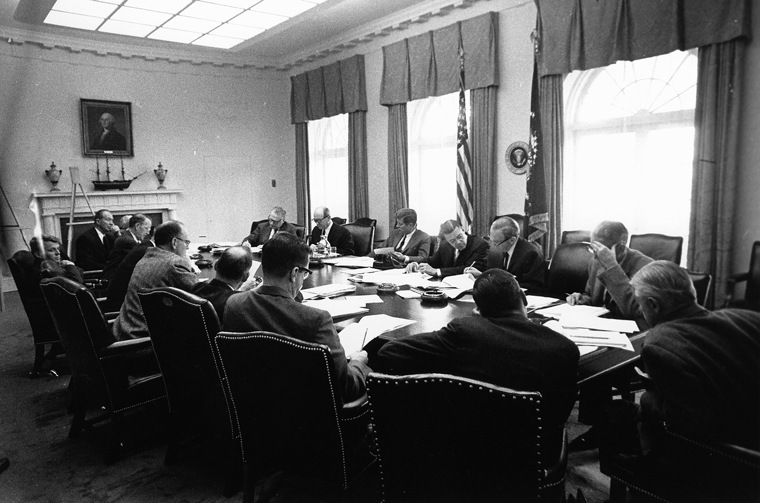
And here I would just give an example of the Cuban Missile
Crisis ,when JFK made the concession to the Soviet Union on removing forces
from, removing American nuclear missiles from Italy and Turkey. He didn't go on
radio and said, we are removing them. He just made an implicit, indirect
promise.
Because that was super toxic for him to say in the middle of
the Cold War. So, I think we just need to be, you know, have some humility on
what we can understand based on the public sources.
Eric Ciaramella: I
think Mykhailo is right that a lot of these concessions, you know, if they are
made, would be made in private. And we only know so much as we're reading press
coverage and various secondhand and thirdhand accounts.
I think the key part is, and this is what I've, you know, been
arguing for like two and a half years, Ukraine and its partners need to have a
common understanding of the future Ukrainian security picture in the
arrangements it has with the West, before going into a negotiation with the
Russians. Because you gain strength from a clarity of the understanding of your
own red lines and what is on the table.
And I think this gets into the question of a security
guarantee, which Mykhailo brought up. So, personally, as much as I would want,
one, I don't see the ingredients at this point for a full-blown security
guarantee from the United States or European countries. In other words, a
legally binding or even legally ambiguous pledge to use their own military
forces in the defense of Ukraine, if it were attacked in the future after a
ceasefire period.
I just don't see that in the cards. So––
Anastasiia Lapatina: Are
you including in that definition, the executive order-type document, akin to
what Trump gave to Qatar? Because of course this has now resurfaced as part of
the conversation.
Eric Ciaramella:
Yeah. I mean, could I imagine him issuing a similar, like a carbon copy of that
for Ukraine?
I guess, maybe. But I don't think it would––I think he would
quickly clarify on social media that it doesn't mean sending any U.S. forces to
Ukraine ever. Because, you know, it says including military means. Well,
military means is sending weapons also. So it's vague enough where you could
sort of interpret it however you want.
So I think Ukraine has to operate with the understanding that
it's not going to get a clear security guarantee to come to its assistance. And
I think with that the target of negotiation from Ukraine's side with its
partners should be sustainable, predictable, long-term equipment, training
support for the armed forces.
Because I think that's doable. And I think the Western
countries have shown after three and a half years that they are willing to
spend quite a bit of money, particularly Europe at this point, in supporting
Ukraine's right to self-defense. But they've also shown repeatedly that they're
not willing to put their forces into Ukraine.
And I think if that is well understood, and the Ukrainian side
has a particular view about the size and capabilities of the army that it will
need to have credible deterrence under a non-alignment scenario, then I think
why not go and propose it to the Russians? But if you don't have that––
Anastasiia Lapatina: What
happens if they reject that. Then what?
Eric Ciaramella: I
mean, that's the thing.
Anastasiia Lapatina:
Are you now in the worst position than you previously were because you've
already sort of given up this leverage?
Eric Ciaramella: No,
because the, you know, that's conditional on them agreeing to some sort of
ceasefire. So if there's no ceasefire, there's no non-alignment. You know,
Ukraine shouldn't unilaterally just neutralize itself, that doesn't make any
sense.
But again, I think if there's no firm view, which is what I
worry about now, because the conversations have been so vague and there's such
jumbled thinking on the American side, and frankly on the Ukrainian side and on
the European side too, no one has a clear concept, in the way that Mykhailo has
laid out I think in some amount of detail what a concept of armed neutrality
could look like.
These conversations are happening in expert communities, but
they're not happening at the government level. So the governments are flying
totally blindly into these high-level, high-stakes negotiations. They have no
idea what their own negotiating position is. Other than ‘don't give anything.’
And I think that is, that's a misguided way to do these kinds
of strategic negotiations and to focus so much on individual items like Tomahawks,
like coalition of the willing forces. You know, we've gotten ourselves wrapped
around these really specific elements, which are just small components of an
overall long-term vision for Ukraine.
And the big questions about this vision for Ukraine, people are
just sweeping to the side because it's a little too complicated to discuss.
Well, you have to attack those first, and you have to have a clear Ukrainian
vision, first and foremost, because it should be a Ukrainian origin idea. And
then you have to have clear agreement with the partners before you go into a
negotiation with the Russians.
Otherwise, like I said, you end up negotiating only with
yourself and the Russians are saying, well, no, well no, go back and give us
something else. So then you go back and you revise your positions. You give
them something else. No, try again. I mean––
Anastasiia Lapatina: And
the Ukrainians say their Nos, and it goes all, you know, again and again.
Eric Ciaramella:
Again and again. Exactly. In a pointless cycle. So, all that is to say, I don't
think there is any harm in making a proposal like this as long as there is a
very clear analysis underneath it about what is, you know, the minimal
acceptable requirements for Ukraine and its partners. And I think they should be
significant.
I will, just final point, I have seen some different expert
analyses of what, you know, what would constitute credible defense and
deterrence for Ukraine under a non-aligned scenario. And there is a pretty wide-ranging
view. It's not only the numbers of forces, it's about the capabilities, it's
about the whole theory of defense and deterrence for Ukraine.
But I think given what we know about the nature of the Russian
threat and the nature of Russia's interest in coercing Ukraine over the long
haul, I would err on the side of a much more robust defense.
Mykhailo Soldatenko:
I would just want to follow up on what Eric said about the Western promise of
robust support in case of another aggression.
And Eric, think that this should be short of use of force because,
if I understand correctly, this is credible because West already did it. So one
issue that I see––
Anastasiia Lapatina: “This”
being ‘providing weapons,’ right?
Mykhailo Soldatenko:
Yeah. Providing weapons, imposing sanctions, maybe even more than doing this
one. One issue that I see that we also need to recognize that Russia also
showed you this war, that it's ready to incur significant costs despite the
Western sanctions and support ,in order to reach its objectives in Ukraine,
which means that there is a scenario under which they may just plan to incur
the same costs in order to try this again.
When you introduce a possibility of the U.S. armed force, at
least in a limited way, like that was done in support of Israel by the Biden
administration, I think that would be completely another analysis and calculus
from their side. Because that would mean for them, and I think, you know, a
risk of war with the United States for them may be existential. And then may
work as a deterrence, on top of Ukraine defense and deterrence capabilities.
And I think that may be realistic only if they agree to such a
guarantee. And to our listeners, that might, like, sound strange, why they
would agree, but I think, for them, such a guarantee, if it's attached to
Ukraine neutrality, that may be actually, you know, beneficial in some way. Because
that would mean that the United States guarantee Ukraine's neutrality and any
deviations in the future.
So the United States would not only be responsible for, you
know, defending Ukraine's neutrality, but also preventing Ukraine from
deviating from discourse. And I think that's something that Russians might be
interested in. And during the Istanbul talks, that's exactly what was
discussed. Obviously Russians wanted the veto back then, but again there was
uncertainty about whether that was a red line.
And here, if they agreed to that, that would mean that we would
have––and there is a forthcoming piece in Lawfare, my forthcoming piece
in Lawfare about that, where I see there are three pillars of deterrence:
potential use of U.S. armed force; the first line of defense, Ukraine's defense
and deterrence capabilities; and Russians incentives to keep the framework in
place. Because if they attack, again, they risk a war with the United States, they
risk incur costs from the Ukraine, robust Ukrainian army, and they risk losing
neutrality.
I think that is more credible than just a snapback clause about
future support. After the Alaska Summit, and again, people questioned those
statements, but after the Alaska Summit, Witkoff stated on CNN, on the record,
that Russia agreed to Article 5-like security guarantee.
Reportedly Trump, right, later told Europeans and Ukrainians, Ukraine
can have Article 5-like wording. So I think this should be explored. I don't
know whether Ukraine or Europeans explored that, because again, I didn't hear
in the public sphere, Ukrainians or Zelensky speaking in detail about that, how
that might look like from the Ukrainian side, et cetera.
So, maybe they discussed that, maybe that was not possible, but
I would try that. Especially considering that, right now, President Trump
showed how he can do it in the respect of Qatar.
Anastasiia Lapatina:
I just want to add that from my conversations about all of this, which I also,
Mykhailo, find fascinating the idea of unarmed neutrality and all the options
associated with that, and how that could be explored.
Anytime I talk about this with, you know, Ukrainian military
experts, foreign policy experts in think tank circles here in Kyiv, almost
everyone would inadvertently run into the problem of, why would Russia ever
agree to this? And that's sort of everyone's final objection. And there is, I
mean, there, everyone has a long list of why this is a bad idea, of course.
But you know, even if you were to work out, like, all of these
nitty-gritty details about the, okay, caps on armed forces, but not too much.
And there is still going to be credible deterrent force, et cetera. But at the
end, even if you work out this magic deal, everyone always goes like, why? Like,
Russia would never agree to this. Because there is almost a unanimous belief, a
deeply entrenched belief in Ukraine that Russia's goal is to make sure that it
can control Ukraine. In the broadest sense of what that means. So, even if the
fighting stops, they want to have control over our domestic policy. They want
to have control over who's in our parliament, who's in our cabinet, who's
making decisions, what language would we speak.
You know, all of these discussions are not touching on a whole
long list of Russian demands around culture and language and history, which in
my subjective opinion, are equally important and like, are completely ignored
by everyone in these discussions too. But, anyway, the point is that Ukrainians
think that, even if some of, even if we work out a deal about non-armed
neutrality, Putin is still going to want to meddle in domestic Ukrainian
politics.
Still want to have a sway over what we do. And I mean, that
kind of existence at Russia's border, is that worth stopping the work for? Like,
how is that going to be different from essentially capitulating? Right?
And so, and so that, that big sentiment as well as the
sentiment of, why would Putin ever agree to any of this? He won't.
I think is sort of what I hear from people in Kyiv.
Mykhailo Soldatenko:
Yeah. I just give a final thought on that, that yeah, this is challenging. It's
not guaranteed that that will work out. But I think that would at least show
that we exhausted diplomacy, and we did everything possible, from our side,
before continuing the war of attrition with significant loss of Ukrainian lives
and without guarantees of success.
So I think that's important. And important to note that, in my
judgment, this is more realistic than going back, discussing how that would be
great when we are part of NATO.
Eric Ciaramella: I
think you're right to focus on how this conversation is shaping up or not
inside Ukraine. I do think that there is a deeply held view that something like
neutrality or non-alignment would be akin to capitulation.
And I think that is, in large part, because of the legacy of
the Istanbul talks, where the type of neutrality and non-alignment that Russia
was pushing for was indeed a form of capitulation, I would argue. And I know Mykhailo
has put out a different view on that, but I would argue that it was aimed at
this kind of demilitarization and rendering Ukraine incapable of defending
itself.
If there were a way to reimagine this concept and maybe find
some new terminology and you know, again, armed non-alignment, it does sound
better than neutrality. And is indeed a, it's a concept that exists in the
international security world, and it does work for some countries, some form
of, again, credible defense and deterrence outside of a formal alliance system.
When you actually look at the polling of Ukrainians, there
actually is, I think, a sophisticated understanding among Ukrainians that NATO
is not an option in the near future, and that ultimately the main source of
Ukraine's kind of power and resilience and its survival is going to be its own
capacity to defend itself in cooperation with Western allies.
Not allies, but partners, getting resources from them and so
on. And when you dig down into these polls, and you ask Ukrainians about their
kind of future visions, it does seem like they would actually accept some form
of this.
But again, the starting point of negotiation shouldn't be, how
big should, the Ukrainian army should be, how capable should its forces be,
what should be the relationships between Ukraine and its security partners in
terms of getting assistance?
Take those things off the table, because those are
non-negotiable. Ukraine should have the right to set its own limits or capacity
or manpower or whatever. It should have the right to buy weapons from whoever
it wants and train with whoever it wants. And then you find the particular
points where actually it does make sense to negotiate the terms of neutrality.
And what those points are, you know, again, maybe it's
something about, you know, the presence of permanent Western military
installations on Ukrainian territory or something like that, where Ukraine
doesn't need them anyway.
So maybe that's something to negotiate. But I think you have to
take these other things off the table, because if you put those as part of the
negotiating basket, okay, let's talk about, well, will Ukraine be able to buy
weapons? How big should the Ukrainian army be? Then immediately the Russians
are going to negotiate the United States and Ukraine down to the lowest
possible point.
And I think that's not good. So all that is to say, I think
there could be a potential diplomatic pathway here. I think it's a real long
shot, but I think first and foremost, Ukraine needs to come up with a concept of
this defense and deterrence outside of NATO which it is comfortable with, and
then get buy-in from its partners before putting this on the table.
And I think Mykhailo’s work, it does actually help a lot in
that regard. And I hope colleagues in Kyiv will read it and take it seriously.
Anastasiia Lapatina:
Well, that was really interesting, guys. Thank you so much for coming on.
Mykhailo Soldatenko:
Thank you.
Eric Ciaramella:
Thank you, Nastya.
Anastasiia Lapatina:
The Lawfare Podcast is produced in cooperation with the Brookings
Institution. You can get ad-free versions of this and other Lawfare
podcasts by becoming a Lawfare material supporter through our website,
lawfaremedia.org/support. You'll also get access to special events and to other
content available only to our supporters.
Please rate and review us wherever you get your podcasts. Look
out for our other shows, including Rational Security, Allies, The
Aftermath, and Escalation, our latest Lawfare Presents
podcast series about the war in Ukraine. Check out our written work at lawfaremedia.org.
The podcast is edited by Jen Patja and our audio engineer this
episode was Goat Rodeo. Our theme song is from ALIBI Music. As always, thank
you for listening.