
Lawfare Daily: What the ‘Kids’ Think of NATO with Rachel Rizzo

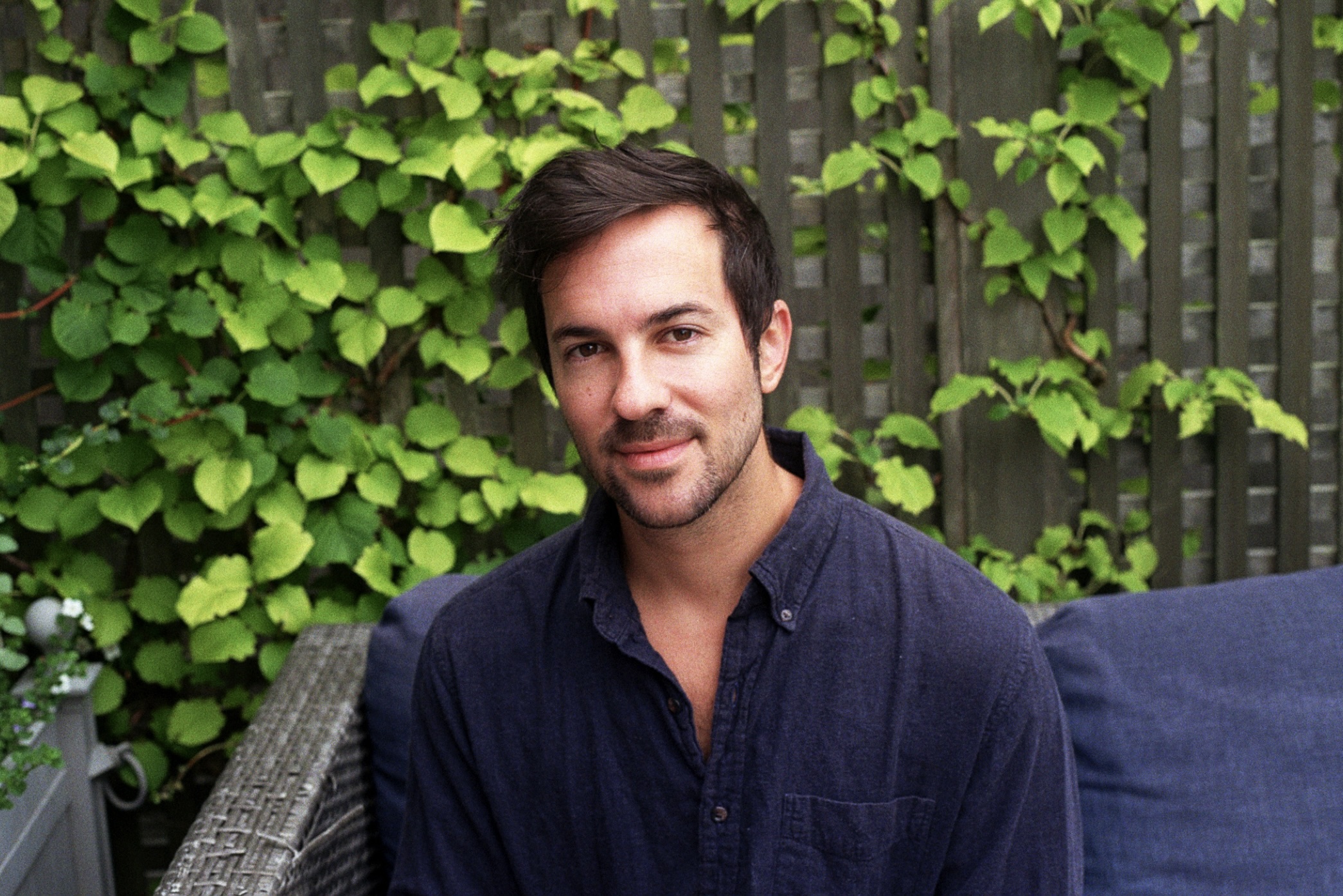


Rachel Rizzo, a nonresident senior fellow at the Atlantic Council’s Europe Center, joins Lawfare Managing Editor Tyler McBrien to talk about last month’s NATO Youth Summit. Building off of her chapter “NATO, Public Opinion, and the Next Generation: Remaining Relevant, Remaining Strong,” in the 2021 book, “NATO 2030: Towards a New Strategic Concept and Beyond,” Rizzo discusses what NATO thinks of Gen Z and Millennials, the many efforts the Alliance is making to pitch to them its relevance and purpose, and the ways in which NATO could better integrate youth voices into discussions about the Alliance’s future. She also explains how and why Gen Z and Millennial views on NATO, foreign policy, and America’s changing role in the world differ from older generations. And yes, they even discuss Taylor Swift and Olivia Rodrigo.
To receive ad-free podcasts, become a Lawfare Material Supporter at www.patreon.com/lawfare. You can also support Lawfare by making a one-time donation at https://
Click the button below to view a transcript of this podcast. Please note that the transcript was auto-generated and may contain errors.
Transcript
[Intro]
Rachel Rizzo: So, I
think you're seeing more of an effort on behalf of policy institutions, but
also policymakers, trying to ensure that NATO and foreign policy is better
understood amongst youth populations.
Tyler McBrien: It's
the Lawfare Podcast. I'm Tyler McBrien, managing editor of Lawfare
with Rachel Rizzo, a non-resident senior fellow at the Atlantic Council's
Europe Center.
Rachel Rizzo: The
views and opinions of emerging foreign policy practitioners today are going to
translate into the real-world policies and strategies that we will see over the
next 10 years.
Tyler McBrien: Today,
we're talking about what younger generations, specifically Gen Z and
millennials think of NATO, as well as what NATO thinks of the youth and how it
views the next generation of leaders.
[Main Episode]
So, Rachel, as you probably very well know, the NATO Youth
Summit just wrapped up around mid-May. What is the NATO Youth Summit? What is
your experience with it and why even have a NATO Youth Summit?
Rachel Rizzo: So I
think there's an understanding amongst leaders that youth opinion really
matters, especially the opinion of youth that can cast votes and really affect
political outcomes.
This is an active generation. They care about their
communities, they care about politics and foreign policy, and they can shape
politics and foreign policy in a way that previous generations simply could
not.
So if you look at Gen Z, some millennial, but more Gen Z
influencers on social media platforms like TikTok and YouTube, they amass
followings of millions and their messages, reach of people amongst all age
groups.
So candidates on both sides of the Atlantic, but I'm kind of
looking at this as an American, candidates really scramble to get major
political endorsements these days from people with huge youth outreach and the
ability to reach this huge voting bloc.
So like look at the scramble to get an endorsement from someone
like Taylor Swift, you know. Look at someone like Olivia Rodrigo, who makes
major contributions and speeches about politically salient issues like women's
reproductive rights.
Like we're not at a time where youth opinion can be ignored,
and I think NATO, as an organization, understands that, and so having a NATO Youth
Summit focused on reaching youth and hearing from youth and understanding their
opinion is a really important way to ensure that NATO is not only understood
by, but supported by a very important bloc of individuals on both sides of the
Atlantic.
Tyler McBrien: Before
we go any further, I have to ask if, you know if Olivia Rodrigo, or Taylor
Swift has spoken on the record about NATO, and if so, what their views are.
Rachel Rizzo: You
know, if Olivia Rodrigo, or Taylor Swift had spoken on the record about NATO, I
would definitely know about it. And I don't think that they have, but trust me,
I will watch out closely.
But I mean, you know, this is a joke, but honestly I do think
we're sort of entering this time and this moment where social media influencers
come in the form of celebrities, but also come in the form of these sort of
grassroots movement. Like there are a lot of people who are just influencers,
like that's what made them famous.
Their fame is from their ability to influence. So the more that
international institutions, not just NATO, but other ones, can reach this
group, I think the better. Like you've had folks like this come to the White
House specifically, you've had the Biden administration reach out to them
specifically.
So it's definitely a new way for, I think, older generations to
engage with the newer and younger ones.
Tyler McBrien: And
I'm sure there is a Swiftie out there who will decode some lyrics of hers that
will be about NATO. So if you're out there listening, please send that to us.
But no, I mean, to your point, it really matters.
You've written before about how so often, in the past few
years, Gen Z and millennial generations have been referred to as the “next
generation.” But in many ways, a lot of millennials and even Gen Zs are in
positions of power and influence even beyond the social media space. So I think
that's, it's a great point.
But first to, to take a step back, what is your sense of Gen Z
and millennial views vis-a-vis NATO, are they in lockstep? Are they different?
What are some of the distinctions between those two generations? And then how
might those opinions differ from older generations, with regard to NATO?
Rachel Rizzo: Yeah,
so it's actually pretty hard to carve out support for NATO specifically. I
think what's more helpful and what's easier is to look at how young people's
opinions of engagement is changing and of militarism, specifically, and this is
something that I've written about in the past.
So you know, millennials, this group that's born between 1981
and 1996 and Gen Z born between 1996 and 2010, have differing views of security
and defense and cooperation than the generations who came before them. Young
people in the U.S. really differ from our older counterparts in terms of our
opinion on the role of the U.S. in the world, and young people in Europe have
shifting views about their relationship to the United States.
Millennials and Gen Z on both sides of the Atlantic are less
militaristic. Instead, what tends to happen is that issues like climate change,
sustainability, human security, technological interconnectedness—these are the
things they're really at the forefront of their minds in terms of foreign
policy priorities.
There was a really interesting poll from the Charles Koch
Institute and the Chicago Council of Global Affairs a few years ago that showed
stark differences in millennial views on foreign policy within the U.S.
So, there was this standard survey question that said, do you
think it will be best for the future of the country if we, the U.S. take an
active part in world affairs or stay out of world affairs. What they found is
that each successive generation since the Silent Generation, those born between
1928 and 1945 showed less percent than the last generation for an active role
in the U.S. and world affairs. So 78% of the Silent Generation showed support
for the U.S. taking an active role, 51% of millennials, and so you have a
pretty big jump there.
And in that same poll, millennials were asked to highlight
their top five foreign policy goals, 70% said protecting American jobs; 64%
said preventing the spread of nuclear weapons; and 59% said safeguarding
adequate supplies of energy. So these, besides nuclear weapons, like these are
not issues that are directly under NATO's purview and so it's been interesting
to see how NATO has and is planning to approach this going forward.
Tyler McBrien: Yeah.
And before we get into that, and I definitely wanna talk about the inverse of,
you know, not just how youth views NATO, but how NATO views the youth in the
next generations. I wanna drill down a bit on this interesting survey data that
you just presented.
I think it will easily provide fodder for older generations to
shake their fist at the kids these days who don't care about the world, but I
suspect there's some really good, logical reasons behind this. Do you have any,
you know, theories or have you written about what is underlying this decreasing
percentage?
Rachel Rizzo: Yeah, I
mean, I think, you know, I'm speaking as a millennial and I think this is a
salient topic for Gen Z as well, but for those of us who sort of came of age in
the early two thousands and sort of started becoming politically aware and
politically active, I think it's important to understand what was going on in
the world at that time and what has happened in the United States at that time.
So first of all, we're the first generation who has literally
had the 24-hour news in front of us since we were children. We're also the
first generation that doesn't really remember a time before total
interconnectedness by technology.
Personally, like I remember the time before the internet, I
remember what it was like to log on to AOL instant messenger and like sit there
and listen to that weird beeping noise and like hope my parents weren't gonna
hear it 'cause I was on the internet at like one in the morning chatting with
my friends.
But we're sort of the last generation that remembers that—Gen Z
doesn't, they've been online their whole lives. And so there's that aspect of
it, just this access to vast amounts of knowledge and information and opinions
from people who are different than us and who are not American.
But we've also dealt with a, an overstretch of the U.S. military
and a response to 9/11, that it has shaped U.S. foreign policy goals for the
last 20 years. And we saw the tools of the U.S. military used in a way that did
not succeed in terms of service of a broader goal, like we sort of looked at
the view of U.S. power as somewhat of a failure in the Middle East.
Afghanistan is another example of that. Like this is a war-weary
country and it's a war-weary generation. My generation also graduated college
either right during or in the aftermath of the financial crisis. And so that
really brought to bear questions about inequality and the role of corporations
and the role of the U.S. government in regulating those things.
And then we had to deal with COVID, like it's just been sort of
one thing after another. And I think that has led to a situation where young
people just have a different view of what power means and how to wield it than
perhaps generations that may have come before us.
Tyler McBrien: Well,
first of all, thank you for the wave of nostalgia.
I just felt at thinking about the dial tone loud sound, and I,
to borrow a millennial, Gen Z term, I think I was just triggered with the fear
of waking my parents for that.
I think underlying this conversation, if I'm not mistaken, is
an assumption of, we're talking a lot about, I think American youth perhaps but
I also wanna make sure to disaggregate some of this opinion among youth toward
foreign policy security and NATO between other NATO member countries.
I think this is a pretty obvious example, but I assume that
millennial and Gen Z are in the U.S., varies differently in their knowledge and
perhaps supportive NATO in Estonia, for example. Do you have a sense of how
these opinions differ between NATO member countries?
It's quite a diverse alliance in many ways, but any sense that
you have.
Rachel Rizzo: Yeah,
so young Europeans are also shifting the balance in their respective states in
terms of foreign policy priorities. I was living in Germany back in 2019 and
you saw millennials and Gen Z, older people as well across Europe, just pack
plazas and parks during Greta Thunberg’s Fridays for Future. It was one of the
largest pro-climate demonstrations in history.
And unsurprisingly, you know, looking at the 2019 European
elections, 30% of Germans under 30 voted for the Greens, and this is a party
that puts climate and denuclearization at the center of its platform.
The same happened in Britain. There was this YouGov poll that
was done a few years ago that showed that 63% of British Gen Z between ages of
11 and 18 said the environment and climate change is the more, the most
important issue for their country.
And so I think much like people in North America, European
generations are driven by aspects of security that fall beyond traditional
definitions.
And going back to Germany, there was, there were really
questions, interesting questions that were asked in some other polls that were
done. And the outcomes of those were really striking in terms of how Germans
think of their relationship to the U.S. and to the U.S. military.
So 33% of German millennials said that U.S. bases in the
country are either important or very important. 61% of Germans over the age of
50 said that they are important or very important. So that's a huge difference
in terms of opinions there.
And then going to NATO specifically, you know, we've seen a
couple rounds of NATO enlargement. We had Sweden recently join; we had Finland
join last year. And what's happening in Sweden now, which is really
fascinating, is that you have had more calls to this youth crisis line by young
people asking if Sweden is more likely to go to war now that they are a member
of NATO.
And what that means is that there seems to be sort of a concern
amongst young people, and understandably so, but also a lack of understanding
of NATO's founding documents, NATO's Collective Defense Clause, what that might
mean for Sweden, and so you have teachers that are now teaching classes on NATO
specifically and helping people understand what that means.
And we have some experience with this also in the U.S. in think
tanks specifically, where, you know, I was working at a think tank called the
Center for a New American Security back in 2016 through 2019. And I was working
for the now U.S. Ambassador to NATO, Julie Smith, and she founded, and I helped
run this program called “Across the Pond, in the Field,” where our goal was to
get out of Washington, go to small- and medium-sized counties around the U.S. with
Europeans, with us, and to meet with college students and high school students
and talk to them about foreign policy issues.
And we had some of these same questions as well about what NATO
membership meant, what Article Five meant, and so I think you're seeing more of
an effort on behalf of policy institutions, but also policymakers trying to
ensure that NATO and foreign policy is better understood amongst youth
populations.
Tyler McBrien: Some
of these issues you're bringing up, climate change, anxiety of going to war makes
me think back to, you know, a few questions ago when you brought up this
polling data for American generations and this question of, should America be
involved in world affairs?
And it makes me think there's actually a nuance or a
distinction there where, at first blush you could think that question suggests
that younger and younger generations don't care about the world or are not
aware of the world beyond American borders, but I think the distinction sounds
like they care about the world, but they just don't necessarily think that the
United States should be leading on certain areas of world affairs. Is that a
fair distinction there or am I getting it wrong?
Rachel Rizzo: No,
that is a fair distinction. I mean, I think that we have a tendency, I think,
in sort of expert foreign policy circles to talk about things like isolationism
and to equate questioning the U.S. role in the world to this idea of the U.S. turning
inwards and not being engaged in world affairs. And that's certainly not
correct.
You know, even a candidate like Bernie Sanders who had a huge
youth support system during not only his senatorial campaigns, but also his
presidential campaigns. He is not an isolationist. He questions the U.S. use of
the military. He puts sort of human-centric issues at the center of foreign
policies. So things like human rights things like climate, things like
inequality and corruption.
And these issues are very salient to younger people, and that
doesn't mean that they are not engaged in the world. They very much are engaged
in the world. It's just that the definitions of security have broadened a
little bit, which means that the definitions of security that have underpinned NATO
are becoming a little bit more difficult to understand, which then brings to
bear, how does NATO adapt to this as an alliance.
You've seen a lot of discussion about climate, and I think
there's an understanding amongst NATO leaders that NATO as an institution is
certainly not the best place to tackle climate change, but climate change does
have a serious effect on the military and military deployments and the rise of
sea waters affects navies around the world.
So there is something to be said about NATO talking about these
issues and working in concert with other institutions that are focused
specifically on them and civic society that is focused specifically on these
issues in order to figure out how it works within these new parameters.
You know, NATO's three sort of core issues are cooperative
security, collective defense, and crisis management. And these three issues can
take the form of many different definitions, and that's what I think we're
seeing NATO do in the past few years, and it will continue to do going forward.
Tyler McBrien: You've
already seamlessly made this transition for me, so thank you for that. Because
I do want to invert this, I wanna talk about NATO's view of the youth and any
anxieties or existential anxieties, even, they may have and how they're dealing
with it.
I'm also wanna refer to a chapter that you wrote for a book on
the NATO 2030 strategic concept. And I'm sorry if it's cruel to ask you to
revisit something you wrote five years ago, but I'm curious, you know, how
you've—if you have revisited that lately and if how it's held up.
What did you find then in digging into the strategic concept
and how NATO views the next generations or the younger generations, and how, if
any, has that changed in the past five years?
I think it's safe to say in the past five years, there have
been quite a few global crises, which may have shifted public opinion on a few
things, so yeah and where we stand now.
Rachel Rizzo: Yeah.
So the good news is I think I wrote that chapter like two and a half years ago,
so it might be more.
Tyler McBrien: Ah,
sorry about that.
Rachel Rizzo: No, I
think it might be more politically salient than it would be if I had written it
five years ago because just so much has happened and things happen so quickly.
So, you know, in 2019, we had a summit where, well ahead of the summit
actually, where you had comments from Emmanuel Macron, right.
Remember, he said that NATO was experiencing a brain death and
everyone sort of freaked out about that and there was this understanding that NATO
needed to sort of think about what its meaning was gonna be in the coming
decade, and there was an understanding at the time that it needed a new
strategic concept.
And NATO does this maybe every 10 years, where it creates this
sort of guiding document that is supposed to—it is supposed to represent the
priorities for NATO over the next decade and sort of serve as a North Star for
the alliance amidst many different international issues happening at once.
And so what Secretary General Stoltenberg did at the time is
that he tapped these luminaries, these foreign policy experts from both sides
of the Atlantic who had a lot of experience in foreign policy.
For example, the last time the strategic concept was written 10
years before this, I think it was Madeleine Albright, who was sort of leading
that luminaries group, and if not leading it, certainly there, she was a part
of it. And this was comprised of individuals all between the ages of 40 and 73.
And the drafters basically lay out topics to help the alliance
approach the key challenges to the next decade and help the alliance figure out
what should be in the strategic concept. So this report was called NATO 2030,
and I was reading it and I noticed that there was one glaring omission from the
NATO 2030 report, and that was a single mention of the term “next generation.”
And instead of including next generation thinkers and opinions
in this primary reflection group, what NATO did was enlist a group of quote, “new
and emerging thinkers from both sides of the Atlantic to undertake their own
reflection process alongside these well-established luminaries.”
And it felt to me like this approach where you separate these
two groups is super problematic because the views and opinions of emerging
foreign policy practitioners today are gonna translate into the real-world
policies and strategies that we will see over the next 10 years.
And so I think a better approach would've been to just
integrate the two groups and there was this report written by a researcher
named Sofie Lilli Stoffel from the Global Public Policy Institute in Berlin,
and she said, you know, creating channels for meaningful youth participation,
as opposed to creating kids tables, will be crucial for the success of the NATO
2030 initiative’s central goals.
And I think that's totally right. Like I think we're at a point
where it doesn't make sense—like I think a NATO youth summit, that makes sense.
Like that's a very specific way to engage a specific subset of the population.
But we need to figure out, and NATO needs to figure out, a much better way of
integrating youth opinion in how it decides to figure out its priorities over
the next 10 years.
And I don't, it's trying, but I don't think it's quite figured
out exactly how to do it yet.
Tyler McBrien: Yeah,
that kids' tables quote really stuck out to me as well. It's such a
Rachel Rizzo: Yeah.
Tyler McBrien:
illustrative, you know, visual. I want to tie this all together somehow.
So if you'll humor me, I wonder if you could put yourself in Jens
Stoltenberg’s shoes for a second and say you're speaking to a group of very
skeptical young Americans, or even, you know, young Brits, young French people,
who are skeptical of the alliance. They didn't grow up with a Soviet threat.
They are pretty far from, you know, the history of NATO's origins.
How would you make the pitch to these skeptical young people
living in NATO member countries?
Rachel Rizzo: Yeah,
so together, NATO allies represent 50% of the world's economic might, and 50%
of the world's military might.
Like, this is a massive alliance and it's an important
alliance. And the security issues that are under NATO's purview today affect
not only how we protect and preserve transatlantic unity today, but also well
into the future. NATO has protected the transatlantic relationship for 75 years
from would-be adversaries, and it has helped promote peace not only on the
European continent, but in North America as well.
And I think young people should care about this because their
opinions, A, they matter and they should be heard at the highest levels of
policymaking, but also because security issues have become much more diffused
as we have become more interconnected as nations.
And so when you look at things like energy security, when you
look at things like climate migration, when you look at cyber and emerging and
new technologies, these are the issues that will directly influence, A, how
nations engage with one another.
But also they will affect the definitions of national security
at very basic levels. And, you know, it's no longer just about great power
competition or conventional warfare or like fighting sea battles in the
Atlantic or the Baltic Sea. Like that's sort of a cartoonish view of national
security and militaries.
The reality is that the definitions of these issues are much
more porous, and they sort of defy definition in many ways. And so young people
are the ones who will help us define those issues going forward and they need
to be part of the conversation because of that.
Tyler McBrien: I do
wanna just give you the space if there's anything that you wish I asked, or you
wanted to make sure to touch on as well.
Rachel Rizzo: There's
one thing that I would probably touch on, and that's sort of how NATO is trying
to appeal to young people. And you've had this really interesting approach over
the last few years where they're, they've done a great job at social media
outreach.
Like if you follow NATO on Instagram. If you follow it on X,
formerly known as Twitter. You have these hashtag campaigns. So #weareNATO, #protectthefuture
to sort of demystify NATO's role and how it works.
So it's also worked directly with content creators behind the
scenes at really defining moments for the organization. So at NATO Summits,
they've invited content creators to meet senior officials, including the
Secretary General. They've really sort of doubled down on digital storytelling,
on discovery-led content.
And so the followers of these accounts really have the chance
to experience these events firsthand, but also can communicate and engage on
these issues relevant to the alliance to their followers. So I think, I wanna
make sure that I give NATO credit, and their public affairs team a lot of
credit, for knowing that this is sort of where communication is going and being
able to follow the trends pretty well on that front.
Tyler McBrien: Great.
Well, unfortunately to bring it full circle, Olivia Rodrigo was not performing
at this year's NATO Summit—Youth Summit rather, but there's always next year.
But Rachel, thank you so much for this conversation. It was great.
Rachel Rizzo: Yeah,
of course. And you know, we have the 75th anniversary NATO Summit coming up
here in Washington on July 10th and 11th.
So let's try to get Olivia Rodrigo to perform at that one.
Tyler McBrien: She's
famously a Lawfare podcast listener, so hopefully she hears this.
Rachel Rizzo: Yeah, hopefully.
Olivia, come hang out with us!
[Outro]
Tyler McBrien: The Lawfare
Podcast is produced in cooperation with the Brookings Institution. You can get
ad-free versions of this and other Lawfare podcasts by becoming a Lawfare
material supporter through our website, lawfaremedia.org/support. You also
get access to special events and other content available only to our
supporters.
Please rate and review us wherever you get your podcasts. Look
out for other shows including Rational Security, Chatter, Allies, and the Aftermath,
our latest Lawfare Presents, a podcast series on the government's
response to January 6th. Check out our written work lawfaremedia.org.
The podcast is edited by Jen Patja and your audio engineer this
episode was me, Tyler McBrien of Lawfare. Our theme song is from Alibi music.
As always, thanks for listening.
-20260515.jpg?sfvrsn=800c0191_5)
